Showing posts with label maids. Show all posts

Tuesday, 8 June 2021

A depreciating diet

About one year has passed since the COVID-19 pandemic began. In India, domestic workers are among the most severely hit groups. In the initial stages of the lockdown, most domestic workers were laid off. Many did not get paid for months. Some of them were initially assured that they would be rehired and paid after the lockdown was over. But even as the lockdown eased, the condition of domestic workers has barely improved.

For many, like Shabana*, who has been working as a cleaner in Guwahati for almost a decade now, things have been rough. Shabana used to work in three houses before the lockdown but has been rehired in only one.


“I was told that I would be rehired after the lockdown, but then only one family did that. The other two families did not pay me during the lockdown and now have hired others,” she says.


As a result, her income has dipped substantially, but costs have not. While they cannot compromise on expenses such as rent, there has been a direct impact on their diets and nutritional needs.


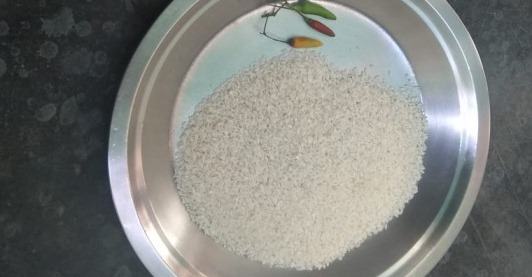
“We have not had anything other than rice and chillies for months. We also skip meals. Everything is so expensive. We have a young daughter whose nutritional needs are getting severely impacted. As a growing person, she should eat well, but unfortunately, it is not happening. I hear on the TV that one needs good immunity to protect themselves against COVID-19. But how will we have immunity if we cannot eat anything good?” says Shabana.


Initially, her family received rice for free from the government, but now they have to buy it at a discounted rate in the market. Data shows that India is facing food inflation of 7.9 percent. In fact, food inflation was an issue much before the COVID-19 pandemic, and the situation has only worsened now.


Families like Shabana’s are forced to compromise on their nutritional intake. While fruits and vegetables have always been luxury items for them, now even daal (lentils) and potatoes fall within that category.


*Name changed to maintain confidentiality.


Rituparna Patgiri teaches sociology in Indraprastha College for Women (IPCW), University of Delhi. Ritwika Patgiri is a PhD student in the Faculty of Economics, South Asian University (SAU), New Delhi. The authors have been conducting research on domestic workers in Assam since August, as part of a research grant from Zubaan Books.


(Source: idr)

Saturday, 13 April 2019

How domestic workers enable well-off women to prosper

In her new book, Women’s Work, the journalist Megan Stack grapples with how she’s been able to advance in her career at the expense of other women’s labor.

As more and more women have entered the workforce, they have naturally spent less time at home. Still, homes demand work, from cooking and cleaning to taking care of children. A majority of American children have two parents working outside the home, and nearly half of all married couples both work. In the U.S. and many other countries, there is no clear answer to who will take care of the housework.

That “second shift” of housework falls disproportionately on women. In the U.S. for example, according to the Bureau of Labor Statistics, half of women report doing housework like cleaning or laundry each day, compared with just 19 percent of men. American women also spend twice as much time caring for children as men do.

To mitigate this second shift for working parents, some families with financial means hire domestic workers, more than 80 percent of whom are women. Around the world, women who can afford it are freed to pursue their career by other women who care for their children, cook their food, and clean their home.

In a new book, Women’s Work: A Reckoning With Work and Home, the journalist Megan Stack examines this dynamic from the inside, telling the story of her own employment of domestic workers, who took care of her children and home while she wrote a novel.

Stack’s memoir takes place in China and India, where she lived after leaving her job as a foreign correspondent for the Los Angeles Times when she became pregnant with her first child. In both places, she hired domestic workers—nannies, maids, and cooks—to give herself time to write.

I recently spoke with Stack, who now lives in Singapore, about her thoughts on the ethics of the domestic-labor economy. The interview that follows has been edited and condensed for clarity.

Anna Waters: Millions of households around the world employ domestic workers to help with child care, cleaning, and cooking. Having a nanny to help with your young children has become fairly normal among financially privileged families, particularly ones with working mothers. What was it about this dynamic that made you think twice, and want to examine it in this book?

Megan Stack: I moved pretty thoughtlessly into having a woman come into my home and work full-time. But very quickly, I started to experience things that surprised me. The emotional components of trust, love, and jealousy, the attempt to turn a household into a job site, and the way that intersects with power imbalances of money and race … I hadn’t anticipated it. The more I adjusted to being a mother, the more uncomfortable I was, because I was looking at my nanny and thinking, She’s a mother, too. Who’s taking care of her baby?

It opened up uncomfortable questions that I hadn’t addressed when deciding to hire her, and that I didn’t feel like the culture broadly had addressed, either. There’s been this global swell of domestic labor as an unregulated and poorly understood job sector, so these relationships exist on a global scale, but are basically unfolding in private. I wanted to make them public.

FELIPE DANA / AP

Waters: The book is a really personal reckoning with how you have benefited from other women’s labor, but as you say, this is much bigger than individual private households. How much of the responsibility for this dynamic do you place on individuals, and how much on larger economic or systemic factors?

Stack: It’s hard, because as women, it’s important for us to say that the work we do is important. That’s how the world moves forward. And realistically, when I looked at my options to keep working and become a mother, there wasn’t any other option. My husband was going to keep his staff job with the salary and health insurance, and I was going to do writing projects that didn’t have those things. Like many women, I was surprised and overwhelmed by how much work came with the baby, and I didn’t see any way to keep working without hiring outside help.

For many women, on both sides, this is the best option. For many migrant women, this is one of the few jobs where they can earn a decent salary and pay for education for their children. So I don’t think I can blame individuals for participating in the domestic-worker economy, because it’s really the best option for so many people. But we all deserve better options.

Waters: What do you think some of those better options might look like?

Stack: I haven’t come up with a great answer. If I had, I would’ve written that book. Extending employment protections to domestic workers is a noble and serious first step. But honestly, that’s like fixing the leaks on a ship that we maybe shouldn’t even be on.

Domestic labor is a model for the advancement and equality of upper-class women, but it depends upon a permanent underclass of impoverished women. I’m not interested in a program for some women to advance on the backs of others.

Waters: This memoir is about being a woman harnessing women’s labor, but it’s also about being a white person harnessing the labor of nonwhite people. What role does race play in the question of offloading domestic work?

Stack: Race is a huge aspect of this. I think 100 percent of the reason domestic work is so poorly regulated is because it affects this trifecta of demographics that political decision makers don’t care about: women, poor people, and people of color. There’s this subconscious social consensus that things happening to people in those demographics just aren’t as important.

I did want to focus this book on the gender aspect, because this dynamic is more universally about women than it is about race. There are Chinese families employing Chinese domestic workers and Indian families employing Indian domestic workers. In those stories, race isn’t as clear-cut an issue as gender or class.

But in my house, the racial dynamic was very clear and troubling. I had this nightmare feeling sometimes in my house, where I raised two white sons seeing women of color working for us. What are the messages they’re picking up? What are we teaching them? That has haunted me.

Waters: You talk a lot in the book about how to place domestic workers in the context of your family. Do you consider them employees or part of the family? Is it possible to be both?

Stack: I had a very strong emotional connection and relationship to the women I hired to work in my home. I really came to love them; there’s no other way to describe the attachment and emotional investment I had in them.

That being said, I don’t think domestic workers should be considered part of the family. When you start to tell yourself that your employee is part of the family, you put them in an unprofessional and unregulated situation. You start to go, Oh well, you know, she’s really part of the family, so she doesn’t mind coming on her day off, because she loves the kids! But you have all the power in that relationship. It’s not like asking your aunt or mother-in-law to watch the kids. Muddying the waters in that way is just making an already vulnerable woman more vulnerable.

Waters: Something that comes up often in the book is the way employers of domestic workers exclude them from pictures and stories about family life. Why do you think some people with domestic workers are reluctant to acknowledge their existence?

Stack: Yeah, it’s interesting because you’ll sometimes see a domestic worker in a photograph, but it’s nowhere near as common as you’d think, especially in the context of how much time kids spend with their nannies. I think it shows some of the ambivalence people feel about having domestic workers. You don’t want to include this complicated aspect in the photographic effort of your life, because it’s uncomfortable.

It’s interesting because in colonial India, British colonials were so unabashed and proud of their servants. There are so many old pictures that will really make you feel ill, of little boys fanning reclining white people. They displayed that unapologetically. We’re in a different era now, where we know it’s not really okay.

Waters: You also write that this lack of acknowledgment goes both ways. In the book, one of your cooks in India said that her family and friends have no idea she’s hired help, and she conceals that.

Stack: That was the thing that surprised me the most from when I interviewed my own domestic workers about their experiences. These women come down to Delhi from rural villages, and don’t tell their families about their work. They pretend they work in call centers. There’s a real stigma and sense of shame around doing domestic work. Our nanny in Beijing would get up at her house every morning, dress up in a secretarial outfit for her commute, get to our house, and change into cutoffs and a T-shirt. When she left, she’d put her secretarial outfit back on just to cross the city by bus.

I started looking at the Facebook pages of a lot of domestic workers, and noticed that a lot of them went to great effort to disguise their work on Facebook. If the family was going to a resort for the day to go swimming, the nanny would find a moment to get someone to take a picture of her posing and she’d post that on Facebook. It was very much framed as, I’m paying for this for myself; this is part of my lifestyle. There’s so much fronting and ambivalence with domestic work on both sides, I think because everyone feels a little uncomfortable about participating in it, whether you’re an employer or employee.

Waters: What kinds of conversations did you and your husband have as you were writing this book? Like your domestic workers, he was a major character in the memoir, and I’m curious how he felt about the book and his role in it.

Stack: When I set out to write the book, I didn’t anticipate the role he would come to play in it. But I wanted to be very authentic about the totality of the experience. When I finished the first draft, I gave it to him to read, and I was very nervous. I wasn’t going to sabotage my marriage for this book, and if he wasn’t comfortable with it, I’d drop it.

But my husband is a really amazing person. After he read it, he said that parts of it made him cringe, but it was all true. Not many people would be strong enough to sign off on this from their spouse.

That being said, I’m never going to write about my family again. It was so hard for me to cross that bridge to write about my own home and marriage with this level of intimacy, and I’m eager to cross back over it.

Waters: You’ve recently moved to Singapore. Do you still have domestic workers?

Stack: We do have domestic workers. We have a woman who’s living with us, and she’s very wonderful, great with the kids. My sons are now 5 and 7, so I think we’re aging out of the time when we’ll have domestic workers around. However, writing this book would’ve been impossible without them. [Living abroad,] I can’t just send my kids to my mom’s house for the weekend to write. It’s been such a luxury to be able to afford someone to help me, but I’m looking forward to not having these relationships and being part of this complicated dynamic anymore.

(Source: The Atlantic)

Friday, 1 March 2019

The decline of domestic help

The absence of maids—exploited, largely invisible workers who decades ago made keeping a house in order look much easier—is one of the biggest reasons today’s middle-class families feel stretched for time.

For centuries, a woman’s social status was clear-cut: either she had a maid or she was one. Servants—often live-ins—who did the bulk of the cooking, laundry, and childcare were an indispensable part of life for virtually everyone who wasn’t a domestic worker him or herself.

Live-in maids, though, are now an anachronism—their outfits are more often seen as Halloween costumes or part of sexual roleplays. The fact that servants used to be a fixture of domestic life and are now reserved for the wealthy is one of the key, but little discussed, reasons why contemporary middle-class men and women feel overwhelmed by responsibilities. The receding presence of hired help has been accompanied by tremendous and long overdue boosts in the rights of domestic workers. At the same time, it means that fewer families today can afford the household support that was available to previous generations; paying even a part-time nanny on the books can be a time-consuming and expensive bureaucratic procedure.

Only a generation before middle-class housewives entered the workforce en masse, they enjoyed the assistance of nannies, cooks, and cleaners. The drop-off in domestic workers—whose absence today is felt disproportionately by women, who still are the ones typically tasked with homemaking—goes a long way toward explaining why women in 1965 spent the same amount of time on childcare and only about 10 more hours on housework a week than women in 2011. Nowadays, many working parents need more help and have access to less.

WIKIMEDIA COMMONS
Today’s arrangement is a historical anomaly. Consider the genteel poverty of protagonists in novels by chroniclers of class such as Edith Wharton, Louisa May Alcott, and Jane Austen. Regardless of their reduced circumstances, these characters would have been shocked by the idea that they should be responsible for sweeping, let alone mopping, their own floors. In perhaps literature’s most extreme example, even the eternally optimistic but penniless Micawber family from Charles Dickens’s David Copperfield can’t imagine giving up its servant.     

This situation remained the status quo for so long because it relied on a cheap and abundant supply of labor from unskilled workers, most of them easily exploited women and children who had few, if any, other options, and no employee protections. A 2013 Mother Jones examination of the history of domestic workers reports that, according to the 1870 census, “52 percent of employed women worked in ‘domestic and personal service.’” From 1870 through the mid-1900s, that percentage only increased. According to the Encyclopedia of Chicago,

domestic service represented the leading occupation of women in Chicago and the nation. … domestic work attracted few native-born women because of the long hours, low status, lack of freedom, and close supervision. Consequently, domestic servants often came from the ranks of the most desperate members of the community, either those too poor to pay for housing or those excluded from other vocations.

In 1912, a “hired girl” with 33 years of experience anonymously published a narrative of the trials of her line of work, in what was the era’s  equivalent of the hit novel The Help:

There is often no Sunday out until after four and no evening out until after eight. Foreign girls do not go into housework for this reason. They prefer the fixed hours of factory and shop work.

Ladies are sometimes not honest in money matters concerning the girls they employ. I have known many nice girls to work for little money—two dollars and a half or three dollars a week—and one week out of every five or six the lady would forget, or pretend to forget, to pay for. If the girl has given no written receipt for her wages, she sometimes has no proof of what is due her.

After the Great Migration brought multitudes of African Americans from the rural south to the urban north in the early 20th century, black women took over the bulk of these exploitative jobs. Only during the Great Depression, and then temporarily, did this dynamic shift, according to the National Women’s History Museum:

Unemployment was especially severe among African-American women.  Many African American women lost their positions as domestic servants to white women who entered the market during the Depression. In urban areas, they were forced to convene on city corners in “slave markets,” hoping to be hired for very low-paid day labor.

By 1970, appliances, ready-made food, and other technologies had reduced both the amount and the rigor of household work and rendered domestic help a luxury. By the 1980s, household help was played for laughs on sitcoms such as  “The Fresh Prince of Bel Air” and “Mr. Belvedere.” It was a running joke on “The Gilmore Girls” that Lorelei Gilmore’s wealthy mother Emily couldn’t keep a maid. By then, only women of Emily’s class were expected to have one.

By contrast, in 1959, when the Douglas Sirk domestic melodrama Imitation of Life was nominated for two Academy Awards, maids were a mundane aspect of the middle class experience.* And the reason for the shift is not merely that Sears started selling affordable dishwashers and laundry machines.

Domestic workers started agitating for better treatment and fairer pay in 1881, and they were denied by both local and federal entities longer than any other kind of laborer. Gradually, though, thanks to the decades-long unionization efforts of women like Dorothy Bolden, they won key rights and protections. That is an unalloyed good. It may make running a household more difficult and cause today’s working men and women to wonder if they can “have it all,” but it also means that domestic workers at last have the opportunity to try to “have it all” as well.

(Source: The Atlantic)

Wednesday, 24 January 2018

Even in an empty Delhi metro coach, middle-class Indians make their maids sit on the floor

With rising prosperity, more double-income couples and nuclear families, the need for domestic workers is increasing – and so is the class divide, writes Shekhar Gupta in The Print. Read on: 

Our reporter Sanya Dhingra tweeted this brilliant, eye-opening picture on Saturday that tells us more than a thousand words on our class differences and the way we treat our domestic workers. Even in a fairly empty metro coach, a maid sits on the floor and not with her employer and her child. The tweet took no time going viral. It obviously struck a chord.

In no other urban Indian situation does class inequality show up as starkly as in employer-domestic worker. Sometimes it reflects in just “normal” settings like the one Sanya captured or residential buildings in big cities (including Gurgaon) have separate elevators earmarked for workers. I was moved to reflect on this the first time when a well-to-do Gurgaon couple was in October 2015 accused of repeatedly beating up their 14-year-old maid, a tribal from Jharkhand. She was, in fact, rescued from behind a cupboard where she was hiding, or was forcibly confined. She had bruises, cut-and-slash marks. She told TV channels she was beaten routinely, thrown against a wall and even cut with a knife. Perhaps the most chilling part: she said her employers beat her, and all they said was they “didn’t like” her.

This was a most extreme case of domestic worker abuse. But the business of the employer-domestic worker, or malik-naukar, relationship is problematic in India. With rising prosperity and more double-income couples and nuclear families, the need for domestic workers is increasing – and so is the class divide.

We Indians are among the most “servant”-dependent people in the world. From getting our dishes washed to our toilets cleaned, our children minded to our dogs walked, from being driven to work to having our lunch boxes opened and our clothes ironed, our need for domestic workers is total, at least 16×7, leaving out the sleeping hours. The term for these workers, even in the mainstream English press, is, simply, “domestics”.

As more and more people become prosperous and busy – or lazy –enough to employ domestic workers, more men and women from the poorest end of society walk into their lives and households. Cooks, drivers, security guards (who are essentially doormen), cleaners, house-keepers, valet and baby-sitters are still within the conventional parameters of our typical upper/upper-middle class existence. You want to know how one-sided this buyers’ market in semi-skilled employment is? Manish Sabharwal, who runs Teamlease, India’s largest third-party employer and arranger of low- and mid-skilled labour, makes a sobering point: “For the past five years our company has employed a new person every five minutes. And it has only employed about 5 per cent of all the people who apply to us.”

In a 2008 article (‘Exploring India’s prosperity through the eyes of the invisible men’) in The New York Times that stays in my mind, reporter-writer Anand Giridharadas had explored the same rising divide using a five-star hotel toilet as a telling metaphor. In these toilets, he said, people are divided into two categories. Those who have to use soap from the dispenser, and those who squeeze the dispenser for you, open and close the tap, hand you a towel, take it back in their gloved hands to bin it, wipe the tap and mutter thank-you as you walk out, tip or no tip.

Mother and child take the seat, while the maid sits on the floor in Delhi Metro | Photo by Sanya Dhingra
Our vast reservoir of cheap manpower leads to other creative uses. On the corporate floors of some of our richest old companies, a peon follows you, either turning polished brass door-handles for you with gloved hands, or, if you turn them instead, wiping them clean again with a lint. Many upscale hotels now have personal butlers and valets, which can be flattering, but many Western travellers find the “privilege” intrusive.

The growing economy has only worsened attitudes. A couple with three small kids now employs three maids, one for each. These are dragged along to restaurants, kitty parties and flights when families travel on holidays. This dependence is serious but is made affordable by the creation, and wide acceptance, of a large, uncomplaining “below-stairs” class, a concept from Victorian Britain where your servants slept in the confined spaces under the staircases of your homes. Check out the coffin-sized sleeping slots that pass for “servant quarters” in our new apartment buildings.

This sense of entitlement was brought to us most strikingly by the Devyani Khobragade episode, which essentially implied that besides diplomatic immunity, every entitled Indian had a fundamental right to a cheap housemaid. Even an avowedly pro-poor and Left-of-centre UPA government ruined its relations with its most important ally; and the media rallied behind the diplomat, dismissing the maid as a foreign collaborator to bring India into disrepute and ungrateful that she had this job, never mind the minimum wages. When I raised these points then in a ‘National Interest’ (‘Our Indian Feudal Service’, 21 December 2013), it drew instant opprobrium from the foreign service. That story, as we know, has fully unravelled now.

In his 2008 article, Giridharadas drew on a Bollywood film on the lives of employers and their drivers (Barah Aana) to make his point. The more recent Talvar, directed by Meghna Gulzar and written by my friend Vishal Bhardwaj, is my exhibit. I have no view on the Aarushi-Hemraj case. I am only portraying the two sets, or classes, of human beings in that story. One, soft, genteel, loving, hard-working, with victim written all over them. The other, boisterous, drinking, ogling, sniggering, even Mogambo-khush-hua laughs, with “usual suspect” written all over them.

Most people, People Like Us, came back from the film shaken at the “injustice”, and appreciated it when the next day’s edition of The Times of India – whose owner produced the film – advised us to take our servants to watch this film, so you’d presume they can all feel guilty, and chastened. Even though the Talwars were acquitted, nobody cares to ask if that investigation, and the judicial process through 16 orders, including at the Supreme Court, was vitiated and manipulated, then how would three poor Nepali domestic workers have the power to do so rather than well-connected dentists?

Nobody noted that in the narco test, as shown in the film, the “doctor” is willing to pump more brain-frying chemical into the workers’ bodies than into the dentist couple. We sniggered joyously when a CBI officer asks a bumbling, lowly UP cop to unbuckle his trousers and have his haemorrhoids fixed with his “danda” (I’d like to see a CBI officer actually do that to a state cop, least of all in a UP run by Mayawati). The good CBI cop even thrashes a Nepali worker. We think it’s fine and the junior colleague who records this on his phone is a traitor, not a whistle-blower, as the case would surely have been if the dentists were beaten up.

Why blame breathless film critics for not noticing these when a film-maker as sensitive and aware as Vishal Bhardwaj has written the script? In this resurgent India, class is the new caste and inevitably one dovetails neatly into the other. We are shaken up only occasionally, and briefly, when a battered, tribal teenager from Jharkhand looks us in the eye from our closet. When a teenaged Nepali girl emerges with the story of an ISIS kind of enslavement and torture by a Saudi diplomat (also in Gurgaon). Or now, just this picture in the Delhi Metro.

Tuesday, 28 November 2017

She was a child bride and maid before becoming bestselling author

Forced to quit school after grade 6, she was forcefully married off to a small-time decorator, who was 14 years older to her at the young age of 12, writes Jovita Aranha in The Better India. Read on: 

She was born in the beautiful valley of Kashmir. And even then, her life was anything but a bed of roses.

Baby Halder’s birth mother abandoned her at the tender age of four because she refused to put up with the domestic violence her drunkard husband would inflict.

And while she fled to be never seen again, she left a young Baby at the mercy of her abusive husband.

As a motherless child, Baby continued to suffer exploitation at the hands of her ex-serviceman and driver father and her stepmother, with whom she travelled from Kashmir to Murshidabad and finally to Durgapur in West Bengal, where she grew up.

Forced to quit school after grade 6, she was forcefully married off to a small-time decorator, who was 14 years older to her at the young age of 12.

Speaking to the Better India saying, “As a kid I remember the house being full of guests and how I was taken away from my friends, forced to be decked up, made to sit in a mandap with an older man I had never seen before. I kept thinking it was all a grand party or a pooja until I was asked to accompany the man to his home.”

At an age where most girls her age studied and played all day, Baby was a mother at 13. She remembers how women around her would tell her to slow down when she would run to play unaware that her jumping and prancing with kids in the neighbourhood could harm it. She was only a child!

Her prayers to not face the same fate as her birth mother fell on deaf years. The abuse that started on the dreadful night of her marriage when her husband raped her continued for 13 long years. Years of enduring domestic violence came to an end when Baby decided she had had enough.

In 1999, at the age of 25, Baby, then a mother of three kids, left her husband for good and escaped on a train to Delhi with her children to start a new life.

And if you have observed the lack of dignity with which most house-helps are treated in many homes across the country, you can imagine the humiliation she felt at numerous instances as a single parent and housemaid in New Delhi homes.

She bore the exploitation quietly, solely to support and educate her children, sons Subodh and Tapas and daughter, Piya. But like they say, there’s always light at the end of a dark tunnel.

Baby’s life was soon going to change because of one person she would continue to work for till 2015 as a househelp. This man was writer and retired anthropology professor Prabodh Kumar.

The old professor, also the grandson of noted Hindi literary stalwart Munshi Premchand, living in Gurgaon, would look on as Baby, then 29, would meticulously clean every corner of the home, sweep, swab and cook without uttering a word.

But every time she would look at his neatly stacked bookshelf, she would slow down, almost yearning to run her hands over the surface of the Bengali litterateurs’ works. Perhaps she would pick it out when nobody was looking, just to feel the fine print inside and keep it back. When the professor once asked her if she read, she recalls feeling embarrassed.

But the professor was perceptive enough to recognise the spark in her eyes, for reading. He was quick to offer her the books and soon enough what once started with a hesitant choice of Taslima Nasreen’s Amar Meyebela (My Girlhood) was followed by a host of novels by Ashapurna Devi, Mahashweta Devi, Buddhadeb Guha.

“Reading Amar Meyebela was as if I was reading my own story aloud,” she says. She continued to read and read until there was no going back.

It wasn’t long until Professor Kumar, before embarking on his trip to South India, handed her a blank copybook and a pen and told her to write.

Frustrated by the weird request, she almost cried. What was she going to write about?


The lost childhood she never had? The horror of the night when her innocence was ripped to shreds? The labour pain that ran up her spine at 13 while delivering her child? Or the scars that marred her body due to years of domestic abuse? Even the subdued memory of her sister strangled by her (sister’s) husband nagged at the back of her conscious.

What would she write about? The exploitation inflicted upon her that thousands of runaway women face as a domestic help, raising her children on the streets?

Well, the answer was yes. She wrote till all those repressed memories ran into pages into the notebook, filling it with ink, raw pain and unshed tears.

She thought of her birth mother whom she met in an unstable state years after all her kids were born. She thought of how one word from her sister’s mouth and a hand for help could have saved her from her tumultuous marriage. Perhaps she could be still alive. The floodgates of her past had finally opened, and she was drowning.

But it was more than 20 years since she had written in a book. She stumbled through spellings and sentence construction, but she never gave up. She was redeeming herself through writing!

It was soon a common sight in the Kumar household to see Baby perching her copybook on the kitchen counter, accommodating it between the chopped vegetables and cooked dishes and writing her memories down, as they came to her. She swept and swabbed, but she wrote her book through it.

This routine followed even before and after cleaning dishes and late at night after her kids were tucked safely into bed.

When the professor returned, she had already written over 100 pages! It was only when the retired professor read the manuscript, he knew this story deserved telling. Raw and heart-wrenching, her simplicity of writing had the power to pull the heartstrings of the reader. He cried as he read it and blessed her, encouraging her never to stop writing.

To avoid any bias, he quickly got in touch with some of his literature enthusiast friends Ashok Seksariya and Ramesh Goswami, who loved Baby’s work so much, they placed it on the pedestal of the Diary of Anne Frank.

And that’s how Baby’s first book, her autobiography, Aalo Aandhari (Light and Darkness) was translated by Professor Kumar, the father she never had and the guru she continues to revere, in Hindi.

Finding a publisher was not easy. After subtle rejections by many publishing houses that deemed the book unusual for their target audience, Sanjay Bharti, a small publishing house in Kolkata, Roshani Publishers, came to their aid.

Moved by her story, Bharti was all set to bear the risk of a loss. But Aalo Aandhari sold right from the first day it launched in 2002. People from all walks of life wanted to grab their copy. Baby’s writing had admirers from the sweepers to the retired headmistress next door. It immediately got extensive media attention as it threw light on the hard lives led by domestic servants in Asia, and within two years, it had published two more editions.

But for Baby, the best thing about her rebirth as an author is the regard of her new friends. “For the first time in my life, I feel confident that my story is worth telling, and in my own words.”

While the Bengali original, Aalo Aandhari (Light and Darkness) was published in 2002, a Malayalam version appeared in 2005. The English translation by feminist Urvashi Butalia, published in 2006, became a best-seller in India. The New York Times harked it India’s Angela’s Ashes.

Today the book has been translated into 21 local languages and 13 foreign languages, including French, Japanese, Korean and German.

Baby continued to write two more books and once she was financially independent moved to Kolkata where she continues to live with her children, Subodh, Tapas and Piya.

“Writing gave me the identity I never had. It is my life. How could I ever stop living my life?” she muses as she bids adieu.

Tuesday, 14 November 2017

How women from Punjab end up in ‘Gulf of slavery’

Women from Punjab’s Doaba taken to Saudi Arabia to work as maids fall prey to dubious travel agents, end up as slaves

It’s like someone died. But Gurbaksh Kaur — crying intermittently as relatives hug her — insists it’s her second birth. She returned from Saudi Arabia on November 4 after three months of “torture” while working for a family there. She’s crying because the fate of her daughter, Reena, 21, wasn’t known till two days ago.

Reena was finally home on Friday.

A school dropout, 40-year-old Gurbaksh worked as a cleaner at a college near Fateh Garhi Khan village in Shaheed Bhagat Singh Nagar (or Nawanshahr), for Rs 5,000 a month. Reena, younger to a brother and a sister, was ambitious ever since she completed Class 12 – the highest qualification in this Dalit peasant family.

Gurbaksh Kaur, back from Saudi Arabia, at her home in Fateh Garhi Khan village near Rahon in SBS Nagar district. (Keshav Singh/HT)
Ambition in this case — particularly in the Doaba region of Punjab — means going to the West. She tried for three years but did not get the required IELTS score. So, she settled for Malaysia. The mother thought of going with her. “Here in India, work meant washing utensils; how much worse could it be?” says Gurbaksh. They were promised Rs 18,000 a month each. Father Gurmail Ram had already invested Rs 50,000 in Reena’s IELTS training. “I sold off a part of my 10 marlas of land for Rs 1.6 lakh, and paid Rs 1.2 lakh to the agents,” he says.

FACELESS AGENTS
In July, Gurbaksh and Reena were dropped off at the Delhi airport by the family. An agent they call “Neha madam” was the contact. The mother was flown out first and the daughter three days later — to Saudi Arabia, not Malaysia.

“I worked for a family with 15 members, including 10 children. I was the lone servant. They did not consider me human,” says Gurbaksh.

She has since become the face of a growing menace in Punjab wherein women are taken to Saudi Arabia to work as maids, and then appear in videos on social media, crying over slavery-like conditions. The pattern involves a tweet by a political leader and the embassy then locating and deporting them.

In several cases, there is a contradiction as to whether the women went to the police or were handed over by “owners” after the case got highlighted. Gurbaksh says she was left on the road with a knife in hand. “The police arrested me, from where the return process began.”

IS IT THAT SIMPLE?
An agent in Rahon, 6 km away, Sukha Ram, says Gurbaksh may be speaking the truth, “but a lot of times it is a case of building a rosy picture to match imaginations”. He sends workers – masons, mechanics, et al – to the Gulf, “but no women”. “Even men get homesick and send videos seeking help. About 90% cases are such.”

The dreams make “gullible and poor” people trust fraudsters, he says. “The Gulf is a hot, sandy region, and you have to work hard – this has to be told. But these agents or sub-agents are faceless.”

Agent Sukha Ram at his office in Rahon. The office door has names of Gulf countries where he send workers.
(Keshav Singh/HT)
The faces that matter – of agents in Delhi and beyond – remain unidentified. Police register cases of cheating, but cash transactions and oral agreements mean little material evidence. “We’re working on locating this ‘Neha madam’,” says assistant sub-inspector Shah Ram, probing Gurbaksh’s case.

THE NETWORK
“Neha madam” resurfaces in a case 50 km away in Jalandhar’s Goraya town, where we meet Lal Chand, a mason-turned-musician whose wife Sonia Ram Murti, 42, went to Saudi Arabia around the same time, and has now sent a video in which she talks of “inhuman conditions”. She has wired Rs 18,000 a month regularly to Lal Chand, though.

In three videos sent via WhatsApp on Friday, she appealed to the Centre and Aam Aadmi Party MP Bhagwant Mann to help her. In the videos, she claims that she is leading a “miserable life” and that her landlord is “harassing” her physically and mentally for the last four months.

With daughters Sukhdeep (left) and Hardeep, Lal Chand talks about wife Sonia who has pleaded to be brought back from Saudi Arabia, in Atti village near Goraya in Jalandhar. (Keshav Singh/HT )
“She is sick there. Here, our youngest of three daughters, who is nine years old, has fever,” says Chand, whose legs have metal inserts after an accident three years ago. As he switched to music – a traditional occupation of sections of Dalits here – they met two dancers planning to go abroad. “We thought we’d rebuild our house – the smallest and oldest in the locality – with the money she’d make.” The two women got them to send Sonia’s passport to “Neha madam”.

When he went to drop off Sonia at the airport, he said, “They gave us the passport with the Dubai visa, and a bar of soap! Neha said this soap has the Saudi visa inside it and Sonia only has to give it to a contact person in Dubai. I thought it was illegal, but Sonia was so excited.”

Dubai is a favoured route for such trafficking. This was the case with Hoshiarpur’s Rina Rani, 38, whose mother lives in a village 5 km from Chand’s house. She was sent to Dubai on a tourist visa, trafficked to Saudi Arabia a year ago, only to start experiencing slavery-like conditions six months ago. That happened after she sought leave to come and help her mother — a cleaner here at Rs 100 a day — get medical help for a leg ailment.

Sonia Ram Murti in a video she sent over WhatsApp. (VIDEO GRAB)
Her case hit the headlines when her video went viral. In it, she too begs Bhagwant Mann for help. “She was brought to the embassy’s deportation centre and her papers are being processed,” says Sukhwinder Singh, a local AAP activist. He says there are 40 women like her at the centre: “Many are from Punjab. That’s why every other day there is a woman coming back with a tragic story.”

LARGER PICTURE
Every year, of the thousands who go to the Gulf for work, most are from southern states. In Saudi Arabia, maids from India are preferred besides Filipinos and Sri Lankans. An estimated 5 lakh maids have gone there from India.

“This boom in Punjab, particularly in Doaba that has a craze of going abroad, happened in the last two years,” says agent Sukha Ram. Agent Ashwani Kumar in Nawanshahr says it’s picked up pace lately after starting five years ago. “Now is the time for ‘return cases’, because people there are not hiring maids; they buy slaves!” he says.

The law says maids have to be 25-50 years old and be paid 1,200 Saudi Riyals (about Rs 21,000). Governments have been working on dealing with illegal hiring, but Saudis continue to underpay and mistreat maids; they even hire via Facebook.

There are only six authorised agencies for hiring in India, but none in Punjab.

“Sub-agents here take Rs 1 lakh to 1.5 lakh, but really make money from ‘slave buyers’ who deal with agents in Delhi,” says a sub-agent in Jalandhar. “It’s multi-level marketing.”

WHY DOABA?
Doaba has 40% Dalit population as against Punjab’s overall 32%, the highest proportion in India. This makes it ripe for such frauds. Sukha Ram says, “Aspirants must pay only after checking visa online and finding job conditions as depicted in the promise.”

Mann says, “How bad must conditions be in Punjab, that people go abroad even after knowing the harsh conditions!” He says he has 15 applications with him. “People approach me like I’m the foreign minister!” But he says he has got help every time from external affairs minister Sushma Swaraj despite their parties being rivals.

HEADLINE HUNTERS
There is a credit war too. “I gave the Sonia case to Jalandhar Congress MP Chaudhary Santokh Singh as locals asked me to take his help after Mann helped many,” says Sukhwinder.

Rina’s mother was even approached by a religious seminary to raise money to help her return. “They wanted to do a Facebook live but I found it awkward,” says Chand Rani. “I told her no money is required after the embassy came into the picture,” says Sukhwinder.

Chief minister Captain Amarinder Singh, too, took to Twitter earlier this week to assure Swaraj that the police have been asked to crack down on dubious agents.

In Gurbaksh’s case, the family used media attention. “I told her to send us a video over WhatsApp, which she did from the police station using a South African woman’s phone somehow,” says nephew Jaswant Kumar, “And then I called local channels and papers.”

Now that his wife and daughter are home, Gurmail says, “I just want our old life back, howsoever bad it may be.”

Elsewhere, the circle goes on. Agents are now issuing advertisements for work permits in New Zealand and Canada with “preference to the Gulf-returned”.

(Source: HT)

Monday, 25 September 2017

Karnataka woman trapped in Saudi Arabia rescued, brought back to India

A woman from Karkala who was stranded in Saudi Arabia for the last 15 months was finally rescued on Friday.

Ravindranath Shanbhag, president of the Human Right Protection Foundation (HRPF) of Udupi, and NRI associations in Jeddah succeeded in having the 42-year-old woman, Jacinta, released from her employer Abdul Almutairy in Yanbu, Saudi Arabia.

Jacinta was a victim of human trafficking. After the demise of her husband, she contacted an agent, James, who claimed to represent a Mumbai-based foreign recruitmen agency. She was directed to one Shabhakhan in Mumbai. Both promised to help her to get a job as a governess for an Indian family in Qatar.

Jacinta with her daughters. (EPS)
As they did not collect a fee for the passport and visa, Jacinta believed them and traveled to the Middle East on June 19, 2016. There she found that she had to look after the 10 children of a Saudi employer, putting in 16-hour days. Her health deteriorated and her pleas fell on deaf ears. She was physically assaulted by her employer.

According to Jacinta's employer Abdul Almutairy, the agents who sent her to Soudi Arabia had taken 24,000 Saudi Riyals from him. He argued that he would send Jacinta back to India if they returned his money.

When HRPF informed this to M C Luther, the Protector General of Immigrants, he ordered an enquiry. HRPF even approached Sushma Swaraj on this issue.

Ravindranath Shanbhag told New Indian Express on Saturday that NRI associations in Saudi Arabia raised Rs 4.5 lakh to be paid to her employer.

"We were able to bring Jacinta back to India on Friday evening via Mumbai. She has been admitted in a hospital in Udupi for a medical check up. She is stable,'' Shanbhag said.

(Source: The New Indian Express)

Thursday, 3 August 2017

'I slept on the floor in a flat near Harrods': Stories of modern slavery

More than 200 years since it was abolished, slavery is rife all over the world. People who have escaped describe their ordeal

When Elvira arrived at Heathrow in 2014, she thought she had escaped the abuse she’d faced as a domestic worker in Qatar. Yet the exploitation the Filipino woman was about to suffer would surpass anything she experienced in the Middle East. The 50-year-old was taken to a luxury flat in Kensington, where her boss, the sister of her “madam” in Qatar, made her work 20 hours a day, allowing her only one piece of bread and no wages. She was trapped in a life of servitude, while metres away central London bustled with shoppers.

More than 200 years since it was abolished, slavery is thriving. The UN’s International Labour Organisation estimates that 21 million people around the world are trapped in some form of modern slavery. In many cases, the physical shackles of the past have been replaced by less visible but equally effective forms of coercion and control: a worker on a factory line crippled by recruitment debts he or she cannot pay back; a man on a construction site in a foreign country without his passport or wages; a woman selling drugs on a roadside threatened with beatings and rape if she doesn’t earn enough. Dig deep into the supply chain of the world’s major commodities, and you’ll find instances of slavery. From the food we eat to the phones we use and the clothes we wear, its influence is pervasive.

Record numbers of people are fleeing violence and poverty, and traffickers are ready to exploit them. The International Office for Migration believes 70% of migrants arriving in Europe by boat have been victims of human trafficking, organ trafficking or exploitation. In the UK, the government estimates there are 13,000 people trapped in slavery, working in hotels, care homes, nail bars and car washes, or locked in private houses that have been turned into brothels.

“As a business model, slavery is a no-brainer,” says Siddharth Kara, an economist and director of human trafficking and modern slavery at Harvard’s Kennedy school of government. “It’s a low-cost, low-risk business that generates huge profits. To be two or three centuries on from the first efforts to eradicate slavery and still to have it permeating every corner of our economy is a damning indictment of our failure to tackle this highly lucrative criminal industry.”

In London, Elvira managed to make a bold escape, waiting until her “employer” was taking a nap before running to a nearby church for sanctuary. She is still waiting for justice. Much exploitation goes unpunished and unrecognised: data from the US State Department shows that in 2016 there were only 9,071 convictions globally for forced labour and trafficking offences.

To get a picture of what slavery looks like today, we talked to people all over the world who have experienced it first-hand. Their stories, which show how quickly one can become trapped and exploited, give an insight one of the biggest human rights challenges of our time.

Elvira, 50, Philippines
Trafficked into domestic slavery in the UK
When my husband became very sick and couldn’t work, I used an employment agency to find me work abroad. I was sent to Qatar, but the family were cheating me, paying me less than agreed in my contract and refusing to give me a day off. I called the agency in the Philippines for help, but they never answered. I had to send money back home to pay for food, school fees and medicine. I fought with my employer about my salary, but he would say: “Your contract is just a piece of paper.”

A year passed. Finally, they said they’d let me go home if I went to work for one of their sisters, who lived in London. My employer flew with me, and when we reached Heathrow, the immigration officer just asked my employer what I’d be doing and let us through. The sister lived in a flat near Harrods. I had to work all the time, without a day off, and I slept on the floor by her bed. She’d shout at me, saying I was stupid or calling me a “dog” in Arabic. I was rarely allowed outside the house, and only with her. I was given just a piece of bread and cup of tea for the whole day. I became emaciated. I felt like a slave, like I was in prison. I wanted to run away, but they had my passport.

I had my phone, so I was able to get on Facebook, and a friend referred me to a federation of Filipino workers in London. One morning, after my employer went for a nap, I grabbed my phone, found the keys to the door and ran. I hid inside a nearby church and phoned the federation. I hope to get justice and go home soon.Trafficked into domestic slavery in the UK

When my husband became very sick and couldn’t work, I used an employment agency to find me work abroad. I was sent to Qatar, but the family were cheating me, paying me less than agreed in my contract and refusing to give me a day off. I called the agency in the Philippines for help, but they never answered. I had to send money back home to pay for food, school fees and medicine. I fought with my employer about my salary, but he would say: “Your contract is just a piece of paper.”

A year passed. Finally, they said they’d let me go home if I went to work for one of their sisters, who lived in London. My employer flew with me, and when we reached Heathrow, the immigration officer just asked my employer what I’d be doing and let us through. The sister lived in a flat near Harrods. I had to work all the time, without a day off, and I slept on the floor by her bed. She’d shout at me, saying I was stupid or calling me a “dog” in Arabic. I was rarely allowed outside the house, and only with her. I was given just a piece of bread and cup of tea for the whole day. I became emaciated. I felt like a slave, like I was in prison. I wanted to run away, but they had my passport.

I had my phone, so I was able to get on Facebook, and a friend referred me to a federation of Filipino workers in London. One morning, after my employer went for a nap, I grabbed my phone, found the keys to the door and ran. I hid inside a nearby church and phoned the federation. I hope to get justice and go home soon.

Interview and photograph by Hazel Thompson

Carla (not her real name), 19, Honduras
Escaped from drug gangs and sexual slavery
My mum used to have a tortilla shop, but when she got arthritis I quit school and became a cook at a small restaurant in San Pedro Sula to support my family. I was 15.

I worked 12-hour shifts and finished every day at 6pm, the same time that the gang curfew in our city came into effect. There are two main gangs in the area, and anyone on the streets after the curfew becomes a target. Every day I thought might be my last. One evening, my co-worker and I were walking to the bus stop when three gang members stopped and said we’d have to sell sex and drugs for them. “We’re not asking you,” they said. “We’re giving you an order.” They let us go, but I was terrified. The next night after work, they were there, waiting for us. “Time’s up,” they said, and they forced us into a car at gunpoint.

We drove to a poor neighbourhood and stopped at a wooden house with a tin roof. There was a room that had a hole in the floor, and they pushed us into it and locked us in. When they finally opened the door again, a policeman was standing over us. We thought we were saved. Then he turned to the gang members and said: “It’s good you finally got some new girls. Let me try them first.” He was the first person to rape us. Then the gang members raped us.

In the morning, men paid to have sex with us; and every night the gang would tie us up, cover our eyes and separate us. Then we’d be driven to different street corners to sell cocaine, and one of the guys would stand behind us with a gun, collecting the cash. They gave us no food, no water. They said we didn’t deserve it, that we had no rights. When I begged for a sip of water, one of them told me to drink my own urine.
Eventually, a client helped me escape. I told him I was very weak and was being held there against my will. He came back the following evening, put me in a taxi to the bus station, and paid for my ticket to the Mexican border. Now I’m applying for refugee status to stay here in Mexico.

Interview and photograph by Encarni Pindado

Ali, 24, Bangladesh
Trapped in debt bondage constructing tower blocks in Singapore
This is my first time in Singapore, and it cost me S$18,000 (£10,175) to get here. I was told I could earn S$1,000 a month as a construction worker, but I had to pay S$9,000 to the training centre and another S$9,000 in agent fees before I could arrive. My family had to sell land, borrow money and even take out a bank loan to pay for it all.

We were contracted to build a social housing development in Sembawang. I was paid the promised S$1,000 a month for the first five months, but didn’t get any payment for overtime. Then for three months we got no salary at all. We thought our boss would pay us eventually, but then we discovered he’d fled Singapore. There’s no way to get the money from him now.
I have my parents, three sisters and a brother to look after. Now they have to depend on my brother, because I have no money to send home.

All I’ve done is make problems for them. We weren’t able to make the monthly repayments, so now we’re in trouble. There’s a 20% fine on the loan, and men from the bank go to my parents’ house every day, shouting at them to pay it back. If we still can’t pay back the bank, they’re going to seize the deeds for my family’s land. The bank’s also lodged a police report against me, so when I do go back to Bangladesh, I might be detained.
We don’t have a lawyer, and I don’t have any money left to pay the agent. I don’t know what I’m going to do when I get back home.

Interview by Kirsten Han. Photograph by Tom White

Anita, 15, Kenya
Forced into child marriage aged 10
I was out grazing the cows one day when my father said it was time to get married. He said I was getting older and there was a man interested in me. A fortnight later, the elders and circumcisers were called and a big celebration planned. I was woken up early the next morning and taken outside to be circumcised. The elders said I’d been given to a man and that he was to be my husband. He was 55.

I was very confused. I was only 10. My mother tried to explain that I had to live like a woman now and not like a child. But what really worried me was knowing how my mother had suffered as a wife. She got beaten a lot in front of us, and I knew she wouldn’t be able to protect me from my new husband.

He already had two wives, and as his third I was expected to look after his goats and cows. A new hut was built for me. Nine months later, because I had still not given him a baby, he began tasking me with all the difficult jobs.

I got the first beating after I lost one of his goats. The second was when he found me resting instead of grazing the cows. The third time was because I’d run away. The next morning, after I took his goats to graze, I decided I had to escape.

I ran into the forest, but had no idea where I was going. There was nothing to eat, and at night I had to sleep in the trees to avoid the animals. After seven days, I found a homestead and was taken in by the Catholic sisters, where I met other girls who had been through the same thing.

I started school in 2013. I have four brothers and four sisters, and none of them went to school; my parents never went to school, either. I hope to be a doctor and get a job to support my family, even though my father is still angry with me for leaving my husband – he had to return all the cows he’d been given as my dowry.

Interview and photograph by Kate Holt

Yum, 29, Cambodia
Sold on to a Thai fishing boat
One of my friends in the village said he and a few others were leaving to find work. The next day we all got a taxi and headed for Thailand. We were met by a man who said we could work on his cassava farm, earning $130 (£99) a month each, with room and board included. We worked seven days a week, morning until night, for a month, until one evening a Thai man asked how much we were earning. He offered us $200 a month to work on a construction site, but said we’d have to move to Thailand.

We were confused. Weren’t we already in Thailand? It turned out we were still in Cambodia, and the farmer had already fled without giving us any wages. We were left with no choice but to accept the deal and smuggle ourselves over the border. The man said we’d be charged for being driven to the construction site, but that it could be deducted from our first month’s wages. It was a long, uncomfortable drive in a pickup, and when we finally stopped, we saw that we weren’t at a construction site, but a busy sea port. The broker said the building site had closed, so he’d arranged for us to work on a fishing boat instead.

We sailed for days and days before they told us we’d been sold to the Thais to work as fishermen. I went to the captain and complained. He beat me so badly, it was impossible for me to work, eat or sleep. I thought I was going to die. We sailed until we were in Indonesian waters. The days turned into weeks and the weeks into months. My health, and the beatings, got worse.

After about nine months at sea, we arrived at an Indonesian fishing port. I knew I had to try to escape. I waited until it was dark and the others were asleep, and managed to sneak off the boat, swimming the short distance to land and hiding until morning. I was scared, tired, sick and hungry. Eventually, I got to the Indonesian police, who were very kind and let me stay in the police station for two weeks, until the embassy arranged an emergency visa and sent me back to Phnom Penh. My ordeal at sea is over, but my health gets worse every week. I have a newborn baby, a wife and no prospects of work. Maybe I will try to find work again in Thailand.

Interview and photograph by George Nickels

Neeta, 16, Nepal
Escaped child labour and sex trafficking
I live with my parents in Kathmandu. Life at home is hard. My father is always drunk and doesn’t have a job, so my mother has to work. She works in construction, carrying bricks all day long. I thought I should help her, and one day a friend told me I could get a job at a restaurant in another part of Kathmandu. When I got there, I was offered work as a waitress. The restaurant wasn’t nice – it was dark with lots of flashing lights. I was afraid, but they said I shouldn’t worry, because I wouldn’t have to do anything I didn’t like.

But this wasn’t true. The clients arrived and the boss told me I had to be kind to them. Later, they told me my clothes weren’t good enough for this job, and they forced me to put on provocative clothes and then forced me to dance naked. I had to let them touch me. At first I told my mum that I was going to school, because they let me go home in the evening. But then one day everything changed: they told me I couldn’t leave and they forced me into prostitution.

My mother got very worried that I had been trafficked, and started looking for me. Finally, somebody told her about an NGO, Maiti Nepal, that helps victims of trafficking. She went to see them and they used their contacts to help find me. I was finally able to go home, and now I am studying at a school for trafficking survivors. In my class, all of the girls have been through similar experiences. One girl was sent to India and forced into prostitution when she was just 11; others lost their organs after traffickers took their kidneys.

I found out that the men at the restaurant had planned to sell me to a brothel in India. I was so lucky that my mother found me. If not, I don’t know where I would be now.

Interview and photograph by Ofelia de Pablo and Javier Zurita

Czar, 31, Philippines
Trafficked into forced labour in Australia

Advertisement

I’ve been boxing since I was 15. My dad died when I was young and my mum worked as a cleaner in the city, so we all had to help out putting food on the table. My mum always worried I’d get hurt, but I knew boxing paid well, and I loved it.

I finished high school and decided to go pro. Soon, people started saying I was good enough to box in Australia. Then I met a Filipino man who said I could make A$200 (£122) a round in Australia. He gave me all the promises: I could support my family; I’d get an extendable visa; the money would be great. That sounded good, because my son had just turned two.

I flew to Sydney with four other boxers. The first day there was a huge celebration for us with the man’s family, his son’s family and his daughter’s family.

Then, out of nowhere, they made us hand over our passports and introduced us to our “duties”. I was told I was going to be the dishwasher and the others cleaners. We were going to box in the day and clean up after the three families in the morning and evening. They showed us our “room”. It was the garage. There were three bunk beds and no heating, and it was the start of winter.

I wondered what was going on, but I couldn’t speak English too well and knew nothing about Australia. I had no money and no passport. We boxed and worked, but didn’t get paid, so I couldn’t send any money home. My partner ended up having to get a job and we broke up as a result. Eventually, after six months, I got my first fight. I was paid A$3,000, but he deducted all my expenses, visa and plane tickets, and I was left with $100.

Finally, we decided to go to the police. We were very lucky that they helped us out. Now I live in Melbourne, and I make good money to send home. My son is turning nine soon, and I want to bring him here. Australia gave me another chance in life, and I’m grateful for that.

Interview by Carla Kweifio-Okai

Photograph by Alana Holmberg

Mario, 26, Peru
Kept in conditions of forced labour in a gold mine in Peru
I was living with my aunt in Cusco when a school friend introduced me to Señor Carlos. He’d worked with him in the gold mines and said he was trustworthy. He said I could make good money fast and the work wasn’t that hard, all I needed to bring was my birth certificate. I packed a small bag and left. I was 16.

We went to Puerto Maldonado, then left for La Pampa. To get good land and good gold, you need to try different sites, so that’s what we did. We worked from 5am to midnight and would eat while we worked. My pay was 1,500 soles (£372) a month, but I was new to the job and didn’t know where or how to keep my money safe, because miners are always drunk, and keeping money or gold around is dangerous. You can get killed if someone thinks you robbed them. Señor Carlos offered to keep my salary for me, and would give me 100 or 200 soles to buy clothes or shoes for work.

I stayed for a year doing different jobs. At first, we’d get 20 or 30 grams a shift, but then they bought two motors and the shifts changed. I started working 24 hours straight and was getting tired and sick all the time, but they didn’t let us take any days off. People were dying inside the mines, and their bodies would just be taken away and dumped outside. No one said anything about it, and nobody asked.

One day, I saw a nice guy I knew from the mine leaving with Señor Carlos. The next day, the guy was dead. I was terrified. I asked Señor Carlos for all my cash at the end of my shift, but he refused, and said he wouldn’t give me my documents back, either. Then he beat me up and threatened to kill me. He drove me out to the middle of the jungle and dumped me in between the mine and the highway. Even now, all these years later, I’m terrified he’ll find me.

These days I drive a mototaxi. It doesn’t pay great, but it lets me rent a room all to myself. If I could choose anything, I’d study to be a veterinarian. I like animals a lot, they’re kinder than humans.

Interview by Stephania Corpi. Photograph by Marco Garro

Young-soon, 80, North Korea
Former prisoner and forced labourer
I met Seong Hye-rim at a school for North Korean elites. That was where I learned to dance. She was a singer, a very good one. Seong and I stayed friends long into our 30s. One day, she told me she was moving to “Residence Number 5”, where the great leader Kim Jong-il’s family lived. She looked very happy. I asked what would happen to her existing family, but she didn’t answer and I never saw her again.

A few months later, I was given orders by the Communist party to go on a business trip. I left my nine-month-old son with my mother and went to the train station. A lieutenant colonel put me in a jeep and drove us down a pitch-dark road. I had no idea what was happening. That first night in captivity was the longest of my life. I was forced to write down the history of my entire existence, including who I had ever met and what I had ever said. It amounted to 200 pages.

I spent the next two months in solitary confinement. Then they moved me, my parents and my four children to Yodok, an internment camp for political prisoners. We all lived in a cramped thatched hut with a mud floor, and were woken at 3.30am to work on the corn fields until sunset. The only food we were given was gruel. To survive, we found anything that grew or moved and ate it, quickly, so no one would catch us. On a lucky day, we would find a rat or a snake and share it.

I was in that camp for nine years. My parents and my eight-year-old son died of malnutrition there, and the rest of my family were either shot dead or drowned. Later, after I was released, I was told we’d been imprisoned because I knew about Kim Jong-Il’s relationship with Seong.

I managed to escape to South Korea, and the first thing I got here was a potato. I don’t know why, but I’ve kept it all these years in the fridge. When I look at it, I feel happy. I know I can get food here any time, anywhere.

Interview by Nemo Kim. Photograph by James Whitlow Delano

Nelson, 46, Brazil
Trapped with his family in forced labour on a coffee farm
I was born here in Tanhaçu, where it hardly ever rains. The droughts are terrible. There’s no water, no food, and no point having land that you can’t grow anything on.

Some friends told me there was work on a coffee farm down in Minas Gerais, about 1,200km from here, so we decided to go. I called the farmer and arranged for us all to work on the coffee harvest. There was a group of us: me, my wife Leni, our niece Keila, who lives with us, and a couple of friends. We all travelled down together.

As soon as we got there, we realised we were in trouble. Our “lodgings” were a decrepit house that had been left to rot by the farmer; it was close to collapse and totally unfit for living. There were no beds. No mattresses. No kitchen. No cupboards to store any food in or closets to hang any of our belongings. No toilets. It stank of something rotten, and the air was so humid that we had to line the floor with a black tarpaulin just to keep the moisture off of us as we slept. We had no bedding, so we just slept on the floor like that.

The work was exhausting: 11 hours a day, seven days a week, without even a drop of water to drink – there was no drinking water on the farm. We became hostages, with no food or payment for any of the harvesting we were doing. The owner just bullied and humiliated us.

Three months went by like this. Then, one day, when I went into the city to find food, I called a local union for help. They complained to the ministry of labour, which eventually rescued us from that hell.

Today we’re back on our own land, relieved that those moments of terror are behind us. Water is still scarce. Even though I dug a well, the little trickle that comes out isn’t drinkable. A municipal truck delivers drinking water once a month, so we have to rely on that.

While we wait for rain, I tend the watermelon plantation that I started, and Leni likes to look after the small garden beside the house. Life is still precarious, but we are back home and we are free.

Interview and photograph by Lilo Clareto

(Source: The Guardian)
Thursday, 5 January 2017

My husband and in-laws wanted me to be the maid of the house

Nothing much has changed in the society. No matter how many Sindhus, Sanias, Dipas and Sakhshis we have, the ace for maximum middle class women in India happens to be the kitchen. Not many women realise that relationships don't come with templates. Not many husbands go out of the way for their wives. It's always and always wives and only wives who have to adjust and sacrifice. A very few dare to walk out on a man off a scenario where the prolonged misery would only be woman's. These kind of people and patterns never change, instead unreasonable demands keep rising.

Bumped into this very beautiful article written by a fellow journo Devlina Ganguly. I have gone through such nightmare and have seen many other women also experiencing such a bad fate in the name of marriage, husband and in-laws. One can not only feel sorry for women going through such a hell, but also assure them that life can be better justified without such husbands and in-laws. All they need is time. Read it for yourself to agree with me.

Love, they say, is blind. Despite warnings from friends and family members, I decided to ignore the tell-tale signs, and instead went ahead and married a man on February 24, 2011.

I had a very liberal upbringing, born in a family where there was no demarcation based on gender. Born 10 years after my parents’ marriage, I was also a spoilt brat, never having to bother about household chores. My parents forgot to train me to be the ‘ideal’ wife or the daughter-in-law, they taught me to be financially independent instead and brought me up to be a self-sufficient, self-respecting individual.

Marriage to me meant companionship, the meeting of minds and the sharing of two lives. My ex-husband was my best friend (before marriage of course) and I believed that we would be one of those contemporary couples who didn’t believe in traditional gender roles.

I was working as a senior editor for the biggest media house in India back then. My work life was very hectic. My ex-husband worked in the retail industry and I felt that he would understand the demands of my job, being from such a high-pressure industry himself.

The disillusionment started very early on after the wedding.

The first shock came when my mother-in-law asked me to put on the pallu of my saree over my head while going out, at least for a week after the wedding.

I had never been a morning person; however, I was expected to wake up, shower, and serve my father-in-law his food before he left for office. I wondered how he managed his breakfast every morning before I was married off to his son. I came from a family where my father used to make the morning tea for all three of us, him being the man of the house didn’t stop him from doing so.

We had one full-time maid apart from a part-timer. There was also another help who was summoned from time to time for thorough cleaning of the house. So it wasn’t as if my MIL would have to slog it out while her evil daughter-in-law (yours truly) would put her feet up and follow her intellectual pursuits (reading books etc. were looked down upon by my in-laws). But they needed a third full-time maid for their lives to go on smoothly, I guess.

During the World Cup final of 2011, my husband and his cousin were glued to the television set, with bottles of beer to keep them company. Whereas I, a cricket fan, was relegated to the kitchen, frying fish fingers and chicken pakoras for them.

My in-laws played a very intelligent game. They wouldn’t openly criticise me (though their disappointment in me was pretty obvious), they made their son their mouthpiece who also told me just three months into the marriage that I would have to change 360 degrees, else the marriage would end.

I was basically told that I would have to wake up early, engage actively in household work, and also win his parents’ hearts by being the bahu they wanted. Basically one, who would come back right from work and immediately change identities by becoming the maid of the house.

All of this, despite the fact that for weeks at a time, I would come back home from work at 1 am and was also suffering from thyroid, which sapped me of my energy.

When my husband's relatives from the US came visiting, I was chastised bitterly by my mother-in-law for not checking whether his uncle’s mattress was changed or not. I was expected to give him his cup of tea the minute he woke up, which was quite early in the morning (I tried for a few days after which I gave up). His aunt passed snide remarks as to how I had no time to cook apart from a few occasional fancy dishes.

The final straw came in September 2012 when on one occasion my father-in-law crossed all limits and said that he hated the ‘status’ of my family, that I would be brought to my knees once my father passed away and all my ‘snobbery’ would be washed away in misery.

I walked out that day, telling my husband that I couldn’t live in that house, and we should have our own home. He took just one day to decide that he wanted a divorce, a decision he never changed.

I initially suffered from a lot of guilt post the separation, at times blaming myself, thinking I was too inflexible, that if I had bowed a bit, changed my stance, I could have saved my marriage. But today I know what they wanted was wrong to the core. They wanted a financially independent, professionally successful daughter-in-law to show off to the world.

To the world they are ‘modern’ while in their hearts they believe that a daughter-in-law's primary responsibility is to sacrifice herself at the altar of household work and to serve them.

A ‘glorified’ maid to be precise. The divorce was a blessing in disguise.

I live my life unfettered by the chains of patriarchy that unfortunately still bind our society, something that will still take years to change.

p.s: Devlina Ganguly has over a decade's experience in the fields of journalism, media and the arts and is an experienced veteran of news commentary, analysis and discussion. She has extensively reported on a plethora of subjects for some of the nation's most widely-read and respected dailies. Currently she's independently working on a bunch of projects - her interests include world-affairs, politics and society, films and music.