Showing posts with label money. Show all posts

Tuesday, 8 June 2021

A depreciating diet

About one year has passed since the COVID-19 pandemic began. In India, domestic workers are among the most severely hit groups. In the initial stages of the lockdown, most domestic workers were laid off. Many did not get paid for months. Some of them were initially assured that they would be rehired and paid after the lockdown was over. But even as the lockdown eased, the condition of domestic workers has barely improved.

For many, like Shabana*, who has been working as a cleaner in Guwahati for almost a decade now, things have been rough. Shabana used to work in three houses before the lockdown but has been rehired in only one.


“I was told that I would be rehired after the lockdown, but then only one family did that. The other two families did not pay me during the lockdown and now have hired others,” she says.


As a result, her income has dipped substantially, but costs have not. While they cannot compromise on expenses such as rent, there has been a direct impact on their diets and nutritional needs.


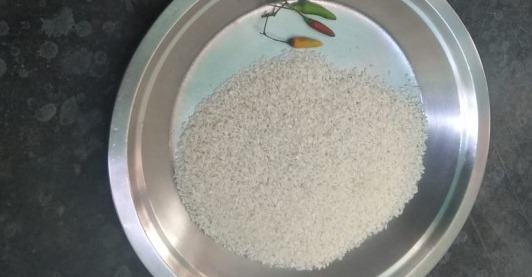
“We have not had anything other than rice and chillies for months. We also skip meals. Everything is so expensive. We have a young daughter whose nutritional needs are getting severely impacted. As a growing person, she should eat well, but unfortunately, it is not happening. I hear on the TV that one needs good immunity to protect themselves against COVID-19. But how will we have immunity if we cannot eat anything good?” says Shabana.


Initially, her family received rice for free from the government, but now they have to buy it at a discounted rate in the market. Data shows that India is facing food inflation of 7.9 percent. In fact, food inflation was an issue much before the COVID-19 pandemic, and the situation has only worsened now.


Families like Shabana’s are forced to compromise on their nutritional intake. While fruits and vegetables have always been luxury items for them, now even daal (lentils) and potatoes fall within that category.


*Name changed to maintain confidentiality.


Rituparna Patgiri teaches sociology in Indraprastha College for Women (IPCW), University of Delhi. Ritwika Patgiri is a PhD student in the Faculty of Economics, South Asian University (SAU), New Delhi. The authors have been conducting research on domestic workers in Assam since August, as part of a research grant from Zubaan Books.


(Source: idr)

Saturday, 13 April 2019

B R Ambedkar said currency should be replaced every 10 years: Prakash

Prakash Ambedkar shared the economic vision of his grandfather whose research at the London School of Economics that evolved in the form of a thesis and, later, into a book 93 years ago explored the problems confronting the nation today.

Dr Bhimrao Ramji Ambedkar was among the first political leaders and unsung economists of the country who had recommended that the Indian currency should be changed every 10 years to tackle the problems of hoarding to black money to inflation. But, he had underlined the need for adopting a flawless methodology to ensure the currency change serves the real objective to nab those dodging the system and help the common man.

In an interview to The Indian Express, Prakash Ambedkar, grandson of B R Ambedkar, shared the economic vision of his grandfather whose research at the London School of Economics that evolved in the form of a thesis and, later, into a book 93 years ago explored the problems confronting the nation today.
Prakash Ambedkar
“It was way back in 1923, Babasaheb (B R Ambedkar) in his book titled ‘Problems of Indian Rupee’ had recommended that the Indian currency should be replaced every 10 years to end the menace of hoarding of rupees and checking inflation,” Prakash said.

While acknowledging that Prime Minister Narendra Modi’s decision to demonetise Rs 1,000 and Rs 500 notes were in accordance with what B R Ambedkar had propounded, he said, “At the outset, the objective for which the action was taken appears to be in consonance with my grandfather’s theory.”

Lamenting that B R Ambedkar remained imprisoned as a Dalit leader, Prakash said, “The great economic insight remained under wraps as a thesis or volumes of books on the shelf. In the last six decades, very little has been talked or studied about Ambedkar’s economic works.”

“B R Ambedkar strongly recommended that the purchasing power of the rupee should be stabilised and that it should be the foremost motto of any nation. The fluctuation in the purchasing power of the rupee leads to devaluation along with increase in inflation, which ultimately affects the common man in the country,” he said.

While the architect of the Indian Constitution had not prescribed a uniform formula to be adopted for the currency replacement, he had underlined the need for circular flow of money in an open economy that would serve the welfare of the poorest sections of the society.

“I am not sure whether the Prime Minister has taken the cue from B R Ambedkar’s economic vision. But what cannot be undermined is that Ambedkar’s economic vision is still relevant not only in the Indian context but also globally,” said Prakash, who also heads the Bharip Bahujan Mahasangh party.

But he added, “The manner in which the currency replacement has been carried out needs to be re-looked. If it has brought the markets to a standstill and impacted a large section of ordinary people, questions are bound to be asked. The government should have replaced the old currency immediately to ensure continuation of monetary transactions without any interruptions.”

Another aspect he pointed out was, there are still large number of people in the unorganised sectors without bank accounts and governments at the Centre and in the state will have to reach out to them to bring them into the mainstream to avail the benefits of economic reforms.

(Source: The Indian Express)

Monday, 8 April 2019

Why India's rich don't give their money away

Indian IT billionaire Azim Premji recently became India's top philanthropist, sealing his place among the world's top givers. But his generosity has put philanthropy in the spotlight in a country where charity does not appear to match wealth. The BBC's Aparna Alluri reports.

With his recent pledge of $7.5bn, Mr Premji's total philanthropic contribution now stands at some 1.45tn rupees ($21bn; £15.8bn). This puts him in the same league of givers - as philanthropists are called - as Bill and Melinda Gates, and Warren Buffet.

What perhaps distinguishes him even more is that, unlike them, he is not one of the world's five richest people - the Bloomberg Billionaires Index ranks him at 51.

Mr Premji is now one of the world's biggest philanthropists
But the philanthropic world was not surprised at his new status.

"This is not unusual for him because he's been the largest contributor in India and, even the continent, for some time," says Deval Sanghavi, co-founder of Dasra, a strategic philanthropy firm. It works with some of the biggest donors in India, directing their money to various causes and non-profits.

In their universe, Mr Premji is a magnanimous "outlier".

The 73-year-old software tycoon has been giving his wealth away for a long time. In 2013, he became the first Indian billionaire to sign the Giving Pledge, an initiative by Mr Gates and Mr Buffet that encourages wealthy individuals to pledge half their fortunes to philanthropy.

(L-R) Bill Gates, Azim Premji , Melinda Gates and Warren
Buffet during a press conference in Delhi
He was just 21 when he dropped out of Stanford University to join Wipro, a company his father started in 1945. (He went back and finished school in 2000). Under him, Wipro, a refinery for vegetable oils, grew into one of India's biggest and most successful IT services firms.

An intensely private man, Mr Premji rarely speaks in public or to the media. Yet, over the years, his unusually modest lifestyle and his generosity have earned him many admirers. Stories about how he still flies economy, or how he has, on occasion, hopped into a rickshaw, impress many in a country that values frugality, especially among the rich.

News of his pledge came in a dry press statement issued by the Azim Premji Foundation and included no personal statement. According to one newspaper, he even asked "what's all the fuss about" when he was told that the pledge was generating headlines and buzz on social media.

Mr Premji is not entirely alone in his generosity. IT billionaires Nandan and Rohini Nilekani have pledged 50% of their wealth to philanthropy; Biocon's Kiran Mazumdar-Shaw committed 75% of hers; and many other families fund hospitals, schools, community kitchens, the arts and scientific research. All of them, like Mr Premji, are pledging their personal wealth, largely earned in their own lifetimes.

The Tata Trusts, endowed by the personal wealth and profits of one of India's biggest and oldest conglomerates, has been India's biggest philanthropic outfit for decades. It is only now rivalled by Mr Premji's foundation, which funds education, healthcare and independent media among other things.

"Premji's grant for the nation matches only what Jamsetji Tata and Dorabji Tata have done from a historical perspective," Amit Chandra, managing director, Bain Capital, told the Economic Times newspaper. Mr Premji's contributions over the past decade, he added, stand out across more than a century of Indian philanthropy - the first Tata trust was set up in 1892.

Mr Premji accounted for 80% of the money given away by ultra-rich donors in India (anyone who has given more than $1.4m) in the 2018 financial year, according to a recent philanthropy report co-authored by Dasra and Bain.

Philanthropy is growing, says Mr Sanghavi, but it's not growing fast enough. Private philanthropy in India grew at a rate of 15% per year between 2014 and 2018.

The Premji Foundation works with government schools like these in northern India
The Dasra report sees this as "particularly problematic" since ultra-rich households have grown at a rate of 12% over the past five years and are expected to double in both volume and wealth by 2022.

Compared to the percentage of net worth given away in the US every year, the report estimates that India's rich could give $5bn to $8bn more each year.

What is stopping them?
"There is a great fear of the taxman," says Ingrid Srinath, director of the Centre for Social Impact and Philanthropy at Delhi's Ashoka University.

"They [the rich] don't want to end up on any radar or become the subject of more appeals for money."

She believes another reason could be that wealth in India is still only one generation old, and those who have it don't feel secure enough to give it away.

But Ms Srinath also cautions against wholly relying on the data as it is incomplete, making it "hard to say anything definitive about philanthropy in India".

IT billionaire Nandan Nilekani has pledged half of his wealth
There is no centralised directory tracking philanthropy in India. Tax laws are complex and there aren't many incentives for giving. So reports, such as the one by Dasra, rely on multiple sources, from the government to third-party trackers to individual declarations.

And many people give anonymously, which further complicates estimates of philanthropy.

"It's not considered cool to talk about how much you are giving," Ms Srinath says. Ashoka University, she adds, was partly funded by some 100 donors, each of whom gave more than $1.4m but refused to be acknowledged publicly.

But Anant Bhagwati, one of the authors of the Dasra report, says that no matter how weak the data collection, large pledges are unlikely to fall through the cracks.

"If you look at those who have the money, they are not giving it," he says.

Ms Srinath agrees: "The overwhelming sentiment is that we [Indians] could do better."

Charity vs philanthropy
Mr Bhagwati doesn't discount donors who fund individual universities or hospitals, but what Indian philanthropy needs, he says, is people who commit to solving a problem. And not just any problem - preferably, one of the daunting sustainable development goals or SDGs. These range from ending poverty and hunger to giving people access to clean energy.

Strategic philanthropy - which Dasra advocates - makes a distinction between charity and philanthropy. While the former might involve feeding the poor on a single day, the latter would require investing in non-profits that work to decrease or end hunger altogether.

By this measure, rich Indians might be charitable, but not enough of them are philanthropists.

More importantly, Mr Bhagwati says, philanthropy needs donors who will invest in the fight itself. By this he means pledges that don't specify how the money is to be spent.

So, for instance, a non-profit that works to improve sanitation could use donor funds to build toilets, hire more people or even buy a laptop or other equipment that might make them more efficient. But most donors, Mr Bhagwati says, will set conditions about how they want the money spent. In other words, they will insist on the toilets being built.

He calls this "restricted giving" and says it's hard to coax people to give any other way.

But some of this is changing. "Earlier you gave as much as you could and hoped something came of it," Ms Srinath says, adding that earlier, most people wanted to fund education.

"Education is to Indian philanthropy what cricket is to Indian sport," she says, laughing.

But now, she adds, Indian philanthropy is finally diversifying into areas beyond education - sanitation, mental health and scientific research.

Ms Mazumdar-Shaw has pledged 75% of her wealth for philanthropy
The biggest challenge has been the gap between what Mr Sanghavi calls "action and intent". Some billionaires are just more willing to give their wealth away than others.

He says he has heard several Indian philanthropists, including the Nilekanis, speak of how they see themselves as "trustees" of their wealth, which, according to them, rightfully belongs to the larger community. That is, they believe they owe the world their wealth.

In a note explaining his decision to sign the Giving Pledge, Mr Premji said his mother was the "most significant influence" in his life and that he was also "deeply influenced by Gandhi's notion of holding one's wealth in trusteeship".

Ms Srinath says philanthropists could be influenced by many things, from parents to community to faith. But generosity as a trait, she adds, is inexorably linked to a way of seeing the world and your role in it.

"It certainly has nothing to do with how much money you have."

(Source: BBC)

Sunday, 1 July 2018

Indian funds in Swiss banks rise by 50%, Pakistan's falls by 21%

Indians have reasserted their love for Swiss banks. Despite NDA government's tall claims of taking decisive action against parallel economy, the money parked by Indians in Swiss banks rose by over 50% to Rs 7,000 crore in 2017.

This reverses a three-year downward trend which the Centre has been presenting as a result of its vigorous clampdown on suspected black money stashed abroad.

The Indian case stands out. As against the 50 per cent rise in funds from India, the total funds held by all foreign clients of Swiss banks rose by just 3 per cent to Rs 100 lakh crore in 2017.

Interestingly, while the money stashed by Indians in Swiss banks rose, its neighbour Pakistan's fell by over 21 per cent to a record low of Rs 7,700 crore. However, Pakistani nationals still have more money stashed in Swiss bank than Indians.

This could well be a setback for BJP government's attempt to keep black money under check.

Swiss banks are most preferred by Indians. This was revealed by the official annual data released on June 28 by Swiss National Bank (SNB) - the central banking authority of Switzerland.


A retired senior finance ministry official, who was a part the note ban exercise and signing of treaties for flow of information to India from tax havens said, "I am surprised. This can happen only if the number of people who have honest money have started depositing overseas using the liberalised rules by RBI, or this can be a case of misuse by people who are desperate."

A finance ministry official said, "I-T department has information about this. Its teams are scrutinising the data which is flowing over a period. Right now, the ministry can't say how much of this is black money or how much of it is accounted for."

In 2016, deposits by Indians had fallen by 25 per cent. The drop was marking the biggest ever annual plunge to approximately Rs 4,500 crore.

The SNB data shows that funds held directly by Indians in 2017 rose to Rs 6,891 crore. Of this, Rs 3200 crore was in the form of customer deposits, Rs 1050 crore through other banks and Rs 2640 crore A's "other liabilities including securities. Nearly Rs 112 crore was held through fiduciaries or fund managers.

What's alarming officials is the fact that the funds under all categories barring fiduciaries has gone up exponentially reversing trends for the last three years.

No official agreed to comment on the SNB data or queries raised by the Opposition.

If deposits in Swiss banks have witnessed a huge rise then what about the tax havens where information is difficult to access due to client protection rules?

The latest data from Zurich-based SNB came a few months after the new framework was put in place to deliver automatic exchange of information between Switzerland and India to check black money.

Switzerland has shed its past reluctance of sharing client details on evidence of misappropriation or illegality provided by the Indian government.

(Source: India Today)

Friday, 29 June 2018

Hoax 'devil coins' found in Bath Abbey

Fake currency was used in elaborate satanic hoax in Scandinavia in 1970s

Two “devil coins” that were hidden in Scandinavian churches as part of an elaborate hoax in the 1970s have been discovered in the unlikely setting of Bath Abbey.

Dusty odds and ends, including an order of service from 1902, were found in the abbey when stalls were removed for restoration work.

The most intriguing discovery, however, was two coins bearing a picture of Satan and the legend Civitas Diaboli on one side and 13 Maj Anholt 1973 on the other.

Experts figured out the coins were linked to the story of a Danish eccentric who perpetrated an elaborate 40-year hoax that was only discovered almost a decade after his death.

The date on the coins refers to an episode that took place on the island of Anholt, between Denmark and Sweden, in May 1973.

 The ‘devil coins’ were found when stalls were removed for restoration work in the abbey. Photograph: Wessex Archaeology
Thirteen “ritual sites” were discovered by residents that prompted an investigation by police from the Danish mainland.

Police puzzled over the meaning of the sites, where items included strange masks, weird stone formations, bones wrapped in string, black candles and a (fake) shrunken head on a stake. The story was picked up by the Danish national media and salacious stories of satanic cults on Anholt abounded.

Coins like those found at Bath Abbey began to be discovered in churches and museums across Denmark. Some were accompanied by letters claiming to be from a satanic high priestess named Alice Mandragora.

In 2013, the Danish newspaper Politiken ran a six-part investigation into the coin phenomenon, revealing that the Anholt mystery was a hoax perpetrated by Knud Langkow, an office clerk at the National Gallery of Denmark who died in 2004, aged 73.

His niece Lene Langkow Saaek told the newspaper he was not a satanist and the hoax was just his sense of humour. “I think normality annoyed him,” she said. ‘He did not like ordinary.”

Some coins may have been minted by Langkow but others are thought to have been created by independent experts who were in on the joke.

Bath’s Anholt coins are in the care of Wessex Archaeology and will be included in the final site archive, alongside artefacts dating from the Roman through to the modern period.

Bruce Eaton, the project manager, said historians and archeologists were used to written artefacts telling an untrue story, but not physical ones.

“As archaeologists we set great store by the integrity of the physical objects we recover. To discover finds that are a fabrication, designed to mislead, is both fascinating and a timely reminder that we should always view any discovery with a critical eye.”

(Source: The Guardian)

Wednesday, 20 June 2018

Mice chew up cash worth Rs 12 lakh in Assam ATM

In a bizarre incident, mice chewed away cash amounting to Rs 12.38 lakh from inside an automatic teller machine (ATM) in Assam's Tinsukia Laipuli area.

Currency totalling Rs 29.48 lakh was deposited inside the ATM by a private security company on May 19, after which the machine had gone out of service on May 20, as quoted by a local newspaper.

Subsequently, on June 11, the company had re-opened the ATM only to realise that the whole sum of Rs 12.38 lakh has been shredded to pieces by mice.

Rs 500 and Rs 2000 currency notes shredded into tiny pieces.
Most notes were in the denomination of Rs 500 and Rs 2000.

The heap of money is suspected to have been shredded by mice that managed to enter the machine.

An FIR has been lodged with Tinsukia police and investigation into the matter is in process.

(Source: India Today)

Friday, 19 January 2018

All 14 types of Rs 10 coin valid, legal tender: RBI

RBI has also asked banks to accept coins for transactions and exchange at all their branches.

All the 14 designs of Rs 10 coin are valid and legal tender for transactions, the Reserve Bank said today amid reluctance by certain traders to accept the coins.

"It has come to the notice of the Reserve Bank that in certain places there is reluctance on part of traders and members of public to accept Rs 10 coins due to suspicion about their genuineness," the RBI said while reiterating legal tender status of the coins of different designs.

In a statement, the central bank clarified that it puts into circulation the coins minted by government mints. These coins, it further said, have distinctive features to reflect various themes of economic, social and cultural values and are introduced from time to time.

"So far the Reserve Bank has issued Rs 10 coin in 14 designs... All these coins are legal tender and can be accepted for transactions," the RBI said.

It has also asked banks to accept coins for transactions and exchange at all their branches. 

(Source: DC)

Saturday, 6 January 2018

Mark Twain’s get-rich-quick schemes

“Like most of us, Mark Twain hated writing checks to other people. But there were times when he happily paid out large sums. Issuing a check for $200,000 drawn on the United States Bank of New York on February 27, 1886, for example, made him almost giddy," writes Alan Pell Crawford, the author of Twilight at Monticello and Unwise Passions. Below is an excerpt from his book How Not to Get Rich: The Financial Misadventures of Mark Twain:

Like most of us, Mark Twain hated writing checks to other people. But there were times when he happily paid out large sums. Issuing a check for $200,000 drawn on the United States Bank of New York on February 27, 1886, for example, made him almost giddy. The check was made out to Julia Dent Grant, the widow of Ulysses S. Grant, the former president of the United States and commanding general of the Union Army, who had died of cancer the summer before, just after completing his remembrances of the Civil War. That payment represented the first profits from sales of volume one of the Personal Memoirs of Ulysses S. Grant, published only a few months earlier by Charles L. Webster and Company, a start-up publishing house Twain had established two years before. He had installed a nephew, Charles “Charley” Webster, as its business manager. Webster got his name on the letterhead and a salary, but that’s about all he got out of the position, besides aggravation. Twain made all the business and financial decisions, except when he didn’t feel like it.

Twain would have been pleased to have published Grant’s memoir even if it had not broken all American publishing records for sheer profitability. Just landing the contract had required Twain to persuade General Grant to break a handshake deal with another publisher. The other publisher had offered Grant a 10 percent royalty. Twain countered by offering a royalty share unheard of then, or since: 75 percent. The other publisher offered no advance against royalties. Twain said he would pay $25,000 upfront.


This was a bold gamble—some might say a reckless investment—but it paid off. At that time, the $200,000 royalty check to Grant’s widow was the largest ever paid by an American publisher. In the months to come, Webster and Company wrote additional royalty checks to Grant’s family, bringing their earnings to $450,000, which again broke publishing records. Twain himself pocketed $200,000 for Grant’s memoirs. In our own time, that’s about $11,000,000 for Grant’s widow and $4,800,000 for Twain.

This sounds like a lot of money—and it was. Back then, a coal miner made $1.50 a day and paid $6 a month to rent a house for his wife and five children. The family’s annual food bill was $80 a month, a pound of butter cost 35 cents and a dozen eggs, 40 cents. For the urban sophisticate, a man’s suit cost $4.85, a piano could be bought for $125, and a three-bedroom apartment in Manhattan rented for $80 a month.

*

By the age of fifty, Mark Twain had achieved something he had dreamed of and worked for his entire life: he was rich. Raised in genteel poverty in small towns in Missouri (when Missouri was still the West), Twain as a grown man, had rubbed elbows with the greatest business tycoons of the time. As the author of The Innocents Abroad, Roughing It, Life on the Mississippi, The Adventures of Tom Sawyer, and The Adventures of Huckleberry Finn, he had seen the world, or much of it. Russian princes and English lords fawned over him. Hundreds of thousands of people bought his books and lined up to hear him speak. With his earnings—and his wife’s inheritance—he had built a startlingly opulent, twenty-five-room mansion in high-toned Hartford, Connecticut. Justin Kaplan, the author of Mr. Clemens and Mark Twain, called the house “part steamboat, part medieval stronghold, and part cuckoo clock.”

And now, as head of his own publishing firm, making money for other authors, he felt like a great philanthropist. He could see himself as one of the true benefactors of the age. And it was an age he had named when he chose the title of one of his own best sellers: The Gilded Age.

*

Mark Twain was born Samuel Langhorne Clemens on November 30, 1835. For the purposes of this book, he is Mark Twain, not Samuel Clemens—and that’s final. Twain’s place of birth was Florida, Missouri, which contained a hundred people at that time. By being born there, he recalled,

I increased the population by 1 percent. It is more than many of the best men in history could have done for a town. It may not be modest in me to refer to this but it is true. There is no record of a person doing as much—not even Shakespeare. But I did it for Florida and it shows that I could have done it for any place—even London, I suppose.

In the interest of scholarly thoroughness, it should also be pointed out that Twain never did anything else for his hometown. Today, Twain tourists go instead to Hannibal, where he grew up. As of the 2000 census, there were only nine people living in Florida, Missouri. By 2010, the village was officially uninhabited, so even if any tourists did show up, there would be no one to greet them.

Perhaps more significant than where Twain was born is when. In Outliers, Malcolm Gladwell discovered that of the seventy-five richest people in human history, fourteen were Americans born within nine years of one another. John D. Rockefeller, the richest ever, was born in 1839. Andrew Carnegie (second richest) was born in 1835, and so on down the line, through J. P. Morgan (fifty-seventh) and Jay Gould (thirty-third) and all the others. What’s going on here? Gladwell asks.

Then he tells us:

The answer becomes obvious, if you think about it. In the 1860s and 1870s, the American economy went through perhaps the greatest transformation in its history. This was when the railroads were being built and Wall Street emerged. It was when industrial manufacturing started in earnest. It was when all the rules by which the traditional economy had functioned were broken and remade.

What Gladwell’s list of rich men and their birth dates says is, “It really matters how old you were when that transformation happened.” And Twain and Rockefeller, et al., were all in their twenties and thirties when it took place. (So, of course, were untold millions of people who were born just when Gladwell recommends but died poor anyway.)

The sociologist C. Wright Mills observed much the same phenomenon decades before Gladwell and came to this conclusion: “The best time during the history of the United States for the poor boy ambitious for high business success to have been born was around the year 1835.” And Twain wasn’t born “around the year 1835,” but during it—a strategic decision of the utmost significance, suggesting an alert and eager business mind operating even in utero.

*
From the cover of How Not to get rich 
Unfortunately, Twain was not so astute in his choice of parents. His father was John Marshall Clemens, an upright and humorless man, a Virginian by birth and, by occupation, a failed storekeeper, failed boardinghouse operator, and failed lawyer. These Clemenses claimed descent from Geoffrey Clement, who in 1649 was one of the judges who sentenced Charles I to die by beheading. Twain’s mother, the former Jane Lampton of Kentucky, was a pious though lighthearted woman whose family also talked of an illustrious British ancestry. Though American by birth, one of Jane Lampton Clemens’s nephews called himself the rightful earl of Durham.

If there was gentility in Mark Twain’s background, it was of the shabby kind, at least by the time he came along. Neither of his parents brought “an over-surplus of property” into the marriage; his mother’s dowry consisted of “two or three Negroes but nothing else.” They were a slaveholding family, with a household servant or two. What the servants actually did is hard to figure. After John Clemens died in 1847, the family lived above a drugstore. Twain’s mother cooked for the druggist’s family and did their laundry. “Money is better than poverty,” Woody Allen once said, “if only for financial reasons.” Twain knew this from childhood.

The Clemens family lived in Tennessee before moving to Missouri, and it was there that their dubious patriarch made a momentous financial decision. John Clemens would become a land speculator. Resigned to the likelihood that he would never earn much money, he determined to provide for his family after his death by acquiring vast holdings in real estate. From 1826 through 1841, he bought twenty tracts in rural Fentress County, Tennessee, totaling between 35,000 and 75,000 acres. John Clemens claimed they owned 100,000 acres. Historians disagree on the precise number, which isn’t surprising since the family itself never seemed sure. He spent about $400 for the land—maybe $11,000 today—and died telling his survivors to hang on to the property until the time was right. Resist the temptation to sell it to the first bidder. If they would only be patient, they would be rich, as any fool could see.

“Whatever befalls me, my heirs are secure,” John Clemens said. “I shall not live to see those acres turn to silver and gold but my children will.” Besides the mineral wealth under the ground, there were “grazing lands, corn lands, wheat lands, potato lands, there are all species of timber—there is everything on this great tract of land that can make land valuable.”

These were boom times in America when Mark Twain’s father bought the Tennessee land. This period of economic expansion that was unleashed by laissez-faire capitalism, in the words of John Maynard Keynes, constituted “the magnificent episode of the nineteenth century.” The federal government offered for sale 28 million acres of public lands, leading to enthusiastic real estate speculation. More than a quarter of the population now lived west of the Appalachians. The way people and goods moved was changing. By 1840, locomotives owned by 300 railroad companies were rattling along 3,300 miles of iron rails. Steamboats, which plied the waters of the Great Lakes, would soon connect north and south on the Mississippi.

Alexis de Tocqueville marveled at “the phenomenal release of initiative and energy” in the men and women of John Clemens’s time. A historian with the wonderful name Garet Garrett called it “the breathless generation.” Henry Adams said, “the continent lay before [Americans] like an uncovered ore-bed.” Technological advances stimulated economic development on scores of fronts. There was Cyrus McCormick’s reaper, John Deere’s steel plow, Samuel Morse’s telegraph, and Josephine Houghton’s hand-cranked dishwashing machine. (Josephine Houghton was a Shelbyville, Illinois, housewife inducted into the National Inventors Hall of Fame in 2006. Unfortunately, this was too late to do her much good, considering that she died in 1913.)

The same iron industry that turned out thousands of miles of rails was producing everyday items vital to settling the west—knives, axes, and plows. It also turned out thousands of revolvers, useful for cowboys shooting each other and for settlers trying to persuade Indians to abandon tribal lands that these newcomers wished to inhabit. This population boom, John Clemens said, “will henceforth increase faster than ever. My children will see the day that immigration will push its way to Fentress County, Tennessee, and then, with 100,000 acres of excellent land in their hands, they will become fabulously wealthy.”

This tantalizing prospect of great wealth bedeviled Mark Twain for much of his life. It spurred him on as few other things did. All truly ambitious people can point to something like this in their lives, and they can be resentful of it but grateful, too. “We were always going to be rich—next year,” Twain recalled. “It’s good to begin life poor; it is good to begin life rich—these are wholesome, but to begin it poor and prospectively rich! The man who has not experienced it cannot imagine the curse of it!”

And few with such a curse upon them ever appreciate how motivating it can be.

*

Mark Twain’s family was poor but possessed lively imaginations. They strained to burst out of their limited financial circumstances. Twain’s father put his hope in the Tennessee land, but that was not all. He also fancied himself an inventor, trying to produce a perpetual-motion machine. Twain’s older brother Orion (pronounced ORE-ee-on) spent long hours at work on a flying machine.

Although intelligent and hard-working, Orion “inherited his father’s aptitude for failure,” according to R. Kent Rasmussen, a Twain scholar. When their father died, Orion became the de facto head of the family, responsible for the Tennessee real estate investment and providing for the family day to day. To that end, he owned and edited the Hannibal Western Union newspaper, where Mark Twain was employed as a “printer’s devil,” setting type—if employed is the right word since he worked without pay.

Twain had other jobs in Hannibal and seems to have been fired from all of them. He worked in a grocery store, in a tannery, and in a blacksmith shop. He worked at an apothecary, though “my prescriptions were unlucky, and we appeared to sell more stomach pumps than soda water.” He worked in a bookstore, but that didn’t work out either, because “customers bothered me so much I could not read with any comfort.” Eventually Orion took him on in the newspaper’s print shop. In time, Twain did get paid, and it was in the Hannibal Western Union that his first literary efforts were published.

Only in retrospect does the appearance of Twain’s first writings seem like a historic occasion. He never viewed them as such, because he was not aware, then or for years to come, of any great literary calling. Self-styled “thought leaders” who say great success depends on finding one’s passion in life and pursuing it like a honey badger with a really nasty disposition will find little support in these pages. Twain’s passion wasn’t to work in a print shop, pilot riverboats, write for newspapers, or even—as he would do in his twenties—prospect for gold and silver out West. Twain’s goal was to make money and then make even more money. Writing books was just a means to an end, and in 1886, when he wrote that check for $200,000 to General Grant’s widow, he was well on his way to realizing his dream.

And now that he was amassing his fortune, he could accomplish even more. Because he was a successful publisher, he could stop writing altogether and make money off other authors’ books. He could invest in other businesses as well. He could be what we’d call an “angel investor” or venture capitalist. He could even turn his attention to his own inventions, as his luckless father and brother had tried to do with theirs, but he lacked the aptitude, connections, and financial wherewithal to make them succeed.

Twain felt there was almost nothing he could not accomplish, as he admitted to a friend just months before his first payments to Grant’s widow. “I am frightened by the proportions of my prosperity,” he said. “It seems to me that whatever I touch turns to gold.”

(Source: The Paris Review)
Tuesday, 12 December 2017

Why earning more means caring less

Science is conclusive: the richer you are the less compassionate you're likely to be, writes Jessica Stillman in Inc.com. Read on: 

Both because it's the season of giving and because it's, apparently, also the season for frantic but far-reaching tax overhauls, I've been thinking about greed and empathy lately. How much wealth should we accumulate and how much should we give away? How do we balance compassion for those less fortunate with justly rewarding innovation, risk, and talent?

If you're looking for definitive answers to these questions, look elsewhere (and good luck to you). But in the course of thinking about these things, I stumbled on one interesting truth. My answers to these questions are almost certainly affected by my bank balance.

Wealth, science has shown, may increase our ability to give to others but it also tends to decrease our desire to do so. Or, to put it more bluntly, being rich is an empathy killer.

How money kills compassion
This isn't the ranting of some (insert your least favorite political persuasion here). This is hard science verified by multiple studies.

Luxury car drivers are more likely to cut off other drivers and ignore pedestrians entering crosswalks. Poorer people tell researchers they think about others' suffering more often. When shown a video of kids with cancer, wealthier people physically react less. Wealthier and more powerful people are worse at reading emotions in other people's faces. Even thinking about your own wealth (however small or great it may be) has been shown to make you less willing to share candy with children (I am not making this up - here it all is laid out by Scientific American.)

And it's not simply that hard hearted people tend to become wealthy. Researchers believe that becoming wealthier actually makes you less empathetic. "Wealth and abundance give us a sense of freedom and independence from others. The less we have to rely on others, the less we may care about their feelings. This leads us towards being more self-focused," explains the same Scientific American article.


A season for self-reflection
Unless you own a yacht or two, the easiest knee jerk reaction to all this science is outrage. It's satisfying to shake your (metaphorical) fist in anger at those greedy rich people, mutter 'I suspected as much' and feel superior for your own commitment to caring for your fellow man.

But the fact is, if you take home more than $34,000 a year (or possibly a bit more depending on which expert you ask), you are among the top one percent globally. After all, around the world about three billion people make ends meet on less than $2 a day. Most Americans, by comparison, are rich, even if they really, really don't feel like it, surrounded as they are by way richer people and facing sky high cost of living.

So perhaps the better and more seasonally appropriate response to these studies isn't just outrage (though a little of that might not be entirely inappropriate); it's self reflection. What suffering has your relative comfort blinded you to? And have you struck the right balance between looking out for your own and remaining open to the worries, experiences, and joys of other people?

It's a hard question that people have wrestled with for millennia, but this science is a healthy if bracing reminder that if you don't continually revisit the issue, as you gain more wealth and success, you're likely to drift away from empathy.

Saturday, 9 December 2017

Modi government's FRDI bill may take away all your hard-earned money

Here's how the Financial Resolution and Deposit Insurance Bill may help the banks take away all your hard-earned money. Without your consent!

Financial Resolution and Deposit Insurance Bill, 2017 is the new bomb that may be dropped on commoners by the Modi government.

What is this bill all about and how is it going to affect you?
In June 2017, the Central government approved the FRDI Bill which is intended to frame new rules for banks that are failing. It has created panic among savings account holders.

According to the Bill, if a bank is failing, may be allowed to use depositors' money to stay afloat. What this means is that the bank can reduce its liability of paying its depositors, that is you, by either locking your money for a longer time or asking you to take a hit on your deposits.

Currently, your deposit in the bank is insured up to a specified limit.According to the 1961 Deposit Insurance and Credit Guarantee Corporation Act, up to Rs 1 lakh of your money deposited in a bank is insured if a bank were to fail.

In practice, however, the Reserve Bank has ensured that this never happens. Failing, or weak banks, have been merged or allowed to be taken over by healthier banks including their liabilities.

But the proposed banking reforms bill will change that. That, some say, will give government banks, private banks and insurance agencies more power over your money.

FYI | What is a bail-in?
The Bill provides for "bail-in" powers to banks. A rescuing body known as Resolution Corporation has been proposed under the Bill which can use your money in case the bank sinks.This is different from a traditional bailout in which government's money helps bank tide over the crisis.

In case of a bail-in, it is the bank's own deposits (that is your money) that is used to rescue the bank or reduce its liabilities.


WHY IS IT IMPORTANT?
When you deposit money in a bank or invest in fixed deposits, you trust the bank with keeping your money safe, forever. Even a remote possibility of you having to lose it all or even part of it for no fault of yours is disturbing.

We take you through 10 steps which will help you understand the Bill:
TAKE A LOOK:


  • Under Section 52 of the FRDI Bill, the rescue body can cancel even the Rs 1 lakh insurance that you get under the current law. In this case, a bank can even declare that they don't owe you any money at all.
  • The same Section provides an option to the rescue body to modify a bank's liability. For example, if you deposit a certain amount of money for a certain period of time as savings (say, 5 or 10 years), the bank can keep the money in a locked-in period (in a FD) and change the time period without consulting you.
  • According to the bill, the bank may be exempted to fulfill its promises to depositors in extreme cases. This means you lose all your money.
  • This can happen in case of an economic downturn, when banks (who provide money to large corporations who are unable to repay the amount) ask for a bail-in option.
  • The bank may turn your savings into a fixed deposit without asking you and that too at a lower interest rate and you cannot even challenge it, unless, you challenge the law.

This is the first time that a Bill of this sort has been proposed in India. However, it has happened before in a few countries. A Deccan Chronicle report said a bail-in provision was used in Bank of Cyprus in 2013 which led to a loss of money of half of its depositors who were uninsured (the people who had deposited money over a certain limit).

It is going to challenge the rights of a commoner as ideally, the government should look for money held by big corporations in case of a bail-in but, that won't be the case once this Bill is passed.
It would not be an exaggeration to say that if this Bill is passed in the Parliament, the depositors' rights may go down the drain, that is if the bank is going down the drain.

Update: Finance Minister Arun Jaitley reiterates government's stance on the FRDI Bill saying it is still pending before the standing committee and that government's objective is to fully protect the interest of the financial institutions and depositors.

(Source: India Today)

Wednesday, 4 October 2017

Why does money never change hands in Japan?

Dear Alice,

I am very curious about those small trays that are used in Japan when settling daily cash transactions. Instead of handing your payment to the clerk, or setting it on the counter by the cash register, here you are generally expected to put your payment into a tray that is presented expressly for the purpose. The clerk takes it away and returns it with your change. In restaurants, the check is often delivered on a rectangular tray made of leather, while in banks and post offices, the trays are usually plastic. So, what the heck are these trays called? And what is their origin and purpose?

Bernard T., Tokyo

Dear Bernard,

I have to say, I had a lot of fun with this question, mostly because it took so many people by surprise. Pretty much everywhere I posed it, I got responses like, “Ehh, nandarō!?” (“Gee, what are they called?”). Or, “Shojikina tokoro, kangaeta koto wa nai.” (“To be honest, I’ve never given them any thought.”) People seem to pay into the trays every day, yet never pay them a second thought.

I started my research at the Currency Museum in Tokyo, figuring that an institution devoted to the study of money was sure to have to have a ready answer. But much to my surprise, and despite the fact that the trays are in use in virtually every bank in Japan, the museum doesn’t have a single example in its collection. Nor does it have documents referring to them.

“It’s an interesting question,” the curator I spoke to allowed, “but I’m not aware of any records on the subject.” He suggested I inquire across the street at the museum’s parent organization, the Bank of Japan.

I was pretty sure the venerable BOJ had more important matters to attend to, but I gave it a try. A public-relations officer kindly agreed to look into the question, but two days later, after what sounded like an exhaustive search, he called back with apologies.

“I’m afraid we have no information at all,” he said. “This is a piece of banking history that seems to have slipped through the cracks.”

Although no one pays much attention to these trays, they carry a veritable payload of names, as I learned by consulting the professional-supply shops that sell them. Tsurisen torei (change tray) is one common moniker. Kaikei-bon (settlement tray) is another. Some suppliers sell them simply as koin torei (coin tray). But the name that really surprised me is karuton, which comes from the French word “carton.” (In French, “carton” originally referred to the pasteboard used for making paper boxes, but was later extended to refer to the boxes themselves, as well as other objects made from pasteboard.)

Fortunately, this discovery gave me a new angle to work on. First, I consulted dictionaries to see when the word “karuton” entered the Japanese language, hoping this would give me a clue as to when the trays themselves were adopted. The earliest reference I found was in a tome titled “Atarashii Kotoba no Jibiki” (“A Dictionary of New Words”), published in 1918. The entry, which I’ll translate, reads: “A round tray into which merchants put change. Recently, a type has become available with rubber on the bottom so coins won’t jangle around.”


So now I knew for certain that these little trays were in use for almost a hundred years ago. But was it possible their use was a much older custom? Not likely, according to Yuji Tanaka, a curator at the Edo-Tokyo Open Air Architectural Museum.

“During most of the Edo Period (1603-1868), only the lowest order of itinerant merchants took payment immediately,” Tanaka explained. “Virtually all other merchants did business on credit.”

Typically, shopkeepers would make collections twice a year — during the o-Bon season in the summer and again at the end of the year. Clients would hand over their payment wrapped and in paper, and it would have been unseemly for the merchant to open the package in front of the client to confirm the amount was correct. There was no custom of making change.

But in the early 18th century, a shop called Echigoya, which later evolved into today’s Mitsukoshi Department Store, introduced fixed pricing in exchange for payment on the spot. Trumpeted under the slogan “Genkin kakene nashi” (“Cash sales, no bargaining!”), the idea proved popular with customers but, even so, the competition continued to work on credit.

Many decades later, the same company experimented with keeping goods constantly on display, which was a radical departure from the usual sales method of za-uri (seated sales), in which a customer would sit at the front of the shop and the merchant would bring goods out of a store room one by one for the customer to examine. By 1900, the company had switched all its branches over to cash sales of goods on display, and gradually other merchants followed suit. Cash transactions became more common. Tanaka surmised that change trays were adopted sometime after these changes in the market, but couldn’t say precisely when or by whom.

I decided to set history aside and focus on the reasons the trays are so widely used. The cashiers I interviewed all agreed that the trays are convenient because there’s less risk that someone will drop a coin and set off a scramble to retrieve it. The trays also make it possible to spread out the bills and coins so customers can see at a glance that they’ve been given the correct change. And as one shopkeeper explained it, offering change in a tray feels more polite than simply placing money in a customer’s hand. “Japanese prefer not to touch other people’s hands and the tray creates desirable distance,” he commented. “So you could say that using a tray is an expression of reserve as well as an extension of good customer service.”

(Source: Japan Times)

Tuesday, 19 September 2017

SBI collects Rs 235 crore in minimum balance fine in 1st quarter

SBI has realised Rs 235.06 crore as penalty from 388.74 lakh accounts for not maintaining monthly average balance in the 1st quarter of the current fiscal, an RTI query has revealed.

State Bank of India (SBI) has realised Rs235.06 crore as penalty from 388.74 lakh accounts for not maintaining monthly average balance in the first quarter of the current fiscal, an RTI query has revealed.

“An amount of Rs235.06 crore has been realised from our 388.74 lakh accounts which did not maintain monthly average balance in the first quarter ended 30 June,” SBI said in its reply to an application filed by Neemuch-based RTI activist Chandrashekhar Gaud.

The RTI activist said the bank has not revealed the categories of accounts on which the fine has been levied for non-compliance with its minimum balance requirements. Photo: Pradeep Gaur/Mint
This information was furnished by a Mumbai-based deputy general manager rank officer of the bank’s operations department, he said.

However, the country’s top bank has not revealed the categories of accounts on which the fine has been levied for non-compliance with its minimum balance requirements, the activist said.

Gaud appealed to the state-run lender to review its policy of levying penalty for non-compliance with its minimum balance requirements in the interest of the poor account holders.

(Source: Live Mint)

Thursday, 3 August 2017

Most people in the world have no idea how to manage their money

Many couldn't pass a simple finance quiz. Can you?

Do you understand money? Let’s see how well you do with the following questions.

1.  Suppose you had $100 in a savings account and the interest rate was 2 percent per year. After five years, how much do you think you would have in the account if you left the money to grow? A) more than $102; B) exactly $102; C) less than $102; D) do not know; refuse to answer.

2.  Imagine that the interest rate on your savings account is 1 percent per year and inflation is 2 percent per year. After one year, would you be able to buy A) more than, B) exactly the same as, or C) less than today with the money in this account?; D) do not know; refuse to answer.

3.  Do you think that the following statement is true or false? “Buying a single company stock usually provides a safer return than a stock mutual fund.” A) true; B) false; C) do not know; refuse to answer.

The correct answers are 1-A; 2-C; and 3-B.

How did you do? Did you respond correctly to all three questions? If you did, then you belong to a surprisingly small global minority.

In Russia, 96 percent of those surveyed could not answer the three questions correctly. While that might be expected of a post-communist nation, the mecca of capitalism didn’t exactly yield glowing results—only 30 percent of Americans aced the quiz. The best-performing respondents were the Germans (53 percent got a perfect score) and the Swiss (50 percent), but this still leaves almost half of each country’s population without a basic understanding of financial matters. In countries with relatively strong economies, the numbers are sobering: 79 percent of Swedes, 75 percent of Italians, 73 percent of Japanese, and 69 percent of French could not respond correctly to all three questions.

A fast-changing world economy makes financial ignorance more dangerous than ever before.
These findings were recently published by two economists, Annamaria Lusardi and Olivia Mitchell, and the results reveal startling levels of financial illiteracy across the world. They call attention to a perilous paradox: Financial ignorance is widespread even as the world has changed in ways that make such ignorance more dangerous than ever before. They write, "Financial markets around the world have become increasingly accessible to the ‘small investor,’ as new products and financial services grow widespread. At the onset of the recent financial crisis, consumer credit and mortgage borrowing had burgeoned. People who had credit cards or subprime mortgages were in the historically unusual position of being able to decide how much they wanted to borrow. Alternative financial services including payday loans, pawn shops, auto title loans, tax refund loans, and rent-to-own shops have also become widespread. At the same time, changes in the pension landscape are increasingly thrusting responsibility for saving, investing, and decumulating wealth onto workers and retirees…. [Today], Baby Boomers mainly have defined contribution (DC) plans and Individual Retirement Accounts (IRAs) during their working years. This trend toward disintermediation is increasingly requiring people to decide how much to save and where to invest and, during retirement, to take on responsibility for careful decumulation so as not to outlive their assets while meeting their needs."

The heightened danger of financial ignorance underlies all these transactions—and more. For a large and fast-growing number of people, personal bankruptcy is just one bad decision away.  This threat will become more critical as the global middle class continues to expand. The newfound prosperity of millions of families in the developing world could be shattered if they mismanage expenses, acquire large and expensive debts, fail to adequately protect their savings, or don’t know how to identify a tempting but catastrophically risky investment. The truth is, these problems are everywhere, and all countries stand to benefit from programs that encourage greater consumer knowledge. Lusardi and Mitchell found that providing financial knowledge to people with low levels of formal education boosts their economic situation by an amount equivalent to 82 percent of their initial wealth, while the equivalent value for college graduates is a substantial 56 percent.


For a large number of people, personal bankruptcy is just one bad decision away.
Good news, right? On the basis of these results, one might presume that demand for financial education is very strong. It is not. And that’s mostly because people are prone to overestimate how much they know about money. Asked to rank their financial knowledge on a scale of 1 (very low) to 7 (very high), 70 percent of the Americans surveyed by Lusardi and Mitchell ranked themselves at level 4 or higher. Yet only 30 percent of them got all three questions in the finance quiz right. The same pattern was apparent in Germany and the Netherlands.

The research also found that women, the poor, and the elderly are the groups with the lowest levels of financial literacy. Ironically for the elderly, confidence in one’s money-managing prowess seems to grow with age, widening the gap between perceived and actual knowledge. Men seem to better grasp the subject than women, independent of age and education, but women—to their credit—are more aware of their shortcomings. While men outperformed women on the finance quiz, greater numbers of women responded that they “don’t know,” a result that held true all over the world. The upshot is that women, more conscious of their limitations, are more likely to be interested in financial-education programs.

As financial products become more diverse, complex, and widespread, and more people join the middle class, fighting the world’s financial illiteracy will become even more of a priority. Practical and accessible education programs should be offered to the millions of people whose economic well-being would improve if they only knew more about managing their incomes and savings, however meager they may be.

(Source: The Atlantic)