Showing posts with label Sachin Tendulkar. Show all posts

Monday, 31 May 2021

A Pakistani cricket writer recalls watching Sachin in 1989

 Recalling the 16-year-old Indian who came to Pakistan as a boy, connected with young Pakistanis as one of their generation, and returned home a man, writes SM Hussain.

It was 1989. After more than 11 years of dictatorial rule that had ended the previous year, and with Benazir Bhutto as prime minister, Pakistan was taking baby steps towards re-establishing democracy. Meanwhile, India was preparing for another democratic election.


At the time, cricketing relations between the two volatile neighbors were thriving. Pakistan had returned with a Test series victory over its ‘nemesis’ in 1987 and, two years later, had also won the six-nation Nehru Cup (ODI tournament held from Oct 15 to Nov 1, 1989) on Indian soil.


The Indian tour party arrived in Pakistan in November, just a couple of weeks after Pakistan returned victorious from the Nehru Cup. The series would’ve been touted as a ‘revenge’ series by any modern day Indian captain but, in those days, there was no such word in the Indian captain’s dictionary. On the contrary, the Indian team, under the leadership of Kris Srikkanth, looked more interested in making friends in Pakistan.


The news about the ‘kid’ cricketer in their side made half of Pakistan fall in love with the visiting Indian team even before they had crossed the border. That wonder kid was Sachin Ramesh Tendulkar, whose first class cricketing endeavours were already making headlines in newspapers in India.


File photo of Sachin Tendulkar | Sachin Tendulkar / Facebook


In spite of his heroics with the bat, two out of five members of the selection committee had been reluctant to include a 16-year-old in the team, to face the deadly pace and swing of Wasim Akram and Waqar Younis. But the selection verdict had gone in favour of Tendulkar by 3-2.


When Sachin Tendulkar walked out to bat for the first time in Test cricket, wearing somewhat idiosyncratic batting pads and a white helmet, the Indians were reeling at 41 for 4 in the first Test at Karachi. As a boy who had recently fallen in love with the game, I was watching the Test match on our 20-inch Philips TV and I immediately felt that someone from ‘my generation’ had taken guard at the National Stadium pitch.


Tendulkar’s juvenile appearance felt out of place in a Test match setting; he looked more like a young lad surrounded by a few bullies in a school playground. But in reality, his presence on the TV screen touched a little chord in every young boy’s heart in Pakistan — every young boy who had experience of batting in the streets until dusk every day.


The sight of the young Tendulkar gave a glimmer of hope to every street cricketer that, if a ‘boy’ could make it to the highest level, so could they. Yes, Pakistan’s Mushtaq Mohammad had made his debut at the age of 15, but that had happened in 1959, before the television era, which would not have had the same impact. Plus ‘my generation’ had not even been born then.


I remember watching in awe Tendulkar’s on-drive for four against the bowling of Waqar Younis — his first ever boundary in Test cricket. But my joy was shortlived; Waqar didn’t take long to beat young Tendulkar’s bat and bowled him. Though he made only 15 runs, in my opinion, his innings was far from a failure. He had faced 24 balls, in which he hit two 4s against the bowling of Waqar Younis, who was also making his Test debut. Younis, who sported a thick moustache, certainly looked a tad bit older than his ‘documented age’ of 18.


In the second Test match at the Iqbal Stadium Faisalabad, in his second Test innings, Tendulkar reached his first milestone in Test cricket — he made a half-century. He was involved in a 143-run partnership with Sanjay Manjrekar and made 59 runs, before Imran trapped him LBW. It was quite evident that he looked more assured in that innings. In the third Test in Lahore, he scored a gritty knock of 41 runs off 90 balls.


If I say so myself, I was quite a studious boy, but one subject, mathematics, always remained Greek to me. So it was in my maths class that I decided to take out my tiny little ‘Ear AM Radio’ from my school bag and put it against my ear and covered it with my hand. My posture falsely portrayed that I was listening to my teacher with immense attention but, in reality, I was listening to the running commentary of the Pakistan and India Test match.


By that time I was so engrossed in the series that I had no other choice but resort to subterfuge to satisfy my craving for information about the Test match proceedings; especially the progress of Tenulkar, who was ‘one of us’.


That was perhaps the most ‘adventurous’ thing I did at the time, but it was nothing compared to a 16-year-old playing a courageous knock in the fourth and final Test, played at Sialkot.

The Indians were onerously placed at 4 wickets down for 38 runs when Tendulkar started to rebuild the innings. The pitch had plenty of green on it and Waqar Younis’s vicious bouncer hit Tendulkar on the nose, which made it bleed.


It was reported in the press that Pakistan skipper Imran Khan came to Tendulkar and asked him to rest and resume his innings later, but the young boy decided not to go off the field. Tendulkar made a match-saving 57 off 134 balls. Perhaps that was the precise moment when a 16-year-old boy became a man.


After the hard-fought drawn Test series, the two teams headed north towards the North West Frontier Province (now called Khyber Pakhtunkhwa) to play the first ODI in Peshawar.


There, due to a heavy downpour and a wet outfield, the umpires thought that the ground wasn’t fit enough to stage an international one-day match but, still, considering the presence of a large crowd, they gave the green signal for an exhibition match. The festive status of the match lifted ‘pressure’ from everyone involved, and a 16-year-old virtuoso wasn’t an exception.


Perhaps the Almighty had a script ready to put young Sachin Tendulkar on the road to success. First, a knock on the nose in Sialkot which hardened him, followed by a ‘friendly’ match in Peshawar, in which he batted without a care in the world, with utter confidence and self-assurance. I remember watching him coming down the wicket and smacking sixes off the bowling of Mushtaq Ahmed and Abdul Qadir. I can never forget that smirk on the late Qadir’s face, as if he could tell that the little maestro had arrived.


My elder sister was an avid listener of music on the BBC radio show ‘Multi Track’, which she used to tune into on a shortwave radio. It gave me the idea that, if there were music available, it only made sense that cricket commentary must also be accessible.


Eight months down the line, when Tendulkar made his first Test hundred at Old Trafford in Manchester, I was fortunate to be able to sit in my room in Pakistan and listen to the BBC Test Match Special commentators describing it. On that day, it became clear that the boy, who had made his debut in Pakistan a few months ago, was now a grown man, ready to take on the best bowlers of the cricketing world. And that he did.


India produced quite a few world class batsmen in the 1990s, with the likes of Rahul Dravid and Saurav Ganguly, but Sachin Tendulkar was nothing short of a phenomenona. The world may remember him simply as India’s greatest batsman, but for yours truly, along with many other Pakistani youngsters who saw him make his Test debut in Karachi, Tendulkar will always have a special place in our hearts.


Because at that time, he was ‘one of us’ — the boy from my generation.


(Source: Scroll) 

Thursday, 14 September 2017

Where many bhashas meet: The Bol of Indian cricket dressing room

The Indian cricket team’s dressing room is one place where languages meet and cultures melt. This is a place where the sophisticated Dada of Bengal is most comfortable with Virender Sehwag’s dry sense of humor, writes Nishant Arora, an award-winning cricket journalist, and the co-author of the best-selling book on Yuvraj Singh’s battle with cancer, on YKA. Read on: 

Sachin Tendulkar, the God of cricket, the mild mannered middle class Marathi has become the ‘Paji’ (elder brother) of Indian cricket. That’s how one generation, which is younger to him and the one after, fondly calls him. Around the early 2000s, when the likes of Harbhajan Singh and Yuvraj Singh walked into the Indian dressing room, they addressed him as “Paji”, and then it took over from there. So, it doesn’t matter if you are Zaheer Khan from Ahmednagar in Maharashtra, or Gautam Gambhir from Delhi, KL Rahul from Bengaluru or Mandeep Singh from Jalandhar, Sachin is Paji to all of them. That’s the power of language.

The Indian cricket team’s dressing room is one place where languages meet and cultures melt. This is a place where the sophisticated Dada of Bengal is most comfortable with Virender Sehwag’s dry sense of humor.

In the late 70s and early 80s, the difference of culture and region was huge and used to play a massive role in dressing room politics. That was also because in those times, Indian cricket was heavily divided into zones. The rivalries in domestic cricket were legendary and fierce. Therefore, the North Zone of Bishan Bedi was always a little skeptical about the West Zone of Sunil Gavaskar.

On the funny side, there are banters about music and the curse words in different languages. Obviously, in both, Punjabi music and Punjabi curse words win the race. (Photo: Saumya Pankaj/The Quint)
However, with the passage of time, these things faded, and under Sourav Ganguly, there was an evident effort to unify the fabric of Indian cricket. That’s the time when players made the most of diversity among the group. Javagal Srinath was an automatic mentor to the likes of Zaheer Khan and Ashish Nehra. Anil Kumble ensured that Harbhajan matures well as a spinner. The likes of Rahul Dravid and VVS Laxman were good sounding boards for Yuvraj Singh and MS Dhoni.

And since then, the mentor-mentee culture has thrived and prospered in Indian cricket. With the advent of the IPL, it has gone to new levels. It is the level where language or region or culture isn’t any hindrance. In fact, they are used to learn new things about cricket and life at large.

In the current set up, most of the players are keen and eager to learn from Virat Kohli. Kohli is the epitome of fitness and symbol of discipline. He is the ideal brand ambassador of how a modern cricketer should be and everyone is willing to observe and absorb from his work ethics. He is more than willing to share his experience and learnings from cricket and life.

On the field, every North Indian batsmen wanted to pick the typical ‘khadoos’ mindset of Mumbai batsmen. And on the contrary, South Indian players have been inspired by the flair and attacking mindset of North Indian players.

On the humorous side, there are banters about music and curse words in different languages. Obviously, in both, Punjabi music and Punjabi curse words win the race. Till today, Ganguly’s biggest challenge to Tendulkar is to speak fluent Bengali. Everyone knows two or three special Punjabi swears as you can’t survive without them. Srinath has always been in awe of North Indian player and their swag.

In the Punjab dressing room, the hilarious stories come from their ‘English day’, started by their seniors like Harbhajan Singh and Yuvraj Singh. (Photo: Saumya Pankaj/The Quint)
In the Punjab dressing room the hilarious stories come from their ‘English day’, started by their seniors like Harbhajan Singh and Yuvraj Singh, where every Sunday you have to speak in English only and if recorded, it will probably give a very good competition to “Comedy Nights with Kapil.”

This reflects in food as well. At the Eden Gardens dressing room, everyone expects good Mishti Dohi, and despite very strict diets, no one minds to cheat with one or two spoons of the local specialty. Down south in Vizag or Chennai, Dosas and Rasams are favorites for everyone in the dressing room. Every player swears by the Poha of Indore and Tandoori Chicken of Mohali.

Sourav’s room was flooded by Sachin. (Photo: Saumya Pankaj/The Quint)
Then there are friendships that are formed at an early age when most of them were playing junior cricket. At that time when no one knew them, when they lived away from the glamour and lived in dormitories to dream together, they forge bonds for life. Sourav’s room would always have Sachin come in, Virat knew everything about Ravindra Jadeja since his Under -16 cricketing days, and Mandeep Singh and KL Rahul are brothers in arms.

No other team in the world has such diversity of cultures, languages and faiths. And despite coming from such different backgrounds, their unity is a lesson. Communication is never a challenge. It doesn’t matter if you understand each other’s language or not. Eventually, they all speak the language of their religion. And that religion is cricket and they know the linguistics of cricket very well.

Sunday, 27 August 2017

Numbers don’t lie: Kohli, Tendulkar are great but Viv Richards remains ODI cricket’s original legend

Few can match the West Indian’s greatness in a time when the game was not as skewed in favour of the batsman.

The recently-concluded Champions Trophy made for compelling viewing, especially in the business end of the tournament. Four of the finest One-Day International batsmen of all time – Virat Kohli, AB de Villiers, Hashim Amla, and MS Dhoni – played this tournament and it was inevitable that at least two records would fall by the time the tournament ended.

Kohli, who has been dominating ODI cricket for more than five years now, became the fastest to reach 8000 ODI runs while Amla, almost unnoticed, became the quickest to get to 25 ODI centuries. This, I felt, would be a perfect time to take a detailed look at ODI greats (present and past) and figure out who might qualify as the best. I decided to approach this analysis very differently from the regular approach that analyses overall averages, strike rates etc.

Along with the four batsmen mentioned, the two others I selected for the analysis include the highest run-getter of all time, Sachin Tendulkar and Viv Richards, who was way ahead of his time and is regarded as the godfather of the modern ODI game. Every great batsman goes through a purple patch (or many) during his career where he appears almost invincible.


The opposite also happens more than once – where the batsman cannot seem to get the ball off the square. An interesting way to understand how the batsman’s career has progressed is by using the concept of the Moving Average (M Avg). How is this different from the concept of average?

Let us say the batsman has played 20 innings. The M Avg (for a set of ten innings) considers innings 1-10 in the first interval, innings 2-11 in its second, and so on. This eliminates sudden upward and downward shifts in the average and allows a player’s career progress to be understood much better. Further, to eliminate the confusion created by not outs, I have eliminated the not-out factor in the analysis and calculated the runs scored per innings (RPI). So, if a batsman has scored 200 runs in 10 innings and is not out twice, his RPI is 200/10 = 20 and his average is 200/8 = 25.

I have also defined the quality factor (QF) for batsmen as the product of the strike rate and the RPI. (QF = (SR*RPI)/100). The analysis of the QF throws up some very interesting and intriguing results. For almost all batsmen, periods of high RPI coincide with high SR; this does imply that batsmen seems to score more (and score quickly) during a purple patch. On the other hand, both the RPI and SR seem to take a plunge during a rough patch hinting that batsmen struggle not just to score runs when the going is tough but also find it challenging to score at a fast clip in that phase. The moving average concept is extended to both the strike rate (SR) and the quality factor (QF).

Factors considered:
M RPI – Moving average approach to Runs per Innings (RPI)
M SR – Moving average approach to Strike Rate
M QF – Moving average approach to Quality Factor ((RPI*SR)/100)
Ov RPI – Overall career Runs per Innings
Ov SR – Overall career Strike Rate
Ov QF – Overall career Quality Factor
The analysis excludes all matches where the batsman/team did not bat

Virat Kohli: Slow start but extraordinary resurgence
Like most other batsmen, Kohli had a slow start to his career. For the first 35 intervals, his RPI did not really stay higher than 40 for too long. In fact, there were phases where the RPI dipped to nearly 16. In the same period, his strike rate, although good, hovered in the mid 80s. However, in the period after that, Kohli’s career saw an extraordinary resurgence.

His RPI rose to reach a career-high 73 around the 77th interval. The corresponding strike rate also improved to top the 100 mark. The QF for this interval (73.80) is more than double his career QF (36.12). His form suffered another major dip around the 146th interval where his RPI fell to 16.33 and his SR dropped to 77. As a result, his QF in that phase was just 12.53, nearly 70% lower than his career mark. As he has demonstrated over the last few years, Kohli has the ability to get back to top form very quickly; in the last (and most recent) phase of his career, he has managed to up his game significantly and has maintained a very high RPI and a strike rate in the range of 100 thereby ensuring that the QF has been 25% higher than his career QF.


AB de Villiers: A recent plunge
AB de Villiers had a fairly ordinary start to his career with his RPI hovering in the 20s and 30s before finally reaching his career mark (43.75) around the 24th interval. His strike rate also rose higher than the 100 mark in that phase. Thereafter, both his RPI and strike rate stayed more or less higher than the career figures (43.75 and 100.25 respectively).

Following a major blip (in the 130-140 interval range), de Villiers’ QF went up beyond 70 and reached a career-high mark of nearly 98 in the 162nd interval. He continued to have a very high QF (80s and 90s) in the subsequent ten intervals with his SR reaching a jaw dropping 160 at one point. However, in the last (recent) phase, de Villiers has witnessed a plunge in form; his QF dropped to just below 22 around the 190th interval and now stands at 36.20, a 15% drop from his career figure.


Hashim Amla: An under-appreciated great
At first glance, Amla does not seem to fit into the category of dominant ODI batsmen. But beneath that placid exterior lies one of the most determined mindsets known to the international game. Amla has quietly and consistently gone about dismantling every major ODI record and is now undoubtedly ranked among the greats of the format.

His RPI hovered around the career mark (46.96) until the 65th interval with a high of 76.8 in the 24th interval. His QF in the 26th interval scaled the 80 mark (nearly double his career mark of 41.82). A major drop in form led to his QF falling to 22.08 in the 66th interval before another resurrection saw it reach the 75 mark in the 102nd interval. His form in the last 15 intervals has mirrored that of de Villiers; the QF is in the mid 30s and a good 20% lower than the career number.


MS Dhoni: Mostly consistent
It is probably fair to say that Dhoni has had the biggest impact on India’s ODI performance in the last decade. Starting off as a hitting option at No 3, Dhoni steadily transformed himself into an exceptional middle-order batsman capable to administering the perfect finish to an innings.

His stand-out display was in the 2011 World Cup final when he walked in at No 4 and crafted a fantastic, unbeaten 91 to lead India to a great win. When one observes Dhoni’s career journey, it is hard to miss the fact that his strike rate has consistently dropped off from over 100 to the mid 80s as his role in the team changed. His QF touched a career-high 60 in the 16th interval but fell away under 15 around the 40th interval before rising back up closer to his career number (33.04). An extraordinary drop in form around the 150th-160th intervals saw his strike rate drop below 60 and his QF fall to 10.67 (70% drop from career mark). Subsequently, there have been ups and downs but Dhoni’s numbers have mostly hovered around his career figures.


Sachin Tendulkar: A symbol of consistency after an initial blip
For nearly two decades, Tendulkar’s form was synonymous with India’s ODI hopes. When he clicked, India had a chance and when he didn’t, India stood virtually no chance. After starting off as a fast-scoring middle-order batsman, Tendulkar seized the opportunity to open during the tour of New Zealand in 1994 and never looked back.

Famously, Tendulkar had a very ordinary start to his career and his QF was most languishing in the mid 20s and even fell away under 10 a few times between the 47th & 55th intervals. His form saw a surge in the period post the blip and his QF reached the mid 50s around the 100th interval. After that phase, Tendulkar’s career was a symbol of consistency. His QF reached nearly 78 in the 181st interval and stayed well above his career mark (35.15) for almost 20 intervals.

Another major drop Tendulkar suffered was during the 287th interval when his SR fell to nearly 53 and his QF crashed to the lowest point (7.69). Despite a couple of other blips, Tendulkar pushed his QF back close to 70 and finished his career with a QF of 44, 20% greater than his career mark.


Viv Richards: A master before his time
At a time when the rest of the cricketing world was struggling to understand the ODI format, Viv Richards was nearly a generation ahead. His ability to play attacking cricket, improvise, and control the innings was well ahead of his time. Richards’ overall career numbers (average of 47 and a strike rate of 90) are on par with the best of this era when batting conditions are at their best.

Richards started off well with a strike rate close to 90 and a QF in the high 50s before a blip around the 20th and 28th interval when his QF fell to nearly 50% of his career mark of 36.30. A terrific run between the 85th and 97th intervals saw his strike rate go over 100 consistently with his QF topping out at 71. 62 (nearly double his career mark). Yet another surge between the 111th and 120th intervals (QF nearly touching 60) was followed by a below par end to his career as the QF dropped away to the early 20s (40% drop from the career figure).


Score pattern analysis
Analysing the score distribution for each player throws up some very interesting numbers. Both Kohli and Tendulkar make less than 15% of their overall RPI in more than 15% of their innings with Tendulkar topping at 22.6%. Amla tops the next two categories (15-30% and 30-50%) with 28.7% of his innings falling in these two ranges. Dhoni and de Villiers top the group in scores made in the 50-80% of RPI category. While Amla is way ahead of the group in terms of the proportion of scores made in the 80-100% of RPI category, Dhoni and Richards top the next two categories (100-150% and 150-200%).

Kohli’s penchant for big scores is evident from the fact that he tops the last two categories (200-300% and >300% of RPI) with close to 24% of his innings in these ranges. Tendulkar comes second, with 18.3% of his innings falling in the last two categories.


Cutting to the chase
For a while now, Kohli has demonstrated an amazing propensity to be able to lift his game in a chase, and even more so in a challenging chase. It is mind boggling to see him orchestrate the chase without ever being ruffled or affected by the rising run rate. But how does he stack up against the finest when it comes to his display in ODI chases? The numbers seem to point to the fact that Kohli might very well be the most effective batsman in a chase.

Kohli has a QF of 36.12 (RPI of 39.69 and SR of 91) overall, but this number rises up to a scarcely believable 47.26 in chases (RPI of 50.55 and SR of 93.5). His QF in chases (QF2) is a percentage improvement of 31% over his career QF (QF1). No other batsman has a QF2 exceeding their overall career numbers. Tendulkar comes closest with the QF ratio (QF2/QF1) working out to be 0.97 while most other batsmen have the corresponding number hovering around the 0.80 mark.

Further, Kohli has made a 50+ score on 43 occasions in chases representing an extraordinary 43% of the total chases he has been a part of (100 innings). Another terrific stat is that Kohli has been not out 18 times in a successful chase while scoring 50 or more (18% of total chases). While de Villiers and Tendulkar have made 50+ scores in 35% and 30% of the chases, de Villiers is second on the not-out % (50+ scores) in successful chases (17%).


When it really matters
The true test for every player comes when the going gets tough. Even more so when the game played is a knockout match. The player’s ability to leave a major impact on such an occasion is a huge factor in determining his greatness. While Kohli has had some superb numbers in chases, he has fallen short when it comes to the big-match days.

His QF in big matches (QF2) is much lower than his career QF (QF1) and the QF ratio (QF2/QF1) is just 0.72. While Dhoni and de Villiers have QF ratios close to the 0.80 mark, Amla is ranked well below with a poor QF ratio of 0.29. Tendulkar, who has often been (unfairly) criticised for not turning up on a big day, has actually done superbly when it matters. He has a QF ratio of 1.20 which is bettered only by the great Viv Richards who has a QF ratio of 1.22.

Richards, who won over 70% of the big games he played in, has made a 50+ score on 55% of the occasions he batted in a major game. This definitely does showcase his ability to rise to the occasion when it matters the most. Tendulkar is a close second with 44% while Kohli is well below at just 14%.


Richards: Unquestionably the greatest
Richards played in a time when batsmen the world over were quite clueless about the limited-overs format. In that period, Richards was so far ahead of the pack that it makes for some stunning reading. He made centuries in big finals (World Cup 1979, World Series finals in Australia) and smashed a world-record unbeaten 189 at Old Trafford in 1984, adding 106 for the last wicket with Michael Holding while scoring 94 of those runs. By the time he ended his glorious career, Richards had made three 150+ scores (and a 149 against India) and won 31 player-of-the-match awards in just 187 matches.

Moving RPI, SR and QF calculated for 3-year periods starting 1978 when ODIs were played more frequently. The period between 1971 & 1977 had very few matches and is not considered for the analysis.

To effectively compare batsmen across eras it is imperative that their numbers be adjusted based on a particular period. The current period (2015-’2017) has been by far the best for batsmen with the QF reaching a high of 31.07 (top six batsmen only from Test teams excluding the recent two entrants, Afghanistan and Ireland).

When each of the top batsmen is compared to his peers (QF comparison), Richards is more than twice as good as the rest of the fray while de Villiers, who is second, is 71% better than his peers. When the QF for each batsman’s career span is calculated, the QF for Richards’ career phase is the lowest (17.75) while it is the highest for Kohli and Amla (26.61). By adjusting the QF to map to the current phase (2015-’2017), we see that Richards’ QF jumps to a brilliant 63.52 which is more than 20% ahead de Villiers (52.75) and 26% ahead of Tendulkar (50.01) respectively.

It perhaps does make sense to assume that Richards, who scaled such heights in an otherwise slow-scoring era when the game was perhaps skewed in favour of bowlers (lighter bats, bigger boundaries, no field restrictions for many years), would have gone on to dominate the bowling like no other batsman ever can hope to.


(Source: Scroll)

Wednesday, 20 November 2013

Books on Sachin Tendulkar

Sachin Tendulkar made his debut in Karachi against Pakistan team that included Imran Khan, Wasim Akram and Waqar Younis, who also made his debut in that test. Perhaps no sportsman, certainly no cricketer, has loved his sport so obsessively, so absolutely, and for so long as Sachin Tendulkar has done. Tendulkar has fans everywhere and writers have celebrated his contribution to India’s most loved sport in several books. Here are some books on the god of cricket. 
Sachin: The Story of The World’s Greatest Batsman (2003) by Gulu Ezekiel
In the twelve years that he has been in the public eye, Sachin Tendulkar has been explosive on the cricket field and just as reticent off it. He was barely fifteen years old when he first wrote his name into the record books with a stupendous 664-run partnership with his childhood friend Vinod Kambli.

Two year later, he struck his first century in first-class cricket. At eighteen, he became the second youngest man to make a hundred in international cricket, and after that there was no looking back. Records tumbled by the wayside as he captivated audiences first in his home city of Mumbai, then in the rest of India and all over the cricket-playing world. Today, Sachin is widely accepted as the world's finest batsman, with impeccable technique, an incredible array of strokes, and maturity far beyond his years. His teammates and friends swear by him, his fans worship him and there are few, if any, critics of his game or his temperament.

In this biography of the hero of Indian cricket, sports writer Gulu Ezekiel mines interviews, press reports and conversations over the last decade to create an accurate and sympathetic account of the man and his first passion: cricket. He tracks Sachin from his childhood when he first caught the bug of cricket, through his early performances in the Ranji Trophy and other domestic tournaments, and follows him on his meteoric rise to international stardom. With unfailing attention to detail, he reconstructs the crucial matches and events that marked Sachin's career and unravels for us the magic of the charismatic cricketer whom Wisden once dubbed 'bigger than Jesus'.

Sachin: The Story of the World's Greatest Batsman, the first, serious exhaustive biography of the Tendulkar career so far, brings back, like a warm autumn breeze does, the memory of the wunderkind's early exhilarating summers in international cricket...The book is akin to a documentary in prose...the book's big virtue is that it is laboriously researched and cross-referenced. For any quizzer on Mastermind India opting for "The Life and Times of Sachin Tendulkar" as their specialist subject there's good news. You just got yourself the ready reckoner that covers 1973-2002.

Sachin Tendulkar: A Definitive Biography (2005) by Vaibhav Purandare
Sachin Tendulkar: A Definitive Biography by Vaibhav Purandare is a book in which the author has attempted to highlight some special aspects about one of the greatest sportsperson in the world. The book talks about Sachin Tendulkar, the renowned Indian cricketer, and throws light on his professional and personal life. It also attempts to present the attributes of the past that shaped Sachin to become one of the most prolific batsmen in the world.

Sachin Tendulkar: A Definitive Biography throws light on the preparation that Sachin undertook to achieve all the milestones that he aimed for. The book highlights the highs and lows of his career, and the personal and professional tragedies that he suffered, and also the news that were contentious about him. This biography outlines the personal life of Sachin, which has not been reflected in the public domain so far.

The A to Z of Sachin Tendulkar 1st Edition (2006) by Gulu Ezekiel
This unique book traces the life and career of Sachin in alphabetical order, from A for Abdul Qadir to Z for Zimbabwe with over 200 entries, some well known, others obscure. All his batting feats are recorded in meticulous detail with extensive statistics and eye-witness accounts of his greatest moments from his contemporaries as well as in the words of the man himself.  

Sachin Tendulkar: The Definitive Biography (2008) by Vaibhav Purandare
Ever since Sachin Tendulkar burst into the public arena, making his debut in 1989 as a cherubic curly haired 16 year old child prodigy, he has captured the attention and the love of millions of fans. His prodigious performances on the field since that time has served to raise him to a place of reverence in this cricket mad country.

There have been numerous biographies on Tendulkar over the past decades. They have showcased his records, talked about his brilliant performances, his family, and his personal life.

Sachin Tendulkar: The Definitive Biography also talks of his records, his hundreds, his close friendship with Kambli, his brilliant performances against tough opposition even at a young age, his incredible genius for the game, and so on.

But, Sachin Tendulkar: The Definitive Biography also goes deeper into the life of Tendulkar as a person, revealing some interesting facts about him that, even in this information age, few people have known.
The book reveals the story of a man who was gifted with prodigious talent in a sport that India is mad about, and has been performing at high levels for more than twenty years. He has set an incredible number of world records, and yet remains humble and modest.

Sachin Tendulkar: The Definitive Biography shows the man behind the idol, the young boy who has grown into a mature man, and yet retains all the passion and zeal with which he first started his international career.
It is a book for fans of Sachin Tendulkar and for sports fans alike.

If Cricket Is A Religion, Sachin Is God (2009) by Vijay Santhanam, Shyam
This book is for the fan and the analyst, by two writers who consider themselves fans and analysts in equal measure. It follows the career of Sachin Ramesh Tendulkar, demi-god and cricketer – his rise, his peak, his dark phase, and his resurrection. It asks the tough questions asked of him, through the lens of statistics.

Numbers are not everything, but once one has framed and understood the context, they are certainly stronger than opinions. The authors seek to compare him with his peers in both major forms of the game and present the data so that the reader can independently draw conclusions.

Sach 1st Edition (2011) by Gautam Bhattacharya
Sach keeps its readers highly engrossed as it provides them with the life journey of the master-blaster, Sachin Tendulkar.

Apart from listing his outstanding achievements throughout the book, the author highlights the ups and downs faced by Sachin to achieve his goal of becoming one of the world’s best batsmen. The author also throws light on the values possessed by the legend of cricket such as humility, non-star like image, and his role as a son, dad, and spouse. It also describes the role played by his brother and spouse throughout his cricketing career.

The book contains a few lines about Sachin by other famous cricketers such as Sourav Ganguly, Sunil Gavaskar, and Rahul Dravid. Apart from that, the author also requests other prominent figures such as Dev Anand, Asha Bhosle, and Dilip Kumar, to pen a few lines in praise of the champion.

The foreword of the book is not written by the author, but by Mahendra Singh Dhoni, who is presently the Captain of the Indian Cricket Team. In the foreword, M.S. Dhoni recounts the first time he met Sachin and mentions the reason for his strong fan following.

Sachin: Genius Unplugged (2011) by Suresh Menon
Sachin Tendulkar has made poets of prose writers even if occasionally his strokeplay has demonstrated the futility of conveying in words the brilliance of his batsmanship. Sachin: Genius Unplugged, brings together writers and contemporaries whose perspectives on the player are unique. Their insights are strained through experience.

Like writers and artists, sportsmen are subject to revisionism, with fresh appraisals adding to the known portrait. A good place to start is the contemporary report. How was a player received in his own time? Sometimes reputations grow with every ball not bowled or every stroke not played, and it is fascinating to know what writers think without the benefit of hindsight.

The essays in the book are by writers who have been reporting Tendulkar’s game, analysing his batting, placing him in context, criticising him over the years. It is a first draft of biography, with the advantage that it is not limited to a single point of view.

Every writer has a personal story as well as a measured, professional one, and part of the joy of the book is to read the admission of veteran writers like Mike Coward on how the player figures in his bank accounts, for example. Harsha Bhogle’s first interview with Sachin, Osman Samiuddin’s discussion with his mathematician father, Barney Ronay’s air-cricket, Peter Roebuck’s comparisons with Viv Richards, Mike Marqusee’s deeply felt personal essay, Gideon Haigh’s take on the commercial value of Tendulkar’s bodily fluids, and personal insights by Rahul Dravid, Anil Kumble, Bishan Bedi, throw light on Tendulkar, on the writers, and on the art of sportswriting itself. The Foreword on the most successful batsman of all time is by the most successful bowler of all time, Muttiah Muralitharan.

The book is edited by Suresh Menon, columnist and author, who has known Tendulkar since he reported the player’s debut match in Pakistan. It is a treat both for those who read cover-to-cover at one go and readers who love to dip in now and then, savouring the individual essays at leisure.

Sachin: 501 Things You Don’t Know about the Master Blaster (2011) by Suvam Pal
This book delves into the life of the milestone man, both on and off the field, through quizzes and a slew of factoids and trivia about him. The questions, encompassing various phases of Sachin s life and cricketing career, try to unravel the enigma that is the man and gives a chance to his fans to test their knowledge about their idol.

Ranging from his childhood, to his days as a prodigy, to his baptism by fire in international cricket, to the making of the greatest modern-day cricketer and an iconic brand, the book covers a wide spectrum of interesting information and lesser-known facts about India s biggest sporting icon.

Master Stroke: 100 Centuries of Sachin Tendulkar (2011) by Neelima Athalye
The book is a Tale of hundred’s. "Sachin has achieved one milestone after the other in the last twenty two years. People have cherished those glorious moments in their memories. Bring back those memories, experience those wonderful moments all over again through this book, which vividly brings back to life each and every of Sachin's 100 centuries, recall the exciting moments in all those 100 matches and much more."

Sachin Tendulkar (2011) by Andy Croft
Sachin Tendulkar is widely regarded as one of the greatest batsman in the history of cricket, and is a hero to millions in his native India. This book tells the fascinating story of Sachin Tendulkar's rise from schoolboy prodigy to the dizzy heights of international cricketing superstardom.

5 feet 5 inch Run Machine: Sachin Tendulkar (2012) by Amit B. Kalantri
5 Feet 5 Inch Run Machine this book has the 400 quotes/insights written on Sachin Tendulkar by Me. The title of the book is self explanatory. These quotes explain his batting excellence, his noble character and people s love and feelings for him. As soon as you read the quote you will find that you have experienced the explanation in the quote in your life while watching Sachin s batting.

The quotes are written with relevant metaphors and sensitivity because Sachin s batting is both best and beautiful. There are few quotes said by the renowned cricketers of the world for Sachin. But this book does not include those quotes. The quotes are original and new written by author who is great fan of Sachin Tendulkar.

Sachin: Born to Bat (2012) by Khalid A-H Ansari, Clayton Murzello, Sachin Tendulkar
Sachin: Born to Bat by veteran journalist Khalid A-H Ansari and edited by Clayton Murzello is a unique ode to contemporary cricket s finest batsman.

In the words of the author: This is an attempt to impartially probe the crucial mental, physical and emotional ingredients of a cricketing god . I have tried to turn the laser on the maestro s persona - innumerable blemishes and all - to prevent the book from degenerating into a shabaash, wah-wah hagiography. For all his splendiferous achievements, Sachin has also shown that he is a mere mortal with feet of clay - witness his run-ins with authority, cricketing and civil.

Despatches to MiD DAY, one of Asia s leading newspapers, from some of the world s most famous names in cricket writing - Ayaz Memon, Harsha Bhogle, Ian Chappell, Mike Coward, Peter Roebuck and other luminaries - grace the pages of this book.

Tributes from cricket s most famous personalities including Tendulkar s Team India teammates and coaches make this publication invaluable in helping cricket enthusiasts understand what makes Sachin the peerless champion he is.

The book also captures critical moments of Tendulkar s wondrous cricketing career from photographers who have followed him throughout his distinguished career.

Sachin: A Hundred Hundreds Now (2012) by V. Krishnaswamy, Ramakant Achrekar, Rahul Dravid
The wait is over. For the world’s finest batsman and for a nation of cricket lovers whose hopes and ambitions accompanied Sachin Tendulkar every time he stepped out to bat.
On March 16, 2012, at Mirpur in Dhaka, after opening the innings for India, Sachin nudged the ball to behind square leg in the forty-fourth over to cross the final barrier: a hundred centuries in international cricket. In this account of the master batsman’s incredible journey, sportswriter V. Krishnaswamy takes us through every hundred, every peak scaled on Sachin’s way to the top. With an introduction by former India captain Rahul Dravid and a foreword by Sachin’s first and most famous coach Ramakant Achrekar, this is a book for every cricket and Sachin fan.
Sachin – Tribute To A Legend (2012) by by Kasturi & Sons Ltd
A century of international centuries has catapulted Sachin Tendulkar from a prodigy to a phenomenon. Sachin - Tribute to a legend from The Hindu takes you on a nostalgic trip to relive his greatest sporting moments. 

Comprising rare news articles, interviews, statistics, pictures and much more from the archives of The Hindu and Sportstar, this book vividly recounts the batting maestro's many memorable centuries, less-remembered masterpieces and even the anonymous ground-out hundreds. A dedication to his countless fans from The Hindu, this collector's item was graciously released by the Little Master himself on his birthday, the 24th of April, 2012.

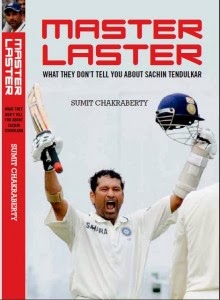
Master Laster: What they don’t Tell You about Sachin Tendulkar (2013) by Sumit Chakraberty
This book takes you beyond Sachin Tendulkars career aggregates and passionate assertions. There are almost as many books about Sachin Tendulkar as there are centuries by him. Just as there is only one Tendulkar century that came in a winning run chase in the last innings of a test match, rare are the books that look at his personal records through the prism of how much they mattered to the team. In fact there are none, because the easiest thing to do is to produce adulatory tomes for his doting fans. There are an equal number of cricket fans out there who want to know something more than gushing accolades and who don't shy away from asking difficult questions.

The book covers: A quarter of a century of Indian cricket, bringing back to life many a game played during Tendulkars time.It indulges fans in one of the enduring joys of cricket, discussing a point threadbare from multiple angles. How many of his centuries made a difference to the team?What is his track record under pressure?
None of the books on Tendulkar has engaged fans in these debates. There is the odd question raised here or a critical comment made there in memoirs by former cricketers, but not a single book that sifts through the mountain of Tendulkar records to see what value can be attached to them from a teams point of view. An exercise like that can be quite revealing, even startling and certainly a lot of fun for cricket lovers. It sets the Tendulkar debate against specific data, taking it beyond career aggregates and passionate assertions.

Master Laster covers the variables in the game and its infinite possibilities. It also deals with why this game is so fascinates so many of us.

Sachin: Cricketer of the Century (2013) by Vimal Kumar
Part of India’s World Cup - winning squad and the team that took India to its No. 1 Test ranking, Sachin Tendulkar has blazed his way through the cricketing world for more than two decades, tearing through matches and records alike. The highest run-getter in both Tests and ODIs in the history of the game, he has also reached what is a truly fabulous milestone - one hundred international centuries.

Sachin: Cricketer of the Century takes the reader on a journey from stellar innings to stellar innings, surveying the batting genius,s brilliant career through the eyes of a pantheon of people who are legends in their own right - from Adam Gilchrist, Matthew Hayden, Nasser Hussain and Courtney Walsh to Waqar Younis, Sanath Jayasuriya, Kapil Dev, Sourav Ganguly and Rahul Dravid. This is the ultimate tribute to the greatest batsman the modern era has seen.

Sachin Tendulkar: Greatness and Where He Fell Short (2013) by Shantanu Kamat
This book takes an in depth look at India’s iconic cricket legend Sachin Tendulkar including his success and where he fell short. Author of the book who is of Sachin’s age, describes how the child prodigy Sachin took over the entire nation by storm in his early days. How he quickly earned the status of batting genius and the God, which puts Sachin in the ultimate batting league of only Viv Richards and Brian Lara. Book goes a step beyond, to praise Sachin outside his batting records and greatness.

Author measures Sachin’s performances in context, by judging him only against the best attacks, the toughest batting conditions and the high pressure big occasions in the game. Just the way the book mentions Sachin’s heroics over the 23 year career, book also sheds light on how he has come up short against the world champion Australian side, the South Africans and at the high pressure big occasion innings.


Author also explores the Indian cricket culture. of putting personal milestones ahead of the team’s performances, and how the retirements of the players are delayed, hurting the performance of the team and the careers of the new youngsters. In the end, Author talks about the successful MS Dhoni era and how Sachin has positively contributed to this era.
‘Sachin just hits the damn ball’

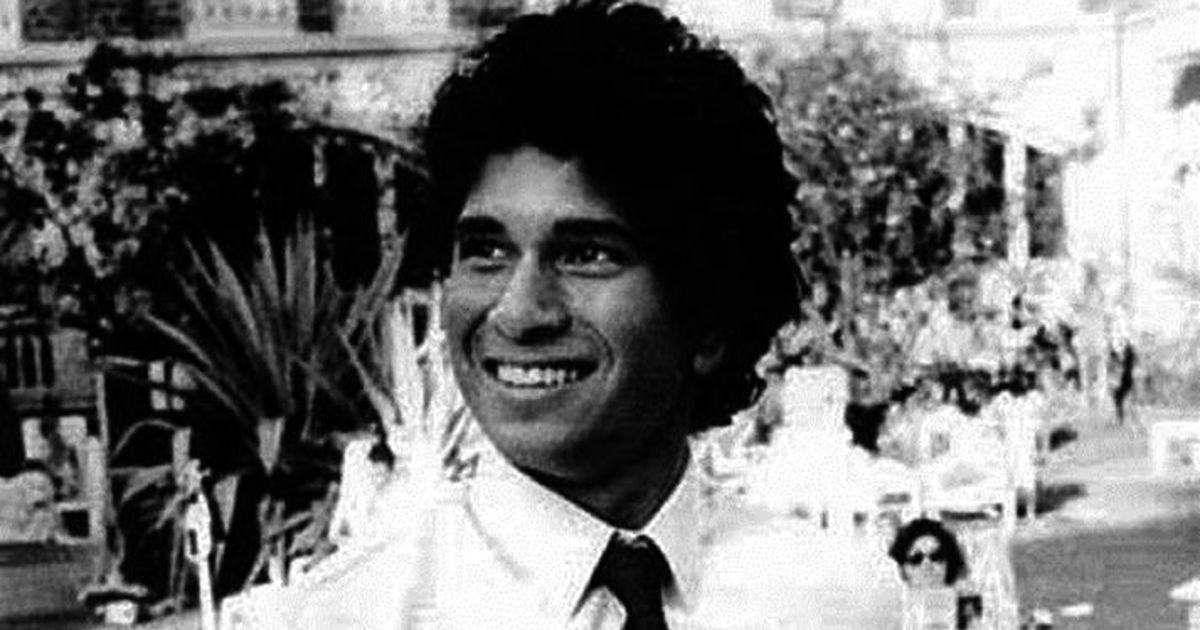
The following extract is a piece by Simon Barnes, the chief sports writer with The Times, UK, from the book Sachin: Cricketer of the Century (2013) by Vimal Kumar.
The most important thing about Sachin's batting is that there is no single important thing to say about it. He doesn't really have a style. In a sense he doesn't even have a personality: or, to be more accurate, personality is something he seems to be able to set aside at will. He seems to have the ability to remain untouched by the circumstances of the match or the personality of the bowler. Poor bowling doesn't get him excited at the chance to cash in; very good bowling in helpful conditions doesn't make him worry. He doesn't really do situations at all: he just bats.
More than any cricketer I have ever watched, he has the gift of playing only the ball. He's never surprised by a bad ball from a great bowler nor by a dangerous ball from a poor bowler. He somehow keeps the bowler out of the equation: the ball is all. He meets it all with the same bland eye. You can't tell whether it all matters hugely to him or whether it doesn't matter at all. He has the very rare gift of playing in the moment. Some players love drama, confrontation, imposing their own personality on a great match, a great occasion. Sachin just hits the damn ball.
There is something Zen-like about this. I am reminded more than anybody else of Pete Sampras, the tennis player. Sampras's first serve was brilliant, but his second serve was better, in that he was almost equally dangerous and very, very rarely missed. In the great Wimbledon final of 1999 against Andre Agassi at his very best, Sampras won in three sets that went far beyond brilliance. He won on a second-serve ace. Someone asked him afterwards: 'What was going through your mind at the time, Pete?' Sampras answered after a puzzled pause: 'There was absolutely nothing going through my mind.'
Perfect.
I wrote at the time that this was pure Zen, and I received a letter from a real Zen master, who totally agreed. Sachin has something of the same ability: to not get distracted by conscious thought, by ambition, by hope, by despair. He just plays the ball. Whether he hits it for four, whether he plays or misses, it's all one to him. He takes guard and faces the next ball and plays it, leaving it or smiting it, as the ball demands. The only time I have seen him affected by a situation was when he was close to that hundredth 100 and was out for, I think, 94 at the Oval. I think for once he was entitled to feel the pressure. After all, he's the first person ever to have felt it.

There are some big things to be written on Sachin as a living symbol of India's headlong charge into the modern world. He is a validation, a living emblem of the truth that an Indian can be the best in the world, the best ever, if you like, and can do so without appearing to break a sweat and without needing to ask anybody for any favours. In this respect, he is rightly compared to Don Bradman. Other cricketers who had national importance include Denis Compton, who was a symbol of optimism and elegance as Britain sought to rebound after World War II, and Sir Frank Worrell, who stood for regional and racial independence, freedom and pride.

Tuesday, 19 November 2013

Sachin Tendulkar and butter chicken

Retiring India batting great Sachin Tendulkar has always lived under stress and pressure to fulfil the dreams of a billion Indians and his 24-year long international career is ending on a happy note, Ajit Tendulkar, elder brother of the legendary batsman, said.

Sachin will be retiring after playing his 200th Test, starting on Thursday here, and Ajit said it would be a different feeling once he hangs up his boots. “On the afternoon of November 18, it would be a different feeling. All of us in the family, we dream about his cricket…one we have shared. That will end, but it is finishing on a happy note. Most of his dreams have come true. I believe he has fulfilled the dreams of the Indian fans,” said Ajit during ‘Salaam Sachin’, an event organised by the India Today Group in honour of the iconic batsman.

“After November 18, Sachin won’t wear his India cap. It will be a big change because he has been wearing it with pride for 24 years. Throughout his career, everyone expected him to score 100s and he was under tremendous stress and pressure, but all that has been worth. After retirement, there won’t be the bowlers to face or those work-outs. Perhaps he can eat as much butter chicken as he wants,” he added.
Ajit Tendulkar
Ajit today walked down memory lane and remembered his younger brother’s early playing days, his millionaire status, their father’s demise, his best innings in international cricket and life after retiring. Sachin had become a millionaire at a very young age but for Ajit he was a millionaire only when he scored runs.

“For me he was a millionaire only when he got hundreds. He wasn’t one if he did not score. There was a charmin travelling in auto after he scored runs. But, travelling in a BMW after he didn’t scoring wasn’t all that good. At home, we spoke about his runs and not his money. After all these records, I can say, he is a millionaire forever,” said Ajit.

Sachin’s family has always tried to stay away from watching him live in action but Ajit said this time he along with the other members will watch him play as it is their last chance. “I will certainly watch this time. This is the last time and last opportunity for me. Our mother will watch him live for the first time. Lot of our friends would laugh at us as we stayed away all these years. We didn’t mind. But now all of us are looking forward to go,” he said.

Asked why the family never watched him live all these years, Ajit said: “There were few things which scared us when he was scoring heavily. One was his tendency to throw away his wicket. Raj Singh Dungarpur called our father once and told him, ‘Tell Sachin to start the car from 1st gear and not 5th’. “My mother would pray and sister would fast. Nitin (another brother) would also do something. I would try to create positive vibes before he would go to bat. Once a batsman goes to bat, nobody is in control, but it was an attempt from us to be with him in spirit.”  

Sachin is the youngest of the four siblings. Talking about the time when they lost their father in 1999, Ajit said: “If father would have come back to life for even five minutes, he would have told Sachin to go and play the 1999 World Cup.

“Our father had suffered a heart-attack in May when Indian team was in Sri Lanka. At night, I told our father that ’Sachin will bat tomorrow and I will not tell him that you are not fine’. Then I went back to our father and told him that Sachin got a ton and he was thrilled. We all felt he should go and play forIndia at the World Cup.”

Reflecting on Sachin’s innings of 136 against Pakistan in Chennai, Ajit said: “I think, Sachin would have won the game for India. I am not saying it was the most important innings (of his career), but my favourite innings.
“When he came from the New Zealand tour, I spoke to him. He said he was really tired and may not play against Pakistan. I was disheartened as he had a chance to play against Wasim and Waqar. In the first innings at Chennai, he was out for zero. The match reached an interesting stage on Day Four and he was batting on 20-odd. The wicket was tough and he went out to bat when India were six for two. “I felt he had to help India win and perform for himself. That was a test of his nerve and skill.”

Of all the accolades that Sachin has received in his career, Ajit remembers one compliment that he got from a friend during the Sharjah innings. “After his Sharjah innings, my friend called and said, ’My mother watched the match and cried as Sachin was batting so beautifully’. That is the best compliment.”
Ajit and Sachin Tendulkar
It was Ajit, who had taken Sachin to coach Ramakant Achrekar when he was just 11 and had no experience of playing with hard ball. Recalling the time, Ajit said: “There were three things I noticed in Sachin as a child. His easy bat lift, the lovely swing of his bat, his judgement of the length of the ball and ball striking. So I took him to Achrekar.

“The first day he did not have the proper clothing, he was in shorts, so Achrekar asked him to wear full trousers. The first day he was made to take a few catches and I was surprised to see him do well. Once he got the kit, Achrekar sir picked the No. 4 spot for him in the line-up.”

Asked if he ever had any arguments with Sachin, Ajit said: “Other than cricket, we do not talk anything else too much. Credit to Sachin as he heard me. He has faced toughest bowlers in difficult conditions. I watched on television and gave him suggestions. He took them in his stride. Not having gone to the ground and experienced, may be wrong on my part.”

He also narrated an incident when Sachin had boarded a taxi to the airport: “I was in his BMW and there was a lot of luggage. As we drove, he said that there is something wrong in the car and we saw the tyre punctured. We parked the car, but we did not have the security guard with us,” Ajit said.

“It was early morning, so there wasn’t enough rush. We couldn’t ask for another car as he had to reach the airport. I called for an auto and a taxi, and the drivers couldn’t believe when they saw. We put the luggage. Sachin was in the taxi. Once we reached the airport, everyone were surprised to see him in a taxi. It was quite funny.”

(Source: PTI)