Showing posts with label hunger. Show all posts

Tuesday, 8 June 2021

A depreciating diet

About one year has passed since the COVID-19 pandemic began. In India, domestic workers are among the most severely hit groups. In the initial stages of the lockdown, most domestic workers were laid off. Many did not get paid for months. Some of them were initially assured that they would be rehired and paid after the lockdown was over. But even as the lockdown eased, the condition of domestic workers has barely improved.

For many, like Shabana*, who has been working as a cleaner in Guwahati for almost a decade now, things have been rough. Shabana used to work in three houses before the lockdown but has been rehired in only one.


“I was told that I would be rehired after the lockdown, but then only one family did that. The other two families did not pay me during the lockdown and now have hired others,” she says.


As a result, her income has dipped substantially, but costs have not. While they cannot compromise on expenses such as rent, there has been a direct impact on their diets and nutritional needs.


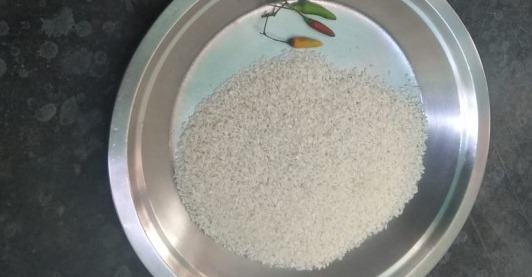
“We have not had anything other than rice and chillies for months. We also skip meals. Everything is so expensive. We have a young daughter whose nutritional needs are getting severely impacted. As a growing person, she should eat well, but unfortunately, it is not happening. I hear on the TV that one needs good immunity to protect themselves against COVID-19. But how will we have immunity if we cannot eat anything good?” says Shabana.


Initially, her family received rice for free from the government, but now they have to buy it at a discounted rate in the market. Data shows that India is facing food inflation of 7.9 percent. In fact, food inflation was an issue much before the COVID-19 pandemic, and the situation has only worsened now.


Families like Shabana’s are forced to compromise on their nutritional intake. While fruits and vegetables have always been luxury items for them, now even daal (lentils) and potatoes fall within that category.


*Name changed to maintain confidentiality.


Rituparna Patgiri teaches sociology in Indraprastha College for Women (IPCW), University of Delhi. Ritwika Patgiri is a PhD student in the Faculty of Economics, South Asian University (SAU), New Delhi. The authors have been conducting research on domestic workers in Assam since August, as part of a research grant from Zubaan Books.


(Source: idr)

Friday, 24 April 2020

10 things the lockdown has taught me about food

I’m always hungry, I love my corner shop – and I really don’t need to buy sumac. Now bring on the Angel Delight…

1
Having long thought of myself as someone who cooks a lot, it turns out this was self-delusion of the worst order. I’m exhausted by all the cooking: not only the labour involved, since shopping now involves so much walking and queuing, but also by the constant whirring in my brain as I work out what might be made from whatever is in the house, and how best any leftovers might be eked out. Waking at three in the morning, I scroll through a list of those I love and miss, after which I quickly set to wondering whether yellow sprouting broccoli (as opposed to purple) is good for anything at all (answer: it isn’t).

2
Relatedly: restaurants. Oh, my heart. What I wouldn’t give for a margherita with extra anchovies at Pizza Express; escargots at Brasserie Zedel in London’s Piccadilly; battered cod at the Magpie Cafe in Whitby; a curry more authentic than one of my own; a steaming bowl of pho; a pretty plate of sushi.

3
I’m prey, in my gilded cage, to all sorts of cravings. Foods bought and eaten in this period after a long absence: peanut butter, grapefruit, Frosties, Ferrero Rocher, beef shin. Next up: Angel Delight.
‘Foods bought and eaten after a long absence: peanut butter, grapefruit, Frosties, Ferrero Rocher, beef shin. Next up: Angel Delight.’ Photograph: TWHPhotography/Alamy

4
On the subject of shin. With time on my hands, I decided to make a ragu like the one famously served at Trullo, in north London, the recipe for which is controversially not in its cookbook – and so, I joined the line at James Elliott, our blessed butcher, where I got the last piece of shin. Happiness! But then he said: “Have a nice weekend, madam” and I was lost; I only just made it out of the door before the weeping began. Whoever could have guessed that stewing steak with a side of kindness would ever make me feel so emotional? (The ragu, by the way, was worth the half bottle of wine I chucked in it, and the five hours it took to cook. Not to boast, but it was the most delicious thing I’ve ever made.)

5
I delivered two portions of this stew in a care package, complete with menu card and After Eights, to a friend who must isolate for 12 weeks. When he later sent me a photograph of his dinner tray all set up and ready to go, I realised all over again how much people love to be cooked for, and how happy it makes me to do so .

6
Years ago, we began referring to our local Turkish store as The Shop That Has Everything. But now I realise that it really does have everything. It’s wonderful, and not a little chastening, the way that we’ve been brought to a new appreciation of those who serve us – the smiles exchanged over bunches of coriander and bottles of bleach! – whether at Sainsbury’s or in our corner shops.

7
Goodbye sumac! None of us are in the market right now for recipes that require kaffir lime leaves or a pinch of lovage. Basically, we want to know if there’s any easily achievable dish involving tinned tomatoes that we’ve yet to make.

8
How’s your appetite? I’m ravenous, but I know this isn’t real hunger. It’s born of boredom, anxiety and the simple fact that there’s more food in the house than usual. What’s especially alarming is that it takes me less than 20 seconds to walk from my home pilates studio – amazing what you can fit behind a sofa – to the fridge.

9
I perhaps like a glass of wine with my dinner a little too much at this point, something that substituting the word “refreshed” for the word “pissed” does not, I fear, effectively hide.

10
Life is meals, as James Salter once said. I now know, as I perhaps never fully did before, the truth of this. Here is comfort and togetherness, structure and ritual. Here, even in the sad moments, is happiness.

(Source: The Guardian)

Thursday, 23 April 2020

Coronavirus: Global hunger could double due to Covid-19 pandemic, UN warns

The impact of lost tourism revenues, falling remittances and travel and other restrictions linked to the coronavirus pandemic are expected to leave some 130 million people acutely hungry this year

The number of people facing acute food insecurity could nearly double this year to 265 million due to the economic fallout of Covid-19, the United Nations’ World Food Programme (WFP) said on Tuesday.

The impact of lost tourism revenues, falling remittances and travel and other restrictions linked to the coronavirus pandemic are expected to leave some 130 million people acutely hungry this year, adding to around 135 million already in that category.

“Covid-19 is potentially catastrophic for millions who are already hanging by a thread,” said Arif Husain, chief economist and director of research, assessment and monitoring at the World Food Programme (WFP).

“We all need to come together to deal with this because if we don’t the cost will be too high – the global cost will be too high: many lost lives and many, many more lost livelihoods,” he told reporters at a virtual briefing in Geneva.

Husain said it was critical to act quickly in order to prevent people already living hand-to-mouth, such as food vendors in Kenya, from selling their assets as it could take them years to become self-reliant again.

In some cases, such as when farmers sell their ploughs or oxen, it could have knock-on effects for food production for years to come, he added.

“These were the people we were concerned about those who were OK before Covid and now they are not,” he said, adding he was “really worried” about people living in countries with little or no government safety nets.

“Acute food and livelihood crisis” is category three of five UN phases meaning a “critical lack of food access and above usual malnutrition”.

Category 5 means mass starvation. UN officials did not give a geographical breakdown of the growing needs but said that Africa was likely to be hardest hit.

WFP expects to need $10-$12bn to fund its assistance programmes this year compared to a record $8.3bn raised last year, Husain added. It plans to pre-position food stocks over the coming months in anticipation of growing needs.

Of those already deemed acutely hungry, many are in conflict zones such as Syria or in countries badly hit by the impact of climate change, according to a UN report.

Even before the coronavirus pandemic, desert locusts in east Africa had destroyed crops and boosted the number of people reliant on food aid.

(Source: Independent)

Wednesday, 22 April 2020

Indian origin man is feeding 24,000 families in Kenya amid lockdown, let’s Salute him

Amid the lockdown which was imposed to prevent the spread of the epidemic, which has claimed more than lakhs of people’s lives, an Indian-origin safari operator based in Kenya is feeding thousands of families there.

Pankaj Shah had started the initiative after he felt heartbroken to see people starving and struggling to live.

“People were getting hungry and angry,” Shah told Reuters.

As per news agency Reuters, Shah started communicating with citizens who were really interested in helping the less fortunate ones in this crisis. Luckily, a local school which was shut down due to the coronavirus epidemic had offered their campus premises as headquarters.

Kenya’s Asian community, which was officially acknowledged as the country’s 44th tribe three years ago, came altogether to contribute in every possible way. They even brought cheques and truckloads of food that could not be transported owing to the suspension of flights.

Meanwhile, the volunteers named “Team Pankaj”, have sent out 24,000 packages of food since March 22. Each hamper comprises enough food to last a family of five people for up to two weeks.

“One old woman told us she hadn’t eaten for days – her sons had stopped supplying her because they have no work,” Shah told Reuters. Pankaj Shah finds his spirit for community service from his idol Mother Teresa whom he says he met decades ago in Nairobi.

Shah is now urging wealthy Kenyans to do their bit to donate 4,000 Kenya shillings (Rs 2,890) for the food packages alone. He had also pointed out that amount is about the cost of two pizzas and a bottle of wine.

“I just need half the rich people here to care enough to fund a hamper,” he added in a statement.

It has been learnt that lorries full of food were sent for distribution in Deep Sea slum last week only. Pregnant woman and those with babies were also assisted by the volunteers.

(Source: The Youth)

Saturday, 18 April 2020

What will corona do to us! Before corona, hunger will kill us: Migrant workers in Kerala

Painter Mohammed Tanveer is bedridden in Kerala after breaking his thighbone, his family - including 5-yr-old nephew-back home in Bihar's Samastipur district is surviving on just one meal a day.

On April 2, right in the middle of a nationwide lockdown against COVID, farm labourer Sudha Bibi (55) raised Rs 60,000 from her relatives and neighbours in Samastipur district of Bihar. Never before has she seen Rs 60,000.

She was responding to an SOS from her son -- 2,525 km away -- in Kasaragod.

On March 23, a day before the nationwide lockdown came into effect, Mohammed Tanveer (26) -- the seventh of her eight children -- fell from the scaffolding while repainting an old two-storey house at Udma. He broke his thighbone.

The owner of the house gave Tanveer Rs 10,000 for treatment and called in an ambulance. "We thought that will take care of the medical expenses," said Mohammed Jahangir (29), elder brother of Tanveer, who was painting along with him.
Sudha Bibi's son Mohammed Tanveer lying in a room after a thighbone surgery in Udma, 2,525km away, in Kasaragod (Photo | EPS)
But the General Hospital in Kasaragod did not admit Tanveer as it was converted into COVID Care Centre. After knocking at two other hospitals, he was admitted to a private hospital in Kasaragod. The contractor, who employed the two brothers, agreed to foot the hospital bill. The surgeons at the hospital inserted a steel rod to help support the fractured femur till it heels. 

After 10 days at the hospital, Tanveer was ready to go home. The bill came to Rs 75,000. Seeing the bill, the labour contractor backed off. 

"I pleaded with the doctor to reduce the bill. He brought down the bill to Rs 65,000 and said it was a private hospital and it was the best he could do," said Jahangir.

Left with no option, the brothers called their mother back home. 

In Samastipur, Sudha Bibi shares her one-room house with her three daughters, two daughters-in-law and a five-year-old nephew, Shah Alam. Her husband, who used to make mattresses, died one year and a half ago, forcing the sons to leave their village in search of better jobs.

Tanveer landed in Kasaragod six months ago and found a job as a painter. "I brought in my elder brother because I liked this place and the wage was better too," said Tanveer, lying on the floor of a congested room he shares with four others, including Jahangir. 

For the family, the going got better. Every week, Sudha Bibi's three sons -- the eldest is working in an industrial estate in Delhi -- send her around Rs 4,000 to Rs 6,000. She, too, work found work as a farmhand. 

But now, the family is steeped in debt and no work at hand. "We are poor. We came here for work but got trapped," said Jahangir.

Tanveer said his mother and sisters back home often ate only once a day. "Sometimes, even my nephew sleep without dinner," he said. 

"What will corona do to us! Before corona, hunger will kill us," said Tanveer.

In Bihar, the government said it would give foodgrains free of cost through ration shops. "But my mother said they did not get anything," he said.

In Udma, the situation is slightly better for the siblings. The panchayat delivers packed meals for all the five persons in the room. "But we will have to manage on our own for breakfast and dinner," he said.

Yet, Tanveer was literally sobbing to go home. "Please help us. Please do something and take me home. At least my mother and sisters are there to take care of me," he said.

The lockdown has been particularly harsh on the migrant workers who are living without work and wages. They have been pleading with the governments to take them home. Kerala has around 3.85 lakh migrant workers, most of them longing to head home. Chief Minister Pinarayi Vijayan told Prime Minister Narendra Modi to run non-stop trains to take workers home and financial support for unskilled workers. But the Centre has rejected the transport proposal.

(Source: TNIE)

Thursday, 9 April 2020

Sex workers hit by coronavirus lockdown, face hunger and work issues

The 21-day lockdown by Prime Minister Narendra Modi to fight the pandemic has put everyone under the fear of uncertainty. While all of us are trying to figure out our lives under the lockdown, there are certain sections of the society that are worst hit by this epidemic such as sex workers. The lockdown has escalated the risk of poverty and ill health for the sex workers, as there are no clients in the market. Isn’t that the responsibility of government to protect these vulnerable people amidst the lockdown who are struggling for their daily bread?

Add to hunger other finger pointing. There’s loathing and societal shame right now with people in their areas calling them names or being a potential source for disease.

No food, no money
Many sex workers don’t even have the money to afford food since the nationwide lockdown was announced on March 24. Around 80 brothels house close to 3000 sex workers in multi-storeyed dingy buildings located in the busy market area of GB Road, remained shutdown. Since the savings of these workers are meagre there is no other source to finance their daily expenses.

An India Today report noted that people are stuck in these dirty corridors and authorities are strictly monitoring us.

“We cannot even go down to buy groceries or medicines. Many of us are sick but now we have no means to even reach a doctor or call for help, let alone wearing masks. The police do not really listen to us. We anyway have little money left. We do not know when this lockdown will get over. I wonder if all of us will survive this,” said the work.

Lack of support from government
Till now there are no relief packages being exclusively announced for the sex workers. However some NGO and police personnel have voluntarily came forward to help them by ensuring proper food packets, masks and sanitizers. But this is not enough. The sex workers need urgent help from the government, so there is a kind of sustenance available for them.

Making this worse for sex workers is that community support from social impact organisations is also suffering. Rashmi Tiwari of Aahan Foundation wrote a powerful piece on SheThePeople saying “all the positive effects of such programs on the participants and ultimate recipients are slowly withering away.”

Uncertain future
“While many professions seeing a gradual decline in business, sex workers are witnessing a sharper fall. With almost no source of revenue, it is difficult to safeguard their children who are now at home all the time due to shutdown. These women cannot even benefit from the benevolence of the general public who are coming forward to lend a helping hand to other women,” notes Rashmi.

The sex workers are worried about the length of this lockdown and the impact on their business. Even after the lockdown ends and business resumes, there will be all sort of apprehensions among the clients, they worry. The business will take some time to regain its momentum which is another fear among the workers.

Various NGOs and people have been working continuously to support sex workers in different ways. Such as Aanchal Narang who raised money to help the sex workers of Kamathipura, Maharashtra amidst COVID-19 lockdown. She is out on the mission to help these workers, as their daily earnings have taken a hit due to dearth of customers. She also did a project work,named ‘Community Mental Health’ , with the sex workers and closely interacted with them to raise awareness regarding mental well being. Narang runs a put practice in Andheri West as a psychologist with a specialization in addiction,trauma,gender and sexuality.

Sangama, an NGO in Bengaluru is also working towards the rights and welfare of sexual minorities since 1999, has extended a helping hand to make the lockdown period a little easier for sex workers. 

Sangama will provide groceries to 350 families of sex workers. Each kit have suffice consumption for April and May and is worth Rs 2000. The NGO pooled the donations from various people and then using the money for the betterment of the sex workers. 


(Source: SheThePeople.TV)

Tuesday, 7 April 2020

Coronavirus: The race to stop the virus spread in Asia's 'biggest slum'

On 23 March, a 56-year-old man living in a vast, labyrinthine slum in the western Indian city of Mumbai went to see a doctor. He was feeling feverish and had a bad cough.

The garment trader lived in Dharavi where more than half-a-million people are spread over 2.5 grubby sq km, which is less than a square mile. (Imagine a population larger than Manchester living in an area smaller than Hyde Park and Kensington Gardens.) The slum was the inspiration for the Oscar-winning Slumdog Millionaire film and city planners from all over the world have studied its throbbing economy and society.

The local doctor examined the man and he left with a prescription for cough syrup and paracetamol. Three days later, the man turned up at the private Sion Hospital close to home. His fever had climbed and the cough was getting worse. He said he had no travel history, so doctors gave him more cough syrup and sent him home once again.
More than 650,000 people live in 50 acres of space in Dharavi. Getty Images

On 29 March, the man returned to the hospital with signs of respiratory distress. Doctors admitted him, and promptly sent swabs for the Covid-19 test.

Three days later, the results arrived - he had tested positive. His condition deteriorated sharply and doctors tried to move him to a bigger hospital already treating Covid-19 patients.

It was too late: he died that evening.

That garment trader was the first Covid-19 patient from Dharavi. People living in this packed-to-the gills slum city suffer from all the common diseases afflicting Mumbai, one of the world's most densely-populated cities, from diarrhoea to malaria.

But an outbreak of coronavirus in a place where social distancing is an oxymoron could easily turn into a grave public health emergency and overwhelm the city's stretched public health system.

Nobody realises this more than the officials racing to track and contain the infection.

Patient No 1 of Dharavi lived with his eight-member family - his wife, four daughters, and two sons - in a poky 420 sq ft one-room apartment in a low-rise slum tenement ringed by squalid shanties.
Dharavi has been under a lockdown since 24 March. Getty Images

"When we asked his family, they told us the man had no recent travel history and only went to the local mosque," Kiran Dighavkar, an assistant municipal commissioner in charge of the area, told me.
But there was a twist in the tale.

The man owned another apartment in the same complex. There he hosted five people who had reportedly arrived from Delhi after attending a conference in early March organised by Tablighi Jamaat, a religious movement that has followers in more than eight countries including Indonesia, Malaysia and the US.

Hundreds of people who attended the religious event in the capital set off several Covid-19 clusters across the country and are now linked to some 650 cases across 14 states.

The police believe the five men lived in the Dharavi apartment for two days - between 19 and 21 March- before they left for Kerala. "We are trying to trace these people," said Mr Dighavkar.

"We have to find out the source of infection. How did this man get the infection and from whom? And we have to contain this infection by taking aggressive steps," he said.

The family of the deceased trader insists he didn't have a passport, something that the police are sceptical of. So they are trying to dig out his mobile phone records to find out more about his movements.
Some 2,500 residents have been put under quarantine in more than 300 slum apartments

For the moment, the race is to ensure that the infection is contained. So 308 apartments and 80 shops in nine six-storey buildings in the complex where the trader lived have been completely sealed. Some 2,500 residents have been put under home quarantine. Food rations are being supplied. Health workers have disinfected the apartments with household bleach. Swabs of eight 'high-risk' occupants of the building - the trader's family and an acquaintance in the building - were sent for testing.

More than 130 residents above the age of 60 and another 35 who are suffering from unrelated respiratory diseases are being closely watched for Covid 19 symptoms.

Fearing an outbreak, authorities have taken over the 50-bed Sion Hospital, and quickly set up a 300-bed quarantine facility in a neighbouring sports complex. Protective gear has been given to doctors and nurses at the hospital.

Yet all this may not be enough to prevent an outbreak.

On Thursday, a 35-year-old doctor working with a private hospital and living in the slum tested positive for the virus. Municipality workers scrambled to isolate and seal 300 people living in the doctor's building. They have also identified 13 high-risk contacts in the building and sent their swabs for testing. The doctor told officials that two nurses in his hospital had tested positive for the virus. And at the weekend, a 30-year-old woman inside the same building complex as the trader, a 60-year-old man, who owns a metal fabrication shop and a 21-year-old male lab technician, tested positive.

"We are still able to try to contain the infection of the gated slum colonies. But there are the slums outside, and if we get cases there, we can't isolate them at home, and have to send even the high-risk cases to the sports complex quarantine centre," says Mr Dighavkar.
Mumbai (Dharavi in foreground in the picture) is one the most densely-populated cities in the world . Getty Images

If that happens, the struggle to contain the infection will turn into a messy battle. The local hospital and makeshift quarantine will be easily overrun by cases.

Testing will have to be stepped up and results will have to arrive in time. After the first two cases - the trader and the doctor - 21 samples were collected from the slum. After more than 48 hours, the results of only seven have come in. The state-run hospital where the testing is being done says it is swamped by samples. Another 23 samples were picked up after the two new cases and sent to the lab on Saturday. It is not clear when the results will arrive.

"We are losing time because of the delay in results. It also delays shifting people who test positive into isolation," Virendra Mohite, the medical officer, who is leading the health teams in the slum, told me.
These are some of the real challenges to contain a massive outbreak of a disease in a unique, otherwise self-contained slum, which is home to fishermen, potters, furniture makers, garment makers, tailors, accountants, waste recyclers and even some of Mumbai's edgiest rappers. Dharavi, writer Annie Zaidi once observed, is a place full of "stories of desperation and grit, initiative and very, very hard work."

Now it faces its most daunting challenge of preventing a cataclysmic wave of contagion.


(Source: BBC)

Monday, 6 April 2020

Rabbits dead, cats and dogs starved in Bengaluru pet shops that shut for lockdown

It's not only the lockdown, the animals were housed in small cages with no ventilation in the rooms.

The Karnataka State Animal Welfare Board’s member Shivanand was shocked at the sight of dead animals, dogs and cats that were starved for days, and animals cooped up in 10 ft X 10 ft shops without any ventilation. His team saw dead rabbits and birds in two of the shops they inspected, while in a few others they found animals that were starved for days. 

The horrific sight of these animals in misery, with no strength to bark or cry out for help were witnessed by Shivanand, who says that 13 pet shops in south and east Bengaluru that were inspected on April 1 and 2 and were found to have neglected the animals. “None of them had a license issued by the animal welfare board as per the rules. The BBMP (Bruhat Bengaluru Mahanagara Palike officials were clueless about the fact that such animal cruelty was happening right under their noses,” Shivanand said. 
PICTURES BY STATE ANIMAL WELFARE BOARD
Hundreds of animals -- mainly dogs, cats, rabbits and birds were rescued and sent to shelters run by NGOs in the city. 

“The shop owners had not fed the animals since the last three days. They said that the police were not allowing them to open due to the lockdown. It's not only the lockdown that has affected the animals but the fact that they were housed in small cages with no ventilation in the rooms they were housed in,” he said. 

He states that the shops located in Shivajinagar, Jayanagar, Infantry Road, Kammanahalli and Banaswadi were small and had only one entrance and no windows for ventilation. Since the shutters were rolled down, there was no proper air or light. “Without ventilation, food and water, the animals were suffering inside,” he added. 

He says that the animal welfare board has urged the Karnataka Animal Husbandry Department to allow pet shops, which are not flouting norms, to be open for a few hours every day so the animals could be fed properly. “Only those pet shops with proper ventilation and space for the animals will be allowed to open. We will shut down others flouting norms. We are coordinating with the police as well to bust the racket where these animals are being sold illegally,” he said. 

A senior member of the State Animal Welfare Board (SAWB) said that the BBMP had issued licenses to these pet shops under the Shops and Establishments Act but had failed to follow up and monitor these shops to see if they were flouting guidelines of the Animal Welfare Board of India. “How can these shops run without a pet shop license that is mandatory? None of the BBMP officials knew how many pet shops there are in their specific zones,” he added. 

According to BBMP Director of Animal Husbandry Department Dr Shashi, more inspections are currently being carried out across the state in coordination with the SAWB. “Some of these pet shops have been illegally transporting animals through private buses that cross state borders. The SAWB and BBMP are going to rope in the police to bust the illegal import and export of animals. Some birds were being sold for Rs 60,000. They were operating without a license as well,” he added. 

"Pet shop inspetion is the primary responsibility of the SAWB be it issuing of licences or inspection. SAWB has been defunct for a long time. It's slowly starting to reprise. BBMP has been brought in for the time with push from citizens to increase the scale of such inspections . After the inspection BBMP also has commited to keeping up with series of inspections in close coordination with the active SAWB members," Rakesh Prabal Kumar, a member of Citizens for Animal Birth Control.


(Source: TNM)

Saturday, 28 March 2020

India's poorest 'fear hunger may kill us before coronavirus'

India has been put in lockdown to halt the spread of the coronavirus outbreak. People have been told to stay indoors, but for many daily-wage earners this is not an option. The BBC's Vikas Pandey finds out how they were coping in the days leading up to Tuesday's announcement.

Labour Chowk in Noida is usually brimming with hundreds of men looking for jobs as construction labourers.

The small intersection of roads in this suburban area of Delhi is a hotspot where builders come to hire workers.

But it was eerily quiet when I drove there on Sunday during the initial lockdown. Everything was still - one could never imagine listening to the sound of birds chirping in such a busy area.

But I did - almost in disbelief.
Ali Hasan has no money to buy food after the shop he worked in closed

I soon spotted a group of men huddled in a corner.

I stopped and asked them, from a safe distance, if they were following the lockdown.

Ramesh Kumar, who comes from Banda district in Uttar Pradesh state, said that he knew "there won't be anybody to hire us, but we still took our chances".

"I earn 600 rupees ($8; £6.50) every day and I have five people to feed. We will run out of food in a few days. I know the risk of coronavirus, but I can't see my children hungry," he said.

Millions of other daily-wage earners are in a similar situation. The lockdown announced by Prime Minister Narendra Modi on Tuesday evening means they are now facing no prospect of income for the next three weeks. The likelihood is, some will run out of food in the coming days.

India has reported more than 500 confirmed cases and at least 10 people have died.

Several state governments, including Uttar Pradesh in the north, Kerala in the south and the national capital Delhi, have promised direct cash transfers into the accounts of workers like Mr Kumar. Prime Minister Modi's government has also promised to help daily-wage earners affected by the lockdown.

But there are logistical challenges.

At least 90% of India's workforce is employed in the informal sector, according to the International Labour Organization, working in roles like security guards, cleaners, rickshaw pullers, streets vendors, garbage collectors and domestic helps.
Kishan Lal - a rickshaw puller in the northern city of Allahabad - has earned no money in four days

Most do not have access to pensions, sick leave, paid leave or any kind of insurance. Many do not have bank accounts, relying on cash to meet their daily needs.

Lots are migrant workers, which means that they are technically residents of a different state to the one where they work. Then there is the problem of the floating population: people who do not live in any state for a long period as they move around to find work.

Akhilesh Yadav, the former chief minister of Uttar Pradesh, admits these challenges are huge, acknowledging that "nobody in any government has faced them before".

"All governments need to act lightning fast because the situation is changing every day. We need to activate big community kitchens and deliver food to people who need it. We need to hand out cash or rice and wheat - irrespective of who comes from which state," he said.
This cobbler - who did not give his name - did not know why the station was empty

Mr Yadav is particularly worried about his state, which is India's most populous, with an estimated 220m residents.

"We have got to stop people from travelling to one city from another to avoid community transmission. And one way of doing is to ensure food security. People rush to their villages in times of crisis," he added.

Uttar Pradesh chief minister Yogi Adityanath has said that a team of workers was tracking those who have arrived from other states and everybody who needs help will be supported by his government.

Indian Railways has now suspended all passenger services until 31 March.

But just days before the suspension kicked in on 23 March, hundreds of thousands of migrant workers travelled in packed trains from outbreak-hit cities like Delhi, Mumbai and Ahmedabad to their villages in Uttar Pradesh and Bihar states.

That has heightened the risk of community transmission and experts fear that the coming two weeks are the most challenging for India.

However, not everybody could afford to travel to their villages.
Mohammed Sabir cannot afford to pay his employees

Kishan Lal, who works as rickshaw puller in the northern city of Allahabad, said he had not made any money in the past four days.

"I need to earn to feed my family. I have heard that the government is going to give us money - though I have no idea when and how," he said.

His friend Ali Hasan, who works as a cleaner in a shop, said he had run out of money to buy food.

"The shop shut down two days ago and I haven't been paid. I don't know when it will open. I am very scared. I have a family, how am I going to feed them?" he asked.

Millions of Indians also earn money as street entrepreneurs - people who own small businesses and employ people like themselves.

Mohammed Sabir, who runs a tiny stall selling yogurt-based drinks in Delhi, says he had hired two people recently, anticipating more business during the summers.

"Now I can't pay them. I don't have any money. My family earns some money from farming in my village. But their crops were damaged this year due to hailstorms, so they were looking at me for support.

"I feel so helpless. I fear that hunger may kill many like us before coronavirus," he said.

All monuments are also shut in the country and that has had an impact on many who make money from tourism.

Tejpal Kashyap, who works as a photographer at the iconic India Gate in Delhi, said he had never seen such a sharp drop in business.

"Last two weeks were bad - even when there was no lockdown. There were hardly any tourists. Now I can't even go back to my village and I can't even work. I am stuck here in Delhi and constantly worried about my family in my village in Uttar Pradesh," he said.

Drivers of ride-hailing services like Uber and Ola are also suffering.

Joginder Chaudhary, who drives a taxi for the employees of an airline in Delhi, says the government needs to give "some relief to people like me".

"I understand the importance of the lockdown. Coronavirus is dangerous and we need to protect ourselves. But I can't help but think how I will support my family if the lockdown continues for weeks," he said.
Photographer Tejpal Kashyap says business has been bad for weeks

And some haven't even heard about coronavirus.

A cobbler, who didn't want to give his name, said he had been "polishing people's shoes at the railway station in Allahabad for years, but nobody is showing up now".

He said he doesn't even know why people have stopped travelling.

"I don't know what is happening. Not many people are coming to the station these days. I know that some curfew is going on, but I don't know why," he said.

Vinod Prajapati, who sells water bottles in the same area, intervenes in the conversation.

"I know everything about coronavirus. It's very dangerous, the whole world is struggling. Most people who can afford and have a place to stay are indoors. But for people like us, the choice is between safety and hunger. What should we pick?" he asks.

(Source: BBC)