Showing posts with label diet. Show all posts

Tuesday, 8 June 2021

A depreciating diet

About one year has passed since the COVID-19 pandemic began. In India, domestic workers are among the most severely hit groups. In the initial stages of the lockdown, most domestic workers were laid off. Many did not get paid for months. Some of them were initially assured that they would be rehired and paid after the lockdown was over. But even as the lockdown eased, the condition of domestic workers has barely improved.

For many, like Shabana*, who has been working as a cleaner in Guwahati for almost a decade now, things have been rough. Shabana used to work in three houses before the lockdown but has been rehired in only one.


“I was told that I would be rehired after the lockdown, but then only one family did that. The other two families did not pay me during the lockdown and now have hired others,” she says.


As a result, her income has dipped substantially, but costs have not. While they cannot compromise on expenses such as rent, there has been a direct impact on their diets and nutritional needs.


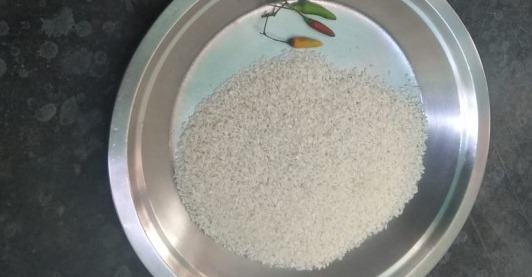
“We have not had anything other than rice and chillies for months. We also skip meals. Everything is so expensive. We have a young daughter whose nutritional needs are getting severely impacted. As a growing person, she should eat well, but unfortunately, it is not happening. I hear on the TV that one needs good immunity to protect themselves against COVID-19. But how will we have immunity if we cannot eat anything good?” says Shabana.


Initially, her family received rice for free from the government, but now they have to buy it at a discounted rate in the market. Data shows that India is facing food inflation of 7.9 percent. In fact, food inflation was an issue much before the COVID-19 pandemic, and the situation has only worsened now.


Families like Shabana’s are forced to compromise on their nutritional intake. While fruits and vegetables have always been luxury items for them, now even daal (lentils) and potatoes fall within that category.


*Name changed to maintain confidentiality.


Rituparna Patgiri teaches sociology in Indraprastha College for Women (IPCW), University of Delhi. Ritwika Patgiri is a PhD student in the Faculty of Economics, South Asian University (SAU), New Delhi. The authors have been conducting research on domestic workers in Assam since August, as part of a research grant from Zubaan Books.


(Source: idr)

Thursday, 3 January 2019

For women, the sin of indulgence is the worst sin imaginable

The story of Eve and the story of my eating disorder are the same story, writes Kristen Zory King in Electric Lit. Raed on: 

I. Story & Sin

For eight years, I have been working on a story about the original sin.

It goes like this: Eve sits alone in a diner at the edge of town. Fluorescent lights glow off linoleum. The air is pale, sick. The narrator, omnipresent as the dense smell of the fryer, watches Eve, believes her grotesque. Eve’s face is ruddy and bloated. Her stomach spills over the tight waist of her jeans, her ankles swell and roll from the elastic top of her socks. There’s a smear of mashed potato on her shirt, something pink and dry crusted to the side of her mouth.

Her table is full of half eaten goods. Dozens of dishes sit before her, small bites taken out of each of them: meatloaf glazed with gravy, doughy crust on a chicken pot pie, a high stack of pancakes, eggs, now cold and stiff, fries smothered in thick, sweet ketchup. Despite this, she is unsatisfied.

This is not a woman we are meant to pity. She has everything she could want before her. And yet.

Here is where things fall apart. Enter the waitress, all yellowed nails, greased hair, dark stains on her teeth. She knows what this woman wants, knows the round taste of desire, the sweetness, relief in giving in. Over and over her quick pink tongue whispers temptation — cinnamon swirls, cream piled high on flakey crust, and, of course, tart, soft, delicious apples nestled in between it all.

This story has taken many forms. Sometimes I tell it as poem found in the words from a large blue Bible on my bookshelf. Sometimes it is a lyric, the pages stained thick and sticky with melodrama. It has been hurtful, helpful, biting, nonsensical. Sometimes what I write is good. Mostly it is bad. No matter what form it has taken, it has never quite worked.

Perhaps this — my need to tell this story, my inability to tell it — is because I started the story at age 19 and try as I might, I just can’t seem to make it less obvious. Woman as rib: clean, bare, sharp. Hunger as sin. The fat, clear juice of an apple rolling down the chin: lustful, obscene.

Woman as rib: clean, bare, sharp. Hunger as sin. The fat, clear juice of an apple rolling down the chin: lustful, obscene.

II. A Woman Takes A Bite
I stopped looking in mirrors at age 14. I avoided my reflection at all costs — not even a glance in a department store window, a flash into a bathroom mirror — knowing that each peek, no matter how brief, would result in a quick intake of breath, disgust. A conscious act of self preservation. It lasted a year.

I went on my first diet at age 8, after my cousins laughed at how tight my shirt fit across my belly, the “little buds” on my chest that refused to blossom. That summer marked a clear line from before to after, the awareness of my body sudden. I was growing quickly, horrified at the ways I was expanding, my flesh swelling around my bones. Although I did not yet fully understand the largesse of guilt, I was warm with shame each time my tiny stomach swelled with after-dinner pie from my grandmother or sweets from the corner store.

I went on another diet at 11, this time alongside my mother. The round curve of my adolescent belly was clear through my ballet leotard; I cried when the scale went from two digits to three. Sweat poured from my hairline down to my chin, from my armpits down the sides of my body, the humid July air made all the more unbearable by the heavy sweatshirt I wore to hide my body at all times.

Unconsciously, food became rapture, repulsion, something I thought of always, with agony and intense desire.

At age 17, I stopped eating altogether, save for one apple (Pink Lady, sweet, whole), one pepper (bell, yellow, sliced), and one nutrition bar (peppermint chocolate, dry) per day. Some days, after school I would break, coming back to myself only when my stomach was distended, my fingers, hands, wrists covered in crumbs from hours of binging. Despite my momentary lapses, this was the age that I was thinnest. The age I still hunger for while teetering on the periphery of recovery.

This trajectory is predictable to the point of boredom, known well by many. It goes on and on, journals full of calorie counting and loathing, years full of better, then worse, whatever “better” and “worse” mean. Even now it exists in my inability to walk into a room without comparing my own body to those around me. The tragedy is in the details (my teeth grew soft from acidic bile! I had a brief spell of religious fervor, hoping that perhaps through prayer, God would grant me a body tiny, delicate!). My disordered eating controlled every aspect of my life.

It comes as no surprise, then, to learn of my obsession with the creation story. A woman takes a bite and the whole world falls.

III. Two Facts and an Opinion
1. According to Mental Health America, roughly 20 million women and 10 million men currently suffer from eating disorders in the United States. This includes anorexia nervosa, bulimia nervosa, and binge eating disorder. The prevalence of eating disorders “is similar among Non-Hispanic whites, Hispanics, African-Americans, and Asians.” Eating disorders take many forms, transcend borders. They exist not, as is commonly believed, in a privileged, white, or even exclusively female world, but rather in collective agony for people of all backgrounds.

2. In 2015, the census reported the percentage of Christians in the United States at 75%. While that number is down from previous years, America still boasts the largest Christian population in the world. While certainly not all of these self-identified believers put faith fully in the story of creation, or any sort of God at all, they have no doubt been taught, at one point of another, about the fall of man, what came before, the consequence in after.

It is old and yet ever-present, this despair. Tertullian, often referred to as the “founder of Western Theology,” once declared to the women in his audience:

And do you not know that you are (each) an Eve? The sentence of God on this sex of yours lives in this age: the guilt must of necessity live too. You are the devil’s gateway: you are the unsealer of that (forbidden) tree: you are the first deserter of the divine law: you are she who persuaded him whom the devil was not valiant enough to attack.
I would venture to say that the numbers of reported eating disorders are a low estimate, made up of the lucky few who are able to seek help. How could they not be? We are surrounded by conceptions of womanhood directly perpetuated by this story. It’s on the periphery of comical, overt, obvious. But whether we are a product of our culture or our culture is a product of us, it is clear that the question of the female body, of what to do with female desire, is all-consuming.

Whether we are a product of our culture or our culture is a product of us, it is clear that the question of the female body, of what to do with female desire, is all-consuming.
One woman in my family bragged often of how, on the day of her wedding, she had a 20 inch waist. Another swung between a strict daytime diet of chalky protein shakes and evenings of chips covered in melted cheese. A girl in my grade would wake up at 4:00am to run for miles and miles every day and eat nothing all day but Diet Coke, her teeth quickly stained yellow. Another would quickly drink hot cups of coffee followed by cold water to tighten her belly as though it were full.

None of these women were ever diagnosed with an eating disorder although their eating was disordered. I myself was not diagnosed officially until age 25, more than fifteen years after I had begun to obsess over my body. When I told a friend, at age 15, that I was worried about how much I was binging and purging, she answered “Kris, we all do that.”

IV. Hollow, Hallowed
Once, I was on a diet that consisted almost exclusively of raw vegetables. An ambitious adolescent, I packed my days with after-school dance lessons, rehearsals for drama club, and a part-time job as a secretary at my ballet studio. So much of my life, of my eating disorder, looked on the outside like discipline. And in between my busy and demanding schedule it was easy to hide what I was — or rather, all that I wasn’t — eating.

On this particular diet, there was no bread allowed, no dessert, no dairy, rarely any fruit or sugar. I spent weekend mornings baking cookie after cake after muffin after pie. I didn’t eat any of it, not even the thick and creamy batter from the bottom of the bowls. Instead I would force my younger brother to eat the many loaves of banana bread, the fruit tarts, the snickerdoodles, sick with envy at his ability as a young boy to eat whatever he wanted, full on pride at my own restraint, and hollow — hallowed — hungry.

During this period, I remember reading a “helpful” trick on a “pro-ana/pro-mia” online forum — yes, you are eating a salad, some celery, a black cup of coffee (perhaps half full of vodka), but close your eyes. Pretend it is something you truly desire. Something sinful, forbidden. Feel all the ways it sits on your tongue, smell its soft sweetness as it enters your mouth, slides slowly down your throat.

And so I would. As I snapped carrot stick after carrot stick between my softened teeth, I would think instead of a banana split. I imagined the thick, creamy puddles each flavor would make as they melted together in an August heat. I fantasized about the hot fudge, heavy in the way it caressed each sugary mound. It was better than an orgasm, an early form of masturbation — the plumpness of the cherry, the whipped cream so light it would cloud the roof of my mouth, the tender grit of each chopped nut between my teeth.

Of course, this meal — chosen because it practically took more calories to chew than it conferred — tasted nothing like the sundae I imagined. I ate furiously, willing each bite to be what I wanted, chugged water until my stomach hurt, until I sobbed with the feeling of fullness, with the fact that not a single baby carrot, a single sip of water, satisfied my craving.

And in truth, no matter how good my imagination, nothing was as wonderful as the one thing I desired. I could have tasted a hundred things, let them all wallow in my mouth as I closed my eyes and pretended and nothing would have satisfied. Nothing would have tasted as sweet.

V. Bones
In the story, Eve looks over the bounty at her table and then shyly up at the waitress. She is ashamed of her own desire but understands she will not be able to taste anything she brings to her lips until she gives in. She is tired of fighting. Exhausting from rationalizing. It’s a fucking apple. It shouldn’t be this hard.

The waitress raises her pen to her pad — “All finished here, dear? Can I suggest some homemade pie a la mode for dessert? It’s just out of this world.”

And this is where I stop.

No matter how many iterations this story has taken, I am never able to continue past this point. I do not want Eve to be weak. I do not know what weak means. As writer, I could take control of this narrative. Give the woman what she wants, no matter what hell there is to pay. I could invert it, change the ending, let Eve taste the forbidden without consequence. Allow room for lust without fear of punishment.

No matter how many iterations this story has taken, I am never able to continue past this point. I do not want Eve to be weak. I do not know what weak means.
But I don’t, because that’s not the point. That’s not the world I live in, the reality I’ve been allowed. That’s not the story I’ve been told.

I am lucky. I have been given the ability to change my own fate (my own story, my own fall), and the tools to do so. I have a job that provides healthcare which allows for medication, weekly therapy sessions. I have a group of supportive friends who understand and give room for my many anxieties. I have a partner who, when we were first dating and I was unable to eat in front of him, would close his eyes and hold my hand while I tasted my meal. I have access to education that has taught me about my illness but also, importantly, so, so much about body positivity. I have a voice with which I can say: yeah, this whole apple-as-sin thing? Maybe I’m being too literal here, but that feels fucked up to me.

But many days there is only so much I can fight, only so much I am able to do, for myself and for other women, for the shame, constant and hot in our stomachs, for the consequences we are forced to bear for this hunger.

Over and over we are told the story of the fall — the banishment from heaven on earth because of one raw moment of wonder. One moment of lust. One moment of taking.

But if we are nothing but bone — a rib, made from man, made from earth, dirt, worms — then we are malleable. We have the ability to sharpen and indeed we are being sharpened day by day, whittled to a point by the rough edges that surround us. Perhaps one day, I will finish my story, give Eve what she desires, fearless of the consequence. Perhaps one day, I too, will be whittled. So sharp, I can cut off a piece of that god damn apple myself.

Tuesday, 3 July 2018

Nutrition famine: What’s on our plate?

Tracing the contours of the ‘nutrition famine’ hitting those who think they eat well points at the cure: recovering the diversity in what we eat.

Indians have been historically generous with holiness. Nature, knowledge, fire, sex, kings, cows, you name it and our plural, freewheeling belief system has been magnanimous enough to host it within the sanctum. Food, too, found its space therein. The toil that went into the tilling of land, the sowing of seeds by weather-hardened hands, the satiating sight of a rich harvest—and foremost, its life-giving quality—all that must have prompted the sages to confer on food a status worthy of reverence.

But what we eat is no more holy. Our traditional dietary wisdom struggles to survive intact. At one level, there’s the destabilising encounter with modernity—which, for everyone in the world, has meant exposure to new, exotic things. The changes in food and food practices also owe to the value-free march of technology: chemical additives, preservatives, criminal levels of sugar and salt, plastic packaging, and yes, Frankenfood!


There’s also the flux of medical wisdom, notoriously the inexact science. We didn’t need GM popcorn or Big Mac burgers for one in five Indians to be obese: it was accomplished by refined flour replacing old grains like ragi or bajra or ethnic rice varieties, or the coup staged by zero-value refined oils on nutrient-rich ghee and more traditional cooking mediums. Our nutritional palette thinned perilously.

Like the 1:5 overweight Indian, an identical 20 per cent is thin and undernourished. But that is the India that does not eat, institutionally abandoned and stalked by hunger. Here, leaving the two extremes aside, we examine the three out of five Indians who do eat and, by their imagination, eat well. Has an epidemic of want been inscribed into our everyday eating? Do we suffer from a nutritional famine—what in another context has even been called ‘nutricide’? Yes indeed, experts speak of Hidden Hunger, and relate the eruption of lifestyle diseases to this dietary ‘turn’.

Here, we take the average, daily diet of nine families from across India—broadly representing various regional and other ‘types’ (say, ‘Bengali’...or ‘rural north Indian)—and put them under the microscope. Complete with the nutritionist’s verdict and suggestions. (See Case Studies 1-9.) But before the nutritionist’s audit and suggestions on what we must do about it, here’s an analogy to clarify the concept.

Entertain, for a moment, the radical proposition that what we took to be our greatest benefactor was actually one of the most ravaging malefactors. Agriculture came about as a way to stabilise food: to make its availability less random and unpredictable. It was a fundamental rupture that changed human history; all our complex ‘civilisations’ grew out of this new deal with nature. But Israeli historian Yuval Noah Harari argues agriculture has been history’s greatest fraud. And the effects of that disruption echo eerily in our contemporary situation.

For 2.5 million years, humans gathered wild plants and hunted wild animals for sustenance, before it made that seminal turn, about 10,000 years ago, to domesticating plants and animals. From a foraging lifestyle, humans now “sowed seeds, watered plants, plucked weeds from ground and led sheep to pastures” all day. “Rather than heralding a new era of easy living, the Agricultural Revolution left farmers with lives generally more difficult and less satisfying than those of foragers. Hunter-gatherers spent their time in more stimulating and varied ways, and were less in danger of starvation and disease,” notes Harari in his book A Brief History of Humankind.


Human bodies were not used to the constant, repetitive, machine-like labour of agriculture. The tilling of land, the fetching of water, all took a toll on human skeletons and, studies show, the arrival of arthritis, slipped discs and hernia coincided with that of agriculture.

There was another, silent, unnoticed fallout of this transition to agriculture and its subsequent institutionalisation—the erosion of dietary diversity. Early humans, who cover about 98 per cent of our species history, consumed a wide variety of foods—grains were a minor element in this diet. With ‘staple-isation’ of grains, average human diets lost out on crucial minerals and vitamins. A small elite managed well all along, wondrously textured dishes were created for them, an endless cornucopia, embellished by rich nuts and fruits. But the majority of humanity toiled for thin gruel, literally. For an average Chinese peasant, Harari says, it was rice for breakfast, rice for lunch and rice for dinner.

Loss of diet plurality. Lack of micronutrients. Chemical imbalances arising from that. A baleful harvest of diseases. We are staring at exactly that these days: a disaster movie running inside all of us.

Hidden hunger arises when the body is unable to get micronutrients—vit­amin A, iron, zinc, folic acid, iodine, thiamine et al—crucial for our physical and cognitive well-being. The WHO says two billion people in the world suffer from hidden hunger. It’s a hunger without pangs—you do not feel it, but the persistent deprivation comes to haunt the body in the form of diseases.

Iron deficiency, for INS­tance, is linked to anaemia: take fatigue, reduced physical work capacity, at times adverse pregnancy and birth-related outcomes. Every fifth man and, astoundingly, every second woman in India is anaemic, the fourth National Family Health Survey (NFHS-4) found. Vitamin A defic­iency can lead to night blindness and increases the risk of disease and death from infection.

A quick mini meal on the go in Delhi is often a plate of chholey-kulchey—basic carbs and protein.
PHOTOGRAPH BY TRIBHUVAN TIWARI


A majority of Indians take less than the recommended levels of micronutrients. A typical urban Indian household consumes a measly 22.8 per cent of the Vitamin A it should, and only half of the ideal levels of Riboflavin, a vitamin of the B group. Calcium and iron intake was at 67 per cent and 77.6 per cent respectively—and that’s an average, so there will be zones of utter deficiency.

The solution is simple. A broad, assorted diet that includes foods from possibly all these 12 food groups: 1) cereals and millets, 2) pulses and legumes, 3) green leafy vegetables, 4) other vegetables, 5) roots and tubers, 6) nuts and oil seeds, 7) condiments and spices, 8) fruits, 9) fish and other meats, 10) milk and milk products, 11) fats and oils, 12) sugar and jaggery. A rounded diet is one with balanced proportions of at least nine of the 12 food groups.

The immensity of India’s geography and demography makes for tremendous variations in diet, but we can abstract commonalities: typically all of it is cereal-heavy. The rest of it could be from different planets. Fish, consumed at least once a week by 91 per cent in Bengal, is had by less than four per cent in Punjab. On the other hand, over 93 per cent people consume milk and milk products in Haryana, as opposed to a minority of about 22 per cent in Mizoram. All this over and above the infinite shades and nuances of micro-variations in cuisine.

Pointing out that most people in Tamil Nadu have a light dinner, ­nutrition expert Laxmaiah says it is a healthy practice.
Vegetarianism is another variable that has a bearing on nutritional profiles. How it came about thr­ough cult­ural or religious factors is an intriguing story. Any­how, today 22 per cent men and 30 per cent women in India are vegetarians. Plenty Brahmin communities are non-vegetarian, and South India is predominantly non-vegetarian too. On the mixed platter of Indian diets, there’s no dearth of contradictions—no irony deficiency.

For all the talk of unspoilt rustic life, consider the diet of the Jyanis of 12 Tike village in Sri Ganganagar, the ‘food basket’ of Rajasthan. Sudhesh Jyani (36) grows wheat, gram, guar and cotton on his 10 acres. The touch of privilege in their lifestyle—TV, fridge, motorcycle, tractor—does not, however, translate into richness of diet.

The day begins for Sudhesh, his wife Meera and 17-year-old son with a cup of tea, with Meera usually having two or three times more tea. (This disparity, which prevails each time tea is prepared, is a common one in India: women have more tea.) With breakfast, the inadequacies start showing. At about 10 am, they have chapatis mixed in with chhachh (buttermilk), red chilli powder and salt—or on some days with onion and green chilli. And the pattern continues. In the evening, they have chapati with kadhi, or a local subzi. People here typically buy greens only when there’s a guest.

The chapatis are had with ghee; as expected, males consume twice the amount of ghee. On the same note, Sudhesh and his son drink two glasses of milk while Meera drinks only one. The rationale offered: men work in the fields and need a richer diet. Pulses are eaten maybe once a week. Fruit consumption is alm­ost zilch. Judged against the 12 desired food groups, the Jyanis get only six.

“Vegetables are missing from the family’s diet: that’s a huge gap,” says Dr A. Laxmaiah, public health nutrition specialist at the National Institute of Nutrition, Hyderabad. “Let alone green leafy vegetables, regular veg­etable consump­tion is also missing. There’s also a huge deficit of fruits, an important source of ­vitam­INS.” Indeed, the whole of Rajasthan fares poorly when it comes to consumption of dark green, leafy vegetab­les, fruits, meat or even eggs. Only 73-60 per cent (men-women) ate green leafy vegetables at least once a week; a mere 41-29 per cent had fruits. Only 10-6 per cent ate fish or chicken or meat, while only 13-7 per cent had eggs, according to NFHS-4.

Standard fare at a Mumbai eatery thronged by ­office-going and other working people
 PHOTOGRAPH BY AMIT HARALKAR
An urban middle-class diet sample, from Delhi, proved relatively more wholesome. The family of bank employee K.L. Arora (59), which includes his wife and 25-year-old daughter, keeps rotating its breakfast menu: parathas one day, chapati and vegetable another day, milk and porridge on a third. Fruits, watermelon for this season, are also a regular. Lunch is mostly chapati and vegetables ranging from potato to lady’s finger, ridge gourd or pumpkin. The family sits together in the evening for a cup of tea, had along with rusk or a sweet. Dinner is similar to lunch, but it’s followed by a fruit, muskmelon, these days. Pulses make an erratic appearance, sometimes present every day in a week, sometimes not for weeks at a stretch.

***

12 Things For Everyday 
by Ishi Khosla, Nutritionist

One carrot
One cucumber
One amla or lemon
Nuts and seeds
One seasonal fruit
Good amount of green leafy vegetables
Rotate the grain (incorporating millet in diet)Avoid grain in every meal
Take grain before 7 pm
Drink plenty of water
Minimise bakery products such as bread, biscuits
Take adequate protein in at least two meals

***

Laxmaiah gives a thumbs-up to this diet, but says some meat, probably three or four times a week, would round it off. “Meat is a double-edged sword. In measured intake, it’s good, but in excess, it can lead to hyper­tension and diabetes,” he says. Nearly 40 per cent men and 30 per cent women in Delhi consume eit­her fish or chicken or meat once a week. About 84-89 per cent in Delhi eat green leafy vegetables once a week. Fruits: 66-72 per cent. Fried foods and aerated drinks: 41-48 per cent.

The south now. Idli is the customary breakfast for­­ ­service engineer Prem­kumar (51) and his family, with poori and pulses coming up once a week or so. Lemon rice with fried potato, or rice with sambar or rasam, make for lunch, while dosa and upma feature on the evening menu. His wife, who works with a finance company, takes a fruit every day between breakfast and lunch. There’s also milk every night.

The nutrition expert says most people in Tamil Nadu have a light dinner, a healthy practice. “The diet is fine if they are adding enough vegetables in the sambar,” says Laxmaiah. “A lot of people just have one chutney all the time though, which is not advisable. And the problem here is high rice consumption, with its high glycaemic index.” Proportions are crucial here. Laxmaiah says the wheat or rice staple should constitute between 25-35 per cent of the meal—and the consumption in India is nearly 65-75 per cent.

Coconut oil as a cooking medium is beneficial: the Chennai family, however, uses refined oils on a regular basis and coconut oil only for special dishes. About 93 per cent in Tamil Nadu consume green leafy vegetables at least once a week. Curd also improves gut microbes.

Dieticians are generally advising a U-turn to tradition and, at the same time, debunking recent food fads. “Fats were spoken ill of, but now we recommend that good fats must be there,” says Ishi Khosla, a top nutritionist who works with the Centre for Dietary Counselling in New Delhi. “Ghee was banished, so was coconut oil, but we’re now realising their pluses. On the cont­rary, it’s the refined oils we advise people against using. The yolk and nuts are back too. Milk, which was earlier recommended, is a cause for problems now. I have treated people with dia­betes just by changing their cereal and removing dairy products from their diet.”

Office goers grab a quick lunch from a roadside kiosk in Delhi
PHOTOGRAPH BY JITENDER GUPTA
The channels of availability and affordability also regulate what flows into the plates of India’s populace. Ironies abound, again. For instance, ragi (finger millet) consumption has gone down in the southern states in the past two decades because it was thought of as a poor man’s grain and suffered from low prestige, says Laxmaiah. The poor rating led to poor demand, which in turn led to less production. Now, ragi, highly recommended by nutritionists, has become a rich man’s dietary accessory. The same is the case with superfoods like flax seeds: a rural commonplace once, now it adorns posh organic shop shelves.

“Poor working women in cities give Maggi to the child because it’s the most affordable and convenient ­food available.”
Fruits are a key part of the price riddle. “Fruits are expensive,” says Purnima Menon, senior research fellow at International Food Policy Research Institute. “Which BPL family can afford to have them every day? Fruits need to be made cheaper, more accessible. If you don’t have money, you’ll end up buying cheap calories in the form of sugars and fats. The ultra-processed foods are so pervasive and aggressive that at some places there’s just no healthy food available.”

The markets and supply chain have to be redesigned with nutrition as the cornerstone, suggests Dipa Sinha, who teaches economics at Ambedkar University Delhi, and works on food rights and food security. “India’s entire food security is focused on cereals,” she says. “There’s little emphasis on dietary diversity. Rural availability of fruits and vegetables is poor. There are few efforts to distribute pulses, which are an important source of protein in the country.”

Even the poor are now moving towards junk food. “For example, poor working women in urban areas give Maggi to the child because it’s the most convenient and affordable food available,” says Sinha. “The government needs to intervene, regulate advertising, and ensure that ­nutritious food is convenient and affordable. The blacks in the US, similarly poor, have been the foremost victims of junk food. Let’s take some lessons, and see to it that the pattern is not repeated here.”

The government has relied on fortification (enrichment of food with micronutrients) and supplementation (providing deficient nutrients in the form of supplements) to address the large gaps that show up on India’s nutritional profile. “Supplementation has sub-optimal coverage and compliance. Only 23.6 per cent women consumed the prescribed number of iron and folic acid tablets during pregnancy. On the other hand, fortification is likely to reach a higher proportion of the population,” says Basanta Kumar Kar, country director of Project Concern International. But those are short- and medium-term  solutions, he’s quick to add a rider. The only, sustainable way out is diversity on the platter—a gradual recovery of our old vibgyor diet.

(Source: Outlook)
Sunday, 14 January 2018

Just eat more fiber

Diets can be overwhelming, but one small change can do a lot, writes Olga Khazan in The Atlantic. Read on: 

In the spirit of Drynuary, I’d like to propose another health-oriented month of the year. Perhaps called Crunch-uary or Poop-tober, it would be 30 days in which Americans, for once, eat enough dietary fiber.

Currently, Americans only eat about 16 grams of fiber —the parts of plants that can’t be digested—per day. That’s way less than the 25 to 30 grams that’s recommended.

There are so many reasons why, from fast-food marketing to agriculture subsidies, but one contributing factor is the slow death of cooking, and the rise of the restaurant meal. Americans now spend more on food at restaurants than they do at grocery stores, but restaurant food tends to have even less fiber than the food we would otherwise eat at home.

One problem seems to be that restaurant meals aren't typically loaded with two of the best sources of fiber, unprocessed fruits and vegetables. A revealing study from 2007, in which researchers interviewed 41 restaurant executives, showed that restaurants think fruits and vegetables are too expensive to feature prominently on the menu, and “61 percent said profits drive menu selections.” They also opposed labeling certain menu items as healthier choices, saying that would be “the kiss of death.”


So people like to eat out, and when they do, they prefer mushy, fiber-free comfort foods. But that’s a pretty dangerous road to go down.

As my colleague Ed Yong has written, low-fiber diets make gut bacteria more homogenous, possibly for generations. Mice that are fed high-fiber diets have less-severe food allergies, potentially because gut bacteria break down fiber into short-chain fatty acids, which support the immune system. A more recent study in mice found that a low-fiber diet can spark inflammation in the intestines. We still need more studies to understand exactly how fiber and the microbiome interact in humans. But we do know that hunter-gatherer communities in Tanzania and elsewhere, who don’t eat Western diets, eat about 100 grams of fiber a day and have much more diverse microbiomes than Westerners.

"We're beginning to realize that people who eat more dietary fiber are actually feeding their gut microbiome," Justin Sonnenburg, a microbiologist at Stanford University, explained to NPR.

There are also already plenty of other studies detailing the many ways fiber boosts health.

Behold, an extremely confusing flow chart, from a 2005 study, showing how fiber leads to greater satiety, less insulin secretion, and more short-chain fatty acids, which all amounts to one thing: Less body weight.


People who are obese consistently report eating less fiber than people who aren’t. Even after controlling for other factors, fiber intake is inversely associated with body-mass index. Eating more fiber helps overweight people lose weight and body fat. It’s been shown to reduce breast-cancer risk by reducing estrogen levels in the blood and to promote healthy aging.

“We found that those who had the highest intake of fiber or total fiber actually had an almost 80 percent greater likelihood of living a long and healthy life over a 10-year follow-up,” Bamini Gopinath, from Australia’s Westmead Institute, told PsychCentral. “That is, they were less likely to suffer from hypertension, diabetes, dementia, depression, and functional disability.”

So, if you are the kind of person who does Drynuary—in other words, you just want to be a little bit healthier without completely revamping your entire life—just try to eat more fiber.

The best part about this health advice is that it doesn’t involve eating something you don’t like. Fiber is in almost every fruit, vegetable, and whole grain. You could eat more apples and celery, sure, but there’s also fiber in things like corn tortillas, beans, grainy bread, and some types of breakfast cereal. A Chipotle burrito with brown rice and corn salsa will get you 22 grams of fiber, compared to just three grams in a Big Mac. (The burrito also has more than twice as many calories, though, so, you know, exercise caution as you would in all things.)

But you don’t have to stop eating anything you do like: People lose about as much weight just by eating a lot of fiber as they do on complicated diets, even if they eat slightly more calories in the process.

So this coming Grain-tember, just order the peas as your side instead of the mac and cheese. Just cut a banana up over your Corn Flakes, which are surprisingly not fibrous in their own right. Just eat more fiber.

Sunday, 19 February 2017

How men made me hate my 35-kilo weight loss

Women always want to shed those extra kilos. Here's a story of a woman, published on Odd Naari, who could digest the biggest, cheesiest burger in the world, but not the fact that suddenly she was being treated like Cinderella by all the 'princes' out there.

Unlike most women who want to shed weight to fit into certain fancy clothes, my weight loss journey began for extremely different reasons. I wasn't in a happy relationship and so I decided to channelize all that frustration at the gym.

What actually started as a vent for my angst against a man made me detest the whole breed altogether. Here's why

I Fell In--HATE With My Partner
If at all that's possible. From being the man who wouldn't call me for weeks together, he became the obsessive Rahul Mehra (Shah Rukh Khan) from Darr, who would call me hundred times a day. My friends say it was insecurity, but what if the poor soul was only trying to check if I hadn't died from all that weight loss?

I had always craved for his attention, but getting it for all the wrong reasons was never on my mind.

He Also Underwent a Transformation: From Boyfriend To Naani
My weight loss, it seemed, had a deeper impact on him than on me--because all of a sudden he assumed the role of my naani in life. Lunch dates became more frequent. In fact, they became all about force-feeding me with the cheesiest pizzas to oil-laden bhaturas.

A few months and a drunk conversation later, I realized it was because he wanted me to fatten me up so that other guys would stay away. Whatever happened to my personality and the kind of person I was? On a serious note, it was heartbreaking and needless to say, relationship-breaking too.

Entering the Single's Club= Reality-Check About The Opposite Sex
Up until now, I had only associated men with love and friendship. Because that's how frequently and conveniently I used to be friend-zoned by almost all of them. But things suddenly took a 360-degree turn. Most men (by most, I mean 99.99% of men) who approached me wanted everything, but friendship.

The Men I Knew Burnt The Last Bridge
There was a sudden splurge of flirty texts from male friends I had known for years. That was confusing and shocking (because I wasn't used to that kind of attention at all--at least not from them), but it also kicked in a sense of betrayal. Not to mention, I lost a lot of friends.

Even at the gym, there were friendly gestures from guys who never paid attention to me before. Suddenly the instructors also started taking a lot more interest in my workouts.

And The Ones I Didn't Know Added Fuel to the Fire
Forget the male friends and suitors, the men I didn't know at all would stare at me as if I was the only woman left on the face of the earth.

The Older Ones Were a Disappointment Too
You expect some maturity when it is the middle-aged men you are dealing with. Barring my father, every uncle in the family thought that my weight loss was my wedding pass. I suddenly became the ideal bride for their sons and their friends' sons too. Which by the way, never happened in my heavier days.

So Were The Young Boys Who Would Grow Up to be Men
Every time I'd walk the streets of my colony, I could hear little boys murmuring "moti, moti". Post my weight loss, not only did that stop, but their priorities changed from playing cricket in the colony to delivering roses from few stalkers here and there.

Yes, I like attention, but if it's for all the wrong reasons, I don't want it at all.