Showing posts with label beauty. Show all posts

Thursday, 5 September 2019

Dying for a new body: Why so many deaths from plastic surgery tourism?

New Yorkers flock to the Dominican Republic for cheaper plastic surgery procedures, but not all of them return home.

Sharilene Cedeño used to joke with her sister Kendra that she was going to be 23 forever.

Cedeño, daughter of Dominican immigrants, was obsessed with staying young – and by extension, plastic surgery. Coworkers at the Manhattan clinic where she was a nurse’s assistant would catch her looking at dramatic before and after photos on surgeons’ social media pages.

One day she saw a friend’s Instagram post after a procedure by surgeon Edgar Contreras, who’s based in the Dominican Republic. That was it. After years of feeling unattractive compared to women who had “gotten done”, Cedeño was ready. Her friend Tiffany Concha, from the Bronx, would join her for her own procedure. “We’re going to become Barbies,” Cedeño told her.

They flew to the Dominican Republic for liposculpture – a procedure during which excess fat removed from the stomach or back is injected into the buttocks.

At 6am on 23 April 2015, the women drove to the Clínica Plástica Contreras (Contreras Plastic clinic), a modern office in Arroyo Hondo, a wealthy neighborhood in the country’s capital, Santo Domingo. Cedeño went into the operating room at noon. Hours later, Concha, lined with purple surgical marker under her medical gown, had not heard anything about Cedeño’s surgery.
 In the last six years, there have been 12 known cases of New Yorkers dying from plastic surgery procedures in the Dominican Republic. Illustration: Franziska Barcyzk/Guardian US

At about 4pm Dominican time, Kendra answered a WhatsApp video call at her home in Harlem from Concha, whose face was streaked with tears.

“Are you calling me to say that my sister is dead?” Kendra asked. “You’re not calling me to tell me that.”

But that was exactly what Concha had called to say: Cedeño died of an embolism during her procedure.

She was 23 years old.

Cedeño is one of 12 known cases of New Yorkers who have died from plastic surgery procedures in the Dominican Republic in the last six years. More than 700,000 Dominicans live in New York, creating a natural pipeline between the two places. It runs even more smoothly for those seeking plastic surgery on the Caribbean island, where procedures are far cheaper: the average cost of liposuction in the US is $5,500, compared to $3,500 in the Dominican Republic.

In 2018, more than 23,000 plastic surgeries were performed in the Dominican Republic and more than 18,000 of those were on foreigners. However, like Cedeño, not all who go there to get work done return home.

In June, Manuel Núñez, a New Yorker who had also gone to get liposculpture, died under the knife in a Dominican operating room. According to Telemundo, the doctor who operated on him was actually a gynecologist. He had a past history of negligence and was charged for the deaths of two women in 2015 but the charges were dropped for lack of evidence.

Then in July, Alexandra Medina, a 33-year-old from Yonkers, became the second New Yorker and third American to die within a month in a Dominican plastic surgery clinic when she went for a tummy tuck.

Of the 12 New Yorkers who have died in Dominican plastic surgeries in the last six years, all but one underwent multiple surgeries at once. All 12 were black or Hispanic.

Dr Myla Bennett, an Atlanta-based plastic surgeon who describes herself as a safe surgery advocate, started to speak out against botched plastic surgeries abroad on her social media pages a few years ago after realizing most patients being hurt and killed were women of color or people of lower socioeconomic status.

 The Dominican Republic doesn't adhere to the same US regulations on surgeries, which increases the likelihood of heart failure
Bennett said the Dominican Republic doesn’t adhere to the same US regulations concerning how much body fat can be removed in one surgery, which increases the likelihood of heart failure and other consequences during procedures.

Despite the risks that come with surgery, she says people continue to flock to the Dominican Republic, because that’s where they can get an extreme Coke bottle figure for a lower cost.

“The ladies want this particular shape – a really exaggerated form with a small waist and big ole’ hips and butt,” Bennett said. “A lot of the surgeons in the Dominican Republic, that’s what they do really well.”

Hector Cabral, who practices at the International Center of Advanced Plastic Surgery (CIPLA) in downtown Santo Domingo, is known for sculpting impossibly voluptuous bodies. Like Contreras, Cedeño’s doctor, he has a large following on social media, a tool which is heavily utilized to advertise their work and recruit new patients.

Contreras and Cabral are also known for the nine combined times they have made headlines after patients died on their operating tables.

Contreras’ clinic was shut down two days after Cedeño’s death by the national prosecutor’s office, only to reopen four months later. In a radio interview with Radio Zol FM in June 2015, Contreras admitted that there were three more accusations made against him from the families of three other patients who had died after surgery with him since 1999. He said that Dominican authorities declared no medical malpractices in those deaths. Contreras added that until Cedeño’s death, he had performed more than 20,000 surgeries.

Thirty minutes away from the posh hills of Arroyo Hondo towards the city center, CIPLA was shut down not as a result of a death during surgery, but due to a bacterial outbreak in July 2017 in its operating rooms that infected 32 Americans, three of them New York City residents.

A study last year by the American Society of Plastic Surgeons noted that between 2003 and 2017 there were 29 cases of postoperative infections in the Dominican Republic, compared to just three in Mexico – the second country with the most cases of plastic surgery tourists.

In May, health authorities closed CIPLA again after a Dominican native, Altagracia Diaz, died during a breast reduction surgery with Cabral, becoming the fifth woman – three of whom are from New York – to die in Cabral’s care since 2013. It has not reopened. There is one other known case this year of a death of a Dominican native – Julia Arias, who died after receiving a procedure in January in Santo Domingo.

On his Instagram account, which has more than 270,000 followers, Cabral publishes client testimonials and highly stylized before and after photos. Like Contreras and other doctors, he refers to his past clients as his “dolls” or, in this case, “Cabral barbies”.

Thousands of pictures of women show them with the camera focused on their new breasts under tightly stretched tops or flaunting their new hips as they bulge out from under bikini straps. The comments section of each post turns into a tug-of-war for likes between those who say his surgeries are dangerous and those who swear by his work.

But Cabral’s recruitment has not always been limited to just social media. In 2011, Cabral pleaded guilty to charges from the New York attorney general’s office that he treated patients in upper Manhattan without a state medical license on at least 10 different occasions. According to the attorney general, Cabral offered medical consultations to women in beauty salons in Washington Heights as a recruiting tactic. As part of his punishment, Cabral had to pay more than $23,000 in restitution to ten clients, a $5,000 fine and he was barred from obtaining a New York medical license for three years.

 Cabral had been suspended from the local regulatory board since 2015, but was still able to practice, which illustrates the lax rules in the country
In a crowded press conference in May following Díaz’s death, Cabral appeared unapologetic and stated, monotonously, that she had “an unexpected event” at the beginning of the operation and doctors unsuccessfully tried to revive her in intensive care. In the press conference, an unprompted Cabral said he never tried to flee the country.

The Dominican Society of Plastic Reconstructive and Aesthetic Surgery, the local regulatory board that oversees the industry, told a local news station that Cabral had been suspended from the association since 2015. Cabral was still able to practice since he was registered with the country’s health ministry, which illustrates the lax rules in the Dominican Republic. (The Guardian called and sent messages to Cabral on several occasions. He did not answer or respond.)

Cabral’s suspension came one year after New Yorker Rachene Hutchinson went into surgery with him and never came out.

In July of 2014, Hutchinson, a mother of five from Long Island who frequented the island with her Dominican partner, traveled to Cabral’s clinic for a “mommy makeover”: a combination of surgeries that usually involves reshaping the breasts and abdomen following pregnancy. She died from a build-up of fluid that compresses the heart. Her mother, Diane Shields, posted her death certificate to a Facebook account which divulges details about her daughter’s death and warns others about Cabral.

At the end of June, Dominican health officials passed new plastic surgery regulations for the country’s 56 clinics. Most notable is a new resolution that requires cardiovascular and preanesthetic assessments to be done before surgery. In addition, it recommends foreign patients wait 48 hours after their flight before going into surgery due to the air pressure, and at least another three weeks after the surgery to return on intercontinental flights. A 2015 resolution laid the ground rules for surgeon qualification requirements, but this is the first time that such specific preventative measures have been passed.

The new health code includes increased sanctions against any doctor or clinic found to be guilty of medical malpractice. Clinics that are closed down, like CIPLA, will need to pass a health ministry-approved improvement plan to reopen.

If potential patients were starting to grow weary of the number of deaths over the last six years, these new regulations may encourage them to think conditions are safer. Or maybe there was never a slow down in the pipeline anyway, even for those directly affected by the industry’s flaws.

“The pain is always there, it will always be there,” Kendra said. “I feel like you just learn how to live with that pain.”

But Kendra underwent surgery in the Dominican Republic herself this May, even though she had once promised herself she would let go of her long-held desire to get plastic surgery after her sister’s death.

“I guess it’s just something like insecurities,” Kendra said. “I just want to make myself feel prettier.”

(Source: The Guardian)

Monday, 17 June 2019

Miss India 2019 winner is Suman Rao from Rajasthan

20-year-old Suman Rao from Rajasthan becomes the Miss India 2019.

The wait is finally over. Miss India 2019 has been announced. We present to you Suman Rao, Miss India 2019 from the state Rajasthan.

Miss India 2018, Anukreethy Vas from Tamil Nadu crowned her successor Suman Rao, Miss India 2019 in an emotional moment. Last year's first runner up or Miss Grand India Meenakshi Chaudhary of Haryana also crowned her successor and so did Andhra Pradesh's Shreya Rao Kamavarapu who was adjudged the second runner-up in 2018. She crowned Sanjana Vij from Telangana.

Shreya Shankar from Bihar was crowned Miss India United Continents 2019 and Shivani Jadhav from Chattisgarh was crowned, Miss Grand India 2019. She is also the first runner up.


The finale of the Miss India pageant 2019 was a star-studded affair, with Katrina Kaif and Vicky Kaushal performing on Bollywood's hit dancing numbers to the pageant being hosted by Bollywood's favourite producer, Karan Johar along with Manish Paul and Miss World 2017 Manushi Chhillar.

Bollywood divas inluding, Huma Qureshi, Dia Mirza, Neha Dhupia and Chitrangada Singh were also in attendance. A dapper looking Aayush Sharma also made it to the red carpet.

There were 30 beautiful women competing for the crown and representing their states.

All the 30 contestants worked hard over the past few months from working on their ramp walk to working extremely hard on their fitness and health.

The event was held at Sardar Vallabhai Patel Indoor stadium, Mumbai. Femina Miss India 2019 is the 56th edition of Miss India beauty pageant.

(Source: India Today)

Sunday, 20 January 2019

Victoria Beckham spends £1,200 on a new moisturiser made from her own BLOOD

Victoria Beckham has spent £1,200 on a new moisturiser made from her own blood.

The fashion designer, 44, took to her Instagram Stories to reveal she is now using the anti-ageing property by Dr Barbara Sturm, who is well loved by celebrities for her 'vampire facials'.

Deciding to try out the range while her daughter Harper, 7, got a facial at Barbara's clinic in Germany last week, the Spice Girls singer revealed that her blood had been used to 'create healing factors made by her own cells.'

No Skinperfections! Victoria Beckham, 44, has spent £1,200 on a new moisturiser made from her own blood
Victoria first uploaded a snap of a slew of bottle from the range and revealed: 'This week I'll be using these products by Dr. Barbara Sturm.'

She then offered a closer look to a tub of moisturiser and informed her followers of the process: '@drbarbarasturm took my blood and created healing factors made by my own cells which is highly anti inflammatory and regenerative.'

While she already has glowing skin, which was seen in her selfie, Victoria continued: 'After sleeping in the mask, (which soaks in so doesn't look funny or feel sticky) my skin feels amazing!

'Super hydrated and clear! And very soft!' she enthused.

Trying it out: The fashion designer revealed she is now using the anti-ageing property by
Dr Barbara Sturm, who is well loved by celebrities for her 'vampire facials'
The treatment is offered from Dr. Babara Sturm, who is well known from endogamous blood therapy, commonly known as 'vampire facials.'

During a patient's initial consultation, some of their blood is removed and is fed through a syringe containing metal beads - which tricks the blood into thinking they are wounds.

This step is required to to produce the healing proteins IL-1 and TGF-beta.

If used regularly, the moisturiser can lead to reduced inflammation, strengthened tissue and collagen growth.

Skincare expert: The treatment is offered from Dr. Babara Sturm, (pictured) who is well known from endogamous blood therapy, commonly known as 'vampire facials' 
This comes after Victoria treated her daughter Harper to a baby facial last week and shared a glimmer into her mother-daughter day with her 23.9m followers via her Instagram stories.

Harper was the picture of relaxation as she could be seen enjoying the very indulgent pampering session at the spa.

Last year in January, the fashion entrepreneur spilled the secrets on her daily £1,246 skincare, make-up, body and hair routine.

The mother-of-four admitted to spending £648 worth of products for her everyday skincare routine and she treated herself to £366 worth of make-up.

Victoria splashed out £124 on body products and £66 on her daily hair routine.

The singer soared to fame in the nineties in the girl group Spice Girls, where she was known for her eye-catching looks and fierce attitude.

However, she admitted that her ever changing looks wreaked havoc on her skin and now that she has a more smoother pace of life, her skin has settled.

Splashing the cash: Last year in January, the fashion entrepreneur spilled the secrets on her
daily £1,246 skincare, make-up, body and hair routine
The mother-of-four told Into The Gloss: 'I used to have quite bad skin when I was younger and I was constantly covering up spots and things like that.

'Luckily, I don’t have to worry too much about that anymore. Over time, you learn what works for you. And, you know, I tried some interesting looks in the Spice Girls.

'At this point, I’ve done so many photo shoots and red carpets that I’ve learned so much about my beauty style by looking back at pictures of myself.'

(Source: Daily Mail)

Friday, 18 January 2019

The best skin-care trick is being rich

Don’t rub the money directly on your face.

As a longtime resident of New York City, I’ve developed a little game I play when I’m alone in one of Manhattan’s especially ritzy neighborhoods: “Famous or Just Rich?”

To play, all you have to do is notice a person and try to decide if they’ve caught your eye because they’re famous. It will feel as if they’re famous. But more often than not, it’ll just be a regular person who looks like a celebrity, with that polished glow they always seem to have. If you play this game enough, you’ll eventually realize that it’s not just expensive-looking clothes or a striking resemblance to an actual celebrity that gives you pause. It’s the smooth, poreless look of their skin, even-toned and plump. The wealthy, both famous and not, tend to be visibly well moisturized.

The general folk wisdom of skin care has two simple steps. Step 1: Do healthy things. Wash your face, avoid the sun, stay hydrated, wear sunscreen, and get plenty of sleep. Step 2: Apply the right goop to your face, in the form of creams and serums. This advice is repeated time and again in women’s media, with an almost religious authority. If you find the right product and live the skin-care lifestyle (No alcohol! No dairy! Don’t enjoy anything!), then you will be rewarded with the glow of the youthful and righteous.

In this advice is a little sleight of hand. The guidance usually comes from the wealthy, who have all the access in the world to the best skin products and treatments, and it tends to overemphasize the importance of lifestyle while sweeping under the rug the actual cost of tinkering with your facial chemistry. Celebrities wouldn’t be as distractingly beautiful without dermatologists, estheticians, and the women behind the beauty counters at Bergdorf Goodman. You can drink as much water and wear as much sunscreen as you want, but the most effective skin-care trick is being rich.

The moral halo around “good skin” isn’t a coincidence. The behaviors associated with a clear, even-toned complexion require those who want it to reject hedonism in a way that is still deeply ingrained as virtuous in American culture; that the wealthy have mastered the look reinforces capitalistic notions of success and who achieves it (the ascetic, dedicated, and hardworking). The journalist Jaya Saxena found as much when she investigated the connections between skin and poverty earlier this year. “We assume those at the top are there because they’ve done something right. And if they have straight teeth, toned bodies, and smooth skin, that must be ‘right’ too,” she wrote. “It’s not that we think having bad skin is a moral failing. It’s that we think poverty is.”

ANNA WEBBER / GETTY / DR. JART+

Maybe that’s why the wealthy models and actresses and the media who exalts them are so dedicated to the idea that those results must be earned through actions, when in reality, they’re usually bought with money. Regular people are hungry for intel on how the rich and beautiful became that way, which means that almost all beauty media regularly publishes tips-and-tricks lists from models and actresses. It’s no mystery to beauty editors and writers, as well as the famous women surveyed, that the answer is a combination of youth, genetic luck, and access to expensive products, treatments, and cosmetic dermatology procedures that few people outside their world could ever hope to experience. But a dozen 20-somethings telling you about their expensive laser treatments would be too depressing for women to read about and too embarrassing for the professionally beautiful to admit.

For example, in a 2016 Elle magazine article surveying 17 Victoria’s Secret models, eight of them praised lifestyle habits such as drinking water and exercising, with several more crediting low-cost fixes such as drugstore pore strips. None of them mentioned Mzia Shiman, who tends to the skin-care needs of Victoria’s Secret models. The facials at her New York spa start at $200, and more advanced services offer tightening and plumping via LED light bed or electric micro-current.

Even if you forgo high-tech treatment and avoid skin problems such as cystic acne or dermatitis, which Saxena notes usually require intervention from an expensive dermatologist, a skin-care regimen itself can get very expensive, very quickly. Into The Gloss, a beauty website whose popular series The Top Shelf asks influential people to detail absolutely everything they do to their skin and hair, provides readers with a rare look at the litany of services and products required to keep the famous and wealthy looking that way. The most recent edition, from the veteran model Angela Lindvall, lists skin-care products that add up to $629, most of which come in small, quickly emptied packages. This price range is typical of The Top Shelf.

When affluent people name just one trick that supposedly works like magic, usually when prompted by a women’s publication, that elides hundreds of dollars’ worth of creams, serums, and peels. Even if you’re dedicated to low-cost alternatives, the trial and error of finding what works for your skin adds up, and you’ll probably go without some of the specialized ingredients that target problems such as wrinkles or hyperpigmentation. (And yes, many of those chemicals really do work.)

Which is not to say that a diet of fresh foods, plenty of water, and eight hours of sleep every night don’t affect how your skin looks; studies have demonstrated links between all three and physical appearance, and they’ll help most people achieve the modest goal of looking totally fine. Unless you’re very young and even more genetically gifted, though, self-denial won’t get the results it promises. What its constant recommendation in place of expensive beauty products belies is how closely tied those factors also are to wealth. Only some people have access to a diet of fresh fruits and vegetables. Only some people have the kinds of jobs with steady schedules that allow for a good night’s sleep. Only some people can drink the water that comes out of their faucet.

Sunscreen is another one of those beauty hacks whose accessibility is assumed, and it’s elemental to staving off visible signs of aging. Its actual accessibility is a bit more complicated, depending on who you are. In 2017, the YouTuber Jackie Aina posted a review of her favorite sunscreens, intended to help viewers navigate the ghostly cast that results when most SPF products are used on darker skin. All of the options cost more than $30, far more than lighter-skinned people have to pay for a functional sunscreen. Although darker skin is structurally less apt to show some of the most obvious signs of aging, people with it still encounter issues such as acne and uneven pigmentation, and they’re up against a global beauty industry that historically doesn’t prioritize their needs.

Skin tends to be the most visible proof of a person’s accumulated lifestyle, and that only becomes truer as people age. The past few years have been a boom time for skin care, as the oldest Millennials begin their late 30s and start to wrinkle around the eyes. Soon, they’ll need more than just a fancy cream to get results, because skin loses volume as the body ages, no matter how good your products are. That’s when fillers and Botox come in, and when the high prices of those treatments mean class differences are even more easily elucidated by the condition of a person’s skin.

Still, though, mainstream beauty media continues to aggregate the tips and tricks of the young and wealthy, usually without questioning the larger picture. If everyone admitted that skin care is primarily a function of wealth, then they’d have to grapple with who has money, and what we assume and expect of those who don’t.

(Source: The Atlantic)

Sunday, 16 December 2018

Miss USA sorry for offending contestants over lack of English

An Instagram post by a beauty queen questioning the English language skills of fellow contestants has caused a stir across social media.

The incident took place in the run-up to this year's Miss Universe competition which is being held in Bangkok, Thailand, on Monday.

Miss USA, Sarah Rose Summers, was quick to apologise after realising her comments may have come across as offensive, although her original live video post had been liked more than 46,000 times.
A well-meaning comment from Miss USA resulted in a heated debate across social media
Ms Summers had said contestant H'Hen Nie, Miss Vietnam, is "so cute and she pretends to know so much English and then you ask her a question after having a whole conversation with her and she (nods and smiles)."

She added: "Miss Cambodia is here and doesn't speak any English, and not a single other person speaks her language.

"Can you imagine? Francesca (Miss Australia) said that would be so isolating and I said yes and just confusing all the time," Summers said. "Poor Cambodia."

In her apology, which received more than 24,000 likes, Ms Summers said she would "never intend to hurt another."

The three beauty contestants from Cambodia, USA and Vietnam have since had a discussion about what was said on Instagram.

Miss Summers added that it was also important to remember that the Miss Universe contest was an opportunity for women around the world to learn about other cultures and life experiences.

Reaction was swift across social media.

One Instagram user, debrasamuelbrown, added her comment to the original video: "Americans have issues with any non-American English speaking person. It's weird how they expect everybody to speak like a yankee! What a wonderful world we live in with so many beautiful accents and so much flavour!"

Sorany Var, a self-confessed 'proud Cambodian-American' posted on Facebook that Rern Sinat, the current Miss Cambodia, did speak English - it was just very basic.

She put this down to the fact that Cambodia was still a developing country, and offered to teach her English "for free".

Over in the Cambodian capital, Phnom Penh, Liya Rika called for more compassion, saying she didn't think Miss USA meant to look down on Miss Cambodia, and that people should forgive her:

One user, tinetoy18, did not regard Ms Summers as fit for the Miss USA title: "You deserved to be forgiven but you do not deserve the crown anymore...You're not a good example of a compassionate woman as you claimed."

However, other comments praised her for owning up to her mistake and apologising, including 'Team Elite Indonesia'.

(Source: BBC)

Sunday, 21 October 2018

Hairy and proud: Body hair removal through a feminist lens

Status quo in India
Today, hairless arms and legs are considered the ‘sexy’ norm, which serves as a status symbol of the society you come from. Having hair on your arms and legs is seen as somewhat ‘dirty’ and adhering to the compulsion of stripping off body hair is a sign of being ‘well-groomed’. Indians, much like other parts of the world, have entirely bought into the seemingly inextricable link between gendered notions of hairlessness and femininity. A survey containing questions on a woman’s visible body hair include responses that exemplify this. A 40-year old man in Noida said, “Fir aadmi jaisa ho jayga, automatic acha nai lagta” (It’ll be similar to a man then, and automatically it doesn’t seem fitting/look nice), and that “Baal sundar lagne ke liye hatate hain, jaise admi khud hee shave karta hai” (Hair is removed for looking beautiful, it is similar to a man shaving).

Even feminists, aware of the complex paradigm that surrounds the compulsion to remove body hair struggle to break away from this seemingly unbreakable notion of a hairless ideal. Anoushka Agarwal puts together a fantastic set of personal accounts of women that document their experiences with the pressure, bullying, coercion that surround hair removal.

In India, the ritual of removal of body hair (usually waxing) starts around the age of 14-15, when the young girl goes to the salon for the first time. The process of waxing is time-consuming, expensive and most of all, painful.

It is not uncommon for girls with body hair to be bullied in school, by girls and boys alike. Never mind the fact that they are only 12 or 13, an age where the skin might be too sensitive to undergo the harshness of waxing or that of a razor. They could have Polycystic Ovary Disorder (an exceedingly common condition in girls today, one of the many symptoms of which may be excessive hair growth).

People will freely comment on the hair on a woman’s arms and legs, destroying the ideas of body positivism and acceptance. It doesn’t matter if the wax gives her allergic reactions, or makes her yelp in pain, or even burns her skin. She cannot choose to exercise agency over her own body. After all, women “shouldn’t” have body hair.

Waxing restricts what we can and can’t wear. Our cycles of repetition of clothes are based entirely on our waxing schedules. It forces us to answer ridiculous thoughts such as, “Can I wear shorts, or must I cover the hair on my legs?” The possible peek of that black stubble on our legs frightens us, being aware of the disapproving gaze that comes our way. Hair is perfectly normal for a boy, preferred even. But somehow, it is unnatural and “unbecoming” for a woman? Why is hair treated as something so ghastly when found on a woman’s body?

IT IS NOT UNCOMMON FOR GIRLS WITH BODY HAIR TO BE BULLIED IN SCHOOL, BY GIRLS AND BOYS ALIKE.

A feminist take on hair removal
Over the years, patriarchy has demanded hairlessness as a feminine ideal. Firstly, this was a direct result of the pre-pubescent/school girl fetishes emerging at the time, which encouraged the ‘hairless’ look. It indulged in patriarchal standards that saw feminine and submissive as synonyms. Secondly, it was a way of affirming the sexual difference between the two dominant genders. As noted by Darwin, “loss of hair” was seen as a direct result of evolution. While women grew the hair on their head, they shaved off their hair to appeal to men, using it as ‘sexual selectors’. Society viewed a woman with ‘excess’ body hair as not only hideous and ludicrous but also as someone who showed signs of degeneration.


Today, hair is a feminist issue. The choice to keep body hair isn’t merely a personal choice, but a political statement. A woman with visible body hair is seen as ‘disobedient’ or ‘rebellious’. Body hair became a feminist issue in 1970s America, marked by the uproar over diminishing amounts of pubic hair for girls in pornographic material. Which primarily stemmed from the desire to infantilize the models, in line with the desire to see women as ‘fragile’, ‘delicate’ and ‘yielding’.

It is absolutely outrageous that women spend so much time, money and effort to rid their body of something it grows naturally every day. Not because they want to, but because they have been instructed to and because they are expected to. This oppressive norm convinces women that they must change their bodies in order to be attractive has now become a rite of passage.

Women start removing body hair when at the brink of puberty. They are told, “it is the thing to do”; and continue to do so to strive by the ‘hairless ideal’ (a term borrowed from Susan Basow’s work). Rarely (if not never) will a woman say that she shaves for functional reasons such as discomfort or hygiene (the latter is debatable regarding underarm hair).

Visible body hair acts as a gender identifier. For instance, being hairless is seen as a sign of cis-gender heterosexuality in women, an identity that comes with its own hierarchical politics in relation to women who identify otherwise. Body hair can be a reason for ostracization for the woman defying the norm, who will be perceived as somehow ‘less-than’.

Further, body hair is used as a class identifier and becomes an issue of group membership, and/or identity, rather than remaining as simple as a personal choice. Lack of body hair is seen as a ‘class-marker’, such as clear skin, good teeth and certain styles of dressing. Associate Professor Breanne Fahs of Arizona State University conducted a 10-week experiment: she asked all her female students to stop removing body hair and all the male students to remove all body hair from their neck down and for each of them to maintain a journal where they would jot down their experiences.

As Fahs puts it, “There is no better way to find out about social norms, than to violate it, and see how people will react”. Many women reported that they internalized feelings of ‘dirty’ and ‘disgusting’ and experienced anger, backlash, homophobia and heterosexism from their family, partners and society. Notably, some women experienced this more harshly than others: a working-woman of colour would be the recipient of greater social penalties, as compared to an upper-class white woman.

As Niloufar Haidari points out, the pressure to remove body hair for women of colour (primarily Latin America, the Middle East and South Asia) is more than just ‘the hairless ideal’ – it is an attempt to assimilate into white culture. For instance, in Iran, being hairless is a status symbol that expresses that you are well off, take good care of your grooming, and are more ‘modern’ or Western. Fahs’ research shows that women prefer to talk about hair removal as a choice. However, they fail to address the complexities of that choice.

While reaching for that razor may seem like a free choice, it is rarely ever so. It is governed and dictated by years of internalization of smooth skin as the ideal quality, learnt from those who we consider our idols of beauty standards – celebrities, either in advertisements or on the Big Screen. It is disheartening to note that women themselves police and judge each other by the amount of hair they have on their legs.

There is an imminent need to stop oppressing each other, see this patriarchal practice for what it really is and break away from it. While patriarchy does have bigger symptomatic problems, they all stem from the idea of agency and respect for human dignity. Hair removal is routine to the extent where an engagement may be viewed as trivial. The negative reactions of society to a woman’s non-adhering to this reflects the immense power with which it shackles us.

From personal experience, I assure you that it is liberating to walk around in shorts or sleeveless tops with hair, knowing full well that people can see the hair and are probably judging me. It is liberating because their negative opinions fail to colour my perception of self, as I walk around completely comfortable in my own skin (and hair!). It makes me feel more in command of how to see myself and increases my self-confidence. I feel ecstatic when someone asks me why I don’t wax because it gives me a chance to introduce to them to a carefree world of wearing what you desire, without having to look at the amount of hair on your legs, where you are in charge of your self-image, where you don’t have to succumb to the societal pressures.

Next time someone comes and asks you why you haven’t waxed, cross-question them and ask them why they wax. Is it because they personally like feeling their own smooth skin, or is it because they are conscious of how other people see them? If it is the former, then clearly, it is the personal agency that is given primacy, in which case it should be none of their business why you don’t wax. If it is the latter, then perhaps, they see the problem but refuse to recognize it.

THE CHOICE TO KEEP BODY HAIR ISN’T MERELY A PERSONAL CHOICE, BUT A POLITICAL STATEMENT.

However, none of what has been stated above goes to claim that hair removal and feminism are at polar ends. One can be a feminist and still remove their body hair, as it is ‘free choice’ that lies at the heart of feminism. While hair removal in itself is not wrong, being compelled to do so by a third person is wrong. Some people, irrespective of social construct and gender, may be willing to put in the requisite time and effort of hair removal because they like the feel of their smooth skin. The key is to be true to oneself as to the real reason why one is reaching for that razor.

A ray of hope – conclusion
Today, the situation is improving, albeit it is geographically restricted to a few pockets here and there. Women have started talking about body hair, the need to do away with this social compulsion and have started embracing their natural selves. This has even seeped into pop culture, with public figures such as Miley Cyrus, Madonna, Paris Jackson, Bella Thorne, Beyonce, Halle Berry, Beyoncé and Julia Roberts unabashedly showing off their body hair, either on their social media posts or on the Red Carpet.

Image Source: Mirror
Another source of inspiration is Ayqa Khan, a Pakistani-American photographer and digital artist, known primarily for her work where she depicts South-Asian women bearing body hair. Xiao Meili, a 25-year old feminist in China, started a competition on the Chinese social media platform, Weibo, in which women were asked to share pictures of their body hair, aimed at challenging gender roles and oppressive beauty standards. She believes that “women should have the right to decide how to deal with their bodies, including small details like armpit hair”.

In India, 22-year old, Delhi based Naina Kataria was called out by her date for being “too much of a feminist” because she pointed out that ads for razors should not be endorsed by celebrities, as they further hairlessness as an aspirational standard. Stunned by the realization of how men do not understand the troubling extents to which a woman goes through every day just to appear “more presentable”, she proceeded to pen a poem, dauntingly revealing the hypocritical standards and conceptions of a woman’s beauty.

Women have come out in solidarity, to stand up for themselves against these restrictive social norms. Recently, they started a movement on Instagram, under the hashtag, #FreeYourPits, where they put up photos proudly showing off their armpit hair.

Things seem to be improving in very small parts of the world, where the privileged have the power and ability to defy norms, with the threat of considerably lesser social backlash. In large parts of the world, the compulsion remains stronger than ever. For instance, most women in the Middle East still cannot dream of abstaining from the practice of hair removal and choosing to sport feminist body hair.

Therefore, there is a need to fuel the movement to ensure it gains more traction. If we all resolve to look at the world around us with a more critical eye, we can break the social constructs that hinder us every day and take patriarchy down. After all, feminism is the future. Rather than making hairy legs uncool, let’s make emancipation cool.

I am Joysheel, a 20-year-old cis female, who willingly chooses not to remove my body hair. I have (a lot of) hair on my arms and legs that I refuse to strip off with hot wax. I am hairy and proud.

(Source: FII)

Saturday, 20 October 2018

A history of body hair removal and distorted body image

For centuries, society has dictated women’s choices over their appearance, by telling them how to dress and be ‘ladylike’. As a direct result of this normalized instruction, women have internalized the misogynistic idea that in order to be seen as presentable, they must self-edit and self-harm.

Exerting dominance over a woman by asserting the unrealistic beauty standards she must attain is just one of the many ways in which patriarchy, globally, has been oppressing women. For instance, the Chinese had a tradition of foot-binding, or ‘lotus-feet’, which persisted for almost 8 centuries. The arches of women’s feet were systematically broken and reshaped by forcing them to wear tiny ‘lotus-shoes’ that didn’t allow their feet to grow beyond 3-4 inches. The smaller the feet, the higher the chances of marriage, as small feet were seen as a status symbol for the elite.

At the same time in Europe, corsets and other equivalent pieces of clothing, that sought to restrict the growth of the waist, were popular, as small waists were seen as the epitome of femininity and female refinement. Even today, there are a plethora of examples all around us which illustrate how society takes it upon itself to decide the ‘appropriate’ look for a woman, and judge how she fares on a scale of expected femininity by attaching ‘positives’ and ‘negatives’ to aspects of her appearance.

Image Source: History of Corsetry
The length of her clothes (leading to the atrocious question of how ‘revealing’ they are), the colour of her hair (‘boldly’ coloured short hair may indicate that she is ‘rebellious’ or ‘promiscuous’), the number and locations of her piercings, etc., are all placed under society’s microscope of patriarchy.

Expecting a woman to get rid of all her visible body hair is just another example of how women are expected to conform to the societal perception of an ‘ideal’ image. While many women start removing body hair for social/normative reasons, they continue to do so to appear more feminine/attractive.

Body hair removal emerged as a survival tactic many millennia ago. With time, it was reduced to an aesthetic value, which then served as a foundation for the oppressive, modern and gendered notions of feminine hairlessness.

Older methods and ideas of body hair removal
Removal of body hair has a long and complex history, dating all the way back to The Stone Age, 100,000 years ago. Cavemen used flint blades, seashells and other sharp objects to shave off all body hair. Hair removal was done for practical reasons, such as to prevent frostbites (especially during the Ice Age, when the unending winter would make the water freeze on their body hair); not provide a breeding ground for parasites like mites and lice and to take away any advantage an adversary might get in a brawl by grabbing.

In Ancient Egypt (around 3000 B.C.), men and women were sticklers for cleanliness. They maintained a strict regiment of bathing and removing body hair; primarily because of the blistering heat that they lived in, but also because they believed that having body hair was an indicator of being ‘uncivilized’. Cleopatra, a trendsetter of her time, is one of the individuals to whom the creation of this beauty standard can be attributed. Thus, they used one of the many processes available at the time, such as ‘sugaring’, tweezers, shaving, a combination of depilatory creams (such as a mixture of burnt lotus leaf, tortoiseshell and hippo fat) and pumice stones, to remove all hair from their body, except for their eyebrows.

The Romans (around 400 B.C) too, like the Egyptians, viewed body hair as a class issue, wherein the amount of body hair was inversely proportional to one’s status in society. However, unlike the Egyptians, this norm was restricted only to women. The testament to this is that upper–class women in portraits and statues of divine beings were always hairless.

Botticelli’s “The Birth of Venus” and a sculpture of Aphrodite. Image Source: Culture Hook
Queen Elizabeth formulated the norm for European women during her reign around the 1500s. She believed that hair on the face must be groomed at all times, requiring the eyebrows to be shaped and, hair on the forehead and upper-lip removed. Europeans developed a fashion of long foreheads, and in adherence, women would remove all hair from the forehead, and were encouraged to raise their hairlines by one inch. Mothers from wealthy families would rub walnut oil, and the less economically privileged would use bandages soaked in ammonia (which they obtained from their feline pets’ faeces) on their daughter’s foreheads to prevent hair growth. However, arm and leg hair did not matter, as clothes always covered them.

Therefore, hairlessness is a value that that has deep roots in many cultures all around the world. Historically, societal perceptions on ‘what’, ‘how’ and ‘why’ regarding body hair removal differed. However, when modern notions of body hair entered the picture in the 1900s, the answers to these questions, globally, became more uniform.

Modern methods and ideas of body hair removal
By 1900s, women started wearing sleeveless clothes that exposed more skin, and manufacturers of razors and depilatory creams wasted no time in capitalizing on this change in style of clothing. Gilette, the pioneer for women’s razors, marketed strategically so as to use its product to create the problem and provide a solution: to save women from the “embarrassing personal problem”.

In 1915, Gilette created the first ever razor especially for women, ‘Milady Décolletée’ which promised to remove the “humiliating growth of hair on face, neck and arms”. It referred to shaving as a “refinement that has become a modern necessity”, and to its product as “the dainty little Gilette used by the well-groomed woman to keep her underarm white and smooth”. Looking back, a century later, this proves to be a landmark year in the history of social norms related to women’s body hair.

Image Source: VELA
Advertisements in magazines at the time sought to inform women of the changing fashion trends that demanded women to remove all visible body hair apart from that on the head, labelling it “superfluous”, “ugly”, “unwanted” and “unfashionable”. These advertisements marked the beginning of the ‘The Great Underarm Campaign’. 66% of the advertisements found in Harper’s Bazaar’s editions glorified shaving by the planned use of pictures, taglines and markedly increased the frequency of such messages.

They showed women with bare arms and underarms raised above the head, accompanied with taglines such as “The fastidious woman today must have immaculate underarms if she is to be unembarrassed”; “Summer Dress and Modern Dancing combine to make it necessary to remove objectionable hair” and “If we were the dean of women, we would levy a demerit on every hairy leg on campus”.

McCall, a popular American magazine with a considerable readership, gave an advertisement accompanied with the tagline, “Let’s look at your legs – Everyone else does”. Life, another magazine gave another such advertisement, stating that in order to wear those sleeveless tops that had just come into vogue, “armpits must be smooth as your cheeks and sweet as your breath”.

Harper’s Bazaar, 1922
A few more factors added to the normalization of hair removal. In the 1940s, World War II forced women to go out and work. However, due to the nylon shortage, they were forced to do so without pantyhose, thereby requiring them to bare their legs. Women were now imposed with the duty of ensuring their mates’ fidelity by keeping strict a check on their appearance.

Aided by changing fashion trends, skirts became shorter, silk stockings more prevalent and swimsuits more revealing. Manufacturers saw this as an opportunity and marketed even more aggressively for hair removal. Their advertisements encouraged women to abide by the ‘right’ look that was slender, sophisticated, youthful and sensual.

By the 1940s, women did not need to be convinced to remove hair – they had internalized the modern link between attractiveness, femininity and hairlessness. Rather than focusing on the practice itself, advertisements now emphasized on the superiority of their own product.

For instance, Remington came up with the first ever electric razor that was presented as a better alternative to manual shaving and depilatory creams that tended to irritate the skin. By the 1950s, society had accepted that a woman must be hairless in order to be truly feminine. Shaving had changed from being a freak story to the new normal. Waxing was introduced in the 1960s and electrolysis in the 1970s. With the increasing popularity of swimsuits in the 1960s, bikini hair removal gained momentum in the 1970s.

Thus, between 1940-1980, body hair removal crystalized as the norm in the USA. As a result of multiple factors such as increasing globalization, colonialism, ‘modernisation’ and Westernisation, the practice, slowly and gradually permeated into parts of the world as well.

(Source: FII)

Sunday, 29 April 2018

I’m a proud brown-skinned Indian, Diana Hayden slams Tripura CM

Tripura Chief Minister Biplab Kumar Deb said on 26 April at a workshop in Agartala that international beauty pageants were a farce and questioned the rationale behind crowning Diana Hayden "Miss World" 21 years ago. According to him, Aishwarya Rai is the true epitome of Indian beauty - presumably because of her fair skin.

Diana Hayden, Biplab Kumar Deb and Aishwarya Rai. (Photo courtesy:  Facebook)
Now Diana Hayden, who won the Miss World contest in 1997, has reacted to the comment saying that she’s deeply saddened by the Tripura CM’s comment. In an interview to News18, she said:

“I am fighting this brown skin bias since my childhood. And I have succeeded. People should be proud of my achievement, rather than belittling it. I am a proud brown-skinned Indian. I am hurt. The minister is in a prominent position and he should be careful about what he says.”
Diana Hayden

Here’s a recap of what Deb said:
“We see women as goddess Laxmi, Saraswati. Aishwarya Rai represents the Indian women. She became the Miss World and that’s all right. But I do not understand the beauty of Diana Hayden... Why are there no more beauty pageant winners from India? They (the jury) have captured the market in the country and have gone elsewhere.”
Biplab Deb, Tripura CM

(Source: The Quint)

Thursday, 11 January 2018

Is beauty parlor stroke syndrome going to kill me?

Rarely, extending your neck over the ledge of a sink can cut off blood flow to the brain, writes Katie Heaney in The Atlantic. Read on: 

The last time I got a haircut, I spent the five or so minutes it took for my stylist to wash my hair thinking about death. Contemplating my mortality is not so unusual an activity for me, but there are places I have counted on for a break, and historically the hair salon was one of them. I devote too much time to worrying I’m about to succumb to all kinds of unlikely health crises, but not even I could think up anything likely to kill me in the hair salon. But then I read an article (well, four articles) about something called “beauty parlor stroke syndrome.”

Besides being a term perfectly engineered to startle those of us with easily startled dispositions, “beauty parlor stroke syndrome” describes a phenomenon by which extending one’s neck over the ledge of a sink can diminish blood supply to the brain, potentially causing a stroke.

The phenomenon reentered the news last year after a woman suffered stroke symptoms not long after visiting her San Diego salon, and subsequently sued for damages. Media coverage of the incident gave mixed messages as to the so-called syndrome’s likelihood. BuzzFeed’s story called it “so rare,” but also quoted the plaintiff, Elizabeth Smith (understandably looking for answers), as saying that “80 percent” of stylists knew “you could have a stroke getting your hair washed.” That Smith arrived at this figure by asking an unspecified number of friends to ask their hair stylists if they’d ever heard of beauty parlor stroke syndrome matters a lot in a scientific sense, but for pseudo-hypochondriacs like me, seeing that kind of number—80 percent!—outweighs all reason. Now my mind has transformed it from an extremely rare medical event unlikely to affect anyone but elderly and other at-risk patients into a widespread beauty-salon conspiracy. All along I thought my hair stylist was a nice lady with great lipstick. Now, I wonder, is she knowingly and carelessly putting my life at risk each time she tells me to lean back? I fidgeted all the way through my most recent hair washing, trying to hold my neck above the sink as though mere neck-to-sink contact was the thing that might kill me.

I do not want to suffer every time I go to the hair salon from here on out. Nor do I wish to offend my hairstylist by telling her why I have become so squirmy. It is very hard to find a hairstylist you like, and you can’t go around accusing them of attempted murder and still hope they’ll give you a decent hair cut. So I got in touch with an actual stroke expert in hopes he might talk some sense into me.


Richard Bernstein is the medical director of the Comprehensive Stroke Center at Northwestern Memorial Hospital in Chicago, and delivers his expertise to me in the patient-if-slightly brusque tone to which I am accustomed in every doctor I speak to. On a hunch I asked him if “beauty parlor stroke syndrome” is a real medical term, and he said no — getting one’s hair washed is merely one possibility in a range of options that cause the actual medical condition properly known as “vertebral artery dissection from hyperextension of the neck,” a considerably less grabby, though ultimately scarier name. What seems to happen is that certain movements of or pressures on the neck can result in a flap-like tear in the vertebral artery, which supplies blood to the brain. From there blood enters (and thereby thickens) the arterial wall, which can cause a blood clot, impeding blood flow and potentially causing a stroke.

“It is so rare that it’s a waste of time to worry about it. It’s so unlikely, and there’s really nothing you can do to prevent it.”
It’s a phenomenon that isn’t altogether understood, Bernstein explained, but it can happen as a result of a wide variety of innocuous activities—not just getting your hair washed, but getting out of bed wrong in the morning, stretching, and even sneezing.

This is the type of thing doctors tell you to make you feel better, but it does not make me feel better. I am known to be a loud and forceful sneezer, like my father before me, frequently startling those in my vicinity. Was he telling me that I had to worry about getting a stroke every time I sneezed, too? Well, no, not really.

“It is so rare,” he said, “that it’s a waste of time to worry about it. It’s so unlikely, and there’s really nothing you can do to prevent it.” I asked him if he was sure—would putting extra towels under one’s neck at the salon do anything, maybe?

“Well, since getting up in the morning can make it happen, you better not sleep, either,” Bernstein replied. Point taken.

Having noticed in my reading that one sign of the artist formerly known as beauty parlor stroke syndrome is neck pain, I asked Bernstein what else people should be on the lookout for. He first explained that while neck pain can be a symptom of vertebral artery dissection, it’s extremely unlikely to be the dominant or the only one. “Neck pain can be caused by a great number of things,” he said. “That’s almost never a cause for concern.” More troubling are the other, more recognized symptoms of a stroke—facial slackness, paralysis on one side of the body, loss of coordination and/or loss of vision. If you’re experiencing any of those symptoms, you should definitely head to the ER, he said. And while it never hurts to protect one’s neck, Bernstein cautions that there is only so much that can be done toward prevention, and you’re likely at no greater risk in a hair salon than you are in your very own bed. That is supposed to be comforting, but I understand if it’s not.

Friday, 29 December 2017

6-year-old dubbed ‘most beautiful girl in the world’

A six-year-old model from Russia has been dubbed the new “most beautiful girl in the world.”

Blue-eyed Anastasia Knyazeva is being hailed as the new Thylane Blondeau, who became the youngest model to star in French Vogue when she was 10.

Knyazeva has already starred in several advertising campaigns for big-name Russian brands, including Chobi Kids, and has an incredible 523,000 Instagram followers who marvel at her doll-like features.

Knyazeva’s social media account is run by her mom Anna, who has been uploading pictures of her adorable daughter since July 2015, when she was just four years old.


The pretty youngster, who is represented by President Kids Management, regularly attracts dozens of admiring comments.

One wrote on one of her photos: “OMG… I think she is the most beautiful girl on the earth!!” while another posted: “What a beautiful eyes.”

And one wrote: “Omg. This is the most beautiful girl I have ever seen. Her eyes.”

In October last year, Knyazeva was voted the face of Little Miss Aoki, a line from luxury couture fashion house Mischka Aoki.

Some reckon she’ll follow in the footsteps of Russian model Irina Shayk, who became a household name in 2007 when her face represented the brand Intimissimi.

(Source: NY Post)

Tuesday, 28 November 2017

The final question that decided the winner of Miss Universe 2017

The top three contestants of Miss Universe 2017 were asked the same question, the answers to the which determined the winner of Miss Universe 2017.

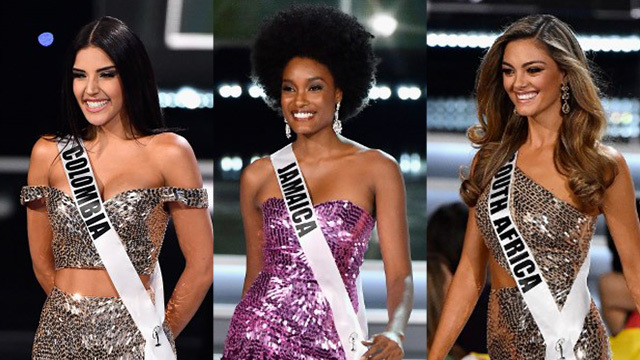
The world has finally got its Miss Universe for the year 2017 and it is none other than Demi-Leigh Nel-Peters from South Africa.

Demi-Leigh Nel-Peters left behind contestants from Colombia and Jamaica, who were declared runner-up and second runner-up respectively, to win the prestigious crown.

Making their way through over 90 gorgeous women representing their respective countries, contenders from South Africa, Jamaica, and Colombia finally made it to the top three of the prestigious pageant that was held in Las Vegas, Nevada, United States.


Each of the three contestants were asked a final question that finally determined the winner of Miss Universe 2017.

The question was, ''What quality in yourself are you most proud of and how will make you apply that to your time as Miss Universe?''

The contestant from Jamaica, Davina Bennett, answered, ''It is my drive and determination. I am part of a foundation that helps deaf people. This platform will be a great platform to help people.''

The contestant from Colombia,  Laura Gonzalez, answered, ''I am incredibly passionate about everything I do. I put my full self in every situation. I have done this as an actress, as Miss Colombia and will now do the same if I win Miss Universe.''

Finally, Miss Universe Demi Leigh Nel-Peters, from South Africa, said, ''You have to be confident in who you are as an individual. Miss Universe is one who has overcome many fears and will inspire other women too, to overcome their fears.''

(Source: India Today)

Demi-Leigh Nel-Peters from South Africa is Miss Universe 2017

Hold your breath, Demi-Leigh Nel-Peters from South Africa, has won the coveted title of Miss Universe 2017.

This is the 66th edition of the world-renown beauty pageant, where India was represented by Miss Diva Shraddha Shashidhar, who didn't make it to the list of top 15 finalists.

Crowned by Iris Mittenaere of France, at an event held at The AXIS at Planet Hollywood in Las Vegas, Nevada, United States, Demi-Leigh Nel-Peters rose to glory, after being skimmed through 92 participants.


Contenders from Jamaica, Venezuela, Thailand and Colombia made it to top five, but the South African beauty beat the others, and bagged the crown. Jamaican beauty Davina Bennett was the second runner-up, while Colombian beauty Laura Gonzalez was the first runner-up.

The show was hosted by American comedian Steve Harvey and supermodel Ashley Graham, while Fergie, and Rachel Platten, who performed "broken glass", brightened up the night with their terrific performances.

This is the second major beauty pageant of the year, after Miss World 2017, which was bagged by Haryana girl Manushi Chhillar.

(Source: India Today)

Saturday, 21 October 2017

'Who is beautiful, Kerala or Tamil women?': 'Neeya Naana' topic has us scratching our heads

The topic may be 'entertaining' but should a TV show normalize the objectification of women like this?

Vijay TV's Neeya Naana, hosted by anchor Gobinath, has often come under controversy for the views expressed on the show. This time, however, the topic itself has drawn flak.

Vijay TV has been promoting the show's topic thus: Who is more beautiful? Kerala women? Or Tamil Nadu women?


The promo is rather bewildering. The all women show has one side dressed in traditional Kerala dress and the other dressed in Tamil Nadu's attire. From women pretending to cuddle a baby (?!) to arguing about why they were superior to the others, the topic certainly appears to be the most ridiculous chosen in recent times.

It's possible that the topic was triggered because of 'Jimmiki Kammal' fame Sherin and her popularity in Tamil Nadu, which prompted discussions on similar lines on social media. However, should a popular TV show take this objectification one stop ahead and normalize it?


The channel is even running a poll on social media. "Kerala women? Or Tamil women? Sunday afternoon at 3 pm on Neeya Naana." It has got thousands of votes.

As counselor and psychotherapist Veena Jagadeesh has put it, writing on Facebook:

"For the people who say " learn to laugh at yourself, chill, when women themselves can discuss this so nicely, what is your problem?"

Unfortunately, that is the problem. In the name of jokes and fun, we are allowing such subtle discussions, which doesn't serve any purpose. And I am only hope that women get strength to not laugh at themselves on such cheap topics.

Well...TRP targets will be achieved for sure, as this is an "entertaining" topic. So this becomes a "chicken or egg" situation!

Now, another question will be...if this program is doing an episode on men "Kerala men or Tamil Nadu men - who have got better six packs and who look more handsome?" , Will I protest?

I will. And you should. Because objectifying any gender is not ok.


The show is yet to be aired and it is perhaps premature to go hammer and tongs at it. But can there be a sensible discussion on such a topic? Ever? If yes, we'd be very surprised.

(Source: TNM)

Sunday, 9 July 2017

I live in the United States of Shringar

I am looking at Aishwarya Rai’s photos. She’s at the launch of her new film Jazbaa. As a woman negotiating the path back to work after childbirth and as one of India’s legendary beauties she knows shape and size – hers – will loom over the buzz that follows. She’s taking no chances. In every single image recorded that evening for posterity she stands with her legs crossed. I tried it at home, it slims down the thighs, neatens the silhouette.

Recently a leading fashion magazine invited me to a power lunch. I entered the convention centre and realized I was the only one in a sari, that too in a blouse with sleeves and a back that wasn’t cut out. In that room full of dark suits and tailored pencil skirts, I looked like what I am sure they imagined a housewife from Chittaranjan Park looked like.

Everyone was most encouraging, happy to see that someone who looked like me could have a day job. Nobody bothered to ask me those “business to business” questions that accompany the main course at networking events. I gave out more visiting cards that afternoon than I have ever done in my entire career. Just to prove not only do I have a job…but baby I am on top of it. That I have huffed and puffed up every rung of that corporate ladder with these arms and thighs.

But things could be worse for me in South Korea. It is estimated that between one-fifth and one-third of women in Seoul have received plastic surgery; this figure for women in their twenties is pegged at fifty percent or higher. In Lebanon, where anecdotal evidence suggests 1 in 3 women have been to a plastic surgeon once, even five years ago banks offered loans of up to $5000 for cosmetic surgery.

Knowing English is the first prerequisite of being cool in this country. Ask Kangana Ranaut, who has said in interviews that when she started out and didn’t speak English well she was “treated like a dog”. Similarly the white body, narrow hipped woman with pointy breasts and long legs has become our dream body image. The sinister lie that female worth depends upon looks, and a certain kind of looks, has become a universal truth validated by the global culture machine.

In magazine after magazine we read about how to eradicate wide hips like polio. How technology in 10 years can make cellulite disappear like small pox. Soon we will dream up anti-flab vaccines to be given to babies before the milestone ‘anna prashon’ ceremony where they are first fed the bad carbs known as rice.


But when did beauty become all about shape. Isn’t ‘shringar’ a mood, a feeling, a moment ripe with possibility? Anxiety, insecurity, fear, self-hate and shame inimical to this delicate feeling. Unlike the all-pervasive global machine that starts with calling parts of your body problem areas, shringar starts with celebrating your best feature.

From long wet hair snaking down the back to the mole that sits sentinel on the chin; wide hips that sway gracefully like an elephant’s walk; the glint of a dimple, a flower tucked in the hair, the shine of a nose pin; the jangle of bangles; the intricate mehendi on your hands. In the land of shringar there is no grid for beauty. Here a pale Sita could co-exist with the dusky, wild-eyed beauty of Draupadi. Now we all want to look the same…wear the same cropped t shirt as our 15-year-old…and have people tell us “you guys look like sisters.”

Last year I had gone to Dhaka to film a documentary and fell in love predictably with the Bengaliness everywhere.

After dinner every night we’d sit together on the terrace and somebody would say “Swati apa kichu gao na amader shathe” (Sing something with us, Swati didi) But I didn’t have a single song to sing. Not one.

I don’t know Rabindra Sangeet or Nazrul or any Lalan Fakir not even a Bengali nursery rhyme. The chalk-and-duster revolution of the empire has taken away my Bengali voice. Growing up in Delhi i thought listening to Dylan and Dr. Hook was way cooler than listening to Baba Dwijen Mukherjee. And now it is as if speaking white is no longer enough. Now we want to look white.

But now I am older and wiser.
I know better.
I know where I come from.

It’s still not late. We can curate a different set of dreams and conversations. Let’s be lovely instead of perfect and let’s not shrink to a size that’s not ours. We are from the United States of Shringar. And in this satisfactory factory we make okay all day.

(Source: The Ladies Finger)

Tuesday, 25 April 2017

20 utterly profound Winnie-the-Pooh quotes to make you smile

Perhaps we adults need to revisit the realms of children’s literature, TV and film once in a while because there is a surprising amount of wisdom to be gleaned from them.

Author A.A. Milne created some of the most thoughtful and profound characters when he penned his Winne-the-Pooh novels and many of the quotes that were born from it have life lessons we can all learn from.

Some of these, and others from the subsequent animated adaptations, can be found below. As soon as you start reading them, you’ll be blown away by how deep and full of meaning they are.

If you are a parent, perhaps you should consider tracking down the books, TV series, and movies to introduce your children to the wonders of this bear in the forest.

I recommend grabbing a copy of The Tao of Pooh as you’ll no doubt enjoy it if you enjoy the quotes below.


On love:
“How do you spell ‘love’?” – Piglet
“You don’t spell it…you feel it.” – Pooh

On trusting your ability to deal with anything:
Promise me you’ll always remember: You’re braver than you believe, and stronger than you seem, and smarter than you think.

On the importance of the little things:
Sometimes, said Pooh, the smallest things take up the most room in your heart.

On being present:
“What day is it?”
“It’s today,” squeaked Piglet.
“My favorite day,” said Pooh.

On the futility of worry:
“Supposing a tree fell down, Pooh, when we were underneath it?”
“Supposing it didn’t,” said Pooh after careful thought.
Piglet was comforted by this.

On knowing by simply being:
Sometimes, if you stand on the bottom rail of a bridge and lean over to watch the river slipping slowly away beneath you, you will suddenly know everything there is to be known.

On individuality:
The things that make me different are the things that make me.

On the difference between knowledge and understanding:
“Rabbit’s clever,” said Pooh thoughtfully.
“Yes,” said Piglet, “Rabbit’s clever.”
“And he has Brain.”
“Yes,” said Piglet, “Rabbit has Brain.”
There was a long silence.
“I suppose,” said Pooh, “that that’s why he never understands anything.”

On knowing that you don’t need anybody else to complete you:
I was walking along looking for somebody, and then suddenly I wasn’t anymore.

On self-sacrifice:
Love is taking a few steps backward maybe even more…to give way to the happiness of the person you love.

On gratitude:
Piglet noticed that even though he had a very small heart, it could hold a rather large amount of gratitude.

On comfort zones:
You can’t stay in your corner of the Forest waiting for others to come to you. You have to go to them sometimes.

On not overthinking:
Sometimes I sits and thinks, and sometimes I just sits…

On unselfishness:
A little consideration, a little thought for others, makes all the difference.

On the wealth in your life:
How lucky I am to have something that makes saying goodbye so hard.

On clearing your mind of all thoughts:
Don’t underestimate the value of doing nothing, of just going along, listening to all the things you can’t hear, and not bothering.

On the value of dreams:
I think we dream so we don’t have to be apart for so long. If we’re in each other’s dreams, we can be together all the time.

On the benefits of not micromanaging everything:
One of the advantages of being disorganized is that one is always having surprising discoveries.

On the beauty within the arts:
But it isn’t easy, said Pooh. Because poetry and hums aren’t things which you get, they’re things which get you. And all you can do is to go where they can find you.

On finding joy in everything:
Nobody can be uncheered with a balloon.

(Source: A Conscious Rethink)