Showing posts with label social media. Show all posts

Thursday, 24 March 2022

Not smart but clever? The return of 'dumbphones'

Seventeen-year-old Robin West is an anomaly among her peers - she doesn't have a smartphone.

Instead of scrolling through apps like TikTok and Instagram all day, she uses a so-called "dumbphone".


These are basic handsets, or feature phones, with very limited functionality compared to say an iPhone. You can typically only make and receive calls and SMS text messages. And, if you are lucky - listen to radio and take very basic photos, but definitely not connect to the internet or apps.


These devices are similar to some of the first handsets that people bought back in the late 1990s.


Ms West's decision to ditch her former smartphone two years ago was a spur of the moment thing. While looking for a replacement handset in a second-hand shop she was lured by the low price of a "brick phone".


The Nokia 3310 phone is one of the best-selling handsets of all time, selling 126 million units. Getty Images 


Her current handset, from French firm MobiWire, cost her just £8. And because it has no smartphone functionality she doesn't have an expensive monthly data bill to worry about.


"I didn't notice until I bought a brick phone how much a smartphone was taking over my life," she says. "I had a lot of social media apps on it, and I didn't get as much work done as I was always on my phone."


The Londoner adds that she doesn't think she'll ever buy another smartphone. "I'm happy with my brick - I don't think it limits me. I'm definitely more proactive."


Dumbphones are continuing to enjoy a revival. Google searches for them jumped by 89% between 2018 and 2021, according to a report by software firm SEMrush.


And while sales figures are hard to come by, one report said that global purchases of dumbphones were due to hit one billion units last year, up from 400 million in 2019. This compares to worldwide sales of 1.4 billion smart phones last year, following a 12.5% decline in 2020.


Meanwhile, a 2021 study by accountancy group Deloitte said that one in 10 mobile phone users in the UK had a dumbphone.


"It appears fashion, nostalgia, and them appearing in TikTok videos, have a part to play in the dumbphone revival," says Ernest Doku, mobiles expert at price comparison site Uswitch.com. "Many of us had a dumbphone as our first mobile phone, so it's natural that we feel a sense of nostalgia towards these classic handsets."


Mr Doku says it was the 2017 relaunch of Nokia's 3310 handset - first released in 2000, and one of the biggest-selling mobiles of all time - that really sparked the revival. "Nokia pushed the 3310 as an affordable alternative in a world full of high-spec mobiles."


He adds that while it's true that dumbphones can't compete with the latest premium Apple and Samsung models when it comes to performance or functionality, "they can outshine them in equally important areas such as battery life and durability".


Five years ago, Przemek Olejniczak, a psychologist, swapped his smartphone for a Nokia 3310, initially because of the longer-lasting battery. However, he soon realised that there were other benefits.


"Before I would always be stuck to the phone, checking anything and everything, browsing Facebook or the news, or other facts I didn't need to know," he says.


"Now I have more time for my family and me. A huge benefit is that I'm not addicted to liking, sharing, commenting, or describing my life to other people. Now I have more privacy."


However, Mr Olejniczak, who lives in the Polish city of Lodz, admits that initially the switch was challenging. "Before I'd be checking everything, such as buses and restaurants, on my smartphone [when travelling]. Now that is impossible, so I have learned to do all those things beforehand at home. I got used to it."


One maker of dumbphones is New York company Light Phone. Slightly more clever that the norm for such products, its handsets do allow users to listen to music and podcasts, and link by Bluetooth to headphones. Yet the firm pledges that its phones "will never have social media, clickbait news, email, an internet browser, or any other anxiety-inducing infinite feed".


The company says it recorded its strongest year for financial performance in 2021, with sales up 150% compared with 2020. This is despite its handsets being expensive for dumbphones - prices start at $99 (£75).


Light Phone co-founder, Kaiwei Tang, says the device was initially created to use as a secondary phone for people wanting to take a break from their smartphone for a weekend for example, but now half the firm's customers use it as their primary device.


"If aliens came to earth they'd think that mobile phones are the superior species controlling human beings," he says. 


"And it's not going to stop, it's only going to get worse. Consumers are realising that something is wrong, and we want to offer an alternative."


Mr Tang adds that, surprisingly, the firm's main customers are aged between 25 and 35. He says he was expecting buyers to be much older.


Two phones pictured in 2005, two years before Apple released its first iPhone, and 11 years before TikTok. Getty Images 


Tech expert, Prof Sandra Wachter, a senior research fellow in artificial intelligence at Oxford University, says it is understandable that some of us are looking for simpler mobile phones.


"One can reasonably say that nowadays a smart phone's ability to connect calls and send short messages is almost a side feature," she explains. "Your smart phone is your entertainment centre, your news generator, your navigation system, your diary, your dictionary, and your wallet."


She adds that smartphones always "want to grab your attention" with notifications, updates, and breaking news constantly disrupting your day. "This can keep you on edge, might even be agitating. It can be overwhelming."


Prof Wachter adds: "It makes sense that some of us are now looking for simpler technologies and think that dumbphones might offer a return to simpler times. It might leave more time to fully concentrate on a single task and engage with it more purposefully. It might even calm people down. Studies have shown that too much choice can create unhappiness and agitation."


Yet back in London, Robin West says that many people are bewildered by her choice of mobile. "Everyone thinks it's just a temporary thing. They're like: 'So when are you getting a smartphone? Are you getting one this week?'."


(Source: BBC)

Monday, 31 January 2022

What is 'Dark Academia', and why is it trending on social media in 2022?

People around the world, mostly Generation Z, are obsessed with the look and feel of gothic, elitist universities. Why?

At the end of last year, Instagram released its first trend report: an extensive study of previous user behavior in order to determine what kind of user might follow which type of trend. Some topics like “racial justice” and “environmental awareness” were expected to show up on the report. Others, like “Dark Academia,” were not.


You would be forgiven if you didn’t know what “Dark Academia” meant. In short, it is the name given to an aesthetic and subculture based on the architecture and clothing styles of some of the world’s most elite colleges, specifically Oxbridge and the Ivy League schools — and perhaps Hogwarts. Think gothic hallways and robed uniforms, candlelit evenings spent marking up classic literature while raindrops platter against a stained glass window. 


That is the general idea, but Dark Academia can be interpreted differently by different people. Your school library can be considered Dark Academia, and the same goes for your grandpa’s study. On platforms like TikTok, even more telling examples of Dark Academia are being shared. It’s cursive notes written in Latin on a piece of parchment. It’s cutouts of Greek statues and the covers of Penguin classics, tweed suits, robed uniforms, and sexy librarians. It’s reading Beat poetry while listening to Chopin, preferably on vinyl. 


According to Instagram’s trend report, the Dark Academia aesthetic is proving to be exceedingly popular among members of Gen Z, or people born between 1997 and 2012. Until recently, cultural trends were difficult to ascertain. Now, thanks to social media, we can get a clear picture of the different types of users buying into the trend, as well as the possible reasons for them doing so. 


The Humanist Library of Sélestat in France is Dark Academic. (Credit: Photo Claude TRUONG-NGOC / Wikipedia)


A resurgence of intellectualism

One of the main reasons Dark Academia is currently trending is that the style means different things to different people. Some are here mainly for the “Academia” side. They appreciate that the style is getting others excited about the unbridled pursuit of knowledge and contemplation of artistic or academic topics that don’t receive enough attention from mainstream society.


The Dark Academia aesthetic is hugely influenced by Oxbridge and the Ivy League, two renowned academic networks that — through their elitist nature, internal hierarchies, and imposing architecture — created environments in which the otherwise slow, uneventful, and oftentimes unprofitable pursuit of knowledge is closely connected with much more enticing images of wealth and power. 


Dark Academia internet subcultures center on adopting and maintaining some important elements of the student lifestyle, including frequent visits to libraries and museums, above average caffeine consumption, and study sessions that often go on till way into the evening — even when you’re not in school and won’t get graded for anything. 


For many post-grads, Dark Academia helps treat the nostalgia they feel for their college days, when intellectual exploration came hand-in-hand with lack of responsibilities. Knowing this, it should come as no surprise that the Dark Academia trend really blew up during the start of the coronavirus pandemic, a time in which students across the world were forced to take classes from home, losing the cherished sociocultural aspects of their education. 


The dark side of Dark Academia

Others gravitate toward the “Dark” side of Dark Academia. These people are very much concerned with the pursuit of knowledge as well, but — writes Adiba Jaigirdar in Book Riot — only insofar as it relates to the “exploration of death and morbidity.” They subscribe to a dramatic but quite possibly accurate axiom about education: that he who increases knowledge also increases sorrow. 


This somber, at times sinister, character of Dark Academia is reflected back in the gothic design of many prestigious colleges in North America and Europe. The appearance of these institutions, more castles than campuses, harken back to a point in time when science still resided in the shadow of religion and inspired similar levels of devotion among its followers. 


The imposing appearance of these schools helped present higher education as an important, serious, and noble enterprise. What’s more, by disguising their buildings as churches and cathedrals, schools framed the knowledge stored inside their walls as a forbidden fruit, the consumption of which has become a religion unto itself. Indeed, something about the aesthetic is almost blasphemous.


Moody architecture and philosophical pessimism are such important aspects of Dark Academia that the online subculture eventually spawned its own sub-subculture, called Light Academia. If Dark Academia is a lamentation of death, Light Academia is a celebration of life. Its attitudes toward learning are more positive; the pursuit of knowledge, instead of causing us grief, can be used to make the world a better, happier place.


Escapism for the elite?

Despite its ongoing popularity on social media, Dark Academia has also drawn its share of criticism. Aside from promoting unhealthy lifestyles where caffeine-fueled study sessions take prevalence over sleep, Dark Academia has been accused of being Eurocentric, seeing that the style is built around European universities with predominantly Western curricula. 


Go on TikTok, and you will find that most Dark Academia content creators prefer to discuss Oscar Wilde and Emily Dickinson over Toni Morrison or James Baldwin, even though the latter two authors were just as insightful as the former. Talking with magazines, more than one social media influencer said they received DMs from others asking if they will fit into the subculture if they aren’t white or wealthy. 


Finally, we are able to understand what may well be Dark Academia’s single biggest appeal: allowing people from various backgrounds to feel as though they have been granted access to a world that, in any other circumstance, would be all but inaccessible. But interestingly enough, Dark Academia serves a similar purpose for people who actually attended university as well. According to an article published in Jacobin, Dark Academia is essentially a romanticized version of academia that highlights problems with real-world institutions. The aesthetic’s subliminal promise, “deep study, unfettered by time pressure,” is a response to the actual college experience, where mounting debt encourages students to move through the most exciting and carefree phase of their lives as quickly as possible.

In a way, Dark Academia is escapism for those who, if they had the money, would stay in school for the rest of their lives. 


(Source: Big Think)

Friday, 28 January 2022

The people deciding to ditch their smartphones

 In a world where many of us are glued to our smartphones, Dulcie Cowling is something of an anomaly - she has ditched hers.

The 36-year-old decided at the end of last year that getting rid of her handset would improve her mental health. So, over Christmas she told her family and friends that she was switching to an old Nokia phone that could only make and receive calls and text messages.


She recalls that one of the pivotal moments that led to her decision was a day at the park with her two boys, aged six and three: "I was on my mobile at a playground with the kids and I looked up and every single parent - there was up to 20 - were looking at their phones, just scrolling away," she says.


"I thought 'when did this happen?'. Everyone is missing out on real life. I don't think you get to your death bed and think you should have spent more time on Twitter, or reading articles online."


Ms Cowling, who is a creative director at London-based advertising agency Hell Yeah!, adds that the idea to abandon her smartphone had built up during the Covid lockdowns.


"I thought about how much of my life is spent looking at the phone and what else could I do. Being constantly connected to lots of services creates a lot of distractions, and is a lot for the brain to process."


One study suggests we spend almost five hours a day on our smartphones. Getty Images


She plans to use the time gained from quitting her smartphone to read and sleep more.


About nine out of 10 people in the UK now own a smartphone, a figure broadly replicated across the developed world. And we are glued to them - one recent study found that the average person spends 4.8 hours a day on their handset.


Yet for a small, but growing number of people, enough is enough.


Alex Dunedin binned his smartphone two years ago. "Culturally we have become addicted to these tools," says the educational researcher and technology expert. "They are blunting cognition and impeding productivity."


Mr Dunedin, who lives and works in Scotland, says another reason behind his decision was environmental concerns. "We are wasting exponential amounts of energy producing exponential amounts of CO2 emissions," he says.


He has become happier and more productive since he stopped using a smartphone, he says. Mr Dunedin doesn't even have an old-fashioned mobile phone or even a landline anymore. He is instead only electronically contactable via emails to his home computer.


"It has improved my life," he says. "My thoughts are freed up from constantly being cognitively connected to a machine that I need to feed with energy and money. I think that the danger of technologies is that they are emptying our lives."


Lynne Voyce, a 53-year-old teacher and writer from Birmingham, has moved in the opposite direction - she started using a smartphone again last August after a break of six years.


She says she was reluctantly compelled to buy one again due to having to deal with QR codes in restaurants, and so-called Covid passports, plus making it easier to keep in touch with one of her daughters who lives in Paris.


But she plans to give up it up again, if she can. "After the pandemic, and when Ella [her eldest daughter] isn't living abroad, I might try and give it up again. It sounds like an addiction, doesn't it?"


When Ms Voyce first abandoned her smartphone back in 2016 it was to help encourage her daughters to reduce the time they spent on their handsets.


"They were glued to their phones. I thought the only way to stop it was to get rid of my own phone. And it made all the difference.


"For example, we'd got to a restaurant, and they would no longer see me pick up my phone."


Not having a smartphone "took a lot of pressure off my brain" she says, "I didn't feel like I had to instantly answer things or be available when out".


Yet, while some worry about how much time they spend on their handset, for millions of others they are a godsend.

"More than ever, access to healthcare, education, social services and often to our friends and family is digital, and the smartphone is an essential lifeline for people," says a spokesperson for UK mobile network Vodafone.


"We also create resources to help people get the most from their tech, as well as to stay safe when they're online - that's hugely important."


However, Hilda Burke, a psychotherapist and author of The Phone Addiction Workbook, says there is a strong link between heavy device usage and relationship issues, quality of sleep, our ability to switch off and relax, and concentration levels.


"Many people have a constant drip feed of requests coming their way via their device, many with a false sense of urgency.


"They feel unable to lay boundaries down, with the result that they feel compelled to check their emails and messages last thing at night and first thing in the morning."


If getting rid of your smartphone seems too much but you are concerned that you spend too much time on it, there are other measures you can take to reduce your usage.


While it might initially seem counterintuitive, more apps are emerging to curtail mindless scrolling.


For example, Freedom lets you temporarily block apps and websites so you can focus more. And Off The Grid enables you to block off your phone for a certain time period.


Ms Burke says it would be useful if more people monitored how much time they spend on their smartphone. "Starting to realise exactly how much time you're frittering away each day on your phone can be a powerful wake-up call and catalyst for change."


She also advises carving out short periods when you have your phone switched off or left at home, and gradually increase the wait period till you check it again.


Finally, she recommends choosing an image or a word that represents what you would rather be doing - if only you had more time - as your phone's screensaver.


"Considering most of us check our phones 55 times per day and some of us even 100 times, this is a great visual reminder of a more valuable way to spend your precious time," she says.


(Source: BBC)

Wednesday, 26 January 2022

Your attention didn’t collapse. It was stolen

 Social media and many other facets of modern life are destroying our ability to concentrate. We need to reclaim our minds while we still can.

When he was nine years old, my godson Adam developed a brief but freakishly intense obsession with Elvis Presley. He took to singing Jailhouse Rock at the top of his voice with all the low crooning and pelvis-jiggling of the King himself. One day, as I tucked him in, he looked at me very earnestly and asked: “Johann, will you take me to Graceland one day?” Without really thinking, I agreed. I never gave it another thought, until everything had gone wrong.


Ten years later, Adam was lost. He had dropped out of school when he was 15, and he spent almost all his waking hours alternating blankly between screens – a blur of YouTube, WhatsApp and porn. (I’ve changed his name and some minor details to preserve his privacy.) He seemed to be whirring at the speed of Snapchat, and nothing still or serious could gain any traction in his mind. During the decade in which Adam had become a man, this fracturing seemed to be happening to many of us. Our ability to pay attention was cracking and breaking. I had just turned 40, and wherever my generation gathered, we would lament our lost capacity for concentration. I still read a lot of books, but with each year that passed, it felt more and more like running up a down escalator. Then one evening, as we lay on my sofa, each staring at our own ceaselessly shrieking screens, I looked at him and felt a low dread. “Adam,” I said softly, “let’s go to Graceland.” I reminded him of the promise I had made. I could see that the idea of breaking this numbing routine ignited something in him, but I told him there was one condition he had to stick to if we went. He had to switch his phone off during the day. He swore he would.
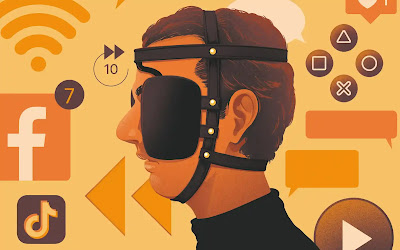

Illustration by Eric Chow.


When you arrive at the gates of Graceland, there is no longer a human being whose job is to show you around. You are handed an iPad, you put in little earbuds, and the iPad tells you what to do – turn left; turn right; walk forward. In each room, a photograph of where you are appears on the screen, while a narrator describes it. So as we walked around we were surrounded by blank-faced people, looking almost all the time at their screens. As we walked, I felt more and more tense. When we got to the jungle room – Elvis’s favourite place in the mansion – the iPad was chattering away when a middle-aged man standing next to me turned to say something to his wife. In front of us, I could see the large fake plants that Elvis had bought to turn this room into his own artificial jungle. “Honey,” he said, “this is amazing. Look.” He waved the iPad in her direction, and began to move his finger across it. “If you swipe left, you can see the jungle room to the left. And if you swipe right, you can see the jungle room to the right.”


If you read your texts while working, you lose that time, but also the time it takes to refocus afterwards, which is a lot.


His wife stared, smiled, and began to swipe at her own iPad. I leaned forward. “But, sir,” I said, “there’s an old-fashioned form of swiping you can do. It’s called turning your head. Because we’re here. We’re in the jungle room. You can see it unmediated. Here. Look.” I waved my hand, and the fake green leaves rustled a little. Their eyes returned to their screens. “Look!” I said. “Don’t you see? We’re actually there. There’s no need for your screen. We are in the jungle room.” They hurried away. I turned to Adam, ready to laugh about it all – but he was in a corner, holding his phone under his jacket, flicking through Snapchat.


At every stage in the trip, he had broken his promise. When the plane first touched down in New Orleans two weeks before, he took out his phone while we were still in our seats. “You promised not to use it,” I said. He replied: “I meant I wouldn’t make phone calls. I can’t not use Snapchat and texting, obviously.” He said this with baffled honesty, as though I had asked him to hold his breath for 10 days. In the jungle room, I suddenly snapped and tried to wrestle his phone from his grasp, and he stomped away. That night I found him in the Heartbreak Hotel, sitting next to a swimming pool (shaped like a giant guitar), looking sad. I realised as I sat with him that, as with so much anger, my rage towards him was really anger towards myself. His inability to focus was something I felt happening to me too. I was losing my ability to be present, and I hated it. “I know something’s wrong,” Adam said, holding his phone tightly in his hand. “But I have no idea how to fix it.” Then he went back to texting.


I realised then that I needed to understand what was really happening to him and to so many of us. That moment turned out to be the start of a journey that transformed how I think about attention. I travelled all over the world in the next three years, from Miami to Moscow to Melbourne, interviewing the leading experts in the world about focus. What I learned persuaded me that we are not now facing simply a normal anxiety about attention, of the kind every generation goes through as it ages. We are living in a serious attention crisis – one with huge implications for how we live. I learned there are twelve factors that have been proven to reduce people’s ability to pay attention and that many of these factors have been rising in the past few decades – sometimes dramatically.


I went to Portland, Oregon, to interview Prof Joel Nigg, who is one of the leading experts in the world on children’s attention problems, and he told me we need to ask if we are now developing “an attentional pathogenic culture” – an environment in which sustained and deep focus is harder for all of us. When I asked him what he would do if he was in charge of our culture and he actually wanted to destroy people’s attention, he said: “Probably what our society is doing.” Prof Barbara Demeneix, a leading French scientist who has studied some key factors that can disrupt attention, told me bluntly: “There is no way we can have a normal brain today.” We can see the effects all around us. A small study of college students found they now only focus on any one task for 65 seconds. A different study of office workers found they only focus on average for three minutes. This isn’t happening because we all individually became weak-willed. Your focus didn’t collapse. It was stolen.


When I first got back from Graceland, I thought my attention was failing because I wasn’t strong enough as an individual and because I had been taken over by my phone. I went into a spiral of negative thoughts, reproaching myself. I’d say – you’re weak, you’re lazy, you’re not disciplined enough. I thought the solution was obvious: be more disciplined, and banish your phone. So I went online and booked myself a little room by the beach in Provincetown, at the tip of Cape Cod. I announced triumphantly to everyone – I am going to be there for three months, with no smartphone, and no computer that can get online. I’m done. I’m tired of being wired. I knew I could only do it because I was very lucky and had money from my previous books. I knew it couldn’t be a long-term solution. I did it because I thought that if I didn’t, I might lose some crucial aspects of my ability to think deeply. I also hoped that if I stripped everything back for a time, I might start to be able to glimpse the changes we could all make in a more sustainable way.


In my first webless week, I stumbled around in a haze of decompression. Provincetown is a little gay resort town with the highest proportion of same-sex couples in the US. I ate cupcakes, read books, talked with strangers and sang songs. Everything radically slowed down. Normally I follow the news every hour or so, getting a drip-feed of anxiety-provoking facts and trying to smush them together into some kind of sense. Instead, I simply read a physical newspaper once a day. Every few hours, I would feel an unfamiliar sensation gurgling inside me and I would ask myself: what is that? Ah, yes. Calm.


Later, I realised when I interviewed the experts and studied their research that there were many reasons why my attention was starting to heal from that first day. Prof Earl Miller, a neuroscientist at Massachusetts Institute of Technology, explained one to me. He said “your brain can only produce one or two thoughts” in your conscious mind at once. That’s it. “We’re very, very single-minded.” We have “very limited cognitive capacity”. But we have fallen for an enormous delusion. The average teenager now believes they can follow six forms of media at the same time. When neuroscientists studied this, they found that when people believe they are doing several things at once, they are actually juggling. “They’re switching back and forth. They don’t notice the switching because their brain sort of papers it over to give a seamless experience of consciousness, but what they’re actually doing is switching and reconfiguring their brain moment-to-moment, task-to-task – [and] that comes with a cost.” Imagine, say, you are doing your tax return, and you receive a text, and you look at it – it’s only a glance, taking three seconds – and then you go back to your tax return. In that moment, “your brain has to reconfigure, when it goes from one task to another”, he said. You have to remember what you were doing before, and you have to remember what you thought about it. When this happens, the evidence shows that “your performance drops. You’re slower. All as a result of the switching.”


This is called the “switch-cost effect”. It means that if you check your texts while trying to work, you aren’t only losing the little bursts of time you spend looking at the texts themselves – you are also losing the time it takes to refocus afterwards, which turns out to be a huge amount. For example, one study at the Carnegie Mellon University’s human computer interaction lab took 136 students and got them to sit a test. Some of them had to have their phones switched off, and others had their phones on and received intermittent text messages. The students who received messages performed, on average, 20% worse. It seems to me that almost all of us are currently losing that 20% of our brainpower, almost all the time. Miller told me that as a result we now live in “a perfect storm of cognitive degradation”.


For the first time in a very long time, in Provincetown I was doing one thing at a time, without being interrupted. I was living within the limits of what my brain could actually handle. I felt my attention growing and improving with every day that passed, but then, one day, I experienced an abrupt setback. I was walking down the beach and every few steps I saw the same thing that had been scratching at me since Memphis. People seemed to be using Provincetown simply as a backdrop for selfies, rarely looking up, at the ocean or each other. Only this time, the itch I felt wasn’t to yell: You’re wasting your lives, put the damn phone down. It was to yell: Give me that phone! Mine! For so long, I had received the thin, insistent signals of the web every few hours throughout the day, the trickle of likes and comments that say: I see you. You matter. Now they were gone. Simone de Beauvoir said that when she became an atheist, it felt like the world had fallen silent. Losing the web felt like that. After the rhetorical heat of social media, ordinary social interactions seemed pleasing but low volume. No normal social interaction floods you with hearts.


I realised that to heal my attention, it was not enough simply to strip out distractions. That makes you feel good at first – but then it creates a vacuum where all the noise was. I realised I had to fill the vacuum. To do that, I started to think a lot about an area of psychology I had learned about years before – the science of flow states. Almost everyone reading this will have experienced a flow state at some point. It’s when you are doing something meaningful to you, and you really get into it, and time falls away, and your ego seems to vanish, and you find yourself focusing deeply and effortlessly. Flow is the deepest form of attention human beings can offer. But how do we get there?


I later interviewed Prof Mihaly Csikszentmihalyi in Claremont, California, who was the first scientist to study flow states and researched them for more than 40 years. From his research, I learned there are three key factors which you need to get into flow. First you need to choose one goal. Flow takes all your mental energy, deployed deliberately in one direction. Second, that goal needs to be meaningful to you – you can’t flow into a goal that you don’t care about. Third, it helps if what you are doing is at the edge of your abilities – if, say, the rock you are climbing is slightly higher and harder than the last rock you climbed. So every morning, I started to write – a different kind of writing from my earlier work, one that stretched me. Within a few days, I started to flow, and hours of focus would pass without it feeling like a challenge. I felt I was focusing in the way I had when I was a teenager, in long effortless stretches. I had feared my brain was breaking. I cried with relief when I realised that in the right circumstances, its full power could come back.


At the end of every day, I would sit on the beach and watch the light slowly change. The light on the cape is unlike the light anywhere else I have ever been and in Provincetown, I could see more clearly than I ever had before in my life – my own thoughts, my own goals, my own dreams. I was living in the light. So when the time came to leave the beach house and come back to the hyperlinked world, I became convinced I had cracked the code of attention. I returned to the world determined to integrate the lessons I had learned in my everyday life. When I was reunited with my phone and laptop after taking a ferry back to where they were stashed in Boston, they seemed alien, and alienating. But within a few months, my screen time was back to four hours a day, and my attention was fraying and breaking again.


In Moscow, the former Google engineer James Williams – who has become the most important philosopher of attention in the western world – told me I had made a crucial mistake. Individual abstinence is “not the solution, for the same reason that wearing a gas mask for two days a week outside isn’t the answer to pollution. It might, for a short period of time, keep certain effects at bay, but it’s not sustainable, and it doesn’t address the systemic issues.” He said that our attention is being deeply altered by huge invasive forces in wider society. Saying the solution was to just adjust your own habits – to pledge to break up with your phone, say – was just “pushing it back on to the individual” he said, when “it’s really the environmental changes that will really make the difference”.


Nigg said it might help me grasp what’s happening if we compare our rising attention problems to our rising obesity rates. Fifty years ago there was very little obesity, but today it is endemic in the western world. This is not because we suddenly became greedy or self-indulgent. He said: “Obesity is not a medical epidemic – it’s a social epidemic. We have bad food, for example, and so people are getting fat.” The way we live changed dramatically – our food supply changed, and we built cities that are hard to walk or cycle around, and those changes in our environment led to changes in our bodies. We gained mass, en masse. Something similar, he said, might be happening with the changes in our attention.


I learned that the factors harming our attention are not all immediately obvious. I had been focused on tech at first, but in fact the causes range very widely – from the food we eat to the air we breathe, from the hours we work to the hours we no longer sleep. They include many things we have come to take for granted – from how we deprive our children of play, to how our schools strip learning of meaning by basing everything on tests. I came to believe we need to respond to this incessant invasion of our attention at two levels. The first is individual. There are all sorts of changes we can make at a personal level that will protect our focus. I would say that by doing most of them, I have boosted my focus by about 20%. But we have to level with people. Those changes will only take you so far. At the moment it’s as though we are all having itching powder poured over us all day, and the people pouring the powder are saying: “You might want to learn to meditate. Then you wouldn’t scratch so much.” Meditation is a useful tool – but we actually need to stop the people who are pouring itching powder on us. We need to band together to take on the forces stealing our attention and take it back.


This can sound a bit abstract – but I met people who were putting it into practice in many places. To give one example: there is strong scientific evidence that stress and exhaustion ruin your attention. Today, about 35% of workers feel they can never switch off their phones because their boss might email them at any time of day or night. In France, ordinary workers decided this was intolerable and pressured their government for change – so now, they have a legal “right to disconnect”. It’s simple. You have a right to defined work hours, and you have a right to not be contacted by your employer outside those hours. Companies that break the rules get huge fines. There are lots of potential collective changes like this that can restore part of our focus. We could, for example, force social media companies to abandon their current business model, which is specifically designed to invade our attention in order to keep us scrolling. There are alternative ways these sites could work – ones that would heal our attention instead of hacking it.


Some scientists say these worries about attention are a moral panic, comparable to the anxieties in the past about comic books or rap music, and that the evidence is shaky. Other scientists say the evidence is strong and these anxieties are like the early warnings about the obesity epidemic or the climate crisis in the 1970s. I think that given this uncertainty, we can’t wait for perfect evidence. We have to act based on a reasonable assessment of risk. If the people warning about the effects on our attention turn out to be wrong, and we still do what they suggest, what will be the cost? We will spend less time being harassed by our bosses, and we’ll be tracked and manipulated less by technology – along with lots of other improvements in our lives that are desirable in any case. But if they turn out to be right, and we don’t do what they say, what’s the cost? We will have – as the former Google engineer Tristan Harris told me – downgraded humanity, stripping us of our attention at the very time when we face big collective crises that require it more than ever.


But none of these changes will happen unless we fight for them. Just as the feminist movement reclaimed women’s right to their own bodies (and still has to fight for it today), I believe we now need an attention movement to reclaim our minds. I believe we need to act urgently, because this may be like the climate crisis, or the obesity crisis – the longer we wait, the harder it will get. The more our attention degrades, the harder it will be to summon the personal and political energy to take on the forces stealing our focus. The first step it requires is a shift in our consciousness. We need to stop blaming ourselves, or making only demands for tiny tweaks from our employers and from tech companies. We own our own minds – and together, we can take them back from the forces that are stealing them.


(Source: The Guardian)

Saturday, 17 July 2021

Next Door : ಕರಾಗ್ರೇ ವಸತೇ ಮೊಬೈಲ್ ತಲೆದಿಂಬೇ ಲ್ಯಾಪ್ ಟಾಪ್

Gadgets : ‘ಆವಕ್ಕನಿಗೆ ನಮ್ಮನ್ನು ಕಂಡ್ರೆ ಹೊಟ್ಟೆ ಉರಿ ಕಣ್ರೀ. ಅವ್ರ ಮಗನಿಗೆ ಟ್ಯಾಬ್ ತೆಕ್ಕೊಡೋಕೆ ಯೋಗ್ಯತೆ ಇಲ್ಲಾಂದ್ರೆ ತೆಪ್ಪಗಿರಬೇಕು, ನಮ್ಮ ವಿಚಾರಕ್ಕೆ ಯಾಕೆ ಬರ್ಬೇಕು? ಇನ್ನೊಂದ್ಸಲ ಆವಕ್ಕನ್ನ ನಮ್ಮನೆಗೇನಾದ್ರೂ ಕರೆದ್ರೆ ನಾ ಸುಮ್ನಿರಲ್ಲ ನೋಡಿ’ ಆಕೆ ತನ್ನ ಗಂಡನನ್ನು ಗದರುತ್ತಿದ್ದದ್ದು ಕೇಳಿ ಗರ ಬಡಿದವಳ ಹಾಗೆ ಹಾಲಿಗೆ ಬಂದು ಕುಳಿತುಕೊಂಡೆ’ ಚೈತ್ರಾ ಅರ್ಜುನಪುರಿ

ವಾಟ್ಸಪ್ಪು, ಟ್ವಿಟರು, ಫೇಸ್ ಬುಕ್ಕು ಮತ್ತೀಗ ಕ್ಲಬ್ ಹೌಸಿನಲ್ಲೂ ಇಲ್ಲವಾ? ಉತ್ತರ ಇಲ್ಲವೆಂದಾದಲ್ಲಿ ಆನ್ ಲೈನ್ ಸಂಸ್ಕೃತಿಯಲ್ಲಿ ನಾಗರಿಕ ಸಮಾಜ ಥಟ್ಟನೆ ನಮ್ಮನ್ನು ಒಂದು ಹಳೇ ಪಳಿಯುಳಿಕೆಯಂತೆ ಮೂಲೆಯಲ್ಲಿ ನಿಲ್ಲಿಸಿಬಿಡುತ್ತದೆ. ಉಸಿರಾಡಬೇಕೆಂದರೆ ಹರಿಯುವ ನೀರಿನೊಂದಿಗೆ ಹರಿಯಲೇಬೇಕು ಎಂಬ ತತ್ವದೊಂದಿಗೆ ನಮ್ಮ ನಮ್ಮ ವಯೋಮಾನ, ಆಸಕ್ತಿ, ಅನಿವಾರ್ಯಕ್ಕೆ ತಕ್ಕಂತೆ ನಮ್ಮ ಕಣ್ಣುಗಳನ್ನು ಬೆಳಕಿನಪರದೆಗಳಿಗೆ ಅಂಟಿಸುತ್ತ ಕಣ್ಣುಗಳನ್ನು ಅಗಲ ಮಾಡಿಕೊಳ್ಳುತ್ತ ಸಾಗುತ್ತಿದ್ದೇವೆ. ಗತಿಶೀಲ ಜಗತ್ತಿಗೆ ಕೊರೊನಾ ವೈರಾಣು ಮತ್ತಷ್ಟು ಚುರುಕು ನೀಡಿದ್ದೇ ಬೆಳಗಾಗುವುದರೊಳಗೆ ಕ್ಲಾಸುಗಳು, ಆಸ್ಪತ್ರೆಗಳು, ಅಂಗಡಿಗಳು, ಸಂತೆಗಳು-ಸಂತರುಗಳು, ಓಣಿಗಳು-ಕಟ್ಟೆಗಳು, ಗುಂಪುಗಳು, ಪರವಿರೋಧಗಳು, ಅಭಿವ್ಯಕ್ತಿಗಳು, ಸ್ವಾತಂತ್ರ್ಯ-ಸಂಸ್ಕೃತಿಗಳು, ಪರಂಪರೆ-ಪತಾಕೆಗಳು, ಗಾಳಿಪಟ-ಬಾಲಂಗೋಚಿಗಳ ಮೂಲಕ ಇಡೀ ಊರಿಗೆ ಊರನ್ನೇ ಜಾಲತಾಣಗಳ ಕೊಂಡಿಗೆ ಸಿಕ್ಕಿಸಿ ಕುಳಿತುಬಿಟ್ಟಿದ್ದೇವೆ.  


ಒಂದರ್ಥದಲ್ಲಿ ಈ ಅನಿವಾರ್ಯ ಬೇರೊಂದು ರೀತಿಯ ಪ್ರಯೋಗ, ಅವಿಷ್ಕಾರ, ಕ್ರಾಂತಿಗಳಿಗೆ ಸಂದರ್ಭಾನುಸಾರ ಕಾರಣವಾಯಿತು. ಆದರೆ ಆಳದಲ್ಲಿ? ಹಳ್ಳಿಗಳಿಗೂ, ನಗರ-ಮಹಾನಗರಗಳಿಗೂ ಅವುಗಳದ್ದೇ ಆದ ಸ್ವಭಾವ-ಸಂಸ್ಕೃತಿಗಳಿವೆ. ಅಲ್ಲೆಲ್ಲ ಜೀವಿಸುತ್ತಿರುವವರು ನಾವುನಾವುಗಳೇ. ತಂತ್ರಜ್ಞಾನ ಮತ್ತು ನಾಗರಿಕತೆಯ ಚೌಕಟ್ಟಿನಡಿ ನಮ್ಮನಮ್ಮ ಆಸೆ, ಆಶಯ, ನಿರ್ಧಾರಗಳನ್ನು ಬಂಧಿಸಿಡುತ್ತ, ಮಾನವ ಸಂಬಂಧಗಳನ್ನು ನಿಸ್ತಂತುಗೊಳಿಸುತ್ತ ಬರುತ್ತಿದ್ದೇವೆಯೇ? ಯಾವೆಲ್ಲ ಸಂದರ್ಭ, ಹಂತಗಳಲ್ಲಿ ಈ ಸಂಬಂಧಗಳು ಹೆಚ್ಚು ಆಪ್ತವಾಗಬೇಕಿತ್ತೋ ಅಲ್ಲೆಲ್ಲ ವ್ಯಾವಹಾರಿಕತೆಯ ಪರಿಧಿ ಆವರಿಸಿ ಭಾವಶೂನ್ಯರಾಗುತ್ತಿದ್ದೇವೆಯೇ? ಪರಸ್ಪರ ಸಹಕಾರ ತತ್ವ ಮರೆತ ಪರಿಣಾಮವಾಗಿ ಸಾಮುದಾಯಿಕ ಸ್ಪರ್ಶ, ಸೌಂದರ್ಯ, ಪ್ರಜ್ಞೆಯ ಬಿಸುಪನ್ನು ಕಳೆದುಕೊಳ್ಳುತ್ತ ಸಾಗುತ್ತಿದ್ದೇವೆಯೇ? ಇದೆಲ್ಲವೂ ನಮ್ಮ ಮುಂದಿನ ಪೀಳಿಗೆ ಅಥವಾ ಮಾನವವಿಕಾಸದ ಮೇಲೆ ಏನೆಲ್ಲ ಪರಿಣಾಮ ಬೀರಬಹುದು ಅದಕ್ಕೆ ನಾವು ಯಾವ ರೀತಿ ಸಿದ್ಧತೆ ಮಾಡಿಕೊಳ್ಳುತ್ತಿದ್ದೇವೆ?


ಕತಾರಿನಲ್ಲಿ ವಾಸಿಸುತ್ತಿರುವ, ಮಂಡ್ಯ ಮೂಲದ ಚೈತ್ರಾ ಅರ್ಜುನಪುರಿ ಲೇಖಕಿ, ಪತ್ರಕರ್ತೆ. ಫೋಟೋಗ್ರಫಿ ಇವರ ಹವ್ಯಾಸ. ಸರಣಿಯ ವಿಷಯಕ್ಕೆ ಸಂಬಂಧಿಸಿ ತಮ್ಮ ಅನುಭವ ಮತ್ತು ವಿಚಾರಗಳನ್ನು ಇಲ್ಲಿ ಕಟ್ಟಿಕೊಟ್ಟಿದ್ದಾರೆ.  


*


ಕೊರೊನಾ ವಕ್ಕರಿಸುವ ಮುನ್ನ ಗೆಳೆಯನೊಬ್ಬ ಮನೆಗೆ ಊಟಕ್ಕೆ ಆಹ್ವಾನಿಸಿದ್ದ. ಇಬ್ಬರು ಪುಟ್ಟ ಹುಡುಗರಿದ್ದಾರೆ, ಅವರೊಡನೆ ಆಟವಾಡಬಹುದು ಎಂದು ಮಗನಿಗೆ ಖುಷಿಯಾಯಿತು. ಪತಿರಾಯ ರಾತ್ರಿ ಏಳು ಗಂಟೆಗೆ ಗೆಳೆಯನ ಮನೆ ಮುಂದೆ ನಮ್ಮಿಬ್ಬರನ್ನೂ ಇಳಿಸಿ, ತನ್ನ ಗೆಳೆಯನೊಡನೆ ಹೋದ. ನನ್ನ ಗೆಳೆಯನ ಮನೆಯೊಳಗೆ ಹೋದಾಗ ಅವನ ಇಬ್ಬರೂ ಮಕ್ಕಳು ಆಟವಾಡುತ್ತಿದ್ದರು; ಒಬ್ಬ ಫೋನಿನಲ್ಲಿ, ಮತ್ತೊಬ್ಬ ಟ್ಯಾಬಿನಲ್ಲಿ. ನನ್ನ ಮಗ  ಅವರಿಬ್ಬರನ್ನೂ ಆಟವಾಡಲು ಕರೆದ, ಆದರೆ ಇಬ್ಬರೂ ಸ್ಕ್ರೀನ್ ಬಿಟ್ಟು ಹೊರಗೆ ಬರಲು ಸಿದ್ದರಿಲ್ಲ.


ಆರರಲ್ಲಿ ಓದುತ್ತಿರುವ ಹಿರಿಯ ಮಗ ತನ್ನ ಗೆಳೆಯರೊಂದಿಗೆ ಆನ್ ಲೈನ್ ಗೇಮ್ ಆಡುತ್ತಿದ್ದಾನೆ, ಮೂರರಲ್ಲಿ ಓದುತ್ತಿರುವ ಚಿಕ್ಕವನು ತನ್ನ ಗೆಳೆಯರೊಂದಿಗೆ ಎಂದು ಗೆಳೆಯನ ಹೆಂಡತಿ ಹೇಳಿದಾಗ ನಾನು ನಕ್ಕು ತಲೆಯಾಡಿಸಿದೆ. ಗೆಳೆಯನ ಹೆಂಡತಿ ಎರಡು ಮೂರು ಸಲ ಹುಡುಗರಿಗೆ ನನ್ನ ಮಗನೊಂದಿಗೆ ಆಟವಾಡಲು ಹೇಳಿ, ಅವರು ಆಕೆಯ ಮಾತಿಗೆ ಸೊಪ್ಪು ಹಾಕದೇ ಹೋದಾಗ, ತಾನೂ ಫೋನ್ ಹಿಡಿದು ನನ್ನ ಜೊತೆ ಮಾತನಾಡಲು ಕುಳಿತಳು.


ಕರೆದು ಕರೆದು ಸುಸ್ತಾದ ನನ್ನ ಮಗ ಕೊನೆಗೆ ಕೈಗೆ ಸಿಕ್ಕ ನಾಲ್ಕೈದು ಗೊಂಬೆಗಳನ್ನು ನೆಲದ ಮೇಲೆ ಹಾಕಿಕೊಂಡು ಒಬ್ಬನೇ ಆಟವಾಡತೊಡಗಿದ. ಆಗಾಗ ತಾನು ಆಡುತ್ತಿರುವ ಗೊಂಬೆಗಳ ಬಗ್ಗೆ ಹೇಳಲು ನನ್ನ ಮಗ ನಮ್ಮ ಬಳಿಗೆ ಓಡಿ ಬರುತ್ತಿದ್ದ. ಮಕ್ಕಳಿಬ್ಬರೂ ತಮ್ಮ ಪಾಡಿಗೆ ಫೋನಿನಲ್ಲಿ ಆಟವಾಡುತ್ತಾರೆ, ದೊಡ್ಡವರಿಗೆ ಡಿಸ್ಟರ್ಬ್ ಮಾಡುವುದಿಲ್ಲವೆನ್ನುತ್ತಾ ಗೆಳೆಯನ ಹೆಂಡತಿ ನಡುನಡುವೆ ಪ್ರಶಂಸಿಸುತ್ತಿದ್ದಳು.


ಒಂದು ಗಂಟೆಯ ಬಳಿಕ ಗೆಳೆಯನ ಮಡದಿ ಊಟಕ್ಕೆ ಏನು ಆರ್ಡರ್ ಮಾಡುವುದು ಎಂದು ನನ್ನನ್ನು ಕೇಳಿದಳು, ನಿಮ್ಮಿಷ್ಟ ಎಂದು ಸುಮ್ಮನಾದೆ. ತನ್ನ ಮಕ್ಕಳ ಉದ್ದನೆಯ ಲಿಸ್ಟ್ ನೋಟ್ ಮಾಡಿಕೊಂಡು, ಆನ್ ಲೈನ್ ಬುಕ್ ಮಾಡಿದಳು. ಮುಕ್ಕಾಲು ಗಂಟೆಯಲ್ಲಿ ಊಟ ಮನೆಗೆ ಬಂದಿತು. ಊಟಕ್ಕೆ ಕುಳಿತಾಗಳು ಆಕೆಯ ಮಕ್ಕಳ ಕೈಯಲ್ಲಿದ್ದ ಫೋನು ಕೆಳಗಿಳಿಯಲೇ ಇಲ್ಲ. ನನ್ನ ಮಗ ಅವರಿಬ್ಬರಿಗೆ, ‘ಯೂ ಶುಡ್ ಗಿವ್ ಸಮ್ ರೆಸ್ಟ್ ಟು ಯುವರ್ ಐಸ್, ಎಲ್ಸ್ ದೇ ವಿಲ್ ಗೆಟ್ ಡ್ಯಾಮೇಜ್ಡ್,’ ಎಂದು ರಾಗವೆಳೆದ. ಹುಡುಗರಿಬ್ಬರೂ ಅವನ ಮಾತಿಗೆ ನಕ್ಕು, ನಾವು ಅಲ್ಲಿಂದ ಹೊರಡುವವರೆಗೂ ಆ ಸಾಲನ್ನು ಹೇಳಿಕೊಂಡು ನನ್ನ ಮಗನನ್ನು ಗೇಲಿ ಮಾಡಲು ಶುರುಮಾಡಿದರು.


ನನ್ನ ಗಂಡ ಗೆಳೆಯನೊಡನೆ ಮರಳಿದಾಗ, ಮಗ ತನ್ನ ದೂರನ್ನೊಪ್ಪಿಸಿದ. ‘ಡ್ಯಾಡಿ, ಬೋಥ್ ಬ್ರದರ್ಸ್ ಡಿಡ್ ನಾಟ್ ಕಮ್ ಟು ಪ್ಲೇ ವಿಥ್ ಮೀ.’ ಗೆಳೆಯ ತನ್ನ ಮಕ್ಕಳಿಬ್ಬರನ್ನೂ ಫೋನ್ ಎತ್ತಿಡುವಂತೆ ಗದರಿದಾಗ ರಾತ್ರಿ ಹನ್ನೆರಡೂವರೆ!


ಗಂಡನಾಗಲಿ, ನಾನಾಗಲಿ ಗೆಳೆಯನ ಮಕ್ಕಳಿಬ್ಬರ ಈ ಸ್ಕ್ರೀನ್ ವ್ಯಸನದ ಬಗ್ಗೆ ಏನೂ ಮಾತನಾಡಲು ಹೋಗಲಿಲ್ಲ. ಅದರ ಬಗ್ಗೆ ಹೇಳಿದರೂ ಅವರಿಂದ ಬರುವ ನಿರೀಕ್ಷಿತ ಉತ್ತರ: ‘ನಾವಿಬ್ಬರೂ ಕೆಲಸಕ್ಕೆ ಹೋಗುತ್ತೇವೆ, ಮಕ್ಕಳಿಗೆ ಸಮಯ ಕಳೆಯಬೇಕಲ್ಲ, ಈಗಿನ ಕಾಲದ ಹುಡುಗರು, ಏನೂ ಮಾಡೋಕಾಗೋಲ್ಲ ಬಿಡಿ, ಇಲ್ಲಿ ಭಾರತದ ಹಾಗೆ ನೆರೆಹೊರೆಯವರೋ, ಸಂಬಂಧಿಗಳೋ ಇಲ್ಲ, ಪಾಪ ಅವರೇನು ಮಾಡುತ್ತಾರೆ, ನಾವೂ ಹೇಳುತ್ತೇವೆ, ನಮ್ಮ ಮಾತೇ ಕೇಳುವುದಿಲ್ಲ’ ಇತ್ಯಾದಿ, ಇತ್ಯಾದಿ.


‘ನೀನಾದರೂ ಸೂಕ್ಷ್ಮವಾಗಿ ಅವನ ಹೆಂಡತಿಗೆ ಹೇಳಿ ನೋಡಬೇಕಿತ್ತು,’ ಅಳುಕುತ್ತಲೇ ಗಂಡ ನನಗೆ ಹೇಳಿದಾಗ, ‘ಆಂಟಿ ಆಲ್ಸೋ ಟೋಲ್ಡ್ ದೆಮ್ ಟು ಟೈಮ್ಸ್, ಡ್ಯಾಡಿ,’ ಎಂದು ಮಗರಾಯ ದೂರೊಪ್ಪಿಸಿದ. ‘ಅವರಮ್ಮ ಹೇಳಿದ್ದನ್ನೇ ಕೇಳದ ಮಕ್ಕಳು ನನ್ನ ಮಾತು ಕೇಳುತ್ತಿದ್ದರೇ?’ ಎಂದು ಹೇಳಿ ಸುಮ್ಮನಾದೆ.


ನಾನು ಗೆಳೆಯನ ಮನೆಯಲ್ಲಿ ಏನೂ ಹೇಳದೇ ಇರಲು ಭಾರತಕ್ಕೆ ಹೋದಾಗ ಆಗಿದ್ದ ಕಹಿ ನೆನಪೂ ಕಾರಣವಾಗಿತ್ತು. ಪ್ರತಿ ಸಲ ನಾವು ಭಾರತಕ್ಕೆ ಬಂದಾಗ ಕೆಲವು ಗೆಳೆಯರ ಮತ್ತು ಸಂಬಂಧಿಗಳ ಮನೆಗೆ ಭೇಟಿ ಕೊಡುವುದು ಮಾಮೂಲಿ. ಒಮ್ಮೆ ದೂರದ ಸಂಬಂಧಿಯೊಬ್ಬರ ಮನೆಗೆ ಹೋಗಿದ್ದೆ. ಎರಡು ವರ್ಷದ ಸಂಬಂಧಿಯ ಮಗು ಟ್ಯಾಬಿನಲ್ಲಿ ರೈಮ್ಸ್ ನೋಡುತ್ತಾ ಮಂಚದ ಮೇಲೆ ಕುಳಿತಿತ್ತು. ಸಂಬಂಧಿಕರಿಗೆ ಚಿಕ್ಕ ಮಕ್ಕಳಿಗೆ ಹೀಗೆಲ್ಲಾ ಫೋನ್, ಟ್ಯಾಬ್ ಕೊಡಬೇಡಿ ಕಣ್ಣು ಹಾಳಾಗುತ್ತವೆ, ಮಕ್ಕಳಿಗೆ ಈಗಲೇ ಸ್ಕ್ರೀನ್ ವ್ಯಸನ ಬೇಡವೆಂದು ಒಂದು ಮಾತು ಹೇಳಿದೆ. ನನ್ನ ಮಾತಿಗೆ ಗಂಡ ಹೆಂಡತಿ ಇಬ್ಬರೂ ನಕ್ಕರು.


ಜ್ಯೂಸ್ ತರಲು ಅಡುಗೆ ಮನೆಗೆ ಹೋದ ಸಂಬಂಧಿಯ ಹೆಂಡತಿ ತನ್ನ ಗಂಡನನ್ನು ಕರೆದಳು. ನಾನೂ ನೀರು ಕುಡಿಯಲೆಂದು ಅಡುಗೆಮನೆ ಕಡೆಗೆ ಹೋದೆ. ‘ಆವಕ್ಕನಿಗೆ ನಮ್ಮನ್ನು ಕಂಡ್ರೆ ಹೊಟ್ಟೆ ಉರಿ ಕಣ್ರೀ. ಅವ್ರ ಮಗನಿಗೆ ಟ್ಯಾಬ್ ತೆಕ್ಕೊಡೋಕೆ ಯೋಗ್ಯತೆ ಇಲ್ಲಾಂದ್ರೆ ತೆಪ್ಪಗಿರಬೇಕು, ನಮ್ಮ ವಿಚಾರಕ್ಕೆ ಯಾಕೆ ಬರ್ಬೇಕು? ಇನ್ನೊಂದ್ಸಲ ಆವಕ್ಕನ್ನ ನಮ್ಮನೆಗೇನಾದ್ರೂ ನೀವು ಕರೆದ್ರೆ ನಾ ಸುಮ್ನಿರಲ್ಲ ನೋಡಿ,’ ಎನ್ನುತ್ತಾ ತನ್ನ ಗಂಡನನ್ನು ಗದರುತ್ತಿದ್ದದ್ದು ಕೇಳಿ ಗರ ಬಡಿದವಳ ಹಾಗೆ ಅಡುಗೆಮನೆ ಬಾಗಿಲಿನಿಂದಲೇ ಮರಳಿ ಬಂದು ಹಾಲಿನಲ್ಲಿ ಕುಳಿತುಕೊಂಡೆ. ಜ್ಯೂಸ್ ತಂದ ಸಂಬಂಧಿಗೆ ಅರ್ಜೆಂಟ್ ಕೆಲಸವೊಂದು ನೆನಪಾಯಿತೆಂದು ಸಬೂಬು ಹೇಳಿ ಅಲ್ಲಿಂದ ಆ ಕ್ಷಣವೇ ಹೊರಟುಬಿಟ್ಟೆ.


ನನ್ನ ಮಗ ಹುಟ್ಟಿದಾಗ ಐಪ್ಯಾಡ್ ಹಿಡಿದು ಪತ್ರಿಕೆಗಳಿಗೆ ಬರೆಯುತ್ತಿದ್ದೆ. ತಂತ್ರಜ್ಞಾನದ ಜ್ಞಾನದ ಬಗ್ಗೆ ಆಗ ಸಾಕಷ್ಟು ಖುಷಿ ಮತ್ತು ಹೆಮ್ಮೆ ಇತ್ತು. ಆದರೆ ಈಗ ಅದರ ಚಕ್ರವ್ಯೂಹದಿಂದ ಹೊರಬರಲಾಗದೆ ಒದ್ದಾಡುತ್ತಿರುವ ಹಲವರಲ್ಲಿ ನಾನೂ ಒಬ್ಬಳು ಎಂದು ಹೇಳಿಕೊಳ್ಳಲು ವಿಷಾದಿಸುತ್ತೇನೆ. ಮಾನವ ಸಂವಹನ ಹೆಚ್ಚಿಸಲು ಹುಟ್ಟಿಕೊಂಡ ಈ ತಂತ್ರಜ್ಞಾನ, ಸಾಮಾಜಿಕ ಮಾಧ್ಯಮ ಮತ್ತು ಜಾಲತಾಣಗಳು ಸಂವಹನವನ್ನು ಕಡಿಮೆ ಮಾಡಿವೆ ಎನ್ನುವುದು ಕಟು ಸತ್ಯ. ಇವು ಮಾನವನ ಬೆಳವಣಿಗೆಯನ್ನು ಉತ್ತೇಜಿಸುವ ಬದಲು ನಿಗ್ರಹಿಸುತ್ತಲೇ ಸಾಗಿವೆ. ಆಧುನಿಕತೆ, ತಂತ್ರಜ್ಞಾನ ಮುಂದುವರೆದಂತೆ ನಾವು ವೈಯಕ್ತಿಕ, ಕೌಟುಂಬಿಕ ಹಾಗೂ ಸಾಮಾಜಿಕ ಬೆಳವಣಿಗೆಯಲ್ಲಿ ಹಿಮ್ಮೆಟ್ಟಿದ್ದೇವೆ.


ಫೋನ್ ಮೊದಲನೆಯ ಹೆಂಡತಿ: ಕತಾರಿಗೆ ಬರುವ ಮುನ್ನ ಜಾಹಿರಾತು ನಿರ್ಮಾಣದ ಕಂಪನಿಯೊಂದರಲ್ಲಿ ನೌಕರಿ ಮಾಡುತ್ತಿದ್ದ ಗಂಡನ ಎರಡು ಫೋನುಗಳು ಹಗಲು ಇರುಳೆನ್ನದೆ ರಿಂಗಣಿಸುತ್ತಿದ್ದವು. ಹೋಟೆಲಿಗೆ ಊಟಕ್ಕೆ ಹೋದರೆ, ಒಂದು ಕೈಯಲ್ಲಿ ಫೋನು, ಮತ್ತೊಂದರಲ್ಲಿ ಊಟವಾಗುತ್ತಿತ್ತು. ಇನ್ನು ದಾರಿಯಲ್ಲಿ ಹೋಗುವಾಗ ಐದು ಕಿಲೋಮೀಟರ್ ದೂರ ಕ್ರಮಿಸಲು ಒಂದು ಗಂಟೆ ಹಿಡಿಯುತ್ತಿತ್ತು. ಎರಡೆರಡು ನಿಮಿಷಕ್ಕೂ ಫೋನ್ ರಿಂಗಾಗಿ ಬೈಕನ್ನು ರಸ್ತೆ ಬದಿ ನಿಲ್ಲಿಸಿ ಮಾತನಾಡುವುದೇ ಆಗುತ್ತಿತ್ತು. ಅವನ ಅಭ್ಯಾಸದಿಂದ ಕಿರಿಕಿರಿಯಾದರೂ ಮೌನವಾಗಿ ಅವನ ಕೆಲಸದ ಒತ್ತಡವನ್ನು ಒಪ್ಪಿಕೊಳ್ಳದೆ ಬೇರೆ ದಾರಿಯಿರಲಿಲ್ಲ. ‘ಫೋನು ನಿನ್ನ ಮೊದಲನೆಯ ಹೆಂಡತಿ, ನಾನು ಎರಡನೆಯವಳು’ ಎಂದು ನಾನು, ಮತ್ತವನ ಗೆಳೆಯರು ಅವನನ್ನು ಸದಾ ರೇಗಿಸುತ್ತಿದ್ದೆವು. ಪರಿಸ್ಥಿತಿ ಈಗೇನೂ ಬದಲಾಗಿಲ್ಲ, ಫೋನು ಮತ್ತು ಲ್ಯಾಪ್ಟಾಪುಗಳ ನಡುವಲ್ಲಿ ನಮ್ಮ ಜೀವನ ಮೌನವಾಗಿ ಸಾಗುತ್ತಿದೆ.


ಗಂಡ ಸದಾ ಫೋನಿನಲ್ಲಿ ಮಗ್ನ ಎನ್ನುವುದು ನನ್ನ ದೂರಾದರೆ, ನನ್ನ ಫೋನು ಸದಾ ‘ಸೈಲೆಂಟ್ ಮೋಡ್’ ಎನ್ನುವುದು ಅವರ ಮತ್ತು ನನ್ನ ಗೆಳತಿಯರ ದೂರು. ಅವರು ಕರೆ ಮಾಡಿದಾಗ ನಾನು ಫೋನು ತೆಗೆಯುವುದಿಲ್ಲ, ಅವರ ಮಿಸ್ಡ್ ಕಾಲ್ ನೋಡಿ ನಾನು ಕರೆ ಮಾಡಿದರೆ ಅವರು ಮತ್ತೆಲ್ಲೋ ಬ್ಯುಸಿ. ಹಾಗಾಗಿ ಗೆಳತಿಯರೆಲ್ಲಾ ಮಿಸ್ಡ್ ಕಾಲ್ ಕೊಟ್ಟು ಅವಳು ನೋಡಿದಾಗ ಕರೆ ಮಾಡುತ್ತಾಳೆ ಎಂದುಕೊಂಡು ಸುಮ್ಮನಾಗುತ್ತಾರೆ. ನನ್ನೊಂದಿಗೆ ಮಾತನಾಡಬೇಕು ಅನ್ನಿಸಿದಾಗೆಲ್ಲ ಗಂಡ ಕರೆ ಮಾಡುವುದು ಲ್ಯಾಂಡ್ ಲೈನಿಗೆ.


ನಮ್ಮಲ್ಲಿ ಬಹಳಷ್ಟು ಮಂದಿ ಈ ಸಂಪರ್ಕ ವ್ಯವಸ್ಥೆಗಳ ವ್ಯಸನಿಗಳಾಗಿಬಿಟ್ಟಿದ್ದೇವೆ. ನಾವು ತಯಾರಿಸಿದ ವಸ್ತುಗಳ ಮೋಹದಲ್ಲಿ ಬೀಳುತ್ತಿದ್ದೇವೆ. ವ್ಯಸನಿಗಳಾಗುತ್ತಿದ್ದೇವೆ. ಕೆಲವೊಮ್ಮೆ ಕೆಲಸ ಮಾಡುವ ನಮ್ಮ ಸಾಮರ್ಥ್ಯ ಈ ತಂತ್ರಜ್ಞಾನದ ಲಭ್ಯತೆ ಮತ್ತು ಅದು ಲಭ್ಯವಿರುವ ಸ್ಥಳದ ಮೇಲೆ ಅವಲಂಬಿಸಿರುತ್ತದೆ. ಈ ಸಮಯ ಮತ್ತು ಸ್ಥಳದ ಕಟ್ಟುಪಾಡುಗಳನ್ನು ನಾವು ಎಷ್ಟು ಆಂತರಿಕಗೊಳಿಸಿಕೊಂಡಿದ್ದೇವೆಂದರೆ ಆವುಗಳಿಂದ ಹೇಗೆ ದೂರವಿರಬೇಕೆಂಬುದನ್ನೇ ತಿಳಿದುಕೊಳ್ಳಲು ಹೋಗಿಲ್ಲ. ಹಾಗಾಗಿಯೇ ಈ ಅಸಮತೋಲನದೊಳಗೆ ಸಮತೋಲನದಲ್ಲಿರಲು ಪ್ರಯತ್ನ ಪಟ್ಟಾಗಲೆಲ್ಲಾ ನಮ್ಮ ದೇಹದ ಯಾವುದೋ ಒಂದು ಅವಿಭಾಜ್ಯ ಅಂಗ ಕತ್ತರಿಸಿಹೋದ ಹಾಗೆ ವಿಲವಿಲನೆ ಒದ್ದಾಡಿಬಿಡುತ್ತೇವೆ, ಮರಳಿ ಸ್ಕ್ರೀನ್ ನೋಡುವವರೆಗೂ ಮನಸ್ಸಿನಲ್ಲಿ ಅತೃಪ್ತಿ ಕಾಡುತ್ತಿರುತ್ತದೆ.


ಆನ್‌ಲೈನ್‌ನಲ್ಲಿ ಹಾಯ್, ಹಲೋ ಹೇಳುವುದು ಮುಖತಃ ಭೇಟಿ ಮಾಡುವದಕ್ಕೆ, ಸಾಮಾಜಿಕತೆ ಕಾಪಾಡಿಕೊಳ್ಳುವುದಕ್ಕೆ ಸಮರ್ಥ ಪರ್ಯಾಯ ಎಂದು ನಾವು ತಿಳಿದುಕೊಂಡುಬಿಟ್ಟಿದೇವೆ. ಈ ತಂತ್ರಜ್ಞಾನ ನಮಗೇ ತಿಳಿಯದಂತೆ ನಮ್ಮ ಮನಸ್ಸನ್ನು ಅಪಹರಿಸಿರುವುದು ಮನವರಿಕೆಯೇ ಆಗುವುದಿಲ್ಲ. ಗೂಗಲ್ ನ ಮಾಜಿ ವಿನ್ಯಾಸ ನೀತಿಶಾಸ್ತ್ರಜ್ಞ ಟ್ರಿಸ್ಟಾನ್ ಹ್ಯಾರಿಸ್ ತಮ್ಮ ಒಂದು ಪ್ರಬಂಧದಲ್ಲಿ ಹೇಳುವ ಹಾಗೆ, ‘ತಂತ್ರಜ್ಞಾನ ನಮ್ಮ ಮನಸ್ಸನ್ನು ಅಪಹರಿಸುತ್ತಿರುವುದು ಮಾತ್ರವಲ್ಲ, ನಮ್ಮ ಆಯ್ಕೆಗಳನ್ನೂ ನಿಯಮಿತಗೊಳಿಸುತ್ತಿದೆ. ಉದಾಹರಣೆಗೆ, ಒಂದು ವಸ್ತ್ರದ ಮಳಿಗೆಗಾಗಿ ಗೂಗಲ್ ಮಾಡಿದರೆ, ಫಲಿತಾಂಶಗಳ ಪುಟಗಳಲ್ಲಿ ನಮಗೆ ಮೇಲ್ಭಾಗದಲ್ಲಿ ದೊರಕುವುದು ಜಾಹಿರಾತು ನೀಡಿರುವ ಪಟ್ಟಿಯೊಂದಿಗಿನ ಸೀಮಿತ ಆಯ್ಕೆಗಳಷ್ಟೇ. ಹುಡುಕಾಟದ ಫಲಿತಾಂಶಗಳ ಎರಡನೇ ಪುಟಕ್ಕೆ ನಾವು ಹೋಗುವುದು ಬಹಳವೇ ವಿರಳ’.


ಆಧುನಿಕ ತಂತ್ರಜ್ಞಾನ ಒಂದಿಡೀ ತಲೆಮಾರಿನ ಮಕ್ಕಳನ್ನು ಅಕ್ಷರಶಃ ಪರದೆಗಳ ವ್ಯಸನಿಗಳನ್ನಾಗಿ ಮಾಡಿಬಿಟ್ಟಿದೆ. ಇದು ಆಧುನಿಕ ಚಟ ಎನ್ನುತ್ತಲೋ, ಮಕ್ಕಳ ಸಮಾಜವಿರೋಧಿ ನಡವಳಿಕೆಗಳನ್ನು ಪೋಷಕರ ಸಮಸ್ಯೆ ಎನ್ನುತ್ತಲೋ ಮೂಗು ಮುರಿಯುತ್ತೇವೆ. ಆದರೆ ಈ ಬದಲಾವಣೆ ಕಿರಿಯ ಪೀಳಿಗೆಯನ್ನು ಮಾತ್ರವಲ್ಲದೆ ನಮ್ಮನ್ನೂ, ಮಿಲೇನಿಯಲ್ಸ್ ಮತ್ತು ವಯಸ್ಕರನ್ನೂ, ಬಾಧಿಸುತ್ತಿದೆ.


ಕೆಲವು ಸಲ ಫೇಸ್ ಬುಕ್, ಇನ್ಸ್ಟಾಗ್ರಾಮ್ ಡಿಆಕ್ಟಿವೇಟ್ ಮಾಡಿ ಅವುಗಳಿಂದ ವಾರಗಟ್ಟಲೆ ದೂರವುಳಿಯುವ ನಾನು ತಂತ್ರಜ್ಞಾನ ಮತ್ತು ಸಾಮಾಜಿಕ ಮಾಧ್ಯಮ ಪರಿಣಿತೆ ದಾನಾ ಬಾಯ್ಡ್ ಹೇಳುವ ‘ಟೆಕ್ನೋ-ಫ್ರೆಟ್ಫುಲ್ ಪೇರೆಂಟ್’ ಇರಬಹುದೆನ್ನುವ ಗುಮಾನಿ ಕಾಡುತ್ತದೆ. ಅದಕ್ಕೆ ಕಾರಣ ನಾನಾರಿಸಿಕೊಂಡಿರುವ ವೃತ್ತಿ ಮತ್ತು ಅಭಿರುಚಿಗಳೂ ಕಾರಣವಿರಬಹುದು. ಸಾರ್ವಜನಿಕವಾಗಿ ಪತ್ರಿಕೋದ್ಯಮ ಮತ್ತು ಛಾಯಾಗ್ರಹಣವೇ ನನ್ನ ಬದುಕಾಗಿದ್ದರೂ, ಖಾಸಗಿಯಾಗಿ ನಾನು ಈಗಲೂ ಬರವಣಿಗೆಯನ್ನೇ ಅಪ್ಪಿಕೊಂಡಿದ್ದೇನೆ. ಒಬ್ಬ ಬರಹಗಾರ್ತಿಯಾಗಿ ಆಗಾಗ ನನಗೆ ಏಕಾಂತತೆಯ ಅವಶ್ಯಕತೆಯಿರುತ್ತದೆ, ಅಥವಾ ನಾನೇ ಆ ಏಕಾಂತತೆಯನ್ನು ಬಯಸುತ್ತೇನೆ. ಬಹುಶಃ ಆ ಏಕಾಂತತೆ ದಕ್ಕದಿದ್ದರೆ ನನಗೆ ಬರೆಯಲು ಸಾಧ್ಯವಾಗುತ್ತಿತ್ತೋ ಇಲ್ಲವೋ ಗೊತ್ತಿಲ್ಲ. ಬರವಣಿಗೆಗೆ ಬೇಕಾದ ಹೊಸ ವಿಚಾರಗಳು ಹೊಳೆಯುವುದು ಅದೇ ಶಾಂತ ಏಕಾಂತತೆಯಲ್ಲಿ. ಆ ಸಮಯದಲ್ಲಿ ತಂತ್ರಜ್ಞಾನದ ಅವಶ್ಯಕತೆಯಾಗಲಿ ಅದರ ಒಳನುಸುಳುವಿಕೆಯಾಗಲಿ ಬೇಕಿರವುದಿಲ್ಲ. ಆ ಏಕಾಂತತೆಯ ಹುಡುಕಾಟದಲ್ಲಿ ಹಲವು ಬಾರಿ ಸಾಮಾಜಿಕ ಜಾಲತಾಣಗಳಿಂದ ಸದ್ದೇ ಇಲ್ಲದೆ ದೂರವುಳಿದುಬಿಡುತ್ತೇನೆ.


ಈ ಏಕಾಂತತೆವನ್ನು ಜನರು ಒಪ್ಪಿ, ಅಪ್ಪಿಕೊಂಡರೆ ತಂತ್ರಜ್ಞಾನದ ಮಾಯಾಜಾಲದಿಂದ ಹೊರಬರಲು ಕೆಲ ಮಟ್ಟಿಗಾದರೂ ಸಾಧ್ಯವಾಗಬಹುದು ಎನ್ನಿಸುತ್ತದೆ. ಫೋನುಗಳನ್ನು ಬದಿಗಿರಿಸಿ ಮಕ್ಕಳೊಂದಿಗೆ ಆಟವಾಡಲು ದಿನಕ್ಕಿಷ್ಟು ಸಮಯ ಎಂದು ಮೀಸಲಾಗಿಟ್ಟರೂ ಎಷ್ಟೋ ಬದಲಾವಣೆಯಾಗುತ್ತದೆ.


ತಳವಿಲ್ಲದ ಮಾಹಿತಿಯ ಬಾವಿ: ತಂತ್ರಜ್ಞಾನ ಉದ್ಯಮವು ನಮ್ಮನ್ನು ವ್ಯಸನಿಗಳಾಗಿಯೇ ಇರಲು ಬಳಸಿಕೊಂಡಿರುವ ತಂತ್ರ – ತಳವಿಲ್ಲದ ಮಾಹಿತಿಯ ಬಾವಿಯನ್ನು ನಮ್ಮ ಮುಂದೊಡ್ಡಿರುವುದು. ಮೊಗೆದಷ್ಟು, ಕುಡಿದಷ್ಟು ಮಾಹಿತಿ ನಮಗೆ ಆದರೆ ಆ ಮಾಹಿತಿಯಿಂದ ದಣಿವಾರುವುದಿಲ್ಲ, ನಾವು ಮೊಗೆಯುವುದನ್ನೂ ನಿಲ್ಲಿಸುವುದಿಲ್ಲ. ಇದಕ್ಕೆ ಒಳ್ಳೆಯ ನಿದರ್ಶನ ನೆಟ್‌ಫ್ಲಿಕ್ಸ್: ಒಂದು ಪ್ರದರ್ಶನ ಮುಗಿದ ನಂತರ ಮುಂದಿನ ಕಂತು ಸ್ವಯಂಚಾಲಿತವಾಗಿ ಮುಂದುವರೆಯಲು ತೊಡಗುತ್ತದೆ, ಒಂದರ ನಂತರ ಇನ್ನೊಂದು, ಇನ್ನೊಂದರ ನಂತರ ಮತ್ತೊಂದು. 20 ಭಾಗಗಳ ಒಂದು ಸೀಸನ್ ಮುಗಿಯುವ ವೇಳೆಗೆ, ಮತ್ತೊಂದು 20-25 ಭಾಗಗಳು ಸ್ವಯಂಚಾಲಿತವಾಗಿ ಮುಂದುವರೆಯಲು ತೊಡಗುತ್ತವೆ. ರಾತ್ರಿ ಕಳೆದು, ಬೆಳಗಾಗುತ್ತದೆ, ಇಡೀ ರಾತ್ರಿ ಟಿವಿಗೆ ಕಣ್ಣು ಹಾಕಿಕೊಂಡು ಕೂತರೂ ತೃಪ್ತಿಯಿರುವುದಿಲ್ಲ. ಫೇಸ್ಬುಕ್, ಟ್ವಿಟ್ಟರ್, ಇನ್ಸ್ಟಾಗ್ರಾಮ್, ಸ್ನ್ಯಾಪ್ ಚ್ಯಾಟ್, ಸಹ ಇದೇ ವಿಧಾನ ಅನುಸರಿಸುತ್ತವೆ – ಸುದ್ದಿ ಫೀಡ್‌ಗಳನ್ನು ನವೀಕರಿಸಿದಾಗ, ಪ್ರತಿ ಪೋಸ್ಟ್ ಮುಂದಿನದಕ್ಕೆ ಸಾಗುತ್ತಾ ನಮ್ಮನ್ನು ಮತ್ತಷ್ಟು ಸಮಯ ಅಲ್ಲಿಯೇ ಬಂಧಿಸಿಟ್ಟುಕೊಳ್ಳುತ್ತವೆ.


ಈ ತಂತ್ರಜ್ಞಾನಕ್ಕೆ ನಾವು ನಮ್ಮನ್ನು ಎಷ್ಟು ಸಲೀಸಾಗಿ ನಮ್ಮನ್ನು ಹೊಂದಿಸಿಕೊಂಡಿದ್ದೇವೆಂದರೆ, ಸಾಮಾಜಿಕ ಜಾಲತಾಣಗಳಲ್ಲಿ ‘ಪೋಸ್ಟ್ ಮಾಡಲಾಗಿದೆ’, ‘ಲೈಕ್ ಮಾಡಲಾಗಿದೆ’, ಅಥವಾ ‘ಡಿಲೀಟ್ ಮಾಡಲಾಗಿದೆ’ ಇಷ್ಟೇ ಆಗಿದೆ ನಮ್ಮ ಜೀವನ. ಇದರ ನಡುವಲ್ಲಿ ಮಾನವೀಯತೆ ಕಳೆದುಕೊಳ್ಳುತ್ತಿದ್ದೇವೆಯೇ ಅಥವಾ ಆಗಲೇ ಕಳೆದುಕೊಂಡಾಗಿದೆಯೋ ಅದರ ಬಗ್ಗೆ ಯೋಚಿಸಲೂ ಯಾರ ಬಳಿ ಪುರುಸೊತ್ತಿಲ್ಲ.


ಸಾಮಾಜಿಕ ಜಾಲತಾಣಗಳು ನಮ್ಮಲ್ಲಿ ಅನೇಕರನ್ನು ಅತೃಪ್ತಿ, ಅಸೂಯೆ ಮತ್ತು ವಿರೋಧಾಭಾಸಕ್ಕೆ ಎಡೆಮಾಡಿ ಸಮಾಜವಿರೋಧಿಗಳನ್ನಾಗಿ ಮಾಡುತ್ತಿರಬಹುದು ಎಂದು ಕೆಲವು ಸಂಶೋಧನೆಗಳೂ ತೋರಿಸುತ್ತಿವೆ. ಅಮೆರಿಕನ್ ಸೈಕಲಾಜಿಕಲ್ ಅಸೋಸಿಯೇಷನ್ ನಡೆಸಿದ ಒಂದು ಶೈಕ್ಷಣಿಕ ಅಧ್ಯಯನದ ಪ್ರಕಾರ, ‘ಜನರು ಮಾಹಿತಿಯನ್ನು ಪಡೆಯುತ್ತಾ ವ್ಯರ್ಥವಾಗಿ ಹೆಚ್ಚಿನ ಸಮಯವನ್ನು ಫೇಸ್ಬುಕ್ಕಿನಲ್ಲಿ ಕಳೆದಾಗ ಅವರ ಮನಸ್ಸಿನಲ್ಲಿ ಕೆಟ್ಟ ಭಾವನೆಗಳು ತುಂಬಿಕೊಳ್ಳುತ್ತವೆ. ಫೇಸ್‌ಬುಕ್‌ನಲ್ಲಿ ನಾವು ಕಳೆಯುವ ಕೇವಲ ಹತ್ತು ನಿಮಿಷಗಳು ಖಿನ್ನತೆಗೆ ದೂಡುತ್ತವೆ. ಇನ್ನು ಅದರಲ್ಲಿರುವ ಬಹುಸಂಖ್ಯೆಯ ಪೋಸ್ಟ್‌ಗಳನ್ನು ಮತ್ತು ಲಿಂಕ್ ಗಳನ್ನು ಓದಿ ಅವುಗಳಿಗೆ ಲೈಕ್ ಮತ್ತು ಕಾಮೆಂಟ್ ಮಾಡುವುದು ಮಾನಸಿಕ ಆರೋಗ್ಯದ ಮೇಲೆ ನಕಾರಾತ್ಮಕ ಪರಿಣಾಮ ಬೀರುತ್ತದೆ.’


ಬಹುಶಃ ನಾವು ನೆಟ್ ‌ಫ್ಲಿಕ್ಸ್ ಪ್ಲೇ ಮಾಡುವ ಬದಲು, ಫೇಸ್ಬುಕ್, ಟ್ವಿಟ್ಟರ್ ಮತ್ತು ಇನ್ಸ್ಟಾಗ್ರಾಮಿನಲ್ಲಿ ಫೋಟೋ ಹಂಚಿಕೊಳ್ಳುವ ಬದಲು, ಮೆಸೆಂಜರ್ ಮತ್ತು ವಾಟ್ಸಾಪಿನಲ್ಲಿ ಮೆಸೇಜ್ ಕಳುಹಿಸುವ ಬದಲು, ನಮ್ಮ ಸ್ನೇಹಿತರು ಮತ್ತು ಕುಟುಂಬದವರಿಗೆ ಕರೆ ಮಾಡಿ ಮಾತನಾಡಿದರೆ ಅಥವಾ ಅವರನ್ನು ಭೇಟಿಯಾಗಲು ದಿನ ಮತ್ತು ಸ್ಥಳ ಗೊತ್ತು ಮಾಡಿ ಅವರೊಂದಿಗೆ ಸಮಯ ಕಳೆದರೆ ಈ ಚಕ್ರವ್ಯೂಹದಿಂದ ಹೊರ ಬರುವ ನಿಟ್ಟಿನಲ್ಲಿ ಒಂದು ಸಣ್ಣ ಪ್ರಯತ್ನ ಮಾಡಿದ ಹಾಗಾಗಬಹುದೇನೋ!


(Source: TV9 Kannada)