Showing posts with label meat. Show all posts

Monday, 3 May 2021

The British loved their meat, but some were fascinated by Hindu-Brahminical vegetarianism

 In ‘Meat, Mercy, and Morality’, Samiparna Samanta writes that the British in India thrived on an elaborate diet of meat, but some preferred vegetarianism in the tropical climate.

The nation’s national wealth was indicated through meat consumption: Britain was the heaviest consumer of meat in Europe. Several private memoirs, diaries, and letters of British officers and memsahibs attest that the British in India thrived on an elaborate diet of meat during the period. 


The starling array of meat consumed at Anglo-Indian breakfasts alone included crumbed chops, brain cutlets, beef rissoles, devilled kidneys, whole spatchcocks, duck stews, Irish stews, mutton hashes, brawns of sheep’s heads, and trotters in addition to Indian meat dishes like jhal frazie, chicken malai, and beef hussainee.


The massive consumption of red meat at breakfast was merely an English custom transferred to a tropical climate, irrespective of its suitability. During the early decades of Company rule in India, as Elizabeth Collingham’s work has shown, such ostentatious and unhealthy dining habits ‘served well to underline the status of the Company grandee in India’. 


Representational image | The Afternoon Meal (La Merienda) | Metropolitan Museum of Modern Art | Wikimedia Commons


However, with the increasing racialization of the Raj after 1857, the body of the British official in India became an even more powerful signifier of ‘Britishness,’ and diet and dress became, accordingly, cultural sites on which a sense of bodily difference between the British and their Indian subjects was maintained. According to Collingham, the lavish consumption of food and drink by the British in India was reminiscent of the nabob and continued to construct the official’s body as an aristocratic body in the Indian context. Over time there might have been a refinement of the eating etiquette compared with the meat-eating excesses of the earlier period, elaborate meals continued to be the norm.


Some Europeans in India, however, advocated vegetarianism. Tristram Stuart discusses the European fascination with Hindu-Brahminical vegetarianism in the early years of the Company rule. According to Stuart, the most surprising to western travellers in India were the masses of ordinary people who lived on what Europe considered an exceptionally abstemious diet. 


Stuart closely examines a few European travellers in India—Thomas Tryon and John Evelyn, among others—to demonstrate how they drew from Hindu theology and enshrined Indian vegetarianism in the mainstream of intellectual debate. The revered Jesuit missionary Abbe Jean Antione Dubois composed a tract, Hindu Manners, Customs and Ceremonies, where he depicted ahimsa as a cowardly and effeminate doctrine, but sought to explain the real historical origin for vegetarianism through climatic compulsions.


According to Dubois, meat was indigestible and putrid in a tropical climate His suggestion was endorsed by a widespread tradition of European tropical medicine like the work of British naval surgeon, James Johnson, who, in his The Influence of Tropical Climates, More Especially the Climate of India, on European Constitutions (1813), applied the principle of temperance very strictly. H


aving identified over-stimulation and a tendency to plethora as the greatest risk to the Europeans newly arrived in a tropical climate, he recommended a cooling vegetable diet. Johnson’s recommendations were based on the eighteenth-century view of a vegetable diet as an antiseptic regimen which cleansed the bodily fluids of impurities while meat, as a stimulant, induced plethora, especially if taken in large quantities. 


Collingham argues that the Brahminical prohibition of wine and meat, as well as the simple diet of rice and vegetables of the Hindu poor, appealed to the temperance-minded British physicians as a laudable Indian custom, which contributed greatly to the health of the Indian population. Thus, British physicians like Johnson held up the Brahmins as models of ascetic, suitable behaviour. Having said that however, Collingham notes that most Anglo-Indians took little heed of arguments in favour of the vegetable diet and many resisted medical attempts to Indianize their constitutions.


Thanks to the lavish consumption of meat by the British in India, stomach disorders were inevitably common, but everyone blamed the climate rather than the unsuitability of their diet. The Governor, Philip Francis, thus wrote in 1775, which attests to the over-indulgence in meat: ‘I am tormented with the bile and obliged to live on mutton chop and water. The Devil is in the climate I think.’ These ostentatious eating habits were, as Burton argues, deployed as the cultural markers of a masculine, physically superior British Raj. In a similar vein, John Beames wrote about their daily eating habits:


Our chota haziri, or little breakfast, was at five-thirty to six, and consisted of tea, eggs boiled or poached, toast and fruit. 


Breakfast at eleven consisted of fried or broiled fish, a dish or two of meat—generally fowl cutlets, hashes and stews, or cold meat and salad followed by curry and rice and dessert. We drank either bottled beer—the universal Bass— or claret. Between four and five there was tea and cakes. Dinner at half past seven or eight consisted of soup, and entree, roast fowls or ducks, occasionally mutton, and in cold weather once or twice beef, an entremet of game or a savoury, and sweets.


If the gastronomic delights of the British were considered to be a metaphor for a physically superior Raj, the native kitchen was however very bleakly portrayed as symbolic of all that was filthy, dirty, and uncouth about Oriental cultures. The author of a cookbook described a typical kitchen in an Anglo-Indian compound as ‘a wretchedly mean, carelessly constructed, godown [outbuilding] … inconveniently far from the house, and consequently open to every passer-by.’


This excerpt ‘Meat, Mercy, and Morality: Animals and Humanitarianism in Colonial Bengal, 1850–1920’ by Samiparna Samanta has been published with permission from Oxford University Press.


(Source: The Print)

Wednesday, 6 May 2020

Put out to grass: When animals are allowed to grow old

Isa Leshko’s portraits of ageing animals are a tribute to creatures too often dismissed as mere livestock – and a poignant reminder of our own mortality

When I began this project, my galleries weren’t sure people would want to buy the prints, because the pictures were too sad,” says the American photographer Isa Leshko. “So I put a film about the work online. Immediately I was flooded by emails with stories about ageing parents or pets, and when I showed the pictures at some exhibitions, visitors would come up to me in tears. I wasn’t prepared for that at all,” she says, “but I think it’s difficult to talk about the people and animals that we love growing old and dying, and the portraits give people a licence to express grief for someone.”

Leshko’s photographs, collected in her book Allowed To Grow Old: Portraits of Elderly Animals from Farm Sanctuaries, are of old and often rather weather-beaten farm animals. You need a bit of a nudge before you see what’s unusual about them – ie they are old, whereas most farm animals are dispatched to the abattoir in their youth (and in many cases in their infancy).
Forest, aged 16, was rescued from planned extermination along with her herd on Santa Cruz island off the Californian coast. Photograph: © Isa Leshko

The subjects have mostly been rescued from slaughterhouses or farms after the authorities have intervened in cases of cruelty, and taken to live on one of the animal sanctuaries scattered across the US. A few, like the 28-year-old Appaloosa horse Buddy, have been donated when owners became unable to care for them – in Buddy’s case, painful iritis meant he had to have his eyes removed, and he needed expert care to help him get used to his blindness.

Having grown up in an urban, working-class Italian-American family, Leshko began her project in 2008 after encountering a brother-in-law’s old horse, Petey, in her native New Jersey. She was a professional photographer by then, and felt drawn to photograph the horse without knowing why. Later, she came to think that it was a way of making herself confront her own fears of getting old and dying, prompted by her mother becoming seriously ill.

This could've been as dry as a rooster’s dust bath, but she describes their personalities like a post-pastoral EB White
An unnamed rooster, age unknown, rescued from a factory farm. Photograph: © Isa Leshko

As she visited more sanctuaries, however, Leshko developed her campaigning edge. Already a vegetarian, she became vegan after meeting Valentino, a 19-year-old bull who, as a calf, had been rescued from a dairy farm which would most likely have sold him for veal or beef. “As I met more animals,” she says, speaking on the phone from her home in New England, “it became important to me that I advocated on behalf of the ones that were not lucky enough to have been rescued. Animal products may be ubiquitous, but farm animals themselves are fairly invisible, and I’m hoping people who read the book might stop to consider these animals’ lives and recognise that they’re individuals, not commodities; that they are sentient, and have unique personalities and emotions.”

Of course, for non-vegetarians who are not unduly fussed about the plight of modern livestock, this could all have been worthily depressing and as dry as a rooster’s dust bath. It isn’t, though, because Leshko puts herself into the book, and describes the animals’ personalities like a sort of grownup, post-pastoral EB White.

This is partly the story of a woman who starts out not knowing how to open and close a farm gate, and ends up learning how to put animals at ease so she can photograph them in close-up (approach them at eye level; lie in the hay with them for as long as it takes; don’t take your bag into the pen, because they’ll eat it).
Abe, a 21-year-old Alpine goat, was given to a sanctuary after his guardian entered an assisted living facility. Photograph: © Isa Leshko

It’s also about characters like friendly Melvin the Angora goat, and Babs the impossibly stoic, shaggy donkey, who are described in the text with an empathy at times reminiscent of Helen Macdonald’s H is for Hawk.

Making the text personal makes the book feel warm and open rather than preachy, which seems the right way to go if you really want to “start a conversation”, as Leshko does.

I grew up on a little farm that had cows, chickens and pigs, and I always felt that neither vegetarians nor hardcore carnivores understood the reality of our relationship with animals. It is perfectly true that livestock farmers can routinely send hundreds of young creatures to their deaths without much sense of them as individual living creatures. But it’s also true that many of them recognise, appreciate and enjoy the characters of the breeding stock, who are around for years.

My mum and dad usually had three or four old pigs they kept back as pets, though they never referred to them as that. Leshko’s picture of Teresa the pig, rescued from a truck in Washington DC in 1998, reminds me of our old boar, Champion, who died a natural death after being allowed to retire into a strawy corner. My dad used to go to scratch his back and talk to him after finishing work some nights.
Of course, keeping back a few pigs didn’t make us “humane” – certainly not from the point of view of the ones who didn’t get a reprieve – but it did mean our capacity for compassion was selective rather than nonexistent.
Buddy, an Appaloosa horse aged 28, went to a sanctuary after losing his sight. He suffered from panic attacks which took months of training to overcome. His eyes were eventually removed to resolve painful iritis. Photograph: © Isa Leshko

This is what a lot of farm folk mean when they say animal advocates “don’t understand” farming (“How can they call us heartless… look at how I sat up all night with Daisy!”). Leshko and I have a chat about it – I don’t know if it gets us anywhere, really (“But to me, it sounds like me saying to one of my cats, ‘You’re off to the slaughterhouse’ and to the other one ‘You can stay’!”), but she does make me think of so many farm stories, like Babe or Charlotte’s Web, that feature wily old animals and escapees as the heroes.

Leshko is beginning a new project in which she’ll document the moment of animals’ birth. It will be more challenging than the last one, because “it means being on call so I can be there at the moment it happens”, but she’s an old hand now, with a penchant for having turkeys and chickens sit in her lap.
Violet, a pot-bellied pig aged 12, was born with partially paralysed hind legs. She was given to a sanctuary to care for her special needs. Photograph: © Isa Leshko

Most of the animals in Allowed to Grow Old are dead now – some died a few days after she photographed them, which she found hard. She talks about her friendships with them in exactly the same way as she talks about her human relationships, and looks back on these animals as “some of the lucky ones”, living on in portraits that, she says, remind her “that old age is a blessing, not a curse.”

Allowed to Grow Old: Portraits of Elderly Animals from Farm Sanctuaries by Isa Leshko is published by University of Chicago Press on 5 April (£30).

(Source: The Guardian)

Saturday, 11 April 2020

Coronavirus: China declares dogs are companions and should not be eaten, signalling possible end to brutal meat trade

Agriculture ministry cites ‘progress of human civilisation and public concern’

China has stated that dogs should be treated as pets, not livestock, for the first time – a move campaigners hope could signal an end to the country’s brutal cat and dog meat trade.

It comes after Chinese authorities imposed an immediate ban on eating and trading wild animals in response to coronavirus, which is believed – but by no means conclusively proven – to have first spread to humans at a “wet” market in Wuhan.

“With the progress of human civilisation and the public’s concern and preference for animal protection, dogs have changed from traditional domestic animals to companion animals,” China’s Ministry of Agriculture and Rural Affairs said.

“Dogs are generally not regarded as livestock and poultry around the world, and China should also not manage them as livestock and poultry.”

The announcement was published on Wednesday alongside a draft document of the National Catalogue of Livestock and Poultry Genetic Resources – a list of which livestock can be legally traded for meat, fur and medical purposes.

While the official list has never included dogs or cats, it is the first time Chinese authorities have explained their omission. The document is open to public consultation until 8 May.

An estimated 10 million dogs a year are killed for China’s dog meat trade, which is thought to be consumed infrequently by less than 20 per cent of the population, according to Humane Society International (HSI).

A nationwide survey in 2016 suggested a majority of Chinese citizens think the dog meat trade should be completely banned, with nearly 70 per cent of those polled having never eaten it – despite efforts by traders to promote it. Last week, Shenzhen became the first Chinese city to explicitly ban their consumption and production.

“This draft proposal could signal a game-changer moment for animal protection in China,” said HSI director Wendy Higgins.

“Coming so soon after Shenzhen’s dog and cat meat ban, it is incredibly encouraging now to see a draft on the table in mainland China that could effectively ban the eating of dogs and cats.

“Tens of millions of dogs and cats every year, mostly stolen pets, suffer the agonies of the brutal meat trade, and there is no greater desire to see it end than among Chinese animal groups and animal lovers themselves.

“Not only does it cause enormous animal suffering, but it is also almost entirely fuelled by crime and, perhaps most significantly right now, poses an undeniable human health threat with the risk of diseases such as rabies and cholera.”

The announcement “signals a major shift” in government policy, said Ms Higgins, adding: “We have to await the outcome of the consultation phase but this draft could effectively pave the way for China to officially take dogs and cats off the menu.”

But the draft ban already faces opposition from dog-related business owners, particularly in Guangxi, where thousands of people are reliant upon the trade.

One business owner from Guangxi told the state-affiliated Global Times that the government's draft should take local living conditions into consideration, warning it could be difficult for many to change profession.

Dogs are eaten infrequently in Nigeria, Togo and across most of South East Asia, according to the Poynter Institute. Campaigners also say they are eaten in Switzerland.

China's draft livestock catalogue was published as a new study found cats and ferrets are highly susceptible to contracting Covid-19.

The paper, published on the website of the journal Science, found dogs, chickens, pigs and ducks are not likely to catch the virus.

The results prompted the World Health Organisation to say it will take a closer look at transmission of the virus between humans and pets, Reuters reported.

(Source: Independent)

Monday, 6 April 2020

Shenzhen becomes first Chinese city to ban eating cats and dogs

Shenzhen has become the first Chinese city to ban the sale and consumption of dog and cat meat.

It comes after the coronavirus outbreak was linked to wildlife meat, prompting Chinese authorities to ban the trade and consumption of wild animals.

Shenzhen went a step further, extending the ban to dogs and cats. The new law will come into force on 1 May.
Thirty million dogs a year are killed across Asia for meat, says Humane Society International (HSI).

However, the practice of eating dog meat in China is not that common - the majority of Chinese people have never done so and say they don't want to.
Most Chinese people don't actually consume dogs and cats and never plan to. Getty Images

"Dogs and cats as pets have established a much closer relationship with humans than all other animals, and banning the consumption of dogs and cats and other pets is a common practice in developed countries and in Hong Kong and Taiwan," the Shenzhen city government said, according to a Reuters report.

"This ban also responds to the demand and spirit of human civilization."

Animal advocacy organisation HSI praised the move.

"This really could be a watershed moment in efforts to end this brutal trade that kills an estimated 10 million dogs and 4 million cats in China every year," said Dr Peter Li, China policy specialist for HSI.

However, at the same time as this ruling, China approved the use of bear bile to treat coronavirus patients.

Bear bile - a digestive fluid drained from living captive bears - has long been used in traditional Chinese medicine.

The active ingredient, ursodeoxycholic acid, is used to dissolve gallstones and treat liver disease. But there is no proof that it is effective against the coronavirus and the process is painful and distressing for the animals

Brian Daly, a spokesman for the Animals Asia Foundation, told AFP: "We shouldn't be relying on wildlife products like bear bile as the solution to combat a deadly virus that appears to have originated from wildlife."
File photo of a wet market in China. Getty Images


A wildlife market
In February, Chinese authorities banned the trade and consumption of wild animals.

The move came after it emerged that a market in Wuhan selling wild animals and wildlife meat could have been the starting point for the outbreak of the new coronavirus, providing the means for the virus to travel from animals to humans.

News of this led the Chinese government to crack down strongly on the trade and on the markets that sold such products.

There are now close to one million confirmed cases of the virus worldwide, and more than 47,000 deaths, according to a Johns Hopkins University tally.

In China alone, there are 81,589 confirmed cases and 3,318 deaths, said the National Health Commission.

Scientists and researchers are still no closer to finding out what the source of the virus is and how it could have spread to humans.


(Source: BBC)

Friday, 20 March 2020

Kababs, kulfis, qormas: Forgotten recipes from Shah Jahan’s kitchens get a second life in this book

‘The Mughal Feast’ by Salma Yusuf Husain recreates the Persian recipe book ‘Nuskha-e-Shahjahani’, providing a glimpse into a bygone era of pomp and show.

The silver twilight of Mughal civilization began with Shah Jahan. Delhi was now a sanctuary of an urbane, sophisticated court which had taste, even elegance. By early 1730 the city had absorbed various elements from neighbouring regions and witnessed a mingling of international as well as national strains and an interchange of ideas, customs and food.

The Portuguese relationship with the Mughals had already been established a long time back, along the trade routes. Hence the imperial kitchens, besides Indian ingredients, saw an additional ingredient brought by the Portuguese – the chilli. The chilli was very similar to the long pepper, already in use, and therefore did not look too unfamiliar to royal chefs, but had the hot taste. Other vegetables like potatoes and tomatoes also appeared on the scene and the food of the Red Fort became rich in colour, hot in taste, and varied as compared to the bland food of its ancestors. Qormas and qaliyas, pulaos and kababs, and vegetables in different garb, besides European cakes and puddings, adorned the table.

Cooking and serving food in the royal kitchens was a riot of colours, fragrances, experiments, table manners and protocols. The emperors usually ate with their queens and concubines, except on festive occasions, when they dined with nobles and courtiers. Daily meals were usually served by eunuchs, but an elaborate chain of command accompanied the food to the table. The hakim (royal physician) planned the menu, making sure to include medicinally beneficial ingredients. For instance, each grain of rice for the pulao was coated with silver warq, which aided digestion and acted as an aphrodisiac. One account records a Mughal banquet given by Asaf Khan, the emperor’s wazir, during Jahangir’s time to Shah Jahan – though no outsider had ever seen any emperor while dining except once when Friar Sebastian Manriquea, a Portuguese priest, was smuggled by an eunuch inside the harem to watch Shah Jahan eat his food with Asaf Khan.

Once the menu was decided, an elaborate kitchen staff – numbering at least a few hundred – swung into action. Since a large number of dishes were served at each meal, an assembly line of staff undertook the chopping and cleaning, the washing and grinding. Food was cooked in rainwater mixed with water brought in from the Ganges for the best possible taste. Not only the cooking but the way the food was served is interesting to note – food was served in dishes made of gold and silver studded with precious stones, and of jade, as it detected poison. The food was eaten on the floor; sheets of leather covered with white calico protected the expensive carpets. This was called dastarkhwan. It was customary for the emperor to set aside a portion of food for the poor before eating. The emperor began and ended his meal with prayers; the banquet ran for hours as Shah Jahan liked to enjoy his food, spending long hours at dastarkhwan.

With the passage of time, indigenization in the cooking style became obvious and certain Indian ingredients, like Kashmiri vadi, sandalwood powder, suhaga, betel leaves, white gourd, and batasha, and fruits like mango, phalsa, banana, etc., were used to give different flavours to dishes.

The arrival of every dish was a ceremony and history will never forget the pomp of those times, along with the flavours which remain only in the pages of handwritten manuscripts of those days, such as Nuskha-e-Shahjahani. Not only the imperial kitchens of the emperor, but also the bazaars of the city were charged with the smoke of different kababs, and the environment was filled with the fragrance of nahari, haleem, qormas and qaliyas. The array of breads was dazzling. Festive occasions were never complete without baqarkhani, kulchas and sheermals. Sharbat ke katore and kulfi ke matke added colour to the scenario. The city of Shah Jahan was a paradise of food with the creations of local and foreign chefs.

This luxurious way of serving and preparing food continued only till the time Shah Jahan ruled, as his son Aurangzeb did not believe in luxury, pomp and show. Unfortunately, the last years of this great emperor were unhappy. Deposed by his son Aurangzeb, Shah Jahan was imprisoned in Agra Fort and remained there for eight years until his death in 1666. Legend has it that Aurangzeb ordered that his father be allowed only one ingredient of his choice, and Shah Jahan chose chickpeas. He chose them because they can be cooked in many different ways. Even today, one of the signature dishes of North Indian cuisine is Shahjahani dal, chickpeas cooked in a rich gravy of cream.

QALIYA KHASA DO-PIYAZAH
LAMB COOKED WITH ONIONS, GREEN GRAM AND VEGETABLE | Serves: 4-6
INGREDIENTS
Lamb, cut into medium-sized pieces 1 kg 
Green gram (moong dal), washed, soaked for ½ hour ¼ cup / 60 gm 
Ghee 1 cup / 250 gm 
Onions, sliced 1 cup / 250 gm
Salt to taste 
Coriander (dhaniya) seeds, pounded 4 tsp / 20 gm 
Ginger (adrak), grated 4 tsp / 20 gm 
Beetroots (chuqander), peeled, cut into medium-sized pieces 3 cups / 750 gm 
Turnips (shalgam), peeled, cut into medium-sized pieces 3 cups / 750 gm 
Carrots (gajar), scraped, cut into cubes 3 cups / 750 gm 
Rice paste 4 tsp / 20 gm 
Saffron (kesar) 2 gm 

Freshly ground to a fine powder:
Cinnamon (dalchini) ½ tsp / 3 gm 
Cloves (laung) ½ tsp / 3 gm 
Green cardamoms (choti elaichi) ½ tsp / 3 gm 
Black peppercorns (kali mirch), ground 1 tsp / 5 gm

METHOD
1. Heat 100 gm ghee in a pan; sauté the onions and lamb with 2 tbsp water. Add the salt, pounded coriander seeds and grated ginger; cook, on medium heat, until the lamb is tender. 
2. Add the beetroots, turnips, carrots and green gram with enough water to cover; cook the vegetables on low heat. 
3. When the vegetables and lamb are fully cooked and at least 1 cup water remains in the pan, remove the pan from the heat and separate the lamb pieces and vegetables from the stock. 
4. Temper the stock with the remaining ghee. Return the vegetables and lamb to the stock and bring to a boil. Add the rice paste and mix well. 
5. Add the freshly ground spices and mix. 
6. Transfer into a serving dish and serve garnished with saffron.

NARANJ PULAO
ORANGE-FLAVOURED LAMB CURRY COOKED WITH RICE | Serves: 6-8
INGREDIENTS
Oranges 4 big / 6 small 
Rice 4 cups / 1 kg
Yoghurt (dahi), whisked 1 cup / 250 gm 
Lemons (nimbu) 2 
Sugar 2 cups / 500 gm 
Saffron (kesar) ¼ tsp 
Ghee 1 cup / 250 gm 
Salt to taste 
Dry fruits as needed 
Green coriander (hara dhaniya), chopped as needed 

For the yakhni: 
Lamb, cut into pieces 1 kg 
Ghee 1 cup / 1250 gm 
Onions, sliced 1 cup / 250 gm 
Ginger (adrak) 4 tsp / 20 gm 
Salt to taste 
Cinnamon (dalchini), 2 sticks 1˝ 
Green cardamoms (choti elaichi) ½ tsp / 3 gm 
Coriander (dhaniya) seeds, crushed 4 tsp / 20 gm 
Cloves (laung) ½ tsp / 3 gm

METHOD 
1. Peel the oranges carefully so that the case remains intact. Remove the segments and keep aside. Sprinkle salt inside the case and float them in whisked yoghurt for an hour. Remove the cases from the yoghurt and wash with cold water. Boil the orange cases for a minute. Remove and keep aside. 
2. In another pan filled with water, squeeze the juice of one lemon and boil the orange cases again. In case lemon is not available, boil in thin yoghurt liquid, simmer to make them tender. 
3. Make yakhni with the lamb pieces and all the ingredients mentioned. Temper the stock with cloves. 
4. Parboil the rice and keep aside. 
5. Prepare a sugar syrup of one-string consistency; keep aside.
6. Remove the seeds and the skin of each segment and coarsely chop and mix with the yakhni. Take 1 tbsp cooked rice and mix it with saffron. Cook on low heat and simmer for 5 minutes. Remove and keep aside. 
7. In a separate pan, spread the yakhni, evenly pour 3 tbsp syrup and simmer, when the syrup is absorbed, spread the rice and pour some ghee. Cover the pan and put on dum. While serving, transfer the pulao into a serving dish and place the orange cases over it. Fill one case with almond halwa, another with pistachio halwa, another with saffron and orange rice and another with salted minced lamb*. Garnish all with dry fruits and chopped coriander.

*You can buy almond halwa, pistachio halwa and salted minced lamb at a grocery store, or make them separately. You can also choose your fillings as per your liking.

GURAK KABAB
CHICKEN STUFFED WITH MEAT AND SLOW-COOKED ON CINNAMON BED | Serves: 4
INGREDIENTS
Chicken, cleaned, washed, skinned 2 (700-800 gm each) 
Onion juice ½ cup / 125 ml 
Ginger (adrak) juice ¼ cup / 60 ml 
Salt to taste 
Vegetable oil 3 tbsp / 45 ml 
Lamb, minced 400 gm 
Onion, medium-sized, sliced 1 
Coriander (dhaniya) seeds, crushed 1 tbsp / 15 gm 
Ginger (adrak), chopped 1 tbsp / 15 gm 
Saffron (kesar), dissolved in milk 1.5 gm 
Yoghurt (dahi), whisked ¼ cup / 60 gm
Cinnamon (dalchini) sticks to cover the bottom of the pan 8-10 
Ghee ½ cup / 125 gm 
Black gram (urad dal) flour ½ cup / 125 gm 
Freshly ground to a fine powder:
Cloves (laung) 1 tsp / 5 gm 
Cardamom (elaichi) 1 tsp / 5 gm 
Black peppercorns (sabut kali mirch) 1 tsp / 5 gm

METHOD
1. Prick the chicken all over with a fork. 
2. Marinate the chicken with onion juice, ginger juice and salt; rub well inside and outside the chicken and keep aside for 30 minutes. 
3. Heat the oil in a pan; add the minced meat, onion, crushed coriander seeds, chopped ginger and salt. Stir and cook until the meat is tender. 
4. Smoke the cooked mixture. 
5. Fill the chicken with the minced lamb and tie both legs with twine to keep the shape of the chicken intact. 
6. Mix the saffron and ground spices with the yoghurt.
7. Apply the yoghurt and saffron mixture all over the chickens evenly. 
8. Spread the cinnamon sticks on the bottom of the pan. Place the chicken on the cinnamon bed and pour the ghee around.
9. Make a semi-hard dough of black gram flour. Cover the pan and seal with this dough. 
10. Place the pan on low charcoal heat and cook on dum for 4 hours. 
11. Remove the cover, take the chicken out, cut into four pieces and serve over the mince.

BAQLAWA
LAYERED SQUARES GARNISHED WITH PISTACHIOS | Yield: 10
INGREDIENTS
Egyptian lentil 1 cup / 250 gm 
Ghee 1 cup / 250 gm 
Ginger (adrak) 4 tsp / 20 gm 
Salt 8 tsp / 40 gm 
Wholewheat flour (atta) 4 cups / 1 kg 
Kid fat 4 tsp / 20 gm 
Sugar 2 cups / 500 gm 
Pistachios (pista), pounded 8 tsp / 40 gm

Freshly ground to a fine powder: 
Cinnamon (dalchini) ½ tsp / 3 gm 
Cloves (laung) ½ tsp / 3 gm 
Green cardamoms (choti elaichi) ½ tsp / 3 gm

METHOD
1. Boil the lentil until soft. Remove from heat and drain. Fry the lentil in little ghee with ginger and salt. Then add enough water to cook the lentil, ensuring that it is not mashed and each grain looks separate. Sprinkle the ground spices and smoke the mixture. 
2. Knead the flour into a hard dough (in summer one part ghee and two parts kid fat is used while in winter the proportions should be equal). 
3. Divide the dough equally into small portions. Roll each portion out into a thin poori, apply ghee and dust with dry flour, sprinkle the lentil mixture lightly and cover with another poori. Repeat the process with 5-7 pooris. 
4. Shape them into squares and secure the edges with water. 
5. Heat the ghee in a pan; deep-fry the squares. Remove and keep aside to cool. 
6. Make a sugar syrup and soak the fried squares in it. When the syrup is absorbed, sprinkle pounded pistachios.


(Source: Scroll)

Monday, 17 February 2020

Life after Veganuary: The ethical guide to eating meat, eggs and dairy

If you have slunk back to burgers after a month of avoiding meat, all is not lost. Here’s how British shoppers can track down high-welfare, eco-friendly produce

Veganuary is over, leaving only the remains of a seitan burger and some cashew cheese in the back of the fridge. Perhaps you feel lighter and healthier; you will certainly feel more virtuous. But do you also feel like a steak? It is OK – you can admit it. The campaign group behind this annual event estimates that only half of the participants plan to remain meat-free beyond the end of the month. However, it says that most of those will at least reduce the amount of animal products they eat for the rest of the year.
If in doubt, choose free-range produce – if you can afford it. Composite: Matt Austin/Pipers Farm; Jason Smalley/Alamy

Whether you call youself flexitarian, vegan-ish or whatever, it is possible to care about the planet while occasionally eating meat or dairy, as long as it comes from ethical sources. Even Jonathan Safran Foer, the author of Eating Animals, a book advocatIng veganism, has admitted to eating a small amount of animal produce after 6pm.

So, if you are hungry for something other than plants, what should you buy? Here are some high-welfare, low-carbon options for post-Veganuary.

Beef
Cows, or “carbon-releasing machines” as George Monbiot calls them, are the worst offenders when it comes to emitting greenhouse gases. Cow burps (not farts, as is commonly believed) release methane into the atmosphere, which traps more heat than carbon dioxide in the short term. Also, beef takes a lot more energy to produce than, say, tofu.

However, much of the information you read about the planet-wrecking capability of cows is based on the most extreme scenario. Yes, grazing cattle on pasture that used to be rainforest releases a lot of carbon dioxide. Yes, cattle kept on feedlots in the US midwest use a lot of water. But there is an easy way to avoid this – buy British.

In Britain, beef cattle tend to be kept outdoors on pasture, simply because we have so much wet grassland that is good for little other than grazing animals. Although feedlots are not unheard of, the average herd size is 28 to 50, as part of a mixed farm. If the cattle are pasture-fed, there is even an argument that they are less damaging to the environment, as permanent pasture stores carbon dioxide. Pasture-fed cattle also tend to have more omega-3 fatty acids.

In terms of welfare, cattle are a fairly safe bet – again, if they are British. British beef tends to be from animals kept outdoors in a social herd for one to two years (a much longer lifespan than chickens).
Pipers Farm’s red ruby cows are grass-fed and grown naturally to maturity. Photograph: Matt Austin/Pipers Farm

Why British as opposed to, say, Irish or continental European? Although the EU has comparable standards to Britain, transport is stressful for animals, so it is always better to eat meat that was produced closer to home. Look out for country of origin labelling: this is a legal requirement for EU countries and shows where the animal was born and slaughtered.

Of course, eating any meat involves the slaughter of animals. In Britain, the Food Standards Agency employs vets in all abattoirs to ensure minimum standards of animal welfare. Animals must be kept calm in holding pens, moved through the system without excessive force and stunned before slaughter, unless it is religious slaughter.

If you want to know higher standards have been met, look out for RSPCA Assured, which is run by the animal welfare charity. This labelling scheme ensures that the transportation of live animals is kept to a minimum, that animals are kept in better conditions before slaughter and that they are killed as quickly as possible. Organic schemes include standards for the humane care and slaughter of animals; they also prohibit the use of most pesticides, genetically modified feed and growth hormones. Organic cattle are not given antibiotics routinely.

Labels to look out for: organic; RSPCA Assured; Pasture for Life
Where to buy: Pipers Farm; Riverford

Veal
Almost all veal is a product of the dairy industry. Cows are put in to calf so they produce milk, then the calf is removed within 24 hours so that the milk can be taken for human consumption. In general, female calves are kept and male calves are slaughtered. There is an argument that using the meat from male calves avoids waste, but ensure it is British and meets a certain standard. In much of Europe, calves are kept in cramped conditions, sometimes without light, so the meat is pale. The RSPCA and other welfare charities have successfully campaigned against this in the UK and advise against buying imported veal.

British veal is a different matter. Most of it is “ruby” or “rose” (so called because the meat is darker), from calves kept for up to a year. Even the RSPCA has approved veal from older calves that are kept free range during their lives.

Labels to look out for: RSPCA Assured

Lamb
Sheep – or “woolly maggots”, as Monbiot would have it – are another animal blamed for environmental destruction because they were grazed on areas that were once ancient forest. As subsidies wind down and rewilding takes off, many of these areas are being allowed to return to scrub or forest.

Many of the farms in these remote upland areas are part of our heritage. The Lake District was awarded Unesco world heritage status in 2017, largely – and controversially – because of the “cultural value” of sheep farming.

Lamb, like beef and pork, is a meat you can buy directly from the farmer, thereby supporting some of these farms. Buying mutton rather than lamb means that the sheep lived longer; such meat tends to be from smaller-scale farmers.
Sheep on Camilla and Roly’s Saddlescombe Farm. Photograph: www.camillaandroly.co.uk


Unlike chicken or pork, sheep are not generally reared intensively indoors. 

Although ewes are brought inside for lambing and some flocks are fed indoors during harsh winters, most spend their lives in fields.

Pasture for Life is a new certification scheme that labels lamb, beef and dairy raised only on pasture. This means they are not fed any grain or manufactured feed and are kept outside throughout their lives. The farmers who set it up claim that grazing animals not only contributes to welfare and produces a healthier meat, but can also help wildlife such as lapwings. Most Pasture for Life farmers follow the same standards as RSPCA Assured or organic to make sure sheep have been slaughtered humanely.

In Britain, about half of all sheep are slaughtered for halal meat, meaning the animal is killed according to Islamic teaching. About 80% of these are stunned, as with conventional slaughter. British Muslims are increasingly looking to develop their own labelling schemes so that welfare standards can be guaranteed.

Labels to look out for: Pasture for Life; RSPCA Assured; organic

Pork
Visit a British farm and you will see that pigs, with their curly tails wagging, enjoy living outdoors. But much of Britain’s pork is imported from factory farms, where those curly tails are docked and the animals spend their whole lives indoors on slatted floors without straw. The biggest sources are Denmark, the Netherlands and Germany, especially for bacon. The EU has comparable minimum standards to the UK, but British producers are beginning to meet much higher standards as consumer awareness increases. 

To eat high-welfare pork and support the farmers going the extra mile, look out for British pork and read the label carefully.

“Outdoor bred” means the animals are born outdoors, but brought inside for the rest of their lives; “outdoor reared” means they spend roughly half their lives outdoors; and “free range” means they spend all their lives outdoors. Compassion in World Farming (CIWF) say all the systems can be humane – even indoor farming can be high-welfare if the animals are kept on plenty of straw.
Farmers’ markets are a great place to find rare-breed meats

A good way to ensure pork is high-welfare is to look out for rare breeds such as the tamworth. Rare breeds tend to live longer and be kept outdoors, since, unlike more modern breeds, they are not bred for intensive systems. The Rare Breeds Survival Trust encourages the eating of rare breeds, because it is the best way of ensuring these animals continue to be farmed. Farmers’ markets are a great place to find rare-breed meats and to meet some of the farmers keeping interesting specimens. Alternatively, try to visit farms open to the public on Open Farm Sunday on 7 June.

Labels to look out for: CIWF Good Pig award

Chicken
Intensive chicken and pork have been cited by UN reports as lower-carbon meats because the animals can be reared quickly using relatively little energy. But this raises questions about welfare.

Most of the chicken eaten in Britain is from barn-reared birds. This can mean tens of thousands of birds in one barn, each with barely as much floor space as an A4 piece of paper. The most basic assurance scheme, the Red Tractor label, has recently improved its standards so that sheds must at least have windows. RSPCA Assured chicken will be slightly more expensive, but will have had more room, as well as toys and straw. These chickens live longer and are less likely to suffer from health problems resulting from growing too fast.

Free-range birds must have access to the outdoors for at least some of their lives, but the label has come in for criticism because not all the birds in huge barns will go outside.

Organic chickens will have access to more space and, since they are kept in smaller flocks, it is argued that they are more likely to go outdoors. They will also not have been fed genetically modified soya, imported from South America and routinely fed to intensive chicken (and pork). They are considerably more expensive – but if you learned to use less meat in Veganuary, this may be less of a problem.

Labels to look out for: RSPCA Assured; organic
Where to buy: Fosse Meadows; Daylesford

Tripe and other offal
If we are going to eat meat, we should eat the whole animal. Thowing away less popular cuts is disrespectful as well as wasteful. They can also be very nutritious. Most butchers will sell liver, sweetbreads, kidney and black pudding. For more unusual cuts, go to specialist butchers or restaurants such as St John in London that advocate “nose to tail” eating.

Fish
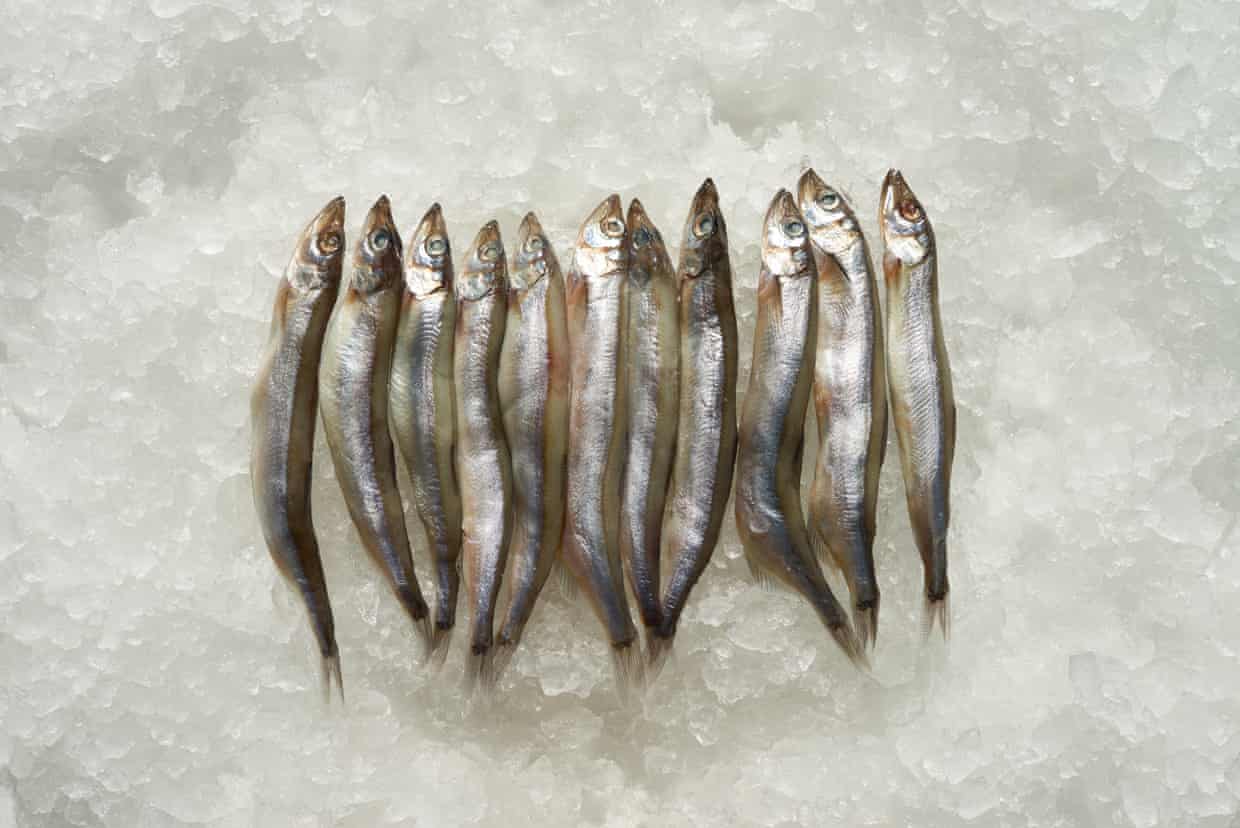
The Marine Conservation Society has a Good Fish Guide app that will tell you if a species is under threat, vulnerable or sustainable. The simple guide uses a traffic light system of red (avoid), amber (eat occasionally) or green (eat without second thoughts). When you are buying fish in the supermarket, look for the Marine Stewardship Council (MSC) badge that is given to fisheries with a sufficiently high population to take a regular catch. Many less fashionable fish are also more sustainable. Rather than cod or haddock, why not try coley or herring?
Opt for fish labelled sustainable by the Good Fish Guide, such as herring trawled in the north Irish Sea. Photograph: Getty Images/iStockphoto

Farmed fish such as salmon have a scheme similar to the MSC’s, run by the Aquaculture Stewardship Council (ASC); this is based on the impact on the wider environment of keeping fish in cages. It ensures that the fish do not escape into the wild and puts limits on numbers to prevent overcrowding. However, only a handful of fish farms in Britain meet these standards. The RSPCA Assured label can be given to salmon that were slaughtered humanely, but it doesn’t focus on environmental credentials.

Labels to look out for: MSC/ASC; fish labelled sustainable by the Good Fish Guide

Game
Game birds such as pheasants and partridge are problematic, since they tend to be from managed shoots. The birds are released into the wild as chicks, only to be shot later in the season. It is difficult to know if shoots are well managed and there are questions over the impact that so many non-native birds have on the countryside.

Wild game meat such as rabbit, deer and even squirrel is more straightforward. All these species are shot as part of managing the landscape for conservation purposes, such as planting trees. They are truly free-range animals living in the wild. If you are lucky enough to live in the countryside, make friends with a gamekeeper, who will probably give you game meat for free.

Eating British venison is good for trees, since the animals are a problem in areas such as the Highlands, where they ravage new forest plantations. 

However, a substantial amount of venison sold in British shops is from deer farmed in New Zealand, because the meat is more consistent. Look out for UK venison or track down a reputable butcher or game dealer.

Where to buy: game dealers and independent butchers; Borough Market, London

Roadkill
You need to know what you are doing, but is there a more ethical meat than that of animals that have been killed anyway and will otherwise be wasted?
Technically, animals on a public highway are the property of the government, but that has not stopped advocates of “roadkill recycling” recommending eating pheasant, squirrel and even badger found on the road. Alison Brierly, an artist and roadkill recycler, offers safety tips on her website. She recommends carrying surgical gloves and a good knife and butchering smaller animals on the roadside – taking the breasts out of pheasants, for example, or the meaty legs from a rabbit or squirrel, and leaving the rest for the buzzards.

Milk
Mossgiel Farm, an ‘at-foot’ dairy in Ayrshire, has eliminated single-use plastic packaging. Photograph: Mossgiel Farm

Unlike meat, milk is very difficult to trace back to the farm, as it tends to be mixed together at centralised bottling plants. The label “free range” guarantees that cows have been kept outside at least some of the time, but one of the easiest ways to make sure you are buying higher-welfare is to invest in organic. Studies at the University of Newcastle have suggested that organic milk could be better for you, since it contains higher amounts of omega-3 fatty acids. Look out for dairies where calves are kept “at foot”, ie with their mothers.

Labels to look out for: organic; Pasture for Life; free range; ethical dairy

Eggs
Most of the fresh eggs sold in Britain are free range. This means that the hens have access to the outdoors – as long as there isn’t a bird flu outbreak, when all birds are kept indoors. If you want to be sure that birds have a bit more space and access to pasture, buy organic.

Eggs in a lot of processed food such as mayonnaise are likely to be from caged birds, so look out for products that state the use of free-range eggs on the label.

If you want to be really ethical, get your own hens and eat the eggs. Rescued battery chickens are increasingly popular.

Labels to look out for: organic

Honey
Humans and honeybees have lived alongside one another for millennia. The Vegan Society says honey is not vegan because, among other things, it is fundamental to the wellbeing of a hive, but others consider supporting bee keepers key to maintaining traditions that benefit both species. Bee farming in the UK is very different from the industrial-scale operations found in the US, especially among local producers, where honey is taken only when it is plentiful and appropriate. There is a movement towards “natural” beekeeping that uses a “bee-centred” approach to hive farming.

Keeping bees is also good for the wider countryside, as it provides pollinators for flowers and food crops. But ethical honey doesn’t have to be British. Imported Fairtrade honeys support bee farmers all over the world and can be the best way to protect forests, by providing a livelihood for local people. Read the Ethical Consumer’s honey guide to find the best sources.

Labels to look out for: Fairtrade
Where to buy: Wainwright’s; Oxfam

(Source: The Guardian)