Showing posts with label egg. Show all posts

Monday, 17 February 2020

Life after Veganuary: The ethical guide to eating meat, eggs and dairy

If you have slunk back to burgers after a month of avoiding meat, all is not lost. Here’s how British shoppers can track down high-welfare, eco-friendly produce

Veganuary is over, leaving only the remains of a seitan burger and some cashew cheese in the back of the fridge. Perhaps you feel lighter and healthier; you will certainly feel more virtuous. But do you also feel like a steak? It is OK – you can admit it. The campaign group behind this annual event estimates that only half of the participants plan to remain meat-free beyond the end of the month. However, it says that most of those will at least reduce the amount of animal products they eat for the rest of the year.
If in doubt, choose free-range produce – if you can afford it. Composite: Matt Austin/Pipers Farm; Jason Smalley/Alamy

Whether you call youself flexitarian, vegan-ish or whatever, it is possible to care about the planet while occasionally eating meat or dairy, as long as it comes from ethical sources. Even Jonathan Safran Foer, the author of Eating Animals, a book advocatIng veganism, has admitted to eating a small amount of animal produce after 6pm.

So, if you are hungry for something other than plants, what should you buy? Here are some high-welfare, low-carbon options for post-Veganuary.

Beef
Cows, or “carbon-releasing machines” as George Monbiot calls them, are the worst offenders when it comes to emitting greenhouse gases. Cow burps (not farts, as is commonly believed) release methane into the atmosphere, which traps more heat than carbon dioxide in the short term. Also, beef takes a lot more energy to produce than, say, tofu.

However, much of the information you read about the planet-wrecking capability of cows is based on the most extreme scenario. Yes, grazing cattle on pasture that used to be rainforest releases a lot of carbon dioxide. Yes, cattle kept on feedlots in the US midwest use a lot of water. But there is an easy way to avoid this – buy British.

In Britain, beef cattle tend to be kept outdoors on pasture, simply because we have so much wet grassland that is good for little other than grazing animals. Although feedlots are not unheard of, the average herd size is 28 to 50, as part of a mixed farm. If the cattle are pasture-fed, there is even an argument that they are less damaging to the environment, as permanent pasture stores carbon dioxide. Pasture-fed cattle also tend to have more omega-3 fatty acids.

In terms of welfare, cattle are a fairly safe bet – again, if they are British. British beef tends to be from animals kept outdoors in a social herd for one to two years (a much longer lifespan than chickens).
Pipers Farm’s red ruby cows are grass-fed and grown naturally to maturity. Photograph: Matt Austin/Pipers Farm

Why British as opposed to, say, Irish or continental European? Although the EU has comparable standards to Britain, transport is stressful for animals, so it is always better to eat meat that was produced closer to home. Look out for country of origin labelling: this is a legal requirement for EU countries and shows where the animal was born and slaughtered.

Of course, eating any meat involves the slaughter of animals. In Britain, the Food Standards Agency employs vets in all abattoirs to ensure minimum standards of animal welfare. Animals must be kept calm in holding pens, moved through the system without excessive force and stunned before slaughter, unless it is religious slaughter.

If you want to know higher standards have been met, look out for RSPCA Assured, which is run by the animal welfare charity. This labelling scheme ensures that the transportation of live animals is kept to a minimum, that animals are kept in better conditions before slaughter and that they are killed as quickly as possible. Organic schemes include standards for the humane care and slaughter of animals; they also prohibit the use of most pesticides, genetically modified feed and growth hormones. Organic cattle are not given antibiotics routinely.

Labels to look out for: organic; RSPCA Assured; Pasture for Life
Where to buy: Pipers Farm; Riverford

Veal
Almost all veal is a product of the dairy industry. Cows are put in to calf so they produce milk, then the calf is removed within 24 hours so that the milk can be taken for human consumption. In general, female calves are kept and male calves are slaughtered. There is an argument that using the meat from male calves avoids waste, but ensure it is British and meets a certain standard. In much of Europe, calves are kept in cramped conditions, sometimes without light, so the meat is pale. The RSPCA and other welfare charities have successfully campaigned against this in the UK and advise against buying imported veal.

British veal is a different matter. Most of it is “ruby” or “rose” (so called because the meat is darker), from calves kept for up to a year. Even the RSPCA has approved veal from older calves that are kept free range during their lives.

Labels to look out for: RSPCA Assured

Lamb
Sheep – or “woolly maggots”, as Monbiot would have it – are another animal blamed for environmental destruction because they were grazed on areas that were once ancient forest. As subsidies wind down and rewilding takes off, many of these areas are being allowed to return to scrub or forest.

Many of the farms in these remote upland areas are part of our heritage. The Lake District was awarded Unesco world heritage status in 2017, largely – and controversially – because of the “cultural value” of sheep farming.

Lamb, like beef and pork, is a meat you can buy directly from the farmer, thereby supporting some of these farms. Buying mutton rather than lamb means that the sheep lived longer; such meat tends to be from smaller-scale farmers.
Sheep on Camilla and Roly’s Saddlescombe Farm. Photograph: www.camillaandroly.co.uk


Unlike chicken or pork, sheep are not generally reared intensively indoors. 

Although ewes are brought inside for lambing and some flocks are fed indoors during harsh winters, most spend their lives in fields.

Pasture for Life is a new certification scheme that labels lamb, beef and dairy raised only on pasture. This means they are not fed any grain or manufactured feed and are kept outside throughout their lives. The farmers who set it up claim that grazing animals not only contributes to welfare and produces a healthier meat, but can also help wildlife such as lapwings. Most Pasture for Life farmers follow the same standards as RSPCA Assured or organic to make sure sheep have been slaughtered humanely.

In Britain, about half of all sheep are slaughtered for halal meat, meaning the animal is killed according to Islamic teaching. About 80% of these are stunned, as with conventional slaughter. British Muslims are increasingly looking to develop their own labelling schemes so that welfare standards can be guaranteed.

Labels to look out for: Pasture for Life; RSPCA Assured; organic

Pork
Visit a British farm and you will see that pigs, with their curly tails wagging, enjoy living outdoors. But much of Britain’s pork is imported from factory farms, where those curly tails are docked and the animals spend their whole lives indoors on slatted floors without straw. The biggest sources are Denmark, the Netherlands and Germany, especially for bacon. The EU has comparable minimum standards to the UK, but British producers are beginning to meet much higher standards as consumer awareness increases. 

To eat high-welfare pork and support the farmers going the extra mile, look out for British pork and read the label carefully.

“Outdoor bred” means the animals are born outdoors, but brought inside for the rest of their lives; “outdoor reared” means they spend roughly half their lives outdoors; and “free range” means they spend all their lives outdoors. Compassion in World Farming (CIWF) say all the systems can be humane – even indoor farming can be high-welfare if the animals are kept on plenty of straw.
Farmers’ markets are a great place to find rare-breed meats

A good way to ensure pork is high-welfare is to look out for rare breeds such as the tamworth. Rare breeds tend to live longer and be kept outdoors, since, unlike more modern breeds, they are not bred for intensive systems. The Rare Breeds Survival Trust encourages the eating of rare breeds, because it is the best way of ensuring these animals continue to be farmed. Farmers’ markets are a great place to find rare-breed meats and to meet some of the farmers keeping interesting specimens. Alternatively, try to visit farms open to the public on Open Farm Sunday on 7 June.

Labels to look out for: CIWF Good Pig award

Chicken
Intensive chicken and pork have been cited by UN reports as lower-carbon meats because the animals can be reared quickly using relatively little energy. But this raises questions about welfare.

Most of the chicken eaten in Britain is from barn-reared birds. This can mean tens of thousands of birds in one barn, each with barely as much floor space as an A4 piece of paper. The most basic assurance scheme, the Red Tractor label, has recently improved its standards so that sheds must at least have windows. RSPCA Assured chicken will be slightly more expensive, but will have had more room, as well as toys and straw. These chickens live longer and are less likely to suffer from health problems resulting from growing too fast.

Free-range birds must have access to the outdoors for at least some of their lives, but the label has come in for criticism because not all the birds in huge barns will go outside.

Organic chickens will have access to more space and, since they are kept in smaller flocks, it is argued that they are more likely to go outdoors. They will also not have been fed genetically modified soya, imported from South America and routinely fed to intensive chicken (and pork). They are considerably more expensive – but if you learned to use less meat in Veganuary, this may be less of a problem.

Labels to look out for: RSPCA Assured; organic
Where to buy: Fosse Meadows; Daylesford

Tripe and other offal
If we are going to eat meat, we should eat the whole animal. Thowing away less popular cuts is disrespectful as well as wasteful. They can also be very nutritious. Most butchers will sell liver, sweetbreads, kidney and black pudding. For more unusual cuts, go to specialist butchers or restaurants such as St John in London that advocate “nose to tail” eating.

Fish
The Marine Conservation Society has a Good Fish Guide app that will tell you if a species is under threat, vulnerable or sustainable. The simple guide uses a traffic light system of red (avoid), amber (eat occasionally) or green (eat without second thoughts). When you are buying fish in the supermarket, look for the Marine Stewardship Council (MSC) badge that is given to fisheries with a sufficiently high population to take a regular catch. Many less fashionable fish are also more sustainable. Rather than cod or haddock, why not try coley or herring?
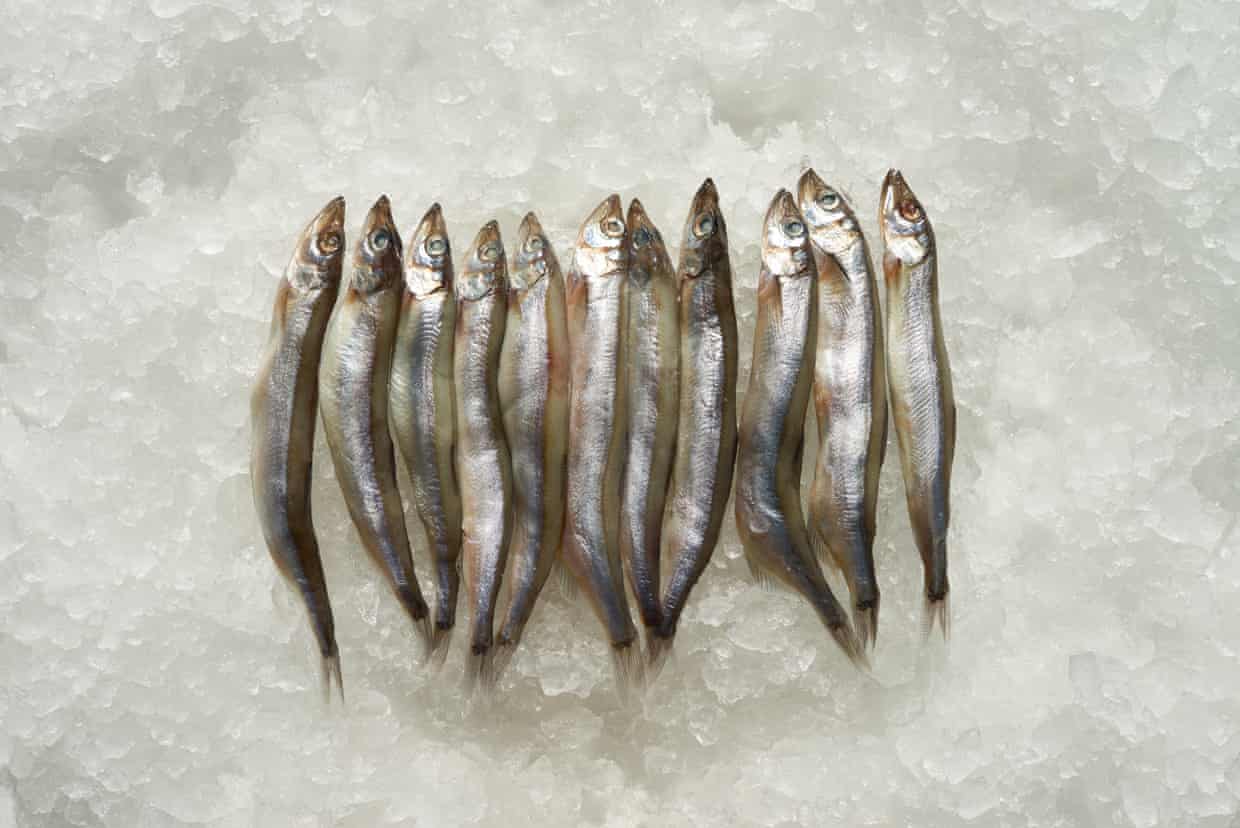
Opt for fish labelled sustainable by the Good Fish Guide, such as herring trawled in the north Irish Sea. Photograph: Getty Images/iStockphoto

Farmed fish such as salmon have a scheme similar to the MSC’s, run by the Aquaculture Stewardship Council (ASC); this is based on the impact on the wider environment of keeping fish in cages. It ensures that the fish do not escape into the wild and puts limits on numbers to prevent overcrowding. However, only a handful of fish farms in Britain meet these standards. The RSPCA Assured label can be given to salmon that were slaughtered humanely, but it doesn’t focus on environmental credentials.

Labels to look out for: MSC/ASC; fish labelled sustainable by the Good Fish Guide

Game
Game birds such as pheasants and partridge are problematic, since they tend to be from managed shoots. The birds are released into the wild as chicks, only to be shot later in the season. It is difficult to know if shoots are well managed and there are questions over the impact that so many non-native birds have on the countryside.

Wild game meat such as rabbit, deer and even squirrel is more straightforward. All these species are shot as part of managing the landscape for conservation purposes, such as planting trees. They are truly free-range animals living in the wild. If you are lucky enough to live in the countryside, make friends with a gamekeeper, who will probably give you game meat for free.

Eating British venison is good for trees, since the animals are a problem in areas such as the Highlands, where they ravage new forest plantations. 

However, a substantial amount of venison sold in British shops is from deer farmed in New Zealand, because the meat is more consistent. Look out for UK venison or track down a reputable butcher or game dealer.

Where to buy: game dealers and independent butchers; Borough Market, London

Roadkill
You need to know what you are doing, but is there a more ethical meat than that of animals that have been killed anyway and will otherwise be wasted?
Technically, animals on a public highway are the property of the government, but that has not stopped advocates of “roadkill recycling” recommending eating pheasant, squirrel and even badger found on the road. Alison Brierly, an artist and roadkill recycler, offers safety tips on her website. She recommends carrying surgical gloves and a good knife and butchering smaller animals on the roadside – taking the breasts out of pheasants, for example, or the meaty legs from a rabbit or squirrel, and leaving the rest for the buzzards.

Milk
Mossgiel Farm, an ‘at-foot’ dairy in Ayrshire, has eliminated single-use plastic packaging. Photograph: Mossgiel Farm

Unlike meat, milk is very difficult to trace back to the farm, as it tends to be mixed together at centralised bottling plants. The label “free range” guarantees that cows have been kept outside at least some of the time, but one of the easiest ways to make sure you are buying higher-welfare is to invest in organic. Studies at the University of Newcastle have suggested that organic milk could be better for you, since it contains higher amounts of omega-3 fatty acids. Look out for dairies where calves are kept “at foot”, ie with their mothers.

Labels to look out for: organic; Pasture for Life; free range; ethical dairy

Eggs
Most of the fresh eggs sold in Britain are free range. This means that the hens have access to the outdoors – as long as there isn’t a bird flu outbreak, when all birds are kept indoors. If you want to be sure that birds have a bit more space and access to pasture, buy organic.

Eggs in a lot of processed food such as mayonnaise are likely to be from caged birds, so look out for products that state the use of free-range eggs on the label.

If you want to be really ethical, get your own hens and eat the eggs. Rescued battery chickens are increasingly popular.

Labels to look out for: organic

Honey
Humans and honeybees have lived alongside one another for millennia. The Vegan Society says honey is not vegan because, among other things, it is fundamental to the wellbeing of a hive, but others consider supporting bee keepers key to maintaining traditions that benefit both species. Bee farming in the UK is very different from the industrial-scale operations found in the US, especially among local producers, where honey is taken only when it is plentiful and appropriate. There is a movement towards “natural” beekeeping that uses a “bee-centred” approach to hive farming.

Keeping bees is also good for the wider countryside, as it provides pollinators for flowers and food crops. But ethical honey doesn’t have to be British. Imported Fairtrade honeys support bee farmers all over the world and can be the best way to protect forests, by providing a livelihood for local people. Read the Ethical Consumer’s honey guide to find the best sources.

Labels to look out for: Fairtrade
Where to buy: Wainwright’s; Oxfam

(Source: The Guardian)

Tuesday, 2 July 2019

Hopes rise for an end to ‘heartless’ rationing of IVF

Health chiefs reinstate UK patients’ access to fertility treatment as minister says postcode lottery is unacceptable

After years of savage rationing of IVF treatment, NHS bodies in England are again making it available to childless women, raising fertility campaigners’ hopes of an end to a “heartless” policy.

The NHS clinical commissioning groups in Herts Valley and South Norfolk reinstated patients’ access to IVF in April and this week Cambridgeshire and Peterborough CCG may follow suit.

Four CCGs in Kent also decided this month to shelve plans to reduce the number of cycles of the treatment they offer to infertile women from two to one as a way of saving money.

All women up to the age of 40 who qualify are meant to get three cycles of IVF free on the NHS, according to National Institute for Health and Care Excellence (Nice) guidelines. But some CCGs offer none at all and many provide only one, despite warnings that they are denying the one in seven couples who are affected by fertility problems the chance to become parents.

The government is ratcheting up the pressure on all England’s 195 CCGs, the local bodies that hold the health service budgets, to stop IVF rationing because it is unfair and damaging.

 Sperm being injected into a human egg during IVF – many CCGs are now offering the treatment after years of rationing. Photograph: Zephyr/SPL/Getty Images/Science Photo Library RF
The Observer can reveal that health minister Jackie Doyle-Price has told CCG bosses that their rationing tactics are unacceptable, have created a postcode lottery in access, and must end.

“For far too long fertility services have become known for the ‘postcode’ variation in their availability to NHS patients. It is unfair to patients with infertility, who have every right to expect NHS services based on clinical need. And it does untold damage to the reputation of the NHS that we all hold so dear,” she said in a letter on 17 June.

Doyle-Price highlighted the “great psychological distress” infertility can cause and told CCGs to review their policies in light of new guidance on the commissioning of fertility services produced by the Human Fertilisation and Embryology Authority (HFEA) regulator. IVF “inequality that has, for too long, been allowed to grow [and] to blight the lives of patients” must stop.

She added: “I cannot emphasise enough that it is not acceptable for CCGs to offer no routine access to fertility services. All CCGs should move towards full implementation of the Nice fertility guidelines recommendations. I urge you to grasp this opportunity to end the lottery of fertility treatment once and for all.”

Campaigners have been encouraged by the minister’s intervention. It follows South Norfolk CCG deciding that it will again fund two cycles of IVF for women aged 23 to 39 and one for those aged 40 to 42 and Herts Valley CCG reinstating one cycle, which it had scrapped in October 2017. The four Kent CCGs voted not to cut provision from two cycles to one after a public consultation revealed that 62% of participants were opposed.

The charity Fertility Network UK says it sees “a glimmer of hope” in these recent decisions. Sarah Norcross, co-chair of the campaign group Fertility Fairness, said: “They are steps in the right direction for NHS fertility services in England after substantial disinvestment over the last two-and-a-half years, with one in five CCGs slashing services.”

In 2017 Cambridgeshire and Peterborough CCG became one of five CCGs to fund no IVF at all when it decided to suspend paying for any treatment. Research for Bourn Hall, a clinic near Cambridge which treats NHS-funded patients from across the east of England, found that it has had a “devastating” effect on people wanting to have a child. Fewer than 150 people in Cambridgeshire a year would be eligible for funding if it was restored, and their treatment would amount to just 0.03% of the CCG’s budget, it is claimed.

The CCG will decide in early July whether or not to reinstate funding. However, its recommendation is that it does not do so because of the “dire” finances of the wider health system it is part of, which includes four hospital trusts and is due to overspend by £192m this year.

“These funding cuts have been devastating for so many people. Infertility severely impacts the quality of life for those affected, and their wider families, straining relationships and causing mental health problems,” said Dr Thanos Papathanasiou, Bourn Hall’s lead clinician.

“We hope to be able to use our experience of fertility care to help C&P CCG streamline the service, reinstate NHS-funded IVF treatment and improve patient outcomes for all.”

(Source: The Guardian)

Sunday, 12 May 2019

Study finds multi-drug resistant bacteria in chicken meat, eggs

The researchers said excessive use of antibiotics in animal feed is a major reason for such the resistance, making it difficult to treat infections.

A new study found that samples of chicken liver meat and eggs from 12 locations in Mumbai had ‘multi antibiotic resistant’ bacteria.

The samples were tested for their resistance or susceptibility to 12 major antibiotics. One of the bacterial isolates was in fact found resistant to all the antibiotics.

“Excessive use of antibiotics in animal feed is one of the prime reasons for such antibiotic resistance,” said Vikas Jha, one of the authors of the study, to Down to Earth.

A bacteria is considered ‘multi-drug resistant’ when it is resistant to antibiotics of at least three classes. Because of the bacteria’s resistance, a human infected with it cannot be treated easily.


The researchers isolated the Salmonella bacterium – which causes food poisoning – from the samples. This isolated bacterium’s interaction with 12 antibiotics which treat infections in humans such as amoxicillin, azithromycin, ciprofloxacin, ceftriaxone, chloramphenicol, erythromycin, gentamicin, levofloxacin, nitrofurantoin and tetracycline was tested.

Resistance to azithromycin, erythromycin, nitrofurantoin and trimethoprim was the highest, with nearly all samples being resistant to these antibiotics. Over 60% of the samples were also resistant to tetracycline, gentamicin, chloramphenicol and amoxillin.

The study, published in the journal Acta Scientific Microbiology, was authored by researchers at the National Facility for Biopharmaceuticals, St Johns College of Humanities and Sciences and VES College of Pharmacy.
In 2017, the Centre for Science and Environment’s report found a high level of multi-drug resistance in bacteria such as E. coli, Klebsiella pneumoniae and Staphylococcus lentus, in and around poultry farms. They took samples from four key poultry producing states in north India – UP, Haryana, Rajasthan and Punjab.

These three bacteria were tested for their resistance to 16 antibiotics. Ten of these antibiotics are considered ‘critically important’ for humans, by the World Health Organisation.

“We first wanted to understand the extent of antibiotic resistance in the poultry environment, and then establish if the resistance bacteria is moving out of the poultry farms into the environment through waste disposal,” said Chandra Bhushan, deputy director of the CSE, about the study.

The study said misuse of antibiotics in poultry farms is leading to multi-drug resistant bacteria. The bacteria seeps into the environment through litter from these farms.

According to their study, 100 % of E. coli, 92% Klebsiella pneumoniae and 78% Staphylococcus lentus isolated from the poultry environment were multi-drug resistant. Some of these bacteria were resistant to antibiotics which are very critical to humans such as penicillins and fluoroquinolones.

(Source: The Wire)

Friday, 18 January 2019

Record-breaking Instagram egg post could now be worth more than £250,000

The post went viral after people around the world started liking the image to set a world record

The world’s most popular Instagram post could now be worth more than £250,000, if sponsored, according to a leading influencer marketing agency.

As it stands, the @world_record_egg account boasts more than 5.8 million followers, days after gaining more than 40 million ‘likes’ on a stock image of an egg with the caption: “Let’s set a world record together and get the most liked post on Instagram.”

As a result, influencer marketing agency Pulse Advertising & Talent Management estimates the post could now be worth a quarter of a million pounds.

Christoph Kastenholz, co-founder of the agency exclusively tells the Independent that the account’s large number of followers means “the egg now reaches five times as many people as an established brand”.

“At the current market value of followers, the egg could value one single post at £25,000 and possibly more.

"Measured on that basis this post alone would be worth more than £250,000.”

However, Kastenholz points out the value of influencer marketing lies in the trust of a character and not followers alone.

“So far the egg has only created attention, not yet relationships with its followers,” he adds, which may affects its monetary sponsored value on Instagram.

Paulina Paulsen, executive Director at Pulse Advertising & Talent Management adds the egg may now be much more valuable than anybody could have imagined.

She says Instagram has become incredibly lucrative for influencers, who can sell sponsorships and partnerships on their posts.

"With 5.8m followers and rising, this account suddenly has a huge audience and could instantly begin commanding five-figure sums per post," she explains.

While it’s yet to be seen how engaged the followers are with the account, “having just carried it to a world record, the sky is the limit!”

Since the account holder posted the egg image on 4 January, the post has overtaken the 18 million ‘likes’ accrued on a picture of reality star Kylie Jenner’s newborn daughter, Stormi Webster, posted in 2018.

According to the 2018 Instagram Rich List compiled by automated Instagram scheduler Hopper HQ, Kylie Jenner had the most lucrative account on Instagram last year.

The make-up mogul earned an estimated £779k ($1 million) per sponsored post on her Instagram – a 150 per cent increase from her Instagram earnings in 2017.

Meanwhile, singer Selena Gomez is estimated to have earned approximately £623k ($800,000) per post, with footballer Christian Ronaldo in third at £584,000 ($750,000) per post.

Reality star Kim Kardashian and singer Beyoncé’s Instagram posts were valued at £561k ($720,000) and £545k ($700,000) per post respectively.

While the identity of the account holder of @world_record_egg remains unknown, they recently told the Independent that they are “an individual living in London”.

“I wish I could tell you how I managed to get the egg photo to go viral but I’m still working that out myself. It’s been a whirlwind week and I’ve just been running with it,” they said.

(Source: The Independent)

Tuesday, 15 January 2019

How an egg beat Kylie Jenner at her own Instagram game

A stock image of an egg has amassed 26m likes to become the most popular post of all time, bumping Jenner’s shot of her newborn daughter and spurring some unlikely imitators 

Name: The Egg.

Age: Born on 4 January.

Appearance: Bigger than Kylie Jenner.

And how big is Kylie Jenner? Smaller than the Egg.

Hey, this is Pass notes, not a zen koan. Sorry. About 1.68m (5ft 6in).

That’s a big egg! What are we talking here? Godzilla? Mutant emu? Instagram.

Whoa! Instagram has the capacity to grow oviducts now? You’re really stringing out the “deliberate misunderstanding” part of this format today, aren’t you? Shall I just explain what the Egg is?

Yes please. The Egg is a picture of an egg that has just broken Kylie Jenner’s record to become the most-liked Instagram post in all of history.

And by “all of history” you mean ... since Instagram was invented. So, eight years or so.

What is so remarkable about this picture of an egg? That’s just it. Nothing. It’s just a stock photo of an egg, the only image ever posted by @world_egg_record, alongside the caption: “Let’s set a world record together and get the most-liked post on Instagram.”
Kylie Jenner has been ousted from Instagram’s most-liked slot by The Egg.
Photograph: Veaceslav Cernat/EyeEm/Getty Images/EyeEm

Am I missing something? Yes. You’re missing a deliberate hierarchical disruption. The Egg likely succeeded thanks to the same impulse that made Rage Against the Machine’s Killing in the Name the Christmas No 1 in 2009. Users (self-identifying as #EggSoldiers), sick of Kylie Jenner’s omnipresence, have got behind the most banal image imaginable, with the express intention of dethroning her.

And now they have succeeded? Absolutely. Jenner’s post received 18m likes, but the Egg is now at 26m and counting.

And what was Jenner’s most-liked post? A picture of her newborn daughter’s hand grasping her finger. Ha! We’re all deliberately undermining the happiest day of her life! Lolz!

And the great thing about Instagram is that there definitely won’t be any tedious copycat efforts. Clearly you haven’t seen @world_record_eggsmotheer [sic], an account that has posted a picture of a chicken (“the mother of the egg”) in an attempt to get more likes than @world_egg_record. It currently has just 17 likes, and five comments..

I really, really hate the internet sometimes. But isn’t this fascinating? The whole thing is a compelling microcosm of our entire collective online behaviour, and, if we investigate it properly, I’m sure we’ll discover …

Nope. You’re right. I hate the internet too.

Do say: “The Egg has definitively proved that Instagram likes are not a genuine reflection of true worth.”

Don’t say: “Look out for the Egg’s new reality show, Negging the Egg, starting next week on E!”

(Source: The Guardian)

Saturday, 28 July 2018

Lots of successful women are freezing their eggs

“Freeze Your Eggs, Free Your Career,” announced the headline of a Bloomberg Businessweek cover story in 2014. It was the year that Facebook and then Apple began offering egg freezing as a benefit to employees. Hundreds of think pieces followed, debating the costs and benefits of “postponing procreation” in the name of professional advancement.

In the years since, many more women across the world have frozen their eggs. Many are highly educated. But the decision may have very little to do with work, at least according to a new study. In interviews with 150 American and Israeli women who had undergone one cycle, career planning came up as the primary factor exactly two times.

Instead, most women focused on another reason: they still hadn’t found a man to build a family with.

“The stereotype that these ambitious career women are freezing their eggs for the purposes of their career — that’s really inaccurate at the present time,” said Marcia Inhorn, a medical anthropologist from Yale University, and one of the authors of the study, which was presented Monday at the European Society of Human Reproduction and Embryology’s conference in Spain.

Most of these mid-to-late 30s women were already established in their careers by the time they got to the clinic, the study found.

“They weren’t freezing to advance; they were facing the overarching problem of partnership,” she said. This was the case, even among those who worked for companies that offered to pay for the procedure.

Though a single woman, headed toward 40, may feel like a freakish anomaly as she freezes her eggs because she hasn’t found a partner, she’s not. This finding echoes other studies in the United States and Britain that have similarly found that it’s the absence of a partner that drives most women to freeze their eggs.


The subjects in this particular study, which has not yet been published, came from seven different fertility clinics. In the United States, the women generally lived in cities along the East Coast or in the Bay Area. They ranged in age from 29 to 42, with three-quarters falling between 35 and 39.
The research approach taken by Dr. Inhorn and her co-authors Dr. Pasquale Patrizio, director of the Yale Fertility Center, and Daphna Birenbaum-Carmeli of the University of Haifa, involved asking women — both single and those who had partners — to share their egg freezing stories and then analyzing their responses to try to understand their primary motives.

Of the participating women, 85 percent were single and most were heterosexual. For about half of these single women, it was uncertainty about when they would meet a man to build a family with that brought them to the clinic, they told the researchers. The next largest group was driven there by a divorce or breakup. (Egg freezing was actually covered by several of these women’s divorce settlements.) This was followed by a smaller group of women who were deployed overseas and felt it was wise to freeze their eggs first and then a handful of women who were preparing to have a baby on their own. Career planning was the least common reason.

Among the 15 percent of the subjects who were in relationships, the reasons for freezing their eggs were not unlike the single women’s: though they had a partner, he was not yet ready or not interested in building a family.

Why are so many women having a hard time finding men to have children with? One hypothesis that researchers often cite is that it’s related to demographics. Women in many developed countries, including the United States, Canada, Britain, Japan, Norway and Australia, are now more educated then men. This could be creating a dearth of appealing male partners for these women.

An American doctor in Dr. Inhorn’s study voiced this concern, saying “Most men don’t want relationships,” and are willing to date uneducated women, whereas most educated women will not. “So I think I have about a .09 percent chance of meeting someone.”

While a number of her subjects seemed to feel empowered by their decision to freeze their eggs, this sense of frustration was common.

“Why me? Why did I end up this way?” was a question that came up a lot. Yes, they had focused on their careers — but they had relationships over the years as well. Neither they, nor their friends, had expected to find themselves without a partner at this stage in their lives.

“It’s not something you’ve done,” Dr. Inhorn said she found herself wanting to tell them. “It’s you and thousands of other women.”

(Source: NYT)

Sunday, 6 May 2018

The female egg chooses the sperm and not the other way round

Eggs meet sperm, fertilization occurs, babies are formed. Simple? Not really! Get introduced to the notion of feminine receptivity, or the freedom of choice for women. Narrowing it further, the female eggs actually do choose. As believed by Scott Gilbert, developmental biologist at Swarthmore College, the “egg engages in a dialog with the sperm rather than locking it down.” So, fertilization is not actually a conquest, but more like a fair race.

After much research, it has also been proven that eggs tend to attract a particular kind of sperm if given the chance.

At Bright Side, we’re thrilled to have come across the research that proved that eggs can be choosy and have their own pick as far as sperm are concerned.

The popular notion — the race of the sperm


Any couple who is planning to extend their family is always under the belief that the sperm races toward the egg. Let’s start at the beginning. All sperm ready, egg at its healthiest, and here begins the race! As we have been taught in school, millions of sperm head towards a single egg cell. When an X meets an X, it’s a girl, and when an X meets a Y, it’s a boy.

So, let’s now begin the process of unlearning.

Female eggs refuse to be submissive. They play a dominant role and choose their own sperm.


Race? Oh wait! It was never a race since the winner has already been decided. In simple language, the egg has already chosen the type of sperm that it will allow to enter.

As researched and explained by scientist Dr. Joseph H. Nadeau, eggs are not submissive and docile, but a key player in the process of reproduction. And against the popular notion that sperm races toward the egg, it’s actually the other way around.


As explained by Pacific Northwest Research Institute, it’s the egg that favors or discards a sperm, and makes sexual selection at the cellular level itself more complex.

It’s strange but true that such an obvious process was assessed wrongly all this time.

How Mendel’s law was defied?


Mendel’s Law, by definition, is the law of segregation. It’s also called the law of inheritance according to which each parent carries 2 copies of each gene. The next step is the ’random fertilization’ process in which these genes are divided randomly into gametes that carry only one copy. However, recent studies discarded this belief altogether.

Dr. Nadeau conducted 2 separate experiments that hinted towards a different theory. His intention was to produce specific predictable ratios of gene combinations in offspring (based on Mendel’s laws). However, he couldn’t achieve it.

As a part of his experiment, he first gave female mice one normal and one mutant gene that increased chances of getting testicular cancer. Male mice had all normal genes. The result was in accordance with Mendel’s law.


Experiment 2: this time Dr. Nadeau reversed the breeding. He gave the male mice the mutant cancerous gene, while females had all normal genes. And there it was! He was astonished to see that only 27% received the mutant version, while they were expecting it to be 75%.

What we all have been taught about normal and mutated versions of DND1 in the mother and the father went absolutely off calculation. What he made out of all this was terming fertilization as non-random and proving the existence of a mechanism that allows the egg to choose the sperm with the normal instead of the mutated gene. In scientific terms, they call it ’genetically biased fertilization’.

What does this signify?


What does this signify? Was this always like this and skipped the sharp eye of top scientists?

Dr. Nadeau gave reasons for this newly found theory. He believed there could be two possibilities for this.

1. Attraction between sperm and egg largely involves the molecule of folic acid. Metabolism of B vitamin or folic acid is different in an egg and a sperm. These very changes may be the deciding factor for the attraction between sperm and egg.

2. Sperm are already present in the female reproductive tract when they are headed towards the egg. The egg may not be fully developed during this time. There’s a possibility that the egg influences this cell-division so that its genes can also be well-suited to the sperm.

We hope this makes the picture a little more clear. Don’t you think this information should be shared further too? Please share your views on this newly found knowledge.

Saturday, 2 December 2017

Females' eggs may actively select certain sperm

New evidence challenges the oldest law of genetics, writes Carrie Arnold in the Atlantic. Read on: 

In the winner-takes-all game of fertilization, millions of sperm race toward the egg that’s waiting at the finish line. Plenty of sperm don’t even make it off the starting line, thanks to missing or deformed tails and other defects. Still others lack the energy to finish the long journey through the female reproductive tract, or they get snared in sticky fluid meant to impede all but the strongest swimmers. For the subset of a subset of spermatozoa that reach their trophy, the final winner would be determined by one last sprint to the end. The exact identity of the sperm was random, and the egg waited passively until the Michael Phelps of gametes finally arrived. Or so scientists have thought.

Joe Nadeau, principal scientist at the Pacific Northwest Research Institute, is challenging this dogma. Random fertilization should lead to specific ratios of gene combinations in offspring, but Nadeau has found two examples just from his own lab that indicate fertilization can be far from random: Certain pairings of gamete genes are much more likely than others. After ruling out obvious alternative explanations, he could only conclude that fertilization wasn’t random at all.

“It’s the gamete equivalent of choosing a partner,” Nadeau said.

His hypothesis—that the egg could woo sperm with specific genes and vice versa—is part of a growing realization in biology that the egg is not the submissive, docile cell that scientists long thought it was. Instead, researchers now see the egg as an equal and active player in reproduction, adding layers of evolutionary control and selection to one of the most important processes in life.

“Female reproductive anatomy is more cryptic and difficult to study, but there’s a growing recognition of the female role in fertilization,” said Mollie Manier, an evolutionary biologist at George Washington University.

* * *

The idea of sexual selection is as old as Charles Darwin himself. In On the Origin of Species, he wrote of the peacock’s showy tail and the elk’s giant antlers as examples of traits that evolved to help males show off their appeal as mates to females. For the next century, biologists focused on all the aspects of sexual selection that operated in the events leading up to copulation. After mating, the female had made her choice, and the only competition was among the sperm swimming to the egg.

This male-oriented view of female reproductive biology as largely acquiescent was pervasive, argued Emily Martin, an anthropologist at New York University, in a 1991 paper. “The egg is seen as large and passive. It does not move or journey but passively ‘is transported’ ... along the fallopian tube. In utter contrast, sperm are small, ‘streamlined,’ and invariably active,” she wrote.

“There are incredible things that eggs and seminal fluid can do.”
Beginning in the 1970s, however, the science began to undermine that stereotype. William Eberhard, now a behavioral ecologist at the Smithsonian Tropical Research Institute, documented all the ways that females can affect which males fertilize their eggs even after mating. It’s a long list, and scientists still can’t say for sure whether they’ve documented everything. The belatedness of these discoveries wasn’t all due to sexism. Two walruses dueling with their tusks is easy to observe; games of hide-and-seek with sperm inside the female reproductive tract are much less so.

“As soon as you have eggs and sperm, you have sexual selection. There are incredible things that eggs and seminal fluid can do,” explained Andrea Pilastro, an evolutionary biologist at the University of Padova in Italy.

In those species in which fertilization happens outside the body, the females often coat their eggs with a thick, protein-rich ovarian fluid. Experiments in 2013 by Matthew Gage of the University of East Anglia in England showed that this fluid contains chemical signals to help attract the correct species of sperm. When they exposed eggs from salmon and trout to mixtures of sperm from both species, the eggs’ own species successfully fertilized 70 percent of the time, significantly more than to be expected by chance.

“The sperm behaved differently in different ovarian fluids. They actually swam straighter in their own fluid,” Gage said.

Internal fertilizers have their own methods of what Eberhard dubbed “cryptic female choice.” Some female reproductive tracts are labyrinthine, complete with false starts and dead ends that can stymie all but the strongest sperm. Some females, including many species of reptiles, fish, birds, and amphibians, that copulate with more than one male (which biologists estimate are a vast majority of species) can store sperm for months, even years, altering the storage environment to stack the odds to favor one male over another. Many female birds, including domestic chickens, can eject sperm after mating, which lets them bias fertilization in favor of the best male.

All these strategies, however, provide females with opportunities only to select the sperm of different males. Within an ejaculate, which sperm fertilized the egg still seemed to be left to chance.

“We’ve been blinded by our preconceptions.”
In fact, the randomness of fertilization is implicit in the principle of segregation—the first law of genetics going back to Gregor Mendel. Parents carry two copies of each gene, which are divided randomly into gametes that carry only one copy. It’s what gives rise to many of the probabilities students learn in high-school biology. If both parents are heterozygotes—meaning they carry two alternate versions of the same gene—then half their offspring would also be heterozygotes. A quarter of the offspring would be homozygotes carrying two copies of one version, and the remaining quarter would be homozygotes with the other version.

“It’s one of the most broadly applicable rules in biology,” Nadeau said.

Yet these probabilities work out only if fertilization is random. If the egg or the sperm can somehow influence the identity of the other gamete involved in fertilization, then those ratios could be very different. This striking difference was what caught Nadeau’s attention back in 2005. When he started looking at the inheritance of two particular genes in mice, the probabilities were all off. In his Seattle lab, he began to wonder: Could Mendel have been wrong?


* * *

Nadeau hadn’t set out to question Mendel. Instead, he wanted to know how interactions between two genes (Apobec1 and Dnd1) affected risks for testicular cancer, one of the most heritable forms of cancer. When Nadeau and his doctoral student Jennifer Zechel bred female mice carrying one normal and one mutant copy of Dnd1 with heterozygote Apobec1 males, everything appeared to follow Mendel’s rules. So far, so good. But when they reversed the breeding (a female Apobec1 heterozygote mated with a male Dnd1 heterozygote), things got weird: They found that only 27 percent of the expected offspring carried copies of mutant Apobec1, mutant Dnd1, or both, compared with the 75 percent they expected to see.


As a researcher who had spent several decades studying heredity, Nadeau was aware of myriad factors that could affect Mendel’s ratios. If a fertilized egg ended up with two mutated copies of a recessive gene, the resulting embryo might die early in development. Such embryonic lethal mutations would alter the ratio of homozygotes to heterozygotes, but it would also reduce the average number of mouse pups in each litter. Yet all of Zechel and Nadeau’s mice had standard litter sizes, and they found no evidence that embryos were dying early after fertilization.

Perhaps, Nadeau reasoned, the problem lay in the sperm, not the egg. He therefore bred male mice with and without the mutation to healthy mutation-free females and found no differences in the males’ fertility—something that would have become obvious if the mutation were affecting sperm formation. Step by step, Nadeau and his team eliminated every possible cause of these wonky ratios of offspring genotypes ... except one: that during fertilization, the egg and sperm were genetically biased against the mutant genotype.

Surely, someone else must have already seen this, Nadeau reasoned, so he searched the scientific literature. Although he could find plenty of examples of unexplained offspring ratios, no one had seriously pursued genetically biased fertilization as an answer.

“I don’t think we still really appreciate how common this is and how often it happens.”
“Everyone just interpreted it as embryonic lethality because we see what we look for and we explain it using what we know,” Nadeau said.

One of those examples Nadeau found was from the lab of the cancer researcher Roseline Godbout at the University of Alberta. Godbout studied the role of a protein called DDX1 in the development of retinoblastoma, a highly heritable childhood cancer. Mice that were missing one functional copy of the DDX1 gene (but with another, fully functional gene as backup) seemed normal and healthy. When Godbout and Devon Germain, now a postdoctoral fellow at the Max F. Perutz Laboratories in Vienna, bred such heterozygote males and females, they found that none of the offspring lacked both copies of DDX1, even though simple Mendelian math would suggest 25 percent of them should. Given the gene’s importance to DNA replication, however, this wasn’t surprising: The homozygotes without DDX1 presumably died after conception. Godbout and Germain also found lower-than-expected numbers of homozygote offspring with two copies of DDX1. A complicated series of mating experiments led the scientists to propose that their results came from a rare mutation that had occurred in the DDX1 gene during their experiments.

Nadeau wasn’t convinced. He wrote to Godbout to ask how her lab had verified that the “knockout” homozygotes without DDX1 genes had died as embryos. They hadn’t. He also asked whether they had considered genetically biased fertilization, wherein the egg preferred to fuse with a sperm of the opposite DDX1 genotype.

“We really thought it was just a weird pattern of inheritance,” Germain recalled. “We hadn’t thought about nonrandom fertilization.”

Later, on a whim, Germain decided to review all the raw data from his experiments. As he looked over the results, he remembered Godbout’s questions that had been prompted by Nadeau’s email. The more he looked at the data, the more that genetically biased fertilization looked like “the most plausible explanation,” he said.

Frustrated at how few scientists had seriously considered genetically biased fertilization as an explanation for their results, Nadeau wrote up his hypothesis in “Can Gametes Woo?,” an article published in October in Genetics. His goal, he said, was to spur more research into this area and determine if and how egg-and-sperm interactions can alter fertilization.

“We’ve been blinded by our preconceptions. It’s a different way to think about fertilization with very different implications about the process of fertilization,” Nadeau says.

Other scientists, such as Manier at George Washington University, say that Nadeau’s hypothesis is intriguing and even plausible, but they point out that no one has any evidence about how it could happen. Nadeau agrees and points to two possibilities.

“Females are going to have a vested interest in the outcome of fertilization.”
The first involves the metabolism of B vitamins such as folic acid, which form important signaling molecules on sperm and eggs. Research in Nadeau’s lab has shown that these molecules play an outsize role in fertilization, and he believes abnormalities in certain signaling genes may alter how much sperm and egg attract each other.

A competing hypothesis builds on the fact that sperm are often present in the female reproductive tract before the final set of cell divisions that produce the egg. Signals from the sperm could influence these cell divisions and bias the identity of the cell that becomes the egg.

Whatever the mechanism might be, this work challenges the standard view of female physiology as passive during fertilization. “Females were seen as passive objects with no choice, but females are going to have a vested interest in the outcome of fertilization,” said Renee Firman, an evolutionary biologist at the University of Western Australia. “We still have a long way to go to understand this process, but I don’t think we still really appreciate how common this is and how often it happens.”

Finding data to support or refute this hypothesis could be challenging, Manier said. It will depend on showing that genes within the sperm affect their surface molecules, and that the egg can sense these differences. Such results will require detailed biochemical studies of individual sperm cells and sequencing information about their genome.

Nadeau is prepared for skeptics—he’s encountered many at conferences when he presents the results of his mouse studies and his hypothesis for what’s going on. Critics often approach him after the talk and begin asking him questions. Whether they walk away convinced is unclear, but Nadeau feels they are much less certain that biased fertilization doesn’t happen. To Harmit Malik, a geneticist and virologist at the Fred Hutchinson Cancer Research Center, the situation is the ultimate Sherlock Holmesian solution.

“If you’ve eliminated the impossible, then what remains, however unlikely, must be the truth,” he quipped.

Tuesday, 21 February 2017

Why do Americans refrigerate their eggs?

Like most of us in the GCC even, Americans refrigerate their eggs. Even in India, we keep the eggs in the fridge. Wonder why? NYT has an answer for all your doubts:

Americans love refrigeration, and eggs are high on the list of items we rush to get into the refrigerator after a trip to grocery store. Meanwhile, our culinary compatriots in Europe, Asia and other parts of world happily leave beautiful bowls of eggs on their kitchen counters.

So what gives?

Mostly, it’s about washing. In the U.S., egg producers with 3,000 or more laying hens must wash their eggs. Methods include using soap, enzymes or chlorine.

The idea is to control salmonella, a potentially fatal bacteria that can cling to eggs. The Centers for Disease control estimates that salmonella causes about 1.2 million illnesses a year, resulting in 450 deaths — though not all of those cases are traced to eggs.

The bacteria can be passed through the porous shell to the inside of the egg from material on the outside, though in rarer cases it can infect the ovaries of a chicken and infect the eggs from the inside.

Why the 3,000-hen cutoff? Salmonella outbreaks are more prevalent in large operations where the chickens are kept in close quarters, often in cages stacked on top of one another. Some large-scale producers vaccinate their flocks, but not all. Thus, the one-size-fits-all washing regulation.

But — and here is the big piece of the puzzle — washing the eggs also cleans off a thin, protective cuticle devised by nature to protect bacteria from getting inside the egg in the first place. (The cuticle also helps keep moisture in the egg.)

With the cuticle gone, it is essential — and, in the United States, the law — that eggs stay chilled from the moment they are washed until you are ready to cook them. Japan also standardized a system of egg washing and refrigeration after a serious salmonella outbreak in the 1990s.

In Europe and Britain, the opposite is true. European Union regulations prohibit the washing of eggs. The idea is that preserving the protective cuticle is more important than washing the gunk off.

At most American farm stands and farmers’ markets, eggs are sold unrefrigerated. And many cooks store unwashed eggs from small producers on their counters, washing them just before they use them — or not at all, if they are getting dropped into boiling water.

However, if you buy farm eggs chilled, it’s better to keep them chilled. Bringing them to room temperature if you’re not going to cook them right away can cause condensation, which can damage the cuticle or encourage mildew. A refrigerated egg, no matter the source, will be good for four or five weeks. Unrefrigerated eggs are best used within a week, though they may be fine for two.

Safety concerns aside, room-temperature eggs perform better in the kitchen. If cold eggs are worked into batters with a high fat content, they can reharden the fats, and you’ll end up with batter that looks curdled and whose texture could be impacted. Also, if you want more volume when you whip egg whites for meringue or soufflés, use room-temperature eggs.

Tuesday, 3 January 2012

549,258 kg of meat and 16,660 trays of eggs confiscated in Doha

A shocking report in Gulf Times published today with the headline ‘Shifting of labourers’ lodgings from Doha proceeding as per plan’. I didn’t pay much attention to it till I glanced through the last few paragraphs. The law enforcement officers in-charge of health and hygiene conducted 23,340 rounds of inspections of eateries, hypermarkets, convenience stores  and juice stalls during the past year and as many as 1,719 cases of irregularities and non-compliance with health and hygiene regulations were recorded.

And during the past year, as much as 549,258 kg of meat and 16,660 trays of eggs were confiscated because they were found to be not fit for human consumption.

Just imagine 549,258 kg of meat and 16,660 trays of eggs!!! Not a small number to ignore. I wonder if there’s more to it and if it’s just a tip of the iceberg. We have to laud the efforts of officials in this regard. But god only knows how much is still on sale that slips through the net, how much are consumers taken for a ride, how much is still being consumed by many of us unknowingly?

Let me do a simple calculation: 23,340 raids in 52 weeks will be 448 inspections week. Then, 1,719 cases in 52 weeks will be 33 cases of irregularities and non-compliance with health and hygiene regulations per week. Conducting 448 inspections per week is not a joke and officials seem to be on high alert. Hereafter, we will also have to be on high alert while buying eggs and meat!