Showing posts with label mughals. Show all posts

Tuesday, 12 October 2021

Re-reading ‘Empress’: As a feminist historian, Ruby Lal offers a scholarly look at Nur Jahan’s life

 Yet, is the feminist mode the only way of studying this text?

The historical biography has gained much currency in recent literature and scholarship, in India, and abroad. When viewed through a feminist prism, the project focuses on two interrelated questions. How can one best recount the stories of women and girls, still largely missing in the pre-colonial and colonial history of South East Asia? And, in this quest – what counts as evidence, and therefore as history?


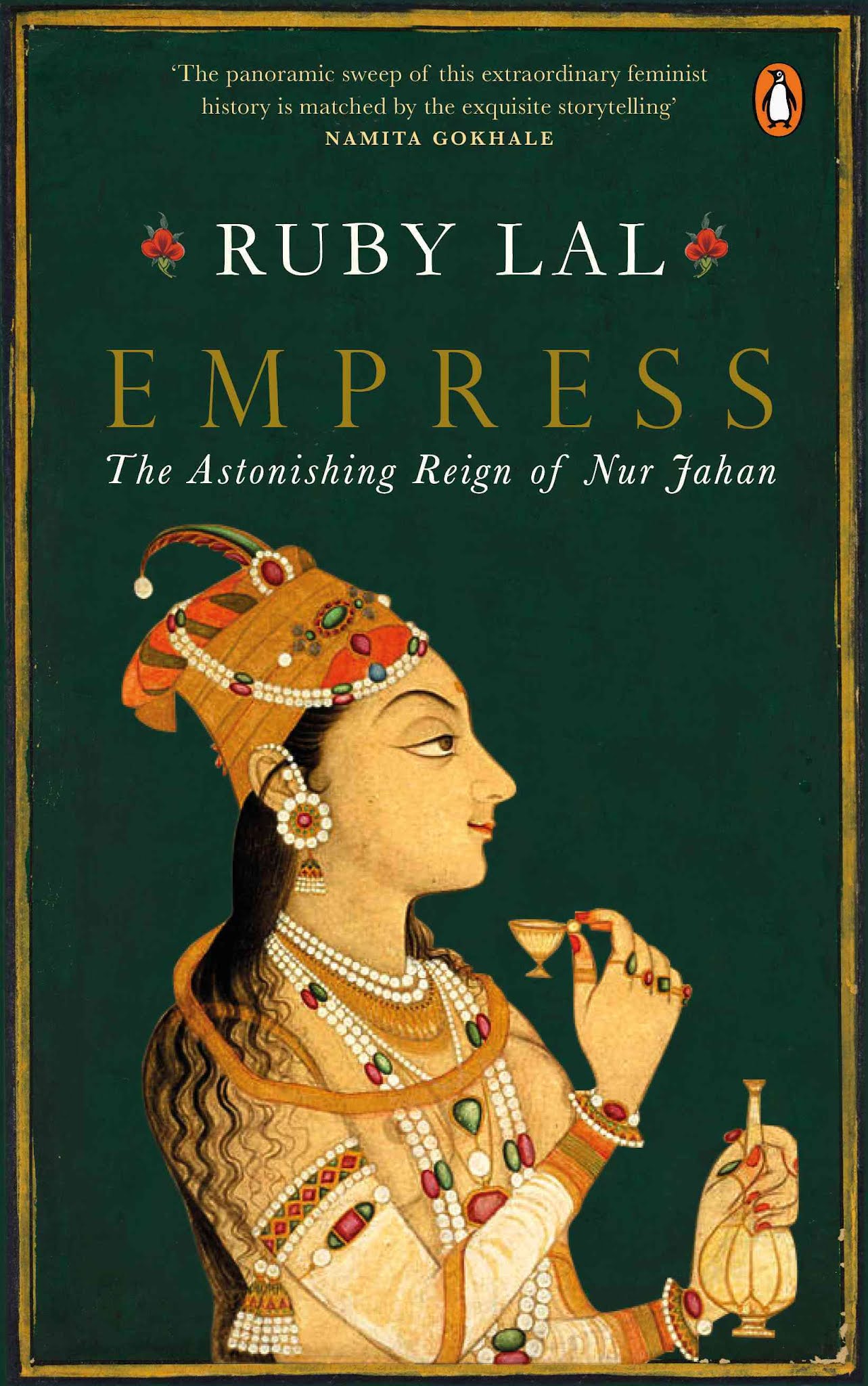
Ruby Lal’s Empress: The Astonishing Reign of Nur Jahan, recently published as a new paperback edition, lives up to the promise of addressing both these questions, within the context of the Mughal empire approaching its high noon. But in fact, it achieves a good deal more.


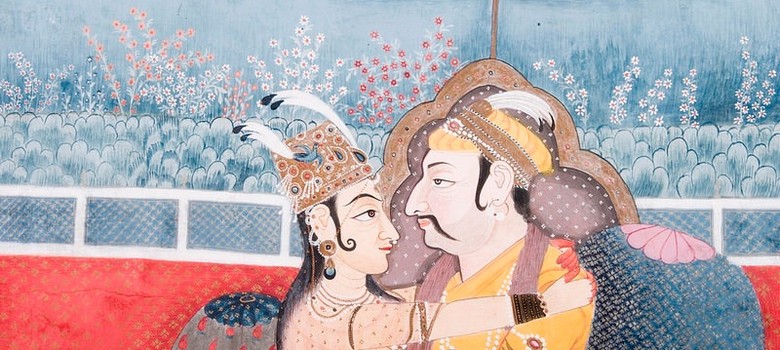
Nur Jahan and Emperor Jahangir. Opaque watercolor, gold, and silver on paper. Los Angles County Museum of Art | Photo courtesy: LCMA


However, an adjunct but equally interesting question appears if we put this book to Lal’s own method of interrogating an archive. Is the feminist mode the only way of studying this text? A new reading of this book, first published in 2018, uncovers other historiographical nuances.


A matter of style

One of the first things that stands out is Lal’s stylistic approach to her subject. Over the past two decades, other noted academic historians have tried their hand at the “popular but authentic” historical biography, and fallen short of the mark. The talent of getting a discerning, non-academic reader genuinely engaged in Mughal history involves so much more than the decision to exclude a discussion of transliteration and diacritical marks, curbing one’s temptation to launch into lengthy footnotes or dispensing with a weighty, full-length bibliography. This is where Lal is so successful.


The book begins with a scene on the morning of 23 October, 1619, when the twentieth wife and empress of Jahangir leads a retinue to a forest near Mathura, to flush out and kill a tiger that had been terrorising a nearby village. While the sole purpose is to bring down the tiger, the party that heads out has all the leisurely pace, pomp and ritual of an imperial pageant.


Lal’s treatment of this entire episode is surprisingly cinematic. But as soon as the hunt is over, the narrative zooms out to inhabit a more objective, scholarly tone:


“Nur’s shooting skill wasn’t the only thing that made her highly unusual. She held a position in the empire never before filled by a woman: co-sovereign. For more than a decade and a half, from a few years after their wedding until Jahangir’s death, Nur Jahan ruled along with their husband, effectively and prominently, successfully navigating the labyrinth of feudal courtly politics and the male-centred culture of the Mughal World.”


This technique of the juxtaposition of alternating viewpoints – one moment in the midst of the action, and in the next, distanced, academic and feminist – is sustained skilfully through the whole length of the book. This allows Lal the latitude to deploy literary stratagems that one usually associates with creative non-fiction, something she appears to have a natural flair for, without compromising on authenticity – because she can “cut away” at will, delving into the more academic nuances of the subject, across a wide range of domains, from religious discourse, miniature painting and architecture to gender and feminist studies.


Adventurous methodology

In tracing the story of Mihr un Nissa, the daughter of refugees from an oppressive Persian regime, from her birth outside the gates of Kandahar to the pinnacle of her fame as the Mughal empress who signed imperial orders as Nur Jahan Padshah Begum, her meteoric rise to power, and an even swifter fall from grace, Lal establishes a fundamental point.


Contrary to the slander of jealous contemporary nobles, aspersions in the Shahjahan-Nama or the equally chauvinistic latter-day European retelling of her story, Nur was neither a gold-digger nor a femme fatale, preying on the affections of her perpetually intoxicated husband. Rather, her spectacular success was the product of her extraordinary innate intelligence and her repeated demonstration of skills, from hunting and warfare, to astute political advice, hitherto solely the preserve of males of imperial or noble birth.


Naturally, the question now arises: how and at what point did Mihr inculcate such skills, and where was there an occasion to practice and hone them? To answer this, Lal has scoured the scantly recorded youthful years of Nur’s life with a fine-tooth comb, identified possible situations and then set down her conjectures, carefully and subtly.


Where Mihr and her first husband, Ali Quli Istajlu, move from the Mughal capital to the Burdwan district of Bengal, she posits: “Rather isolated in the eastern provinces, he would be likely to lean on her and discuss matters of trade, taxes, public grievances, the particulars of his visits to Rajmahal [the provincial capital], and news from the Mughal court. Mihr’s later grasp of governance suggests that Quli had talked about these things with her – or that she was very observant and perspicacious.”


Again, a few pages later, Quli having relocated to Allahabad, we find: “Mihr was left on her own in a remote area plagued by tigers and robbers… Mihr may have taken up the musket at this time, so she’d be able to defend her family.”


Methodologically, this is an unusual, interesting and slightly risky choice for an academic. But it pays off. Starting from the established position or end-point – that of Nur’s astonishing accomplishments – Lal works her way backwards, in a reverse-Bayesian mode, through a series of iterative, plausible hypotheses that are cleverly embroidered into the tapestry of the overall narrative.


The outcome that this exercise achieves, of course, is much bigger: the credible recreation and insertion of some missing pages of Mughal history. Reversing centuries of wilful erasure suffered at the hands of successive chroniclers, Lal thus accords Nur Jahan her rightful and lasting place in the sun.


The feminist lens

Having read Empress, one understands instinctively why readings of Francis Gladwin, Beni Prasad and Ellison Banks Findley inevitably left one dissatisfied. Dutifully researched and well-intentioned as these earlier works were, they were lacking in one crucial aspect – an original voice. In this case, a distinctly feminist one.


Lal places the male-centred animosity against Nur Jahan, during her own time and retrospectively, after her death – fitna, meaning chaos or disorder being the word repeatedly used in reference to her – in the orthodox Islamic thought of the times. She explains:


“For centuries after the Battle of the Camel, the Islamic world associated fitna with what were seen as innately destructively elements in women. Their sexuality was ruinous, her ambition damaging. Women were a source of trouble, turmoil and temptation. Women’s domain was the sacred, inner quarters. What else could follow a transgression of these boundaries, but fitna?”


From a feminist perspective, Empress continues the exploration of Lal’s earlier academic books. In Domesticity and Power in the Early Mughal World, she made extensive use of Gulbadan Begum’s Humayun-nama, a text that had received only a cursory notice by generations of male Mughal historians – with the exception of Kalika Ranjan Qanungo.


In her second book, Coming of Age in Nineteenth Century India: the Girl-Child and the Art of Playfulness, the aim was to use the existing sources, untranslated and obscure material, to illuminate a feminine world missing from the records. The same motivation and spirit of inquiry can be seen here. In recounting one of Nur’s courageous and empathetic actions, allowing the ladies in her harem the choice to either look for a husband or remain with her, the author reads this as a “feminist moment” of the empress.


As Lal acknowledges, this book really emerged as an answer to the challenge thrown by a male colleague: “How are you going to write a history of Mughal women, their relationship with court and the empire? There are no sources for it!” The answer, she finds, depends on which sources one studies, and how one reads them.


Gulbadan Begum’s Humayun-Nama, Abul Fazl’s monumental panegyric, Akbarnama, the utterly contrarian picture presented by Badayuni in his three-volume Muntakhab ul Tawarikh, Jahangir’s own memoirs, as well as later court histories written after Nur’s death in 1645, all undergo a worthy revisitation. In the end, Lal’s finding is that “Nur is there, it turns out: all we have do is look for her…”. And though in seeking out her subject, she has to peer over the figures of towering men, it’s important to note that she doesn’t then cast these men aside.


As the work of a feminist historian, Empress marks an insightful scholarly contribution to our understanding, of Nur Jahan, as well as of the lives, mores, trials and triumphs of women of noble birth and in the imperial harem of the Mughals. However, it is also an equally important commentary on Jahangir and his reign, an examination of the dynamics of power between the capital and far-flung provinces such as Bengal, and the dramatic recounting of inter-generational conflict and princely rebellion, court politics, schemes and machinations, the bizarre kidnapping of the emperor, treachery and imperial retribution – in other words, a perpetually relevant commentary on the condition of men-folk of all stations, who toiled and fought and thrived in the late 16th and first half of the 17th century, in the Mughal empire. Stemming from an avowedly feminist project in mind, the book nevertheless expands organically to assume a broader vision.


Lal does not cast a Rembrandt-like spotlight on Nur, and then proceed to obscure the emperor, princes, commanders, courtiers, ladies-in-waiting and servants around her, into pools of darkening, brown penumbra. Instead, having observed her subject in the sequestered chambers of the haveli, she draws her protagonist out into the open, to humid, rainy Burdwan, managing both her family and the estate, in the absence of her husband, to the jharokha of the Agra fort, to the banks of a raging Bahat River, desperate, indignant, firing off volleys from her musket at a superior renegade force, or – possessed of supreme composure – at the site of the hunt.


True, Lal’s visualisation of the royal hunt situates Nur at the centre of the scene – after all, she did succeed in killing the tiger with a single shot. But the author’s sweep also takes in the villagers, now-anxious, now-hopeful, that follow the royal train at a safe and discreet distance; the drummers, the local hunters who also double as guides, noblemen, soldiers, attendants, Nur’s elephant groaning and swaying nervously because it has sensed the presence of the tiger, and cannot stand still; and at the empress’s side, riding his own elephant, the devoted husband and emperor, who will never again draw his sword or fire a musket at another living creature, man or beast.

It is a gaze that is painterly, all-encompassing, and at its core, deeply humanistic.


(Source: Scroll)

Thursday, 8 April 2021

Where even drains smell of roses — inside India’s perfumery Kannauj

 Ancient city of Kannauj traces its perfume-making history to Mughal empress Nur Jahan. It continues the legacy of making ‘attar’ through hydro-distillation technique.

It is said that perfume flows through the drains of the ancient city of Kannauj in Uttar Pradesh. And this is no exaggeration.


In the perfume capital of India, which is home to about 300 small, medium and large distilleries, a pleasant fragrance constantly lingers in the air and the remnants of roses and other flowers are strewn across the city, including in the drains.


Pink roses being prepared for extraction of essential oils through hydro-distillation in Kannauj | Photo: Manisha Mondal | ThePrint


The centuries-old tradition of distilling perfumes or ‘attar’, also pronounced itr, in Kannauj dates back to the Mughal courts, and this legacy continues. The old-world perfumery still uses the traditional method of distilling perfumes that are based on essential oils and not alcohol.


Woodsy, floral, musky and androgynous, attars are markedly different from alcohol-based perfumes. They’re made from essential oils extracted from flowers and other ingredients, which are dissolved in water or oil rather than alcohol. And this makes them more fragrant and easily absorbent.


On World Fragrance Day, 21 March, here’s a look inside Kannauj, the perfume capital of India.


Raw materials

India grows 31 of 300 naturally fragrant raw materials required to manufacture perfumes, and is also a leading supplier of essential oils like mint, jasmine, sandalwood, tuberose and spices in the global market.


Pink roses being plucked from a field on the outskirts of Kannauj | Photo: Manisha Mondal | ThePrint


At present, pink roses are in full bloom on the outskirts of Kannauj, which are cultivated by several farmers. These roses are considered to be the most fragrant, and the oil extracted from them the most expensive. Farmers sell them to agents at approximately Rs 35 per kg, who, in turn, supply them to the city.


Mohammed Shakir, 23, a local flower farmer, said he grows about 15-16 kg of roses within two days. “I have to pluck roses only thrice a week and they can fetch me up to Rs 80 per kg, depending on the season,” he told ThePrint.


Other popular flowers are bela or arabian jasmine, champa (plumeria), marigold and kewda. Roots of plants like henna are also used to make attars.


Nur Jahan’s legend and geographical proximity

For many in Kannauj, perfume-making is their primary profession, but there is a web of rich history and mythology around the occupation.


According to local legend, the business of perfume making in the city started with Mughal empress Nur Jahan, wife to emperor Jahangir, in the early 17th century.


A perfumery in Kannauj | Photo: Manisha Mondal | ThePrint


The empress used to bathe in a pool with rose petals and once noticed that the flowers would leave oil behind in the water and concluded that the fragrant oil could be extracted from flowers.


Nur Jahan was an avid enthusiast of fragrances and therefore, Jahangir encouraged research on their extraction and development. The legend states that some men (the exact number is unclear), who happened to be from Kannauj, managed to extract the fragrant oil from the flowers for the queen.


According to Pranjal Kapoor, who heads M.L. Ramnarain perfumers in the city, founded in 1888, Kannauj’s position as the perfume capital of India also developed because of its geographical position.


“Kannauj is located near big cities like Agra, Kanpur and Lucknow, and isn’t too far away from Delhi either. Its soil is fertile with the Ganga nearby, so it was probably developed as this perfume industrial hub by the emperors,” Kapoor said.


Traditional methods of distilling

In Kannauj, the traditional way of hydro-distillation is still widely in use instead of the newer and faster method of steaming.

Perfumers in the city believe that this traditional method gives unmatched fragrance.


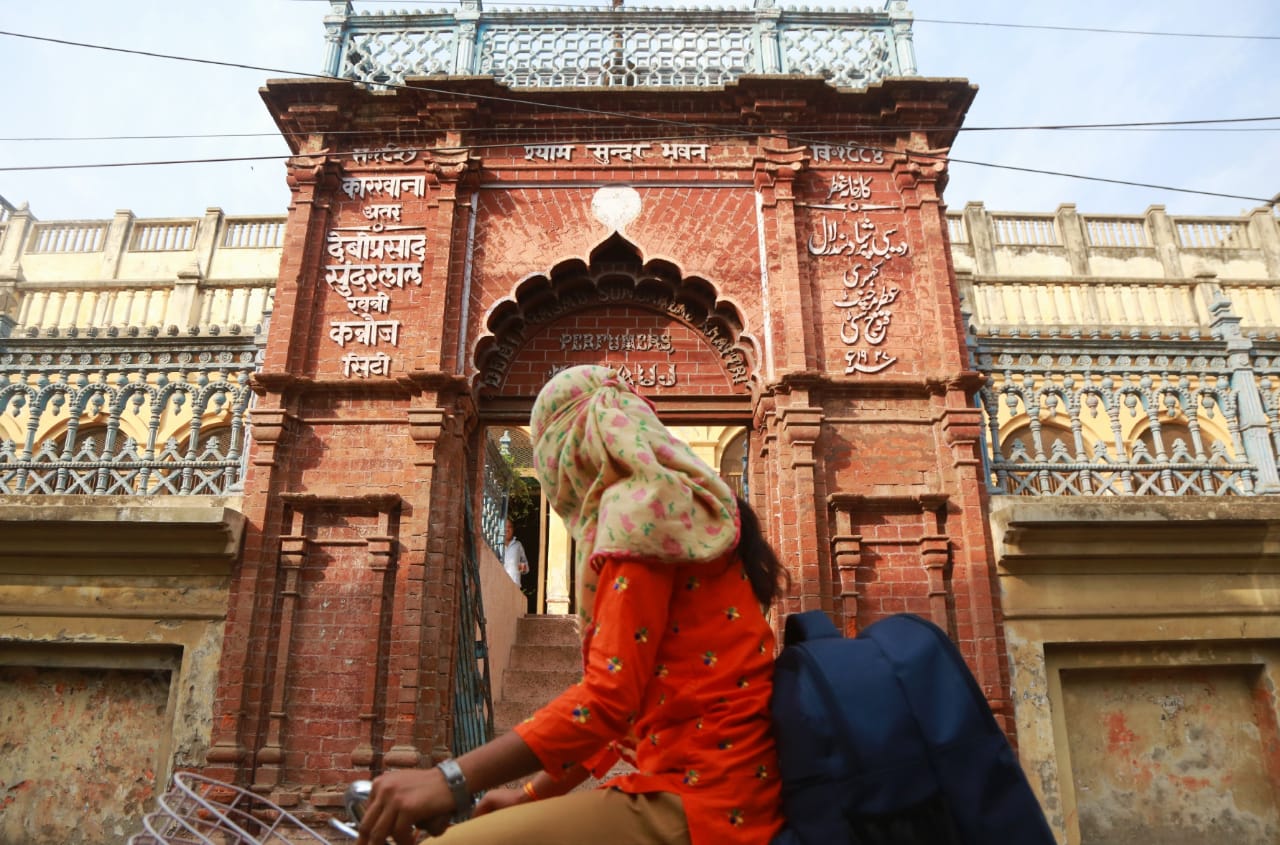
“The scent profile of the traditional method is unique and unmatched, which is why we stick to it, and this is what makes Kannauj’s attars truly special,” T.N. Tandan, a perfume distiller, told ThePrint. Tandan owns Devi Prasad Sunder Lal Khatri perfumers, which was founded in 1870.


Almost everyone in the city is engaged in attar-making in one way or another. The first part of the process starts at the break of dawn when farmers and labourers go to their fields to pluck flowers of the season.


These flowers are then transported to distilleries located in the city. They’re put into huge vessels called deg made of copper. An average vessel can hold 100kg of flowers of varying sizes. The tightly packed deg is then capped with clay so that air can’t escape.


These are connected to a bhapka, another receiver made of copper, which acts as a condenser and is placed in a water tank. The deg is put on fire on a furnace and the bhapka distills the steam.


This process is extremely laborious. “On an average, one will extract 180 gm of rooh gulaab from 400 kg of flowers,” Kapoor said.

The traditional method of perfume-making using hydro-distillation | Photo: Manisha Mondal | ThePrint


Famous attars

Kannauj manufactures essential oils, attars, floral water and floral absolutes. Among the unique and popular attars offered by the city is shamama, which is made from the roots of henna.


“Shamama is a popular, unique attar of Kannauj. It is a concoction of over 41 natural ingredients including herbs, spices and essential oils and every family has a unique recipe of its own here,” Kapoor said.


Mitti attar is another popular offering, which was an attempt to capture the smell of rain (petrichor) in a bottle.


“Mitti attar is made by co-distillation of earthen clay pots with sandalwood oil or other oils. It is quite soothing and calming. Other than that, it is also used in other creations of perfumery wherein it is used as an ingredient which brings out an earthy foundation to the concoction,” he added.


The essential oils from Kannauj can range from Rs 25 for a small 1 gm bottle to over Rs 20 lakh per kg.


“We’ve divided our products into 3 categories: Rs 10,000 per kg, Rs 60,000 per kg and Rs 1,60,000 per kg across all our fragrances,” added Tandan.


“The two most expensive products are agarwood oil (from aquilaria trees in Assam) that can cost up to Rs 25 lakh a kilo and absolute oil of rooh gulab (from pink roses) that sells for up to Rs 8 lakh a kilo,” he said.


(Source: The Print)

Saturday, 27 March 2021

Was Nur Jahan a scheming temptress or just an independent woman who historians couldn’t fathom?

 Whatever the truth, the impact this Persian refugee had on emperor Jahangir cannot be denied.

She was the 35-year-old widow of a man who had fallen out of favour with the Mughal emperor when she caught the eye of Jahangir. Within years, Mehr-un-Nisa, or Nur Jahan as she is known in history, rose to become the most powerful woman in the Mughal empire – coins were minted in her name, she enacted legislation, issued edicts, interacted with foreign traders and determined the empire’s policy.


But that is not the reason why I want to talk about her today, on Women’s Day. Nur Jahan saved the life and dignity of her husband – it is her bravery in this context that makes her my woman of the day.


Born in Kandahar to impoverished Persian parents fleeing Tehran in search for better opportunity in the Mughal empire, Mehr-un-Nisa grew up to be an extraordinarily beautiful and accomplished young girl. She was married at the age of 16 to Ali Quli Istajlu, who too was a refugee from Persia who had joined Khan-i-Khanan Abdur Rahim – a senior nobleman and poet popularly known as Rahim – in Emperor Akbar’s court.


Ali Quli later fought for Prince Salim (the future Jahangir) in a campaign against the Kingdom of Mewar and was awarded the title of Sher Afghan for his bravery. However, he fell out of favour with the prince after Salim rebelled against Akbar (the falling out had nothing to do with Mehr-un-Nisa). In 1605, after Akbar died, and Jahangir became emperor, he pardoned Ali Quli but transferred him far away, to Burdwan, in Bengal. Two years later, Ali Quli was killed in a fracas with Qutbuddin Khan, the Governor of Bengal.


The many romantic stories we hear of how the young Salim fell in love with Mehr-un-Nisa and eventually got Sher Afghan murdered, like many of its genre, are latter day fabrications that medieval Indian history expert Satish Chandra said serious historians do not accept.


Nur Jahan and Emperor Jahangir. Opaque watercolor, gold, and silver on paper. Los Angles County Museum of Art | Photo courtesy: LCMA


Star of the harem

After Sher Afghan’s death, the young widow, and her daughter Ladli, were brought to Agra. Mehr-un-Nisa was made an attendant to Salima Sultana Begum, Akbar’s wife, and Jahangir’s stepmother. She lived in the Mughal harem for four years during which time she used her skill in embroidery and stitching to become a very popular designer for the Mughal ladies. She dressed very simply herself – mainly in whites – but fashioned brightly coloured brocades, tissues and silks for the ladies of the harem. Her designs were much sought after and often set the fashion trends. To her goes the credit for inventing the Dudámí (flowered muslin) for peshwáz (gowns open in the front), pánchtoliah for oá¹›hnís (a new design for veils), bádlah (embroidery with metal strips), kinárí (lace), and farsh-i-chandaní (white cloth for floor covering). She is also credited with designing gold ornaments with elegant new patterns.


In 1611, Jahangir happened to meet her at Meena Bazar – a new year fair started by Akbar in which the emperor was the only male present while noblewomen, princesses and other female members of the royal harem exhibited brocades, exquisite silks, fine muslins, bejeweled turbans and the like. Jahangir fell in love with her, proposed immediately, and they were married on May 25 of the same year. She was his 18th and last wife. Jahangir gave her the title of Nur Mahal or light of the palace and later Nur Jahan or light of the world. She was also given the title of Badshah Begum.


Poet and hunter

Mughal ladies were highly accomplished and studied art, literature, philosophy, and religious studies with learned tutors. 


Nur Jahan was no exception, but she was a brilliant conversationalist too. She composed Persian poems occasionally under the pen name of Makhfí, or the concealed one, a pseudonym also used by other female writers in the Mughal court like Salima Sultana Begum and Aurangzeb’s daughter Zebunnisá Begum.


Mughal women were trained in basic warfare and knew how to use swords and other weapons. Nur Jahan was a crack shot, and often accompanied Jahangir on tiger hunts. In his memoirs, Tuzuk-e-Jahangiri, the emperor described one such occasion in 1619:

My huntsmen reported to me that there was in the neighbourhood (of Mathurá) a tiger, which greatly distressed the inhabitants. I ordered his retreat to be closely surrounded with a number of elephants. Towards evening I and my attendants mounted and went out. As I had made a vow not to kill any animal with my own hands, I told Núr Jahán to fire my musket. The smell of the tiger made the elephant very restless, and he would not stand still, and to take good aim from a howda is a very difficult feat. Mírza Rustam, who after me has no equal as a marksman, has fired three or four shots from an elephant's back without effect. Núr Jahán, however, killed this tiger with the first shot.


He described another occasion in which she killed four tigers with six shots:

She shot two tigers with one shot each and knocked over the two others with four shots. In the twinkling of an eye she deprived of life the bodies of these four tigers. As a reward for this good shooting I gave her a pair of bracelets of diamonds worth 100,000 rupees and scattered 1,000 ashrafis over her. 


Nur Jahan had a refined cultural taste and ably assisted Jahangir in his pursuit of art and painting. Her mother, Asmat Begum, had discovered attar or essence of roses, but the credit of distilling and popularising it goes to her. Apart from this, she took care of orphans, especially girls, and is estimated to have arranged the marriages of, or provided for, five hundred such girls.


She was a great patron of architecture too, and built many beautiful palaces, gardens and mosques. The tomb she built for her father Mirza Ghias Beg (who was later given the title Itimad-ud-Daula or pillar of the state by the emperor) in Agra is one of the most exquisite examples of Indo-Persian architecture, and provided inspiration for the Taj Mahal. She also built the Pathhar Masjid mosque at Srinagar.


An emperor besotted

It has been implied that Nur Jahan’s dominant role during Jahangir’s reign led to rebellion and disaffection amongst nobles especially with his third son Prince Khurram or Shah Jahan. While some historians have painted her as an ambitious, scheming temptress who took advantage of Jahangir’s love for wine and opium to take over the reins of the empire, others like professor Satish Chandra have argued that the prejudice against Nur Jahan possibly reflected “the deep-seated anti-feminist bias of many contemporary historians which has often been repeated uncritically” by others.


However, her impact on Jahangir’s life can’t be denied. In his memoirs, the emperor said:

“Before I married her, I never knew what marriage really meant… She gradually reduced the quantity of wine I took, and guarded me against unsuitable food and improper things".


When Jahangir fell sick, which he did often in the latter part of his reign, Nur Jahan monitored his health and took over the reins of government with his permission. Except for the khuá¹­bah (prayer for the reigning monarch), she possessed all the privileges of a ruler. Farmans or edicts were issued in her name and grants were conferred under her seal. From 1623-27 AD coins were also struck in her name bearing the words:

Ba hukm Shah e Jahangir yaft sad zewar (front)

By order of the King Jahángír, gold has a hundred splendours added to it

Za naam e Nur Jahan Badshah Begum zar (on reverse)


By receiving the impression of the name of Núr Jahán, the Queen Begum.


She is the only Mughal woman in whose name coins were struck. She would even appear with Jahangir for jharokha darshan, a tradition that Akbar started in which the emperor would show himself at the window after dawn prayers every day to give the common people an audience.


Her father and brother rose to be important nobles during the reign of Jahangir but it was primarily because of their own abilities. As Jahangir said in his memoirs:

"… On the basis of seniority in service, extent of sincerity and experience in the affairs of government, I exalted Itimad-ud-Daula to the high post of Wizarat of the Dominion". 


Indian historian Prof Nurul Hasan pointed out that the rise of Itimad-ud-Daula and his family took place after 1616 when Nur Jahan was not so active in politics. She only stepped into the limelight in 1622 when Jahangir’s health was failing, his son Shah Jahan was in open rebellion, and her father was no longer alive to guide affairs. Ambitious nobles tried to take advantage of this situation but they underestimated her grit.


Woman in battle

In 1626, the emperor was weakened by ill health and Nur Jahan appointed as prime minister, her brother Asaf Khan. An important courtier and Mughal general Mahabat Khan felt slighted. He was considered a potential threat by some sections. Perhaps to put him in his place, Mahabat Khan was asked to render accounts, and to surrender war elephants he had captured during a campaign. A troop of soldiers was sent to escort him to court. But instead of meekly accompanying them, he came with a trusted body of Rajput warriors and seized the emperor as the royal camp was crossing the river Jhelum on its way to Kabul.


Mutamad Khan, the author of Iqbalnama-e-Jahangiri, who was present there, wrote:

After Núr Jahán had crossed the river, and reached the house of her brother, she summoned all the chief nobles, and addressed them in reproachful terms. “This,” she said, “has all happened through your neglect and stupid arrangements. What never entered into the imagination of any one has come to pass, and now you stand stricken with shame for your conduct before God and man. You must do your best to repair this evil, and advise what course to pursue.”


Nur Jahan joined the battle that ensued to release Jahangir from Mahabat Khan’s clutches. Despite a tactical disadvantage, the superior force of the enemy, the deep gushing water and severe injuries to her elephant, she kept shooting arrows at the enemy. But though she fought bravely, attempts to rescue the emperor proved fruitless.


She returned to Lahore and thought of other ways to rescue Jahangir. She had realised by then that she was powerless while separated from the emperor as both their lives were in danger. On Jahangir’s invitation, she joined him in Kabul. Mahabat Khan was now at ease as the emperor was reconciled with him, but Nur Jahan was planning their escape.


Said Mutamad Khan, in the Iqbalnama-e-Jahangiri:

Núr Jahán Begam worked against him both in private and in public. She maintained a number of followers, and attached them to herself by money and promises.


Within six months, taking advantage of Mahabat Khan’s weaknesses, Nur Jahan was able to wean away most of the nobles from his side. Realising that his position was precarious, Mahabat Khan fled from the court and later joined Shah Jahan who was biding his time till he ascended the throne. Nur Jahan’s sharp intellect, cool head and courage led her to her greatest victory, the defeat of Mahabat Khan. However, her triumph was short-lived as Jahangir died soon after in Lahore. The year was 1627.


Nur Jahan gracefully retired from public life once Shah Jahan became emperor, and died in Lahore in 1645. She was 72. She was buried in a red sandstone tomb she had built for herself in Shahadra Bagh, Lahore, a short walk away from her husband's last resting place.


(Source: Scroll)

Wednesday, 3 February 2021

Three times when the Mughal military juggernaut ran up against the immutable force of nature

 There were two seasons the armies of the Mughal empire often dreaded: winter and monsoon.

Winters can last for years in George RR Martin’s novels A Song of Fire and Ice and the HBO blockbuster series Game of Thrones. They bring long nights, bitter cold and endless snow to the kingdom of Westeros. Winters also resurrect violent nonhuman creatures called the Others in the novels and White Walkers in the TV series. These creatures lead armies of the undead known as wights. It is the fear of the advent of such a troubling winter that is immortalised in the pronouncement “winter is coming” – now a part of pop culture.


There were no White Walkers or wights in the Mughal Empire. But winter could still strike similar fear in the hearts of the empire’s armies. Moreover, while the people of Westeros had to fear only winter, Mughal armies often dreaded a second season: monsoon. This fear of environmental forces was so fierce that at times it slowed down the military juggernaut of the empire and even jeopardised territorial expansion. In this essay, we will encounter three stories of Mughal soldiers, commanders and even a prince who refused to serve, all for fear of the environment.


Image for representation only. | Victoria and Albert Museum/Wikimedia Commons [Public Domain]


Refusals were not common in imperial ranks. The emperor was the fount of authority in the Mughal political world, and loyalty and willingness to serve were celebrated as the highest virtues. To oppose the emperor was to oppose divine will itself. Even on a more earthly level, the emperor was the supreme arbiter of all promotions and punishments. Refusing to comply with his wishes could be seen as serious insult and attract severe penalties. This is why these three refusals are particularly striking.


Prince Murad Bakhsh in Balkh

The year was 1646. The fifth Mughal emperor Shah Jahan dispatched a huge army under his son Prince Murad Bakhsh to conquer the Uzbek-ruled city of Balkh in what is today Afghanistan. This was supposed to be the first step in the Mughal reconquest of their ancestral lands in Central Asia, which the Uzbeks had captured from the Mughals in the days of Babur. As the army approached, the Uzbek ruler of Balkh fled the city. Prince Murad occupied the place without much difficulty.


But soon after, he started growing uneasy. He did not want to stay on in Balkh. He wrote to his father requesting a transfer of post. Shah Jahan was busy celebrating the victory in Balkh when his son’s request arrived. Annoyed, he denied the appeal and instructed Murad to remain at his station. Although Balkh had been occupied, Mughal authority over the area was yet to be established. Murad refused to obey the order. Leaving his subordinate commanders in charge, he set off on a return journey. In retaliation, Shah Jahan cancelled his son’s mansab (rank) and jagir (land assignment). But he could not reverse the prince’s refusal to serve in Balkh.


What accounts for this behaviour of the prince? Contemporary sources are unanimous: the fear of the onset of the harsh and snowy Central Asian winter. The roads in the region were often narrow and the terrain rugged. Winter snow would block the roads for several months every year, which created major logistical problems for Mughal armies. They would often get stranded for days during campaigns when excessive snowfall would make roads impassable. Workmen would have to go ahead of the main army, shovelling snow and levelling the ground. The region was also extremely arid, making it difficult for large armies to feed themselves off the land. As a result, they had to carry much of their provisions with them. This, however, slowed them down and limited their ambit of operations. Gathering enough grass and fodder for the large number of horses of the cavalry also proved to be challenging.


By the time the Mughal troops under Murad Bakhsh reached Balkh and occupied the city, they were already greatly aggravated by the environmental conditions. With the freezing winter round the corner, they were also extremely anxious about what lay ahead. The roads would get blocked once the snow started by October, making their return to Hindustan impossible until spring. This was the context of Murad Bakhsh’s petition to his father. In fact, contemporary chroniclers indicate that the prince’s reluctance to weather a winter in Balkh was shared widely by the rank and file of his army. Shah Jahan’s denial of Murad Bakhsh’s request for a transfer must have come as a shock to the prince. Much more than upcoming military challenges, it was ultimately the fear of enduring the Central Asian winter that prompted his refusal to serve in Balkh.


Mughal campaign in Kashmir

This is similar to what had happened in Kashmir some years before. The Srinagar Valley had just fallen to the empire in 1586. Yet, Muhammad Qasim Khan, the commander of the victorious army, found himself in a fix. In occupying Kashmir, he had defeated its erstwhile rulers – the Chak dynasty. But the supporters of the previous regime refused to bow down to the conquerors and put up a stiff resistance. With challenges to Mughal authority mounting, there was no respite for the imperial army stationed in Srinagar. Yet, much to the chagrin of Qasim Khan, the troops under his command simply refused to venture out of the city to engage the insurgents in battle. Left with no option, Qasim Khan had to ride out himself to face the enemies.


Once again, historical sources point to environmental challenges as the main factor behind the refusal of the Mughal troops to fight. The initial experience of Mughal armies in Kashmir had been marked by struggles to cope with freezing winters, rugged terrain and arid conditions. Akbar’s biographer Abul Fazl writes that imperial troops were “exceedingly harassed by the severe cold, the dearness of provisions, the difficult roads and the rain and snow”. The mountainous terrain proved particularly challenging round the year. In 1594, for instance, around 115 porters lost their lives in an avalanche and landslide near the Pir Panjal Pass. Supply was another issue. Cultivation was limited in Kashmir, making it difficult for large Mughal armies to sustain themselves by feeding off the land.


The Kashmiri aristocracy often exploited these environmental conditions to resist the invaders – they would, for instance, attack imperial forces in difficult and narrow mountain passes. This made life extremely difficult for the Mughal soldiers. Most of them were used to warmer conditions and level ground. Noting this problem, Abul Fazl writes sarcastically: “Apparently these delicate men of hot countries were averse to campaigning in a cold country and did not like to traverse defiles.” It is in this context that we have to understand the refusal of Qasim Khan’s soldiers to venture out of Srinagar and face the Kashmiri resistance.


Mughal advance in Assam

As mentioned earlier, monsoon was another season that could jeopardise Mughal campaigns. This was, in fact, a regular affair in the eastern reaches of the empire. This is what our final story is about.


In 1662, an army under emperor Aurangzeb’s trusted general Mir Jumla invaded the Brahmaputra Valley. It ran over Assam rather swiftly without much resistance. After some initial engagements, the Ahoms withdrew to the hills and forests, leaving most of Assam to Mir Jumla’s forces. By early 1663, the operation culminated in a treaty between the Mughals and the Ahoms. 

Murad Bakhsh. Credit: Columbia University/Wikimedia Commons [Public Domain].


Towards the end of the campaign, Aurangzeb sent a farman (royal decree) to appoint two officers from the Assam campaign to the positions of subadar (governor) of Assam and faujdar (military commander) of Kamrup respectively. The emperor’s emissaries travelled all the way from North India to Assam, where they presented the farmans to an assembly of Mughal officers. To the shock of everyone present, both the commanders promptly refused to accept their new appointments. No amount of persuasion could change their mind.


Here too, the decisions of these commanders can be traced to the troubles the army had faced in negotiating Assam’s environment. 


Soon after the Mughal army occupied the region, heavy monsoon rain had caused widespread floods. This threw the invading army into utter disarray. Describing the horrors of the monsoon, one chronicler, Khafi Khan, writes: “… [A]rmies of clouds, moving like elephants, appeared from the side of every mountain; arrows of raindrops caused the nalas and the rivers to swell; and the latter, putting on helmets of waves over their heads, raised noise and tumult in all directions.”


The Ahoms took advantage of this situation. They came out of their refuge, mounted their boats, and attacked the invaders. Mughal soldiers, in contrast, had become marooned at different stations because of the floods. Unable to come to each other’s aid, they became easy targets for the Ahoms. The Ahoms exploited this situation, repeatedly leading devastating attacks, especially at night. Mughal troops found themselves helpless.


To make matters worse, the rain and the flood snapped Mughal communications with their base in Bengal. This resulted in a breakdown of the supply line and created widespread shortage of food grains. Various epidemics broke out in the Mughal camp, leading to heavy casualties. Ultimately, the imperial army barely managed to strike a settlement with the Ahom kingdom and rush out of Assam. It was this traumatic experience of the campaign that prompted the two Mughal commanders to refuse their new appointments. Accepting the appointments would have meant serving in Assam and reliving the horrors they had just experienced.


Vagaries of nature

In all three cases, there were other factors besides climate, terrain and ecology. Significant military challenges, to name one. In Balkh, Uzbek mounted archers attacked Mughal armies on the march relentlessly. In Kashmir, the ousted aristocracy put up a resilient fight even after the imperial occupation of Srinagar. Finally, in Assam, Mughal forces struggled against determined night-time attacks carried out by the Ahoms.


However, in all three cases, military challenges became more difficult to handle because of the way the adversaries exploited environmental conditions to their advantage. This was made possible by their greater familiarity with local conditions.


Supply was also a problem in these cases. In most of South Asia, Mughal armies relied on itinerant grain merchants, called the Banjara, for food. However, they did not operate in any of these three regions. Once again, these logistical difficulties were amplified by the aridity of Balkh and Kashmir as well as by the floods and disease ecology of Assam.


These stories offer us a window into the complex interactions of the Mughal empire with the natural environment. Warfare was a domain in which many of these interactions played out. Mughal capacity to make war was based on its ability to harness and use environmental resources like animals, crops, firewood, and water. In course of military campaigns, armies also sought to tame the environment by cutting down forests, levelling the ground, removing snow and bridging rivers. At the same time, environmental factors like climate, ecology and terrain shaped the conduct of campaigns. They decided military tactics, strategy, logistics and deployment of technology. And in the case of the Mughals, they sometimes derailed the course of imperial expansion in more than one way.


Today, we live in a world where a killer pandemic has brought human civilisation down to its knees. Global environmental catastrophe seemed like a rather distant and vague possibility even ten years ago. Now it is staring us in the face. In order to understand how we got here, it is important to study the dynamics of human-environment relationships in the past. This is where environmental history becomes important.


In case of South Asia, this field has flourished mainly in the context of the colonial period. We know far less about human-environment dynamics during the pre-colonial times. By focusing of the interactions of the Mughal Empire with the natural environment, we are offered a glimpse into these relatively unexplored histories.


Pratyay Nath is Associate Dean, AshokaX, and Assistant Professor of History, Ashoka University. He is the author of Climate of Conquest: War, Environment, and Empire in Mughal North India (Oxford University Press, 2019). His ongoing research projects explore the concept of “early modernity” in history-writing, empire-environment relationship in the early modern world, and history of the horse in South Asia.


(Source: Scroll)

Tuesday, 26 January 2021

Malik Ambar: The African slave who built Aurangabad and ruined the game for Mughals in the Deccan

 The story of Malik Ambar, an African slave turned warrior, is an unusual one. Sold and bought several times by slave dealers during his youth, fate brought him miles away from his home in Ethiopia to India.

Among several allegorical paintings created by Abu’l Hasan, a chief painter at Emperor Jahangir’s court, is one depicting the Mughal sovereign shooting arrows at the severed head of an Abyssinian slave. Created somewhere in 1620, the painting is a perfect depiction of Jahangir’s furore towards a man considered his arch-nemesis, the one he lambasts as “the ill-starred” and “the black fated” and who, throughout his life, remained a thorn in the flesh for the Empire in the Deccan.


The story of Malik Ambar, an African slave turned warrior, is an unusual one. Sold and bought several times by slave dealers during his youth, fate brought him miles away from his home in Ethiopia to India. In India, not only did Ambar get his freedom back, but he also rose up the social ladder, got an army, vast estates, and founded a city that today goes by the name ‘Aurangabad’.


Sold and resold many times

Born in 1548 in southern Ethiopia’s Khambata region, Ambar is believed to have been associated with the Oromo tribe, an ethnic group that now represents over 35 per cent of the country’s population. He was known by the name of ‘Chapu’ until he fell into the hands of slave dealers. Historians believe either he was captured during a war or was sold into the trade by his poor parents due to poverty.


Malik Ambar was known by the name of ‘Chapu’ until he fell into the hands of slave dealers. (Source: Wikimedia Commons)


Soon, the young Abyssinian was paraded with other slaves in markets across the Middle East where he was bought by an Arab. Thereafter, he was bought and resold on several occasions.


Citing a contemporary European source and Persian Chronicles, Historian Richard M Eaton, in his book A Social History of the Deccan, 1300–1761 Eight Indian Lives, writes that Chapu was sold in the Red Sea port of Mocha (in Yemen) for the sum of eighty Dutch guilders. From there, he was taken to Baghdad and “sold to a prominent merchant who, recognising Chapu’s superior intellectual qualities, raised and educated the youth, converted him to Islam, and gave him the name ‘Ambar’.”


In the early 1570s, Ambar was taken to the Deccan as southern India was then called. Here he was purchased by a certain Chengiz Khan. Khan himself was a former slave who had risen to hold the office of Peshwa, or chief minister of the Nizam Shahi sultanate of Ahmadnagar in India.


The rise of the African slave

Ambar was amongst one of a thousand other ‘Habshi’ (a term used to refer to members of various ethnic communities from the Abyssinian highlands) purchased by Khan, when fate brought him to the Deccan.


Eaton notes that the Deccan sultanates were systematically recruiting the Habshis as slaves in the 16th century. They were highly valued for their physical strength and loyalty, and were frequently put to military service.


A painting of Malik Ambar, Circa.1620. (Source: Victoria and Albert Museum, London)


The 14th-century Medieval Moroccan scholar and traveller Ibn Battuta in his writings mention that the Habshis were “guarantors of safety” for ships travelling in the Indian Ocean. He notes that the slaves had such a reputation that even if one was on board, the ship would be avoided by pirates.


However, in Deccan society, the slaves did not have a permanent status. Upon the death of their masters, they were usually “set free” and served as per their free will in service of powerful commanders in the Empire. Some even reached such highs that they were soon seen as political game-changers, as it happened in the case of Ambar.


Five years after taking him on, Ambar’s master and patron Chenghiz Khan died, and Ambar was set free. For the next 20 years, he served as a mercenary for the Sultan of neighbouring Bijapur. It is here he was given charge of a small troop and bestowed with the title “Malik”.


‘Ambar’s land’

In 1595, Malik Ambar returned to the Ahmadnagar Sultanate and served under another Habshi lord. This was the time when Mughal Emperor Akbar laid eyes on the Deccan and began a significant military expedition towards Ahmednagar. This was also Akbar’s last expedition before he passed away.

Mughal Empire in the 16th century. (Source: Colin Davies)


“It was really during the Mughal invasion of Ahmednagar in the late 1590s that Malik Ambar truly came into his own,” historian Manu S Pillai writes in his book Rebel Sultans: The Deccan from Khilji to Shivaji.


“At the time of the first siege, he had less than 150 cavalrymen in his command, and he joined himself to a more established Habshi lord. But as war shred to pieces the nobility, and challenged the loyalties of large numbers of men, within a year Ambar held in his control 3,000 warriors; by 1600, this number rose to almost 7,000, now including Marathas and other Dakhnis – a ‘multiracial, multi-ethnic force that broadly shared a regional identity distinct from the northern Mughals’,” writes Pillai.


In the coming years, Ambar married one of his daughters to a 20-year-old scion of Ahmadnagar’s royal family in neighbouring Bijapur, projecting him as a future ruler of the Nizam Shahi state against the Mughals.


Mughal Emperor Jahangir shooting at a severed head of Malik Ambar, a painting created by Abul Hasan; Circa. 1616. (Source: Wikimedia Commons)


“Cleverly, using muscle when it was needed and trickery when that suited his ends, Ambar emerged as the principal force in what used to be the Ahmednagar state. At the height of his power, it was said that the Nizam Shahi of the western Deccan was simply referred to as ‘Ambar’s land’,” Pillai writes.


Along with the Marathas, Ambar’s feud with the Mughals – now led by Emperor Jahangir – lasted for decades. He was widely known for unleashing guerrilla warfare on the Mughal army.


Eaton’s book mentions that ‘general after general’ were dispatched from Delhi towards the south to beat the Ethiopian, but failed. “The more times he defeated superior Mughal armies, the more men rallied to his side; in 1610, he even managed to expel the Mughals from Ahmednagar fort,” Eaton notes.


Builder of Aurangabad

Apart from being an able fighter, Ambar was also a fine administrator. In 1610, after briefly expelling the Mughals from Ahmednagar, Ambar established a new capital, a city named Khirki (present-day Aurangabad in Maharashtra) for the sultanate.


The city eventually became home to over 2,00,000 people including the Marathas after whom several suburbs such as Malpura, Khelpura, Paraspura, and Vithapura came to be named.


Tomb of Malik Ambar in Khuldabad, Maharashtra. (Source: Wikimedia Commons)


“It was around 1610-11 that Ambar made Khirki his base, and this slowly emerged as a major urban centre, where like Ambar, much of his Maratha nobility and military leadership also built houses and developed localities,” Pillai says in an email interview with Indianexpress.com. “Waterworks and an underground canal were among the early developments he brought about, which is how a lot of cities in the dry Deccan area were able to expand. We see it with Bijapur as well, a few decades before, and this required considerable expertise in engineering and planning.”


In the coming wars, the city along with the Ahmadnagar Sultanate fell to the Mughals. It was under the reign of the 17th-century Mughal monarch, Aurangzeb, that the city came to be renamed as ‘Aurangabad’. “They too added to the city’s infrastructure and allowed the city to grow. This included improving and expanding the waterworks. But in the middle, there were also one or two devastating attacks on the city that ruined much of its beauty, even though it managed to recover and rebuild itself with time,” says Pillai.


Ambar was laid to rest in a mausoleum, designed by him in Khuldabad. (Source: Rana Safvi)


Pillai says Ambar in building a new city in the first place seemed to mark his legacy. “This was, after all, a time of great builders and it would not be surprising that the Habshi warlord also wished to follow in that tradition. He is also supposed to have built both the Jama Masjid and Kali Masjid in Aurangabad, as the city was later named by the Mughals.”


The Abyssinian is also credited with establishing a more efficient land revenue model of the time which was used by the Marathas under Shivaji, whose grandfather (Maloji) was a close aide of Ambar. In years to come, Shivaji in his grand epic poem ‘Sivabharata’ also mentioned Ambar, referring him “as brave as the sun”.


Inside Malik Ambar’s tomb in Khuldabad. (Source: Rana Safvi)


Ambar died in 1626 and was laid to rest in a mausoleum, designed by him in Khuldabad.


Surprisingly, upon his death, Emperor Jahangir’s surrogate diarist, Mutamid Khan made an entry noting: “He had no equal in warfare, in command, in sound judgment, and in administration. History records no other instance of an Abyssinian slave arriving at such eminence.”


Further reading– ‘A History of the Deccan.’ In Sultans of Deccan India: Opulence and Fantasy, 1500–1700,’ by Richard M Eaton; ‘Rebel Sultans: The Deccan from Khilji to Shivaji,’ by Manu S Pillai; A Social History of the Deccan, 1300–1761 Eight Indian Lives by Richard M Eaton.


(Source: The Indian Express)