Showing posts with label violence. Show all posts

Monday, 4 March 2019

Disabled children ‘constantly’ physically restrained and left with bruises and trauma, parents say

'These children are not naughty children. They are children with disabilities'

Children with learning disabilities and complex needs have been physically restrained in school as much as 80 times in just three months, leaving them injured and traumatised, parents say.

A 12-year-old boy with sensory processing disorder, autism and ADHD was restrained “constantly” at a special school in Essex for up to five hours at a time, his mother told The Independent.

Lucy, mother of Ellis, said he would come back from school with bruises all over his body after being pinned down. He would hide in the garage because the experience had left him terrified.

“Because of his sensory disorder, touch is Ellis’ biggest trigger,” she said. “So you just don’t touch him. Before he went to that school, he had never had to be restrained in his life.”

Lucy is one of the parents who have launched a campaign calling on the government to better regulate the use of restraint in schools to stop disabled children from being “hurt every day”.

“It is hard enough raising a child like Ellis without the added worry of people who should be caring for him constantly traumatising him,” Lucy said. “I am so worried about the damage this has done.”

The families say a lack of clear guidance has led to some schools often using restraint against children with special education needs and disabilities (SEND) – despite there being no risk of serious harm.

Becky said her daughter Abi, who has foetal alcohol spectrum disorder, was restrained 81 times during one year at a special school in North Yorkshire.

She told The Independent: “What worried us was the intensity of the restraints and the fact she was being restrained very often.”

During one incident, she was held by eight members of staff as four more watched.

After multiple restraints, Abi then began to self-harm at school and threatened to run in front of cars and throw herself down stairs.

Now 15, Abi was excluded as she was taking up “too many resources”, Becky said.

“Schools are using restraint too often,” she added. “These children are not naughty children. They are children with disabilities. It just seems to be a way of working with children that is just so wrong.”

Funding pressures could be leading to a rise in the number of special schools opting for restraint amid larger class sizes and reduced one-to-one support, the National Education Union (NEU) says.

Speaking about the parents’ stories, NEU executive Jerry Glazier, who has worked at a pupil referral unit (PRU) for two decades, said: “If a school is making that number of restraints on the same child over a short period of time, then that really is excessive.”

He added: “I know that some schools are more acutely committed to trying to avoid using physical restraint as it often makes matters worse rather than better.”

A crowdfunding appeal has been launched to pay for legal advice to see whether a judicial review can be taken against the government over inadequate safeguards on the use of restraint in schools.

The families want education secretary Damian Hinds to introduce a law regulating the use of restraint, as well as other restrictive practices – such as seclusion in schools.

It comes after a December report by the Children and Young People’s Commissioner Scotland, James Adamson, which found guidelines on restraint and seclusion in Scottish schools were falling short.

Anna Cole, parliamentary and inclusion specialist at the Association of School and College Leaders, said the use of restraint intervention occurs in “extremely challenging circumstances”.

However, she added: “We would welcome clearer guidance over this difficult and sensitive area, and have responded to a government consultation on reducing the need for restraint intervention.

“It is important to note that a key element in reducing the need for restraint intervention is the provision of tailored support for children and young people, and schools need sufficient government funding to be able to provide that support.”

The government consulted last year on draft guidelines on reducing the need for restraint for young people with SEND in health and social care services, as well as special schools.

A Department for Education (DfE) spokesperson said they were considering responses. But they added: “Schools need to be safe and calm environments, with effective behaviour management policies and approaches that meet the needs of pupils.

“At times, it may be necessary to use reasonable force to restrain a pupil, for example to break up a fight in order to protect teachers and other pupils.”

(Source: Independent)

Friday, 8 June 2018

Are literary classics behind the misogyny of the incel movement?

Incels aren’t monsters of cruel internet culture – they are the product of the American literary canon that has long glorified male sexual frustration, writes Erin Spampinato in the Guardian. Read on: 

One month ago, Alek Minassian drove through a Toronto shopping district in a rented van, killing 10 people and injuring 16 more. Analysis of Minassian’s online activity – where he participated in forums for the involuntarily celibate, or incels – quickly revealed the attack’s motivation: he was avenging himself on the women (apparently all of us) who had rejected him. He declared that with his act of terrorism, the “incel rebellion” had begun – although he was not the first self-described incel to use his sexlessness as an excuse for acts of mass violence.

Though the subsequent rash of media analysis might lead you to think otherwise, none of this is new – not even the term “incel”, which was first coined in 1993 by a queer Canadian woman when she created a website for people who identified as involuntary celibates to share their thoughts and feelings. The incel community that exists today on reddit, 4chan and incel.me is an inchoate and ever-evolving group, which seems to change shape with every attempt to characterize it. The genealogy of today’s incel grows more complex the more you dig (he is descended from both the aggressively misogynist pick-up artist community and the slightly more sympathetic “love-shy” community). What members of all these groups share, of course, is their sense of their own alienation from women and their (almost always deeply misogynistic) conviction that this alienation has negatively affected their lives in myriad profound ways.

The sentiments offered by participants in such forums range from standard misogynist cliche, to violent hatred for women, to deep ambivalence and confusion about all aspects of human sexuality. At best, these communities are desperately sad and at worst – and lately we’ve been seeing them at their worst – incel and related forums rationalize and even celebrate the rape and murder of women, and advocate state-mandated “sexual redistribution of women” (the rationale behind which, amazingly, has been echoed by several prominent rightwing thinkers lately).

"The plots of a number of other ‘classic’ novels, from Great Expectations and A Tale of Two Cities to The Great Gatsby, are driven by a (white) male character’s frustrated desire with a remote woman."

I am writing this on 23 May, the fourth anniversary of Elliot Rodger’s Isla Vista spree killing, a set of murders explicitly motivated by the perpetrator’s extreme hatred of women and the men he perceived as more sexually successful than he. As of the time of writing, 10.09am, there are multiple posts on the front page of incel.me celebrating Rodger as a hero (many more will surely show up throughout the day). Posters are discussing what kind of vanilla latte Rodger would have liked (hot or cold), congratulating each other on the anniversary (which they’re calling “The Supreme Gentleman’s Day” and “The Day of Retribution”), and making playlists of his favorite songs (they call these 80s pop songs “Elliotcore”). Where did these young men get the idea that male pathos (stereotypically defined by them as sexual frustration) is so pathetic, so worthy of tribute? One possible answer to the question, one we don’t discuss very much, is our culture’s literary history. The incel isn’t just a monstrous birth of our casually cruel and anonymous internet culture. He is also a product of anglo-American literary culture, which (particularly in the 20th century) treats the topic of male sexual frustration as if it is of prime importance to us all.

Think of the literature you read in high school. One source of Hamlet’s insanity, those around him find it natural to assume, is his sexual frustration with Ophelia. Multiple characters in the play scheme to bring the two together, hoping that if she puts out he’ll calm the fuck down and not kill everyone. The plots of a number of other “classic” novels, from Great Expectations and A Tale of Two Cities to The Great Gatsby, are driven by a (white) male character’s frustrated desire with a remote woman. Holden Caulfield’s ramble through New York is punctuated by his obsessive recollections of Jane Gallagher, the girl he respected too much to try to fuck. Tim O’Brien’s collection, The Things They Carried, lingers on the story of Jimmy Cross and his obsession with a woman named Martha, whom he knew before he was drafted. Cross is depicted as a genuine figure of pathos: a normal, relatable man caught in a terrible position who uses fantasy as a way to manage the horrors of his war experience. He remembers touching Martha’s knee one night, and how she had recoiled. As he recalls this scene, he fantasizes about having “done something brave”. “He should’ve,” he thinks, “carried her up the stairs to her room and tied her to the bed and touched that left knee all night long.” That his fascination with her takes the form of a rape fantasy is later revealed to be doubly significant. It is not just evidence of his resentment towards her for rejecting him, but also, we later learn, proof that he has somehow intuited the history of sexual trauma that lives behind her veneer of disassociation, her eyes which are always “wide open, not afraid, not a virgin’s eyes, just flat and uninvolved”.

Perhaps these novels coached me into taking male sexual frustration seriously through a kind of frightful education: look what happens, they seemed to say, when men don’t get what they want.

I choose The Things They Carried to pick on here because it’s a favorite of mine. I think it’s brilliant, but it offers a prime example of the way our literary culture has long treated rage and aggression as if they are normal features of (white) male sexuality. (The racial component is of course significant here, since the exact opposite has long been true for depictions of black male sexuality, which have been represented as essentially and problematically aggressive.) The literature we choose to teach our children evidences how untroubled we are by this disturbing cliche that rage and a fascination with violation are characteristic features of (again, white) male sexuality. This is of course one of the main points of O’Brien’s beautiful book, but it doesn’t change the fact that as a teenager I had read many fictional accounts of men’s rape fantasies long before I had ever read a literary account from the woman’s perspective of rape, or even of consensual sex. I was trained to accept that male sexual frustration was a serious issue because I read hundreds of pages about it before the age of 20, far more than I read about issues of undoubtedly greater social import, like the legacy of slavery, the alienation of women and people of color from public life, or the violence of the settler colonialism on which the United States was founded. Perhaps these novels even coached me into taking male sexual frustration seriously through a kind of frightful education: look what happens, they seemed to say, when men don’t get what they want.

‘Our literary culture has long treated rage and aggression as if they are normal features of (white) male sexuality.’
And these are just the books I read in high school. Don’t even get me started on DH Lawrence, W Somerset Maugham, Ernest Hemingway, Harold Pinter, Henry Miller, Saul Bellow, Vladimir Nabokov, John Updike, Norman Mailer, Bret Easton Ellis, or the patron saint of elevating male bullshit: David Foster Wallace. (Don’t @ me; I don’t care.) Though many of these authors are justly celebrated, they have all repeatedly treated male sexual frustration as if it deserves pride of place among the great issues of Life. Lolita even succeeds in conjuring sympathy for the desires of a pedophile. (Gregor von Rezzori famously called it “the only convincing love story of our century” in Vanity Fair, a quotation which has long been emblazoned on the cover of the Vintage edition of the novel.) By contrast, novels of women’s frustration with society – not sex – like those of Edith Wharton and Kate Chopin, are classed as special interest pieces: feminist fiction or women’s fiction, not Great American Novels.

This all becomes even more ironic when we consider the history – not literary, but real – of identifying women’s sexual frustration as the psychological problem of hysteria. For hundreds of years, women were literally committed because of a “disease” that male doctors attributed to a handful of sexual causes: women with hysteria were either not getting fucked enough, had been fucked by the wrong people, had wanted to fuck the wrong people, or had just plain wanted to fuck too much. It’s hardly an insight to say that men have been telling women about how they should behave sexually forever, and that usually their instructions are geared to benefit their own pleasure or politics. That today’s most visible forms of misogyny, however, reverse the traditional rationale about female sexuality – it’s not that we need to get fucked more for our own good, but for the good of a nation plagued by mass shootings perpetrated by lonely men – just goes to show that this kind of misogyny cuts across political and ideological categories. I think our most celebrated and most taught literature also shows that. After revisiting the books that I was first introduced to as “great novels”, I see that many of them rehearse and even promote the idea that male sexual suffering (often represented by deprivation) is a public concern, while female sexual suffering (often represented by trauma) is a private, psychological issue. In literature, time and again, men – both writers and characters – elevate their pathos by revealing it. By contrast, female pathos marks a text as niche, as “confessional”, as minor.

This is more extreme version of a broader phenomenon described by Rebecca Solnit (among others): “A book without women is often said to be about humanity but a book with women in the foreground is a woman’s book.” This is the same logic that allows us to unreflectively give teenagers The Catcher in the Rye instead of The Bell Jar, because JD Salinger’s book seems to have universal appeal, while Sylvia Plath’s is an account of pathology (when in reality, of course, both books tackle the protagonist’s mental illness). It is the same logic that meant I wasn’t exposed to the novels of Alice Walker, Margaret Atwood, Marilynne Robinson or Toni Morrison until college. It is the same logic that recently allowed Gay Talese to argue publicly that he had not been influenced by any female writers (as if that’s possible). In short, literary culture has long been complicit in upholding the structures by which we imagine men to be more worthy of attention and thus more human.

In both life and literature, we lock up women who are dangerously sexually frustrated for the (supposed) good of themselves and the good of the community, but we ask the community to adapt to and accommodate male sexual suffering. We regularly ask teenage girls to read books in which characters degrade women, expecting them to understand that the book’s other merits outweigh its misogyny. To set such an expectation and not consider its effect on young women is foolish and hypocritical; we rarely expect young men to do the same, and hardy ever expect young white men to read extensively in traditions where their identities aren’t represented or are degraded. We need to reflect on the way the literature we celebrate supports the idea that women who are sexually frustrated create problems for themselves, while men in the same situation create problems for the world. Though the links are subtle, our celebration of a canon of sad white boy literature affects the way we think, and how much tolerance we offer to men like Minassian and Rodger.

It’s time to be done with this particular story, which treats white male rage as a ceaseless source of interest.

We have been told recently that there is a crisis in masculinity in America, and that we should be worried about it. We have been subjected to ideologues using this “crisis” as impetus to consider radically regressive ideas about sexuality. We can counteract this fearmongering by remembering the misogyny of the canon, which reveals to us that we have always worried about male sexual frustration more than we need to (or at least, more than we worry about more widely devastating social issues). We have always treated the alienation of men as if it deserved thousands of pages of analysis, perhaps because we feared it had the power to endanger us all. (Because, as Margaret Atwood famously put it: “Men worry that women will laugh at them, and women worry that men will kill them.”) Reassessing the canon allows us to see that one of the reasons why “he was a lonely virgin” sounds like reasonable justification to us for a spree killing is that we have long valorized male isolation. Our literary canon treats such desire as if it is a (if not the) central topic in the lives of white men. It treats the frustration of male desire as if it merits exploration time and again. Maybe people like Jordan Peterson and Ross Douthat (two mainstream writers who have recently entertained the possibility that society would benefit from “sex redistribution”) wouldn’t think male isolation was a privileged social problem (rather than an individual psychological problem) if our literary culture didn’t also support that idea. Maybe Donald Trump wouldn’t have won the presidency in a country that didn’t worry so much about what white men think all the time.

I’m not saying that we need to divest entirely from the mid-century authors like Pinter, Bellow, Updike and Roth who have so shaped American literary culture (though I’d personally be cool with letting Hemingway, Ellis and Wallace drift into obscurity). But I do think it’s time to be done with this particular story, which treats white male rage as a ceaseless source of interest. Perhaps we already are done with this story, and instead of representing a generation-wide crisis in masculinity, the incels are just the dudes who haven’t gotten over the fact that we’ve gotten over them. In that case, we might view their terrorism (or even the affront to civil rights represented by Trump’s win) not as the beginning of an uprising but as the last gasps of a defeated army.

I’m not naive enough to think that we will ever read or write misogyny out of existence, but I hope that more of us (especially men) will start reading more widely, start balancing books like American Psycho with books like Chris Kraus’s equally nimble satire of American life, I Love Dick. If I am right that there are subtle but real connections between mainstream literary structural misogyny and violent subcultures like that of the incel, then perhaps our lives actually depend on it.

Sunday, 27 May 2018

Thailand's dark side: Why you really shouldn't visit Koh Tao

Elaine Dickinson, an ex-Thailand resident warns that Koh Tao is a no-go zone. Read on:  

"Amazing Thailand" - so the slogan goes. But while Thailand shines brightly on many fronts – its exuberant capital, mesmerising beaches, bucolic countryside, lip-smacking food – it is mirrored by a dark side, a far cry from the tourism authority's vision of paradise.

During my years living in the Land of Smiles, I heard almost daily tales of horrific motorbike, car, boat and bus accidents, scams and property frauds, drownings and diving incidents, stabbings, suicides and highly-suspicious deaths. Most distressing among them were the murders of British youngsters Hannah Witheridge and David Miller, who were brutally killed on the southern island of Koh Tao in 2014. At the time of the event, I was asked by an international news agency to gather some quotes from foreigners living on the island.


Resting in the Gulf of Thailand, a two-hour ferry ride north of Koh Samui, Koh Tao is best known for its incredible marine life, which over the years has attracted a small but buoyant expat community of around 2,000 people, many of whom run dive centres, restaurants and B&Bs. But my requests to long-time residents and business owners were met with fear, as they made it quite clear they felt their lives would be in danger if they spoke on the record. Off the record, however, they told of an island held in the iron grip of a mafia family, who demanded protection money, controlled the local police force and were not above attacking or burning down the homes and businesses of people that crossed them.

Later, the investigation into Ms Witheridge and Mr Miller's murders was widely criticised, with the police accused of incompetence, mismanagement and the scapegoating of two Burmese migrant workers, who are now awaiting the death penalty. With attention focused on the island, a number of other disturbing deaths soon came to light, including that of Nick Pearson, from Derby, who police concluded had fallen from cliffs and then drowned, and French tourist Dimitri Povse, who was found hanged with his hands tied behind his back. Since then, I have refused to visit the island, have strongly advised friends and family not to go and have declined to include Koh Tao in any of my travel-related articles. The recent discovery of the body of Elise Dallemange, the seventh young backpacker to have died in suspicious circumstances in just three years, has only strengthened my belief that Koh Tao is a place to be avoided at all costs. 

Koh Tao may be beautiful but is allegedly controlled by a mafia family (Rex)
But while Koh Tao appears particularly troubling, corruption and mafia connections are not unique to the island. It's an open-secret that many of Thailand's most popular tourist resorts, including Phuket, Koh Samui and Phi Phi, are run by powerful families who control everything – from which vendors can sell pineapples on the beach to human trafficking, prostitution, and land rights. I was told by the general manager of one five-star hotel in Phuket that they had to include kick-back money in their budget to allow for building to go ahead.

Within a few weeks of arriving in the south, I also learnt that taxis are mafia controlled and charge up to 10 times more than you would pay in Bangkok; jet-ski operators are notorious for intimidating tourists into paying for fictional damages – never leave your passport as security – and if you do have a problem, the police are unlikely to help, although you should always report any crimes committed against you, for insurance purposes if nothing else. Violent attacks on women are also common enough for the Foreign Office to offer this advice:

“Violent sexual assaults and unprovoked attacks have been reported in popular tourist destinations, including in the Koh Samui archipelago and Krabi province. These are particularly common during the monthly Full Moon parties and generally occur late at night near bars.”

The FCO goes on to state: “Drink spiking has been reported in tourist destinations around Thailand, with both male and female victims. Be careful about taking drinks from strangers and at clubs and parties, or leaving your drinks unattended, particularly in Koh Samui, Pattaya and at the Full Moon party on Koh Phangan, where date rapes have been reported.”

So after three years living in Thailand would I say it’s safe to visit? Yes, for the most part. But I'm not going to sugar-coat it. You should take extra care when visiting the country. Do your research, avoid high-risk activities, never raise your voice to a Thai person (Thais hate confrontation and when they “lose face” often turn to violence) and ensure you have comprehensive travel insurance. And, for now, avoid Koh Tao.

(Source: Independent)

Wednesday, 18 January 2017

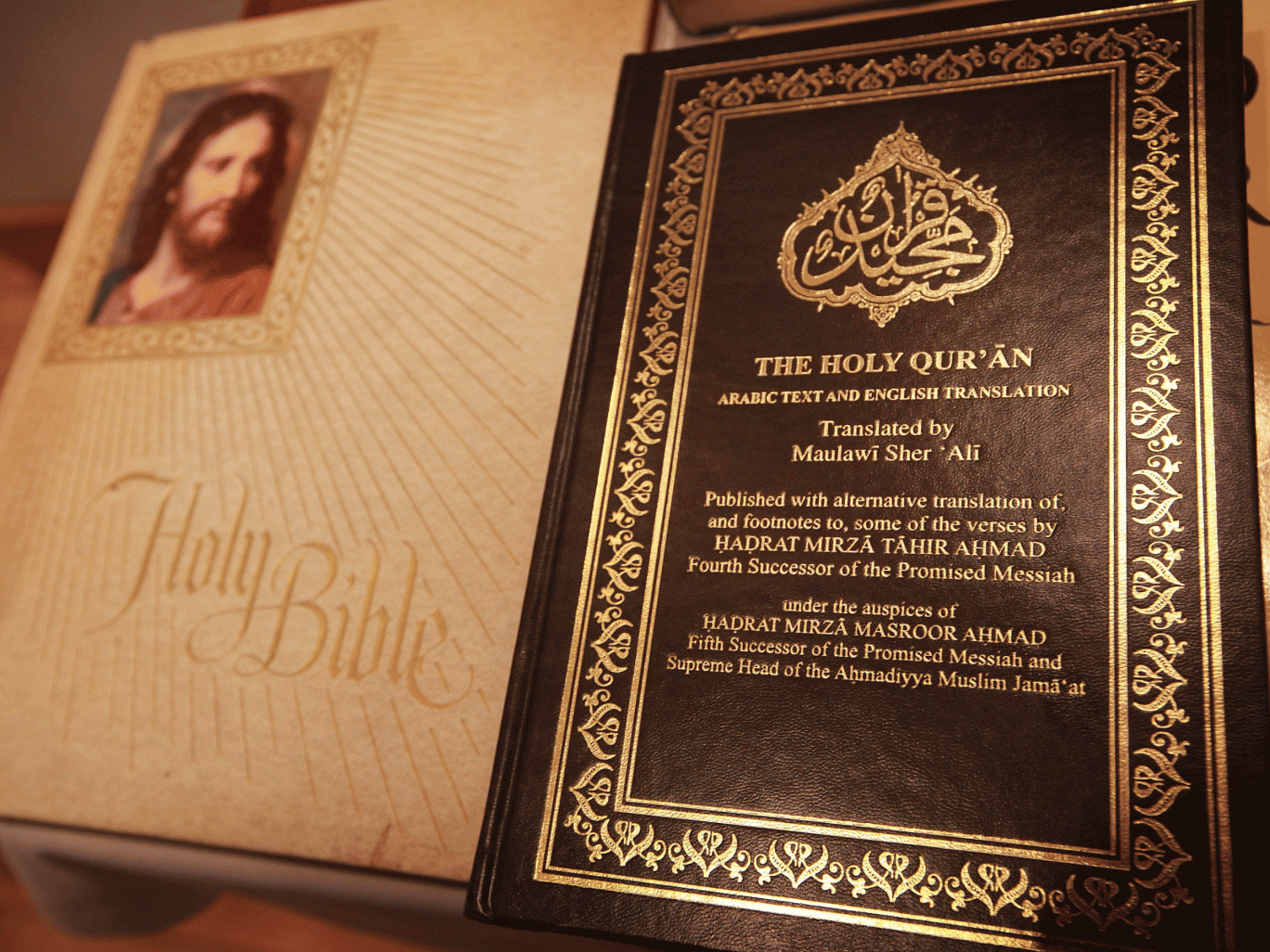
'Violence more common' in Bible than Quran, text analysis reveals

An analysis into whether the Quran is more violent than the Bible found killing and destruction occur more frequently in the Christian texts than the Islamic.

Investigating whether the Quran really is more violent than its Judeo-Christian counterparts, software engineer Tom Anderson processed the text of the Holy books to find which contained the most violence.

In a blog post, Mr Anderson explains: "The project was inspired by the ongoing public debate around whether or not terrorism connected with Islamic fundamentalism reflects something inherently and distinctly violent about Islam compared to other major religions."

Using text analytics software he had developed, named Odin Text, he analysed both the New International Version of both the Old and New Testaments as well as an English-language version of the Quran from 1957.

It took just two minutes for his software to read and analyse the three books.

By categorising words into eight emotions - Joy, Anticipation, Anger, Disgust, Sadness, Surprise, Fear/Anxiety and Trust - the analysis found the Bible scored higher for anger and much lower for trust than the Quran.

Further analysis found the Old Testament was more violent than the New Testament, and more than twice as violent as the Quran.

Mr Anderson summarises: "Of the three texts, the content in the Old Testament appears to be the most violent.

"Killing and destruction are referenced slightly more often in the New Testament (2.8%) than in the Quran (2.1%), but the Old Testament clearly leads—more than twice that of the Quran—in mentions of destruction and killing (5.3%)."

However, he adds: "First, I want to make very clear that we have not set out to prove or disprove that Islam is more violent than other religions.

"Moreover, we realize that the Old and New Testaments and the Quran are neither the only literature in Islam, Christianity and Judaism, nor do they constitute the sum of these religions’ teachings and protocols.

"I must also reemphasize that this analysis is superficial and the findings are by no means intended to be conclusive. Ours is a 30,000-ft, cursory view of three texts: the Quran and the Old and New Testaments, respectively."

(Source: Independent)

Thursday, 15 December 2011

When the ‘dirty little secret’ comes out


I sometimes wonder if education and employment really empower women in India. But still I see women gaining monetary independence and still trapped in the vicious circle of domestic violence. On the one hand, women are encouraged to pursue their education and get good jobs, but on the other hand, they are still expected to shoulder the responsibility of the household. Even if they work full time at office, they still return home to do all the unpaid domestic work single-handedly. When they she show reluctance, they face confrontation from their in-laws!
Is it because of the anger of men that it’s happening? I don’t know. Maybe they think women have won some sort of autonomy, an autonomy which breaks the men’s traditional stranglehold over the household and economy. In retaliation, many women face domestic violence.

As women gain good education, they become aware of their rights and question their male family members. When they refuse to tolerate the abuses, it may trigger conflict in the family. I have come across a few women who are very humble and meek and believe it is a husband’s right to beat his wife. Plus, there are occasions when newly-liberated women come in contact with their traditional mothers-in-law, and their husbands supporting their mothers and tension erupting in the family. And there have been cases where women have been killed by in-laws and husbands. I’m surprised how some in-laws face condemnation from their in-laws for their work and some feel that their in-laws are jealous of their work, which is often one of the leading causes of psychological torture.
What’s very strange is, which is one of the major aspects in accelerating domestic violence is that most women choose to suffer silently. They refuse to take any action against the perpetrators of violence.

The United Nations declared November 25 as the International Day for the Elimination of Violence Against Women. And October is National Violence Awareness month in the United States and one-third of women in the US still experience physical or sexual abuse by a male partner at some point in their lives, surveys show. As a matter of fact, so many other countries come with reports and articles on domestic violence regularly, quite often more during this month. China’s Xinhua news agency came up with a poll – a government survey on the social status of women in China -- report telling the world that about a quarter of its women suffer domestic abuse. The survey classified domestic abuse as verbal humiliation, physical assault, deprivation of personal freedom, illegal control of income and rape, and was based on the responses of 105,573 women aged 18 and above across the country. Reports of physical assault stood at 5.5 per cent, with a rate of 7.9 per cent among rural women and 3.1 per cent among their urban counterparts.

Domestic abuse became a big story in September when Chinese celebrity Li Yang -- yes, the same English teacher whose “Crazy English” teaching method made him very popular in the mid-1990s -- was exposed in a scandal of domestic violence, beating his American wife, Kim Lee, in front of his children. The world was shocked to see the photographs of Kim -- on her micro-blog at Weibo, one of China's most popular social media sites -- with bruises on her head and legs. The devil is in the details. The world was taken aback when she posted: "You knocked me to the floor. You sat on my back. You choked my neck with both hands and slammed my head into the floor. When I pried your hands from my neck you grabbed my hair and slammed my head into the floor 10 more times!" and his apology on his micro-blog after a week that, "I wholeheartedly apologise to my wife Kim and my girls for committing domestic violence. This has caused them serious physical and mental damage."
Though China set up an aid centre in Shanghai – the first in China -- against domestic violence in November 2009, and later several such centres were set up in other regions of the country, to offer temporary accommodation for victims, the country, interestingly, is yet to draft an independent law on domestic abuse.

Earlier, women silently suffered domestic abuse, as they considered it a family affair, too personal to talk about, let alone report it to police. And maybe that is the reason everybody saw a “they lived happily ever after” families. When scene was such, there was no question of a survey on it or any organisation to help the victims. But today, most of the countries have included it in their several laws, besides several organisations pitching in to increase awareness and helping the victims to turn to the police or NGOs or even the media for help.

On the other hand, in Ireland, almost 900 women and children were accommodated in, or needed some kind of support from, domestic violence services in just one 24-hour period in 2010. Safe Ireland -- the only national organisation representing frontline domestic violence services in Ireland -- released the results of a one-day census it carried out last November, and astonishingly, the census, carried out on November 4, 2010, showed that on that day, 555 women and 324 children were accommodated or received support from these services. This means, almost 36 people seeking support every single hour of that day. And noting the nationalities, most were Irish, however, other nationalities, including British, Nigerian, Polish, Russian and Chinese women too approached the Safe Ireland, on that day.

Maybe we have to go beyond mere numbers to acknowledge that each statistic represents a crime against a woman, a mother, an expectant mother, a toddler or a teenager, each living with fear, brutality and uncertainty at their own homes. There is a need to act quickly with responsibility and unwaivering commitment – to begin with those in higher positions -- our leaders and politicians.

Domestic violence and sexual assault is kind of like everybody's dirty little secret. No one wants to talk about it. No one wants to admit that they've been sexually assaulted. No one wants to admit that the person that they love the best has beaten them. There’s a need for domestic violence survivors to unite, to speak about what they went through. A very few will offer their stories in public as it always takes courage on the part of the victim. Not all can become Carolyn Thomas. She did not want to remain silent, instead, decided to speak out, travelling across the nation, educating women about the dynamics and dangers of domestic violence. She's been on TV shows, including “Oprah” in 2005, where her tale of courage drew such an overwhelming viewer response that she was invited back for the final show in April 2011.
 And now, Cuba has gone a step forward by airing the soap opera, “Bajo el mismo sol” (Under the Same Sun), for several weeks now, bringing the touchy and often silenced issue of violence against women into millions of homes. As Diéguez put it: “This soap is the first television programme in Cuba to address the ‘cycle of violence’ - a theory formulated by US anthropologist Lenore E. Walker (The Battered Woman, 1979) that explains the behaviour of some women abused by their spouses, especially about why the victim goes back to her attacker.

The victims can always caution others and help avoid violence or come out in public to raise their voice against such unhappy events, if any. The signs of domestic abuse can vary from jealousy to controlling and isolating behaviour to mental and emotional abuse. Not to forget Carolyn Thomas’ words: “I want women to understand they could wind up like me, or worse… They can wind up in the graveyard.”