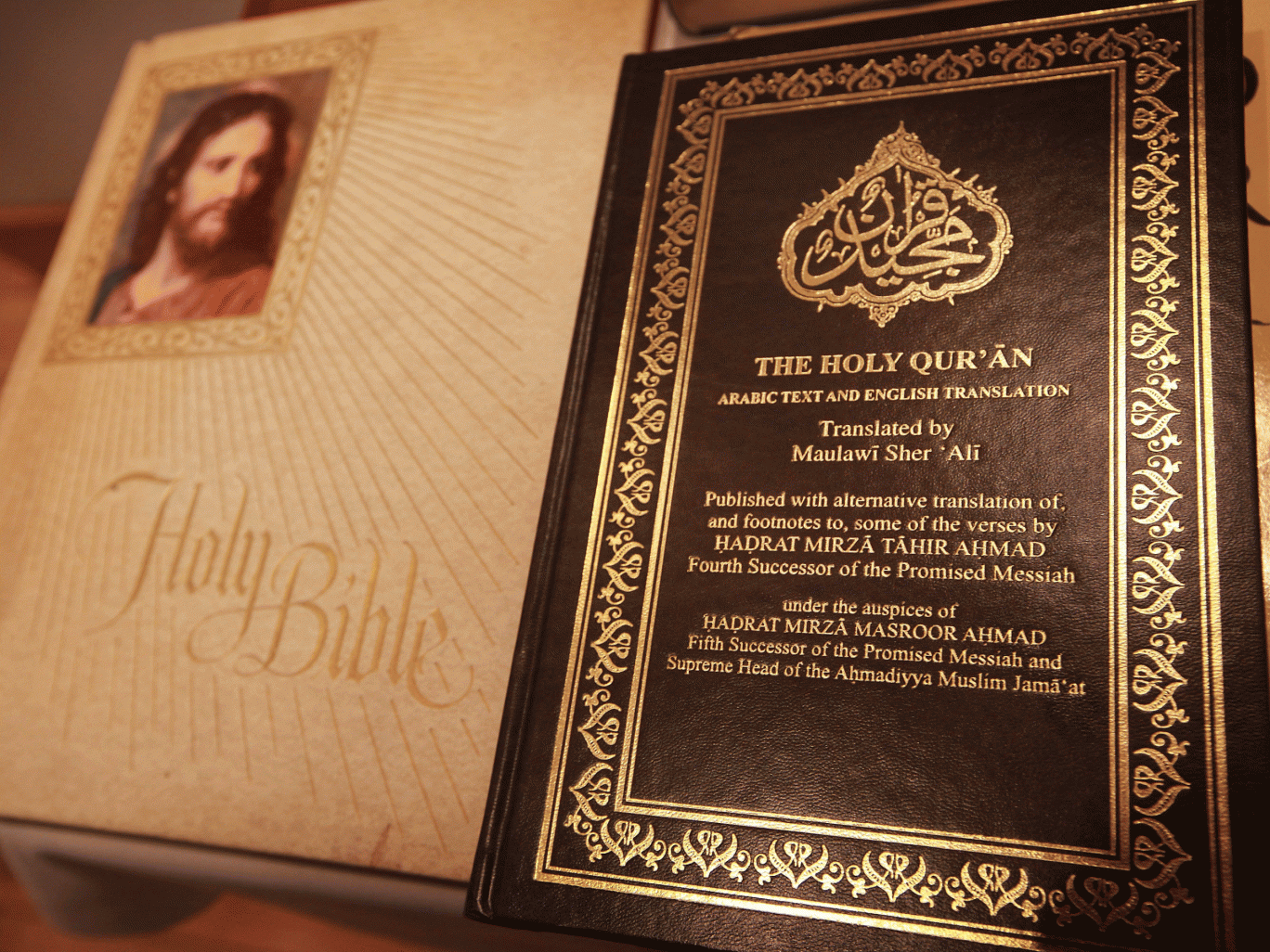
David Bentley Hart’s text recaptures the awkward, multivoiced power of the original, writes James Parker in his review in The Atlantic. Read on:
In the beginning was … well, what? A clap of the divine hands and a poetic shock wave? Or an itchy node of nothingness inconceivably scratching itself into somethingness? In the beginning was the Word, says the Gospel according to John—a lovely statement of the case, as it’s always seemed to me. A pre-temporal syllable swelling to utterance in the mouth of the universe, spoken once and heard forever: God’s power chord, if you like. For David Bentley Hart, however, whose mind-bending translation of the New Testament was published in October, the Word—as a word—does not suffice: He finds it to be “a curiously bland and impenetrable designation” for the heady concept expressed in the original Greek of the Gospels as Logos. The Chinese word Tao might get at it, Hart tells us, but English has nothing with quite the metaphysical flavor of Logos, the particular sense of a formative moral energy diffusing itself, without diminution, through space and time. So he throws up his hands and leaves it where it is: “In the origin there was the Logos …”

It’s significant, this act of lexical surrender, because if you’d bet on anyone to come up with a fancy English word for Logos, it’d be David Bentley Hart. Vocabulary is not his problem, unless you think he has too much of it. A scholar, theologian, and cultural commentator, Hart is also a stylist; or rather, the prickly and slightly preening polemical exhibition that is his style is indivisible from his role as a scholarly and theologically oriented cultural commentator. Like G. K. Chesterton, he has one essential argument: that God is the foundation of our being and that every human life therefore has its beginning and its end in eternity. He rehearses this argument in numberless witty variations against whichever non-God ideology happens to slouch beneath his pen: materialism, scientism, consumerism, pornographism … And he can sound a Chestertonian note. “My chief purpose,” he wrote in 2013’s The Experience of God, “is not to advise atheists on what I think they should believe; I want merely to make sure that they have a clear concept of what it is they claim not to believe.”
“Where an author has written bad Greek ... I have written bad English.”
Unlike Chesterton—and this is how you know he’s an early-21st-century guy, someone with Wi-Fi—Hart is extremely rude. Richard Dawkins, “zoologist and tireless tractarian,” has “an embarrassing incapacity for philosophical reasoning”; Sam Harris’s The End of Faith is “extravagantly callow”; and Dan Brown’s heretical The Da Vinci Code is “surely the most lucrative novel ever written by a borderline illiterate.” (All this from the first one and a half pages of 2009’s Atheist Delusions.) He once proposed, as a thought experiment, that bioethicists such as the late Joseph Fletcher (“almost comically vile”) be purged from the gene pool: “Academic ethicists … constitute perhaps the single most useless element in society. If reproduction is not a right but a social function, should any woman be allowed to bring such men into the world?”
So what has he done to the New Testament, this bristling one-man band of a Christian literatus? The surprising aim, Hart tells us in his introduction, was to be as bare-bones and—where appropriate—unsqueamishly prosaic as he can. The New Testament, after all, is not a store of ancient wonders like the Hebrew Bible. It’s a grab bag of reportage, rumor, folk memory, and on-the-hoof mysticism produced by regular people, everyday babblers and clunkers, under the pressure of a supremely irregular event—namely, the life and death and resurrection of Jesus Christ. So that, says Hart, is what it should sound like. “Again and again,” he insists, “I have elected to produce an almost pitilessly literal translation; many of my departures from received practices are simply my efforts to make the original text as visible as possible through the palimpsest of its translation … Where an author has written bad Greek … I have written bad English.” Herein lies the fascination of this thing: its deliberate, one might say defiant, rawness and lowbrow-ness, as produced by a decidedly overcooked highbrow.
Let’s zoom in on Mark, the roughest and tersest of the Gospels. (Hippolytus of Rome, in the third century, called Mark “stump fingered”—possibly a physical descriptor but more likely, I think, a comment on his prose.) Here’s how Monsignor Ronald Knox handled Mark 1:40–41 in his 1945 translation: “Then a leper came up to him, asking for his aid; he knelt at his feet and said, If it be thy will, thou hast power to make me clean. Jesus was moved with pity; he held out his hand and touched him, and said, It is my will; be thou made clean.” Hart’s version: “And a leper comes to him, imploring him and falling to his knees, saying to him, ‘If you wish it, you are able to cleanse me.’ And, moved inwardly with compassion, he stretched out his hand and touched him, and says to him, ‘I wish it, be clean.’ ” There’s a stumbling, almost rustically blundering urgency to this, the verb tenses tripping over one another; beside it the Knox translation feels smoothed out, falsely archaized, too rhetorical. In Hart we can hear more clearly both the leper’s challenge—heal me!—and the quickness and intimacy of Jesus’s response.

A more rugged Mark, then, but not exactly “bad English.” For that, we must go to Hart’s version of Revelation, a book that is, he opines, “if judged purely by the normal standards of literary style and good taste, almost unremittingly atrocious.” Indeed his rendering of the first line—“A revelation from Jesus the Anointed, which God gave him, to show his slaves what things must occur extremely soon”—is quite aggressively maladroit. What things must occur extremely soon. The book as a whole, freshly ranty and ungrammatical, seems more of a schizoid pileup than ever. But even amid Revelation’s welter of imagery, Hart maintains his artistic intent, or at least a radically inspired pedantry. Look what he does with the metallic locusts of Revelation 9, the ones with long, womanly hair and wings that buzz and clatter like a charging army. “They had breastplates, as it were breastplates of iron,” says the King James Version. Hart, fantastically, instead gives them “thoraxes like cuirasses of iron.” Far more monstrous, far more strange. It’s the slurred half-rhyme of thoraxes and cuirasses; it’s the crunch of the ancient Greek against the prissy medieval French; it’s the sheer freaking oddness.
Oddness, in fact, might be the signature—the breakthrough, even—of Hart’s translation. No committee prose here, no compromises or waterings-down: This is one man in grim submission to the kinks and quirks of the New Testament’s authors—to the neurology, as it were, of each book’s style—and making his own decisions. At the wedding feast at Cana, Hart’s Jesus addresses Mary, his mother, as “madam,” for perhaps the first time ever. “Dearly beloved,” runs the King James Version of 1 Peter 2:11, “I beseech you as strangers and pilgrims …” Hart is more immigration-conscious: “Beloved ones, I exhort you as sojourners and resident aliens …”
“The sole literary claim I make for my version,” writes Hart, “is that my mulish stubbornness regarding the idiosyncrasies of the text allowed me to ‘do the police in different voices,’ so to speak.” That’s no small claim, actually, and it takes a little unpacking. The idea of “doing the police in different voices” is one of the genetic strands of early modernism: “You mightn’t think it,” says the virtuous Betty Higden of her foster son Sloppy in Dickens’s Our Mutual Friend, “but Sloppy is a beautiful reader of a newspaper. He do the Police in different voices.” T. S. Eliot took this last line—with its undertone of channelings and polyphonic possessions—as the working title for an early draft of The Waste Land. The life of Jesus in the New Testament reaches us via four voices, four accounts that overlap, diverge, corroborate, and destabilize one another. It’s all very contingent and fractured, all very partial and mortal, all rather amazingly modern in technique. By putting us closer to these differences, to the distinctive sound of each voice—the heavy-breathing rush of Mark, or the bureaucratic polish of Luke—Hart is doing something important.
I hope I’m getting across the beautiful paradox of his New Testament—that it is simultaneously a kind of feline, Nabokovian modernist project, a meta-text in a matrix of eccentric scholarship, and a wild rush at the original upset, the original amazement, the earthshakingly bad grammar of the Good News. “And opening his mouth he taught them, saying: ‘How blissful the destitute, abject in spirit, for theirs is the Kingdom of the heavens.’ ” This is from the Sermon on the Mount, Jesus’s gently administered program for pulling down thrones, decapitating idols, and jamming eternity into the present tense. Hart opted for blissful over the traditional blessed, he writes, because the original Greek, makarios, “suggested a special intensity of delight and freedom from care that the more shopworn renderings no longer quite capture.” So now we hear it, and are shocked by it: not the ambiguous benediction of blessed, but the actual bliss, right now, of destitution, the emancipation of everything being stripped away. It comes at us like white light, this generosity of emptiness, and because we’re not angels, we shield our eyes.