Showing posts with label alcohol. Show all posts

Friday, 12 March 2021

How all Indians (including teetotallers) end up consuming a lot of alcohol without knowing it

 An excerpt from Krish Ashok’s ‘Masala Lab’, an exploration of the science of Indian cooking.

Armchair-uncleji theories about how tropical parts of the world do not have brewing traditions because of their climate are patently silly. When you put human beings, carbohydrates and some microbes together, alcoholic drinks will emerge. [...] When you ferment things, ethanol is almost always produced. There is no escaping it.


If you make yoghurt at home, it will have a tiny amount of ethanol that is produced by wild yeast in the environment. Industrially produced yoghurt is fermented in sterile conditions to ensure that only specific strains of bacteria, such as streptococcus thermophilus and lactobacillus lactis, feast on the milk sugars and do not produce alcohol. This is also why homemade yoghurt is almost always richer in flavour, because a diversity of microbes results in more complex flavours. And some alcohol.


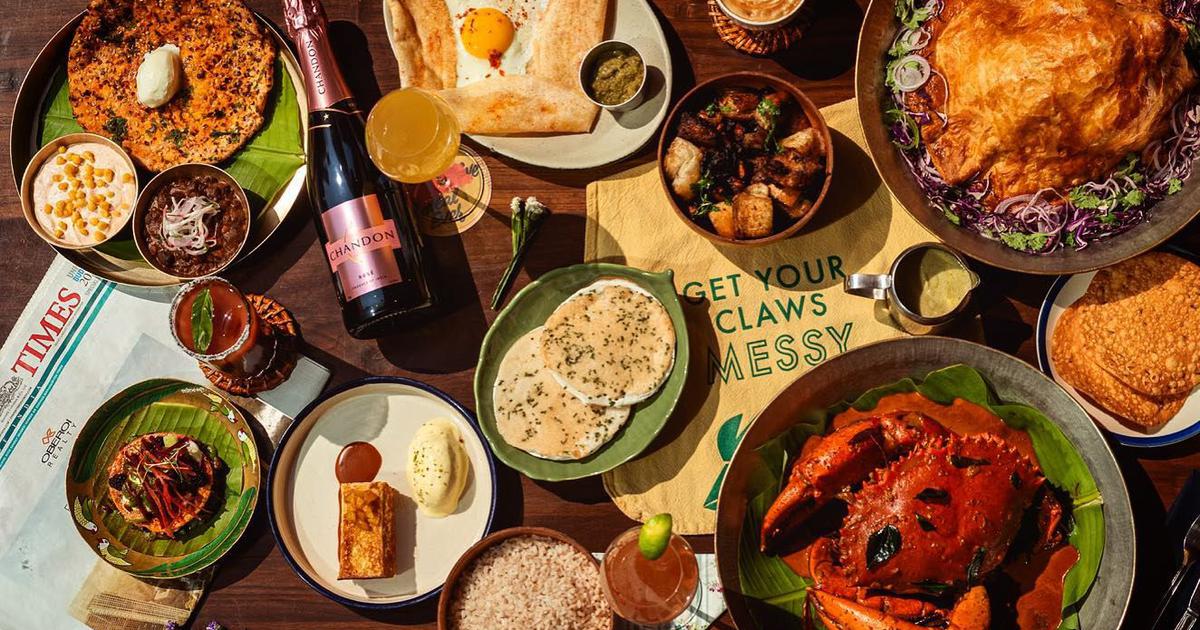
Representational image. | The Bombay Canteen/Facebook


If you bake bread, there is literally no escaping alcohol production. Yeast produces alcohol when it eats up sugars. In fact, one element of the sweet smell of baking bread is the ethanol evaporating. The alcohol molecule has a slight resemblance to the sugar molecule, which is why, in low concentrations, it tastes sweet. Breads, such as naan, made after a long fermentation process with yeast can sometimes contain about 2 per cent residual alcohol even after baking. Leave aside bread-bakers and naan-makers, the long-standing tradition of eating rice fermented overnight involves consuming a finished product that can be pretty alcoholic. Now you know why people eat fermented rice with raw onions soaked in yoghurt in south India. The onions overpower the smell of alcohol.


I want you to consider using alcohol in moderate amounts while cooking process. You don’t have to drink it, and rest assured, your finished product will not be any more alcoholic than the bread you bake or the yoghurt you ferment.


[...] If you remember, flavour is a multisensory experience that involves the taste buds, nose, ears, eyes and mouthfeel. Among these, aroma contributes to about 80 per cent of how we perceive flavour. While our tongues can detect five kinds of tastes, our noses can detect thousands of aromas. In fact, we can detect some aromas even if the concentration is of a few molecules in a trillion! Sulphur-based aroma molecules, like the smell of cooked fish, tend to be detectable at concentration levels approaching one molecule in a quadrillion!


This is a crucial thing to remember when making good food – we can only taste things that are water-soluble, but we can smell way more volatile aroma molecules thanks to the olfactory receptors in our noses. Most spices and strongly aromatic ingredients have volatile flavour molecules that are not water-soluble, so we can’t actually taste them.


Remember, you smell cardamom, you don’t taste it. What you taste when you bite into cardamom is its woody mouthfeel and bitter taste. This is why fats are absolutely crucial to cooking, because most flavour molecules are fat-soluble, not water-soluble.


This means that when you cook spices in hot oil, it extracts all of these flavour molecules and dissolves them into the oil, thus preventing them from being lost to the air. When you eat this food, the enzymes in your saliva start breaking down the fats, which results in those dissolved aroma molecules escaping into your mouth. As they enter the short, shared highway that transports both food and air, the act of breathing out elevates the aroma molecules, which are basically gases, and makes them hit the olfactory receptors. That is when you truly experience the complex taste of the thousands of aroma molecules from the saffron in your biryani.


Now that I have your attention with the words ‘saffron’ and ‘biryani’ (no political angle here, I assure you), let me tell you that after fats, the silver medal winner in the 100 m flavour extraction race is alcohol. A tiny amount of alcohol used while cooking will almost always result in a stronger flavour. The alcohol will help transport more aroma molecules to your nose and make your dish pop.


Here is how I use alcohol when making Indian dishes:

  1. A splash of vodka, brandy or rum when cooking onions, ginger, garlic, tomatoes and spice powders has two benefits: extraction of more flavour from the spices and the alcohol’s ability to release all those sticky bits from the bottom of the pan, which have a ton of flavour thanks to the Maillard reaction.
  2. A splash of wine added at the end of a dish, along with finishing spices, will amplify the effect of those spices when you eat.
  3. Keep in mind that while a small amount of alcohol can amplify flavour, a large amount will actually prevent the release of flavour molecules by holding on to them like family heirlooms. This is incidentally one of the reasons why bar snacks tend to be overpoweringly spicy in India. When had with a large whisky, that mirchi bajji could well be made using bhut jolokia chillies and you won’t notice.
  4. The amount of alcohol in beer is not strong enough to make a difference, so at the very least, use wine. The cheapest one will do because once heated, all the evocative notes of strawberries and smoked salmon in your fine Chardonnay will largely be destroyed. You can, however, use beer as an acid.
  5. If you are frying fish (or vegetables) using a batter, try a batter made of maida, salt and vodka (which is just plain ethanol diluted in water). What the alcohol does is reduce gluten development, which we do not want in a fried product, as it will cause chewiness. It also prevents surface starches from absorbing too much water to gelatinize, which will result in a drier and crispier crust. This technique was pioneered by Heston Blumenthal, who went one step further and carbonated his batter before use. The aerated batter makes the crust airy, in addition to being crisp. Trust me, use this technique and you will have some game-changing pakoras to enjoy.


Excerpted with permission from Masala Lab: The Science of Indian Cooking, Krish Ashok, Penguin Books.


(Source: Scroll)

Saturday, 25 January 2020

Acclaimed scientist gets brain surgery for alcohol addiction

Microbiologist Frank Plummer has been on the frontlines of the battle against of some of the world's most alarming epidemics, from HIV to Ebola - but his illustrious career masked a growing reliance on alcohol. Now, the researcher has become the guinea pig in a clinical trial investigating whether brain implants can help treat alcohol use disorder.

Alcohol was always a big part of Frank Plummer's life.

At the beginning of his research career, in the early 1980s in Nairobi, he began to lean on scotch to relax, and to the handle stress, disappointment and grief related to his work.
Microbiologist Frank Plummer is recognised globally for his research into the HIV virus

He and his colleagues were feeling the visceral urgency of their work as they watched the African HIV crisis unfold.
"I felt just like a fire fighter or something but the fire didn't go out," Dr Plummer, 67, told the BBC.

"It just kept going and going and going. There was this sense that you needed to do something and that the world needed to do something. And I was trying to draw attention to it and get money to continue our work. So it was a time of intense pressure."

Dr Plummer's research subjects were Kenyan women, sex workers, some who were found to have a natural immunity to the virus.


It was pioneering research, and over the 17 years Dr Plummer spent in Kenya, he and his colleagues made groundbreaking discoveries made about how HIV spreads - breakthroughs that have helped inform how we reduce transmission risk and that raised the possibility a vaccine against the virus could be developed one day.

In those stressful times, five or six glasses of scotch a night were giving him room to exhale after hectic days and weeks.

When he returned to Canada, he took a leadership position at Winnipeg's National Microbiology Laboratory, one of a handful of laboratories in the world with the capacity to work with highly pathogenic viruses like Ebola.
The University of Manitoba and the University of Nairobi have long collaborated on HIV research

At the lab they dealt with the outbreaks of Sars in 2003 and the H1N1 influenza in 2009. It was there Dr Plummer contributed to the development of Canada's Ebola vaccine.

It was vital, exciting, and stressful work, with 12-hour days that began with coffee and would end with several glasses of scotch. His drinking escalated to about 20 ounces of the booze a night.

It didn't seem to affect his work - until 2012, when it caught up with him.
"My liver packed it in," he says. "Before that I knew I drank a lot but I didn't think I had a problem."

The diagnosis of chronic liver failure was followed by a liver transplant. He had to watch his alcohol intake to preserve his new liver - but he found his alcohol had become a powerful thirst.

Dr Plummer tried treatment - rehab programmes, support groups, counselling, medications - but any relief was temporary. He would inevitably slip back into drinking.

"It was pretty hopeless cycle and it was very tough on my family and my wife, Jo, and on my children and my stepchildren," he says. "I was in the hospital a lot, I almost died several times."

He went looking for help - "a more robust clinical solution, perhaps one not yet discovered" - and was referred to two neurosurgeons at Toronto's Sunnybrook Hospital.
Frank Plummer was awake during the surgery

They were recruiting patients for an experimental procedure being conducted in North America for the first time, using deep brain stimulation (DBS) to help patients with treatment-resistant alcohol use disorder. The surgical trial is testing how safe and effective DBS is for alcohol addiction.

DBS has been used for over 25 years to help treat movement disorders like Parkinson's disease. Roughly 200,000 DBS surgeries have been performed around the world, many for the nervous system disorder.

In recent years, it's been explored as a treatment for a range of other diseases. At Sunnybrook, clinical trials are underway exploring DBS for use in disorders like post-traumatic stress disorder, obsessive-compulsive disorder, major depressive disorder, and alcohol use disorder.

What changes is the part of the brain being targeted, says Dr Nir Lipsman, the trial lead investigator and the neurosurgeon who performed Dr Plummer's surgery.

"[For] things like Parkinson's disease we target motor circuits in the brain, in addiction, alcohol use disorder, we're targeting reward, pleasure circuits of the brain," he says.
The DBS surgery performed on Frank Plummer targets the brain's nucleus accumbens, or pleasure centre

DBS treatment involves implanting an electrical device directly into a patient's brain to stimulate circuits where there is abnormal activity , or dysfunctional "wiring", and help reset them. DBS is frequently described as a type of "pacemaker" for the brain.

Electrodes are inserted into a targeted region of the brain to recalibrate activity in that area using electrical impulses - controlled by a pacemaker-like device placed under the skin of the patient's chest - and ease cravings.

Dr Plummer was the trial's first patient and underwent the experimental surgery just over a year ago. A total of six people are expected to eventually participate - all with a history of chronic alcohol use disorder proven resistant to other types of treatment.

Patients are awake for the surgery.

Dr Plummer says the worst part of the procedure were the noise and vibrations when surgeons drilled into his skull in order to implant the electrodes.

"It was a large drill that drills about a 25 cent piece out of your skull on both sides - that wasn't painful but it was annoying," he says.
Frank Plummer, seen with his wife Jo, says he has rediscovered life since the surgery

The brain pleasure centres being targeted in this study - the nucleus accumbens - is also involved in mood, anxiety and depression.

That factor is potentially key since many addiction disorders frequently coexist with mood disorders, the neurosurgeon says.

The surgeon says Dr Plummer has seen an improvement in both his cravings and his mood.

In those who've had the surgery, "we are seeing some signs, some early signs that we are having an impact on those kind of behaviours and those kind of measures that we want to influence", says Dr Lipsman.

The surgeons hope the study will shift some of the stigma around addiction disorders. Addictions are still often seen as a weakness or a failure of willpower, which can prevent people seeking treatment.

"We need to change the way we view addiction, change the way we view alcohol use disorder as a condition in its advanced stages, in the treatment resistant stages as being driven by circuits in the brain that are not functioning properly," he says.

But he cautions the research is in early stages - and that it's not a silver bullet.

"It's not just put in the implant, say goodbye and you're done," he says. Patients should still continue their conventional treatment for their alcohol addictions, like therapy or rehab programmes.

"It's really about viewing this as part of a larger strategy to treat what is an incredibly complex and challenging condition."

Any results from DBS are not instantaneous - it can take weeks to feel a change. For Dr Plummer, after a little while, "life just became so much better, so much richer."

"I suddenly decided that I wanted to write a book about my experiences as a scientist, and experiences living in Kenya," he says.

He's back to getting up early, writes daily and has returned to HIV research with the hopes of developing a vaccine for the disease.

He drinks occasionally but says he doesn't have the same compulsion or the physical dependency as before.

"Life is on the table again," he says.

(Source: BBC)

Monday, 22 July 2019

Dubai tourists can now buy alcohol from shops

New measures aim to make city more visitor-friendly

Tourists in Dubai are able to buy alcohol from shops for the first time, thanks to new measures introduced to make the city more visitor-friendly.

Holidaymakers could previously only purchase and consume drinks at licensed venues like hotels and restaurants.

It’s now possible for non-Muslim visitors over the age of 21 to buy alcohol from any Maritime and Mercantile International (MMI) or African and Eastern liquor store in the city.

Visitors will need a licence to purchase alcohol from these shops, but it’s free of charge and can be obtained by applying on arrival in Dubai at any participating store.


The process requires tourists to supply their passport, fill out a short form and sign an official declaration stating that they are not a UAE resident and agreeing to abide by the UAE’s rules on alcohol purchase and consumption.

The shop takes copies of the applicant’s passport and entry stamp, plus provides them with guidelines on responsible drinking in Dubai.

The license is valid for 30 days and can be renewed if tourists choose to extend their stay.

Although this represents a relaxation of the rules on buying booze, the United Arab Emirates still has strict laws when it comes to alcohol consumption.

The Foreign Office advice states: “You should be aware that it is a punishable offence under UAE law to drink or be under the influence of alcohol in public.

“British nationals have been arrested and charged under this law, often in cases where they have come to the attention of the police for a related offence or matter, such as disorderly or offensive behaviour.”

It adds: “Passengers in transit through the UAE under the influence of alcohol may also be arrested.”

The British consulate issued a warning on its Facebook page last year, stating that British travellers are at risk of arrest if they are found with alcohol in their blood when transiting through the United Arab Emirates.

It followed the case of Dr Ellie Holman, who was detained in Dubai with her daughter in August 2018 for allegedly drinking a complimentary glass of wine on a flight from London.

After landing in the UAE, the 44-year-old says she was questioned about her visa and asked if she had consumed alcohol, before being taken into custody. She was released a month later.

(Source: The Independent)

Thursday, 11 July 2019

How secondhand drinking ruins lives: ‘Every family has been touched by this’

Passive smoking is treated as a serious hazard. So why have we been so slow to wake up to the dangers alcohol poses to those who live with – or have a devastating encounter with – a heavy drinker? 

Helen Witty thought she had taught her children all about the dangers of drinking. She was raised with the knowledge that her great-grandfather’s alcoholism had led him to suicide. “It’s in the family,” her mother warned her. In a classic expression of the ripple effect of harmful drinking, Witty kept her own consumption modest. And she taught her two children to understand and to be careful of the long shadow cast by other people’s drinking.

But what none of the family had prepared for was the day when Helen Marie, Witty’s 16-year-old daughter, stood in the drive of their Florida home wearing her skates; she wanted to destress before a big school play. She flipped around, blew her mother a kiss and said she would be right back.
 Family members of people killed by drink drivers hold pictures of their loved ones during a Mothers Against Drunk Driving rally in Washington DC. Photograph: Tom Williams/CQ-Roll Call
She didn’t return. When her father went to look for her, he found a crime scene. Helen Marie had been hit while skating on a bike path by a 17-year-old driver who had been drinking tequila and smoking cannabis. Instead of bringing his daughter home, her father had to identify her body.

Helen Marie was killed by another person’s abuse of alcohol in a tragic example of so-called secondhand drinking. While the concept of secondhand, or passive, smoking is familiar, secondhand drinking is a growing field of study. Last week, the Alcohol Research Group at the Public Health Institute in Emeryville, California, published research showing that 53 million Americans each year experience harm from another individual’s alcohol use. That is one in four men, and one in five women. Given that passive smoking is treated as a serious public health hazard in countries from Mongolia to Colombia, Australia to the UK, why are governments so slow to notice, let alone challenge, secondhand drinking?

“Secondhand smoking really changed public opinion and paved the way for legislation to make bars and public places smoke-free,” says Sir Ian Gilmore, the chair of the Alcohol Health Alliance and the director of the Liverpool Centre for Alcohol Research. “There is undoubtedly harm from secondhand smoke, but the range and magnitude of harms is likely to be even greater from alcohol.”

“We are only just starting to appreciate the long-term impact of these harms,” adds Katherine Karriker-Jaffe, a senior scientist at the Alcohol Research Group in the US, and the author of the research published last week. Her team worked with 10 categories of harm, from harassment to assault. Although she cannot recall experiencing any secondhand harm herself, she is something of an anomaly because, as Gilmore points out: “There is hardly a family that hasn’t been touched in some way, whether it’s a child of an alcoholic or someone who has been punched on a night out. There are so many examples; it is genuinely unusual to come across a family where someone hasn’t been affected by alcohol.”

Often, the effects of alcohol use can ripple from one life into another. All too easily, a person who suffers a secondary harm can become a perpetrator of further harms.

Sam is the birth mother of a child with foetal alcohol spectrum disorder (FASD). When she was pregnant, her then partner had a problem with alcohol. “It was an abusive relationship,” she says. “I struggled with what was going on. When you’re in that part of your life where everything is overwhelming …” She trails off. She drank on average a bottle of wine a week, with “the odd binge”.

Sam’s son is now 12, but at the time he was conceived the UK government did not advocate abstinence during pregnancy. (Today, 41% of women in the UK are thought to consume alcohol while pregnant.) Sam believed her pregnancy was proceeding well. Every scan showed that her son was growing as he should be. The possibility of FASD “kind of flittered and then escaped my mind”.

 A report suggests 41% of women in the UK drink alcohol while pregnant. Photograph: Jamie Grill/Getty/Tetra
Sam’s son was nine and had repeatedly been excluded from mainstream school when he was finally diagnosed with partial FAS (foetal alcohol syndrome). “When the paediatrician confirmed my fears, I broke down and cried,” Sam says. “You have to come to terms with the fact that you harmed your child. You gave your child brain damage. There is a massive part of you that just wants to block it out. But you can’t. You have to live it, day in, day out.”

Sam’s long list of her son’s symptoms, which include sleep issues, manic behaviours, depression and low social maturity, is balanced by an equally long list of what she appreciatively calls his “highest qualities”: his creativity, his IT skills, his loyalty to friends and “massive heart”. She is clearly a loving, attentive mother who is highly attuned to her son’s needs. At some point, when her little boy has sufficient emotional maturity and stability, she will need to muster all of those qualities to explain to him his diagnosis.

It is the ultimate discharge of maternal responsibility, but Sam worries that the disclosure may take her away “as his one safe person. This is what secondary alcohol use has created in my family,” she says.

Even when a person harmed by secondary drinking acts to intercept the repercussions, the psychological impact can be inescapable. In 2014, Jabz Musinga’s father died after falling into the River Aire in Leeds. It took several weeks for his body to surface, but Jabz, 25, knew what had happened as soon as she saw the security video of her dad walking drunkenly beside the water.

The certainty must have felt strange, because she had spent her childhood “on tenterhooks”. What she had witnessed in her own home, her father’s behaviour, “carried into my adult life, trickled into my dating life”, she says. “I had low standards of what to expect from a guy, and even from friends. People easily took advantage of me.”

She soon found herself in an abusive relationship. “It was very brief. I put my foot down straightaway. It was like two weeks and I said: ‘This is not going to work.’” She was thankful, she says, that she was “able to stop” – which suggests that she may also have been able to continue. It took a particular conviction to intercede.

“It was very hard to say: ‘I’ve been affected by someone else’s drinking,’” Jabz says. “The focus tends to be on people who have addictions,” not those around them. But she has no doubt that alcohol changed her. “It shaped my personality. I would be a completely different person if it hadn’t happened. I do think about it, once in a while – the person I would have been,” she says, as if a ghost self shadows her. “I think I would have been more confident. Maybe a better person.”

Jabz sounds adjusted and happy in her life, but that last note of self-rebuke recalls the words of the MP Liam Byrne, another child of an alcoholic father and a patron for the National Association for Children of Alcoholics (NACOA), a charity that Jabz volunteers for. “You don’t know what’s normal, so you construct these perfect templates of what you think good looks like,” he says.

Self-medicating with perfectionism, Byrne wrote “long lists of attributes” to live up to – “a blueprint for being a superhuman with super powers”. He is 48 now. How old was he when he wrote his last list? He sighs heavily. “Forty-three? Forty-four?”

Secondhand drinking covers such a spectrum of human experience that a wide range of measures is required to confront it. Byrne, whose experiences have helped him to connect with the homeless population of the West Midlands, where he is campaigning to be mayor, points out that about 2.5 million children in the UK have an alcoholic parent, and 50% of these “go on to develop problems themselves”. Greater education of frontline workers with children, including teachers and GPs, would help – something that the all-party parliamentary group Children of Alcoholics, which he founded, is working to change.

Witty, who is now the president of the charity Mothers Against Drunk Driving, would like stiffer laws against underage drinking. Sam would like more support for children with FASD – and their mothers. At present, nearly 80% of the NHS’s clinical commissioning groups do not provide diagnosis for children with FASD, according to a freedom of information request by the National Organisation for Foetal Alcohol Syndrome-UK. Karriker-Jaffe is interested in the degree to which “negative impacts for people with heavy drinkers in their lives appear to be stronger for women than men”. But why can’t all the harms of secondhand drinking be addressed with the same sort of legislative determination that denormalised secondhand smoking?

“A single act, if I had a wish, would be to introduce a minimum unit price combined with increasing duty on alcohol,” says Gilmore, of the Alcohol Health Alliance. He cites the “duty escalator”, introduced by the Labour government in 2008, pushing up duty on alcohol by 2% above inflation year on year. “That was the first time we saw outcomes like cirrhosis deaths plateau off and begin to fall. Unfortunately, George Osborne as chancellor removed that duty escalator.

“[With cigarettes] we have relentlessly pushed the price up.” Gilmore points out. “Quietly, but relentlessly. And that’s made a huge impact. The UK is the leading European country in reducing smoking rates. The government has a real opportunity to show it is at the forefront of reducing alcohol-related harm, including harm to others. It needs to stop leaving alcohol to the free market like soap powder and treat it as a potentially serious health risk, as it has done with tobacco.”

There are differences between smoking and drinking, of course. More than 90% of the 181 governments to have signed up to the World Health Organization’s Framework Convention on Tobacco Control (WHOFCTC) have implemented some form of smoking ban; Article 8, which relates to secondhand smoking, is the most implemented of all WHOFCTC articles. But with alcohol, the desired outcomes – the appropriate limits – are more variable, more open to discussion. And no doubt the normalisation of alcohol in an array of social situations, from family celebrations to weekend binges, means that its abuse remains highly stigmatised: a harmless pursuit that has simply exceeded control.

“People say that if you smoke you harm others, but with alcohol you only harm yourself,” says Amy, 30. She vehemently disagrees. Her sister began to drink in her early 20s – just “having a wild weekend”, as medical staff initially described it to the family. Within seven years, she died of heart failure. “Anyone else who had a terminal illness would have an abundance of understanding from friends, colleagues. But you don’t have that support,” Amy says. “In fact, you don’t have the ability to talk about it without stigma.”

Amy, who is from south Wales and volunteers for the charity Alcohol Change UK, was training for a new job while her sister’s condition deteriorated. “I’d be in the hospital, then come straight to work as if nothing had happened. I work in a fairly professional environment, and I know it sounds silly, but I wouldn’t want it [her sister’s alcoholism] to impact on people’s view of me as a professional,” she says.

She is not alone. The day after we speak, Karriker-Jaffe emails to say that she would like to alter her answer about her own experience of secondhand drinking. “I watched an extended family member struggle with an alcohol use disorder that I believe eventually contributed to her death,” she says. “I think about her often in relation to this work.” Karriker-Jaffe adds that she is unsure why she did not mention this on the phone. “Stigma, I suppose.”

Her revelation, as an expert in this field, suggests that alcohol abuse, and the harms of secondhand drinking, need to be destigmatised in order for its scale to be properly confronted. In the UK, it is widely seen as deplorable to smoke in the company of children – but even the most conscientious parents display few qualms about drinking. Does it matter, for instance, if children see a parent habitually reach for a glass of wine to de-stress? Byrne laughs drily. “It does, yeah. Because you need to be able to model self-care.”

“We need to reframe what we believe is problem drinking,” agrees Josh Connolly, a life, leadership and performance coach who has experienced secondhand drinking as the child of an alcoholic parent, and as an alcoholic parent himself. “I say: come away from quantity and how often you are doing it. Because if your children know you get them to bed, get the wine out, have one glass of wine and relax, what they see is that they can’t help you relax: you go and get a glass of wine. It’s about the behaviours, the feelings that alcohol use creates.”

Twelve-step programmes, including that of Alcoholics Anonymous, helped Connolly eliminate alcohol from his life. But, in his sober years, he has found that his presence can make drinkers feel uncomfortable in their relationship with alcohol – and this, he thinks, is where everyone who enjoys alcohol could benefit from some self-appraisal.

“The strange thing, as somebody who is seven and a half years sober, is that I now face more stigma from society for not drinking than I did as a dad who drank,” he says. No doubt this reluctance to examine our relationship with alcohol helps to make secondhand drinking so hard to acknowledge. As he says: “Society doesn’t have a line to cross on this. So how is an individual going to have one?”

Maybe it is time to explore not only the ways in which we have, as individuals, experienced a secondhand harm from alcohol – but also those in which we may have perpetrated one.

(Source: The Guardian)
Thursday, 13 June 2019

How Sri Lanka's arrack coconut spirit went upmarket

Distilled from the sap of the coconut flower, Sri Lankan arrack has been a local favourite for centuries. But now its makers are trying to take the spirit global, writes the BBC's Ayeshea Perera in Colombo.
Sri Lanka's arrack producers are trying to take the spirit upmarket
It's served in some of London's most fashionable restaurants, like Dishoom and Hoppers.

And the late food and travel writer Anthony Bourdain described it as tasting like "a marriage of bourbon and rum, but with a stronger, burning kick and a mysterious bouquet".

Yet the makers of Sri Lankan arrack - best described as a dark coconut rum - believe it is still punching far below its weight when it comes to international recognition and appreciation.

For years, arrack was considered too "low class" to be taken seriously as a premium alcohol, even in Sri Lanka, whose elite in the capital Colombo preferred Scotch whisky, wine or rum.

Arrack is distilled from the sap or toddy of the coconut flower, which is still harvested by hand
Arrack's makers have also had to survive multiple Sri Lankan governments who have taken the view that while necessary for revenue, the local alcohol industry is a terrible influence on society, rather than a business that ought to be nurtured.

Distilleries are therefore subject to heavy taxes, and advertising spirits is prohibited by law.

Despite these impediments, attempts to raise the quality and profile of the drink at home and overseas appear to be paying off.

Premium versions of arrack have found lucrative markets both in Sri Lanka and other countries, where it is marketed as a smooth, artisan spirit that can be either drunk neat, or used in cocktails.

Amal de Silva Wijeyeratne, the managing director of the country's oldest arrack producer Rockland Distilleries, is at the forefront of these efforts.

He passionately points to the fact that quality arracks are made from just two ingredients - coconut flower sap (known locally as toddy) and water.

And for him, it's in his blood.

The sap ferments naturally after it has been harvested
His great grand uncle, JBM Perera, is credited with completely changing the way the drink was distilled and blended, when in 1924, he accepted a British government contract to produce arrack on a commercial scale.

His innovations, including the procurement of a custom-made still from a French company, helped transform arrack from a crude liquor into a smoother and more sophisticated drink.

Mr Wijeyeratne says he is trying to continue that legacy of innovation.

Part of this was his company's introduction of an upmarket, barrel-aged blend called Ceylon Arrack, which he says has been made to appeal to drinkers around the world.

And it is making some significant inroads in the global market.

Working as a "toddy tapper" collecting the coconut flower sap is not for those who are scared of heights

First introduced in the UK back in 2002, which Mr Wijeyeratne calls the "toughest liquor market in the world", he says that Rockland now sells more Ceylon Arrack to British buyers than those in its home market.

The brand is now also sold in countries like Singapore, Germany and Japan. And there are plans to launch it in India this year.

Singaporean bar Native uses Ceylon Arrack in one of its cocktails, and its owner and head bartender Vijay Mudaliar says it has been a bestseller ever since they introduced it.

"Arrack is a beautiful spirit. The taste profile is very fresh and clean. Aged arracks are definitely a viable choice for any dark spirit drinkers."

There is no way of really knowing how long Sri Lankans have been drinking arrack, but it is believed to be one of the oldest spirits in the world.

Rockland is Sri Lanka's oldest commercial producer of arrack
According to Mr Wijeyeratne, that's because "God has already taken care of the fermentation process".

What he means by this is that the toddy ferments of its own accord, because it contains both natural sugars and yeasts.

As soon as it is collected from the trees, it's a sweet, slightly tangy white liquid. But the fermentation process is rapid and its alcohol percentage increases in just hours to around 6%.

It is then distilled like whisky or brandy to an alcohol level of more than 60%, before water is added to bring that back down to 40%.

Global Trade
However, collecting the coconut sap is not for the faint hearted.

In a process that has remained unchanged for generations, men known as "toddy tappers" twice a day shimmy up the unnervingly tall coconut palms - a fully grown tree can reach 60m (200ft) - to collect toddy from the unopened flowers.

Sri Lanka's four major arrack producers - DCSL, IDL, Mendis and Rockland - employ hundreds of tappers on their vast coconut estates.

With each tapper given a group of trees to look after, they stay high above the ground for hours, using crude rope bridges to move between trunks.

Together the four firms produce about 60 million litres of arrack a year, in different grades and mixes.

The price and quality of arrack has a lot do with the percentage of actual toddy in it.

While the premium versions are made from 100% distilled sap, cheaper blends - which are somewhat erroneously called "Extra Special Arrack" - are usually also made from molasses, a form of treacle.

Sri Lankan arrack has become increasingly popular both in Sri Lanka and overseas
Some of the most basic versions of arrack can actually contain as little as 3% toddy.

Although lower grade arrack still accounts for almost 70% of sales in Sri Lanka, the premium versions are making Sri Lankans feel that they can take pride in the drink.

"Many Sri Lankan CEOs I meet tell me that they don't travel without a bottle of arrack as a gift for their high profile international clients," says Mr Wijeyeratne.

He adds that changing the perception of the drink continues to be a slow but rewarding process.

"It takes years and years. You have to be willing to go for the long haul."

"It's still going to be a long time before arrack gets the attention and recognition it deserves."

(Source: BBC)

Wednesday, 27 March 2019

From Bukowski to Hemingway: There’s a problem with the way we idolise drunk male writers

A new book of excerpts from professional rogue Charles Bukowski may feel frank and forthright – but we should hesitate before seeing this as an unvarnished account of alcoholism, Ceri Radford argues. 

In today’s prim culture, where millennials shun nightclubs for spin classes, the unabashed booziness of certain 20th-century writers has a quaint vintage charm. Hemingway considered beer basically a soft drink! Truman Capote would have a double martini before lunch! Can you even imagine the whiskey-soaked Dylan Thomas sipping a mocktail?

It’s in this spirit, as it were, that a collection of excerpts by the American writer and professional rogue Charles Bukowski, On Drinking, is published in the UK on 21 March. With a cute cover that makes alcoholism look like a Father’s Day gift opportunity, the book spans poems, letters and novel extracts on the topic of Bukowski’s legendary love of the bottle.

If anyone could give an honest description of the mingled euphoria, misery and indignity of heavy drinking, it should be Bukowski. Born in 1920, he worked dead-end jobs and propped up bars while publishing in small presses, prompting Time magazine to call him a “laureate of American low-life”. He claimed to hate writer types, spearing literary pretensions with his sparse, scabrous style, and was more at home describing his bowel movements than the dew on a leaf at dawn.

Bukowski in San Pedro, 1981 ( Rex )
Indeed, he shunned the clichés about the mystic connection between creativity and intoxication. In a letter to his friend Douglas Blazek in 1965, extracted in the new book, he wrote: “Drinking is a temporary form of suicide wherein I am allowed to kill myself and then return to life again. drinking is just a little paste to hold on my arms and my legs and my pecker and my head and the rest. writing is only a sheet of paper; I am something that walks around and looks out of a window.”

It was almost a permanent form of suicide, too. Bukowski took great relish in describing the internal haemorrhage brought on by alcoholism that nearly killed him in 1955, blood pouring out from mouth and arse as he lay on the floor of a charity hospital, “my stomach torn open finally with gut rot and agony”.

On Drinking might feel frank and forthright, but we should hesitate before seeing this as an unvarnished account of alcoholism. As Olivia Laing wrote in her superlative book on writers and drinking, The Trip to Echo Spring, one of the things that binds together the overly bibulous is “the self-deceiving nature of the alcoholic”. The first step in the Alcoholics Anonymous programme is to admit that you are “powerless over alcohol”, a step that many never accomplish. As Laing writes:

“In the particular case of the writer who drinks, the ways in which autobiographical material is used requires more than usual scrutiny, since what denial means in practice is an inconsistent mass of material that moves bewilderingly between honest accounting, self-mythologising and delusion.”

Although Echo Spring covers six other famous and alcohol-fuelled American writers – John Cheever, Tennessee Williams, John Berryman, Ernest Hemingway, F Scott Fitzgerald and Raymond Carver – Laing could have written that sentence with Bukowski in mind.

Charles Bukowski in 1978 (Hulton Archive/Getty Images)
What is most striking about On Drinking is that although Bukowski revels in being a down-and-out, he always has the upper hand. He wins at drinking games, he wins at fights, he wins at the horses, he wins with women. The “dirty old man” – the title of a column he wrote about his life – is a creature of his own meticulous creation, and for all the filth and dysfunction you never truly get the sense of a life spinning out of control. The closest he comes is in his poetry, notably when confronting a voracious enemy in “ants crawl my drunken arms”:

and the ants crawl down my throat
and into my mouth,
and I wash them down with wine
and pull up the shades
and they are on the screen
and on the streets
climbing church towers
and into tire casings
looking for something else
to eat
It is still, however, his decision to drink the wine, to raise the shades.

If Bukowski were alive today, he would no doubt have some choice words to say on the concept of toxic masculinity, but it is impossible to read his work in 2019 and not be struck by the narrowness of the macho mould he created and inhabited in his writing. If he’s not swinging a punch, he’s yelling rape threats: the one thing more copious than beer in On Drinking is casual sexism. Women are not really humans; they are body parts, ages, or a hectoring, cat-fighting stereotype.

This is a typical sentence, from the largely autobiographical novel Post Office: “She was a nice nurse. Good legs, good hips. Fair breasts.” In the same book, his alter-ego Chinaski also describes raping a mentally ill woman on his rounds in a casual, self-satisfied way – “‘Rape! Rape! I’m being raped!’ / She was right”.

Special contempt is reserved for women who encroached on his territory, as in this extract from his travel memoir, Shakespeare Never Did This: “Then a lady writer started talking. I was fairly into the wine and wasn’t so sure what she wrote about but I think it was animals, the lady wrote animal stories. I told her that if she would show me more of her legs I might be able to tell if she were a good writer or not.”

Quick, somebody find me a lady doctor to stitch my sides back up. If the sexism is, to a certain extent, just another part of Bukowski’s schtick, something deliberately hammed up into a joke, it’s a joke that from this vantage point feels as funny as a lump of mud.

But what has the misogyny got to do with the drinking? Only that alcohol acts chemically on the brain as a disinhibitor, and if there was anyone who needed to ratchet up their inhibitions rather than going in the opposite direction, it’s the red-blooded male of the Mad Men era.

There is plenty to enjoy in Bukowski’s writing: the spare lyricism of his poetry, the iconoclastic swagger of his prose. But this collection risks making a retro fetish out of dark and murky material. As Echo Spring makes clear, it’s hard to generalise about the effect of alcoholism on a writer beyond the inevitable ripples of suffering. While Bukowski lived to the age of 73, many others were less fortunate. As the writer Lewis Hyde noted, four of the six Americans to win the Nobel Prize for Literature were alcoholic, and “about half of our alcoholic writers eventually killed themselves”. With so much left unsaid and so many moments of reflexive sexism, On Drinking leaves a bitter aftertaste. 

(Source: Independent)

Wednesday, 11 July 2018

India trains delayed due to 'drunk' station master

Several trains were delayed in the northern Indian state of Uttar Pradesh after the station master got drunk and fell asleep while on duty, officials said.

Deep Singh did not respond to repeated calls from officials, causing them to rush to the Murshadpur train station.

According to local media, Mr Singh was found sleeping in his office with empty liquor bottles under his cot.

Authorities said an inquiry had been ordered into the incident.

India runs 11,000 trains every day, of which 7,000 are passenger trains
They added that a medical examination showed a high level of alcohol in his blood.

"He was dead drunk and could barely walk," a senior railway official is quoted as saying in The Hindu newspaper. He added that it was "a very serious matter" which would be further investigated.

According to sources at the station, many long-distance trains had to stop and wait since there was no green signal at the station.

A large number of trains pass through the station every day. Across the country, more than 22 million Indians commute daily on about 9,000 trains.

Such unusual incidents are not uncommon in India. Employees were suspended in the state of Orissa after 22 carriages detached from a train and sped backwards for 11km (seven miles) in April.

Last November, a group of Indian farmers woke up to find that the train they were travelling on had sped 160km in the "wrong direction".

(Source: BBC)

Wednesday, 13 June 2018

Mapping the price of beer around the world

Whether you’re sipping a pint of kölsch in Germany or drinking a Heineken at a hotel bar in Hong Kong, there are a number of factors that can influence how much your beverage will cost. Cost of living is certainly a primary factor, but taxes, availability, type of establishment, type of beer (craft beer vs macro brew), and local tastes will also affect the price of your pint.

Analysts at Deutsche Bank recently gathered critical data on how much a pint of beer costs in various major cities around the world.

STICKER SHOCK
Many of the cities that topped the price list have a higher cost of living, and it’s no surprise to see Singapore and Oslo rank near the top.

The city of Dubai, however, is a unique case.

Technically, drinking is only permissible for expats and non-Muslim residents in Dubai, and being drunk in public can come with serious consequences. That said, the city’s establishments serve beer with prices that reflect its high-end look and feel. Considering the scarcity and heavy regulations, those craving a pint might be happy to overlook the price tag of $12.

CHEAP THRILLS
The thirsty citizens of the Czech Republic consume the most beer by a long shot – a full 36% more than neighbors Austria and Germany. This is partially because demand is so high that companies are willing to compete on cost. As a result, beer is often cheaper than water in restaurants and pubs in Prague.

Manila’s low cost of living and steady supply of domestic beer earned it the lowest price per pint on the Beer Price List. San Miguel, the Philippines’ largest brewery, dominates with a market share of over 90%, and beer consumption is also on the rise in the country.


THE 48 PACK
The median price of beer in the 48 cities analyzed was $5.70, and below is the full list of cities ordered from most to least expensive pint.

Rank City Country Price of Beer Pint
#1 Dubai United Arab Emirates $12.00
#2 Oslo Norway $10.30
#3 Hong Kong China $8.90
#4 Singapore Singapore $8.30
#5 Zurich Switzerland $7.70
#6 New York City United States $7.70
#7 San Francisco United States $7.70
#8 Paris France $7.30
#9 Stockholm Sweden $7.30
#10 London United Kingdom $7.20
#11 Dublin Ireland $7.10
#12 Helsinki Finland $7.10
#13 Auckland New Zealand $7.00
#14 Shanghai China $7.00
#15 Melbourne Australia $6.80
#16 Copenhagen Denmark $6.70
#17 Boston United States $6.70
#18 Milan Italy $6.50
#19 Amsterdam Netherlands $6.10
#20 Sydney Australia $6.10
#21 Edinburgh United Kingdom $6.00
#22 Chicago United States $5.70
#23 Madrid Spain $5.70
#24 Toronto Canada $5.70
#25 Wellington New Zealand $5.70
#26 Vancouver Canada $5.50
#27 Kuala Lumpur Malaysia $5.40
#28 Athens Greece $5.10
#29 Jakarta Indonesia $5.00
#30 Tokyo Japan $5.00
#31 Moscow Russia $4.70
#32 Vienna Austria $4.60
#33 Frankfurt Germany $4.60
#34 Brussels Belgium $4.50
#35 Mumbai India $3.90
#36 Berlin Germany $3.90
#37 São Paulo Brazil $3.70
#38 Istanbul Turkey $3.70
#39 New Delhi India $3.40
#40 Bangalore India $3.20
#41 Rio de Janeiro Brazil $3.20
#42 Lisbon Portugal $2.80
#43 Warsaw Poland $2.60
#44 Cape Town South Africa $2.60
#45 Mexico City Mexico $2.40
#46 Johannesburg South Africa $2.20
#47 Prague Czech Republic $1.60
#48 Manila Philippines $1.50

It’s worth noting that the data collection focuses on expat (read: touristy) areas of the city. While that’s not a perfect picture of prices in a city, it does allow for a more consistent comparison of wildly differing markets.

(Source: Visual Capitalist)

Tuesday, 29 May 2018

Her father loved tequila, now she runs a company that makes it

Melly Barajas Cárdenas has built a growing distillery business with a work force made up almost entirely of women, writes Valeriya Safronova in NYT. Read on: 

More than two decades ago, when Melly Barajas Cárdenas and her father were on vacation in Mazamitla, Mexico, he told her that he wanted a tequila made in his name. At the time, Ms. Barajas Cárdenas was a clothing designer in Guadalajara, where she is from.
“Once I was in the tequila industry, I loved it,” said Melly Barajas Cárdenas, who opened her
distillery, Raza Azteca, nearly two decades ago. “The smell, the taste, it was marvelous.”
CreditLindsay Lauckner Gundlock for The New York Times

“I didn’t know anything about tequila,” Ms. Barajas Cárdenas, who declined to give her age, said in a recent telephone interview conducted in Spanish. “But it was my father’s wish.” So she decided she would find a way to fulfill it. She knocked on doors, asking various tequila producers for help, and eventually found one who produced a line of bottles for her.

Ms. Barajas Cárdenas quickly realized she wanted to do more.

“At first, it was a goal I had to accomplish, more than something that I wanted to do,” she said. “My clothing business was very comfortable. I went to the office, went home, it was easy. But once I was in the tequila industry, I loved it. The smell, the taste, it was marvelous.”

“From the girls in the agave fields to those who cook the agave, process the fermentation, it’s all
women,” Ms. Barajas Cárdenas said.Lindsay Lauckner Gundlock for The New York Times
The distillery, based in Jalisco, Mexico, produces tequila for companies like La Gritona,
as well as three in-house brands.Lindsay Lauckner Gundlock for The New York Times
In 1999, she opened her own distillery, Raza Azteca, in Jalisco. At the time, according to an estimate from Mexico’s Tequila Regulatory Council, which certifies tequilas with designations of origin, eight or nine of the 79 tequila producers were women. (Today, the number is 12 of 152, or 8 percent.)

“She’s one of the few female master distillers down there,” said Andy Coronado, the owner of La Gritona, a Los Angeles company that works with Ms. Barajas Cárdenas to produce and bottle its tequila. He described Ms. Barajas Cárdenas as protective of her people, knowledgeable about her craft, tough and sometimes eccentric.

“She always has a Coca-Cola and has a steak when we go out to eat,” Mr. Coronado said. “She pushes the vegetables off her plate and says, ‘That’s the food of my food.’”

The lab and office of Vinos y Licores Azteca, Ms. Barajas Cárdenas’s company. “We are a little distillery, not a big brand on the market,” she said. “We have to make things very differently.”
CreditLindsay Lauckner Gundlock for The New York Times
Raza Azteca produces 100 percent tequila, which is not mixed with sugar or chemical flavors, for three in-house brands — El Conde Azul, Espectacular and Leyenda de México — as well as for other companies, such as La Gritona, Sino Tequila and La Quiere.

“To be a woman in this industry requires a lot of work,” Ms. Barajas Cárdenas said. “It’s a man’s world. When I started, people told me: ‘A woman in this industry? You will not make it.’ I grew off of those comments.”

And she did not focus on advancing only herself. From the early days, Ms. Barajas Cárdenas hired primarily women to work for her company, Vinos y Licores Azteca, which operates Raza Azteca.

Ms. Barajas Cárdenas with her staff on the porch of the distillery. “Most men could do this faster,” she said. “But it’s not something women can’t do. It just takes a little bit more time.”
CreditLindsay Lauckner Gundlock for The New York Times
“When I started the company, I put out job ads for women and men,” Ms. Barajas Cárdenas said. “But here in the little towns, there are more women than men because a lot of the men have left to look for job opportunities in the U.S.A.” So women filled all the openings, including those that are traditionally performed by men.

“From the girls in the agave fields to those who cook the agave, process the fermentation, it’s all women,” she said. “Some of it is really hard work, like cutting the agave. Most men could do this faster. But it’s not something women can’t do. It just takes a little bit more time.”

In creating her distillery, Ms. Barajas Cárdenas entered a market dominated by major companies like Herradura, Patrón and Sauza.

Barrels holding tequila while it ages. Raza Azteca uses methods that take longer than those at
some other distilleries.Lindsay Lauckner Gundlock for The New York Times
All of the distillery’s bottles are made in Mexico, as are the caps and labels.
Lindsay Lauckner Gundlock for The New York Times
“They’re bigger than you, and they want to eat you,” she said. She set out to make a product that would stand out by staying true to the region’s heritage. “It’s tequila like our grandparents drank,” Ms. Barajas Cárdenas said.

Instead of industrial machines, her distillery uses masonry ovens that are made from the soil where the blue agave is planted. This extends the cooking process from eight hours to 24 (with another 24 hours of resting). Normally, the next step, fermentation, is pushed along with additives and lasts one to two days, but Ms. Barajas Cárdenas allows the fermentation to occur naturally, which requires nearly one week. All of the packaging components, such as the labels, caps and bottles, are made in Mexico.

“We are a little distillery, not a big brand on the market,” Ms. Barajas Cárdenas said. “We have to make things very differently.”

Blue agave, grown for tequila, in Ms. Barajas Cárdenas’s fields. When she started, she said, “I had to get up early in the morning and drive from one agave field to another to search for the agave I wanted.”
CreditLindsay Lauckner Gundlock for The New York Times
Ms. Barajas Cárdenas said the most difficult challenge occurred when she first opened the distillery. She did not have her own fields of agave yet, and she wanted to use plants that were eight to 10 years old and had been grown in the highlands. (Some experts argue that terroir is as relevant to tequila as it is to wine.)

“I had to get up early in the morning and drive from one agave field to another to search for the agave I wanted,” Ms. Barajas Cárdenas said. At the time, she managed to produce 300 liters per month. Now, her distillery makes that amount daily.

In the nearly 20 years that she has been producing tequila, the amount of 100 percent tequila that Jalisco produces has more than doubled, but the industry’s male-to-female ratio hasn’t changed much.

Yet Ms. Barajas Cárdenas remains hopeful. “I tell women they can do everything they want to,” she said. “We are no better or worse than men. It’s difficult, but we can definitely do what we want. The sky’s the limit.”