Showing posts with label tea. Show all posts

Monday, 7 October 2019

One tea bag can release 11.6 billion microplastics into your cup

This is higher than plastic loads previously reported in other foods such as from beer, honey, fish and shellfish, chicken, salt, bottled water, finds the study

Love to start your mornings with a refreshing cup of tea? Beware, you might be drinking microplastics, all thanks to the premium plastic teabags, according to a new study.

The study, by researchers from McGill University in Montreal, showed that a single plastic teabag can release harmful particles into your cup — 11.6 billion microplastics and 3.1 billion nanoplastics.

When water fleas were exposed to the plastic-laden beverage, they showed significant behavioural effects and developmental malformations, according to the study published in the journal Environmental Science and Technology.

“The particles did not kill the water fleas, but did cause significant behavioural effects and developmental malformations,” Nathalie Tufenkji at McGill, told New Scientist.

Microplastics are those plastics less than five millimetres in size. They would amount to nearly 16 micrograms or one-sixtieth of a milligram of plastic in one cup, the CBC News reported.

These are higher than plastic loads previously reported in other foods such as beer, honey, fish and shellfish, chicken, salt, bottled water.

“Table salt, which has a relatively high microplastic content, has been reported to contain approximately 0.005 micrograms plastic in per gram salt,” Tufenkji at McGill was quoted by New Scientist. Microplastics were also found in cosmetic products like toothpastes and face wash.

Instead of the traditional paper, premium teas now come in silken bags, some of which are pyramid-shaped, which help large leaves to expand when brewed. While these silken bags are made of PET (polyethylene terephthalate, found in plastic drink bottles) or nylon (used in many food bags and pouches), their potential health risk are not known yet, the study showed.

To test the potential toxicity, the team bought four different tea bags from shops and cafés in Montreal, cut them open, washed them and steeped them in 95 degrees Celsius water.

The materials used in the tea bags were deemed safe for use in contact with hot food and beverages, the Tea and Herbal Association of Canada told CBC News in a statement.

There is currently no data on use of plastic tea bags in India. But, according to analysis, “India currently vies with China as the world’s biggest packaged tea market,” Swati Singh Sambyal, programme manager - environmental governance (waste management) at Delhi-based non-profit Centre for Science and Environment, told Down to Earth.

“In 2017, India consumed a total retail volume of 678,200 tonnes worth of packaged tea, followed by China (576,800 tonnes), Turkey (173,400 tonnes), Russia (134,200 tonnes) and Japan (92,900 tonnes),” Sambyal added.

While there is no evidence that microparticles pose a risk to human health, their potential environment risk is widely known.

Microplastics can infiltrate into our ecosystems and foodchains, Sambyal said. More research is needed to understand its possible health impacts on humans, she added.

Meanwhile, it would be safe to stick to paper tea bags and loose leaf tea, Tufenkji suggested.

(Source: DTE)

Wednesday, 14 August 2019

Always have three beverages

The correct number of drinks to keep at your desk

The phrase rule of three is a Rorschach test. When people hear it, it can conjure an array of disparate guidelines. Celebrity deaths. Rhetorical technique. Aesthetic pleasure. Free markets. Joke writing. There are so many rules of three across disciplines and superstitions that the concept requires its own disambiguation page on Wikipedia, which lists 17 different options.

Some of those rules are more important than others. Pilots have one for landing airplanes that advises descending 1,000 feet every three miles to ensure that the plane doesn’t drop too quickly for passengers to adjust to changing cabin pressure. Outdoors-people use one as a guide for how long people can usually stay alive in extreme conditions: three minutes without oxygen, three hours without shelter, three days without water, and three weeks without food. More broadly, groupings of three pop up everywhere: the Holy Trinity, the three branches of the U.S. government, the number of data points required to determine an unknown location, the number of partners needed to corner people at a party to talk about polyamory.
JAMES LEYNSE / CORBIS / GETTY

Relatively little is known about why people enjoy and invoke triads so frequently. But after more than a decade of personal research, I’d like to present a new rule of three for your consideration: If you work at a desk in an office, three desk beverages is the ideal number to keep by your side. The first is water. The second is a source of caffeine. The third is something fun—a juice, a soda, a glass of wine on Friday afternoon (if your office is like that), a kombucha (if you are like that).

The case for having any beverages at your desk in the first place is one of basic human biology. Your mom was right when she told you to drink some water: Mild dehydration isn’t a notable health risk, but the spotty research done on the topic suggests that being thirsty is distracting. Slaking that thirst might help you return to your spreadsheets and get out of the office on time. Even if you’re not thirsty, people tend to report feeling more alert after having some water. Water is the foundation of your beverage kingdom.

And then there’s caffeine. Research has shown that it improves alertness in moderately sleepy people—for instance, those who underestimated the size of their sandwich and are now slowly slipping into a food coma at their desk. Maybe you stayed a little too long at happy hour last night and need a coffee to help ease your headache. Or maybe you’ve just been riding around on the planet with the rest of us for long enough that you need a Diet Coke on a spiritual level. Add it to the lineup.

Completing the desk-bev triumvirate is where the magic happens. A third beverage is your wild card, a chance for a little bit of random pleasure in a period of the day that is otherwise not your own. One of the reasons people go so wild for random snacks in the workplace is that popcorn or cookies allow a moment of disengagement from work that feels autonomous. Since water and coffee are the only drinks many workplaces provide, tracking down a third can be an excuse to leave the office for a moment, even if it’s just to run to the nearby corner store. Small, regular pleasures have real psychological value in any part of life. During the workday, acquiring a mango seltzer or green juice can return some humanity to the cubicle farm.

It probably isn’t a coincidence that three is my personal sweet spot, according to Kurt Carlson, a marketing researcher at the College of William & Mary’s Raymond A. Mason School of Business. As far as I can tell, he’s the only person who has done significant research into why and how human brains sort things into groupings of three. “People believe they’re observing something special when they see the third instance of it happen,” he explains. “After making three shots in a row, the person’s hot, and four doesn’t make them more hot. If you miss three traffic lights in a row, the world’s out to get you.”

Carlson references shots because he began his research by looking at data from the Philadelphia 76ers basketball team. He found that when players make or miss three shots in a row, both they and their competitors believe that they are on a streak, which actually changes the probability of a player making or missing the next shot. If a guy is hot, he is “going to take shots that he shouldn’t take, the defense is going to double-team him, his teammates are going to force him the ball in places they shouldn’t have forced him the ball,” Carlson explains. Counterintuitively, that makes a player with “hot hands” less likely to make a fourth shot than under baseline circumstances. The inverse also happens for players who miss three: Everyone takes that as a sign that a player is no longer a threat, and the player’s chances of sinking a shot end up improving.

When it comes time to make decisions or process new information, people often default to problem-solving shortcuts called heuristics, many of which are so ingrained in human thinking that it might feel like you were born with them. Carlson believes that groupings of three spring out of our brains’ efforts to be simultaneously organized and complete. “The least cognitively challenging way to categorize things is to put them into two buckets, and the hardest way is to treat everything as an individual,” he says. The middle-ground approach to distinguishing between concepts without driving ourselves mad with nuance is to put things into three categories. In that sense, at least, the theory of hydration, caffeine, and pleasure is time-tested and psychologically approved.

Unfortunately, academia stands in the way of testing my desk-bev theory any further. “That is as far as I got,” Carlson says. “I moved on. You can only publish so many things that are cutesy like that before you damage your reputation as a real scholar.”

(Source: The Atlantic)

Wednesday, 27 March 2019

Drinking very hot tea almost doubles risk of cancer, new study says

Many people start their day with a cup of tea. But those who drink it piping hot could be increasing their risk of esophageal cancer, according to a new study.

Researchers found that tea drinkers who liked their beverage to be warmer than 60 degrees Celsius (140 degrees Fahrenheit) and consumed more than 700 ml of tea per day -- about two large cups -- had a 90% higher risk of esophageal cancer, when compared to those who drank less tea and at cooler temperatures.

The study looked at more than 50,000 people in Golestan, a province in northeastern Iran.

"Many people enjoy drinking tea, coffee, or other hot beverages. However, according to our report, drinking very hot tea can increase the risk of esophageal cancer, and it is therefore advisable to wait until hot beverages cool down before drinking," said Dr. Farhad Islami, of the American Cancer Society and the study's lead author.


Previous research has found a link between hot tea drinking and esophageal cancer. This study, published Wednesday in the International Journal of Cancer, was the first to pinpoint a specific temperature, according to the authors.

Esophageal cancer is the eighth most common cancer in the world and is often fatal, killing approximately 400,000 people every year, according to the International Agency for Research on Cancer. It is usually caused by repeated injury to the esophagus due to smoke, alcohol, acid reflux and -- maybe -- hot liquids.

The esophagus is a long tube through which swallowed food and liquids travel to reach the stomach.
The American Cancer Society estimates that 13,750 new cases of esophageal cancer will be diagnosed in men and 3,900 new cases in women in the United States in 2019.

The team of researchers followed 50,045 people, aged between 40 and 75, for an average of 10 years. Between 2004 and 2017, the researchers detected 317 new cases of esophageal cancer.

The study said more research was needed on why exactly drinking very hot tea is associated with the higher risk of esophageal cancer.

Stephen Evans, a professor of pharmacoepidemiology at the London School of Hygiene & Tropical Medicine, said that it was the heat that was the issue rather than the type of beverage.

"In fact, it is probably anything hot: Microwaved jam has been known to cause esophageal injury. It is possible that the trauma leads to cell changes and hence to cancer," he told the Science Media Centre. Evans was not involved in the study.

In the United States and Europe, tea is rarely consumed at temperatures above 65 degrees Celsius (149 degrees Fahrenheit) -- but in places like Russia, Iran, Turkey and South America, it is common to drink tea that hot or even hotter.

"If you go to the Middle East or to Russia, they drink it out of a samovar that's constantly under heat," said Peter Goggi, president of the Tea Association of the USA told CNN last year. "It's very, very hot."

Dr. James Doidge, senior research associate at University College London, said that hot drinks were an established risk factor for esophageal cancer.

"It doesn't take a scientist to appreciate that repeated irritation of any body surface increases your risk of cancer. Sunburn gives us skin cancer, smoking gives us lung cancer, and many foods and drinks contribute to risk of gastrointestinal cancers," Doidge, who wasn't involved in the research, told the Science Media Centre.

(Source: CNN)

Thursday, 1 November 2018

Will ‘hōjicha’ be the next Japanese tea to take the world by storm?

Danielle Geva and Francois Mathieu love tea, so naturally it made up the bulk of a spring visit to the Kansai region this year.

“We visited a bunch of tea fields, factories, actually. I was interested in sourcing the best matcha for myself,” Mathieu tells The Japan Times from Toronto. “I’m a big tea drinker, and just wanted the best.”

The pair found a whole new world of tea while walking around Osaka’s Shinsaibashi neighborhood. They stopped in a store to get some green tea but, rather than the usual drink, they were served hōjicha, a variety of roasted green tea.

“It was so sweet and smoky. We had no idea what it was, so we had to ask,” Geva says.

Months after encountering hōjicha, Geva and Mathieu are trying to spread the tea to North America. Together, they founded Hojicha Co. in May, the first company to specialize in selling premium hōjicha on the continent. While it was possible to purchase hōjicha directly from Japan and have it delivered to Canada, that process often added extra shipping costs to your order and took weeks to arrive. The Toronto-based venture stores all its hōjicha in the city, keeping customer costs down and making delivery quicker.

It was inspired, partially, by the near-absence of the drink in Toronto.

“You really have to search for it,” Mathieu says, with Geva adding, “We started seeing hōjicha in really small Japanese convenience stores here.” They saw an opportunity to help introduce the drink and spread awareness if it.

Tea lovers: Francois Mathieu (left) and Danielle Geva founded Hojicha Co. in May 2018. | COURTESY OF HOJICHA CO.

The pair is betting that hōjicha will soon become the next Japanese drink to take off internationally. This decade, Japanese food and beverages have enjoyed a boom in popularity internationally — according to data collected by the Ministry of Agriculture, Forestry and Fisheries, there are almost 120,000 Japanese restaurants operating overseas as of late 2017, a 30 percent increase from 2015.

In overseas beverage markets, green tea is the clear champion among sales of Japanese produce. Move beyond the usual “Cool Japan” marketing materials and there are still plenty of reports from the past couple of years talking up the stuff in Asia and beyond, both as a drink and a flavor for desserts. Yet domestically, the situation is different.

“There has been a hōjicha boom of sorts in the past couple of years in Japan,” Shogo Nakamura, managing director of Nakamura Tokichi Honten Co. Ltd. tea sellers, tells The Japan Times. Hōjicha emerged in the 1920s from Kyoto, with some histories (including the one compiled by the Hojicha Co. folks) saying it came from vendors roasting leftover stems and stalks. Nakamura Tokichi sells hōjicha among its other teas, though Nakamura says the company doesn’t have specific records of when it started selling it.

And the recent Japanese interest in the tea goes beyond its liquid form.

“Hōjicha-flavored sweets seem to have become more popular. The market for matcha sweets has become flooded, and a reason for the increase in hōjicha sweets is that businesses and customers are looking for the ‘next thing,'” Nakamura says. Convenience store sweets now feature hōjicha flavors frequently, while most notably, Starbucks Japan had a hit with a limited-edition Hojicha Creme Frappuccino last year. It’s a trend that has carried over to Singapore and Hong Kong, too.

But Hojicha Co. believes hōjicha’s potential in North America lies in its health benefits.

“I think a lot of people are trying to cut back on coffee, and this is a good alternative for them,” Geva says, having herself cut back on her caffeine consumption over the years by drinking tea instead.

Nakamura also thinks health benefits could be the biggest selling point in North America, though he notes challenges exist in that cheaper tea can be sourced from “China or other Asian countries,” and roasted into something similar to hōjicha.

Such competition is not an immediate issue for Hojicha Co., though.

“We had to taste a lot of hōjicha,” Mathieu says with a laugh. “We were specifically interested in bringing one that was from Kyoto, because we wanted it to be the most authentic.”

The company currently offer two roasts, a dark and a gold, and the early response has been good, coming mainly from the “early adapting” tea community.

“Restaurants are reaching out and asking, ‘Hey, do you have the powder?’ This is one thing we’re exploring, along with bottled beverages,” Mathieu says.

Step one, though, is introducing people to a drink that is still relatively unknown in North America.

“The challenge is going to be telling people that hōjicha is roasted green tea. And when we go mass market, that’s what we have to do,” Geva says. But the pair believe they will soon have assistance from food and beverage heavyweights.

“Eventually, I think some of the big brands are going to bring hōjicha to North America, and elsewhere.” says Mathieu. “By that time, our goal is to establish ourselves with a few more products, and when people try it at Starbucks or at a big chain, and they like the sugary version that’s not so authentic and they want to try the real thing, they’ll have some options available.”

(Source: JT)

Saturday, 2 June 2018

15 times Northeast India redefined cool for the rest of India

Relatively unchartered, the Northeast India is a land of natural beauty, scenic views, and really sweet people. There are cultures to be experienced, amazing food to be had, and amazing sights to be seen. It is well known that the term 'The Seven Sisters' is used for the contiguous states of Arunachal Pradesh, Assam, Meghalaya, Manipur, Mizoram, Nagaland and Tripura in Northeastern India. Oh, and Sikkim is known as their "brother".

And together, there are things about them that are are way cooler than we care to find out.

So here are 15 facts that make the left hand of our nation so awesome.

1.  Northeast has the only floating park in the world


The Keibul Lamjao National Park is a national park in the Bishnupur district in Manipur. An integral part of Loktak Lake, it has floating decomposed plant materials called phumdis.

2. There are nearly 220 languages spoken in the states of the Northeast. 
The languages and culture in the Northeast are a mix of Tibetan, South-East Asian and East Indian culture.

3. Northeast is the only part of India that the Mughals could not occupy during their reign.
Two centuries. Not one defeat. Many brave kings from the Northeast were responsible for this win. In fact, Assam survived 17 bids of invasion by the Mughals.

4. The Northeast is home to 14 national parks of India


...five of which are in Assam, including Orang National Park, and Kaziranga National Park.

5. The wettest place on the whole planet is in the Northeast
Mawsynram is a village in the East Khasi Hills district in Meghalaya, and it receives an annual average rainfall of 11,873 mm. It actually holds the Guinness World Record for the same. Pretty legit, right?

6. And it is also where the cleanest village of Asia is nestled. 


Mawlynnong in Meghalaya is the cleanest village in the whole of Asia. Notwithstanding that, the whole region is pretty spick and span.

7. The entire region is 'dowry-free'
A cultural practice that we all can learn from no matter how much we deny it. Look, the rest of India! Learn, maybe?

8. World’s smallest inhabited river island in the world is in Guwahati. 
It goes by the name of Umananda Island in the River Brahmaputra, and has a temple by the same name.

9. Tea lovers already know that Assam is the largest tea-growing region in the world.
A small state and the largest tea growing region in the whole world!

10. And not just tea, Assam also produces three different types of silks. 
White Pat, golden Muga, and warm Eri silk are three indigenous silks with distinct beauty not to be found in other silks.

11. Aizawl, India's first 'No-Honking' city is here as well
Aizawl is the capital of the state of Mizoram in India, and this is where you have to move if you are tired of hearing traffic horns in your city all the damn time.

12. And if all of this wasn't enough, this is where the nation's morning begins


Arunachal Pradesh is the eastern most state of the country, therefore witnessing the first sunrise. This state also has three international borders: Bhutan, China, and Myanmar.

13. Northeast India holds the 7th rank in terms of the most enriched biodiversities of the world
Apart from great flora, the region also boasts of a vivid avian biodiversity of the country. NE's geographical location (the transitional area of Indian, Indo-Chinese and Indo-Malayan bio-geographic zones) makes it a hotspot of various native and rare species of fauna and flora.

14. Two of the most literate states of India are in the Northeast
In 2011, Mizoram had a literacy rate of 91.58% , and Tripura had a literacy rate of 87.75%. In fact, in 2013, the State Government of Tripura claimed that the state surpassed Kerala as the most literate state in India, with a literacy rate of 94.65%.

15. India's oldest and largest paramilitary force is from NE India
The 'Friends of the Hill People & Sentinels of the Northeast', Assam Rifles had been the country’s oldest and largest paramilitary force, founded in the year 1835.

Incredible Northeast indeed!

(Source: Scoop Whoop)

Friday, 4 May 2018

India splutters in anger after toilet water used for train tea

An Indian tea vendor caught on video taking water from a train toilet before selling his drinks to passengers has been fined amid heightened concern in India over food safety.

The vendor on the Chennai-Hyderabad Express was caught after footage of him and two others coming out of a toilet with large cans used to serve tea and coffee on Indian trains was widely shared.

Indian Railways said in a statement that the ‘incident has been inquired into in detail’ and that the tea seller had been fined the equivalent of $1,500.

The video was made on a train at Secunderabad in Telangana state. Out of the three vendors seen only one was licensed.

Screenshots from video that shows two railway tea vendors filling their cans with toilet
The vendor claimed the group were transferring milk from one can to another and did not want to do it in the open.

‘The very fact that tea/coffee cans were seen being brought out of the toilet, is in itself a wrong practice,’ the railway company said.

A series of recent incidents have put the spotlight on food safety in India.

In the eastern city of Kolkata, famed for its Bengal delicacies, police this week unearthed a racket in which tonnes of rotten meat from dumps was being sold to restaurants.

Sales of meat and poultry in the city have plummeted since authorities seized about 20 tonnes of rotten meat. Police suspect a lot more had been sent out to city restaurants.

‘The meat was sourced from dump yards where vultures, dogs fight over carcasses in the fringes of the city,’ Koteshwar Rao, a senior West Bengal police officer told AFP.

Eight people have been arrested so far. But Kolkata restaurants and cafes have been left reeling from the scandal.


‘The rumours have resulted in a 50 percent fall in demand (for meat) across restaurants and eateries,’ Taher Ali, a member of the Meat Merchants Association told AFP.

The Hotel and Restaurant Association of Eastern India has told its members to only purchase meat from registered suppliers.

According to government figures, food poisoning is one of the most common disease outbreaks in India, accounting for 242 of 1,469 reported serious outbreaks last year.

(Source: Gulf Times)

Sunday, 4 February 2018

Tea if by sea, cha if by land: Why the world only has two words for tea

With a few minor exceptions, there are really only two ways to say “tea” in the world. One is like the English term—té in Spanish and tee in Afrikaans are two examples. The other is some variation of cha, like chay in Hindi.

Both versions come from China. How they spread around the world offers a clear picture of how globalization worked before “globalization” was a term anybody used. The words that sound like “cha” spread across land, along the Silk Road. The “tea”-like phrasings spread over water, by Dutch traders bringing the novel leaves back to Europe.


The term cha (茶) is “Sinitic,” meaning it is common to many varieties of Chinese. It began in China and made its way through central Asia, eventually becoming “chay” (چای) in Persian. That is no doubt due to the trade routes of the Silk Road, along which, according to a recent discovery, tea was traded over 2,000 years ago. This form spread beyond Persia, becoming chay in Urdu, shay in Arabic, and chay in Russian, among others. It even made its way to sub-Saharan Africa, where it became chai in Swahili. The Japanese and Korean terms for tea are also based on the Chinese cha, though those languages likely adopted the word even before its westward spread into Persian.

But that doesn’t account for “tea.” The Chinese character for tea, 茶, is pronounced differently by different varieties of Chinese, though it is written the same in them all. In today’s Mandarin, it is chá. But in the Min Nan variety of Chinese, spoken in the coastal province of Fujian, the character is pronounced te. The key word here is “coastal.”

The te form used in coastal-Chinese languages spread to Europe via the Dutch, who became the primary traders of tea between Europe and Asia in the 17th century, as explained in the World Atlas of Language Structures. The main Dutch ports in east Asia were in Fujian and Taiwan, both places where people used the te pronunciation. The Dutch East India Company’s expansive tea importation into Europe gave us the French thé, the German Tee, and the English tea.

Yet the Dutch were not the first to Asia. That honor belongs to the Portuguese, who are responsible for the island of Taiwan’s colonial European name, Formosa. And the Portuguese traded not through Fujian but Macao, where chá is used. That’s why, on the map above, Portugal is a pink dot in a sea of blue.

A few languages have their own way of talking about tea. These languages are generally in places where tea grows naturally, which led locals to develop their own way to refer to it. In Burmese, for example, tea leaves are lakphak.

The map demonstrates two different eras of globalization in action: the millenia-old overland spread of goods and ideas westward from ancient China, and the 400-year-old influence of Asian culture on the seafaring Europeans of the age of exploration. Also, you just learned a new word in nearly every language on the planet.

(Source: Quartz)

Tuesday, 31 October 2017

In spice-laden Kerala, a break from urban India

Younger Indians, flush with disposable income and a new found appreciation of the cultural riches within their own borders, have discovered Kerala. And for good reason, writes Kim Severson on the NYT. He saunters around Kerala's spice gardens, organic farms and tea estates. For him, Kerala is a 'cook's' own country. Read on: 

The skinny, 80-year-old Indian yogi was doing his best to suggest ways I might adjust my ample 55-year-old American body into a passable downward dog.

I admired his ambition. I’m an enthusiastic but generally bad practitioner of yoga. But here in the darkened yoga hut at Spice Village, a botanically focused resort on 14 organic acres in the middle of the Cardamom Hills of Kerala, on India’s southwestern coast, I thought I had found a kindred soul on the mat next to me. Her downward dog wasn’t looking so good, either. We smiled at each other in that awkward, supportive way tourists sometimes do.

After class, we chatted. I asked her where she was from. The 37-year-old mom told me she was from Mumbai and came to Kerala because she needed a break.

She and her husband, both born and raised in India, had left their young son with relatives for the weekend and headed south to this land of coconuts and clear air — the way a tired Manhattanite might take to the Hudson Valley or a Londoner to Brighton.

A tea plantation in Munnar, Kerala. Credit Evan Sung for The New York Times
I ran into more than one city-bound Indian tourist like her as I roamed through the spice plantations, tea estates and beaches in this slice of Southwest India. Younger Indians, flush with disposable income and a newfound appreciation of organic food, holistic living and the cultural riches within their own borders, have discovered Kerala.

“All of this has happened in the last six or seven years,” said Shelton Pinheiro, the executive creative director at Stark Communications, a tourism and marketing agency working with the region. “There has been a revival in local, regional things, especially among people who have traveled abroad and come home to discover what they have here is just as special.”

We were talking over lime sodas and spicy chunks of chicken, curry leaves and shallots fried crisp in coconut oil at the Marari Beach Resort, a seaside resort near the Malabar coastal village of Maraikulum, where city dwellers come to get Ayurvedic treatments and swim in the Arabian Sea.

The chef and cooking teacher Asha Gomez was sitting with us, taking a break from the intense, late-spring South Indian sun. The author of a well-received cookbook called “My Two Souths: Blending the Flavors of India Into a Southern Kitchen,” she is often the brightest light in a room. She has been pestering me to travel to Kerala almost from the day I met her a half dozen years ago at Cardamom Hill, the restaurant she used to run in Atlanta.

“Kim,” she would say, grabbing my hands, “you must come discover why we call it God’s own country.”

I finally took her up on it. After 14 hours in a plane that took us through Qatar and then to Kochi, the largest urban area in Kerala — its airport is the first in the world run completely on solar power — we found ourselves in this beach resort dissecting the new wave of Indian travel over fried chicken that was almost like the banana-leaf-wrapped version she used to eat as a child at street stalls called thattu kadaas.

Ms. Gomez grew up in Thiruvananthapuram, Kerala’s capital city on the Arabian Sea, about a four-hour drive south of the beach where we were eating. Many of the white beaches along the Kerala coast are rustic and inviting. A pleasant morning can be spent watching traditional wooden fishing boats come and go. Ms. Gomez swears that the sand is softer and the water is bluer as you get closer to India’s tip, where she grew up.

After her father died of a heart attack when she was 16, she and her mother moved to Michigan, where her older brothers were in college. She made her way to New York City before landing in Atlanta, where she has made a career out of blending the food of the Indian South with the American South, first at Cardamom Hill and now out of a private kitchen called The Third Space.

In an age where Korean taco trucks and poke bowl restaurants seem to be everywhere, the approach might seem another attempt to cash in on a rising American appetite for international culinary mash-ups. But the two styles of cooking work together beautifully.

The hot, vinegary sauce in a dish of pork vindaloo is not far from the one that moistens a whole-hog barbecue sandwich in Eastern North Carolina. The black pepper that grows everywhere here helps tame the innate sweetness in a Southern-style carrot cake. And for both American southerners and Indian southerners, eating fried chicken is deeply woven into the cultural fabric.

Young black pepper at Thomas Puttampurakkal’s organic spice farm in Thekkady.
Credit Evan Sung for The New York Times
“When I was younger no one from Madras or even Goa was thinking about going to Kerala to eat for vacation,” she said. “Traveling for pleasure was wasting money. Now anyone you talk to has either been or is planning to go.”

Travelers from the United States and Europe who might have a specific interest in tea or the vast nature preserves that hold tigers and elephants have long made their way to Kerala, starting and ending their trips in Kochi, a city of about 600,000 that is easier to navigate and less tradition-bound than New Delhi, Mumbai or Bangalore.

Even outside the city, Kerala is more distinctly laid-back than most of the other 36 states and union territories in India. It’s the most religiously diverse part of India, and the literacy rate among its 33 million residents is the country’s highest. In some parts of the state, American rock edges out Bollywood soundtracks as the preferred backdrop.

There are plenty of small resorts along its sub-tropical coastline, and a series of river communities called the backwater that feature wooden houseboats furnished with cooks and nice furniture that provide a base for family vacations. Kerala’s cooking is light and infused with chili and coconut; its dishes are built largely around rice and fish.

“Most of my friends say Kerala is the soft landing for India because then you are used to India and ready for all of its glorious chaos in other places,” Mr. Pinheiro said.

In Alappuzha. Credit Evan Sung for The New York Times

It is also religiously diverse — more than half of the people here practice Hinduism, but there are plenty of Muslims, a handful of Jewish neighborhoods and lots of Catholics — a fact that manifests itself through the region’s cuisine.

The Portuguese, who landed here in the 15th century and took up the spice trade, introduced Latin Catholicism. They also brought with them a love of pork and the chilies that would come to define a lot of Kerala’s food. It’s how Ms. Gomez’s family got its name and why she grew up a meat-eating Catholic in a land where vegetarianism is the predominant eating style.

It makes sense, then, that Kerala and its food is increasingly attractive to younger people from India’s huge, sprawling cities who, like travelers in many parts of the world, are increasingly using food as an organizing principle for their vacation.

“Growing up, we never took vacations to eat and at home we never ate out unless it was a super special occasion,” Mr. Pinheiro said. “Now once or twice a week we eat out.”

In Kochi, millennial eaters are rejecting the American-style fast food restaurants they grew up on in favor of authentic experiences that offer new twists on classic South Indian dishes.

Tea harvesters picked and sorted tea leaves in Munnar. Credit Evan Sung for The New York Times
At places like Pai Brothers, crispy, paper-thin dosas might be filled with duck masala or chocolate and cashews. At Dhe Puttu, a small restaurant chain started by the popular Malayalam film stars Dileep and Nadirshah, puttus — traditionally a breakfast staple of soft cylindrical steamed dumplings made from ground rice and coconut — have been pushed into fanciful forms that can take on the flavors of Spanish paella, a biryani or even an ice cream sundae.

We ate our last meal there before heading out of the city toward the vast tea estates and spice gardens that lace the Cardamom Hills of Kerala.

To get there, we spent nearly five hours in a van grinding our way up the steep hills of the Western Ghats, stopping only for plates of vegetable curry and glasses of fresh pineapple juice. The road narrowed as we worked our way past wildlife sanctuaries and forests of sandalwood. The oppressive mugginess of the city had lifted, giving way to weather cool enough that I considered digging out the one light sweater I brought. Tea estates cascaded down the steep valleys, their tight, trimmed shrubs looking as manicured as a formal English garden.

Manoj Vasudevan, a photographer who teaches tourism in Kerala and who has been exploring the mountains here for decades, was our guide. That included explaining the finer points of mountain driving in India, which required faith, acceptance and a good horn.

The strips of pavement hugging the mountainside were often only wide enough to hold one vehicle, but sometimes three would try to navigate a stretch at once. Horns were essential to blast our gentle warnings on blind curves. Inevitable traffic knots that brought traffic to a stop were solved when a driver or a passenger would hop out and calmly direct cars and buses to back up or edge around each other. Everyone would then head on without a harsh word or even a friendly wave.

At Dhe Puttu in Kochi, a sweet and spicy take on puttu — traditionally a breakfast staple of soft cylindrical steamed dumplings made from ground rice and coconut. Credit Evan Sung for The New York Times
“We practice a kind of practical politeness,” he explained.

Many of the sprawling tea estates we passed are owned by Tata Global Beverages, which maintains 51 estates in India and Sri Lanka. We stopped for lunch at the Briar Tea Bungalow, a rambling, low-slung Colonial-style building northwest of Munnar that the British built on a mountain top surrounded by 2,500 acres of tea plants.

We waded out into hip-high tea bushes and hiked to where women armed with small hedge clippers spend the day trimming the very tips from the tea bushes. A day’s work brings in a little over $6, more if they can beat their daily quotas.

Soon, we were back on the road headed for the heart of spice country. Small spice gardens started to pop up the way “u-pick” apple orchards do in upstate New York. Some offer tours for a couple of hundred rupees, about $3. Others declare themselves to be organic, and have small shops where packets of vibrant ground turmeric, nutmeg and green cardamom pods can be had for prices that would make a cook used to prices at an American grocery store fall to her knees.

Touring spice gardens is a fairly new pursuit here, driven by an increasing appreciation of agriculture and cooking among tourists.

“Twenty years ago when I traveled this way there was not even a single place,” Mr. Vasudevan said. “Ten years ago there were maybe a few places. Now, they’re all over. Somebody started it then everyone started copying it because they saw that people were becoming curious to see how spices grow.”

Cacao fruit at Thomas Puttampurakkal’s spice farm in Thekkady.
Credit Evan Sung for The New York Times
And then there’s black pepper. From the time of the Roman Empire, people have been coming to Kerala for black pepper. Wars have been fought over it. The plants that produce the fruit are everywhere. Their thin green vines wrap around jackfruit, mango and coconut trees that grow with such abandon they don’t seem to need a bit of human effort to thrive.

Cardomom is a big money maker here, but black pepper remains the coin of the realm. Even though Indian pepper growers are fighting off cheaper production in countries like Vietnam, there are still plenty of wealthy owners who oversee vast plots of pepper plants. But in every village and small town, you can find someone who grows a little pepper and sells a few kilos when a bill comes due or there’s a wedding to fund. About 30 percent of the people who live here are involved in the spice trade, Mr. Vasudevan estimated.

Ms. Gomez and I found our way to a small, organic spice garden in Thekkady where Thomas Puttampurakkal, a retired Kerala police officer in his 80s, tends to pepper vines that twist around jackfruit and nutmeg trees growing in what seems to be an agricultural system with no real pattern or structure.

He uses only elephant dung for fertilizer. Pepper, he explained, is all about terroir. The best grows naturally here in the high elevations, the green berries protected by the shade until they ripen.

The green pepper berries become black pepper after they spend four or five days in the sun. Those same green berries can also produce white pepper, whose pungency is softened by a long soak in water before they are dried and their husks removed.

Diners at Dhe Puttu in Kochi. Credit Evan Sung for The New York Times
Ms. Gomez and I wandered through Mr. Puttampurakkal’s spice garden like kids in a toy store. We rubbed curry leaves between our fingers and dug up turmeric roots. We searched around the bottom of willowy cardamom stalks 12 feet tall, looking for green buds. We sucked the custardy pulp off the seeds inside cacao pods, smelled clove buds and peeled a bit of bark from a cinnamon tree.

We found a nutmeg tree and pulled down a round piece of fruit the size of my palm. Someone had a knife, so we sliced it open to reveal a glossy dark gem covered in a lacy red coat. The seed is nutmeg, the red covering mace.

In the little shop Mr. Puttampurakkal runs, I bought bags of the small, local black Malabar peppercorns locals call tribal pepper and another of the fat, fragrant peppercorns called Tellicherry, named after the famed growing region in Northern Kerala.

I bit into one. It tasted like citrus and flowers. In a split-second, heat overtook the flavor, like hot perfume in my mouth.

Ms. Gomez wandered in, her hands filled with nutmeg. “You have no idea how excited I am,” she said.

Rava dosa, a porous version with cashews, at Pai Brothers in Kochi. Credit Evan Sung for The New York Times
Mr. Puttampurakkal was laughing, probably at us. It was hard to tell. It didn’t matter.

I had made it to the Cardamom hills. Ms. Gomez was right. It was God’s own country. Or, at least, a cook’s.

If You Go
Kerala is always warm, but can get downright hot and muggy from March to May. December through February is reliably dry and cooler, and also more crowded. The monsoon season comes in May and can last until November. The mountains with their spice gardens and teas estates are always cooler than the coast. It’s relatively easy to rent a car or van with a driver, or take a small tour bus to the spice and tea regions. Car rentals are available, too.

Tea fans can visit the Briar Tea Bungalows (V-363, Kannan Devan Hills Village, Talliar post, Idukki; teabungalows.com/talayar-valley-bungalow-munnar/) in the Talayar Valley in Munnar, where you can pick your own tea onthe 2,500-acre estate.

For accommodations in spice country, try Spice Village (536, Kumily Thekkady Road, Thekkady, Kumily; cghearth.com/spice-village), which has an Ayurveda spa and whose stand-alone huts are well-appointed and named after spices.

At the shore, the Marari Beach Villas (North S.L Puram, Mararikulam, Mararikkulam, Alappuzha; mararibeachvillas.com) offer uncrowded beach access and a resort feel.

In the greater Kochi area, select from a dozen styles of dosa and watch them get made by fast-moving cooks at Pai Brothers (TD East Sannidhi Road, Shenoys, Ernakulam).

Dhe Puttu (NH Byepass, Edappally, Ernakulam, Kochi) specializes in an upscale, modern take on puttu, another classic South Indian dish.

Monday, 30 October 2017

Chennai man who traced his roots to The Great Tea Robbery of the British from China

James Ajoo, a man who grew up in Chennai, realised that his grandfather was a pawn in one of the greatest heists of the 19th century - the Great Tea Robbery.

When James Ajoo, a Chennai-based English professor, was growing up, he often wondered why his surname was so different from that of his classmates. It was not a typical South Indian name - for that matter, it didn’t even sound Indian. When he asked his paternal grandmother, her answer was so unexpected that it set him off on a quest to trace his roots.

His grandmother told him that his ancestor was one of the six Chinese tea manufacturers that Robert Fortune smuggled into India to help the English manufacture tea, harvested from their newly planted tea estates. Some of these estates are in what is now The Nilgiris in Tamil Nadu. His grandfather was a primary player, albeit a pawn, in one of the greatest heists of the 19th century - the Great Tea Robbery pulled off by Robert Fortune, a botanist and plant hunter who stole tea from Imperial China.

Canton, Kwangtung province, China. Photograph by John Thomson, 1867. Image: Wellcome Images

In modern day terms, there are three serious violations: Geographical Indications (GIs), bio-piracy and the theft of a process.

James questioned other older members of his family, but none of them knew anything more. The information he had gathered was inadequate. Several years later, when James went to the US to study, he found the time and resources to further research his ancestor, the mysterious John Ajoo.

European interest in China
Since the Ajoo family story in India is tied up with that of Robert Fortune and the nascent tea industry in India, let’s start with the Scottish botanist. What made him a hero in the times he lived in and a villain thereafter? Robert Fortune was best known for stealing tea plants from China, the only country where tea was grown at that time. Tea growing and manufacture in China was a closely guarded secret.
James Ajoo
Trade with China was much sought after by the European trading powers of that time, primarily the English, Americans and the Dutch. Trade with China grew and flourished right through the 18th century, when the English East India Company traded woolens and Indian cottons for Chinese tea, silk and porcelain.

However, with the widespread popularity of tea in England, tea soon became the single largest export item out of China, while the imports declined. The Chinese made things more difficult by insisting that tea has to be paid for in silver. Soon, there was a shortage of silver and the English were forced to look for other commodities to offset the balance of trade.

This is when they introduced opium grown in India to China, which proved to be a profitable business.

The tea robber
After the Treaty of Nanking in 1848, Fortune was sent by the Royal Horticultural Society to collect exotic plants from China, tea primarily. The latter was to be replanted in parts of India which was considered to be congenial to tea and thus break China’s monopoly of global trade.

“The task required a plant hunter, a gardener, a thief, a spy,” writes Sarah Rose, in her award-winning book ‘For All the Tea in China’, which charts Fortune’s great British Tea Robbery. Though some of the saplings perished, the tea seeds brought back by Fortune were instrumental in starting the tea industry in India and breaking Chinese monopoly on tea.

Fukien province, China: Women tea plantation workers. Photograph by John Thomson, 1871.
Image: Wellcome Images

In 1849, Fortune disguised as a wealthy Chinese trader travelled to the remote tea growing areas in China and witnessed both green and black tea being processed. He realized that manufacturing tea was a complex and intricate process and experienced tea manufacturers would be required. So, he recruited a team of experienced tea farmers and manufacturers from Hawgchow, present day Huizhou in the Anhui province of China, with help of Chinese contractors called Wang tih Poon and Hoo. Fortune and this small band of Chinese set sail for India from Shanghai.

John Ajoo enters India
James Ajoo, now in his 30s, is of the opinion that his ancestor took the name John when he arrived in India, because he had been secretly converted to Christianity by the Jesuits who had been active in China since 1582. The name Ajoo, he says, could be the phonetic pronunciation of a Chinese surname.
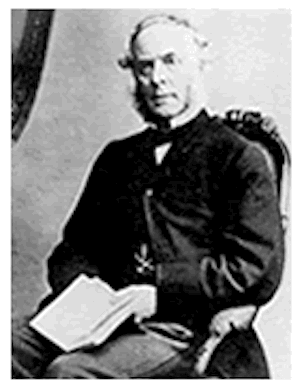
Rober Fortune. Source: Wiki Commons
James started his research by digging deep into the available material on the internet. After months of searching, he finally got lucky when he found a log entry made on February 15, 1851 which mentions that the Chinese tea manufacturers are to be paid from that date and the order was to be executed by the Chinese contractor Wang tih Poon.

Ajoo was clutching at straws but persisted in his search; he combed through endless maritime lists and passenger arrivals lists and then finally, struck gold when he found an old notice of passenger arrivals into Calcutta port on November 27, 1851, when the streamer Lady Mary Wood docked in Calcutta with six Chinese on board. (Most records show that there were eight Chinese – six tea manufacturers and two pewterers, whose sole job was preparing lead casings to the tea chests).

When Ajoo came to Nilgiris
James Ajoo followed the progress of the Chinese tea manufacturers who were sent to work in the tea gardens of the North-West Province. It was hard work, (for James Ajoo) for there was but a scant mention here or there. In May 1862, the Chinese left government service and entered private employment for higher wages.

The next year, a report on the tea plantations in East Indies made to the House of Commons mentioned that Dr HFC Cleghorn, Conservator of Forests of the Madras Presidency, had asked the government for Chinese tea manufacturers to help tea growers in the Neilgherries (as Nilgiris was spelt those days). This report also states that there were no Chinese tea manufacturers available for the Nilgiris planters, and instead “native” tea manufacturers were offered.

However, may be because of continued pressure from the Nilgiris planters, two Chinese tea manufacturers were sent to the hills in 1864, one of them being John Ajoo. It is interesting to note that these two were not the only Chinese in the Nilgiris at the time.

Did Chinese PoWs teach Indians how to manufacture tea?
Between 1856 and 1860, the British brought in Chinese Prisoners of War (PoWs) captured during the second Anglo Chinese war, also known as the Opium Wars, which involved British trade in opium to China and China’s sovereignty. Chinese prisoners were also brought to the Nilgiris from the Straits Settlements of Singapore, Malacca, Dinding and Penang. They were initially sent to the Nilgiris because of the overcrowding in the Madras jails, but later, when it was discovered the Chinese were good workmen, they were put to work in the newly opened tea and cinchona plantations.

Many senior Nilgiri planters have poofed the idea that the Chinese PoWs taught the pioneer planters how to plant and manufacture tea, mainly because the PoWs were mostly seafaring men with no experience in tea farming or manufacture. Sir Percival Griffiths, a British civil servant and tea historian is one who dismissed claims that Chinese PoWs instructed planters how to plant and manufacture tea. But records indicate that at this time, Miss Cockburn, (pronounced Coburn) daughter of the Collector of Salem and pioneer tea and coffee planter, had one Chinese man help on the tea estate near Kotagiri, while Thaishola Estate, where many PoWs were housed, has anecdotal evidence that the Chinese planted tea and has a Jail Thottam (garden) even today.

An 1850 depiction of the tea cultivation process in Assam.
By Joseph Lionel Williams after Thomas Brown, via Wiki Commons
Chinaman’s field
James Ajoo at this point, reiterates that his ancestor, John Ajoo, a free man, worked with some planters in the Nilgiris for a short while and was then lured away to work with a tea planter called AW Turner, who founded the North Travancore Land Planting Agricultural Society in Munnar.

S Muthiah, the Chennai based historian, in his book “A Planting Century” which records the history of South India’s plantations has made a mention of John Ajoo, a Chinaman who planted 13 acres of tea in Munnar, and this plot of land was known popularly as the Chinaman’s Field.

Somewhere along the line, John Ajoo married a local woman, though there is no mention of that. (It would be pertinent to note that most of the Chinese PoWs who settled down in Nattuvattom, a small hamlet in the Nilgiris where the Government cinchona factory was located, married local women and lived the rest of their lives tending cattle and growing garden vegetables.)

The Chinaman’s son
John Ajoo’s son John Antony, referred to as the Chinaman’s son, was born in June 1869 and would become the owner of a small estate called Vialkadavu near Talliar Estate in which the Turner family had an interest.
A plac of John Antony
Now John Antony was quite a colorful character and had worked in a provision store owned by an Englishman in Munnar town. He taught himself English, joined the Anglican Church and endeared himself to the English planters in the area. He was a skilled tracker and shikari and in the course of time, became a favourite with the planters for the hunting jaunts; which lead him to be acquainted with the Sri Kerala Varma Valiya Koilthampuranan, who was married to Her Highness Bharani Thirunal Lakshmi Bayi, the adopted niece of the Maharajah of Travancore.

Anecdotal evidence within the family is that, the marriage of John Antony to Mariamma was brought about by none other than the Koilthampuranan himself. Mariamma, it is said, was a child widow of a member of royal family. Nothing more is known of the mysterious Mariamma (that may not even be her real name) as there is no documentary evidence to the marriage or her background.

John Antony died when he was 82 after establishing himself as a planter and with a large acreage under him. He was also a founder member of the Travancore Cardamom Planters Association in Madurai district. Subsequently, the Ajoos moved away from the plantations and turned to the Church with many of them becoming pastors.

James Ajoo has never visited the land of his ancestor but hopes to do so one day. But now he has a story to tell too, of John Ajoo’s long journey from the tea growing farms of his youth in China, to the High Ranges in the south of India. One wonders, did John Ajoo ever think of going back home?  We will never know.

(Source: TNM)