Showing posts with label plastic. Show all posts

Thursday, 30 July 2020

Single-use masks and coronavirus waste end up polluting ocean

Environmentalists have warned that a global increase in use of single-use masks, latex gloves and other protective gear employed against the novel coronavirus could exacerbate marine pollution.

OceansAsia, a grassroots environmental organization based in Hong Kong, reported earlier in the month that disposable masks were found floating underwater and on seabeds, caught among ghost nets and other debris.

“A single face mask could take hundreds of years to break down into microplastic, the kind of microplastic is now being found in fish destined for human consumption, sea salt and even sea spray,” the organization said, recommending that people switch to reusable masks where possible.

Japanese coasts and waters have also witnessed an apparent increase in the number of disposable masks recently, said Masahiro Takemoto, a professional diver and environmentalist.
People walk in a street in Tokyo on Monday. According to environmentalists, Japanese coasts and waters have witnessed an apparent increase in the number of disposable masks recently. | AFP-JIJI

On the other side of the world, medical waste has been adding to the glut of pollution washing up on the shores of Turkey and Europe.

“Knowing that more than 2 billion disposable masks have been ordered (in France), soon there may be more masks than jellyfish in Mediterranean waters,” Laurent Lombard of Operation Mer Propre, a French environmental group, said in a Facebook post dated May 23.

Calling for citizens and governments to take action to protect the environment, the group, whose activities include cleaning up the Cote d’Azur, warned, “It’s only the beginning and if nothing changes it will become a real ecological disaster.”

While the economic slowdown brought by the virus pandemic has reduced carbon emissions, fishing and offshore oil drilling, and paused coastal development projects, such effects are only for the short-term, according to the U.N. Development Program and other organizations.

The temporary reprieve will not lead to a reduction in the concentration of carbon dioxide in the Earth’s atmosphere, and is not sufficient for depleted marine life to recover from overfishing, experts said.

In fact, poaching in Africa and Asia is said to be on the rise as patrol boats and other surveillance have been unable to make their rounds during the pandemic.

Nirmal Shah, director of Nature Seychelles, an environmental organization based in the Western Indian Ocean country, referred to a dire situation in Africa in a webinar in June.

With Seychelles’ marine sanctuary largely funded by tourism — practically nonexistent in the coronavirus crisis — many guides have been left without an income and have turned to fishing, leading to an increase in poaching, he said.

U.N. Secretary General Antonio Guterres has stressed the need for countries to work together to ensure the conservation and sustainability of the oceans.

“As we work to end the pandemic and build back better, we have a once-in-a-generation opportunity — and responsibility — to correct our relationship with the natural world, including the world’s seas and oceans,” Guterres said in a video message marking World Oceans Day on June 8.

(Source: JT)

Thursday, 19 March 2020

Most of the plastic debris along Kerala’s coast comes from fishing waste

Other studies have shown similar trends in Puducherry and Mangaluru.

Marine plastic debris is a widespread problem with an ever-growing list of animals entangled in fishing gear cropping up along shorelines around the world ‒ sometimes resulting in death. In January, an 18-foot long whale shark succumbed to its injuries after being trapped in a fishing net off the coast of Puducherry, according to a report.

Although surveys have increased over recent years, reporting of marine litter in India tends to be weaker compared with other countries. In a recent study, researchers who surveyed six beaches in Kerala for debris found that not only is plastic the main culprit, but in beaches with a high intensity of fishing activities, most of the debris comes from the fishing industry. And seasonally, more plastic fishing debris was found after the monsoon season.
Representative image. | Luke Appleby/Flickr (CC BY-NC-ND)

While research on beach debris has been carried out on Indian coast recently, various characteristics, sources and other aspects of debris along the coastline are still inadequately studied, notes the research by scientists from School of Industrial Fisheries, Cochin University of Science and Technology and ICAR – Central Institute of Fisheries Technology, Cochin.

Renjith VishnuRadhan, a postdoctoral researcher at the Indian Institute of Technology-Bombay, who was not connected to the study, said that in Kerala, there are 222 marine fishing villages and 113 inland fishing villages, as per the Economic Review 2017, State Planning Board, Kerala. “Thus, the quantum of plastic litter that can be generated through fishing activities along the state is huge.”

“Plastic menace comes under the category of ‘wicked problems’,” explained VishnuRadhan, adding that there is no single solution to this issue. “Any possible or proposed solutions should have the involvement of citizens, stakeholders and governance systems.”

Littered with plastic
For the study conducted in 2017, the team surveyed six beaches in Kerala that are used as fish landing centres for litter during three seasons: pre-monsoon, monsoon, and post-monsoon. The team collected, sorted and weighed all human sources of debris.
Thanur beach had the highest number of fishing-related plastic debris. Credit: Damaris Benny Daniel/Mongabay

They found that of all the pieces of beach litter they collected during all three seasons, which comprised 15,360 items, plastic was the majority standing at 73.8%. It was also the largest fraction when they considered the beach waste by weight.

Of the total debris, 36% of the items and 39.8% by weight was fishing-related debris. And among the plastic debris, 48% was fishing-related debris ‒ the highest component ‒ which mostly consisted of ropes ‒ 38% ‒ and nets ‒ 24%.

The researchers also compared the amount of fishing-related plastic debris in beaches with a high-intensity of fishing, with those exhibiting a low fishing intensity. High-intensity fishing beaches ‒Thanur, Malipuram, and Vizhinjam ‒ were classified as those with 100 or more motorised fishing vessels operating for more than 20 days per month, whereas low-intensity fishing beaches ‒ Kappad, Kuzhippilly and Cheriazheekal ‒ had 10 or fewer vessels running for less than 20 days per month.
Malipuram beach is a high-intensity fishing beach in Kerala. Credit: Damaris Benny Daniel/Mongabay

It turns out that fishing-related plastic debris in terms of the number of items in the higher-intensity fishing beaches was more than four times that found in lower-intensity fishing beaches. Thanur beach with the maximum number of fishing vessels operated at 1,140, had the highest fishing debris whereas Kuzhippilly, which operated only 15 vessels, had the lowest.

The season the survey was conducted also had an impact on the amount of litter. A higher concentration of fishing-related plastic was seen during the post-monsoon season compared to the monsoon season, which had the lowest.

“The debris on high fishing-intensity beaches was higher than expected. About seasonal variation, we did anticipate lower plastic debris abundance during monsoon months, because of the possibility of debris getting washed into the sea with rain and our results confirmed this hypothesis,” said Damaris Benny Daniel, PhD scholar at the School of Industrial Fisheries, Cochin University of Science and Technology, and lead author of the study.

Daniel explained that during the monsoon months, wave heights are higher than normal months and as a result, lines of debris left on the beach by high tide, known as wrack lines, “will be wider which will trap more debris during the following months, that is, post-monsoon seasons.”

But these results may not be surprising. A growing body of research is pointing to the role of fishing waste in the beaches of South India. Last August, a study from six beaches in Puducherry on India’s South Eastern coast reported a strong correlation between fishing and microplastic abundance.

Similarly, another study published last September where three major beaches in Mangaluru were surveyed from 2011 to 2016, also found significant amounts of fishing litter compared to all litter in 2016 ‒ 59% by number and 33.4% by weight. The group also noted changes in the amount of plastic littered on the beaches depending on the rainfall, rainy days, and river discharge.

Turning the tide
The authors recommend greater monitoring for more regions and longer time periods for fishing-related debris, educating the fishing community about the environmental and economic consequences of fishing-related debris and providing proper collection mechanisms for damaged fishing gear.
Wrack lines after the monsoon will be wider and trap more debris. Credit: Hillebrand Steve/Pixnio

VishnuRadhan believes that “the fishing population is well aware of the marine plastic problem than us.” During his research, many fishing communities shared their worries with him about the growing menace. “For example, sometimes they get more plastic materials than fish while using shore seines nowadays,” he said.

For proper collection, “the governing bodies or local authorities should provide a facility to collect the damaged fishing nets and other gears from fisherman,” said Daniel. “If there is no such mechanism, they will throw it on beaches.”

Agreeing with the need to establish proper collection mechanisms, VishnuRadhan said that there are enough studies and data available that can be used to develop strategies.

“Now, it is time for some sustainable solutions,” he says, citing a report published in 2015 by the Marine Environmental Emergency Preparedness and Response Activity Centre of the North West Pacific Action Plan outlining the best practices in dealing with marine litter in fisheries in the region. Some of the collection systems that were introduced by the Government of Korea include a buyback program for marine litter ‒ such as fishing nets, ropes and hooks ‒ and installation of deck barges in ports and harbours to collect marine litter.
Abandoned fishing entangled with other debris at Malipuram beach. Credit: Damaris Benny Daniel/Mongabay

Litter arising from fishing is expected to increase with a global surge in fishing fleet over the past few decades, warned VishnuRadhan, noting that “as major fish stocks are being depleted globally,” fishing activities will become more vigorous.

“Further, it is also very difficult to phase out plastic fishing gears and associated materials in the near future due to the strength and durability [and cost] these gears provide in the marine condition,” he added.

This article first appeared on Mongabay.


(Source: Scroll)

Thursday, 7 November 2019

This TN college is promoting ink pen among students to fight plastic menace

While aiming to reduce the College's plastic waste output, ended up throwing another welcome surprise: better handwriting among the students, a fact vouched by teachers.

My two fingers on a typewriter have never connected with my brain. My hand on a pen does. A fountain pen, of course. Ball-point pens are only good for filling out forms on a plane...

Now, Graham Greene (1904-91), the critically-acclaimed English novelist of The Third Man and The Honorary Consul fame, surely must know what the humble fountain pen is capable of, a fact that his body of work would gladly testify. When the Government Arts College here ordered the students taking the semester exams to use fountain pens, it incidentally corroborated Greene's belief all the while taking a leap towards preserving the environment.
Image of fountain pen and ink used for representational purpose

The partiality for the fountain pens stemmed from the fact that the College premise was littered with discarded ball-point pen refills. After brainstorming for a while, the powers that be decided that use-and-throw refills were an eyesore, and ordered that ball-point pens be discarded in favour of fountain pens. The order, while aiming to reduce the College's plastic waste output, ended up throwing another welcome surprise: better handwriting among the students, a fact vouched by teachers.

The new 'ink pen' rule came into force on October 30. New because the College had briefly tried its hand at the fountain pen rule earlier in March 2018, which fizzled out. Big blackboard at the College's entrance keeps students informed about the rule passed by Principal K Chitra.

Doing its bit for preserving the environment in the wake of the State government's single-use plastic ban, the College has organised various drives, says Assistant Professor and Coordinator of the Plastic-Free Zone and Save Nature Cell K Vasanthi.

"We have limited the use of plastic on the campus. Flex banners have been replaced with ones made of cloth, metal utensils have replaced plastic cups in the canteen. We also promote the use of cloth bags among students and staff," Vasanthi says.

Taking the green drive to a whole new level is the Identity Cards the students get. Printed on thick papers, these ID cards have reduced the College's plastic use.

Meanwhile, the College authorities say that the students would take some time in getting used to the new imposition. This new development only underscores the College's status of being the first plastic-free zone, as declared by Corporation Commissioner J Sravan Kumar recently. Well, to improve on an old adage, it seems that a fountain pen indeed is mightier than a sword.

(Source: TNIE)

Monday, 7 October 2019

One tea bag can release 11.6 billion microplastics into your cup

This is higher than plastic loads previously reported in other foods such as from beer, honey, fish and shellfish, chicken, salt, bottled water, finds the study

Love to start your mornings with a refreshing cup of tea? Beware, you might be drinking microplastics, all thanks to the premium plastic teabags, according to a new study.

The study, by researchers from McGill University in Montreal, showed that a single plastic teabag can release harmful particles into your cup — 11.6 billion microplastics and 3.1 billion nanoplastics.

When water fleas were exposed to the plastic-laden beverage, they showed significant behavioural effects and developmental malformations, according to the study published in the journal Environmental Science and Technology.

“The particles did not kill the water fleas, but did cause significant behavioural effects and developmental malformations,” Nathalie Tufenkji at McGill, told New Scientist.

Microplastics are those plastics less than five millimetres in size. They would amount to nearly 16 micrograms or one-sixtieth of a milligram of plastic in one cup, the CBC News reported.

These are higher than plastic loads previously reported in other foods such as beer, honey, fish and shellfish, chicken, salt, bottled water.

“Table salt, which has a relatively high microplastic content, has been reported to contain approximately 0.005 micrograms plastic in per gram salt,” Tufenkji at McGill was quoted by New Scientist. Microplastics were also found in cosmetic products like toothpastes and face wash.

Instead of the traditional paper, premium teas now come in silken bags, some of which are pyramid-shaped, which help large leaves to expand when brewed. While these silken bags are made of PET (polyethylene terephthalate, found in plastic drink bottles) or nylon (used in many food bags and pouches), their potential health risk are not known yet, the study showed.

To test the potential toxicity, the team bought four different tea bags from shops and cafés in Montreal, cut them open, washed them and steeped them in 95 degrees Celsius water.

The materials used in the tea bags were deemed safe for use in contact with hot food and beverages, the Tea and Herbal Association of Canada told CBC News in a statement.

There is currently no data on use of plastic tea bags in India. But, according to analysis, “India currently vies with China as the world’s biggest packaged tea market,” Swati Singh Sambyal, programme manager - environmental governance (waste management) at Delhi-based non-profit Centre for Science and Environment, told Down to Earth.

“In 2017, India consumed a total retail volume of 678,200 tonnes worth of packaged tea, followed by China (576,800 tonnes), Turkey (173,400 tonnes), Russia (134,200 tonnes) and Japan (92,900 tonnes),” Sambyal added.

While there is no evidence that microparticles pose a risk to human health, their potential environment risk is widely known.

Microplastics can infiltrate into our ecosystems and foodchains, Sambyal said. More research is needed to understand its possible health impacts on humans, she added.

Meanwhile, it would be safe to stick to paper tea bags and loose leaf tea, Tufenkji suggested.

(Source: DTE)

Monday, 30 September 2019

Vicious cycle: delicate wash releases more plastic microfibres

Study finds 800,000 extra fibres are shed than on standard washing machine setting

Delicate wash cycles should be avoided whenever possible, according to scientists who found they can release hundreds of thousands more plastic microfibres into the environment than standard wash cycles.

Researchers at Newcastle University ran tests with full-scale machines to show that a delicate wash, which uses up to twice as much water as a standard cycle, releases on average 800,000 more microfibres than less water-hungry cycles.

“Our findings were a surprise,” said Prof Grant Burgess, a marine microbiologist who led the research. “You would expect delicate washes to protect clothes and lead to less microfibres being released, but our careful studies showed that in fact it was the opposite.”

“If you wash your clothes on a delicate wash cycle the clothes release far more plastic fibres. These are microplastics, made from polyester. They are not biodegradable and can build up in our environment.”
 Newcastle University student Max Kelly, 24, holds up washing machine filters with microfibres collected following a delicate wash (L) and a normal cycle. Photograph: Owen Humphreys/PA

The finding challenges the assumption that more aggressive washing cycles, which use less water, change direction more frequently and spin at higher speeds, release more fibres into wastewater. Instead, the volume of water used per wash appears to be the most important factor in dislodging fibres from clothing, the study found.

“If the water volume is high, the water will bash the clothes around more than if less water is used,” Burgess said. “The water forces its way through the clothing and plucks fibres of polyester from the textiles.”

The clothing industry produces more than 42m tonnes of synthetic fibres every year. The vast majority, about 80%, are used to make polyester garments. Previous tests have found that washing synthetic items can release between 500,000 and 6m microfibres per wash.

Because many washing machines lack filters that can remove microplastics from their wastewater, the fibres are carried into water treatment plants and can eventually reach the seas. The particles, which come from a variety of sources, are now ubiquitous in the environment, from the deepest marine trench in the Pacific Ocean to the pristine wilderness of Antarctica. Scientists have found the plastics in organisms at every level of the food chain from plankton to marine mammals.

It is unclear what health risk easily ingested microplastics pose to marine life, but researchers fear toxic chemicals in the plastics, and other compounds such as polychlorinated biphenyls (PCBs) which stick to them, could be harmful to the animals. The particles may also help spread disease-causing viruses and bacteria.

The Newcastle team measured the amount of microfibres released from black polyester T-shirts, first in a series of lab tests that mimicked full-scale washing machines, and then in real washing machines at a Procter & Gamble research centre. The results showed that earlier recommendations to use more water and less aggressive washing cycles may actually be releasing more microfibres into the environment.

Some washing machine manufacturers are introducing microfibre filters, but Mark Kelly, the first author of the study published in Environmental Science and Technology, said avoiding delicate washes and half loads would help to reduce the amounts of microfibres released by washing.

“This research is important as it helps to identify how microfibres are reaching the marine environment,” said Prof Tamara Galloway, an ecotoxicologist at the University of Exeter, who was not involved in the study.

“We have found microplastics in most of the marine animals we study, including turtles, seals and dolphins. Microfibres are the type of microplastics we find most frequently. Whilst we can’t say for sure what the health impacts of ingesting microfibres from textiles might be, minimising exposure has got to be a high priority for protecting the marine environment and the food chain.”

(Source: The Guardian)

Friday, 9 August 2019

Recycling isn’t going to save the planet – we need to get tough and punish people for using plastic

We need to do much, much more to live greener lives. For that we are going to need greater financial incentives and penalties

The nudge worked then. We now use 93 per cent fewer plastic bags than we did before the introduction of the 5p carrier bag levy went nationwide in 2015 (Wales pioneered the levy in 2011). When the levy goes up to 10p next year it will further curtail their use, and as such the waste of precious hydrocarbons and the obscene environmental damage sometimes across oceans in otherwise pristine marine environments, choking turtles and all the rest of it.

According to the government, on a 10-year view the carrier bag levy – which is not a tax – will mean an expected overall benefit of over £780m to the UK economy; up to £730m raised for good causes; £60m savings in litter clean-up costs and a carbon saving of £13m. Some 4p of every 5p you spend on a bag goes to a “good cause”. It goes to show, by the way, how simple insights from behavioural economics can leverage big societal changes – the levy being effectively financially invisible to almost everyone.

All good news.

Well, we can do much more, such as introducing pilot levies on disposable coffee cups (with a suitable exemption for smaller cafes, obviously), on plastic straws and various other bits of our plastic fanatic lifestyle. I believe the civil servants at the Department for the Environment, Food and Rural Affairs found the whole thing so perplexing they’ve not been able to work out a suitable scheme. As Boris Johnson might say, if we could put three men on the moon in 1969, we can surely find a way to put a price on plastic straws. We can also do much more for food recycling – supplanting the food banks with fresher, healthier produce.  Maybe Theresa Villiers will have more luck than Michael Gove had.

Indeed, we could go for a generalised plastics tax – a small deterrent levy on the absurd amounts of plastic and other packaging that we cosset so much of our fresh food in. If your food is wrapped in any kind of plastic it will be, say, 10p more expensive than if it is loose or in a paper bag or a compostable organic bag.

Not that I’m showing off or anything but before me I have four white flesh doughnut nectarines from Marks & Spencer – a small but potent symbol of the power of capitalism to satisfy consumer needs we dreamed of having. Leaving aside for moment their vast carbon footprint, having travelled all the way from Spain, I find them swaddled in cellophane (I think that’s what it is) and coddled by a dark cardboardy tray, cupping their royal lusciousness from bruising. And yet nowhere can I see a guide as to which bits are reliable, and how I should go about recycling this packaging. If it would save the planet, I’d be glad to put up with an occasional bruised doughnut nectarine, even one in the early stages of necrosis, on the Theresa May principle that you just cut out the rot and use the rest (a notion that she might have applied more vigorously to her own cabinet).

There are in fact some 58 different recycling symbols, and they are poorly understood by the public. Some councils will take anything that’s vaguely recyclable; others are fussier. Some ask you to stick it all in a general recycling bag; others demand you carefully parse all the different types, and then, if needs be, travel to special recycling centres for the more recherché garbage. Never having been much cop at science, I am not sure that I can easily tell my polyethylene terephthalate from my high-density polyethylene or my polyvinyl chloride from my low-density polyethylene, polypropylene, polystyrene or, well, Polly put the kettle on.

Unless you’ve got a degree in organic chemistry, you’ve pretty much had it in the UK’s wild kaleidoscope of recycling regimes. A stray crisp packet or a few old cans in with the paper recycling can basically render it useless, worthless. It is one reason why the Chinese and Malaysians are telling us that they no longer want our recycling material because the poor befuddled British consumer keeps putting the wrong kind of metals/plastics/paper/organic materials in the wrong bags and bins, and when they open it all up in Shanghai and KL they just want to send it back to us. “Global Britain” can’t even export decent rubbish, it seems.

We should always be clear; recycling is not going to save the planet. It will merely delay its inevitable demise, and by a relatively insignificant amount in the great cosmic scheme of things. The real problem is our vast over-consumption of everything, and, of course, in such an unsustainable way. So we need to do much, much more to live greener lives, and for that we need more financial incentives (and penalties).

So the obvious answer is to deter the use of plastics, especially, in packaging in the first place. We could all make the effort to buy our groceries fresh and loose – like we used to and I still do down the local market – and, if we can’t or won’t, have some kind of levy placed on them because they are worsening the climate emergency. It would not be a tax on food, ie on the poor, because there should always be an unwrapped option. Market forces, in other words, nudged by a small financial incentives could do for the wider plastic problem what the 5p levy did to end the plastic bag menace.

(Source: Independent)

Monday, 24 June 2019

Sweden’s recycling is so revolutionary, the country has run out of rubbish

Sweden’s recycling is so revolutionary, the country has to import rubbish from other countries to keep its recycling plants going. What lessons can we learn, asks Hazel Sheffield 

Sweden is so good at recycling that, for several years, it has imported rubbish from other countries to keep its recycling plants going. Less than 1 per cent of Swedish household waste was sent to landfill last year or any year since 2011.

We can only dream of such an effective system in the UK, which is why we end up paying expensive transport costs to send rubbish to be recycled overseas rather than paying fines to send it to landfill under The Landfill Tax of 1996.

The UK has made strides in the proportion of waste recycled under an EU target of 50 per cent by 2020. This has underpinned hundreds of millions of pounds of investment into recycling facilities and energy recovery plants in the UK, creating many jobs. We’re not quite at that target yet. Recycling in the UK peaked at around 45 per cent of all waste in 2014.

Since then, provisional figures from the ONS have shown that figure has dropped to 44 per cent as austerity has resulted in budget cuts. The decision to leave the EU could be about to make this situation worse. While Europe is aiming for a 65 per cent recycling target by 2030, the UK may be about to fall even further behind its green neighbours.


Why are we sending waste to Sweden? Their system is so far ahead because of a culture of looking after the environment. Sweden was one of the first countries to implement a heavy tax on fossil fuels in 1991 and now sources almost half its electricity from renewables.

“Swedish people are quite keen on being out in nature and they are aware of what we need do on nature and environmental issues. We worked on communications for a long time to make people aware not to throw things outdoors so that we can recycle and reuse,” says Anna-Carin Gripwall, director of communications for Avfall Sverige, the Swedish Waste Management’s recycling association.

Over time, Sweden has implemented a cohesive national recycling policy so that even though private companies undertake most of the business of importing and burning waste, the energy goes into a national heating network to heat homes through the freezing Swedish winter. “That’s a key reason that we have this district network, so we can make use of the heating from the waste plants. In the southern part of Europe they don’t make use of the heating from the waste, it just goes out the chimney. Here we use it as a substitute for fossil fuel,” Ms Gripwell says.

Sweden’s heating network is not without its detractors. They argue that the country is dodging real recycling by sending waste to be incinerated. Paper plant managers say that wood fibre can be used up to six times before it becomes dust. If Sweden burns paper before that point it is exhausting the potential for true recycling and replacing used paper with fresh raw material.

Ms Gripwall says the aim in Sweden is still to stop people sending waste to recycling in the first place. A national campaign called the “Miljönär-vänlig” movement has for several years promoted the notion that there is much to be gained through repairing, sharing and reusing.

Sweden is a top performer when it comes to sorting and recycling its waste and is in the rare situation of lacking garbage at its incineration centres, which produce enough electricity to supply 250,000 homes and heating for 950,000 homes (Getty)

She describes Sweden’s policy of importing waste to recycle from other countries as a temporary situation. “There’s a ban on landfill in EU countries, so instead of paying the fine they send it to us as a service. They should and will build their own plants, to reduce their own waste, as we are working hard to do in Sweden,” Ms Gripwall says.

“Hopefully there will be less waste and the waste that has to go to incineration should be incinerated in each country. But to use recycling for heating you have to have district heating or cooling systems, so you have to build the infrastructure for that, and that takes time,” she adds.

Swedish municipalities are individually investing in futuristic waste collection techniques, like automated vacuum systems in residential blocks, removing the need for collection transport, and underground container systems that free up road space and get rid of any smells.

In the UK, each local authority has its own system, making it difficult for residents to be confident about what they can recycle and where. “We need more of a coherent national strategy in England to the collection of recyclable materials, rather than the current approach, whereby it is largely left to individual local authorities to determine their own collection policies,” says Angus Evers, partner at Shoosmiths and a convenor of the UK Environmental Law Association’s Waste Working Party.

Local authorities will often start by recycling the highest volume materials because they are measured according to the proportion of waste recycled, so bigger items count for more. “Whatever we end up with in the UK, we need a system which collects all recyclable materials rather than cherry-picking the easiest and cheapest,” says Richard Hands, chief executive of ACE UK, the drink carton industry’s trade association.

Sweden is a top performer when it comes to sorting and recycling its waste and is in the rare situation of lacking garbage at its incineration centres, which produce enough electricity to supply 250,000 homes and heating for 950,000 homes (Getty)

Mr Hands points to his own drinks carton industry, which includes Tetra Pak, SIG Combibloc and Elopak. Through ACE UK, these brands have driven up carton recycling, more than doubling the number of local authorities collecting cartons from 31 per cent in 2011 to 65 per cent in 2016.

He says that the UK needs to build infrastructure around recycling plants so that it can stop sending waste overseas. Some local authorities already have a “no export” policy to achieve this. “Growing the UK waste industry will create jobs and generate UK-based revenue for the economy,” Mr Hands says.

Angus Evers says a better domestic recycling system should be a part of our strategy for leaving the EU. “The materials we currently export represent a huge drain of valuable resources going out of the UK that could be used in the UK economy to make new products and reduce our imports of raw materials. If we have aspirations to be less dependent on Europe, then we need to be more self-sufficient and recycle more,” Mr Evers says.

And what will Sweden do if we stop sending it rubbish to feed its heating system? Ms Gripwall says the Swedes will not freeze – they have biofuels ready to substitute for our exported waste.

(Source: Independent)

Tuesday, 4 June 2019

Food packaging is full of toxic chemicals – here's how it could affect your health

If you care about what you eat, you should care about what it comes in

The internet cheered in December when Trader Joe’s announced it would take meaningful steps towards making its packaging more sustainable. The supermarket chain outlined a plan that included reducing and eliminating excess waste, using materials that could realistically be recycled and avoiding harmful substances. It’s the last part that medical and environmental activists are keeping an eye on.

We’re just beginning to understand some of the short- and long-term risks associated with the chemicals in packaging: obesity, cancer, cardiovascular disease and other health issues. Some consumer advocates say phasing out some of the riskier substances that come into contact with our food is long overdue.

“Avoiding the use of these chemicals of concern in packaging is a great step forward,” said Leonardo Trasande, pediatrician and author of Sicker, Fatter, Poorer: The Urgent Threat of Hormone-Disrupting Chemicals to Our Health and Our Future and What We Can Do About It. “The question is: what replaces these materials?”

Before Trader Joe’s fulfills its commitment, and other food companies follow suit, consumers can be vigilant. We asked Trasande to outline the types of food packaging consumers might want to avoid, along with possible alternatives.

Plastic packaging can introduce chemicals into your food. Photograph: Thomas Demarczyk/Getty Images/iStockphoto

Takeaway containers – even paper ones
Convenient food delivery apps, such as Seamless and Postmates, have made it easier than ever before to order food to the couch. It’s so convenient that 26% of Americans eat takeout at least once a week. But when hot products are placed in containers, chemicals from the box can leach into the food and, in turn, our bodies.

There are the more obvious culprits: for example, polystyrene, commonly called Styrofoam, a known carcinogen that’s also an environmental nightmare. Cities such as New York, Washington and San Francisco have banned Styrofoam coffee cups, plates, and to-go boxes. Progressive food establishments have traded it and other hazardous packaging for safer, plant-based alternatives.

But many of those seemingly safe containers may have hazardous chemicals lurking inside.

A study released last year by consumer advocacy groups Safer Chemicals, Healthy Families and Toxic-Free Future found that nearly two-thirds of paper takeout containers from the country’s five largest grocery stores contained elevated levels of fluorine, which meant that they were probably treated with PFAS, a group of industrial chemicals no longer manufactured in the US. The same was true for 11% of bakery and deli papers tested. PFAS has been shown to cause reproductive, developmental, liver, kidney and immunological problems in laboratory animals. It may also be associated with low birth rate and thyroid disruption, according to the Environmental Protection Agency.

What you should buy instead The safest containers are brown or white paper boxes composed of 100% recycled paperboard, which have a seal to indicate they are compostable.

Aluminum cans
What do beer, corn and pasta sauce have in common? The ubiquitous aluminum can, often lined with bisphenol A (BPA). BPA, a plastic additive, has been deemed safe for food contact by the Food and Drug Administration, despite evidence that it acts as an endocrine disruptor. Companies have voluntarily stopped using BPA in packaging for baby formula and bottles, but it persists in water bottles and food packaging. Endocrine disruptors are linked to breast and prostate cancers, infertility and metabolic disorders, among other health concerns.

“Low doses of these chemicals may be as impactful as high doses of exposure,” Trasande said. “Even the lowest level of exposure can cause serious, permanent and lifelong consequences as a result of these preventable exposures.”

What you should buy instead Trasande recommends avoiding aluminum cans when possible, even if the label claims to be “BPA-free”, since those products can be problematic as well. The only exception are BPA-free products made with oil and resin substitutes, Trasande added. He suggests drinks and food items packaged in glass as well as fruits and vegetables not in a can.

No 3, 6 and 7 plastics
Besides the impact on the environment, plastics are implicated in a host of potential health problems. At the very least, the American Academy of Pediatrics urges consumers to avoid three plastics in particular: those that bear within the recycling symbol the numbers 3, 6 and 7.

No 3 is typically found in takeout containers, among other plastic products, and is made from polyvinyl chloride. The concern is that it could release phthalates, a common class of chemical used to make plastic malleable. They can act as a hormone disruptor and may contribute to childhood obesity, cardiovascular disease and interfere with male genital development.

No 6 is often present in takeout boxes too, and, when heated, could release styrene, linked to depression and fatigue. At high doses, it could also affect kidney function.

Finally, No 7, which is often found in large water bottles, may contain BPA, the endocrine disruptor that’s associated with cancer, metabolic disorders and infertility.

What to buy instead Avoid the most potentially hazardous plastics and plastic-lined takeout boxes. Plastic products labeled with the terms “greenware” or “bio-based” are less harmful, but aren’t completely safe. Even bioplastics, products derived from plants, come with their own environmental concerns. Some of them will still release harmful greenhouse gases when they end up in a landfill and many simply can’t be recycled.

Plastic-wrapped produce
Some consumers might assume fruits and vegetables wrapped in plastic may be cleaner than those that aren’t. But crinkly or clingy packaging might actually introduce chemicals that could infiltrate your food.

Trasande said this type of wrapping probably contains phthalates, one of the most widespread endocrine disruptors. But plastic films are typically unmarked, making it difficult to deduce which types of chemicals are in them.

Buying produce wrapped in plastic “undermines some of the hard-fought changes and benefits we would like to achieve by eating greater amounts of fruits and vegetables”, Trasande said.

What to buy instead Purchase fruits and vegetables that are free of any sort of packaging. Better yet, stock up on produce at a local farmer’s market to reduce your produce’s carbon footprint.

Coffee cups
Your standard coffee cup may seem innocuous. But most paper cups are coated with plastic, which keeps them from leaking your latte. That means tea or coffee drinkers are mixing steaming liquids with plastic, which is “probably not the safest thing to do”, said Elizabeth Balkan, director of food waste at the Natural Resources Defense Council, as plastic is more likely to leach when it’s heated.

What you should do instead Protect yourself and the environment by bringing your own tumbler to the coffee shop.

Microwave safe plastic packaging
Plenty of plastic storage containers and vessels for frozen foods may claim to be “microwave safe”, but this phrase is misleading. “The reality is, there’s no such thing as microwave safe plastic,” said Trasande. Heating up any plastic in the microwave could lead to chemicals seeping into the food you’re about to eat.

What to do instead This one is simple: avoid putting plastic products in the microwave.

(Source: The Guardian)

Tuesday, 14 May 2019

Scotland to pay people 20p for every returned bottle and can

‘We will be urging environment secretary Michael Gove to build on Scotland’s ambition,’ say green campaigners

A plan to create the UK’s first deposit return scheme for plastic bottles, cans and glass in a bid to boost recycling rates, has been backed by green groups.

The Scottish Government unveiled a proposal that includes a 20p return value for drinks containers – with all retailers in the country required to comply and accept returns.

Environmentalists hailed it as a blueprint and urged ministers at Westminster to adopt similar measures south of the border to help tackle plastic waste and other forms of packaging pollution.

Most plastic bottles included in Scottish scheme ( Getty )

Samantha Harding, of the Campaign to Protect Rural England (CPRE), said: “We wholeheartedly congratulate the Scottish Government … we will be urging environment secretary Michael Gove to build on Scotland’s ambition and go one better, by making sure every drinks carton is also included within England’s deposit system.”

Scotland’s environment secretary Roseanna Cunningham said the scheme would be up and running by the end of the current parliament in 2021 and aims to capture 90 per cent of drinks containers for recycling within three years.

Jenni Hume, from the Have You Got The Bottle? campaign, praised the plans and stressed the importance of persuading other parts of the UK to follow suit.

She said: “The deposit system set out today is a major step in the right direction, setting the pace for the rest of the UK, and it will have a substantial positive impact on litter and recycling.

“Now we know how the system will work initially, the key will be to persuade the rest of the UK to adopt the Scottish model. It is in the interests of the environment, the public and business for the other administrations to adopt an approach that is just as inclusive.”
Calum Duncan, head of Conservation Scotland also welcomed that the scheme will include glass, highlighting the high levels of glass found on Scottish beaches.

He said the country was "now ahead of the game and the rest of the UK must follow to ensure we have the best systems in place across these islands to increase recycling and help reduce the tide of glass and plastic bottles and cans blighting our shores.”

Dr Richard Dixon, of Friends of the Earth Scotland, said the system would provide a huge boost for recycling of bottles and cans, reduce litter across Scotland, and save both materials and climate change emissions.

He added: “This scheme will set a good benchmark to influence the thinking for a similar scheme for England and the ideal is that the two schemes will eventually work in exactly the same way.”

In her statement to MSPs at Holyrood, Ms Cunningham said the scheme will apply to PET plastic bottles like those used for fizzy drinks and water, glass bottles and steel/aluminium drinks cans.

She said she had not included high density polyethylene (HDPE) plastic – primarily used for packaging fresh milk – because of concerns about potential contamination of other materials and odour.

However, she added that she hoped these could be added at a later stage if such concerns are addressed.

Despite the positive response from environmental groups, concerns were raised in the business sector. Colin Borland, of the Federation of Small Businesses, said the very smallest shops have concerns about storage.

“We’re unhappy that the Scottish Government hasn’t taken on board our concerns, despite a commitment to address the problems such a scheme poses for small retailers," he said.

Ewan MacDonald-Russell, of the Scottish Retail Consortium, described the design of the scheme as “disappointing”.

He said: “A successful deposit return scheme … would herald an opportunity to drive further increases in recycling and reduce litter, over and above the existing household kerbside system. However, we are concerned the disappointing design unveiled by ministers may make that achievable.”

Mr MacDonald-Russell claimed the inclusion of glass would add an additional £50 million annual cost to the scheme, and he suggested that by not working collaboratively on a UK-wide scheme, the Scottish Government risks increased costs on retailers and consumers.

(Source: Independent) 

Monday, 29 April 2019

Milkmen are returning to London as millennials order glass milk bottles in a bid to slash plastic waste

The catalyst for the surge in millennials using glass bottles is David Attenborough's Blue Planet II, according to one milkman

Milkmen and milkwomen are making a comeback in London as millennials have started using glass milk bottles in a bid to cut down plastic waste.

Dairies in the capital told of a "phenomenal" upsurge in interest from younger customers at the start of the year amid growing public upset over plastic waste.

Both UK-wide company milk&more and east London dairy Parker Dairies have seen increased demand for glass bottles in 2018, citing David Attenborough's Blue Planet II as the "catalyst" for the new uptake.

The firms said younger consumers and families seem willing to pay more for the service in a bid to help the environment.

It comes amid conflicting reports of a resurgence in glass doorstep deliveries in the UK.

While it was reported there was a 25 per cent hike in the number of deliveries in the UK over the last two years, Dairy UK told the Standard it could not confirm the figure.

The industry body said figures showed doorstep deliveries make up 3 per cent of milk sales in the UK – around 1 million pints per day – and glass milk bottles make up 3 per cent of all milk sales.

But depot manager of Parker Dairies Paul Lough said interest of late in glass bottles has been “absolutely phenomenal”.

Parker Dairies: the east London dairy has a fleet of 25 electric milk floats (Parker Dairies)
He said the dairy, which has a fleet of 25 electric milk floats covering all of east London, the city and the West End, has gained 382 new customers since the beginning of the year.

Of these new calls, 95 per cent are having milk delivered in glass bottles.

Mr Lough said: “Before Christmas we were taking 30 calls a month, and since New Year we are getting 30 calls a week.”

The dairy has seen a 4 per cent increase in sales since December, with an extra 1800 pints being sold each week.

Mr Lough attributed the new interest to the "regeneration" of the East End since the Olympics.

"People are much more environmentally conscious and so they are asking if we do glass,” he said.

And the dairy has attracted a younger clientele, Mr Lough said, meaning the firm has expanded its product line to cater to the new demographic.

“Without a doubt [they are younger],” he said. “That is why we are trying to change our product list.

“We do sourdough and honeys… we sell 250 loaves a week to new customers.”

Glass milk bottles can be reused up to 25 times before they are recycled into new bottles (Parker Dairies)
Meanwhile, UK company milk&more said it has gained more than 2,500 new customers in the last month – the equivalent of five new milk rounds.

And some 90 per cent of these customers across the country are ordering in the iconic glass bottles.

In London, milk&more has added the equivalent of a whole new round, the company said.

The company – which occupies Hanworth Dairy in south west London - was bought by dairy giant Müller from Dairy Crest in 2016, which pledged to save glass milk bottle doorstep delivery and boost the service.

Dairy Crest had planned to shut down the dairy and review milk&more in light of declining interest in milk deliveries, with plans to phase out glass bottles.

But Müller said it wanted to reverse the plans and “rejuvenate and expand” milk&more.

Milkman Ian Beardwell has been doing the same round in Wimbledon for Hanworth Dairy for 27 years.

He said: “Since Blue Planet that has been the catalyst of the revival in glass.

Dairies offer locally sourced produced such as sourdough bread alongside milk
“I used to do 550 calls before and in four weeks I’ve gained another 35 to 40 calls – 90 per cent glass.

“The trend for new customers has always been to come on board with plastic. But I have always done glass. I think they forgot that I do glass… people just didn’t realise.

“One lady has just come back to me in the last four weeks. I hadn’t been delivering to her for the last 10 years. She told me she just got lazy.”

Patrick Müller, managing director of milk&more, said: “The glass bottle is an exciting product… we think that it has a future.

“We believe the tradition of the milkman has some fantastic elements that are relevant now. They are a reliable presence for pre-breakfast delivery, they offer an exciting product range including locally sourced produce, and can be a part of the community.

“We just have to make them relevant for the modern consumer.” 

He said new customers were aged around 35 years old, coming from young families with a double income.

Mr Muller added: “It’s popular with families, so people that care about the local community and local produce.

“They want the story behind their produce but they don’t have the time to get it.

“We talked with customers and they said they enjoy the experience of the glass bottle - the childhood memories - and they want to reduce their plastic wastage.”

(Source: Evening Standard)

Thursday, 18 April 2019

Vietnamese man makes and sells straws out of wild grass found in Mekong delta

In recent times, plastic straws have been shunned due to its impact on marine animals.

One video in particular has stood out:


Now, numerous purportedly more eco-friendly alternatives to plastic straws have sprouted, such as metal straws and rice straws.

Very fresh idea
One rather innovative solution that has surfaced are straws made out of grass.

In a Facebook video that has since garnered more than 1.5 million views and 27,000 shares, Vietnamese Tran Minh Tien shows how he goes about his business of manufacturing grass straws.

The straws aren’t just made from random weeds, but a specific species of grass from the fields of the Mekong Delta in Vietnam, called Lepironia articulata.

The sedge grass grows wild in the wetlands of Vietnam, and is long with a hollow stem.


From grass to straw
What is the process of transforming a stem of grass to a fully functional drinking straw?

Here is the entire procedure, which Tran detailed in the video.

After the grass is collected, they are washed, and then neatly cut into 20cm tubes.


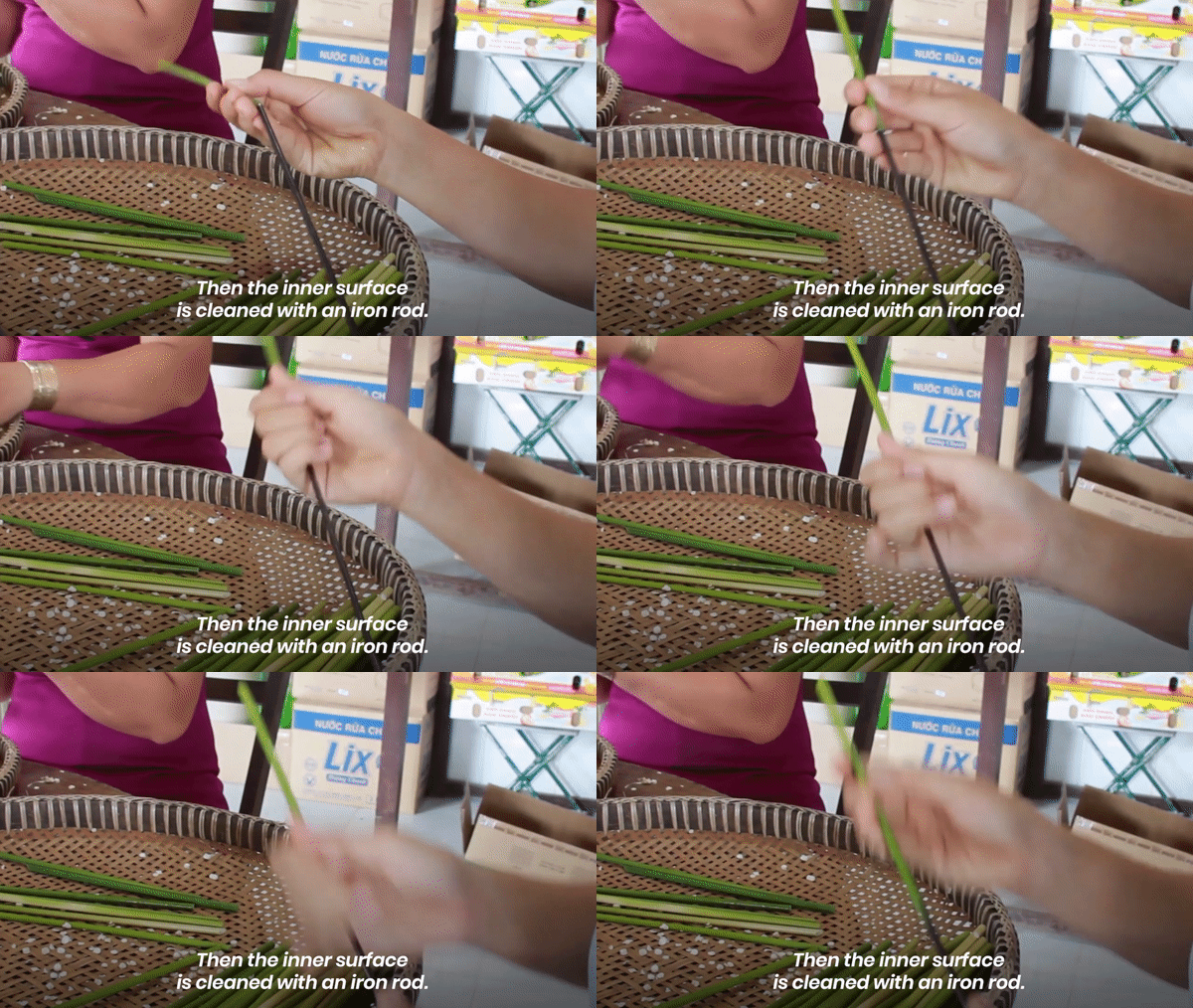
The insides of the hollow tubes of grass are then cleaned using a metal rod.


The straws are carefully rinsed a second time, and then packaged into bundles using banana leaves. Very environmentally-friendly.


Straws are single-use but biodegradable
The grass straws made by Ong Hut Co., the name of Tran’s business, come in both ‘fresh’ and ‘dry’ versions.

Freshly cut straws can be stored in the refrigerator for up to two weeks and in room temperature for up to a week, if not in use.

To make the dried straws, fresh straws are left out in the sun to dry, and then baked in an oven.

These are able to last much longer than fresh straws, and can be stored in the refrigerator for up to six months.

Both types of grass straws are intended for single-use only in F&B restaurants. However, Tran and his team encourage those who purchase the straws for personal use to reuse them at home.

The straws are not treated with any chemicals or preservatives and reportedly have a mild and pleasant natural fragrance.

Best yet, the straws are biodegradable.

If you’re still uncertain about using plants to drink, you can check out Ong Hut Co.’s FAQ here.

Currently, the grass straws are only shipped within Vietnam.

What about metal straws?
While metal straws have become a trending alternative to plastic straws and can be reused numerous times, it is not biodegradable.

This means that it cannot decompose into organic matter, unlike grass straws.

Tran, pictured in blue here, and his grass straws . Photo from Ong Hut Co.
Although reusable, metal straws still involve the mining of heavy metals themselves, which entails a whole host of environmental impacts such as water pollution and loss of biodiversity.

Therefore, these alternatives to plastic straws have their own set of pros and cons which consumers will have to weigh.

(Source: Mothership)

Friday, 22 March 2019

Coca-Cola admits it produces 3m tonnes of plastic packaging a year

Revelation comes as report calls on global firms to end secrecy over plastic footprint

Coca-Cola has revealed for the first time it produces 3m tonnes of plastic packaging a year – equivalent to 200,000 bottles a minute – as a report calls on other global companies to end the secrecy over their plastic footprint.

The data from the soft drinks manufacturer was provided to the campaigner Ellen MacArthur, who is pushing for major companies and governments to do more to tackle plastic pollution.

The figures – which the company has refused in the past to disclose – reveal the amount of plastic packaging Coca-Cola produced in 2017. The company did not reveal the scale of its bottle production but when its packaging footprint is translated into 500ml PET plastic bottles, it amounts to about 108bn bottles a year, more than a fifth of the world’s PET bottle output of about 500bn bottles a year.

Coca-Cola is one of 31 companies – including Mars, Nestlé and Danone – that have revealed how much plastic packaging they create as part of a drive for transparency by the Ellen MacArthur Foundation. Combined, they produce 8m tonnes of plastic packaging a year.

Coca-Cola’s packaging footprint is equivalent to 108bn bottles a year -
more than one-fifth of the world’s plastic bottle output.
Photograph: Richard Levine/Corbis via Getty Images
But the majority of the 150 companies who have signed up to MacArthur’s global commitment to reduce plastic pollution are still refusing to publicly disclose figures on their own plastic packaging production. These include Pepsi Co, H&M, L’Oréal, Walmart and Marks & Spencer.

In a report published on Thursday, the Ellen MacArthur Foundation said data published for the first time, alongside what companies say they are doing to tackle plastic pollution, offered a new level of transparency about plastics and efforts to stop plastic waste and pollution.

But the foundation said companies and governments across the world had to do more. “The decision by more than 30 companies to publicly disclose their annual plastic packaging volumes in the report is an important step towards greater transparency,” the foundation said.

“We applaud the companies that are publishing this data and encourage all companies that make and use plastics to disclose their plastics footprint.”

One hundred and 50 companies have signed up to the foundation’s global commitment to reduce plastic waste, which aims to:

Eliminate unnecessary plastic packaging and move from single-use to reusable packaging.
Innovate to ensure 100% of plastic packaging can be easily and safely reused, recycled, or composted by 2025.
Create a circular economy in plastic by significantly increasing the volumes of plastic reused or recycled into new packaging.
Sander Defruyt, from the foundation, said the action plans revealed by governments and companies in the report were a significant step forward. But he added: “They are still far from truly matching the scale of the problem, particularly when it comes to elimination of unnecessary items and innovation towards reuse models.

“Ambition levels must continue to rise to make real strides in addressing global plastic pollution by 2025, and moving from commitment to action is crucial.”

A first step by many of the companies who have signed the commitment was more openness. Alongside Coca-Cola’s data, Nestlé revealed it puts out 1.7m tonnes of plastic packaging annually, Unilever 610,000 tonnes, and Danone 750,000 tonnes.

Only two global raw material plastic producers have signed the commitment – Indorama and Borealis – and no airlines, food chains or hotels.

(Source: The Guardian)

Monday, 18 March 2019

Maryland may become the first state to ban foam food containers and cups

Maryland is well on its way to becoming the first state to ban foam.

The Legislature has approved bills to ban polystyrene -- commonly known as plastic foam -- cups and food containers. If a final measure is passed and the governor signs it, Maryland would be the first state to implement such a ban, environmental group Natural Resources Defense Council says.

Democratic Delegate Brooke Lierman is the primary sponsor of the House bill. She said banning foam products is the first step to curbing people's reliance on single-use plastics.

"Single-use plastics are overrunning our oceans and bays and neighborhoods," Lierman told CNN. "We need to take dramatic steps to start stemming our use and reliance on them ... to leave future generations a planet full of wildlife and green space."

The Maryland state legislature has passed bills to ban polystyrene food containers and cups.
Lierman proposed the bill twice before but says she believes public opinion has now shifted to recognize the problem with plastic.

"We see plastics in our neighborhoods, in our riverbeds and streams -- it is ubiquitous," Lierman said. "We've seen major companies like Dunkin' Donuts say they're going to phase out" the foam.

A conference committee will work to resolve discrepancies between the House and Senate versions of the bill. Lierman said she expects the negotiations to go smoothly, saying there are "no real substantive differences."

However, it's unclear whether Republican Gov. Larry Hogan will sign the bill.

A spokeswoman for his office said Hogan is "always willing to consider any piece of legislation that reaches his desk."

Cailey Locklair Tolle, president of the Maryland Retailers Association, said such a law could hurt Maryland businesses.

"Not only will costs go up for restaurants and be passed onto consumers, but because comparable products weigh more and many cannot be recycled, costs will increase due to higher tipping fees (based on weight) at landfills," Locklair Tolle said.

The American Chemistry Council, the trade association of chemical manufacturers, voiced opposition to the legislation.

"Polystyrene foam packaging and containers provide business owners and consumers with a cost-effective and environmentally preferable choice that is ideal for protecting food and preventing food waste, particularly when used for food service. Foam packaging is generally more than 90 percent air and has a lighter environmental impact than alternatives," the council said in a statement.

Foam is difficult to clean up
Several areas in Maryland have already introduced foam bans, including Montgomery and Prince George's counties.

Lierman said plastic foam "is probably the most insidious form of single-use plastics."

The lightweight material easily breaks into smaller pieces, which makes it difficult to clean up, says Ashley Van Stone, executive director of Trash Free Maryland.

Foam also absorbs toxins faster than other plastics and is mistaken for food by marine life, Van Stone said. And the toxins that wildlife consumes makes its way up the food chain into people.

Van Stone, who worked with lawmakers to pass the foam ban legislation, said it would be only the first step.

"We know that banning one material is not going to stop and eradicate all litter. But by banning foam we can work to ensure that the material is reduced from entering our environment," Van Stone said.

(Source: CNN)