Showing posts with label ocean. Show all posts

Tuesday, 8 February 2022

‘I didn’t even know this was humanly possible’: The woman who can descend into the sea on one breath

Scientists once thought humans could swim to a maximum depth of 30m on a single breath. Amber Bourke has gone deeper than 70m and physiology alone can’t explain why.


Ten years ago, Australian Amber Bourke was in her early 20s and backpacking through Egypt when she discovered something astonishing about herself. In a little village on the Sinai peninsula she came across a place that taught “free diving” – underwater diving without any breathing apparatus – and decided to give it a try.


“I held my breath for four minutes and I dove to 18 metres,” says Bourke, who is the current women’s Australian pool and depth freediving champion. “And both of those things, I didn’t realise was possible.”


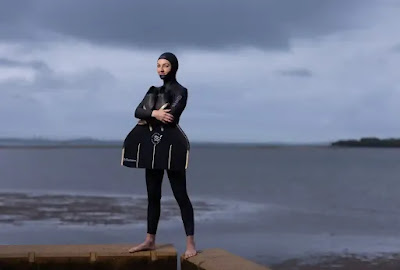
Amber Bourke, who says she got hooked on free diving and wanted to see ‘how deep I could go’, is now the Australian women’s pool and free diving champion. Photograph: David Kelly/The Guardian


Bourke had been a champion synchronised swimmer when she was a teenager, so already knew she could hold her breath for several minutes at a time. But discovering free diving “just opened my eyes to the possibilities … and I just got hooked on a feeling of diving deeper and wanted to see what I was capable of and how deep I could go.”


By 2018, Bourke had established herself as one of the best competitive free divers in the world, and in deep waters off the coast of the Philippines, was ready to attempt to break the women’s world record in the discipline of “constant weight no fins”.


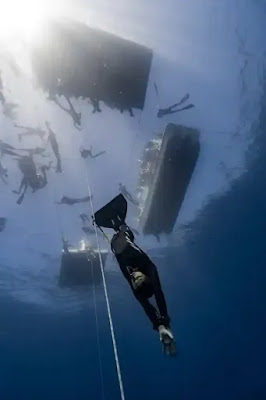
Considered one of the most challenging forms of the sport, a diver descends vertically in deep water on a single breath, using only muscle strength to propel them downwards. With every metre of descent, the compressive pressure on the body increases, shrinking the spaces that contain air. By 30 metres down – the maximum depth physiologists in the early days of the sport thought humans were capable of reaching – the pressure exerted on the body is four times greater than on the surface and the volume of air inside the body has shrunk to one quarter. Once negative buoyancy is reached, the diver begins to freefall.


Even at 70 metres down, Bourke says she can still ‘bring in’ more air from her lungs. Photograph: Daan Verhoeven


Bourke reached a depth of 73 metres – a world record – but a split second blackout once she reached the surface disqualified her. “If you stay underwater long enough, there’s always the chance that your oxygen will drop to a level where your brain will decide to shut down in order to protect itself from brain damage,” Bourke says. “So, in a way, it’s a good thing … but frustrating at the end of a long dive.”


The men’s world record for “constant weight no fins” is 102 metres, taking four minutes and 14 seconds. With fins, it is 131 metres. For the discipline of “static apnea”, where a competitor doesn’t dive but just submerges themselves under water, the longest breath-hold is 11 minutes and 54 seconds. When 100% oxygen is breathed in prior to the attempt, the record is 24 minutes and 37 seconds.


Dr Anthony Bain, a vascular physiologist from the University of Windsor in Canada, has researched the physiology of extreme breath-holding – including conducting experiments with elite free divers – and says many of those at the professional level have larger lung volumes than the average person. Studies in native diving populations, for example the Bajau people in south-east Asia, “have also demonstrated larger spleens, which will theoretically allow for longer breath holds via splenic contraction and release of oxygen bound red blood cells”.


Primarily, however, the ability to survive while submerged for a prolonged time is a learned skill. According to Bain, studies suggest that elite free divers have “enhanced” their Mammalian Dive Response. Theorised to be an evolutionary adaptation – a vestige from billions of years ago when all life was aquatic – it’s a reflex that’s triggered when a mammal’s face comes into contact with water. It prompts a number of physiological responses that promote survival, such as the slowing of the heart rate and metabolism, and a redirection of blood to vital organs, including to the lungs to bolster them against pressure.


While Bourke doesn’t know if she has any innate physiological differences – she has never been tested – she knows that over a decade of training she has learned how to better use the space in her lungs. Even at 70 metres down, she can still “bring in” more air from her lungs.


Free diving is gaining popularity as a pastime, with schools popping up along the Australian coastline, but becoming an elite free diver takes patience.


Progression is slow – it often takes years to achieve several extra metres in depth, as the body becomes accustomed to pressure. “When I first dove to 30 metres deep, I really felt a lot of pressure on my body, and especially on my chest, it feels like you’re being crushed,” Bourke says. “But now, diving to 70 meters, I don’t feel that pressure at all.”


‘If you think about how long you’re planning to stay under water and how deep you’re planning to dive, then it’s easy to get overwhelmed and to panic,’ Bourke says. Photograph: David Kelly/The Guardian


The major adaptation though is psychological: developing a conscious ability to withstand the urge to breathe. 


According to Bain, an untrained person starts to undergo “involuntary breathing movements” after no longer than two to three minutes underwater, when the “body has barely desaturated with oxygen”. Elite free divers, however, are able to mentally push through this point, holding their breath until they “majorly desaturate their blood of oxygen”.


Among free diving instructors, like Clinton Laurence from the Gold Coast, who is also a clinical psychologist, psychological strategies such as mindfulness are key to training. “That is where you observe the thought, ‘I have to breathe’,” he says. “But you just observe it. ‘Yep, there’s that thought again. That’s OK.’ And you just keep going.”


Bourke says she enters a “meditative state” by slowing her breathing before she enters the water. Then, “it’s about maintaining that relaxed state, and for me, that’s really about staying in the moment and not thinking too far into the future, because if you think about how long you’re planning to stay under water and how deep you’re planning to dive, then it’s easy to get overwhelmed and to panic.”


While the pandemic has stalled most international competitions, Bourke is still training – she does long sessions swimming underwater in the pool around four times a week, plus working out in the gym – alongside her work as an electrician and a free-diving instructor. Once competition resumes, she’ll be back pursuing world records.


“When I first started, I was like, ‘I didn’t even know this was humanly possible’, but it’s just amazing what humans can do.”


(Source: The Guardian)

Friday, 2 April 2021

Sperm whales taught each other how to fend off whaling ships in the 19th century, scientists find

 A scientist from Nova Scotia and his team discovered that sperm whales shared information across the ocean on how to run away — and even fight back — against hunters

In the 18th and 19th centuries, industrial whale hunters in the North Pacific Ocean were having a field day hunting sperm whales. Riding rowboats and brandishing hand-thrown harpoons, the whalers would hunt large gatherings of whales for their oil. The business was booming.


But, according to old fishing logs, their hunts became less and less fruitful, until their yield was reduced by more than half in the span of two years.


Sperm whaling in the North Pacific from the ship Canton on the Japan Grounds in the North Pacific. Four whaling boats harpooned six whales. Three of those whales were killed (exhaling reddish blows) and the other three were lost when the harpoons pulled free or broke. One whaling boat, shown in the lower left, was destroyed. PHOTO BY INK AND WATERCOLOUR BY OLIVER


Now researchers say that the whales had actually learned how to avoid the whalers — and shared this information across the ocean.


Their paper published on March 17 in The Royal Society says that sperm whales shared tips among each other on how to prevent — and even fight back — against whalers in the 19th-century North Pacific, and reduced successful whale killings by 58 percent.


Hal Whitehead, one of the paper’s co-authors and a biology professor at Dalhousie University in Nova Scotia, has been studying whales — primarily sperm whales — and analyzing their behaviours and social systems for almost 40 years. His interest in this study began with the release of a trove of recently digitized documents; thousands of captains’ logs and fishing logs, providing extremely detailed accounts of whaling expeditions around the world.


Most historians focused on the history of the whalers themselves, but Whitehead said what piqued his interest was their descriptions of the whales’ behaviours. Sometime in the 19th century, whalers began complaining that they were catching significantly fewer whales.


Initially, Whitehead said, it was hard to find the culprit, as most of the first whaling expeditions didn’t keep detailed logs.


Sperm whales in the 19th century and beyond have shared information in a form of “culture”, researchers say.


“We don’t have good data sets to do this. The problem is, when we as humans start exploiting anything, we don’t tend to keep very good records of it,” Whitehead said. “This makes it hard to figure out the potential for animals reacting to this, because we don’t have good records.”


So his team, which included U.K. biologist Luke Rendell and data scientist Tim Smith, decided to pay close attention to American whaling expeditions in the North Pacific Ocean in the 19th century. Whitehead said, as one of the more recent areas that whalers began to hunt in, it was a region where the expedition logs were more complete, and at that time it was exclusively the domain of American whalers.


Before hunters encroached on their territory, the only predator sperm whales — who often weigh more than 40,000 kilos — had to fear were killer whales.


“These were the Texaco of this era, these guys killing sperm whales, getting the oil, selling the oil and making huge amounts of money,” Whitehead said.


According to the study, Smith compiled a dataset of 77,749 voyage days, which included 2,405 days where whalers spotted sperm whales.


When they discovered that there was a 58 percent drop in successful sperm whale hunts in an extremely small window of just over two years, Whitehead said he was “pretty well blown apart by that.”


“That was very remarkable,” he said. “I thought there might be a drop, but not that much and not that quickly. Usually, you expect it to increase as they figure out stuff and become more successful. That’s typically how our exploitation of wildlife goes. We become more efficient as we learn how to do it.”


Before hunters encroached on their territory, the only predator sperm whales — who often weigh more than 40,000 kilos — had to fear were killer whales. Typically, sperm whales defend themselves against killer whales by forming a large circle, with their young in the middle, and fight back with either their jaws or tails.


It works pretty well, Whitehead said, but has the opposite effect when confronted with humans.


“This is what they did to their previous enemy,” Whitehead said. “So they now have this new enemy, and this is almost the very worst thing you should do when faced with Captain Ahab. To form a tight group, slow-moving, just sitting there, it’s a wonderful target for someone throwing a harpoon.”


At first, whalers were extremely successful at catching and killing sperm whales. But there soon was a shift — instead of gathering in a circle when hunters arrived, the whales would quickly swim upwind, where the weak rowboats couldn’t follow. Some even attacked the fragile boats instead.


The sperm whales were communicating, the study finds, sharing their findings when new strategies helped fight off their attackers, and soon whales across the entire North Pacific were doing it.


Whitehead said the behaviours of the sperm whales in that area are indicative of their sharing of culture, which he defines as what information a creature passes on to those around them, and which potentially is passed on through generations.


“This pattern is more like agriculture, a new idea which develops and becomes really important,” Whitehead said. “I’m really interested in this diversity of culture in the whales, and this is a wonderful example of it.”


But despite the sudden shift in sperm whale safety in the 19th century, Whitehead said that more advanced whaling technologies — more powerful boats, explosive harpoon guns — eventually became too much for sperm whales to fight, though he said that they tried.


“Of course, none of it works,” he said. “The modern whalers are totally lethal. The whales cannot get away.”


Whitehead said he’s still seeing ways in which communities of sperm whales are sharing their culture to others, including learning how to safely harvest food from fishing lines, and is hopeful they’ll continue to adapt to their rapidly changing environment.


“We’re still affecting the ocean,” he said. “Whether they’re learning about those things and how to deal with them, we don’t know. But hopefully they are.“


(Source: National Post)

Thursday, 30 July 2020

Single-use masks and coronavirus waste end up polluting ocean

Environmentalists have warned that a global increase in use of single-use masks, latex gloves and other protective gear employed against the novel coronavirus could exacerbate marine pollution.

OceansAsia, a grassroots environmental organization based in Hong Kong, reported earlier in the month that disposable masks were found floating underwater and on seabeds, caught among ghost nets and other debris.

“A single face mask could take hundreds of years to break down into microplastic, the kind of microplastic is now being found in fish destined for human consumption, sea salt and even sea spray,” the organization said, recommending that people switch to reusable masks where possible.

Japanese coasts and waters have also witnessed an apparent increase in the number of disposable masks recently, said Masahiro Takemoto, a professional diver and environmentalist.
People walk in a street in Tokyo on Monday. According to environmentalists, Japanese coasts and waters have witnessed an apparent increase in the number of disposable masks recently. | AFP-JIJI

On the other side of the world, medical waste has been adding to the glut of pollution washing up on the shores of Turkey and Europe.

“Knowing that more than 2 billion disposable masks have been ordered (in France), soon there may be more masks than jellyfish in Mediterranean waters,” Laurent Lombard of Operation Mer Propre, a French environmental group, said in a Facebook post dated May 23.

Calling for citizens and governments to take action to protect the environment, the group, whose activities include cleaning up the Cote d’Azur, warned, “It’s only the beginning and if nothing changes it will become a real ecological disaster.”

While the economic slowdown brought by the virus pandemic has reduced carbon emissions, fishing and offshore oil drilling, and paused coastal development projects, such effects are only for the short-term, according to the U.N. Development Program and other organizations.

The temporary reprieve will not lead to a reduction in the concentration of carbon dioxide in the Earth’s atmosphere, and is not sufficient for depleted marine life to recover from overfishing, experts said.

In fact, poaching in Africa and Asia is said to be on the rise as patrol boats and other surveillance have been unable to make their rounds during the pandemic.

Nirmal Shah, director of Nature Seychelles, an environmental organization based in the Western Indian Ocean country, referred to a dire situation in Africa in a webinar in June.

With Seychelles’ marine sanctuary largely funded by tourism — practically nonexistent in the coronavirus crisis — many guides have been left without an income and have turned to fishing, leading to an increase in poaching, he said.

U.N. Secretary General Antonio Guterres has stressed the need for countries to work together to ensure the conservation and sustainability of the oceans.

“As we work to end the pandemic and build back better, we have a once-in-a-generation opportunity — and responsibility — to correct our relationship with the natural world, including the world’s seas and oceans,” Guterres said in a video message marking World Oceans Day on June 8.

(Source: JT)

Sunday, 24 May 2020

My lighthouses

Certain landlocked cities have lighthouses. On such rivers as the Rhine, the Seine, and the Saint Lawrence, lighthouses gave warning of dangerous areas. In London, the Trinity Buoy Wharf light is still in existence. This hexagonal, pale-brown brick structure is located in an area known as Container City. I remember my father telling me about these buildings when I was a child. To my ears, accustomed to the Spanish language, the word container, which I never completely understood, sounded warlike; I imagined gigantic metal constructions, improbably conical or spherical in shape. It never occurred to me that they would be like shoeboxes.

When I visited that shoebox city, the shipping containers, adapted to function as housing, reminded me of the futuristic cities of nineties movies and TV series. The lighthouse on the wharf looked out of place among the container architecture, yet, like all of its kind, it was experimental in origin. For a time the building was used to train lighthouse keepers, and later to trial the lanterns and lenses that would then be transferred to other lights. It was there that the scientist (and bookbinder) Michael Faraday worked on the fixtures for the South Foreland lighthouse in Kent. A tiny museum at the foot of the lighthouse offers a display of Faraday’s instruments and personal effects.

Today the Trinity Buoy Wharf light has no lantern. It doesn’t illume, but it can be heard because it now has a bell.
C LEVÃ…, MARINMOTIV, OIL. COLLECTION OF THE MARITIME MUSEUM IN STOCKHOLM. PUBLIC DOMAIN, VIA WIKIMEDIA COMMONS.

The lanterns of lighthouses are the bells of churches. As with light, sound waves can also announce and convene. And in this lighthouse there’s a bell that chimes ceaselessly. A bell that will sound for a millennium. It’s made up of many other bells that chime according to an algorithm designed by Jem Finer. Apparently one day, in almost a thousand years’ time, the music of the bells will come into a harmonic alignment, in a process that can be likened to the planets moving into alignment in the heavens.

*

On the Manhattan shore of the Hudson, there is also one remaining lighthouse: Jeffrey’s Hook, better known as the Little Red Lighthouse.

The city seems to peter out. The blocks of buildings disappear at a highway crossed by a footbridge, from which the only view is cars, trees, and the river. At the far end of the footbridge is a park that I visited with Lorena when we were together in New York for two weeks: my first since moving there, her last before returning to Mexico City. We shared her apartment in Washington Heights during the apex of the summer heat. I can’t remember how we first met. It’s as if she was always there with her delicate hands and hair that is in fact chestnut, but in my mind is red. It was the dog days, a time for goodbyes, even the summer sun was saying its farewell to New York. We were walking along a winding path of tunnels and drawbridges over the rail tracks, with a view of the George Washington Bridge, which crosses from Manhattan to New Jersey. The gray of its soldered-metal engineering stood out against the undergrowth in the park. The path was descending toward the river. From the shoreline, beyond rocks jutting through the surface of the water between scraps of sunlight, the south tip of Manhattan was visible. Below the great bridge was a small red lighthouse. A lighthouse at the end of the island, at the end of the river, which Antonio Muñoz Molina calls “the lighthouse at the end of the Hudson.”

I have no memory of how I knew of the existence of this building: I woke up one day recalling that there was a lighthouse under the George Washington Bridge, with no idea of who had told me, or if I’d read about it somewhere. I had to find it. 

Lorena hadn’t originally planned to accompany me; she was leaving the following day for Mexico, and was glad to be returning home, leaving behind the hard loneliness that life in this city can be. But we were only one stop away. We wondered how there could be a lighthouse so close to the bustle and reggaetón of Washington Heights, so close to the subway, the banks, and the accountants. I was already feeling fond of the neighborhood, with its custom of filling the Sunday sidewalks with chairs, chat, and dominos; the sopa de siete potencia (misspelling intentional) and the twenty-four-hour fruit stands, where other substances were probably also for sale.

The Hudson here is not in fact a river, but an arm of the ocean. It has been a fishing ground since the times when the Weckquaesgeek tribe inhabited its shores, and there used to be ships that sailed from Albany to the city or on to the Atlantic. Shipwrecks were so common on this stretch of water that a red pole had to be erected to signal the danger. And red was also the color of the lighthouse, constructed in 1880; a small structure, today almost invisible beneath the bridge. Its size, color, and green tip give it the appearance of a toy.

At the last minute, Lorena decided to come with me. We’d expected to find an abandoned building, a lighthouse vanquished by the bridge and highway, a ridiculous anachronism. Instead, the smallest lighthouse in the world (or at least that is how it seemed to me then) retains enormous dignity despite being dwarfed by the bridge. It felt much more on our scale, belonging to our universe.

Around 1942, the author Hildegarde Swift watched the bridge being erected over Jeffrey’s Hook, and wrote The Little Red Lighthouse and the Great Gray Bridge, an illustrated children’s book whose main character is the lighthouse, saddened and oppressed by the construction. At the end of the story, readers discover that the bridge is its metal brother, and that the lighthouse gets to continue to fulfill its function of safeguarding boats.

When the authorities decided to sell the lighthouse, many of the children who had read The Little Red Lighthouse and the Great Gray Bridge protested. They started petitions and even offered to collect money to buy it, to the point where the auction was cancelled. The property was transferred to the Parks Department in 1951 and the lighthouse fell into disuse. 

The lantern was not switched on again until 1979, when the building was placed on the National Register of Historic Places and restoration was undertaken. In 2002, the sixtieth anniversary of the publication of Hildegarde Swift’s book was celebrated by, for pure nostalgia, presenting the lighthouse with a new lens so that it could continue to illuminate the night. It was saved, not for its utility or even historical value, but for the symbolic and literary meanings it embodied. People refused to allow life to be so prosaic, were determined that reality should imitate fiction.

Weeks afterward I returned to the lighthouse, this time without Lorena (missing her, envious that she was back home). It was the one day of the month when the building is opened to allow girls and boys to climb to the observation deck. There it stood, demonstrating to those children that it is still indispensable, and gets along splendidly with modernity.

*

Other metropolises that are far from the sea, and whose rivers have dried up or been channeled underground, have their own kinds of lighthouses. Mexico City’s Torre Latinoamericana, for example, used to function as a lighthouse on the high seas for the citizens who had lost their way in the urban tides. In those days there was only one skyscraper on the labyrinthine streets of the city, a single tower from which Mexico City seemed to stretch out forever, like an ocean; just as from the Eiffel Tower, Paris can be viewed from one end to the other.

The Eiffel Tower is still the only lighthouse in Paris. No one would dare to move a stone of that city without first seeking authorization (authorization they should not be given). By contrast, buildings in Mexico City are demolished and others spring up by the minute, each one taller than the last. They compete among themselves as trees in the rainforest compete for sunlight. During my own lifetime the Hotel de México in the Colonia Nápoles, succeeded the Torre Latinoamericana as the point of reference in the distance. Whenever I was lost, I only had to see it to be sure of which direction to take. But new skyscrapers appear every day now, taller than the Hotel de México, blocking my view.
In Manhattan there are so many skyscrapers that none functions as a lighthouse. The whole stretch of land is so densely populated with tall metal structures that, at street level, their summits are invisible. For the Manhattan pedestrian, the lighthouse is perhaps more down to earth: Central Park, that enormous oasis, the meeting place from which one can set out in a new direction, is the point of orientation on the island.

The most beautiful pseudo-lighthouse I know of in a city is the eleventh-century Carfax Tower in the heart of Oxford. Its four faces are all that remain of St. Martin’s Church. On the front of the building is a clock, with male figures announcing the quarter hours. The name of the tower comes from the French carrefour, meaning crossroads. It’s said that for many years the place offered shelter and a point of reference to travelers, and it is still the building that every tour guide in the city recommends visiting. Planning regulations forbid building higher than the Carfax in that area of Oxford, and its summit offers a view of the whole of the city, its sea of spires and rooftops.

*

Lightships, or lightvessels, as they are sometimes called, deserve a fragment of their own here. The masts of certain Roman ships were hung with iron baskets in which fires burned throughout the night. Lightships were located in very deep or dangerous waters, where it was impossible to erect a stone structure. They also acted as stand-ins for coastal lighthouses under repair, in which case they carried a huge sign saying RELIEF.

The greatest difficulty was in maintaining the stability of those vessels in tempestuous waters. It was Stevenson’s grandfather who invented the most popular means of achieving this: the mushroom anchor. The vessel on which Sir Walter Scott and Robert Stevenson traveled, the Pharos, was the first lightship in England.

In the 1930s, the earliest automatic lightships came into service; decades later solar power began to be used to recharge their batteries. With no crew and no keepers, they were ghost ships. Ignis fatui, fatuous lights, like the will-o’-the-wisps said to sometimes float on lakes or over the sea. Phantom, fiery, foolish Pharos vessels.

*

The lighthouse is always different, depending on the time and the position from which it’s viewed. There is the lighthouse in the distance, a diminutive life preserver. The lighthouse close at hand, where its size is imposing, revealing its origins as a temple, a tower, and a house of illumination. The lighthouse at different times of day: In the mornings, we see it surrounded by seagulls; at midday the sun dots it like an i, but in the evening, as the sun declines, they separate in a form of ritual farewell. At night, the lighthouse is a second, terrestrial moon. There is the lighthouse standing calmly beside the sea, and the lighthouse in a storm, a titan that resists and, in the words of Michelet, returns “fire with fire to the lightning bolts of the heavens.” And, finally, there is the lighthouse swathed in mist.

*

The world is a cornucopia of objects for the lover of lighthouses: plastic and metal models, prints and postcards. In Mexico City, there are also bakeries and hardware stores called El Faro, and Faros is a brand of cigarettes (prisoners condemned to death had the right to smoke one before facing the firing squad, from which comes the expression ya chupó faros, which literally translates as “he’s had his last drag of the lighthouse”). There are lantern stores in Chinatown and stands at son et lumière events that go by the name of Lighthouse, an interview show called The Pharos of Alexandria, lighthouse magnifying glasses, an art book entitled Your Lighthouse, a Christian sect in Los Angeles called the Lighthouse Church, and it’s the main element of a John Maus album cover. Its image and form attract us the way its light attracts ships.

*

Lying on the beach, Leopold Bloom remembers Grace Darling, the lady of the islands, the girl with her hair flying in the wind. In 1838, Grace was a young woman living with her parents in a lighthouse on the Farne Islands. One day a storm blew up, lasting longer than any other before it. Standing at the highest window with her spyglass, Grace spotted a ship, the Forfarshire, which the waves had thrown onto the rocks, splitting it in two. A number of survivors were huddled together, clinging to the wreckage, begging for help. The legend goes that Grace managed to convince her father that they must set out together to rescue the shipwrecked sailors. At the height of the storm, they rowed to the wreck and, while her father helped the survivors aboard, she kept the boat steady. They “tossed on the waves,” says Wordsworth in a poem he wrote in honor of Grace Darling, “to bring Hope to the hopeless, to the dying, life.”

—Translated from the Spanish by Christina MacSweeney

Jazmina Barrera was born in Mexico City in 1988. She was a fellow at the Foundation for Mexican Letters. Her book of essays Cuerpo extraño (Foreign Body) was awarded the Latin American Voices prize from Literal Publishing in 2013. She has published her work in Nexos, Este País, Dossier, Vice, and more. She is the editor and cofounder of Ediciones Antílope. She lives in Mexico City.

Christina MacSweeney received the 2016 Valle Inclan prize for her translation of Valeria Luiselli’s The Story of My Teeth, and Among Strange Victims (Daniel Saldaña París) was a finalist in the 2017 Best Translated Book Award. Among the other authors she has translated are Elvira Navarro (A Working Woman), Verónica Gerber Bicecci (Empty Set; Migrant Words), and Julián Herbert (Tomb Song; The House of the Pain of Others). She is currently working on a second novel by Daniel Saldaña París, and her translations of short story collections by Elvira Navarro and Julián Herbert will be published in 2020.

“Jeffrey’s Hook” from On Lighthouses, by Jazmina Barrera, translated from Spanish by Christina MacSweeney. Published by Two Lines Press in May 2020, all rights reserved.
(Source: The Paris Review)

Sunday, 17 November 2019

Blue spaces: why time spent near water is the secret of happiness

Coastal environments have been shown to improve our health, body and mind. So should doctors start issuing nature-based prescriptions?

After her mother’s sudden death, Catherine Kelly felt the call of the sea. She was in her 20s and had been working as a geographer in London away from her native Ireland. She spent a year in Dublin with her family, then accepted an academic position on the west coast, near Westport in County Mayo. “I thought: ‘I need to go and get my head cleared in this place, to be blown away by the wind and nature.’”

Kelly bought a little house in a remote area and surfed, swam and walked a three-mile-long beach twice a day. “I guess the five or six years that I spent there on the wild Atlantic coast just healed me, really.”

She didn’t understand why that might be until some years later, when she started to see scientific literature that proved what she had long felt intuitively to be true: that she felt much better by the sea. For the past eight years, Kelly has been based in Brighton, researching “outdoor wellbeing” and the therapeutic effects of nature – particularly of water.

In recent years, stressed-out urbanites have been seeking refuge in green spaces, for which the proven positive impacts on physical and mental health are often cited in arguments for more inner-city parks and accessible woodlands. The benefits of “blue space” – the sea and coastline, but also rivers, lakes, canals, waterfalls, even fountains – are less well publicised, yet the science has been consistent for at least a decade: being by water is good for body and mind.
 ‘People who visit the coast at least twice weekly tend to experience better general and mental health,’ says Dr Lewis Elliott. Composite: Getty Images

Proximity to water – especially the sea – is associated with many positive measures of physical and mental wellbeing, from higher levels of vitamin D to better social relations. “Many of the processes are exactly the same as with green space – with some added benefits,” says Dr Mathew White, a senior lecturer at the University of Exeter and an environmental psychologist with BlueHealth, a programme researching the health and wellbeing benefits of blue space across 18 (mostly European) countries.

An extensive 2013 study on happiness in natural environments – to White’s mind, “one of the best ever” – prompted 20,000 smartphone users to record their sense of wellbeing and their immediate environment at random intervals. Marine and coastal margins were found by some distance to be the happiest locations, with responses approximately six points higher than in a continuous urban environment. The researchers equated it to “the difference between attending an exhibition and doing housework”.

Although living within 1km (0.6 miles) of the coast – and to a lesser extent, within 5km (3.1 miles) – has been associated with better general and mental health, it seems to be the propensity to visit that is key. “We find people who visit the coast, for example, at least twice weekly tend to experience better general and mental health,” says Dr Lewis Elliott, also of the University of Exeter and BlueHealth. “Some of our research suggests around two hours a week is probably beneficial, across many sectors of society.” Even sea views have been associated with better mental health.

White says there are three established pathways by which the presence of water is positively related to health, wellbeing and happiness. First, there are the beneficial environmental factors typical of aquatic environments, such as less polluted air and more sunlight. Second, people who live by water tend to be more physically active – not just with water sports, but walking and cycling.

Third – and this is where blue space seems to have an edge over other natural environments – water has a psychologically restorative effect. White says spending time in and around aquatic environments has consistently been shown to lead to significantly higher benefits, in inducing positive mood and reducing negative mood and stress, than green space does.

People of all socioeconomic groups go to the coast to spend quality time with friends and family. Dr Sian Rees, a marine scientist at the University of Plymouth, says the coastline is Britain’s “most socially levelling environment”, whereas forests tend to be accessed by high-income earners. “It’s not seen as being elite or a special place, it’s where we just go and have fun.

“By spending time in these environments, you’re getting what we call ‘health by stealth’ – enjoying the outdoors, interacting with the physical environment – and that also has some different health benefits.”

Even a fountain may do. A 2010 study (of which White was lead author) found that images of built environments containing water were generally rated just as positively as those of only green space; researchers suggested that the associated soundscape and the quality of light on water might be enough to have a restorative effect.

Although participants rated large bodies of water higher than other aquatic environments (and “swampy areas” were rated significantly less positively), the study suggested that any water is better than none – presenting opportunities for beneficial blue space to be designed or retrofitted. “You can’t change where the coast is, but when we’re talking about translating the benefits to other types of environments, there is nothing to stop a well-designed urban fountain,” says Elliott.

“People work with what they have,” says Kelly. When she lived in London, she would head for the Thames when she had a spare 10 minutes “and recalibrate”. Then, four times a year, she would go to Brighton “and the benefits would keep me going for the next few months – so I didn’t get into a place of being overwhelmed or stressed, just keeping myself topped up”.

The coast does seem to be especially effective, however. White suggests this is due to the ebb and flow of the tides. He points out that rumination – focusing on negative thoughts about one’s distress – is an established factor in depression. “What we find is that spending time walking on the beach, there’s a transition towards thinking outwards towards the environment, thinking about those patterns – putting your life in perspective, if you like.”

 To go to the sea is synonymous with letting go. Photograph: James Galpin/Getty Images
When you are sailing, surfing or swimming, says White, “you’re really in tune with natural forces there – you have to understand the motion of the wind, the movement of the water”. By being forced to concentrate on the qualities of the environment, we access a cognitive state honed over millennia. “We’re kind of getting back in touch with our historical heritage, cognitively.” Water is, quite literally, immersive.

As well as an academic, Kelly is a wellness practitioner who teaches classes in “mindfulness by the sea”. She says the sea has a meditative quality – whether it is crashing or still, or you are in the water or observing from the shore. “You can immerse yourself in it, which you can’t really do with a green space. You’re present in that moment, you’re looking at something with intention, and whether that’s for two minutes or half an hour, it gives you the benefits in that moment.”

In the future, she believes time in blue space will be a mainstream, formalised response. “The mental health crisis isn’t going anywhere,” she says.

Rees says support for the idea of “blue” or “green” prescriptions for individuals is growing. A “surfing for mental health” group in north Devon is one example she gives of how “nature-based interventions” can work.

By working to characterise and quantify benefits, BlueHealth’s cross-disciplinary team hopes to establish how “blue infrastructure” – the coast, rivers, inland lakes – can help tackle major public health challenges such as obesity, physical inactivity and mental health disorders. A 2016 paper – which White co-authored – put the monetary value of the health benefit of engaging with the marine environment at £176m.

Harnessing the power of blue space could also potentially help to alleviate inequality. “One of our recent papers finds that the benefits of coastal living are strongest for people living in the poorest areas,” says Elliott. For that reason, it is crucial to ensure everyone has access. With proximity to water associated with at least a 10% premium in house prices, White is concerned by the exclusivity of seaside urban development. “What will happen is you’ll get this kind of gentrification, where the people who benefit most will get squeezed inland.”

Access provisions under the revised Marine and Coastal Access Act, which is due to be completed next year, will help, says White. But seaside communities are particularly vulnerable, imminently from seasonal fluctuations in income and environmental degradation, and, in the longer term, sea level rise and extreme weather due to climate change.

Rees says that the benefits of marine environments for our wellbeing are tied to the health of those environments, and that conservation efforts need to factor in the “natural capital” of blue space in supporting our wellbeing. Kelly’s work has found a link between a sense of personal connection to the sea and environmentally friendly behaviours; researchers hope that we may be more inclined to protect blue space if the health benefits are proven.

“To go to the sea is synonymous with letting go,” says Kelly. “It could be lying on a beach or somebody handing you a cocktail. For somebody else, it could be a wild, empty coast. But there is this really human sense of: ‘Oh, look, there’s the sea’ – and the shoulders drop.”

(Source: The Guardian)

Tuesday, 27 August 2019

Massive pumice 'raft' spotted in the Pacific could help replenish Great Barrier Reef

The 150 sq km field of floating rock was created by an underwater volcanic eruption near Tonga

A giant raft of pumice, which was spotted in the Pacific and is expected to make its way towards Australia, could help the recovery of the Great Barrier Reef from its bleaching episode by restocking millions of tiny marine organisms, including coral.

The pumice raft, which is about 150 sq km, was produced by an underwater volcano near Tonga. It was first reported by Australian couple Michael Hoult and Larissa Brill, who were sailing a catamaran to Fiji, on 16 August.
 A pumice raft in the southwest Pacific in 2012. Researchers say pumice can carry marine life, including coral across the ocean helping to replenish reef Photograph: Erika Fish/QUT/AAP

“We entered a total rock rubble slick made up of pumice stones from marble to basketball size,” the couple said in a Facebook post.

“The waves were knocked back to almost calm and the boat was slowed to 1 knot. The rubble slick went as far as we could see in the moonlight and with our spotlight.”

The yacht’s steering became temporarily jammed by rocks between rudders and hull, but they managed to clear it and warn other vessels in the area.

Since then, the pair have been working with Queensland University of Technology geologist Scott Bryan by providing pictures and samples of the volcanic rock.

Bryan said the raft will be the temporary home for billions of marine organisms. Marine life including barnacles, corals, crabs, snails and worms will tag along as it travels toward Australia and become a “potential mechanism for restocking the Great Barrier Reef”.

“Based on past pumice raft events we have studied over the last 20 years, it’s going to bring new healthy corals and other reef dwellers to the Great Barrier Reef,” Bryan said.
I think Liss is enjoying the Science side of this... We have been contacted by a couple of Earth Science and Geology Professors from a couple of universities who study Volcanic and Pumice events looking for more details, photos and samples of the Pumice ROAM collected the other night. Liss is on the job of specimen photography this morning and taking it very seriously

Pumice forms when frothy molten rock cools rapidly and forms a lightweight bubble-rich rock that can float. The pumice raft comes from an unnamed but only recently discovered underwater volcano that satellite images reveal erupted about 7 August.

It should begin to hit Australian shores in about seven months’ time, passing by New Caledonia, Vanuatu and reefs in the eastern Coral Sea along the way as coral begins to spawn.

“It’s the right timing. So it will be able to pick up corals and other reef building organisms, and then bring them into the Great Barrier Reef,” Bryan said.

“Each piece of pumice is a rafting vehicle. It’s a home and a vehicle for marine organisms to attach and hitch a ride across the deep ocean to get to Australia.”

(Source: The Guardian)

Saturday, 20 April 2019

Unique ‘oil-eating’ bacteria discovered in world’s deepest ocean trench

Mariana Trench believed to be home to greatest concentration of hydrocarbon consuming bacteria of anywhere on Earth

At the bottom of the Mariana Trench, the deepest part of the Earth’s oceans, scientists have discovered unique oil-eating bacteria.

Similar kinds of bacteria have previously been found and even used to help deal with oil spills, such as that from the Deepwater Horizon disaster in 2010, but the new research reveals the Mariana Trench is home to the greatest concentration of these life forms anywhere in the world.

The 2,550km (1,585 mile) long ocean trench is located in the western Pacific Ocean and reaches a maximum depth of about 11,000 metres. By comparison, Mount Everest is 8,848 metres high.

As a result, voyaging to the bottom of the trench is hazardous and expensive, and only a few expeditions have investigated the organisms inhabiting this ecosystem.

One expedition was organised and led by the film director and avid underwater researcher James Cameron, who built a specialised submersible to collect samples from the trench.

“We know more about Mars than the deepest part of the ocean,” said Prof Xiao-Hua Zhang of the Ocean University in China, who led the new study.


Dr Jonathan Todd, from the University of East Anglia's School of Biological Sciences, said: “Our research team went down to collect samples of the microbial population at the deepest part of the Mariana Trench – some 11,000 metres down. We studied the samples that were brought back and identified a new group of hydrocarbon degrading bacteria.

“Hydrocarbons are organic compounds that are made of only hydrogen and carbon atoms, and they are found in many places, including crude oil and natural gas.”

He explained the bacteria “essentially eat compounds similar to those in oil and then use it for fuel. Similar microorganisms play a role in degrading oil spills in natural disasters such as BP’s 2010 oil spill in the Gulf of Mexico.”

“We also found that this bacteria is really abundant at the bottom of the Mariana Trench.”

In order to understand the source of the hydrocarbons ‘feeding’ this bacteria, the team analysed samples of sea water taken at the surface, and all the way down the water column to the sediment at the bottom of the trench.

Dr Nikolai Pedentchouk, from the UEA’s School of Environmental Sciences, said: “We found that hydrocarbons exist as deep as 6,000 meters below the surface of the ocean and probably even deeper. A significant proportion of them probably derived from ocean surface pollution.

“To our surprise, we also identified biologically produced hydrocarbons in the ocean sediment at the bottom of the trench. This suggests that a unique microbial population is producing hydrocarbons in this environment.”

“These hydrocarbons, similar to the compounds that constitute diesel fuel, have been found in algae at the ocean surface but never in microbes at these depths.”

Dr David Lea-Smith, from UEA’s School of Biological Sciences, added: “These hydrocarbons may help microbes survive the crushing pressure at the bottom of the Mariana Trench, which is equal to 1,091 kilograms pressed against a fingernail.

“They may also be acting as a food source for other microbes, which may also consume any pollutant hydrocarbons that happen to sink to the ocean floor. But more research is needed to fully understand this unique environment.”


In 2017 it was reported a similar naturally occurring underwater bacteria had “eaten” a considerable proportion of the oil that spilled out of the Deepwater Horizon drilling platform.

Recovery teams poured millions of barrels of chemicals into the ocean to disperse the oil and force it to much deeper parts of the ocean, where it is believed to have been consumed by the microbes.

It is not yet clear if the newly discovered bacteria could also help clean up pollution from oil spills.


The research is published in the journal Microbiome.

(Source: Independent)

Saturday, 2 June 2018

Japanese hunters kill 120 pregnant minke whales

More than 120 pregnant whales were killed during Japan's annual hunt last summer, a report has revealed, prompting outrage among conservationists.

Figures show that 128 of the 333 minke whales caught during the 12-week expedition in the Southern Ocean were female. 122 of them were pregnant.

The figures were published in a technical report submitted to the International Whaling Commission and prepared by representatives of the Institute of Cetacean Research, an agency linked to Japan's fisheries ministry.

A minke whale is suspended above a hunting vessel in Kushiro, Hokkaido, in northern Japan, September, 2013.
Conservationists greeted the report's findings with fury, calling the statistics "shocking" and condemning the slaughter as "abhorrent."

"It is further demonstration, if needed, of the truly gruesome and unnecessary nature of whaling operations, especially when non-lethal surveys have been shown to be sufficient for scientific needs," Alexia Wellbelove, Senior Program Manager at Humane Society International, said in a statement.

Japan has previously justified its whaling on an exemption in international law which allows the animals to be killed for scientific purposes, but Australia won a 2014 case at the International Court of Justice which ruled against the Japanese program in the Southern Ocean.


After the ruling however, Japan announced new research program, under which it would kill up to 333 Antarctic minke whales each year. The country's fisheries ministry said the program is necessary to study the best methods of managing minke populations.

"The continued killing of any whales is abhorrent to modern society, but these new figures make it even more shocking. We look forward to Australia and other pro-conservation countries sending the strongest possible message to Japan that it should stop its lethal whaling programs," said Wellbelove.

(Source: CNN)

Wednesday, 23 May 2018

Are octopuses aliens from outer space that were brought to Earth by meteors?

Octopuses are aliens. That’s the claim being made by a team of 33 researchers published in a peer-reviewed scientific journal.

They are not referring to aliens in a metaphorical sense, but literal aliens from outer space.

Since the paper was released on Sunday, a trickle of news coverage has turned into a torrent, with increasingly alarming headlines about octopuses and their extra-terrestrial origins.

It will not come as a surprise to many to learn that these claims have been roundly mocked by the scientific community, who have branded the paper – published in Progress in Biophysics and Molecular Biology – as ridiculous and unscientific.


What are the claims being made?
They suggest the Cambrian explosion, a sudden burst of life that occurred around 540 million years ago, was the result of extra-terrestrial intervention.

The paper asks whether this event, which saw the rapid emergence of most of the main animal groups that still exist on Earth today, was “terrestrial or cosmic”. Their conclusion is the latter.

How do the scientists suggest this would work?
Specifically, the researchers propose the idea that alien viruses crashed to Earth in a meteor, infected a population of primitive squid and caused them to evolve into octopuses.

Another theory they suggest is that fertilised squid or octopus eggs were delivered to Earth by a meteor.
The idea is essentially a reimagining of the “panspermia” hypothesis, which suggests that life on Earth was “seeded” by space dust or asteroids crashing into Earth. One of its first proponents, Chandra Wickramasinghe, is one of the authors of the new paper.

Why do the researchers look at the octopus in particular?
Octopuses are weird. They are molluscs, meaning they are closely related to snails, and yet they are incredibly intelligent.

On top of their large brains and sophisticated nervous systems, the authors of the new paper list camera-like eyes, flexible bodies and ability to camouflage themselves by changing colour and shape as evidence of their extra-terrestrial origins.

So suddenly did these features appear in the octopus family tree that “it is plausible then to suggest they seem to be borrowed from a far distant ‘future’ in terms of terrestrial evolution, or more realistically from the cosmos at large,” the authors write.

“Such an extraterrestrial origin as an explanation of emergence of course runs counter to the prevailing dominant paradigm,” they continue. This is a strong contender for understatement of the century.

What reason is there to doubt the claims being made in the paper?
There are plenty of reasons. First off, as Mark Carnall from the Oxford University Museum of Natural History pointed out in a series of tweets, not one of the paper’s authors is a zoologist.

Much of the authors’ speculation rests on the idea that the genetics of octopuses and their relatives are mysterious – yet a 2015 paper published in Nature revealed the octopus genome, so this is rather disingenuous.
In fact, octopus genes suggest they fit into the generally understood theory of the evolution of life on Earth, and require no alien invasion. They are thought to have split from the squid lineage around 135 million years ago.

Molecular geneticist Professor Karin Moelling of the Max Planck Institute Molecular Genetics, who was asked to review the report, concluded that it "cannot be taken seriously”.

The primary reason for doubt given by Professor Moelling is that there is “no evidence at all”.

Haven’t I heard something about octopuses being aliens before?
Writers are fond of comparing octopuses to aliens due to their unusual appearance and great intelligence. Philosopher Peter Godfrey-Smith, who has written a book about octopus intelligence titled Other Minds, has described them as “the closest we will come to meeting an intelligent alien”.

On top of that, this is not the first time octopuses have been mistakenly labelled aliens by the press.

An unfortunately worded press release concerning the Nature paper describing the octopus genome led to a slew of online news pieces in 2015 about researchers finding “alien DNA” in these creatures.

(Source: Independent)