Showing posts with label pilot. Show all posts

Thursday, 10 December 2020

Grounded pilots out of practice because of COVID-19 spark airline safety fears

 On Sept. 15, an Indonesian plane carrying 307 passengers and 11 crew to the northern city of Medan momentarily veered off the runway after landing, sparking an investigation by the country’s transport safety regulator. It found the pilot had flown less than three hours in the previous 90 days. The first officer hadn’t flown at all since Feb. 1.

The incident underlines an emerging risk from the coronavirus pandemic: pilots aren’t getting enough opportunity to fly because airlines have grounded planes and scaled back operations due to a slump in demand for air travel.


In its preliminary report, Indonesia’s National Transportation Safety Committee said the pandemic has made it harder to maintain pilot proficiency and flying experience. The Lion Air aircraft involved was an Airbus SE A330, one of 10 in the carrier’s fleet. Because Lion Air doesn’t have a simulator for the A330, its pilots are trained at third-party facilities in Indonesia, Malaysia and Singapore. COVID-19 travel restrictions have made those harder to access.


“Regular flying keeps your mind in the cockpit,” said Mohan Ranganathan, an aviation safety consultant who was an adviser to India’s Directorate General of Civil Aviation. “Being away from flying for such a long time brings in some complacency. Add loss of income, uncertainty about jobs or the future of the airline, that brings in additional stress. With an increase in stress levels, proficiency drops.”


As the pandemic continues to hammer international travel, analytics company Cirium says almost a third of the world’s passenger jets remain in storage. | BLOOMBERG


Analytics company Cirium says almost a third of the world’s passenger jets remain in storage — parked in the center of Australia and the U.S.’s Mojave Desert. While there’s been a recovery in domestic travel in larger markets such as China, international traffic is way off pre-pandemic levels because of border restrictions and mandatory quarantine, a big deterrent to travelers. Thousands of pilots have been laid off or furloughed, and those still in work are flying a lot less because there’s so little demand.


Pilot rustiness was also cited by Europe’s top aviation-safety official as a possible factor in the crash of a Pakistan International Airlines Corp. plane in Karachi in May that killed all but two of the 99 people on board. Nobody was injured in the Lion Air runway incident.


“The pilots did not seem to be as fluent in the way they were conducting their flights as they should have,” European Union Aviation Safety Agency Executive Director Patrick Ky said in September regarding the PIA flight. “If you haven’t flown for three months, six months, you need to be retrained in some way in order to come back.”


That concern is shared by others. At an event in October, Singapore’s central bank chief, Ravi Menon, spoke about the lingering effect COVID-19 will have on the aviation industry and pilots who haven’t flown for long periods. “It’s not like picking up after taking two months off. When you take two years off, it’s very different,” he said.


In its preliminary report on the Lion Air incident, the Indonesian safety authority laid out the pilots’ experience, the approach of the plane, weather conditions and landing. The pilot in command was a 48-year-old Airbus A330 flight instructor with about 17,000 hours flying experience; the 46-year-old first officer, who’d been working as a captain for Thai Lion Air before relocating to Indonesia in March, had a similar amount of flying hours.


On its approach, Flight 208 requested a change of runway due to stormy weather. At about 1,000 feet, the first officer handed control to the pilot. He then noticed that the plane was nearing the left edge of the runway and told the pilot to adjust. The right rudder pedal was applied after touching down but the left main landing gear went off the tarmac, breaking two runway lights.

The report noted that Indonesia’s Directorate General of Civil Aviation issued a circular in May on testing pilot proficiency during the pandemic, with certain exemptions and extensions allowed due to limitations on flying time. However the circular didn’t provide detailed guidelines to airlines on how they should operate under these exemptions.


A Lion Air spokesman didn’t respond to a request for comment.


In a recent interview with Bloomberg Television, the International Air Transport Association’s vice president for Asia Pacific, Conrad Clifford, said the industry group has been looking at creating special travel bubbles so pilots can access simulators to ensure they can remain current. “I’m glad to say that governments are doing something about this,” he said.


Additionally, the International Civil Aviation Organization has called for flight crew to be recognized as key workers so they can use travel bubbles and access training facilities, including simulators so they can maintain certifications, experience and proficiency.


Ian Cheng, senior vice president of flight operations at Scoot, Singapore Airlines Ltd.’s low-cost carrier, said its pilots are being kept engaged with simulator sessions and meetings to update on the latest developments. “Because of the low amount of flying, it’s essential to keep proficiency levels up,” he said.


According to Ranganathan, it will take about a month of regular flying for pilots to get their confidence and skill levels back, along with lots of training.


“When you are not focused, decisions can get delayed,” he said. “Just a few seconds can make a difference between a safe flight or an accident.”


(Source: JT)

Saturday, 22 August 2020

Experience: I landed a plane after the pilot passed out

The flashing lights of emergency vehicles streaming towards the runway made me realise people were preparing for disaster

I hadn’t flown very much in my first two flying lessons. The first few are really just introductions to a plane and cockpit, a run-through of the basics; you’re taken up and brought back down. I hadn’t spent more than 10 minutes in control of an aircraft, and my instructor was sitting next to me, carefully watching my every move.

At 4pm on 31 August 2019, I settled in to the two-seat Cessna 152 for my next lesson; 30 minutes later, we started to make our way back to Jandakot airport, Perth. As we cruised at 3,500ft, I noticed my instructor was staring out the window into the sky above us. I assumed he’d seen something, but there was nothing there.

Then he started to shake. I’d never seen someone have a seizure, but it was clear that was what was happening.

At that moment, thankfully, I was in control of the aircraft. If I hadn’t been, we may have started plummeting before I’d clocked what was going on. Instead, I ensured we were stable and then went into survival mode: we needed to make it down alive. First I decided to phone my wife. I explained what was happening, but then my phone cut out. I can only presume she thought that I’d died.
Max Sylvester: ‘Despite the calmness of the controller, there were moments of panic, made worse when I noticed the blood coming from my incapacitated instructor’s mouth.’ Photograph: David Dare Parker/The Guardian

Once I’d figured out how to work the radio, I contacted air traffic control: “Emergency, emergency, emergency”, and told them who I was. The man at the end of the radio reassured me, confirmed there was no traffic, and that I should divert towards the airport urgently. 

He calmly talked me through every step as I began to fly us back.

For a while I flew the plane in circuits above the airport, familiarising myself with the controls and the sensations different movements bring. Despite the calmness of the controller, there were moments of panic, made worse when I noticed blood coming from my instructor’s mouth. With one hand on the yoke [control wheel], I used my other to keep his head upright: I couldn’t let him choke.

“I hope they don’t think I’m paying for this class,” I found myself saying to the controller, cracking a joke in order to bring back my focus. The severity of the situation began to dawn on me: the flashing lights of emergency service vehicles streaming towards the runway made me realise people were preparing for disaster. By now it was the evening, and soon we’d start losing light.

I was talked through a few practice landings. I’d fly us down towards the runway to get used to the experience, before pulling back to ascend into the air once again. Meanwhile, in a state of confusion, my instructor began to regain consciousness. Oblivious to what was happening, he started to press buttons and touch dials on the radio, refusing to listen to my objections. That was all I needed, I thought.
Only 40 or 50 minutes after my first contact with the control room, the voice in my ear asked if I thought I was ready to try landing. 

Attempt number five would be the one. As we descended, my mind ran wild: one moment I was thinking that landing so early in my flying career would be proof of my abilities. The next I imagined us coming down on a highway, ending up on fire or upside down. Focus, Max, I told myself. Then I heard the wheels hit the ground.

I taxied towards the terminal. The controllers presumed I’d stop on the runway, but this felt easy compared with what had just happened – I wanted to see the journey through to the end. Once at a standstill, though, my legs turned to jelly. It was 6pm by the time the ground team helped me step out.

Words can’t describe how it felt to hug my wife and grab my three children when I made it to where they stood waiting: we’d both been terrified the kids would lose their father – not that my wife let on to them what was going on. My instructor was taken to hospital; it turned out he had a brain tumour. Somehow, I’d managed to save both our lives.

Only a week or two later I was back in the cockpit; I didn’t quit my job in engineering to just give up on my plans to be a pilot. Now I’m making good progress on the 150 hours’ flight time I need to attempt my commercial licence qualification. Some people have said I should have been rewarded with more than an extra 45 minutes of experience added to my timesheet, but frankly, I am just happy to be alive.

(Source: The Guardian)

Monday, 17 June 2019

Pilots reveal safety fears over Boeing’s fleet of Dreamliners

Company admits that fire extinguisher switch has failed a ‘small number’ of times

Airline pilots have voiced fears over the safety of a fleet of Boeing aircraft after a crucial fire-fighting system has been found to have the potential to malfunction.

Boeing has issued an alert to airlines using its flagship B787 Dreamliner, warning that the switch used to extinguish an engine fire has failed in a “small number” of instances. The switch also severs the fuel supply and the hydraulic fluid to prevent flames spreading.

UK airlines Tui, British Airways and Virgin Atlantic operate more than 60 Dreamliners between them. The US regulator, the Federal Aviation Administration (FAA), has decided not to ground the fleet, despite admitting a “risk to the flying public”.

Pilots, however, claim that the safety of passengers and crew is being compromised. “If there was an engine fire on a transatlantic flight and the aircraft had one of the defective fire switches, then we would have to fly with a burning wing for up to three hours before we could safely land,” a pilot with a British airline told the Observer.

Questions have been raised by some pilots about the engine fire-fighting system on the Boeing B787 Dreamliner. Photograph: Paul Joseph Brown/AFP/Getty Images

In its alert to airlines, Boeing warns that long-term heating can cause the fire switch to stick in the locked position so it can’t be used to release the two fire extinguishers in each engine.

The FAA has issued an airworthiness directive, mandatory instructions to air operators, announcing that the problem is “likely to exist or develop in other products of the same design” and that “the potential exists for an airline fire to be uncontrollable”. However, it stopped short of grounding the aircraft and instead ordered airlines to check the switch every 30 days.

The FAA was criticised for declining to ground Boeing’s fleet of 737 Max aircraft in March after a software malfunction was suspected of causing two fatal crashes. It changed its stance after regulators in other countries banned the aircraft from flying while the accidents were investigated.

Launched in 2011, the Dreamliner fleet was designed to revolutionise air travel with fuel-efficient technology and a longer flight range.

The $200m (£160m) aircraft were grounded in 2013 following a series of fires caused by leaking batteries. In 2017 the FAA ordered the company to improve its quality control after metal shavings were found among electrical wiring, causing a fire hazard.

This year Boeing increased production of the Dreamliner from 12 to 14 a month and announced that it would be replacing up to 900 quality control inspectors with smart technology. Critics claim that the speed of production is compromising safety.

“We, as a pilot community, have found it all smacks of taking the cheap route and not the safe route,” says a pilot who spoke anonymously to the Observer.

“Boeing insists that the risk of an engine fire is very low, and that’s true, but it’s Boeing’s attitude to the risk that has upset us, especially in light of recent B737 Max issues. If the fire switch malfunctions, there’s no manual override to deploy the engine fire extinguishers and therefore no way of putting out a fire, but Boeing says that it’s fine, and the airlines agree. Such is the fear of Boeing’s power that no one dares speak out.”

Tui, British Airways and Virgin Atlantic all told the Observer that they abided by the safety requirements set out by aviation authorities and their aircraft had been checked and would continue to fly as normal.

Boeing said that fewer than 1% of fire switches have proved defective, and that it was supporting airlines with inspections and replacement parts. “Boeing works closely with the FAA to monitor the fleet for potential safety issues and take appropriate actions,” said a spokesperson.

“Engine fires are a very unlikely event and there have been no observed engine fires in the 787 fleet history.”

The FAA declined to comment on pilot concerns, stating that it invited responses in February when the airworthiness directive was proposed.

(Source: The Guardian)

Thursday, 28 February 2019

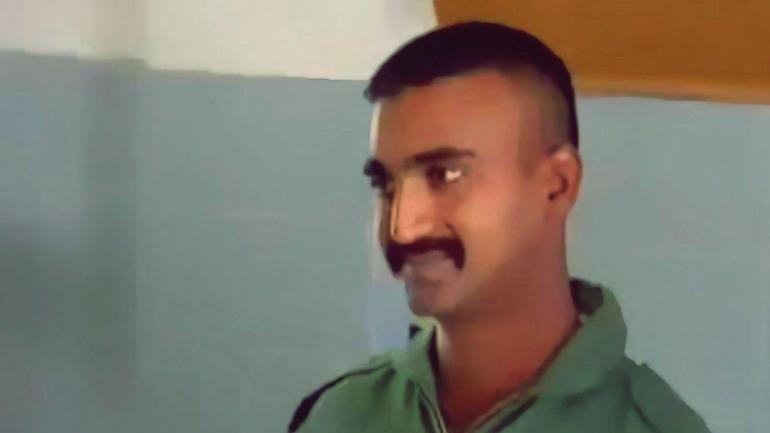
Pakistan to release Indian pilot captured in Kashmir attacks

Imran Khan says pilot to be freed as ‘peace gesture’ amid rising tensions between nuclear neighbours

Pakistan says it will release a captured Indian pilot as a “peace gesture” between the neighbours amid the gravest military crisis in the subcontinent in two decades.

Imran Khan, the country’s prime minister, told a joint sitting of parliament that the Indian wing commander, Abhi Nandan, who was shot down over the heavily guarded ceasefire line in disputed Kashmir on Wednesday, would be released on Friday

“We have captured an Indian pilot,” Khan said. “As a peace gesture, tomorrow we are going to release him.”

Nandan was shot down on Wednesday during a dogfight in the Himalayan foothills, the first between the countries to be publicly acknowledged for 48 years. It followed tit-for-tat airstrikes this week that have led to the closure of dozens of airports and put major cities on high alert across the subcontinent.

The wreckage of an Indian aircraft after it crashed on Wednesday near Srinagar,
the summer capital of Indian-controlled Kashmir.
Photograph: Javed Dar/Xinhua/Barcroft Images
The Indian prime minister, Narendra Modi, accused Pakistan of having “evil designs” to stunt India’s growth on Thursday in his first remarks since Nandan was captured and appeared in several prisoner videos released by Islamabad.

Speaking to party workers in a video conference on Thursday, Modi did not respond to an offer of dialogue from Khan, leaving open the possibility of further escalation between the two nuclear-equipped armies.

“The enemy tries to destabilise us, carries out terror attacks,” Modi said. “Their motive is to stop our growth. Today, all countrymen are standing like a rock to counter their evil designs.”

The clashes over the heavily militarised “line of control” that divides Indian and Pakistani-held Kashmir sparked calls for restraint from countries including the US, China, Russia and the UK.

The US president, Donald Trump, who was addressing a press conference in Hanoi at the same time Modi was speaking, hinted that diplomatic efforts had begun behind the scenes.

“They have been going at it and we have been involved,” Trump said. “We have some reasonably decent news, hopefully it’s going to be coming to an end, this has been going on for a long time, decades and decades.”

Leave was cancelled for health workers and police in the Pakistani province of Khyber Pakhtunkhwa and emergency orders were issued in Karachi, while train stations in Delhi were placed on “red alert” as both countries prepared for the possibility of more military attacks.

Pakistani jets struck sites in Indian-controlled territory on Wednesday and shot down one of the Indian planes that scrambled in response, capturing the pilot. Videos of Nandan showed him being interrogated in a bloodied uniform then being beaten by villagers near the crash site. Both were widely shared on WhatsApp and social media.

By late evening, in a video that appeared to be aimed at calming public anger in India, the pilot was shown drinking tea and praising the way he was being treated by his captors, who he said were “thorough gentlemen”.

(Source: The Guardian)

Injured Abhinandan fought captors, fired into air, swallowed imp documents before being captured: Pak media

Pakistani media reports how in the face of grave danger, our fighter pilot didn't panic or lose his mind.

As the country prays for the safe return of IAF braveheart Abhinandan Varthaman, Pakistani media reports how in the face of grave danger, our fighter pilot didn't panic or lose his mind.

Instead, he fought his captors, fired into the air and swallowed important documents (which should not have been in enemy hands), before he was outnumbered and captured.

All this, while he was bleeding profusely after the crash.

Pakistani newspaper Dawn reports: The pilot, who was equipped with a pistol, asked the youngsters whether it was India or Pakistan. On this, one of them intelligently responded that it was India. The pilot, later identified as Wing Commander Abhi Nandan, shouted some slogans and asked which place exactly it was in India. To this, the same boy responded that it was Qilla'n.

The pilot told them that his "back was broken" and he needed water to drink.

Some emotional youth, who could not digest the slogans, shouted Pakistan army zindabad. On this, Abhinandan shot a fire in the air while the boys picked up stones in their hands.

Wing Commander Abhinandan Varthaman (Photo:Still from old interview with a TV channel)
According to Mr Razzaq (an eyewitness), the Indian pilot ran a distance of half a kilometre in backward direction while pointing his pistol towards the boys who were chasing him.

During this brisk movement, he fired some more gunshots in the air to frighten them but to no avail, he said. Then he jumped into a small pond where he took out some documents and maps from his pockets, some of which he tried to swallow and soaked others in water.

The boys kept on asking him to drop his weapon and in the meanwhile one boy shot at his leg, Mr Razzaq said.

Even while catering to Pakistani readership that would perhaps not want to read about the bravery of an Indian fighter pilot inside their territory, Dawn reports that Abhinandan said his back was broken while he displayed such valour.

The fact that Abhinandan was perhaps severely injured when his fighter jet crashed could be seen from the videos circulated on social media.

In one, a profusely bleeding Abhinandan is seen trying to get up as men in uniform pull him up and locals hit him and shout slogans.

"The boys got hold of him from both arms. Some of them roughed him up, in a fit of rage, while others kept on stopping them. In the meanwhile, army personnel arrived there and took him into their custody and saved him from the wrath of the youths, he said. Thanks God, none of the furious boys shot him dead because he had given them quite a tough time," Dawn reports.

Read those words again: "He (Abhinandan) had given them quite a tough time."

No wonder even Pakistani handles want Abhinandan to return to India with dignity.

(Source: India Today)

Thursday, 6 September 2018

Five difficulties wheelchair users face when flying by plane

From a man kicked off a Ryanair flight because his wheelchair wouldn’t fold to a chair being damaged in the hold, wheelchair users often struggle even to board a plane

A disabled man and his mother were kicked off a Ryanair flight last week after staff “couldn’t fold his wheelchair”. Gary Dunne, who has mobility problems and is deaf, and 81-year-old Kathleen from the Wirral, Merseyside, were then rebooked on a second flight the next day – only to be asked to leave once again. Humiliatingly, the pilot then announced over the tannoy that the delay was due to “the lady with the wheelchair”. The airline say wheelchair services are provided by outside companies. But this sort of treatment is frustratingly common – here are five difficulties of flying when you’re disabled:

Disabled passengers are expected to plan ahead and book assistance, but it often doesn’t come. Photograph: Shaun Wang/Getty Images/EyeEm
1. Being abandoned on the plane
Disabled passengers are expected to plan ahead and book wheelchair assistance but it often doesn’t come. Paralympian Anne Wafula Strike was stranded at Stansted last month after staff failed to meet her flight to take her off the plane, with the same thing happening to the BBC’s security correspondent, Frank Gardner, at Heathrow.

2. Not being able to travel in your wheelchair
Unlike trains or buses, it is still not possible for wheelchair users to stay in their wheelchairs onboard a plane. For those who are not able to sit comfortably in a plane chair, this makes flying impossible.

3. Wheelchairs being damaged
If you trust staff to put your vital wheelchair in the hold while flying, it may come out with pieces missing. In 2016, the disabled actor Athena Stevens launched a legal challenge against British Airways and London City airport over damage to her £25,000 chair. Britain’s equality watchdog says airlines should cover the full cost of damage they cause to mobility devices.

4. Banning wheelchairs
In 2010, easyJet came under fire for preventing thousands of disabled people from flying on its planes by refusing to allow most powered wheelchairs onboard. The budget airline blamed a weight restriction and “health and safety” rules.

5. Being left behind
Still, sometimes we are lucky if we are let on the plane at all. Last year, Niamh Herbert told the Guardian that she was asked by Ryanair staff to walk up the stairs to the plane “for easiness’ sake” (the airline said she changed her flight, and hadn’t informed them of her requirements when she did so). Since she couldn’t, she watched as the plane took off without her.

(Source: The Guardian)

Wednesday, 29 August 2018

Japan gets first female fighter pilot inspired by 'Top Gun'

Japan has appointed its first female fighter pilot, the latest achievement in the national push for greater gender equality in the traditionally male-dominated country.

1st Lt. Misa Matsushima, 26, joined the Japan Air Self Defense Force (JASDF) after graduating from the National Defense Academy in 2014, becoming one of the 13,707 servicewomen who make up a mere 6.1% of all Japanese troops. She finished her training earlier this week, and was officially named a fighter pilot in a ceremony on Friday, said the JASDF in a press release.

"Ever since I saw the movie 'Top Gun' when I was in primary school, I have always admired fighter jet pilots," Matsushima told reporters Thursday.

Misa Matsushima in the cockpit of an F-15 fighter jet.
"As the first female (fighter) pilot, I will open the way. I would like work hard to meet people's expectations and show my gratitude to people who have been supporting me. I want to become a full-fledged pilot, no different from men, as soon as possible."

"I hope to be the one to inspire more people to become a pilot," she added.

Matsushima, who is from the eastern city of Yokohama, got her pilot's license in 2015, before advancing to fighter pilot training. She will now be stationed at the Nyutabaru Air Base, and begin flying F-15J fighter jets.

The F-15J is a twin-engine fighter designed for air-to-air combat with other jets, capable of carrying eight radar and infrared missiles. It can reach top speeds of Mach 2.5 -- 2.5 times the speed of sound, or 1,918 mph.

Misa Matsushima receiving her certificate from the Japan Air Self-Defense Force.
"The first female fighter pilot aircraft of the Air Self Defense Force is born," said the JASDF in a tweet Thursday.

The JASDF didn't accept women until 1993, when most positions became open to female applicants.

However, women were still not allowed to fly fighter jets and reconnaissance aircraft until the ban was lifted in 2015, as part of a government initiative to increase the number of women in the workplace, according to the JASDF statement.

Across Japan, women have long been relegated to performing household duties and administrative roles, often referred to as the "mommy" track. However, facing an aging population and shrinking workforce, Prime Minister Shinzo Abe pledged in 2013 to empower working women.

This new "womenomics" policy also reached the military; the Defense Ministry launched a series of initiatives last April aiming to increase the number of women in the Self Defense Forces to 9% by 2030.

Misa Matsushima, 26, has become Japan's first female fighter pilot.
By contrast, women make up 16% of the US enlisted forces, according to think tank Council on Foreign Relations (CFR).

However, with previously restricted positions in Japan's Marine, Air, and Ground Self Defense Forces now open to women, new female leaders have started taking the reins. In March, Japan's navy appointed the first female commander of a warship squadron, local media reported.

The military's social media, too, regularly shows female personnel, with one post showing a "day of female shifts."

(Source: CNN) 

Sunday, 3 June 2018

Russian pilot found after three decades missing in Afghanistan

Military veterans group says man whose plane was shot down wants to return to Russia

A Russian pilot who was missing presumed dead after his plane was shot down three decades ago during the Soviet intervention in Afghanistan has been found alive and wants to come home, according to a military veterans group.

“He is still alive. It’s very astonishing. Now he needs help,” the head of the Russian paratroopers’ union, Valery Vostrotin, told RIA Novosti state news agency on Friday.

Vostrotin, who heads the Russian side of a Russian-US joint commission on prisoners of war and soldiers missing in action, declined to name the pilot for reasons of confidentiality.

The man was shot down in 1987 and was likely now to be over 60, the deputy head of veteran’s organisation Battle Brotherhood, Vyacheslav Kalinin, told the news agency.

He suggested the pilot could be in Pakistan, where Afghanistan had camps for prisoners of war, and said he wanted to return home.

Afghan guerrillas who fought Soviet forces, pictured in 1980. Photograph: AP
RIA Novosti reported that 125 Soviet planes were shot down in Afghanistan during the course of the war between 1979 and 1989. When Soviet troops pulled out in 1989, about 300 soldiers were listed as missing. Since then, 30 have been found and most returned to their home countries.

The Kommersant business daily reported that only one Soviet pilot was shot down in 1987, naming him as Sergei Pantelyuk from the southern Russian Rostov region, who went missing along with his plane after taking off from Bagram airfield, now a US air base, north of Kabul.

The head of a local veterans’ organisation said his mother and sister were both alive and the Komsomolskaya Pravda tabloid traced Pantelyuk’s 31-year-old daughter who was born months before her father went missing.

Senator Frants Klintsevich told RIA Novosti that this was far from the only such case. He said he had met a former Soviet soldier on a trip to Afghanistan a few years ago who refused to give his name and spoke Russian with difficulty and said it was too late for him to go back.

Former Soviet soldier Bakhretdin Khakimov, who was interviewed by AFP in 2015, was one of those who opted to remain in Afghanistan. He was seriously wounded and was nursed back to health by local people and then converted to Islam. He told AFP: “I stayed in Afghanistan because Afghans are very kind and hospitable people.”

(Source: The Guardian)

Friday, 5 January 2018

15 paradoxes that will make your head explode

"I know one thing," Socrates famously said. "That I know nothing."

It's a crucial insight from one of the founders of Western philosophy: You should question everything you think you know.

Indeed, the closer you look, the more you'll start to recognize paradoxes all around you.

Even Socrates is baffled.The Death of Socrates by Jacques-Louis David (1787)
To go anywhere, you must go halfway first, and then you must go half of the remaining distance, and half of the remaining distance, and so forth to infinity: Thus, motion is impossible.

The dichotomy paradox has been attributed to ancient Greek philosopher Zeno, and it was supposedly created as a proof that the universe is singular and that change, including motion, is impossible (as posited by Zeno's teacher, Parmenides).

People have intuitively rejected this paradox for years.

From a mathematical perspective, the solution -- formalized in the 19th century -- is to accept that one-half plus one-quarter plus one-eighth plus one-sixteenth and so on ... adds up to one. This is similar to saying that 0.999... equals 1.

But this theoretical solution doesn't actually answer how an object can reach its destination. The solution to that question is more complex and still murky, relying on 20th-century theories about matter, time, and space not being infinitely divisible.

In any instant, a moving object is indistinguishable from a nonmoving object: Thus motion is impossible.

This is called the arrow paradox, and it's another of Zeno's arguments against motion. The issue here is that in a single instant of time, zero seconds pass, and so zero motion happens. Zeno argued that if time were made up of instants, the fact that motion doesn't happen in any particular instant would mean motion doesn't happen.

As with the dichotomy paradox, the arrow paradox actually hints at modern understandings of quantum mechanics. In his book "Reflections on Relativity," Kevin Brown notes that in the context of special relativity, an object in motion is different from an object at rest. Relativity requires that objects moving at different speeds will appear different to outside observers and will themselves have different perceptions of the world around them.

If you restored a ship by replacing each of its wooden parts, would it remain the same ship?

Another classic from ancient Greece, the Ship of Theseus paradox gets at the contradictions of identity. It was famously described by Plutarch:


"The ship wherein Theseus and the youth of Athens returned from Crete had thirty oars, and was preserved by the Athenians down even to the time of Demetrius Phalereus, for they took away the old planks as they decayed, putting in new and stronger timber in their places, in so much that this ship became a standing example among the philosophers, for the logical question of things that grow; one side holding that the ship remained the same, and the other contending that it was not the same."

Can an omnipotent being create a rock too heavy for itself to lift?

While we're at it, how can evil exist if God is omnipotent? And how can free will exist if God is omniscient?

These are a few of the many paradoxes that exist when you try to apply logic to definitions of God.

Some people might cite these paradoxes as reasons not to believe in a supreme being; however, others would say they are inconsequential or invalid.

There's an infinitely long "horn" that has a finite volume but an infinite surface area.

Moving ahead to a problem posed in the 17th century, we've got one of many paradoxes related to infinity and geometry.

"Gabriel's Horn" is formed by taking the curve y = 1/x and rotating it around the horizontal axis, as shown in the picture. Using techniques from calculus that make it possible to calculate areas and volumes of shapes constructed this way, it's possible to see that the infinitely long horn actually has a finite volume equal to π, but an infinite surface area.


As stated in the MathWorld article on the horn, this means that the horn could hold a finite volume of paint but would require an infinite amount of paint to cover its entire surface.

A heterological word is one that does not describe itself. Does "heterological" describe itself?

Here is one of many self-referential paradoxes that kept modern mathematicians and logicians up at night.

An example of a heterological word is "verb," which is not a verb (as opposed to "noun," which is itself a noun). Another example is "long," which is not a long word (as opposed to "short," which is a short word).

So is "heterological" a heterological word? If it were a word that didn't describe itself, then it would describe itself; but if it did describe itself, then it would not be a word that described itself.

This is related to Russell's Paradox, which asked if the set of things that don't contain themselves contained itself. By creating self-destructing sets like these, Bertrand Russell and others showed the importance of establishing careful rules when creating sets, which would lay the groundwork for 20th-century mathematics.

Pilots can get out of combat duty if they are psychologically unfit, but anyone who tries to get out of combat duty proves he is sane.

"Catch-22," a satirical World War II novel by Joseph Heller, named the situation where someone is in need of something that can only be had by not being in need of it -- which is a kind of self-referential paradox.

Protagonist Yossarian is introduced to the paradox with regard to pilot evaluation but eventually sees paradoxical (and oppressive) rules everywhere he looks.

There is something interesting about every number.

After all, 1 is the first nonzero natural number; 2 is the smallest prime number; 3 is the first odd prime number; 4 is the smallest composite number; etc. And when you finally reach a number that seems not to have anything interesting about it, then that number is interesting by virtue of being the first number that is not interesting.

The Interesting Number Paradox relies on an imprecise definition of "interesting," making this a somewhat sillier version of some of the other paradoxes, like the heterological paradox, that rely on contradictory self-references.

Quantum-computing researcher Nathaniel Johnston came up with a clever resolution of the paradox: Instead of relying on an intuitive notion of "interesting" as in the original paradox, he defined an interesting whole number as one appearing somewhere in the Online Encyclopedia of Integer Sequences, a collection of tens of thousands of mathematical sequences like the prime numbers, the Fibonacci numbers, or the Pythagorean triples.

Based on this definition, as of Johnston's initial blog post in June 2009, the first uninteresting number -- the smallest whole number that didn't show up in any of the sequences -- was 11,630. Since new sequences are added to the encyclopedia all the time, some of which include previously uninteresting numbers, as of Johnston's most recent update in November 2013, the current smallest uninteresting number is 14,228.

In a bar, there is always at least one customer for whom it is true that if he is drinking, everyone is drinking.

Conditional statements in formal logic sometimes have counterintuitive interpretations, and the drinking paradox is a great example.

At first glance, the paradox suggests that one person is causing the rest of the bar to drink.

In fact, all it's saying is that it would be impossible for everyone in the bar to be drinking unless every single customer were drinking. Therefore, there is at least one customer there (i.e., the last customer not drinking) who by drinking could make it so that everyone in the bar was drinking.

A ball that can be cut into a finite number of pieces can be reassembled into two balls of the same size.

The Banach-Tarski paradox relies on a lot of the strange and counterintuitive properties of infinite sets and geometric rotations.

The pieces that the ball gets cut into are very strange-looking, and the paradox only works for an abstract, mathematical sphere: As nice as it would be to take an apple, cut it up, and reassemble the pieces so you have an extra apple for your friend, physical balls made of matter can't be disassembled like a purely mathematical sphere.

A 100-gram potato is 99% water. If it dries to become 98% water, it will weigh only 50 grams.

Even when working with old-fashioned finite quantities, math can lead to strange results.


The key to the potato paradox is to closely look at the math behind the nonwater content of the potato. Since the potato is 99% water, the dry components are 1% of its mass. The potato starts at 100 grams, so that means that it contains 1 gram of dry material. When the dried-out potato is 98% water, that 1 gram of dry material now needs to account for 2% of the potato's weight. One gram is 2% of 50 grams, so this must be the new weight of the potato.

If just 23 people are in a room, there's a better-than-even chance at least two of them have the same birthday.

Another surprising math result, the birthday paradox comes from a careful analysis of the probabilities involved. If two people are in a room together, then there's a 364/365 chance they do not have the same birthday (if we ignore leap years and assume that all birthdays are equally likely), since there are 364 days that are different from the first person's birthday that can then be the second person's birthday.

If there are three people in the room, then the probability that they all have different birthdays is 364/365 x 363/365: As above, once we know the first person's birthday, there are 364 choices of a different birthday for the second person, and this leaves 363 choices for the third person's birthday that are different from those two.

Continuing in this fashion, once you hit 23 people, the probability that all 23 have different birthdays drops below 50%, and so the probability that at least two have the same birthday is better than even.

Most people's friends have more friends than they do.

This seems impossible but is true when you consider the math.

The friendship paradox is caused by how, in most social networks, most people have a few friends, while a handful of people have a large number of friends. Those social butterflies in the second group disproportionately show up as friends of people with smaller numbers of friends, and drag up the average number of friends-of-friends accordingly.

A physicist working on inventing a time machine is visited by an older version of himself. The older version gives him the plans for a time machine, and the younger version uses those plans to build the time machine, eventually going back in time as the older version of himself.

Time travel, if possible, could result in some extremely strange situations.

The bootstrap paradox is the opposite of the classic grandfather paradox: Rather than going back in time and preventing oneself from going back in time, some information or object is brought back in time, becoming a "younger" version of itself, and enabling itself later to travel back in time. One then has to ask: How did that information or object come into being in the first place?

The bootstrap paradox is common in science fiction and takes its name from a short story by Robert Heinlein.

If there's nothing particularly unique about Earth, then there should be lots of alien civilizations in our galaxy. However, we've found no evidence of other intelligent life in the universe.

Finally, some see the silence of our universe as a paradox.

One of the underlying assumptions in astronomy is that Earth is a pretty common planet in a pretty common solar system in a pretty common galaxy, and that there is nothing cosmically unique about us. NASA's Kepler satellite has found evidence that there are probably 11 billion Earth-like planets in our galaxy. Given this, life somewhat like us should have evolved somewhere not overly far away from us (at least on a cosmic scale).


But despite developing ever-more-powerful telescopes, we have had no evidence of technological civilizations anywhere else in the universe. Civilizations are noisy: Humanity broadcasts TV and radio signals that are unmistakably artificial. A civilization like ours should leave evidence that we would find.

Furthermore, a civilization that evolved millions of years ago (pretty recent from a cosmic perspective) would have had plenty of time to at least begin colonizing the galaxy, meaning there should be even more evidence of their existence. Indeed, given enough time, a colonizing civilization would be able to colonize the entire galaxy over the course of millions of years.

The physicist Enrico Fermi, for whom this paradox was named, simply asked, "Where are they?" in the middle of a lunchtime discussion with his colleagues. One resolution of the paradox challenges the above idea that Earth is common and posits instead that complex life is extremely rare in the universe. Another posits that technological civilizations inevitably wipe themselves out through nuclear war or ecological devastation.

A more optimistic solution is the idea that the aliens are intentionally hiding themselves from us until we become more socially and technologically mature. Yet another idea is that alien technology is so advanced that we wouldn't even be able to recognize it.

(Source: BI UK)

Tuesday, 22 August 2017

The only Indian family where mum, dad, daughter and son are all pilots

This family had held on to a profession as a reign for over 100 years now! Flying has been dominating this Delhi family and what the parents started off as their passion, career and a goal to achieve, their kids all follow them. These parents are so inspiring and their only advice for their kids are not to be tempted to land when the weather is bad, to carry extra fuel, and to never be in a hurry!

Captain Jai Dev Bhasin was the pioneer in the family to become one among the 7 commanders in India 1954. His son, Captain Rohit Bhasin and his daughter-in-law Niveditha Jain, carried the tradition of flying in the family!


Niveditha was just 20 when she received her first appointment letter from Indian Airlines on June 24, 1984. Interestingly, Rohit and Niveditha’s children are keeping up with the traditions and today they proudly look at their children – Rohan Bhasin and Niharika Bhasin who are commanders as well!

At the age of 26, Niveditha was the youngest woman captain in the world to be the commander of Boeing 737. She even went on to become the Commander of Airbus 300 and co-piloted world’s first ever all women crew! Her victories are countless and her children seem to keep up their family tradition. Very recently, their daughter, Niharika took command on the Airbus A320.

Though Rohan and Niharika’a parents were away most of the times, it did not bother them as they knew it was normal. They were matured enough to understand that their parents have struggled a lot to juggle being a commander at work and being parents at home!


Their parents being so incredible, no other profession seemed right the minds of Rohan and Nihariks, thus, pursuing flying was all that they were passionate about. Rohan successfully commands the Boeing 777 and their family is really happy about it! The father-son duo has had the chance to fly in Boeing 787 Dreamliner about 10 times now.

Though they only get to spend some quality family time for about 5-6 days in a month, this family has truly believed in themselves and flying has been their primary motto! The years that passed by to this family has seen more of the sky than the ground!

(Source: NDTV)