Showing posts with label science. Show all posts

Monday, 24 January 2022

Har Gobind Khorana is ours too

 A DAWN article on Har Gobind Khorana (1922-2011) threw me back 50 years when I, along with 600 other students had packed 26-100 (MIT’s largest lecture hall) to hear him speak. Being clueless of the basics of molecular biology, I understood little and left halfway through. Curiosity had driven me there because this famous MIT professor had won the 1968 Nobel Prize and started a brand new field — protein synthesis via nucleotides. More interestingly, he was a Lahori with bachelor and master’s degrees from Punjab University.

Alas! Lahore, to its misfortune, does not know — nor cares to know — who this man was. The same holds true for another of its sons, Subrahmanyan Chandrasekhar (1910-1995), who became a Nobel Laureate in recognition of his definitive work on the death of stars. Today a Nasa satellite named Chandra scours the skies for neutron stars, black holes and other unusual astronomical objects.


The story of Abdus Salam (1926-1996) is too well known to repeat here. Winner of the 1979 physics Nobel, he studied at Government College (GC) Lahore and later taught at Punjab University. However, no road or landmark in Lahore bears Salam’s name — or that of Khorana and Chandrasekhar. While a GC affiliated institution called the Abdus Salam School for Mathematical Studies nominally exists, to display his name on its signboard could be dangerous in a city often gripped by religious fervour.


Less well known is the story of Chowla and Chawla. At GC there have been two mathematicians in number theory. One was Sarvadaman Chowla, an accomplished mathematician who headed the mathematics department from 1937 to 1947. Being Hindu, he left Lahore after the rioting began and went to Princeton University, then the University of Colorado at Boulder, and eventually became professor at the University of Pennsylvania. He died in 1995 and was celebrated as a famous number theorist by the American Mathematical Society with several important theorems to his name.


Unless Pakistanis learn to value the works of non-Muslims, science in Pakistan shall remain dead.


The other was Lal Muhammad Chawla who graduated from Oxford in 1955 and then taught at GC for many years. With rather modest professional achievements, he had only one well cited paper. As a Google search of his publications reveals, Chawla was more interested in writing religious books than advancing mathematics. However, the GC math society is named after Lal Muhammad Chawla and not the more famous and much more accomplished Sarvadaman Chowla. No Hindu scientist is celebrated in Pakistan.


Rejecting non-Muslims of high professional merit has come at devastating cost to Pakistan. For one, it lost those who could have helped the newborn country establish a scientific base. For another, it became difficult to create institutional meritocracies. After Partition, many clever ones played the religious or ethnic card and undeservedly rose to positions of high authority. In time they became institutional gatekeepers with catastrophic consequences.


The weakness of science education in Pakistan is too evident to belabour here. Unsurprisingly, our best and brightest young people usually go for soft stuff like medicine, law, and business. Unlike in China or India, hardly any opt for tough, demanding, scientifically oriented careers. So, how can we persuade our children towards them? What stories to tell them about science and scientists? Most importantly, who should be their role models?


This brings up a civilisational problem. Over the last 300 years — which is how old modern science is — there are no Muslim subcontinental names associated with first tier (Nobel calibre) scientific accomplishments (after 1974 Salam must be excluded). Notwithstanding the valiant efforts of Sir Syed Ahmad Khan (1817-1898), Indian Muslims shunned science and the English language. Thus, even at the distant second or third tier level, one finds barely a dozen names.

Since one cannot find Muslim science heroes who belong to the soil, books for Pakistani children inevitably valorise Arabs from the Golden Age such as Al-Battani, Ibn-e-Shatir, Ibn-e-Haytham, etc. While these luminaries of Muslim science were genuine path-breakers, they do not serve well as role models. For one, persons from centuries ago cannot inspire today’s children. For another, excitement is inspired by those ‘of your own kind’. Arabs, however, are visibly different from people around here.


Ancient Hindu scientists could have found some place in Pakistani books. However, they are excluded on ideological grounds because ‘woh hum main say nahin hain’ (they are not us). Instead, many Pakistanis anxiously seek ancestral roots in Arabia, Afghanistan and Central Asia. But modern laboratory tools are ripping apart dearly held myths of racial origins. Now several genetic marker studies are suggesting that the subcontinent’s Muslims have descended primarily from local Hindu converts with only a few per cent admixture of Arab or Central Asian genes. Excluding Hindu scientists from our books is absurd.


Ideology and science are like oil and water — they refuse to mix. Science cares only about facts and logic, not personal likes and dislikes. History is replete with examples of failed attempts to fuse science with cherished beliefs. When Stalin sought to impose his Marxist views upon Soviet biology through his chosen tout, Trofim Lysenko, he nearly destroyed agriculture and forestry.


Soviet Russia’s good fortune was that it had a scientific community robust enough to counter Lysenko’s meddling. Pakistan has not been so lucky. It has an abundance of charlatans pretending to be scientists but just a few who deserve to be called such. While there is a science ministry, several scientific bodies, and hundreds of institutions that purport to teach or do research in science, no community of genuine scientists exists. High-sounding scientific bodies — such as the Pakistan Academy of Sciences — are a joke. They command no respect internationally and should be dissolved.


Every kind of intellectual endeavour, science included, needs an enabling cultural and social environment to flourish. Science suffocates when scientists are judged by their religion, race, ethnicity or any criterion other than scientific achievement. Before Pakistan can produce any science worth the name, it will need to overcome its deeply held prejudices. It must learn to value all who share the common heritage of humankind. The day we count Khorana, Salam, and Chandrasekhar as our very own, Pakistan will have begun breaking the shackles of scientific under-development.


Pervez Hoodbhoy, is an Islamabad-based physicist and writer.


Published in Dawn, January 15th, 2022


(Source: Dawn)

Thursday, 28 October 2021

I knew that was going to happen… The truth about premonitions

 Uncanny and creepy, premonitions that turn out to be authentic can feel profound. But is there science to explain them?

Around seven years ago, Garrett, was in a local Pizza Hut with his friends, having a day so ordinary that it is cumbersome to describe. He was 16 – or thereabouts – and had been told by teachers to go around nearby businesses and ask for gift vouchers that the school could use as prizes in a raffle. There were five other teenagers with Garrett, and they’d just finished speaking to the restaurant manager when suddenly, out of nowhere, Garrett’s his body was flooded with shock. He felt cold and clammy and had an “overwhelming sense that something had happened”. He desperately tried to stop himself crying in front of his peers.


“It was like I’d just been told something terrible,” the now 23-year-old from the southwest of England says (his name has been changed on his request). “I couldn’t tell you exactly what it was, but I just knew something had happened.” Garrett returned home and tried to distract himself from a feeling he describes as grief. The phone rang. His mum answered it. A few hours earlier – around the time Garrett was in the restaurant – his grandfather had died from a sudden heart attack while on a cruise.


Although there’s no way of knowing how many people worldwide feel that they “sensed” a loved one’s death before being told, it’s a phenomenon that’s been explored in everything from Star Wars to Downtown Abbey to Kung Fu Panda 2. Perhaps one of your own relatives has a story similar to Garrett’s – perhaps you dismissed it, perhaps you treat it as family lore. Is there any evidence to suggest this phenomenon is real – that humans can sense one another’s passing from a distance, that Garrett’s emotional afternoon was anything more than a coincidence? In a word, no. Meanwhile, it is well documented that the human mind is a bundle of bias: false memories, grief hallucinations and confirmation bias can easily explain these experiences. Besides which, for every person who feels a shiver when their loved one dies, there are hundreds more who were quietly eating pizza or happily riding a rollercoaster or bored doing maths homework completely unaware of their loss.


Ripple effects: ‘There are many accounts of crisis telepathy.’ Illustration: Eva Bee/The Observer

But are these dismissals too quick? Too easy? Some scientists claim that the complex world of quantum physics could be used to explain the paranormal (other scientists say they’re unbelievably wrong.) What can stories like Garrett’s tell us about what we do and don’t know? What we are and aren’t willing to believe? About the disconnect between what some claim to experience and others claim is impossible?


Brian Josephson is your prototypical professor. With tufts of white hair atop his head, a knitted vest and a glasses chain keeping his specs safe, he says via Zoom that, “The academic community is a kind of club. You’re supposed to believe certain things and you run into problems you disagree with.” In 1973, he was awarded the Nobel Prize in physics for his work on superconductivity. Later, during his time as a professor at the University of Cambridge, he began using quantum mechanics to explore consciousness and the paranormal.


Quantum entanglement – nicknamed “spooky action at a distance” by Albert Einstein – describes the (proven) phenomenon of two spatially separated particles influencing each other, even over large distances. While the phenomenon is subatomic, academics such as Josephson have theorised that quantum entanglement could explain phenomena like telepathy and psychokinesis.


“There are many accounts of crisis telepathy,” says Dean Radin, a parapsychologist and author of Entangled Minds: Extrasensory Experiences in a Quantum Reality. “Does entanglement explain these effects? No, in the sense that entanglement as observed today in the physics lab, between pairs of photons, is extremely fragile and typically lasts only minuscule fractions of a second. But also, yes, in that we are at the earliest stages of understanding entanglement.”


Radin says studies in quantum biology show that entanglement-type effects are present in living systems (academics from Oxford have successfully entangled bacteria) and he believes the human brain could in turn have quantum properties. “If that is subsequently demonstrated – I think it’s just a matter of time – then that would go a long way towards providing a physical mechanism for telepathy,” he says.


Put down your pen, scrunch up your letter to the editor. You only need an explanation for telepathy if you believe in telepathy in the first place, and experiments purporting its existence have been widely debunked. Josephson and Radin are regularly criticised by peers. In 2001, when Royal Mail released a set of stamps to celebrate the 100th anniversary of the Nobel Prize, there was outrage when Josephson wrote in an accompanying booklet that quantum physics may lead to an explanation for telepathy. In this very newspaper, academics branded the claim “utter rubbish” and “complete nonsense”.


When reviewing Entangled Minds for The Skeptic’s Dictionary, philosophy professor and professional sceptic Robert Carroll wrote that Radin’s book was “aimed at non-scientists who are likely to be impressed by references to quantum physics”.


Garrett has no idea what happened to him on the day his grandad died, but he is certain that it happened. He believes in some kind of “interconnectedness” between people. “I think if it’s happened to you, then there’s an underlying accepting of it,” he says.


This is a sentiment shared by the self-described “naturally sceptical” Cassius Griesbach, a 24-year-old from Wisconsin who lost his grandfather in 2012. Griesbach says that he “shot awake” on the night his grandad passed and began to sob uncontrollably. “It felt like something just rocked me, physically,” he says. When his dad called moments later to say his grandad had died, a teenaged Griesbach replied: “I know.”


Griesbach doesn’t blame anyone for being sceptical of his story. “The further you get away from it, the more I would like to write it off as a coincidence,” he says, “But every time I sit down and think about it, it feels like it’s something else.” Griesbach is “not super religious” and doesn’t believe in ghosts. “ If it is something to do with actual science, I would think that would be science that we are nowhere near yet, you know?”


Many would disagree, arguing that the answer lies in the social sciences. In 2014, Michael Shermer married Jennifer, who had moved from Köln to California and brought with her a 1978 radio belonging to her late grandfather. Shermer tried in vain to fix it before tossing it in a drawer, where it lay silent until the couple said their wedding vows at home months later. Just as Jennifer was keenly feeling the absence of her grandfather, the radio began to play a romantic song. It continued all night before it stopped working for good the next day.


“It’s just one of those anomalous experiences,” says Shermer, a science historian, professional sceptic and author of The Believing Brain: from Spiritual Faiths to Political Convictions. How We Construct Beliefs and Reinforce Them as Truths. “Randomness and chance play a big role in life and in the world, and our brains are designed to see patterns not randomness.” Shermer argues that experiences like Garrett’s and Griesbach’s are statistically more likely than we think.


“You have billions of people worldwide having dozens of dreams [each] at night,” he says. “The odds are pretty good that on any given night, somebody’s going to have a dream about somebody dying who actually dies. That’s inevitable.” At the same time, he argues, we ignore all the times we suddenly sob or shudder and it turns out that no one’s died – or the times when someone does die and we don’t feel anything at all.


There are other prosaic explanations. While Garrett’s grandfather’s death was sudden and unexpected, Griesbach’s grandfather was hospitalised the week before he died, when he shot awake in the middle of the night, Griesbach’s first thought was, “It happened” – he knew his grandfather had passed. But is that surprising when he’d spent a week by his bedside?


John Bedard, a 36-year-old in Los Angeles, woke suddenly on the night his parents died. He was 10 and sleeping at a friend’s house when he awoke, “just knowing something was wrong”. He called his brother, sobbing. When his brother picked him up, he told Bedard their parents had died in a motorcycle accident.


And yet, there were clues that “something was wrong” much earlier. The sleepover wasn’t planned – Bedard had gone to friends to play when “it started getting later and later” and nobody came to pick him up. It was a Sunday night – an unusual night to have a sleepover. Bedard was uneasy when he went to bed.


Despite these answers, explanations continue to be toyed with. Rupert Sheldrake is a biologist and parapsychologist who conceived of “morphic resonance”, the idea that interconnections exist between organisms. He believes the human mind has fields that stretch beyond the brain, much like electromagnetic fields. This, he says, explains why we can seemingly tell when someone behind us is staring at us, or why we sometimes think of someone right before they call. (Sheldrake’s work has been called “heresy” in the journal Nature.)


“I’m not talking about the supernatural; I think these things are totally natural. I think they’re normal, not paranormal,” he says. When it comes to experiences like Garrett’s, he says empirical studies are impossible. “You can’t ask somebody to die at a randomly selected time to see if their nearest and dearest respond… So unfortunately, the evidence for cases to do with death has to be circumstantial.”


Shermer is not a Sheldrake fan. “The idea that a biologist like Rupert Sheldrake is going to uncover some new force of nature that somehow Einstein and everybody else has missed… is just so unlikely to have happened, that almost any explanation like the ones I’ve been giving you are way more likely.” Josephson’s rebuke of such criticisms: “People say that [science is] always subject to revision and yet they’re secretly convinced that certain things can’t happen.”


What can and can’t happen doesn’t change what many feel has happened – Garrett, Griesbach and Bedard all believe something strange and unexplainable occurred when they lost their loved ones. At the very least, these stories undeniably offer comfort.


“As far as looking into it, I don’t even know what there is to look into,” Griesbach says – after all, the phenomenon doesn’t even have a name. “I think the best thing that we could do for people is validate how they feel and let them grieve. Because whenever people have that happen, they’re also grieving. That is one of the most important times to just be a kind human to somebody.”


(Source: The Guardian)

Sunday, 13 June 2021

‘Bad science’: Planting frenzy misses the grasslands for the trees

There’s a tree-planting frenzy everywhere you look. In August 2019, the state of Uttar Pradesh in northern India announced that more than a million Indians had planted 220 million trees on a single day. A month earlier, Ethiopia had made a similar declaration: more than 350 million trees had been planted in one day.

“Always be suspicious of such big claims,” says William Bond, a grasslands researcher and emeritus professor at the University of Cape Town in South Africa. “It’s taken for granted that tree planting is good. But look at what they’re planting, where they’re planting.”


Intuitively, planting trees makes sense, especially given the high levels of forest loss and fires around the world. Even in 2020, when it was in the throes of the COVID-19 pandemic, the world lost 4.2 million hectares (10.4 million acres) of old-growth tropical forest in places such as the Brazilian Amazon – 12% higher compared to the previous year, according to data from the University of Maryland and Global Forest Watch. Carbon emissions from fossil fuel burning and forest clearing are also at an all-time high. Where pre-industrial levels of atmospheric carbon dioxide were about 278 parts per million (ppm), contemporary levels exceeded 420 ppm in April 2021, according to data from the Mauna Loa observatory in Hawai’i.
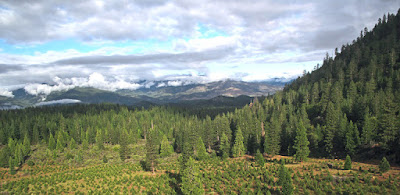

Reforestation after logging in western U.S. Image by Downtowngal via Wikimedia Commons (CC BY-SA 3.0).


Planting trees, then, can seem like the easiest way to battle both problems – it has the potential to create “forests” and soak up excess carbon dioxide from the air. This narrative is what many campaigns are relying upon. Take for example, the one-trillion trees initiative launched by the World Economic Forum in January 2020. The project notes that “trees and forests are a critical part of the solution to the climate crisis and biodiversity collapse. That’s why we aim to mobilise, connect and empower the global reforestation community to conserve, restore and grow one trillion trees by 2030.” The Bonn Challenge aims to bring 350 million hectares (865 million acres) of degraded and deforested land into restoration by 2030. An offshoot of the Bonn Challenge, AFR100 (the African Forest Landscape Restoration Initiative) wants to restore 100 million hectares (247 million acres) of land in Africa by 2030.


Restoring lands sounds like a good idea. But there is a widespread perception that “restoration” means “planting forests,” says Giselda Durigan, a forestry engineer and plant biologist at the São Paulo State Forest Institute in Brazil.

“I am primarily a forestry engineer, and that is why I take those concepts so seriously,” Durigan says. A good forest-restoration project, she says, must recreate a forest ecosystem where it was a forest before, a process also called reforestation. But afforestation, or planting a new forest in an area where there was no forest to begin with, can often be problematic.


This is because planting forests requires a lot of land. And areas that were never forests historically, but seem open and available for planting trees, are usually another critical ecosystem: grasslands, savannas, shrublands, meadows, rocky outcrops, or dry lands. For long, though, forests have been viewed as the default natural vegetation. And large tracts of non-forest areas, including shrublands, grasslands and savannas, continue to be viewed as unproductive, or historically forested land that humans have degraded to barrenness.


Where is all the unforested land?

In 2019, a paper titled ‘The global tree restoration potential’, published in the journal Science, created a furor. The authors of the study estimated, using remote sensing and machine learning, that Earth had available land for about 900 million hectares (2.2 billion acres) of forest restoration. Foresting this tree-less land would help store 205 gigatonnes of carbon, they wrote, making it “our most effective climate change solution to date.”


The study was, however, based on various flawed assumptions and data, several independent groups of researchers countered. Among the many problems, one group noted, was that the study had relied heavily on foresting grasslands and savannas.


A few years earlier, the World Resources Institute had published the Atlas of Forest Landscape Restoration Opportunities in collaboration with the IUCN. This influential map identified more than 2 billion hectares (5 billion acres) of land as presenting an opportunity for forest restoration. But subsequent analysis by independent researchers including Durigan showed that the Atlas ­had classified 900 million hectares of grassy biomes as “deforested” or “degraded.”


“They mapped the major game parks of Africa as degraded and deforested, defining degradation as anything that damages trees,” Bond says.


The Cuyaba dwarf frog (Eupemphix nattereri) is only found in Brazil’s Cerrado. It has a unique defense mechanism: mooning potential predators in the hopes of scaring them away with its giant rump eye spots. Image by Felipe Gomez via Wikimedia Commons (CC BY-SA 2.5).


Authors of both maps countered by saying that their maps simply point out areas that can be potentially forested. Each area, however, needed to be assessed individually.


But critics say that by marking broad areas as potential sites for restoration – a term usually conflated with planting forests – the maps prompted a flurry of massive tree-planting campaigns and projects around the world. AFR100, for instance, is aiming to plant trees across 100 million hectares of mostly savanna in Africa by 2030, write Bond and his colleagues in a 2019 paper published in Trends in Ecology & Evolution.


“These maps have been extremely damaging,” Bond says. “It was really superficial, bad science, but then international policies are feeding into this. The vast areas then became the targets for reforestation, supported by the World Bank, the IUCN, the German government and so on.”


At the heart of many of the disagreements lie muddled-up ideas. When is an area a “forest”? What is a “degraded” forest? How is it different from a grassland or savanna with trees? How far back in time do you go to see what the original habitat of the area was like? Does a forest always trump a non-forested area?

Degraded or naturally unforested?

The WRI Atlas considered all areas with more than 10% tree cover as a form of forest; this is the broad definition also used by the UN Food and Agriculture Organisation (FAO). Only land with less tree cover was considered to be either naturally non-forested or converted to some other land use.


Now, deforestation and degradation of forests can create open areas with few trees. But non-forested areas like grasslands and savannas, too, naturally have trees. Sometimes the trees are scattered, sometimes they occur in dense lots. This means that when viewed from above, many of these areas will have more than 10% tree cover and look like degraded forests.


“You’ve got to be careful of the word forest and what it means – the definition of forest is critical,” Bond says. “The definition provided in global terms by the FAO is more than 10% tree cover, which includes nearly all the world’s savannas, which are not forests at all.”


If you’re thinking just in terms of tree cover in an area, it can be hard to distinguish between a “degraded forest” and a naturally non-forested area. But there are better ways to do so. Let’s consider tropical savannas. In a paper entitled ‘When is a ‘forest’ a savanna, and why does it matter?’ published in Global Ecology and Biogeography in 2011, Jayashree Ratnam, an ecologist at National Centre for Biological Sciences, Bengaluru, India, and her colleagues recommend looking carefully at the kinds of plants growing on the land, and the kinds of evolutionary adaptations they show.


Tropical savannas, such as the Serengeti in Tanzania, the Cerrado in Brazil or the grasslands of central India, they write, are dominated by species of grasses that use a form of photosynthesis called C4. These grasses don’t like shade, which means that the trees that grow in these landscapes are typically short and have smaller leaf areas and open crowns that let sunlight filter to the ground. By contrast, a tropical forest tends to have grasses that use more shade-tolerant C3 photosynthesis because trees there grow tall and wide and have denser canopies.


This may look like a meadow of small groundcover plants (A), but it’s actually the canopy of a Jacaranda decurrens tree in Brazil’s Cerrado. In addition to leaves, the tree also flowers aboveground (B). Like conventional trees, the underground branches of J. decurrens are woody (C). Photo courtesy of Alves et al., 2013.


The C4 grasses in savannas are highly flammable. The wet season prods the grasses to grow long and thick, while the prolonged dry seasons turn them into potent fuel for fire. Savanna fires, however, tend to be low on the ground, burning the grasses and young saplings, but not big or hot enough to scorch adult trees. Once the fires ebb, the grasses regenerate quickly. It’s perhaps counterintuitive, but many savannas need fires to remain savannas. Even the trees that grow in these areas have adaptations like thick bark to live with fire.


Fires in forests, on the other hand, tend to be very hot, burning not just the understory but the crowns of tall, adult trees as well. They spread rapidly to other trees, and can turn catastrophic. In fact, Ratnam and colleagues note that many areas in South Asia, currently classified as tropical dry forests, such as Bandipur Tiger Reserve in southern India, have such C4-dominated grasses with interspersed fire-resistant tree species. These areas are more like savannas than forests. “Having worked for a while in African savannas and being very familiar with the idea that mixed tree-grass ecosystems were distinctive from forests, when we returned to India and started visiting various field sites, we were struck by the similarities of these sites with African savannas,” Ratnam told Mongabay India in 2019.


Apart from needing fire and light, savannas also have a long association with animals that graze, studies have found. They’ve evolved to support both large, wild herbivores like wildebeest, rhinoceros, zebras and antelopes, as well as nomadic pastoralists whose livestock feed on the grasses and small plants and keep the savanna ecosystem an open one.


Still, for many, the image of a fire, or of a goat pulling out young saplings, might seem like a “disturbance” that humans have introduced to forests, resulting in forest degradation. Moreover, tropical savannas and forests can often occur side by side, within the same wet and warm climatic conditions. That raises the question: did savannas exist before humans started cutting down forests, or did humans degrade forests into savannas?

Current evidence suggests that many of the world’s tropical savannas are ancient. In Africa, for example, studies have found that savannas started spreading 10 million to 15 million years ago and were extensive by around 3 million years ago – long before humans started clearing large tracts of forests. Even in Asia, evidence suggests that these habitats existed before human arrival.


If you had to look at more recent history, a study from South Africa found that there were around 471,100 hectares (1.16 million acres) of “forests” in the country in 1750; the authors consider this to be a baseline, before humans started widespread conversion of land for other uses. Yet, AFR100 has a reforestation target of 3.6 million hectares (8.9 million acres) in the country. “So the target has got nothing to do with restoring forest. It was an arbitrary number, it was pulled out of a hat. It had no relationship to the real need to reforest areas that had been deforested,” Bond says.


AFR100 did not respond to a request for comment, but on its website describes forest landscape restoration as “more than just planting trees” and mentions including savannah restoration as part of its commitment.


Collateral damage

Much of the recent emphasis on planting trees comes from international agencies and individuals from the Global North, and is based on the assumption that tree-less areas store very little carbon. Forests, on the other hand, are considered miracle carbon sequesterers.


Forests are great at storing carbon; there’s little controversy there. In fact, the loss of tropical forests contributes some 5 billion metric tonnes of carbon dioxide per year, which means that halting deforestation and reducing fossil fuel emissions are two powerful actions to take, if tackling the climate crisis is the goal. But Durigan says that tree-planting programs often “create the illusion that if we can plant trees in the whole world, we’ll neutralise all carbon emissions.”


For the goal of storing carbon, planting forests on grasslands or shrublands, however, can backfire.


In general, forests store most of their carbon in woody trunks and leaves aboveground. But much of the carbon in grasslands is in the soil (in extensive root systems of the grasses as well as decaying organic matter). In fact, grasslands, covering a quarter of the Earth’s surface, can store up to 30% of the world’s carbon, per some estimates. “Replacing savannas, grasslands and wetlands by tree plantation[s] is expected to decrease carbon storage in the soil, despite increasing aerial biomass,” Durigan says.


There is also the question of fire. Afforestation projects in grasslands or savannas have rarely planted “forests” of native tree species, and typically involved establishing monoculture plantations of fast-growing exotic species like eucalyptus or pine. These trees burn very well, and in case of fires, can turn devastating.

“Since fire is a natural factor in savannas, it will happen in the dry season despite human efforts to avoid,” Durigan says. In open savanna systems, such fires usually cause low carbon emissions and this carbon is quickly captured back when the grasses and plants regenerate after the fire, she adds. But “firestorms in forest plantations will irreversibly send huge amounts of carbon dioxide to the atmosphere.”


Tree-planting programs and governments say they’re paying attention to the kinds of species they grow. But it isn’t hard to imagine that plantations of eucalyptus and pine trees will still be common, especially with the kinds of targets they want to achieve in a short period of time. “Planting indigenous trees is slow and difficult,” Bond says. “We often don’t know how to get them to grow, and you can’t plant them over a million hectares. It’s difficult.”


On the other hand, growing large populations of pines and eucalyptus is easy; people have been doing it for a long time, Bond adds. Madagascar’s latest mass tree-planting drive, for example, includes exotic species like eucalyptus and acacia along with some fruit trees. But with a warming climate making droughts and heat waves worse, establishing plantations on vast tracts of grasslands could put the very forests you’re trying to protect at risk.


“Unbelievably, people are planting eucalyptus in Madagascar, next to the last remnants of their forests, and they’re bringing fire right into those forests,” Bond says. “It just indicates such ignorance. When the fires do happen, which they will happen undoubtedly, they’re increasing the risk to the forest massively.”


Impacts of tree planting on climate change are complicated by other factors like albedo, the amount of sunlight that’s reflected back into space without being absorbed as heat by the Earth’s surface. Since land surface covered by forests is much darker than if covered by grasses or even crops, afforestation can lead to a decrease in albedo, Durigan says, which can lead to an increase, instead of the desired decrease, in air temperature.


Afforestation of grasslands, shrublands, or even native forests with plantations, a widespread practice for timber, are also known to create water woes. Several studies have found that, in general, such plantations consume more water than the original vegetation, which, in turn, reduces flow of rivers downstream. Long-term experiments have found this to be the case in South Africa, for example, which has extensive areas, including montane grasslands and shrublands, under eucalyptus plantations. Based on these results, the country formulated legislation to restrict afforestation with plantations.


Then there are the more obvious impacts of converting open, airy grasslands, savannas and shrublands into plantation forests: the loss of unique biodiversity. Losing savanna grasslands can mean losing animals like wildebeest, giraffes, rhinos, lions, blackbucks and the great Indian bustard.


So, planting thousands of seedlings in naturally open areas can, in fact, be disastrous if done too quickly without adequate evaluation. But there is value in planting trees in non-forested areas like agricultural lands, or in helping native trees in degraded grasslands and arid areas regenerate.


Restoring degraded habitats

Let’s consider Regreening Africa, a program that aims to “reverse land degradation on 1 million hectares [2.5 million acres] across 8 countries in sub-Saharan Africa.” Since the demand for agricultural land is a major driver of deforestation in sub-Saharan Africa, the program focuses on restoring degraded lands in agricultural farms and community lands by integrating trees into the landscape. Not just any trees, but trees that the communities want.


“Rule number one is let natural regeneration occur, especially in areas where you don’t have a lot of human pressure,” says Susan Chomba, a social scientist and program manager of Regreening Africa. “It’s going to encourage not just the tree species themselves, but other kinds of biodiversity that naturally exists in that area. It’s less expensive, and it’s the most kind of effective way of letting nature heal itself.”


But where there is human pressure and natural regeneration might not work well, the program asks a fundamental question: what is it that needs to be restored?


The answer isn’t based on scientific measurements alone, but also on what farmers and pastoralists in the area want. 


Do they want more fruit trees to earn more income? Do they want more water in the area? Do they want the soil on their lands to be more productive, and wash away less frequently when it rains? “If fruit trees is the end goal, we need to understand what kind of diversity of food resources are suitable for that area and are needed by farmers,” Chomba says. “If farmers want water, we try to figure out what kind of tree species native to these ecosystems can help restore hydrological functions.”


Shola grassland in India’s Kudremukh National Park. Image by Kousik Nandy via Wikimedia Commons (CC BY-SA 4.0).


It’s not been easy, Chomba says, because governments and various NGOs still tend to hand over hundreds of eucalyptus saplings to farmers to grow on their lands. Farmers, too, accept these species as the default trees to plant. This was the case in Rwanda, the team found.


“We engaged with the local district and subdistrict government, and we found that most of the seedlings being prepared by the cooperatives were eucalyptus,” Chomba says. “When we discussed this, they said, ‘Oh, but if you grow other kinds of seedlings the farmers are not going to be interested. These are the ones that farmers are interested in’.”


But when the team started holding discussions with the farmers themselves, with the government officials present, the narrative shifted. “We asked them, ‘Could you please tell us historically what kind of tree species existed in these ecosystems?’ And my goodness, they were naming hundreds and hundreds of different kinds of tree species and their functions.”


The farmers named species that were extremely important to them for their medicinal value. Some species gave them important food, fruits and nuts. Then there were tree species, whose presence indicated there was water around. When the team asked them if they would like to see these species come back in their areas, there was a resounding “yes.” Eucalyptus was good for timber and firewood, they said, but they would like to see the other ecosystem services, like more water, return to their lands. Chomba’s team then worked with the government, cooperatives and farmers to revive some of the native species.


“In some areas in Rwanda now, farmers really demand these indigenous tree species,” Chomba says. “We saw a big transformation there, not because of something that was completely out of big scientific innovation, but by engaging with the local knowledge in communities to look back at what used to exist in their landscape and what they’d like to see.”


Such engagement is uncommon, though. In India, for example, the law requires “compensatory afforestation” whenever infrastructure or mining projects involve cutting down forest areas; the forest loss has to be “compensated” for by either establishing a plantation over an equivalent area or by depositing money with the forest department to do so. In a country where land is an incredibly valuable resource, marginal communities often end up losing their lands for these “compensatory forests,” usually without their knowledge or any form of consultation on what the communities might want.


Even if the local communities are consulted, whether they will support those trees’ growth for years to come and care for them depends on whether they see more value in the trees remaining standing, or in cutting them down or not tending to them. Land tenure, where the farmers have an ownership in the trees and land, can provide that value, examples from Africa have shown. “Everybody now knows that land tenure is a big problem,” Chomba says. “People also know the solution, but they don’t want to get into that because it means you have to engage with the local authorities for a long period of time in trying to change the laws. It’s not as simple as planting a tree and saying I planted a million trees. So we need to be able to understand the policy bottlenecks and be prepared to do the hard work to change them.”


Overall, agroforestry, if done well and keeping in mind the local context, can achieve lots: it can increase the productivity of soil, improve microclimate as well as water and food security, and build resilience to climate change. 


But whether these benefits actually materialise needs to be monitored systematically, Chomba adds.


Durigan says planting trees in farmlands is a good way to restore degraded lands. But she doesn’t consider agroforestry to be true reforestation or afforestation.


“I do like productive systems with trees spaced, especially in degraded land, no matter if it was not a forest before. It is better than monocultures,” she says. “But agroforestry does not result in a true forest. It is not afforestation nor reforestation, since both are expected to create a continuous canopy and a forest structure. Agroforestry is a productive system where trees and crops share the space, aiming at improving degraded soils or to have an ecologically ‘healthier’ land use.”


Not everyone loves a forest

Forests are culturally important for many people around the world. Dense, mysterious forests have been a part of stories, nursery rhymes, poems and movies. But those who live in areas that have naturally been non-forested – grasslands in India, rolling meadows in Scotland, Cerrado in Brazil – don’t necessarily want them.


The loss of open areas to forests or plantations can mean losing an entirely unique landscape.


“We cannot see the horizon anymore,” Durigan says. “We cannot see the blue sky, the rain falling, the mountains and the valleys, we cannot feel the breeze on our faces. Unfortunately, this ecosystem service is not perceived by the urban society.”


The Shola grasslands atop the mountains of the Western Ghats in India, home to the pastoral Toda community, for instance, now have extensive stands of invasive acacia trees that have spread from plantations that were originally established by the British who settled there. With the trees proliferating, the community’s traditional cattle rearing has become difficult. Unlike the grasslands that made spotting predators easier, the trees now provide cover for carnivores, increasing human-animal conflict. There’s been loss of grasses that the community used in their daily lives; wetlands have disappeared; tribe members are increasingly forced to migrate to other places for work.


Bond says he loves trees, but he doesn’t want them everywhere. “My garden is full of trees; I love them,” he says. 


“But a forest is a dank dark place. Here in my part of the world, we love the open spaces too. We love grass. This is my mantra: ‘the right tree / in the right place / for the right reasons’.”


Citations:

Bastin, J., Finegold, Y., Garcia, C., Mollicone, D., Rezende, M., Routh, D., … Crowther, T. W. (2019). The global tree restoration potential. Science, 365(6448), 76-79. doi:10.1126/science.aax0848

Veldman, J. W., Aleman, J. C., Alvarado, S. T., Anderson, T. M., Archibald, S., Bond, W. J., … Zaloumis, N. P. (2019). Comment on “The global tree restoration potential”. Science, 366(6463), eaay7976. doi:10.1126/science.aay7976

Veldman, J. W., Overbeck, G. E., Negreiros, D., Mahy, G., Le Stradic, S., Fernandes, G. W., … Bond, W. J. (2015). Where tree planting and forest expansion are bad for biodiversity and ecosystem services. BioScience, 65(10), 1011-1018. doi:10.1093/biosci/biv118

Bond, W. J., Stevens, N., Midgley, G. F., & Lehmann, C. E. R. (2019). The trouble with trees: Afforestation plans for Africa. Trends in Ecology & Evolution, 34(11), 963-965. doi:10.1016/j.tree.2019.08.003

Ratnam, J., Bond, W. J., Fensham, R. J., Hoffmann, W. A., Archibald, S., Lehmann, C. E., … Sankaran, M. (2011). When is a ‘forest’ a savanna, and why does it matter? Global Ecology and Biogeography, 20(5), 653-660. doi:10.1111/j.1466-8238.2010.00634.x

Veldman, J. W. (2016). Clarifying the confusion: Old-growth savannahs and tropical ecosystem degradation. Philosophical Transactions of the Royal Society B: Biological Sciences, 371(1703), 20150306. doi:10.1098/rstb.2015.0306

Bond, W. J., & Zaloumis, N. P. (2016). The deforestation story: Testing for anthropogenic origins of Africa’s flammable grassy biomes. Philosophical Transactions of the Royal Society B: Biological Sciences, 371(1696), 20150170. doi:10.1098/rstb.2015.0170

Kumar, D., Pfeiffer, M., Gaillard, C., Langan, L., Martens, C., & Scheiter, S. (2020). Misinterpretation of Asian savannas as degraded forest can mislead management and conservation policy under climate change. Biological Conservation, 241, 108293. doi:10.1016/j.biocon.2019.108293

Skowno, A. L., Jewitt, D., & Slingsby, J. A. (2021). Rates and patterns of habitat loss across authors: South Africa’s vegetation biomes. South African Journal of Science, 117(1/2). doi:10.17159/sajs.2021/8182

Albaugh, J. M., Dye, P. J., & King, J. S. (2013). Eucalyptus and water use in South Africa. International Journal of Forestry Research, 2013. doi:10.1155/2013/852540

Chomba, S., Sinclair, F., Savadogo, P., Bourne, M., & Lohbeck, M. (2020). Opportunities and constraints for using farmer managed natural regeneration for land restoration in sub-Saharan Africa. Frontiers in Forests and Global Change, 3. doi:10.3389/ffgc.2020.571679


(Source: Mongabay)

Thursday, 1 October 2020

Physicists prove time travel is 'mathematically possible'

 Australian scientists say they have ‘squared the numbers’ of the grandfather paradox

Scientists in Australia claim to have proved that time travel is theoretically possible after solving a logical paradox.


Physicists from the University of Queensland used mathematical modelling to reconcile Einstein’s theory of general relativity with classical dynamics. The clash between these two systems is behind a famous flaw with time travel, known as the grandfather paradox.


Einstein’s theory allows for the possibility of a person using a time loop to travel back in time in order to kill their grandfather. 


However, classical dynamics dictates that the sequence of events following the grandfather’s death would culminate in the time traveller not existing in the first place. 


“As physicists, we want to understand the universe’s most basic, underlying laws and for years I’ve puzzled on how the science of dynamics can square with Einstein’s predictions,” said Germain Tobar, who led the research. “Is time travel mathematically possible?”


For their calculations, Mr Tobar and Dr Costa used the coronavirus pandemic as a model for working out whether the two theories could co-exist.


They imagined a time traveller attempting to go back and prevent patient zero from being infected with Covid-19.


Einstein’s theory allows for the possibility of time travel but the science of dynamics would mean that the fundamental sequence of events could not be interfered with.


This is because if the time traveller succeeded in preventing the virus from spreading, then it would eliminate their initial motivation for them to travel back in time.


“In the coronavirus patient zero example, you might try and stop patient zero from becoming infected, but in doing so you would catch the virus and become patient zero, or someone else would,” Mr Tobar said.


"No matter what you did, the salient events would just recalibrate around you. This would mean that - no matter your actions - the pandemic would occur, giving your younger self the motivation to go back and stop it. Try as you might to create a paradox, the events will always adjust themselves to avoid any inconsistency.


“The range of mathematical processes we discovered show that time travel with free will is logically possible in our universe without any paradox.”


University of Queensland physicist Dr Fabio Costa, who supervised the research, added: “The maths checks out - and the results are the stuff of science fiction."


A paper detailing the research was published in the journal Classical and Quantum Gravity.


(Source: The Independent)

Tuesday, 17 December 2019

Scientific phenomena photographs of the year – in pictures

An image of three perpetually bouncing droplets, whose behaviour embodies a key theory in quantum physics, has won first place in the Royal Society Publishing photography competition. The award celebrates science and its beauty as portrayed through photography.

Overall winner: Quantum Droplets by Aleks Labuda. Photograph: Aleks/Royal Society Publishing Photography Competition 2019


Ecology and Environmental Science winner: Fade to White by Morgan Bennett-Smith
‘A juvenile Red Sea clownfish (Amphiprion bicinctus) looks out from between the clear tentacles of a bleaching sea anemone (Entacmea quadricolor) in Thuwal, Saudi Arabia. While reef-building corals may be the most direct victims of coral reef bleaching events, other species can be similarly affected. Some sea anemones, for example, also expel their colourful symbionts during periods of climactic stress’


Ecology and Environmental Science runner-up: Vigilant Soldier by Abhijeet Bayani
‘Ropalidia marginata is a primitively eusocial wasp found in southern India. Their nests are built in concealed places as they do not seem to have evolved any active safeguard against their deadliest predator, Vespa tropica. Having vigilant females on their nests can only alarm other nestmates but they do not impede Vespa from foraging on their brood. I found this out when I took this picture inside a tubelight panel and was stung by several vigilant soldiers. No post-processing for image was required’


Ecology and Environmental Science honourable mention: Abstract water gallery by Daniela Rapavá
‘In the Ľuboreč water reservoir in Slovakia, I came across blooming water lilies (Nymphoides peltata). Their long stems were rotting, and a white coating formed and spread across the lake. The coating is formed by microscopic algae and cyanobacteria, and contains green, blue and red plant colours. The increased incidence of natural pollution there is related to higher temperatures and low water levels’


Astronomy winner: Halo by Mikhail Kapychka
‘I suddenly saw an unusual lunar halo in the night sky and hurried outside the city into the forest of Mogilev, Belarus, to take a picture of it. A halo appears in the sky when several factors are combined. Often it is observed in frosty weather in conditions of high humidity. In the air at the same time there is a large number of ice crystals. Passing through them, the lunar or solar light is refracted in a special way, forming an arc around the moon or sun’


Astronomy runner-up: Taranaki Stars by James Orr
‘This is an image of the Milky Way and the two Magellanic clouds above Mount Taranki, a 2,500m active stratovolcano, on New Zealand’s North Island. The two Magellanic clouds are dwarf galaxies over 150,000 light years away that can only be seen in the southern hemisphere’s night sky. After a tough hike up to this viewpoint, we spent a good eight hours watching the clouds thin, the sun set and the Milky Way appear. By midnight, the sky was full of stars but a sliver of moon was just bright enough to light up the incredible landscape’


Astronomy honourable mention: Equinox Supermoon Over the Coast Range by Loren Merrill
‘A supermoon rises over the British Columbia Coast range on the spring equinox this year. The last time a supermoon coincided this closely with the spring equinox was 1905, and the next one won’t be until 2144, so this celestial event was a real once-in-a-lifetime moment. I photographed the moonrise from Quadra Island, British Columbia, Canada, looking out across the Georgia Strait’


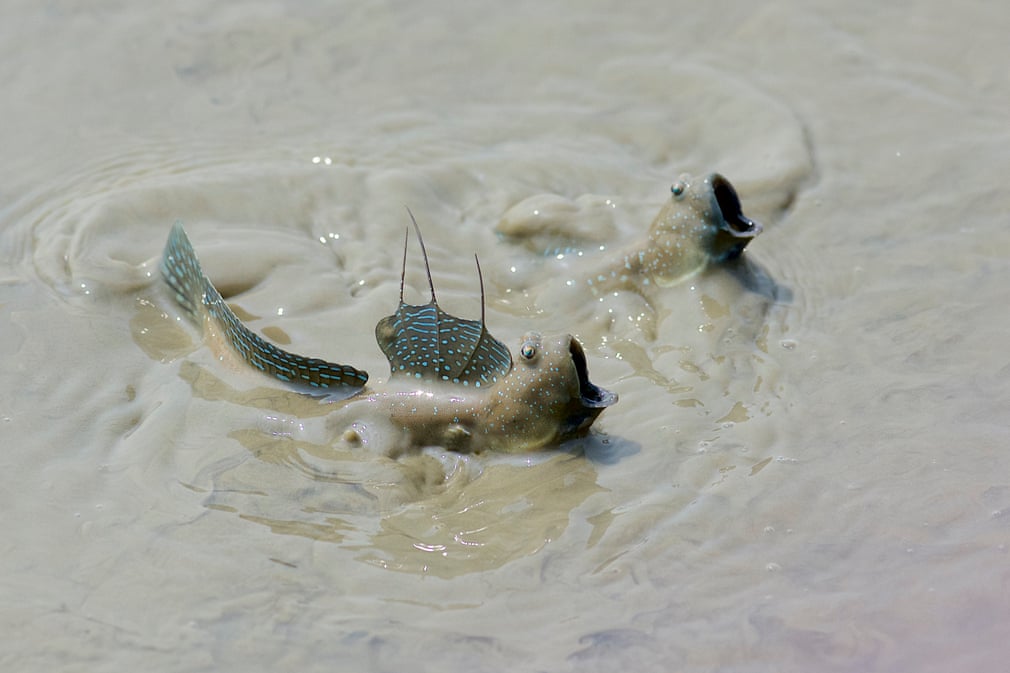
Behaviour winner: Mudskipper Turf War by Daniel Field
‘While photographing wading birds in the famous Mai Po wetlands, Hong Kong, I was distracted by the mesmerising territorial displays of hundreds of blue-spotted mudskippers near the shore. Adjacent individuals would frequently engage in brief skirmishes, allowing me to select the optimal angle for illustrating their aggressive interactions’


Behaviour runner-up: Jellyfish by Eduardo Sampaio
‘Jellyfish-fish associations happen for a multitude of reasons. However, in this case, it is the simplest one: predation. A young blue trevally (Carangoides ferdau) feeds on the purple jellyfish (Thysanostoma loriferum), and guards it against others that may have the same idea. Given the length and thickness of these tentacles, together with the fact that a jellyfish can regenerate its cells at considerable speed, this interaction can be sustained for several days. When jellyfish are large, they can also be used as shelter by fish’


Behaviour honourable mention: Fight Club by Alwin Hardenbol
‘Northern nutcrackers (Nucifraga caryocatactes) often fight over food in the winter, as I saw while on the Vitosha mountain massif, Bulgaria. This could be explained by their typical behaviour of storing food in caches during wintertime. This caching of food is essential to their survival and their breeding strategy, because they usually start the breeding process when there is still snow on the ground. It could, therefore, be worth fighting over the available food to have a better breeding success’


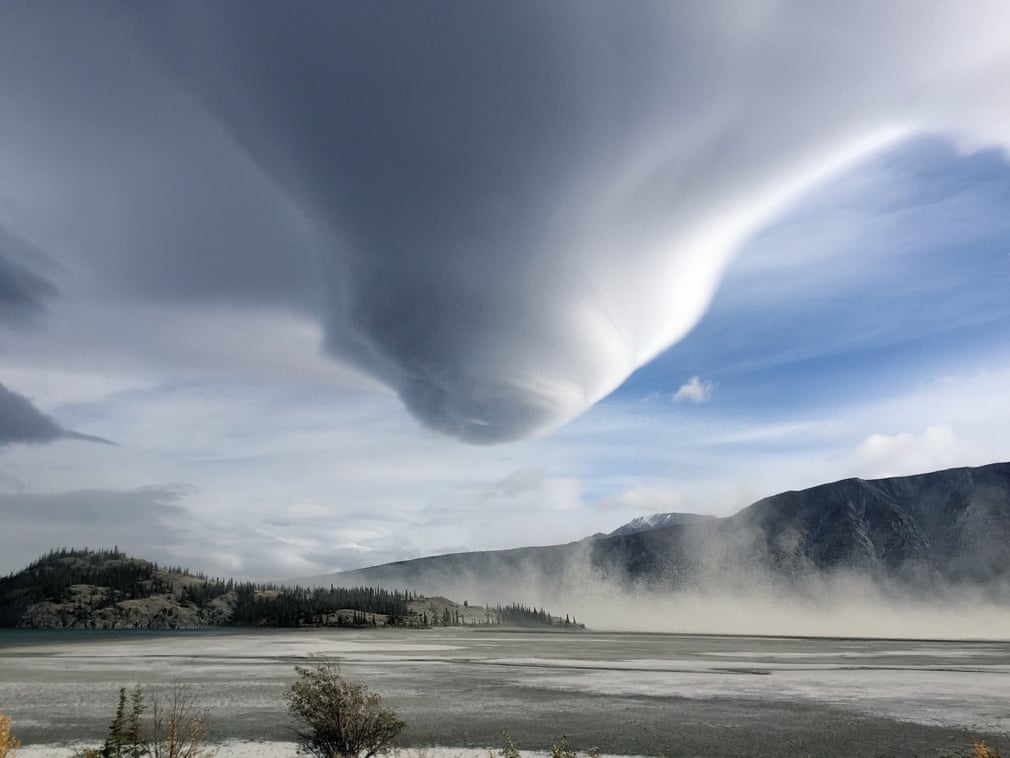
Earth Science and Climatology winner: Twister in the Yukon by Lauren Marchant
‘This photo was taken near to Kluane Lake research station in the Yukon, Canada. It depicts a large, cone-shaped, funnel cloud. A funnel cloud forms when water droplets are drawn in from the surrounding area by a rotating column of wind, making a region of intense low pressure visible to the human eye. Most tornados begin as funnel clouds. However, this funnel cloud never made contact with the ground and therefore could not be classified as a tornado’


Earth Science and Climatology runner-up: Fizzy Sea by Tom Shlesinger
‘Coral reefs are among the most diverse and productive ecosystems on our planet. However, pollution, over-fishing and the release of gases into the atmosphere are causing acidification and warming of the oceans to levels that corals are no longer able to tolerate. This photo was taken while on a scientific expedition to Ambitle Island, Papua New Guinea, as part of the Coral Reef Acclimatisation to Ocean Acidification (CARIOCA) project. Volcanic carbon dioxide can be seen fizzling from the seafloor alongside diverse and healthy coral reefs’


Earth Science and Climatology honourable mention: Mammatus on Fire by R Vicente Calle
This photograph was taken after a summer sunset when these clouds (Cumulonimbus mammatus) quickly formed in Jackson, Wyoming, USA. Mammatus clouds are special structures that are formed by downward vertical currents, which collide with other warm air rising. This collision gives rise to the characteristic bumps at their base as a result, and giving it its name from the Latin word “mamma”


Earth Science and Climatology honourable mention: The Child of Krakatoa Awakes by James DP Moore
‘This photo shows Anak Krakatau at the start of its eruptive phase in August 2018, taken whilst on vacation. This Strombolian eruptive style is building up the flanks of the central cone, out of unconsolidated tephra, with little real strength. Eventually, this constructive phase culminated with the collapse of the southwestern flank (left). The water displaced by this slope’s failure generated a devastating tsunami with no warning, and claimed more than four hundred lives on 22 December 2018’


Micro-imaging winner and overall winner: Quantum Droplets by Aleks Labuda
‘These silicone oil droplets are bouncing indefinitely above a vibrating pool of silicone oil at 15 Hz. The surface waves generated by the droplets are analogous to quantum mechanical waves that guide the dynamics of quantum particles. While the droplets move like quantum particles, they behave like quantum waves’


Micro-imaging runner-up, Completely Stitched Up by Anne Weston
‘This is a scanning electron micrograph of surgical thread used to stitch a head wound. The surgical thread was removed from the human patient after seven days, and debris from the skin and the area surrounding the wound can be seen still attached to the thread after removal. What this image shows in great detail is the skill required by healthcare professionals in being able to accurately tie such an intricate knot with a piece of thread less than 0.25mm in diameter, in what is a “routine procedure”’


Micro-imaging honourable mention: Magnetostatic Spawn by Aleks Labuda
‘Ferrofluids are colloidal liquids made of nanoscale ferromagnetic particles suspended in a carrier fluid. Surfactants in the fluid prevent the agglomeration of the nanoparticles because their strong van der Waals forces exceed the particles’ weak magnetic attraction. Reducing the size of the magnetite (or hematite) nanoparticles to below 10 nm is key in preventing their precipitation from the carrier fluid’


(Source: The Guardian)