Showing posts with label LoC. Show all posts

Sunday, 3 March 2019

All prisoners of war my children, don't release my son: Field Marshal KM Cariappa to Pakistan in 1965

General Ayub Khan, the military ruler of Pakistan, offered to release his former boss Field Marshal KM Cariappa's son immediately but was turned down.

It was the last day of the 1965 Indo–Pak war. The 36-year-old Squadron Leader KC Cariappa was flying near the border and was shot down. A few moments later, he emerged from the wreckage of the war plane and was taken prisoner by the Pakistan army.

Like all the officers, he gave his name, rank and unit number and nothing more. The information was relayed to Pakistan Army headquarters at Rawalpindi. An hour later, his captors came rushing to a small cell where he was kept prisoner to know if he was the son of Field Marshal KM Cariappa, the first Indian chief of armed forces after Independence. KM Cariappa was first appointed as the chief of all three services and later made Army chief.

He told them that he was indeed the son of the military legend and they returned. KC Cariappa is not sure of what happened after that but he was worried that his family would not know about his arrest in Pakistan.
Field Marshal KM Cariappa. (Source: Indian Army)
However, something interesting was happening outside. General Ayub Khan, the military ruler of Pakistan, announced on radio that KC Cariapppa was captured by his forces and was safe in their custody. He even offered to release him immediately because he was the son of Field Marshal Cariappa who was his boss in the British Indian Army before the partition in 1947. Ayub Khan had held Cariappa in high esteem and had ordered Pakistan’s High Commissioner in New Delhi to personally meet and brief him about his son’s well-being.

But Field Marshal Cariappa politely declined the offer, telling Ayub Khan that all captured Indian soldiers were his sons and all of them should be looked after well by Pakistan.

Speaking to the media, the now 80-year-old KC Cariappa — known as Air Marshal KC “Nanda” Cariappa — said: “My dad was a man of high principles. For him, his son and all other soldiers were the same. Even though Ayub Khan was his junior and was close to him, he refused to get me released before the others. I was later released with all others”.

He said he did not know that the war was over and was caught on the last day. After he returned home, KC Cariappa commanded a helicopter unit of the Indian Air Force and retired as Air Marshal. He had also participated in the 1971 war with Pakistan.

An avid reader and a prolific writer, he writes on defence and strategic affairs for various publications. He lives at his father’s ancestral house “Roshanara” in Kodagu district’s Madikeri in Karnataka.

(Source: News18)

Thursday, 28 February 2019

Pakistan can’t afford a war with India – unless China comes to its aid

A fifth of India’s population and a third of Pakistan’s live in extreme poverty. Another conflict between the two nations would devastate their economies and lead to people facing destitution

India’s airstrikes against Pakistan-based terror camps, in retaliation for the horrific 14 February suicide attack on Indian troops by Pakistan-based terrorists, threatens to lead the two nuclear weapon neighbours to a conflagration they can ill afford. There are also fears of an Indian government decision to impose a national emergency by citing “external aggression”, threatening the peace, security, stability and governance of the country.

There have been pitched war cries from both sides since the Valentine’s Day Jaish-e-Mohammed (JeM) attack on an Indian paramilitary convoy in Pulwama, in the terror-ridden border state of Jammu and Kashmir, which claimed the lives of 40 soldiers of the Central Reserve Police Force. JeM claimed responsibility for the carnage that saw a local Kashmiri youth, acting at the behest of the jihadi group, drive into the convoy of buses with an explosive-laden SUV.

Two days later, prime minister Narendra Modi sounded a warning – “We will settle the account in full this time” – and pledged to avenge “each drop of tear shed”, even as India started roping in international support to isolate Pakistan at the world stage and charting a retaliatory action plan. His Pakistani counterpart, Imran Khan, addressed India: “If you think you will attack us and we will not think of retaliating… We will retaliate. We all know starting a war is in the hands of humans, where it will lead us only God knows.”


Not only was the terror attack the worst on Indian security forces in the Kashmir valley this decade, India’s retaliatory airstrikes were the first across the line of control frontier since the Indo-Pakistani war of 1971. Both sides have now claimed responsibility for shooting down jets, as Pakistan has confirmed it is closing its airspace.

The sharp exchange prompted US president Donald Trump to tell the media: “Right now between Pakistan and India, there is a very, very bad situation. A very dangerous situation. We would like to see it [hostility] stop.” India’s foreign minister Sushma Swaraj will today visit China to take part in an India-China-Russia trilateral meeting, to anticipate the response of these powers in case India-Pakistan hostilities escalate. The group is expected to urge India to carry out its “fight against terrorism” through international cooperation.

India and Pakistan have gone to war four times – in 1947, 1965, 1971 and 1999. But another war today would prove mutually disastrous. A fifth of India’s population and a third of Pakistan’s live in extreme poverty, defined as those living on less than $1.90 (£1.43) a day. Not only would such an engagement ravage their economies and lead to civilian destitution, it may draw other global powers into the conflict too, deepening the discord.

While some quarters still predict the conflict can be contained locally, with some cross-border reprisals, that would depend on the two nations working together to avert any outbreak of further hostility by showing sensitivity to its consequences and by marshalling diplomatic interventions by other powers.

Already, Pakistani troops have violated a ceasefire by firing in the Akhnoor, Nowshera and Poonch sectors along the line of control. On the Indian side, movement of soldiers has increased, amid reports of a heavy troop buildup across the border. Flashpoints are erupting across the Indian sub-continent because military posturing is being matched by political grandstanding from the two country’s leaders. Political rhetoric needs to be scaled down on both sides to give peace a chance.

While the Modi regime is hamstrung by electoral pressures, with general elections due in May, Khan will also feel obliged to abide by his promise of retaliation.

There are broader economic issues at play, too. Although Khan promised a “new Pakistan” upon his swearing-in last August, his country is reduced to bankruptcy, with foreign exchange reserves critically inadequate to fund imports beyond a few months. While the country is now banking on an IMF bailout, Trump has warned against capitalising Pakistan in order to help it repay its massive debt to China. Yet the country runs a serious risk of defaulting on its payments without the IMF dole.

To go to war against India, Islamabad will have to look to China. China’s entry into the affray would raise major questions for India, which lacks the military power to wage a war on two fronts for any length of time.

There are those in India who are interpreting the government’s “non-military” pre-emptive action as a political move. The prime minister urged the public at a rally to vote for him to ensure the “safety and security” of their homeland. His ministers, too, upheld the aerial offensive as indicative of a strong and decisive leadership that provided security to all Indians.

With Modi increasingly unsure of re-election, declaring a national emergency could potentially allow a delay to elections, extending the term of the incumbent regime for as long as the emergency continues. 

The altercation between India and Pakistan is fraught with grave consequences. An event of war will physically endanger civilians living along the borders and jeopardise the lives of all Indians and Pakistanis by devastating both country’s economies. Scaling down the rhetoric to come to an understanding is the only way forward.

(Source: Independent)

Pakistan to release Indian pilot captured in Kashmir attacks

Imran Khan says pilot to be freed as ‘peace gesture’ amid rising tensions between nuclear neighbours

Pakistan says it will release a captured Indian pilot as a “peace gesture” between the neighbours amid the gravest military crisis in the subcontinent in two decades.

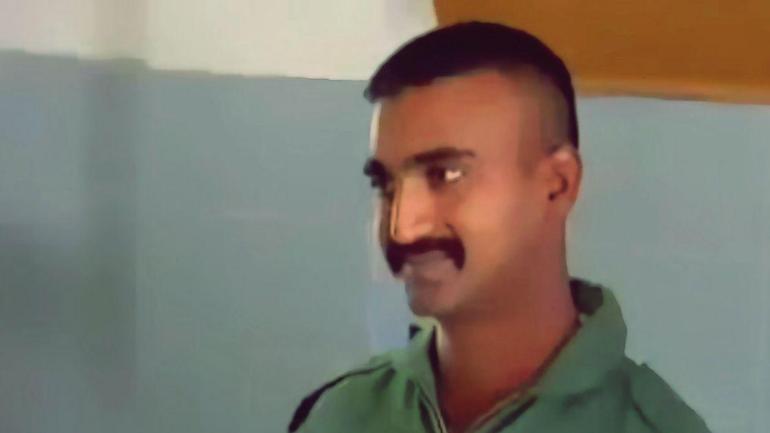
Imran Khan, the country’s prime minister, told a joint sitting of parliament that the Indian wing commander, Abhi Nandan, who was shot down over the heavily guarded ceasefire line in disputed Kashmir on Wednesday, would be released on Friday

“We have captured an Indian pilot,” Khan said. “As a peace gesture, tomorrow we are going to release him.”

Nandan was shot down on Wednesday during a dogfight in the Himalayan foothills, the first between the countries to be publicly acknowledged for 48 years. It followed tit-for-tat airstrikes this week that have led to the closure of dozens of airports and put major cities on high alert across the subcontinent.

The wreckage of an Indian aircraft after it crashed on Wednesday near Srinagar,
the summer capital of Indian-controlled Kashmir.
Photograph: Javed Dar/Xinhua/Barcroft Images
The Indian prime minister, Narendra Modi, accused Pakistan of having “evil designs” to stunt India’s growth on Thursday in his first remarks since Nandan was captured and appeared in several prisoner videos released by Islamabad.

Speaking to party workers in a video conference on Thursday, Modi did not respond to an offer of dialogue from Khan, leaving open the possibility of further escalation between the two nuclear-equipped armies.

“The enemy tries to destabilise us, carries out terror attacks,” Modi said. “Their motive is to stop our growth. Today, all countrymen are standing like a rock to counter their evil designs.”

The clashes over the heavily militarised “line of control” that divides Indian and Pakistani-held Kashmir sparked calls for restraint from countries including the US, China, Russia and the UK.

The US president, Donald Trump, who was addressing a press conference in Hanoi at the same time Modi was speaking, hinted that diplomatic efforts had begun behind the scenes.

“They have been going at it and we have been involved,” Trump said. “We have some reasonably decent news, hopefully it’s going to be coming to an end, this has been going on for a long time, decades and decades.”

Leave was cancelled for health workers and police in the Pakistani province of Khyber Pakhtunkhwa and emergency orders were issued in Karachi, while train stations in Delhi were placed on “red alert” as both countries prepared for the possibility of more military attacks.

Pakistani jets struck sites in Indian-controlled territory on Wednesday and shot down one of the Indian planes that scrambled in response, capturing the pilot. Videos of Nandan showed him being interrogated in a bloodied uniform then being beaten by villagers near the crash site. Both were widely shared on WhatsApp and social media.

By late evening, in a video that appeared to be aimed at calming public anger in India, the pilot was shown drinking tea and praising the way he was being treated by his captors, who he said were “thorough gentlemen”.

(Source: The Guardian)

Injured Abhinandan fought captors, fired into air, swallowed imp documents before being captured: Pak media

Pakistani media reports how in the face of grave danger, our fighter pilot didn't panic or lose his mind.

As the country prays for the safe return of IAF braveheart Abhinandan Varthaman, Pakistani media reports how in the face of grave danger, our fighter pilot didn't panic or lose his mind.

Instead, he fought his captors, fired into the air and swallowed important documents (which should not have been in enemy hands), before he was outnumbered and captured.

All this, while he was bleeding profusely after the crash.

Pakistani newspaper Dawn reports: The pilot, who was equipped with a pistol, asked the youngsters whether it was India or Pakistan. On this, one of them intelligently responded that it was India. The pilot, later identified as Wing Commander Abhi Nandan, shouted some slogans and asked which place exactly it was in India. To this, the same boy responded that it was Qilla'n.

The pilot told them that his "back was broken" and he needed water to drink.

Some emotional youth, who could not digest the slogans, shouted Pakistan army zindabad. On this, Abhinandan shot a fire in the air while the boys picked up stones in their hands.

Wing Commander Abhinandan Varthaman (Photo:Still from old interview with a TV channel)
According to Mr Razzaq (an eyewitness), the Indian pilot ran a distance of half a kilometre in backward direction while pointing his pistol towards the boys who were chasing him.

During this brisk movement, he fired some more gunshots in the air to frighten them but to no avail, he said. Then he jumped into a small pond where he took out some documents and maps from his pockets, some of which he tried to swallow and soaked others in water.

The boys kept on asking him to drop his weapon and in the meanwhile one boy shot at his leg, Mr Razzaq said.

Even while catering to Pakistani readership that would perhaps not want to read about the bravery of an Indian fighter pilot inside their territory, Dawn reports that Abhinandan said his back was broken while he displayed such valour.

The fact that Abhinandan was perhaps severely injured when his fighter jet crashed could be seen from the videos circulated on social media.

In one, a profusely bleeding Abhinandan is seen trying to get up as men in uniform pull him up and locals hit him and shout slogans.

"The boys got hold of him from both arms. Some of them roughed him up, in a fit of rage, while others kept on stopping them. In the meanwhile, army personnel arrived there and took him into their custody and saved him from the wrath of the youths, he said. Thanks God, none of the furious boys shot him dead because he had given them quite a tough time," Dawn reports.

Read those words again: "He (Abhinandan) had given them quite a tough time."

No wonder even Pakistani handles want Abhinandan to return to India with dignity.

(Source: India Today)

IAF Mirage-2000: Why IAF chose the jet that turned Kargil War in India's favour for surgical strikes 2.0

Here’s all you need to know about the French-made Dassault Mirage-2000 fighter jets used by IAF for strike on PoK.

In the early hours of Tuesday, 12 Indian Air Force Mirage-2000 fighter jets, made by Dassault Aviation, the French company who also manufactures the Rafale Medium Multi-Role Combat Aircrafts, entered Pakistani airspace and dropped 1,000-kg laser-guided bombs on Jaish-e-Mohammed terror launch pads across the Line of Control. While India has many new-age fighter jets like the Sukhoi Su-30MKI and MiG 29, apart from the indigenously developed Tejas LCA in its arsenal, it was again the Mirage-2000 jet, which was used in the Kargil war, that was used for the unprecedented cross-border strike. Indian government sources told CNN-News18 that there were over 200 casualties in the strike, which targeted the biggest JeM hideout in Balakot in a counter-terrorism operation. 

An Indian Air Force Mirage-2000 aircraft lands on the Agra-Lucknow
expressway during a drill on October 24, 2017. (REUTERS/Pawan Kumar)
Here’s all you need to know about this Dassault Mirage-2000 fighter jet!

History
The Mirage-2000 is undoubtedly one of the Indian Air Force's (IAF) most versatile and deadliest aircraft and it was first commissioned in 1985. Soon after inducting the Mirage, IAF gave it the name – Vajra – meaning lightening thunderbolt in Sanskrit. It was developed by Dassault Aviation and took its first flight in 1978 and was inducted in the French Air Force in 1984. India had placed an initial order of 36 single-seater Mirage-2000 and 4 twin-seater Mirage 2000 in 1982 as an answer to Pakistan buying US-made F-16 fighter jets by Lockheed Martin.

The Mirage-2000 played a decisive role in the 1999 war of Kargil and turned it in India’s favour. 

Seeing the success of the jets, the government placed an additional order of 10 Mirage-2000 planes in 2004, taking the total tally to 50 jets. Then in 2011 a contract was signed to upgrade the existing Mirage-2000 jets to Mirage 2000-5 Mk, increasing the life of the jets that are now ready to serve till 2030. Dassault built an estimated 580 Mirage-2000s over a course of 30 years before replacing it with the Rafale MMC jets.


Specifications
The Mirage-2000 uses a single shaft engine that is light and simple as compared to other fighter jet engines and is called SNECMA M53. The engine was first tested in 1970 and was not made initially for the Mirage jets. In 1974, Dassault Aviation conducted flight tests of the M53-2 version using its Mirage F1E testbeds. The majority of the Mirage 2000 is powered by the SNECMA M53-P2 engine.

The Mirage is ideally designed to seat a single fighter pilot, but can be made into a twin-seat jet depending on the armed forces' requirements. It has a length of 14.36 metre and a wingspan of 91.3 metre. The plane weighs 7500 kg (dry) and has a total takeoff weight of 17000 kg. The Mirage 2000 has a maximum speed of Mach 2.2 (2336 kmph) and can travel 1550 km with drop tanks. The flight height is capped at 59000 ft (17km).

In comparison, Indi'as other fighter and more advanced fighter jet - the Russia made Sukhoi Su30MKI has a speed of 2120 kmph (Mach 2), slower than the Mirage-2000 and is heavier too. This gives the Mirage-2000 an advantage in quick operations. 

The Mirage 2000 has a fly-by-wire flight control system and has a Sextant VE-130 HUD, which displays data related to flight control, navigation, target engagement, and weapon firing. In terms of the armament, the Mirage 2000 can carry laser guided bombs, air-to-air and air-to-surface missiles and has a Thomson-CSF RDY (Radar Doppler Multi-target) radar on board.

File photo of Mirage air crafts. (Image: AFP PHOTO)
Countries using Mirage 2000
Apart from India, Dassault sold the Mirage 2000 to 8 other countries, including the home country of France, Egypt, UAE, Peru, Taiwan, Peru, Greece and Brazil. While Brazil has retired the Mirage 2000, other counties are still using this jet. A total of 583 Mirage-2000 fighter jets were built over a course of 30 years and its successor Rafael has already been ordered by the IAF.

Not only is the Mirage-2000 a trusted partner in India's previous success in Kargil, it is also immensely capable to carry out Surgical Strikes and attacks whenever possible, thanks to its load-carrying capacity, precision, Laser Guided Bombs and latest technology updates!

(Source: News 18)