Showing posts with label plants. Show all posts

Friday, 13 November 2020

Lost and found: The story of a plant and how a village is trying to protect it

 In a village called Lathedi in Kutch, amid the semi-arid landscape, a small patch of land has been fenced with thorny branches by the local community. The aim, they said, was to guard a precious species of plant that has been re-discovered in Gujarat after a gap of 104 years. Olax nana—the plant species—was last reported from the Saurashtra region in Gujarat in the early 1900s and has since not been found during various surveys.

“Re-discovering this vanaspati (plant) in our Lathedi is a matter of pride for us,” said Jitubhai Jadeja, a local community member, “This is why we are extremely cautious to save this plant and hopefully see it propagate to a bigger area.”


The Olax nana plant that has been re-discovered in Gujarat after 104 years. Photo by Pankaj Joshi.


Finding the lost plant

Olax nana is a low undershrub, up to 60 cm tall, and is listed as a threatened species in the Gujarat Biodiversity Act. It was last reported from the state’s Porbandar district in 1910 and had since not been seen in subsequent surveys, including by the Botanical Survey of India.


“I was personally working in this area (in the Saurashtra region) between 1996 and 2003, but did not see this plant species,” said P.S. Nagar an assistant professor at the botany department in The Maharaja Sayajirao University of Baroda said. The exact reason behind the disappearance of the plant species in the region is not yet ascertained.


In 2015, however, during an “extensive study on endangered and threatened species of plants in Gujarat”, said Nagar, Olax nana was re-discovered near Lathedi in Kutch. There were 43 plant specimens in a 100 square metre area.


Pankaj Joshi of the NGO Sahjeevan, which was part of the team that found the plant species in Lathedi, said that due credit must be given to the village BMC—Biodiversity Management Committee—whose members, along with others from the NGO, brought him the first sample to be identified.


“I first saw the sample at night—it was a dry piece and I was almost sure that it was Olax nana,” Nagar told Mongabay-India, “The next day, we went to the place.  And there, in a patch of grassland, it was re-confirmed that Olax nana has been found again.”


New, but old

The news spread fast, but the local community could not really relate to the excitement and jubilation. “We had no idea what this plant was, or what was its name in our local language,” Jadeja said, “Not even the elders of the village have any idea about this plant. But how could we? The plant was missing for more than a hundred years!” Slowly, with awareness activities organised by Sahjeevan and the village BMC, men, women, and children understood the significance of finding this missing plant near their village. It instilled a sense of pride.


But there was a basic question: what was its name in the local language?


“It took us nearly a year to figure out the plant’s local name,” Jadeja said, “We asked the elders, others in the locality; finally, with the help of local Ayurveda practitioners, we found out its name: Sudiyo.”


The work of the BMC

Once the name was found, the BMC members put up a signboard near the plant patch, elaborating the significance of its rediscovery after more than a century and the importance of its conservation. BMC is an initiative of the National Biodiversity Authority, which is the nodal agency to implement the provisions under the Biological Diversity Act 2002.


The idea behind forming BMCs at the local level is to involve the local community in promoting conservation and sustainable documentation of biological diversity. Preparing and updating the People’s Biodiversity Register (PBR), which details biological resources and traditional knowledge, is also a function of the BMCs.


The Lathedi BMC was therefore formed following the same agenda under the Gujarat State Biodiversity Board. The state board had, in 2011-12, identified different technical groups like Sahjeevan to identify, to help train and involve the local community members in the formation of BMCs.


Local community leader Jitubhai Jadeja with Olax nana. Photo by Jitubhai Jadeja.


In Lathedi, the BMC also visits the local primary school in the village and talks to the children about the importance of conservation—not just of Olax nana, but of all flora and fauna. Giving an example, Joshi said that once a group of students from MS University had come for a field visit to see the Olax nana plant, soon after its rediscovery.


“We were supposed to accompany them to the field from Bhuj (the nearest city, 90 km away) but got stuck with some other work. So I asked them to go to the village and ask anyone about the plant,” he said, “They were sceptical, but on reaching and then enquiring, a group of children took them to the area and told them about the plant. That is the level of awareness among the children.”


Conservation: different methods, one aim

Although it was lost—and found—in Gujarat, Olax nana, however, has continued to be reported in other parts of India—Assam, Bihar, Odisha, West Bengal, and Punjab. “It is not an abundantly found species but what makes this plant biogeographically interesting is its presence in a diverse landscape,” Nagar said.  “Unfortunately, not enough efforts are put in search and conservation of rare plants. They definitely need more boost.”


The local community in Lathedi has taken the conservation work of the ‘re-discovered’ Olax nana upon themselves. Photo by Pankaj Joshi.


Exploring different means of conservation, Joshi said that they are in talks with MS University about tissue culture of this plant in order to help its propagation in a wider area. “It (the talks) is an ongoing process. In the meanwhile, we have also started approaching private labs for tissue culture,” he said.


Nagar, however, opined that in-situ conservation—conservation of an endangered plant or animal species in its natural habitat—is the ideal route. Ex-situ conservation means relocating an endangered plant or animal species from their natural habitat to protected areas equipped for their protection and preservation.


The local community of Lathedi, however, is doing what it can to protect and preserve the plant species from possible harm.


“Most of us here and in Kutch are pastoralists; I have a dairy business and have 10 cows,” Jadeja said, “This means is that we have a lot of grazing animals around and the Olax nana plants are threatened by goats and other animals. So we have put a fence around the patch with babool tree (Gum arabic) branches that are very thorny.”


It is not a permanent structure and overtime—in monsoons particularly—the fence gives away. But the locals keep an eye out and put the branches back. They have also requested Sahjeevan to help put up a wired fence. “The number of plants has not increased. We found around 43 and they are still around the same number,” Jadeja said. “It’s not possible for us to do seed propagation in new areas. That is for the experts to do. But we are happy that Olax nana is flourishing here. A lot of students from far off places come to see these plants; Lathedi has become famous.”


(Source: Mongabay)

Wednesday, 15 April 2020

Olive oil industry under increasing threat from 'olive leprosy'

Italian, Spanish and Greek farmers set to lose billions unless drastic action is taken to combat bacterium that has killed millions of trees

One of southern Europe’s most important staples, olive oil, is under pressure from a potentially deadly disease that new research shows could infect nearly all of the productive areas of Italy, Greece and Spain.

Economic losses could be as high as €5bn over the next 50 years for Italy, where at least 1m trees have already died, if nothing is done to halt the spread of the disease and olive groves are not replanted, the study found. In Spain, losses could total €17bn over the same period, and Greece could suffer to the tune of about €2bn.
Olive trees infected with Xylella fastidiosa are destroyed in Menton, southern France. Photograph: Yann Coatsaliou/AFP/Getty Images
Drastic action would be required to halt the spread, including felling seemingly healthy olive trees. However, if preventive measures are taken, and if orchards can be replanted with resistant strains of olive, the economic impact could be cut to as little as €10m a year in Italy, with proportionally similar benefits in Spain and Greece. The three countries represent 95% of European production.

About 17% of Italy’s olive producing areas are currently estimated to be infected with the disease, olive quick decline syndrome, which has become colloquially known as olive leprosy and has also struck in France, Spain and Portugal. There is no practical cure for the disease, though work to develop resistant varieties is under way.

The researchers analysed to what extent the climatic conditions in each of the three countries was suitable for the spread of Xylella fastidiosa, the bacterium that causes olive quick decline syndrome. 

The first cases of the disease, which is transmitted by insects and causes delayed growth, withering leaves, declining fruit and the eventual death of the tree, were found in Italy in 2013.

They found that most current olive production in all three countries falls within the range of climates in which the bacteria can be expected to flourish, with between 85% and 99% of all producing areas susceptible. The spread of the disease is currently 5km a year, but could be reduced to a little over 1km a year with appropriate measures.

Some of the measures likely to be needed to slow the spread of the disease, however, will cause hardship and will not be popular. They involve tree felling around areas where the disease has gained a foothold to create a cordon sanitaire, needed because many trees can be infected without showing outward symptoms of the disease. But the scientists noted that when these control measures were tried, they “resulted in great societal unrest in the affected region”.

Preparing for plant diseases, even of vital crops, is “a notoriously difficult problem”, said Kevin Schneider, of Wageningen University in the Netherlands, lead author of the paper published in the journal Proceedings of the National Academy of Sciences. “There are clear guidelines and protocols enacted to prepare as much as possible against the introduction of harmful plant diseases. [But] some species can change ecosystems, some have economic impact, and some do not establish successfully at all and in turn do not cause impact.”
A stricken olive tree in a field belonging to the Mediterranean Agronomic Institute (CNR) in Apulia, Italy, used for research into the disease. Photograph: Charles Onians/AFP/Getty Images

He told the Guardian that farmers and governments in the affected regions should heed scientific advice. “Farmers need to stay vigilant and adhere to the imposed mitigation measures. Government interventions are warranted with regard to economic considerations, and government support for adaptation strategies, such as [developing and propagating] resistant varieties, is important.”

The losses are not just economic, he added: “We did not account for the cultural heritage value associated with these trees. Some of the European olive trees are hundreds of years old and there is currently no practical cure under field conditions for the disease. I think aiming at containing the pathogen and finding ways to adapt to the situation is certainly a good idea.”

It is unlikely to be possible to eradicate the disease altogether, the researchers concluded, owing to the size of the area infected, the problem of symptomless but infectious host plants, and the fact that the tight network of olive orchards in Apulia in Italy will serve as a reservoir.

In 2017, the production value of olives in Europe was about €2.4bn, and for olive oil €6.7bn.

(Source: The Guardian)

Wednesday, 1 April 2020

If you have to self-isolate… then why not self-propagate, too

Three easy ways to clone your houseplants

For those of us who have to self-isolate in the coming months, gardening can be a great escape. A growing body of research suggests that being around plants can reduce stress and anxiety, thus gardening can provide not only a welcome distraction from the headlines, but much-needed signs of growth, new life and positivity.

The best news is, you don’t even need a garden to get these benefits. The beauty of houseplants is that even people like me, who might otherwise be looking at four walls and Netflix for weeks on end, can benefit from horticultural therapy. So, in that spirit, here are a range of houseplants you can propagate at home right now to lift your spirits. Home propagation is also an excellent way to get new plants for free.
Cloning around: Zantedeschia grows easily from cuttings. Photograph: Manfred Ruckszio/Alamy

The three easy ways to clone your existing houseplants with little more than some compost and a few pots are cuttings, runners and division. The particular method you choose depends mainly on the species you are dealing with.

For most trailing plants, from aroids to ivy, cuttings are by far the easiest way forward. Cuttings can be made by simply snipping off 20cm sections of the plants’ growing tips and placing them in a glass of water in a bright spot away from direct sunlight. Other examples of easy-rooters include African violets and begonias, which can be started off from single leaf cuttings in either pots of gritty compost or (perhaps counterintuitively for plants prone to waterlogging when mature) you can also put the leaf cuttings in a jar of water.

Some plants naturally produce “babies” on the ends of runners in an effort to clone themselves. This includes a broad range of species from the spider plant Chlorophytum, to strawberry saxifrage Saxifraga stolonifera and Episcia, whose cascading runners, each with a small plant at the tip, are highlighted by growers selling them in hanging pots.
Easy rooters: African violets. Photograph: lcrms/Alamy Stock Photo

To get propagating, just wait for the plants to produce five or more leaves on mini plants, the size of a 50p coin, and they can then be planted up in their own pots of gritty compost. Not enough pots at home? No need to go to the garden centre, any old yogurt pot or other plastic food container will work perfectly. Just poke a few holes in the base.

Finally, the easiest and most instant technique of all – division. Most growers will sell multiple small plants crammed into the same pot to give the illusion of one lush, stocky, medium-sized specimen in far less time. This means that for all sorts of species, from ferns and begonias to fittonias and ficus, you already have many more plants than you realise.

Knocking the plant out of its pot and gently teasing the individual specimens apart at their base, before potting them up separately, will give each of them far more space to breath, resulting in healthier plants and loads more of them.


(Source: The Guardian)

Sunday, 4 August 2019

Use your waste water to save street trees, experts urge

Dishwater and bathwater can be used to give vital support that councils often cannot afford to young trees

Instead of letting your dirty dishwater go down the drain, consider using it to water the trees on your street. That is the message from tree experts, who say survival rates for urban trees could be boosted significantly by volunteers.

Russell Miller, a London-based arboricultural consultant, said: “If you plant trees from good stock, at the right time, and provide enough water, you’d lose almost none prematurely. But get that wrong, and more than half can die.”

Miller says a big issue is that local council budgets often do not stretch to include proper watering, which is critical in the first three years of a tree’s life. “Watering is less sexy than planting. It’s cheaper to replace them,” he said.
 Street trees in Bethnal Green, London. New trees need at least 20 litres of water a week. Photograph: M Sobreira/Alamy
New street trees need at least 20 litres of water a week – about two large watering cans – from April to September, especially in hot weather, says Miller. Any tap or grey water, including dishwater, bathwater and water from washing cars, windows and even clothes, is fine, as long as it does not contain bleach.

England’s tree-planting fell 71% short of government targets last year, with just over 2m planted. Last October, the environment secretary, Michael Gove, announced a £60m scheme to plant 10m trees, including 130,000 urban trees. But there are concerns that both the money and trees could go to waste unless the right aftercare is prioritised.

“The idea is not just to plant a million trees, but to establish a million trees,” warned Tony Kirkham, arboretum head at the Royal Botanic Gardens Kew.

Most species of street tree, such as the London plane, are chosen especially for their resilience and tolerance of urban stress. But even these species need years to develop root systems that can find their own sources of moisture among the networks of cables and pipes, and compacted soil under pavements and roads.

“Once street trees get stressed it’s difficult for them to bounce back, they really struggle, and have to rely on rain falling the following year,” Kirkham explained. “If this doesn’t happen, the problem is compounded from year to year.”

Citizen-led projects are making an impact, and some local councils, including Cambridge, Sheffield, Camden, Kingston-upon-Thames, Waltham, Enfield and Richmond, have started social media campaigns, put signs up on trees and sent out leaflets urging residents to water their local trees.

“Councils are hoping for rain, and hoping they’ll survive, but there are heavy losses when it comes to urban tree planting. The public can dramatically improve their chances of survival,” said Kirkham. “Anything we can do to relieve the stress on our trees is a massive bonus, for both our local authorities and our trees.”

(Source: The Guardian)

Thursday, 11 July 2019

David Attenborough urges everyone to leave a spoonful of sugar and water in their garden to save humanity

You don’t have to be a tree hugger to respect the environment that you live in.

For two million years, before the agricultural revolution, humans foraged the land and brought thousands of species of animals to extinction.

We can say that millions of years ago we didn’t know better, but now we do.

Bees are pollinators, and without them, we wouldn’t be alive. They are responsible for feeding 90% of the world’s population.


David Attenborough, the voice behind The Blue Planet and Planet Earth, warns “if bees were to disappear from the face of the Earth, humans would have just four years to live.”

That may become a reality at the rate things are going.

In a heartfelt Instagram post, the 92-year-old documentary maker shared that “in the last five years, the bee population has dropped by 1/3.”

There is a way to make a difference.

David Attenborough says by leaving a teaspoon of sugar and water in your garden or lawn, you can help to re-hydrate them when they’re tired.

“This time of year bees can often look like they are dying or dead, however, they’re far from it. Bees can become tired and they simply don’t have enough energy to return to the hive which can often result in being swept away. If you find a tired bee in your home, a simple solution of sugar and water will help revive an exhausted bee. Simply mix two tablespoons of white, granulated sugar with one tablespoon of water, and place on a spoon for the bee to reach.”

In turn, these bees are going to give you health and happiness!


(Source: Newsroom 24)

Friday, 5 July 2019

Why are England's roadsides blooming?

A long-running campaign encouraging councils to let neatly-mown grass verges become mini meadows where wildflowers and wildlife can flourish appears to be building up a head of steam.

Since 2013, Plantlife has been telling authorities the move could help them save money and boost their green credentials.

Several have taken the message on board. An eight-mile "river of flowers" alongside a major route in Rotherham was widely praised on social media recently and roadside meadows have also popped up in Nottinghamshire, Derbyshire, Birmingham, Newcastle and Sheffield.

So are we likely to see more from the "meadow movement" in the future?

Eight miles of wildflowers have been planted in Rotherham
Who's behind the campaign?
Plantlife has been banging the drum for wilder roadside verges since 2013.

The group said the UK had lost 97% of its wildflower meadows in less than a century - with roadside verges particularly hard hit.

It said safety and access considerations along with a desire for "neatness" and the logistics of litter-picking had resulted in authorities adopting an overzealous approach to keeping verges short.

Plantlife said a "cut less, cut later" approach by councils and highways authorities could significantly improve the health of the UK's verges.

It said: "We want flowers to be allowed to flower so pollinators can work their magic and seeds can ripen and fall to the ground. In this way, the floral display will become better and better every year."

So councils are jumping on board?
Some certainly have. Rotherham Borough Council has been ditching the mower and planting wildflower seeds on a stretch between the town centre, Catcliffe and Bramley since 2013 to create its "river of flowers".

Last year, Nottinghamshire County Council decided to trial cutting back on grass mowing at a handful of roadside sites.

However, the unusually hot summer conditions left the authority unsure of the benefits and potential long-term savings of the approach so it has decided to pilot it for another year.

What are the potential savings?
Rotherham Borough Council said its efforts had saved an estimated £23,000 a year in mowing costs.

A slightly more modest £150 was the estimated saving made by Nottinghamshire County Council during last year's pilot.
Roadside meadows have popped up in city centres across the UK, including Sheffield
The authority said this was because its mowing teams still needed to visit each of the six locations to trim back sections affecting motorist visibility.

Presumably wildlife groups are loving it?
Nottinghamshire Wildlife Trust said it "very much supports any project that aims to enhance the value of road verges for wildlife".

Senior conservation officer Ben Driver said: "We've regularly received positive feedback about the stretches of road verge where the county council has carried out wildflower seeding, such as the Lowdham Bypass.

"The easiest gains can often be made on country lanes by simply leaving the grass to grow long throughout the summer.

"We accept it is often necessary to maintain a shorter sward near to the road's edge and at junctions, whilst grading to a taller sward near to the hedgerow."

Pam Hunter, head of research at the British Beekeepers' Association, also welcomed the shift towards more fulsome roadside greenery.

She said: "The amount of area covered by verges and also parks and gardens that the local authorities have is enormous and this constant hacking them back all the time really is a great shame because they could provide a tremendous amount of food for such a wide range of beneficial insects."

Pam Hunter said bees had suffered due to authorities "hacking" back green spaces
However, she said authorities needed to put some thought into how they went about letting their verges grow out.

"It does need managing quite carefully. You can't just leave them," Ms Hunter said. "You might get very lucky if you leave a verge and get some lovely plants growing back.

"Some of the verges on the M40 are absolutely beautiful, absolutely covered in cowslips, and now there's a lot of other lovely flowers, but that doesn't always happen.

"So a lot of the time it has to be an active project from the council or authority to actually plant the right kind of flowers, which can be a bit complicated - but it's certainly been very successful in some areas."

Are there any road safety concerns?
Common sense dictates it would not be a great idea to let roadside verges develop into meadows at junctions - but are there other concerns?

Martin Tett, environment spokesman at the Local Government Association, said: "It is crucial that verges are cut to ensure roads are safe for all road users and to prevent road drainage damage.

"However, councils recognise that verges are an important habitat for many species of insects and animals and will take this into account where it is safe and practical to do so."

Highways England said it had to balance biodiversity aims with safety for road users
Highways England said it had a "comprehensive" biodiversity plan that aimed to preserve visibility at junctions and bends, as well as providing a safe area for pedestrians when there is no pavement.

A spokesperson said: "We are committed to improving the biodiversity performance of England's motorways and major A-roads and manage around 30,000 hectares of green space across the country.

"We manage vegetation across our network in a number of ways, but all with the aim of maintaining road safety while also protecting wildlife and take great care in maintaining their habitats."

Why is this happening now?
Franziska Schrodt, an ecosystems expert at the University of Nottingham, said it was no surprise roadside meadows were becoming a more frequent sight.

She said: "More people are now aware of environmental issues, including pollution and loss of biodiversity which also lead to an acceptance of a messier urban aesthetic.

"Indeed, whilst some continue to view unmowed road verges as untidy, the majority of drivers find them visually pleasing and roadside verge meadows have been shown to reduce driver stress significantly.

"Local councils are responding to these changes in public opinion whilst also considering human resources and economic sustainability, as well as roadside safety.

Another roadside meadow, spotted in Newcastle
"From a scientific viewpoint, we now know much more about the importance of roadside vegetation for biodiversity and other critical services to humanity such as regulating pollution, maintaining soil structure and health, reducing flood risk... than even five years ago."

So will we see more roadside meadows in the future?
Plantlife hopes so. It said: "A few roadside nature reserves is not enough. We want to transform the entire network.

"There are nearly 500,000 km of rural road verge in the UK. This is equal to half of our remaining flower-rich grasslands and meadows. Their potential is enormous."

Can I grow my own urban meadow?
Quite possibly. Peter Thain, from Cheltenham, recently ripped up his front garden and sowed wildflower seeds to create his own mini-meadow.
Peter Thain was flooded with praise when he posted photos of his front garden meadow on social media
He said his neighbours thought he was "nuts" but he was really pleased with how it turned out.

(Source: BBC)

Monday, 15 April 2019

In the land of El Dorado, clean water has become ‘blue gold’

The misty páramos in the Andes that supply water to tens of millions of people are under threat. Now their mystery could be solved

In the land where the legend of El Dorado began, the race is on to solve the mystery of a vital 21st-century treasure – the water that tens of millions of people rely upon across northern South America. “It’s blue gold, and we are looking for it,” says Mauricio Diazgranados, a Colombian botanist.

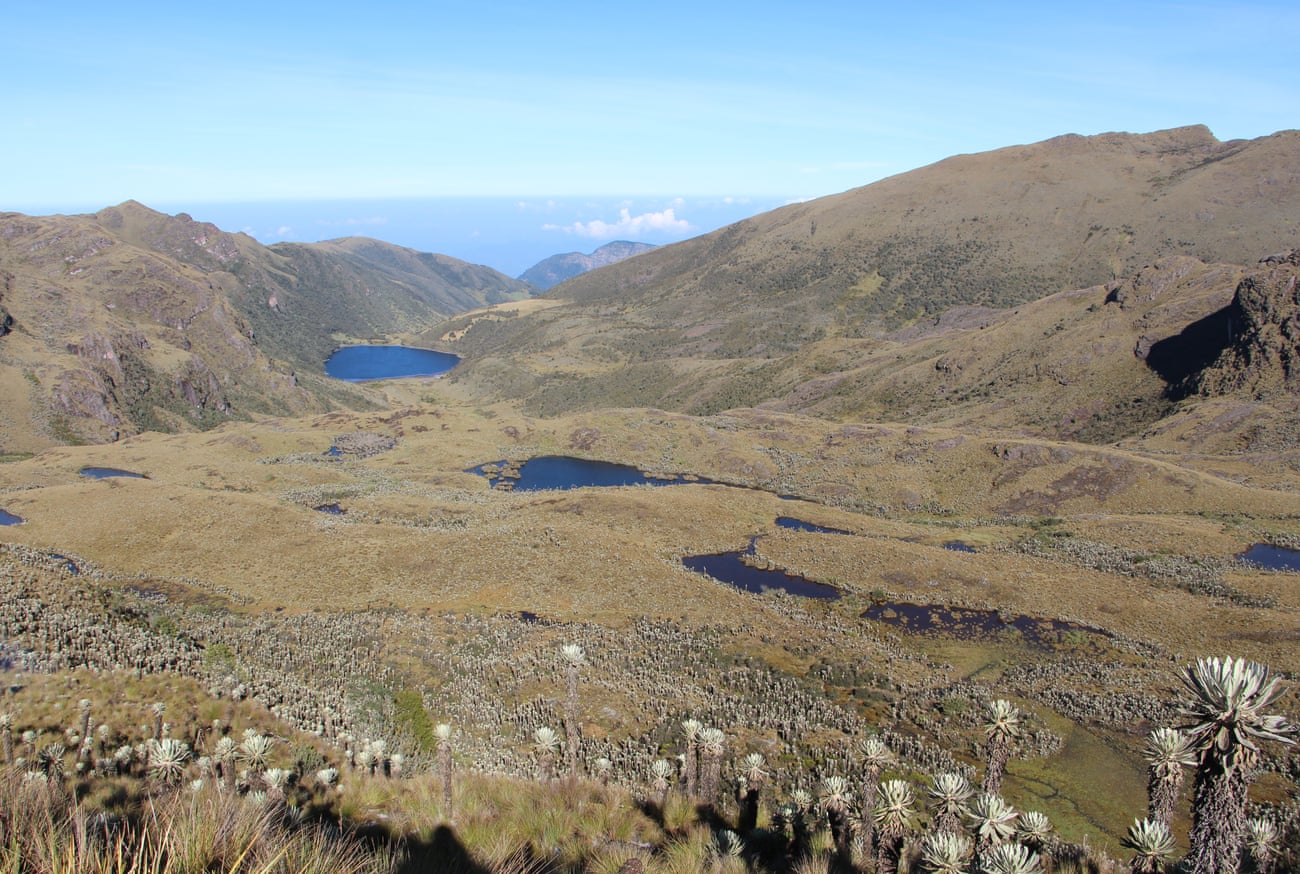
The misty and marshy páramo landscapes that sit above the tree line and below the snow caps of the soaring Andes peaks are known as the living factories that ensure a steady flow of clean water to the region’s growing population.

But after many centuries of protection as sacred places, the páramos face a battery of threats: destruction by farming and mining, rapidly rising temperatures and a triple plague attacking the exotic frailejones plants that stand like silent armies defending the land.

Frailejones, or big monks, rise amid the misty Andean páramos in Colombia. The country hosts 88 of the 143 known frailejones species. Photograph: Courtesy of Mauricio Diazgranados

Healthy páramos are covered with plants adapted to the extreme conditions in the high-altitude tropics, where scorching sun is followed by freezing nights. They are highly efficient at capturing huge quantities of water from the thick rolling fogs and rains, then trapping it in rich peat soils and slowly releasing it, preventing floods in the wet season and drought in the dry months. This steady supply provides virtually all the water for big cities such as Bogotá and Quito in Ecuador, where water shortages strike regularly.

“It really is a sponge!” says Diazgranados, from Kew Gardens in west London, picking up a fistful of moss in the Paramo de la Rusia in northern Colombia. It’s the end of the dry season but water still drips out as he squeezes.

Despite the critical importance of the páramos, until recently it was one of the least known ecosystems in the world. Now a team of researchers have set out to give the paramos the most thorough and hi-tech examination yet, from above, on and below the ground, aiming to reveal exactly how the giant water towers work and can be protected.

The stakes could not be higher, says Juan Pablo Romero, from the Nature Conservancy in Bogotá, and not part of the team. “If you don’t have water, you don’t have anything. We won’t be able to function as a society.”

Steady water flow is also crucial for hydropower, which dominates the electricity supply of the region. The new research may have global importance too, as there are similar landscapes in Africa, south-east Asia and Hawaii.

In the Páramo de la Rusia, the sharp peaks rise to 4,000 metres, eagles soar over deep green valleys, and mountain lions and wild guinea pigs roam the slopes. When the sun breaks through the mists, the crowns of the frailejones light up in silvery green, like lanterns across the mountainside. Their shininess is a vital protection from the sun’s intense UV radiation.

Colombian botanist Mauricio Diazgranados. Photograph: Damian Carrington/The Guardian

As an eagle passes, Charles George, a researcher at the Centre for Ecology and Hydrology (CEH) in the UK, cries: “OK, everyone, I’m flying.” His warning is for the drone that takes to the air and begins its passes, photographing the landscape and plants in 3D detail. “The important thing here is not to fly into the mountain!”

The páramos are also being examined from space. It is one of the first places where a new satellite radar method is being used to track the rise and fall of the plant-covered land to within a millimetre. “It’s giving an entirely new view of the peat,” says David Large, a senior research fellow at the University of Nottingham.

 The páramos in the high Andes. The region is also being examined from space. Photograph: Courtesy of Mauricio Diazgranados

Where peat is being degraded, the ground level will fall; where it is accumulating, as it should in a natural system, the land rises. “It’s like a heartbeat. If you get a good rhythm out of the bog, that’s like a good heartbeat. If not, it’s like an arrhythmia.”

On the ground, Diazgranados is sizing up the frailejones, which can grow to 10 metres over centuries and exist only in the páramos. “That’s beetle poop,” he says, pointing at dark flecks deep inside the fleecy crowns. Over the past decade, a triple plague has attacked the plants: beetle larvae, a night moth and a deadly fungus.

The cause is unknown, as some of the pests are new to science, but climate change is the key suspect, allowing lower-altitude species to invade as temperatures rise. The frailejones may be a crucial component of the páramos water factory, so the team are making 3D measurements of thousands of plants to measure their storage capacity.

 The frailejones, or big monk. The páramos is the most biodiverse mountain ecosystem in the world. Photograph: Courtesy of Mauricio Diazgranados
The páramos investigation is also going underground. In a neighbouring valley, where cattle raising and potato growing is more intense, Ed Rowe, the team’s soil ecologist and from CEH, is up to his waist in a pit he has dug in a field converted into pasture by burning.

“This would have been fluffy and held lots of water before. It would have been up to here,” he says, holding his arm about 50cm above ground level. Rowe thinks it has lost about half its water storage capacity, compacted by the hooves of cows and shrunk as exposed peat decays into carbon dioxide. He is taking samples to date the carbon and see where the oldest peat is being washed away.

Some parts of the páramos have already come back from the dead. “Fifty years ago, this land was bare like skulls: you could only see the rocks,” says a local farmer, José Álvaro, waving his arm across a recovered páramo that was once repeatedly burned. Álvaro, 81, remembers a massive fire sweeping through this valley in 1955, deliberately set but which got out of control.

Local farmer José Álvaro, 81, on a hillside. Photograph: Damian Carrington/The Guardian
“The old people had to find a path in life and needed the land for cows, sheep and goats,” he says. “But if the old people have destroyed, the young people will have to restore, but it will take a very long time.”

For many centuries, the páramos where protected by indigenous people as sacred places where the gods lived. The legend of El Dorado began in the páramos, where leaders or shamans would cover themselves in gold dust and dive into paramos lakes, throwing golden offerings for the gods. Spanish conquistadors searched for these treasures but called the paramos the Empire of Darkness, and many perished in the cold and boggy lands.

More recent protection was inadvertently provided by Colombian guerrillas, including the Farc, whose commander, Romaña, captured Diazgranados in the Sumapaz páramos near Bogotá in the mid-1990s. The party escaped in a nighttime march through the mountains.

But the páramos, the most biodiverse mountain ecosystem in the world, are now in mortal danger and no one knows how much has been lost already. Gold is again a factor, via both legal and illegal mining, along with coal and iron ore extraction. Global warming heats up mountains even faster than the lowlands, and it is predicted that half the remaining páramos could be destroyed by 2050.

German Grimaldos, 57, who has always lived by the Páramo de la Rusia, is clear: “The biggest threat we have is global warming. It heats the soil very fast.”

Fields cut into the páramos have hit water supplies to the nearby town of Belen, where Grimaldos lives. “Both the quantity and quality has got worse. When it rains, it washes all the soil, chemicals and fertiliser down to the town.” The cutting down of many thousands of frailejones to make traditional houses has also been harmful, he says. The practice only ceased in 2007.

France Gerard, at CEH and leader of the £1.3m project examining the páramos, says listening to the stories of local people is crucial. “They have been living in this place a long time and they will have an idea of how a páramo works. We’re convinced they can teach us something. Local farmers may, for example, have learned the most crucial areas to protect.”

The UK’s Centre for Ecology and Hydrology team on the ground in Colombia. Photograph: Courtesy of France Gerard
Gerard’s team will present their understanding of how the páramos work back to the local people at the end of the three year project, and the prospect of making a difference to many people’s lives is a big driver. “It makes me quite emotional,” she says. “We only have one Earth and the more we find out about it, the better we can protect it.”

The project is funded by the UK government, in parallel with Colombian government projects, and could have a wider significance if it cracks the mystery of exactly how water is regulated at high altitudes.

“It is a global problem because half of the world’s population depend on mountains” says Boris Ochoa Tocachi, an Ecuadorean hydrologist on the team. “Impacts on those mountains will clearly impact people, especially their clean and clear water.”

Sitting on the mountainside he has known for eight decades, Alvaro emphasises the sheer beauty of the páramos. “I am very proud to live here, and very happy. It is a beautiful land.”

He then sings a few lines from an old song, ending: “I love my land as I love my mother.”


The extraordinary ‘big monks’ of the páramos
In the dense mist that frequently drapes the páramos, it can seem like thousands of silent figures are watching. But they are plants, whose human scale and the distinctive leaves that crown them, gave them their popular name – frailejones, or big monks.

The striking plants, which can live for centuries, are found only in the northern Andes and through evolution have solved how to thrive in the extreme high-altitude environment.

“The sun is so strong it would burn the plants, so they have to protect themselves,” says Diazgranados. Their leaves are covered in tiny silvery hairs that reflect the light and make them gleam like beacons on the mountainside.

But sunscreen is not the only thing needed to survive. The soft hair also insulates the plant against the freezing alpine temperatures at night. Furthermore, most plants evaporate water from their leaves to draw up water and nutrients through their roots. But at night it is too cold for this, while opening their stomata in the glare of the sun would cause them to shrivel.

So they have become incredibly thrifty water users, passing up to 90% of the water they catch in their rosettes straight into streams. Pines, for example, pass on just 20%, evaporating the rest.

Frailejones make a thriving micro-ecosystem. One such plant in Venezuela contained 130,000 insects and spiders. Photograph: Damian Carrington/The Guardian
This superpower of the frailejones may be a significant part of the reason why the páramos have been such reliable water towers for millions of people. They are also vital for other life on the high mountains.

As they grow, the dead leaves pile up in neat layers under the growing crown and make a thriving micro-ecosystem for frogs, insects and spiders. One plant in Venezuela was found to harbour 130,000 insects and spiders. “They are a keystone species,” says Dizagranados.

There are 143 known species of frailejones, of which Colombia hosts 88. Most are under threat of extinction from farming, mining and agricultural expansion. Diazgranados has himself discovered 13 new species and he is sure more await discovery.

This is because each high peak is an isolated “sky island”, meaning unexplored mountains will have their own species that evolved in isolation. Elsewhere in the world, other plants have independently evolved the same solutions to high-altitude living, such as the silver sword in Hawaii.

(Source: The Guardian)

Thursday, 28 March 2019

Guy spends 6 months recreating a Van Gogh painting using plants in a 1.2-acre field

Can you imagine seeing a Van Gogh painting sitting right off the freeway on your morning commute or aerial ride?

One field in Egan, Minnesota got exactly this when the 64-year-old artist, Stan Herd, transformed it into Van Gogh’s 1889 “Olive Trees.”


Herd has been doing similar types of artworks or ‘earthworks’ since 1981. His most recent project took six months and spans 1.2 acres.

Plenty of mowing, digging, and planting was involved. All of which were sponsored by the Minneapolis Institute of Art. It can even be seen from the Minneapolis airport. The “earthwork” is comprised of mainly large native plants and materials. It was Herd’s way of uniquely engaging with his favorite artist.

Herd has been doing these types of artworks or ‘earthworks’ since 1981


His most recent project took six months and spans 1.2 acres. Plenty of mowing, digging and planting were involved which were all sponsored by the Minneapolis Institute of Art


If you’re ever near Thomas Reuter’s campus, you can catch a glimpse of this for yourself.

Photo Credits: Stan Herd

(Source: Can You Actually)

Monday, 4 March 2019

NASA says Earth is greener today than 20 years ago thanks to China, India

NASA has some good news, the world is a greener place today than it was 20 years ago. What prompted the change? Well, it appears China and India can take the majority of the credit.

Greening of China and IndiaNASA
In contrast to the perception of China and India’s willingness to overexploit land, water and resources for economic gain, the countries are responsible for the largest greening of the planet in the past two decades. The two most populous countries have implemented ambitious tree planting programs and scaled up their implementation and technology around agriculture.

India continues to break world records in tree planting, with 800,000 Indians planting 50 million trees in just 24 hours.

The recent finding by NASA and published in the journal Nature Sustainability, compared satellite data from the mid-1990s to today using high-resolution imagery. Initially, the researchers were unsure what caused the significant uptick in greening around the planet. It was unclear whether a warming planet, increased carbon dioxide (CO2) or a wetter climate could have caused more plants to grow.

After further investigation of the satellite imagery, the researchers found that greening was disproportionately located in China and India. If the greening was primarily a response from climate change and a warming planet, the increased vegetation shouldn’t be limited to country borders. In addition, higher latitude regions should become greener faster than lower latitudes as permafrost melts and areas like northern Russia become more habitable.

The greening of the planet.NATURE SUSTAINABILITY
The map above shows the relative greening (increase in vegetation) and browning (decrease in vegetation) around the globe. As you can see both China and India have significant greening.

The United States sits at number 7 in the total change in vegetation percent by decade. Of course, the chart below can hide where each country started. For example, a country that largely kept their forests and vegetation intact would have little room to increase percent vegetation whereas a country that heavily relied on deforestation would have more room to grow.

Comparing the greening of various countries around the globe.NASA.GOV

NASA used Moderate Resolution Imaging Spectroradiometer (MODIS) to get a detailed picture of Earth’s global vegetation through time. The technique provided up to 500-meter resolution for the past two decades.

Both China and India went through phases of large scale deforestation in the 1970s and 80s, clearing old growth forests for urban development, farming and agriculture. However, it is clear that when presented with a problem, humans are incredibly adept at finding a solution. When the focus shifted in the 90s to reducing air and soil pollution and combating climate change the two countries made tremendous shifts in their overall land use.

It is encouraging to see swift and rapid change in governance and land use when presented with a dilemma. It is something that will continue to be a necessary skill in the decades to come.

(Source: Forbes)

Friday, 6 April 2018

5 plants and animals utterly confused by climate change

Global warming is causing spring to arrive early and autumn to come late in many places, and not all species are adapting at the same rate, write Livia Albeck-Ripka and Brad Plumer in NYT. Read on: 

Every year, as the seasons change, a complex ballet unfolds around the world. Trees in the Northern Hemisphere leaf out in the spring as frost recedes. Caterpillars hatch to gorge on leaves. Bees and butterflies emerge to pollinate flowers. Birds leave the Southern Hemisphere and fly thousands of miles to lay eggs and feast on insects in the north.

All of these species stay in sync with each other by relying on environmental cues, much as ballet dancers move to orchestral music.

But global warming is changing the music, with spring now arriving several weeks earlier in parts of the world than it did a few decades ago. Not all species are adjusting to this warming at the same rate, and, as a result, some are falling out of step.

Scientists who study the changes in plants and animals triggered by seasons have a term for this: phenological mismatch. And they’re still trying to understand exactly how such mismatches — like the blooming of a flower before its pollinator emerges — might affect ecosystems.

In some cases, species might simply adapt by shifting their ranges, or eating different foods. But if species can’t adapt quickly enough, these mismatches could have “significant negative impacts,” said Madeleine Rubenstein, a biologist at the United States Geological Survey’s National Climate Change and Wildlife Science Center.

“If you look at the past history of climate on earth, there has never been such a dramatic, rapid, change in the climate,” said Andrea Santangeli, a postdoctoral researcher at the Finnish Museum of Natural History. “Species have to respond really fast,” he said, “that’s really unprecedented.”

Here are five examples of mismatch, just one of the many threats that species face from global warming, that scientists have discovered so far:

An orchid’s sex life turns bleak
The early spider orchid relies on deception to reproduce. Each spring, the orchid, whose bulbous crimson body looks like an insect, releases a pheromone that tricks solitary male bees into thinking the plant is a mating partner — a key step for pollination.

This ruse, which scientists call pseudocopulation, works because the orchid tends to bloom during a specific window each spring — shortly after lonely male bees emerge from hibernation but before female bees appear.

Yet with spring coming earlier, female bees are now emerging sooner and luring the male bees away from the lovelorn orchid, according to a 2014 study from Britain.

By examining data collected in herbariums and in the field over a century, the researchers found that the gap between the times when male bees and female bees emerge shrinks by about 6.6 days for each degree Celsius of warming, giving the orchid less opportunity to reproduce.

“The main finding is that things are getting increasingly bad for orchid pollination,” said Anthony Davy, a professor of biological science at the University of East Anglia, and the lead author of the paper. For this orchid — which is already rare — the future looks bleak, he said.

Spring comes early, but the flycatcher doesn’t
The European pied flycatcher runs on a tight schedule each spring.

From its wintering grounds in Africa, the bird flies thousands of miles north to Europe to lay eggs in time for the emergence of winter moth caterpillars, which appear for a few weeks each spring to munch on young oak leaves.

By timing this just right, the flycatchers ensure there’s enough food around when their hungry chicks hatch. In a series of studies in the 2000s, however, scientists in the Netherlands showed that many flycatchers were starting to miss this narrow window.
Lauren Kolesinskas for The New York Times
As spring temperatures warmed, oak trees were leafing out earlier and peak caterpillar season was arriving up to two weeks sooner in some places. But many flycatchers, which appear to schedule their departure from Africa based on the length of day there, were not getting to Europe early enough for their spring meals.

In the parts of the Netherlands where peak caterpillar season had advanced the fastest, the scientists later found, flycatcher populations dwindled sharply. “That was the big discovery that suggested this mismatch could have real consequences for populations,” said Christiaan Both, an ecologist at the University of Groningen.

Birds and tractors get too close for comfort
Climate change doesn’t just cause missed connections. In some cases, the advance of warmer weather can lead to perilous meetings.

In Finland, for example, the Northern lapwing and Eurasian curlew have usually built their ground nests on barley fields after farmers have sown their crops in the spring. But as temperatures have risen, the birds are now increasingly laying their eggs before the farmers get to the fields, which means their well-concealed nests are more likely to get destroyed by tractors and other machinery.

Looking at 38 years of data, researchers found that farmers in Finland are now sowing their fields a week earlier in response to warmer temperatures, but the birds are laying their eggs  two to three weeks earlier. “This has created a phenological mismatch,” said Andrea Santangeli, a postdoctoral researcher at the Finnish Museum of Natural History and lead author of the study. “The response we’ll see is declines of these birds.”

Caribou show up late for lunch
Caribou in western Greenland follow a strict seasonal diet. In the winter, they eat lichen along the coast. In the spring and summer, they venture inland to give birth to their calves and eat the Arctic plants that grow there.

As Greenland has warmed up and sea ice has declined, however, those inland Arctic plants have been emerging earlier — with some plant species now greening 26 days earlier than they did a decade ago. But the caribou have not shifted their migration as quickly. And scientists have documented a troubling trend in the region: More caribou calves appear to be dying early in years when the spring plant growth preceded the caribou’s calving season.

While that study only found a correlation between warmer temperatures and caribou calf deaths, “it’s consistent with the idea that mismatch is disadvantageous,” said Eric Post, an ecology professor at the University of California, Davis. When Arctic plants green up earlier, they may become tougher and less nutritious by the time the caribou get there and start eating them.

Why don’t the caribou speed up their migration? One possibility is that their reproductive cycles respond most strongly to seasonal signals like the length of the day, whereas plants respond more strongly to local temperatures, which are rising.

In theory, if given enough time, the caribou might eventually adjust as natural selection takes its course and favors individuals that calve earlier. But with the Arctic warming faster than the rest of the globe, Dr. Post said, “the question is whether things are changing too fast for evolution to matter.”

The snowshoe hare has a wardrobe malfunction
Climate change doesn’t just cause mismatches in the spring. Consider the snowshoe hare, whose fur coat has evolved to change from brown to white during the winter for camouflage. As the earth has warmed, however, snow cover in the hare’s habitat melts sooner, leaving the animal more exposed to predators.

“Camouflage is critical to keep prey animals alive,” said L. Scott Mills, a professor of wildlife biology at the University of Montana who studies the impacts of camouflage mismatch on species like the snowshoe hare.

For every week the hare is mismatched, Dr. Mills and his colleagues found, it had a 7 percent higher chance of being killed by predators like the lynx.

Currently, the hare is only mismatched by a week or two. But by midcentury, Dr. Mills said, that could extend up to eight weeks. If that were to happen, he said, the hare “would start declining toward extinction.”

There is some good news for the snowshoe hare, however. Where evolution was previously thought to take millions of years, scientists now think an animal like the hare could adapt in five to 10 generations, especially if those parts of the hare population which are more adaptable are protected.

“It does give us an avenue for hope,” Dr. Mills said. “It’s not a foregone conclusion that species with phenological mismatch are going to go extinct.”

Monday, 25 September 2017

Haryana girl cycles solo from Kanyakumari to Khardung La for a green cause

Long-distance cycling is one of the favourite hobbies of Gurugrammers. Across the city, you will find several avid cyclists who cover distances of a few hundred kilometres every day. However, 25-year-old Sunita Chokhen, who lives on the outskirts of the city, has upped the ante by cycling solo for over 4000km from the southern-most point of the country to the northern-most motorable road.

The 25-year-old, who lives in a small town in Rewari, an hour away from Gurgaon, undertook this long journey as part of her plantation drive that saw her plant over 200 saplings in several cities in India. The journey also made her the first Indian woman to cycle solo from Kanyakumari to Khardung La, Leh.

Talking about why she started this journey, Sunita tells us, "I'm not a cyclist but a mountaineer. I climbed Everest in 2011 and have conquered 17 other mountains around the world. Earlier this year, I was on an expedition to an unclimbed mountain in the Himalayas when I noticed how much the region had changed. I had gone for my initial recce of that area in 2012 and since then, the region had seen so much deforestation that I felt bad. That's what compelled me to do something for the environment and the idea of the Kanyakumari to Leh plantation drive shaped up."

On why she chose to cycle instead of using any other mode of transportation, Sunita says, "If I had driven or taken a bike, it would defeat the purpose of an environment-friendly campaign since those vehicles cause pollution. Cycle was the best option."


Sunita started on her 4656km journey from the southern-most point on the mainland - Kanyakumari - on July 15, and ended it at Khardung La, the highest motorable road in the world, over six weeks later.

"It took me 46 days to finish the journey, during which I covered 100-200km every day on my cycle. But more importantly, I planted 220 saplings along the way. I planted some in every city I stopped in from Kanyakumari to Manali. Post Manali, the weather wasn't conducive for plantation so I stopped that," she says.

Sunita spoke to her contacts and friends in several cities and also made new friends in every city she visited, in order to make sure there was someone to look after the saplings she planted there.

She explains, "In every city, I planted the saplings keeping in mind that there was someone to tend after them. I mostly planted them in ashrams, temples, local schools or colleges. Even in open areas, I made sure to get the residents nearby to promise me to water them regularly. The main focus of my journey was not any record but the goal of plantation."

However, the record landed in her lap acci-dentally. She tells us, "Friends told me that I'm the first girl to cycle from Kanyakumari to Kashmir. I didn't believe it at first but then I decided to check and it was indeed the case. But since I hadn't mapped my journey through GPS, I could not apply to Guinness or Limca books. However, I have applied to India Book of Records for a certificate and my application is under review currently. The record is not my goal but a certificate wouldn't hurt."

Sunita, who is also the Beti Bachao Beti Padhao ambassador for Haryana, says that she utilised whatever free time she had in each city in trying to speak to the students there.

"I would walk up to local schools and colleges, tell the administration who I was and what I was doing, and that I wanted to speak to the students for a short time. Surprisingly, about 80% of the schools received me positively and I delivered quite a few short lectures in several schools along the way. I spoke to young girls about the importance of education, taking up sports, and preserving the environment."


Sunita started her cycling expedition from Kanyakumari. Here, she's seen cycling at a place that appears to be in Southern state.

Sunita now says that she will return to mountaineering for a while, but she does have plans to revisit all the places where she has planted her saplings a few years on to check on their progress.

"I want to give the saplings some time to grow and a few years down the line, I will retrace my journey and see how much they have grown. I am curious to see whether my efforts will bear any fruit," she says.

(Source: ToI)