Showing posts with label Colombia. Show all posts

Monday, 15 July 2019

Bishop to spray holy water over city from helicopter in mass exorcism of 'demons' this weekend

‘We have to get rid of the devil,’ says Colombian monsignor Rubén Darío Jaramillo Montoya

A Catholic bishop will spray holy water over an entire city from a military helicopter in an attempt to conquer the demons he believes are plaguing it.

Monsignor Rubén Darío Jaramillo Montoya will perform the mass exorcism for the Colombian seaport of Buenaventura during the city’s annual patron saints’ festivities.

“We want to go around the whole of Buenaventura, from the air and pour holy water onto it to see if we exorcise all those demons that are destroying our port,” he told a Colombian radio station.

The bishop, ordained in 2017 by Pope Francis, added he wanted to “get rid of all the wickedness that is in our streets” during the helicopter flight.


Buenaventura, the South American nation’s biggest Pacific seaport, is notorious for drug trafficking and the violence wage by criminal gangs.

“In Buenaventura we have to get rid of the devil to see if we can return the tranquillity that the city has lost with so many crimes, acts of corruption and so much evil and drug trafficking,” Mr Montoya told local media.

“It will be a great public demonstration for the entire community, where we will pour holy water to see if so many bad things end and the devil goes out of here.”

Human Rights Watch has issued a report detailing Buenaventura’s history of abductions and killings by gangs known to maintain “chop-up houses” where victims are slaughtered.

Although there have been efforts to tackle violence by creating a “humanitarian zone” in the city, Mr Montoya said there had been 51 murders in 2019 so far.

Last year the Vatican announced a new training course for exorcism because of the increased demand for “deliverance ministry”.

(Source: The Independent)

Monday, 15 April 2019

In the land of El Dorado, clean water has become ‘blue gold’

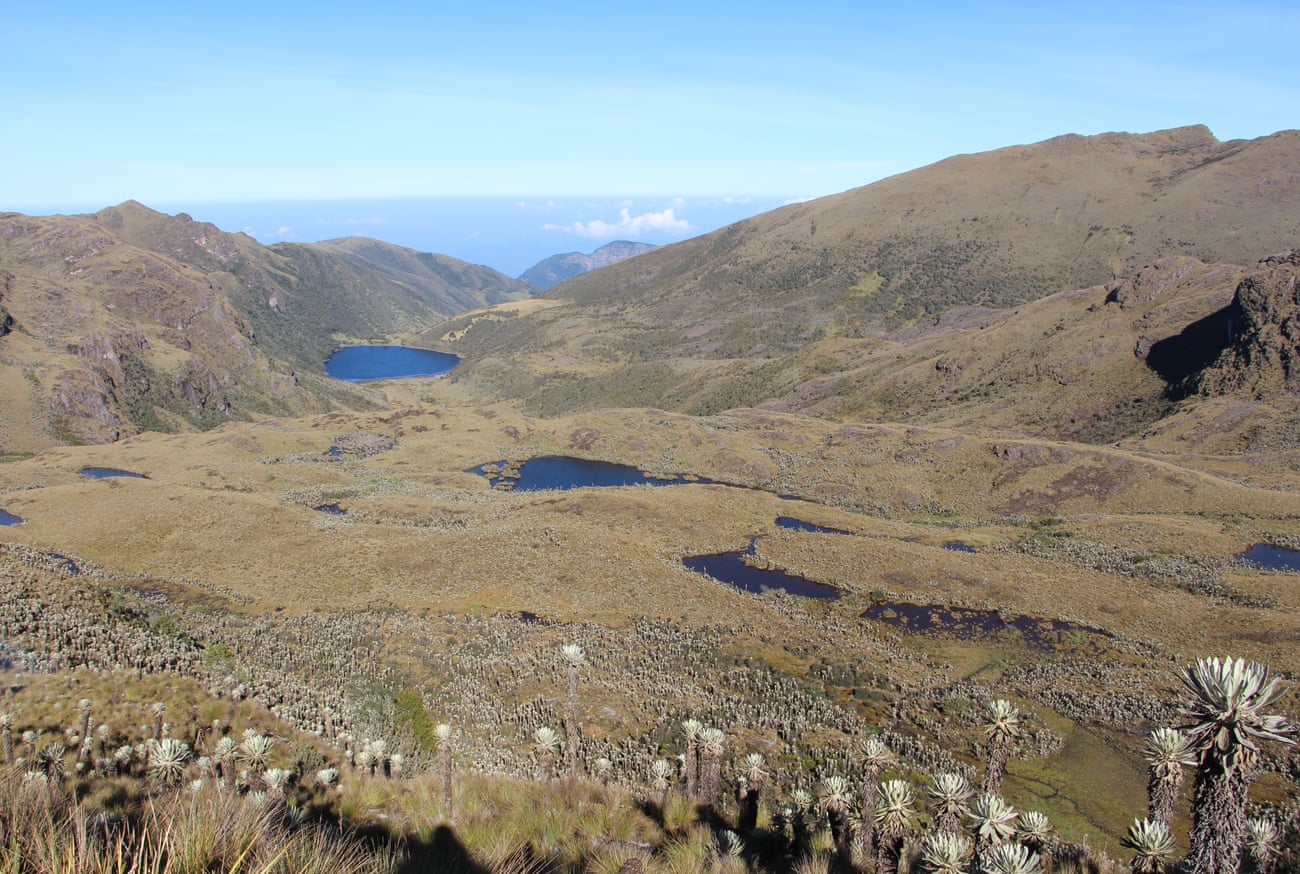
The misty páramos in the Andes that supply water to tens of millions of people are under threat. Now their mystery could be solved

In the land where the legend of El Dorado began, the race is on to solve the mystery of a vital 21st-century treasure – the water that tens of millions of people rely upon across northern South America. “It’s blue gold, and we are looking for it,” says Mauricio Diazgranados, a Colombian botanist.

The misty and marshy páramo landscapes that sit above the tree line and below the snow caps of the soaring Andes peaks are known as the living factories that ensure a steady flow of clean water to the region’s growing population.

But after many centuries of protection as sacred places, the páramos face a battery of threats: destruction by farming and mining, rapidly rising temperatures and a triple plague attacking the exotic frailejones plants that stand like silent armies defending the land.

Frailejones, or big monks, rise amid the misty Andean páramos in Colombia. The country hosts 88 of the 143 known frailejones species. Photograph: Courtesy of Mauricio Diazgranados

Healthy páramos are covered with plants adapted to the extreme conditions in the high-altitude tropics, where scorching sun is followed by freezing nights. They are highly efficient at capturing huge quantities of water from the thick rolling fogs and rains, then trapping it in rich peat soils and slowly releasing it, preventing floods in the wet season and drought in the dry months. This steady supply provides virtually all the water for big cities such as Bogotá and Quito in Ecuador, where water shortages strike regularly.

“It really is a sponge!” says Diazgranados, from Kew Gardens in west London, picking up a fistful of moss in the Paramo de la Rusia in northern Colombia. It’s the end of the dry season but water still drips out as he squeezes.

Despite the critical importance of the páramos, until recently it was one of the least known ecosystems in the world. Now a team of researchers have set out to give the paramos the most thorough and hi-tech examination yet, from above, on and below the ground, aiming to reveal exactly how the giant water towers work and can be protected.

The stakes could not be higher, says Juan Pablo Romero, from the Nature Conservancy in Bogotá, and not part of the team. “If you don’t have water, you don’t have anything. We won’t be able to function as a society.”

Steady water flow is also crucial for hydropower, which dominates the electricity supply of the region. The new research may have global importance too, as there are similar landscapes in Africa, south-east Asia and Hawaii.

In the Páramo de la Rusia, the sharp peaks rise to 4,000 metres, eagles soar over deep green valleys, and mountain lions and wild guinea pigs roam the slopes. When the sun breaks through the mists, the crowns of the frailejones light up in silvery green, like lanterns across the mountainside. Their shininess is a vital protection from the sun’s intense UV radiation.

Colombian botanist Mauricio Diazgranados. Photograph: Damian Carrington/The Guardian

As an eagle passes, Charles George, a researcher at the Centre for Ecology and Hydrology (CEH) in the UK, cries: “OK, everyone, I’m flying.” His warning is for the drone that takes to the air and begins its passes, photographing the landscape and plants in 3D detail. “The important thing here is not to fly into the mountain!”

The páramos are also being examined from space. It is one of the first places where a new satellite radar method is being used to track the rise and fall of the plant-covered land to within a millimetre. “It’s giving an entirely new view of the peat,” says David Large, a senior research fellow at the University of Nottingham.

 The páramos in the high Andes. The region is also being examined from space. Photograph: Courtesy of Mauricio Diazgranados

Where peat is being degraded, the ground level will fall; where it is accumulating, as it should in a natural system, the land rises. “It’s like a heartbeat. If you get a good rhythm out of the bog, that’s like a good heartbeat. If not, it’s like an arrhythmia.”

On the ground, Diazgranados is sizing up the frailejones, which can grow to 10 metres over centuries and exist only in the páramos. “That’s beetle poop,” he says, pointing at dark flecks deep inside the fleecy crowns. Over the past decade, a triple plague has attacked the plants: beetle larvae, a night moth and a deadly fungus.

The cause is unknown, as some of the pests are new to science, but climate change is the key suspect, allowing lower-altitude species to invade as temperatures rise. The frailejones may be a crucial component of the páramos water factory, so the team are making 3D measurements of thousands of plants to measure their storage capacity.

 The frailejones, or big monk. The páramos is the most biodiverse mountain ecosystem in the world. Photograph: Courtesy of Mauricio Diazgranados
The páramos investigation is also going underground. In a neighbouring valley, where cattle raising and potato growing is more intense, Ed Rowe, the team’s soil ecologist and from CEH, is up to his waist in a pit he has dug in a field converted into pasture by burning.

“This would have been fluffy and held lots of water before. It would have been up to here,” he says, holding his arm about 50cm above ground level. Rowe thinks it has lost about half its water storage capacity, compacted by the hooves of cows and shrunk as exposed peat decays into carbon dioxide. He is taking samples to date the carbon and see where the oldest peat is being washed away.

Some parts of the páramos have already come back from the dead. “Fifty years ago, this land was bare like skulls: you could only see the rocks,” says a local farmer, José Álvaro, waving his arm across a recovered páramo that was once repeatedly burned. Álvaro, 81, remembers a massive fire sweeping through this valley in 1955, deliberately set but which got out of control.

Local farmer José Álvaro, 81, on a hillside. Photograph: Damian Carrington/The Guardian
“The old people had to find a path in life and needed the land for cows, sheep and goats,” he says. “But if the old people have destroyed, the young people will have to restore, but it will take a very long time.”

For many centuries, the páramos where protected by indigenous people as sacred places where the gods lived. The legend of El Dorado began in the páramos, where leaders or shamans would cover themselves in gold dust and dive into paramos lakes, throwing golden offerings for the gods. Spanish conquistadors searched for these treasures but called the paramos the Empire of Darkness, and many perished in the cold and boggy lands.

More recent protection was inadvertently provided by Colombian guerrillas, including the Farc, whose commander, Romaña, captured Diazgranados in the Sumapaz páramos near Bogotá in the mid-1990s. The party escaped in a nighttime march through the mountains.

But the páramos, the most biodiverse mountain ecosystem in the world, are now in mortal danger and no one knows how much has been lost already. Gold is again a factor, via both legal and illegal mining, along with coal and iron ore extraction. Global warming heats up mountains even faster than the lowlands, and it is predicted that half the remaining páramos could be destroyed by 2050.

German Grimaldos, 57, who has always lived by the Páramo de la Rusia, is clear: “The biggest threat we have is global warming. It heats the soil very fast.”

Fields cut into the páramos have hit water supplies to the nearby town of Belen, where Grimaldos lives. “Both the quantity and quality has got worse. When it rains, it washes all the soil, chemicals and fertiliser down to the town.” The cutting down of many thousands of frailejones to make traditional houses has also been harmful, he says. The practice only ceased in 2007.

France Gerard, at CEH and leader of the £1.3m project examining the páramos, says listening to the stories of local people is crucial. “They have been living in this place a long time and they will have an idea of how a páramo works. We’re convinced they can teach us something. Local farmers may, for example, have learned the most crucial areas to protect.”

The UK’s Centre for Ecology and Hydrology team on the ground in Colombia. Photograph: Courtesy of France Gerard
Gerard’s team will present their understanding of how the páramos work back to the local people at the end of the three year project, and the prospect of making a difference to many people’s lives is a big driver. “It makes me quite emotional,” she says. “We only have one Earth and the more we find out about it, the better we can protect it.”

The project is funded by the UK government, in parallel with Colombian government projects, and could have a wider significance if it cracks the mystery of exactly how water is regulated at high altitudes.

“It is a global problem because half of the world’s population depend on mountains” says Boris Ochoa Tocachi, an Ecuadorean hydrologist on the team. “Impacts on those mountains will clearly impact people, especially their clean and clear water.”

Sitting on the mountainside he has known for eight decades, Alvaro emphasises the sheer beauty of the páramos. “I am very proud to live here, and very happy. It is a beautiful land.”

He then sings a few lines from an old song, ending: “I love my land as I love my mother.”


The extraordinary ‘big monks’ of the páramos
In the dense mist that frequently drapes the páramos, it can seem like thousands of silent figures are watching. But they are plants, whose human scale and the distinctive leaves that crown them, gave them their popular name – frailejones, or big monks.

The striking plants, which can live for centuries, are found only in the northern Andes and through evolution have solved how to thrive in the extreme high-altitude environment.

“The sun is so strong it would burn the plants, so they have to protect themselves,” says Diazgranados. Their leaves are covered in tiny silvery hairs that reflect the light and make them gleam like beacons on the mountainside.

But sunscreen is not the only thing needed to survive. The soft hair also insulates the plant against the freezing alpine temperatures at night. Furthermore, most plants evaporate water from their leaves to draw up water and nutrients through their roots. But at night it is too cold for this, while opening their stomata in the glare of the sun would cause them to shrivel.

So they have become incredibly thrifty water users, passing up to 90% of the water they catch in their rosettes straight into streams. Pines, for example, pass on just 20%, evaporating the rest.

Frailejones make a thriving micro-ecosystem. One such plant in Venezuela contained 130,000 insects and spiders. Photograph: Damian Carrington/The Guardian
This superpower of the frailejones may be a significant part of the reason why the páramos have been such reliable water towers for millions of people. They are also vital for other life on the high mountains.

As they grow, the dead leaves pile up in neat layers under the growing crown and make a thriving micro-ecosystem for frogs, insects and spiders. One plant in Venezuela was found to harbour 130,000 insects and spiders. “They are a keystone species,” says Dizagranados.

There are 143 known species of frailejones, of which Colombia hosts 88. Most are under threat of extinction from farming, mining and agricultural expansion. Diazgranados has himself discovered 13 new species and he is sure more await discovery.

This is because each high peak is an isolated “sky island”, meaning unexplored mountains will have their own species that evolved in isolation. Elsewhere in the world, other plants have independently evolved the same solutions to high-altitude living, such as the silver sword in Hawaii.

(Source: The Guardian)

Thursday, 21 February 2019

Cacao Hunters knows where the best chocolate is: Colombia

‘Don’t chew the chocolate,” instructs chocolate maker Mayumi Ogata. “First sniff the surface, where most of the aromatics are concentrated. Then take a small bite and let it melt over your tongue.”

I’m at Bricolage Bread & Co. in Tokyo’s Roppongi district, where Ogata is delivering a presentation about cacao — the pod-shaped fruit whose fermented beans are used to produce the main ingredient in chocolate — and Cacao Hunters Japan, the brand she helped to develop in Colombia. There, the company partners with various indigenous communities to source heirloom varieties of cacao for the Cacao Hunters line of premium chocolates.

“Different species of cacao have different characteristics. Some have more bitterness, others more sweetness. The roasted aromas, nutty notes and lime-like acidity are the flavors of fermentation,” she explains.
Getting to the good stuff: Cacao producers in Colombia pry open a cacao pod with a knife. | COURTESY OF CACAO HUNTERS

On the plate in front of me are three squares of chocolate, each containing a different percentage of cacao. I pick up a piece of 82-percent dark chocolate made with cacao from the Tumaco region of Colombia and follow Ogata’s directions. The aroma is high-toned and fruity; there’s a citrusy acidity on the palate and a touch of Earl Grey tea, with bitterness and sweetness balancing out the finish. It’s my first taste of chocolate from Tumaco, and I am impressed by its depth and range of flavors.

Although Cote d’Ivoire and Ghana are the world’s largest producers of cacao by volume, cacao trees originated in the Amazon Basin. Artifacts found in Ecuador suggest that indigenous people began cultivating the crop over 5,000 years ago. In recent years, Latin American countries such as Peru, Brazil and Ecuador have emerged as key players in the specialty chocolate market, but Colombia has remained relatively unknown.

“Colombia has suffered from ongoing conflict for many years. Warring between paramilitary forces, guerillas and drug cartels has prevented rural areas from thriving,” says Cacao Hunters co-founder Carlos Ignacio Velasco. “Our goal is to transform the cacao industry here and empower these communities.”

Velasco grew up in Popayan, a picturesque colonial town in southwestern Colombia. After graduating university, he began working with the Colombian Coffee Growers Federation. The job brought him to Tokyo, where he lived for four years, opening his eyes to the potential of high-end agricultural products for rural economies. Products such as coffee, he explains, are usually traded at low prices as commodities; turning them into specialty items adds value and boosts income for growers.

Eventually, he hit upon the idea of working with cacao. Native species of cacao trees abound in the jungles of Colombia’s Pacific coast. However, most of the cacao harvest “goes to the domestic, low-quality market.”

For the past seven years, Velasco has been working with small-scale farmers — around 1,500 families descended from African slaves in Tumaco, and approximately 200 families from the Arhuacos tribes in the Sierra Nevada region. He helps to select heirloom varieties and set up post-harvesting infrastructure, providing vital equipment such as fermentation tanks and drying stations, in order to improve the quality of the cacao beans and resulting chocolate.

Heirloom chocolate: Although Peru, Brazil and Ecuador have emerged as key players in the specialty chocolate market, Colombia remains relatively unknown. | COURTESY OF CACAO HUNTERS
“The most important element of what we do is provide the farmers with a stable and high price for the product. Then we can create the right incentives for them to keep cultivating cacao as an alternative to coca, which contributes to the development of the country as a whole,” Velasco says. According to an impact assessment conducted by U.S.-based investment firm Acumen, the project has led to an increase in net income of 58 to 75 percent for producers.

Through contacts in Tokyo, Velasco met Mayumi Ogata, who had been working as a consultant for a major chocolate company. He invited her to Sierra Nevada to meet with the Arhuacos, and she soon became a partner in the venture.

“When I first visited Colombia, I was blown away by the biodiversity of the cacao, but the (production and distribution) systems were not organized at all. I felt that there was so much work for us to do. I thought that if we could just make certain adjustments, we would be able to make great chocolate, at such a high level,” Ogata recalls. “I see a lot of potential for Colombian chocolate going forward.”

In 2013, the two set up a factory in a corner of Velasco’s mother’s pastry shop in Popayan. Velasco made chocolate in tiny batches and Ogata brought suitcases filled with samples to Japan. In 2015, Cacao Hunters received its first gold medal at the prestigious International Chocolate Awards, and the company has expanded operations, opening a new facility to meet demand.

The Cacao Hunters brand has since caught the attention of top chefs and patissiers such as Jordi Roca, of Spain’s El Celler de Can Roca, who visited farmers in Sierra Nevada last year. In Tokyo, Shinobu Namae uses the chocolate in recipes at Bricolage and his Michelin-starred restaurant, L’Effervescence.

“Before, I was using chocolate from big international companies and thought of it as a product without uniqueness. Now I see there is so much more, and this has changed the way I use it,” Namae says.

Working with distinctive ingredients, he explains, requires more creativity and experimentation. The chocolate croissant at Bricolage, for example, is made with Cacao Hunters’ 82-percent chocolate, which necessitates a slightly saltier pastry dough to “highlight the fruity flavor of the chocolate.” The result? Delicious.

(Source: JT)

Wednesday, 4 July 2018

World Cup: Mystery as James Rodriguez left out of England vs Colombia

James Rodriguez was the shock absentee for Colombia vs England after losing his fitness battle to feature in the World Cup last-16 clash.

The 2014 Golden Boot winner injured his calf in the first half against Senegal in the group stage and, despite missing training on the eve of the match, was given until the last moment to make the team.

Instead, the Real Madrid man's place went to Levante's Jefferson Lerma at Moscow's Spartak Stadium.

When the official teamsheets were uploaded to Fifa's website ahead of the game, Rodriguez was marked as "absent" - indicating he was not even available from the bench.

Rodriguez won't playa against England (AFP/Getty Images)
The same absent marker appeared alongside the names of his team-mate Miguel Borja and England's Fabian Delph, corresponding with the latter not being included after flying home to be with his wife for the birth of their third child.

Tournament organisers Fifa later released the official teamsheet for the game, with Rodriguez apparently absent.

England meanwhile reverted to the same starting XI which started the tournament.

That meant Dele Alli returning in place of Ruben Loftus-Cheek in midfield, the Tottenham man having missed the last two games due to a thigh injury.

None of the eight players drafted in for the defeat by Belgium held their spot, with Ashley Young keeping Danny Rose out at left wing-back and Raheem Sterling preferred to Marcus Rashford as Harry Kane's partner up front.

(Source: The Independent)

Tuesday, 14 February 2017

Couple have been living inside sewer for 22 years

Maria Garcia and her husband, Miguel Restrepo, met on the streets of Medellin, Colombia. They were both drug addicts at the time, on the verge of giving up, but together, they found the strength to persevere and kick their addictions.

Twenty-two years later, they’re still living in the place where they found shelter. While you might think of it as an ideal homestead, that couldn’t be farther from the truth.

When Maria Garcia met her husband, Miguel Restrepo, their lives were on the verge of irreparable disaster.

They were both drug addicts living on the streets of Medellin, Columbia, a place known for its violence and widespread narcotics trafficking.

Without any money or family to take them in, they took shelter… in the sewers.

It was there where they were able to come together to kick their addictions.

You would think that as their lives improved, they would have wanted to move out of their sewer home.

But 22 years later, they’re still there.

And they couldn’t be happier.

They say that though their home is unusual, it has everything they need.

They have electricity, with lights, heat, and a little kitchen.

They even have a TV hooked up.

They decorate their home for the holidays like everyone else.

They say that the location is quite peaceful and far from the bustle of the city.

Their dog, Blackie, keeps them company and acts as the guardian of the homestead.

When asked if they ever think about leaving, they say they’ve never even considered it.

Some people might pity them for having to live in a sewer, but if you ask me, I’d say they should be envious of their happiness and contentment. All you really need to make a home is love… and maybe a TV.

(Source: NTD.TV)

Saturday, 21 January 2017

Quit your job and live abroad

Have you ever fantasized about quitting your job and moving to a place where it's so cheap that you barely need to work — if at all? "It’s a great idea, and it’s not that far-fetched," says Kathleen Peddicord, who has turned this fantasy into a business. As founder of the company Live and Invest Overseas, Peddicord advises global nomads on where to move in order to live on the cheap.

A long-time global nomad herself, Peddicord is originally from Baltimore. She left the U.S. about 20 years ago for a job in Waterford, Ireland, then made a pitstop in Paris before setting her sights on Panama City, where she now lives with her husband and family.

Here, Peddicord shares her top picks to live around the world: eight places where expats can get by on next to nothing. "They're beautiful, interesting, welcoming and adventure-rich places that are also single-friendly and uber-affordable," she says.

A note: In each case, the budget referenced is a base amount that gives a snapshot of monthly living costs for a single person and includes the cost of renting a two-bedroom apartment in a neighborhood where an American would be comfortable living. You could reduce your total budget by renting a smaller place. Costs for groceries, transportation and entertainment are also per person; internet and cable are often bundled with a telephone plan. And in some destinations, items like electricity or heat are listed as free because they're either included in the rent or unnecessary. These budgets do not include travel, clothes, health insurance and other costs.

1. Carvoeiro, Algarve, Portugal

"Looking at the whole world map right now and based on my experience and the input of people I know, this is my pick for the top place to live," says Peddicord, who also describes Portugal as "the best-kept secret of old-world Europe."

Carvoeiro, a town on the Algarve coast, qualifies as the most appealing place on earth to call home for several reasons, says Peddicord: "The take-your-breath-away views from the rocky coast, the constant sunshine, the near-perfect weather year-round, the food, the wine, the history — it all adds up to top-shelf living for a very bargain price."

"It's also a great place for single women to start a business and start a life," says Peddicord. The current down value of the euro helps contribute to the budget factor. "I think Carvoeiro is the best place to live abroad, unless you hate Europe and hate the beach."

Total monthly budget: $1,150 per person (€1,069)
Rent: €650
Transportation: €37.50
Gas: 0
Electricity: €90
Water: 0
Telephone/Internet/Cable TV: €70
Entertainment: €96.50
Groceries: €125

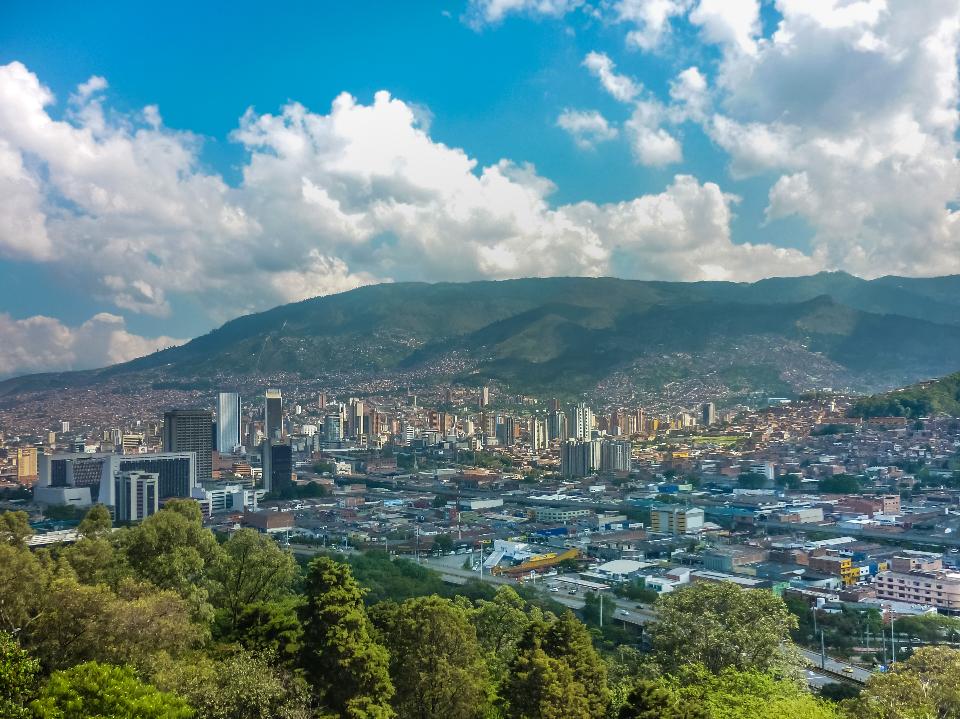
2. El Poblado, Medellín, Colombia

"Escobar’s dead and the city he and his goons once terrorized is today at peace," says Peddicord, describing Medellín, set in the mountains of Colombia. Her pick for where to live in Medellín: El Poblado, a neighborhood located in the heart of the city. "Medellín is culture rich and Euro chic; its people are well dressed, well mannered and welcoming. The city offers a comfortable, tranquil and idyllic way of life for a super affordable cost."

The current exchange rate between the U.S. dollar and the Colombian peso also allows expats to live a luxury cosmopolitan life at a great bargain. Another advantage: the weather, thanks to Medellín's location. "The climate is lovely all the time — upper 70s and low humidity," says Peddicord.

Medellín has also benefited from fear factor. "People have been afraid of it and have stayed away longer — both investors and tourists," says Peddicord, who points out that it's much cheaper, cooler and less touristy than Colombia's better known city, Cartagena.

Total monthly budget: $1,650 per person (4,760,000 Colombian pesos)
Rent: 3 million Colombian pesos
Transportation: 150,000 Colombian pesos
Gas: 300,000 Colombian pesos
Electricity: 0
Water: 0
Telephone/Internet/Cable TV: 300,000 Colombian pesos
Entertainment: 410,000 Colombian pesos
Groceries: 600,000 Colombian pesos

3. Las Terrenas, Dominican Republic

"Las Terrenas is quintessential Caribbean with a French twist," says Peddicord, describing this small coastal town on the north coast of the Dominican Republic. "The big and established community of French expats living in this white-sand beach town means fresh baguettes, great restaurants and greetings with kisses on both cheeks."

Add to that: "Infrastructure is improving, establishing residency is easy and the cost of living is one of the great bargains of today’s Caribbean."

Peddicord also points out that when many people look at the Caribbean as a region, the Dominican Republic is not necessarily the first place that comes mind — which has its advantages. "Other places like the Cayman Islands and the Bahamas are more developed and not necessarily in a good way," she says. "Tourists pay the highest prices for the worst services. The DR right now is enjoying a very strong economy — the strongest growing economy in Latin America — and an administration that’s working hard to bring attention to the country. Plus, crime is falling."

Total monthly budget: $1,250 per person (58,472.50 Dominican pesos)
Rent: 36,500 Dominican pesos
Transportation: 687.50 Dominican pesos
Gas: 350 Dominican pesos
Electricity: 2,755 Dominican pesos
Water: 230 Dominican pesos
Telephone/Internet/Cable TV: 2,200 Dominican pesos
Entertainment: 6,750 Dominican pesos
Groceries: 9,000 Dominican pesos

4.  Santa Familia, Cayo, Belize

"If you want to leave the troubles and the worries of our age behind, the little Santa Familia village in Cayo, Belize, is calling your name," says Peddicord. "Life in Cayo is back to basics, simple and sweet. You know your neighbors, they know you and you all look out for each other."

Peddicord recounts a 60 Minutes segment that Morley Safer did on Belize about 25 years ago. "He sat in a row boat and said 'The news from Belize is that there is no news from Belize.' And it hasn't changed since then. That's the reason Belize is on my list."

Cayo is a region of wide-open spaces, fresh air, warm sun and fertile land. "It's the world’s best place to disconnect and unplug," says Peddicord, which can have its disadvantages, too. "It’s is a paradise where the roads aren’t paved and the internet goes out constantly."

According to Peddicord, Belize is a country with limited government, limited resources and limited budgets — which is a positive thing, since the government leaves its residents well enough alone. "People are self-sufficient and self-reliant. The whole country is like a small town in the Midwest."

Total monthly budget: $1,200 per person (2,397.50 Belize dollars)
Rent: 1,200 Belize dollars
Transportation: 190 Belize dollars
Gas: 25 Belize dollars
Electricity: 350 Belize dollars
Water: 12.50 Belize dollars
Telephone: 100 Belize dollars
Internet: 100 Belize dollars
Cable TV: 45 Belize dollars
Entertainment: 175 Belize dollars
Groceries: 200 Belize dollars

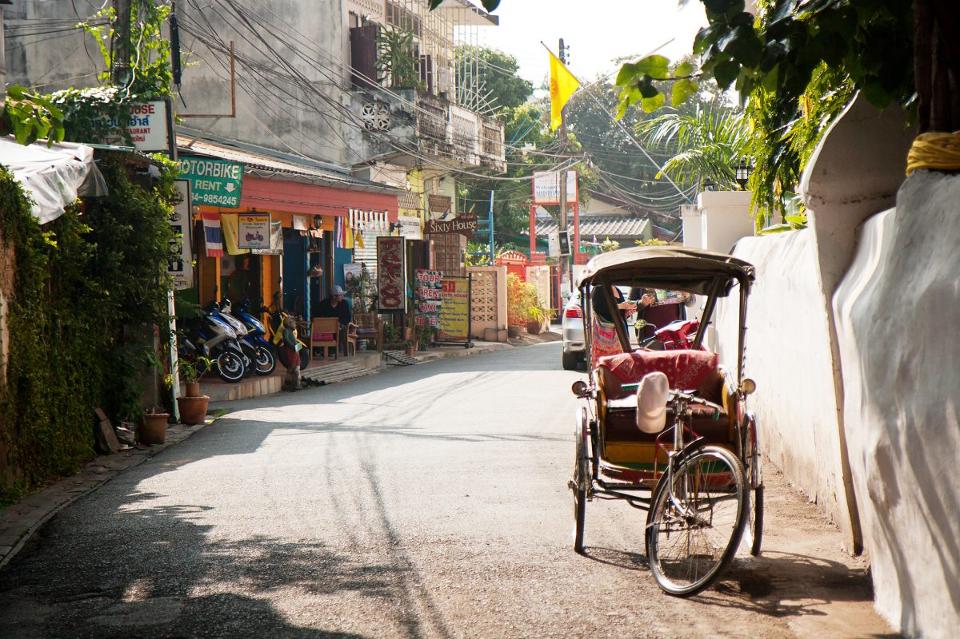
5. Chiang Mai, Thailand

"Since the 1800s, the Thai city of Chiang Mai has been luring expats from the West with its uber-low cost of living, great weather (especially compared with elsewhere in Thailand), rich history and distinct culture," says Peddicord.

"The biggest advantage to life in Chiang Mai is its cost in general and of health care in particular," she says. A person can live here comfortably on as little as $1,000 per month , and you can see an English-speaking doctor for $20.

The heart of Chiang Mai lies within its old city walls, where ancient and modern Buddhist temples coexist with public and international schools, residential and commercial neighborhoods. Modern Chiang Mai has grown beyond the ancient walls and offers mega-malls, huge multi-national grocery and department stores, and all other trappings of life in the 21st century.

"You will need to learn some basic Thai to get by, but there is an established expat community here that communicates in English," says Peddicord.

Total monthly budget: $1,000 per person (36,380 Thai baht)
Rent: 25,000 Thai baht
Transportation: 400 Thai baht
Gas: 300 Thai baht
Electricity: 2,000 Thai baht
Water: 200 Thai baht
Telephone: 600 Thai baht
Internet: 1,000 Thai baht
Cable TV: 1,100 Thai baht
Entertainment: 1,280 Thai baht
Groceries: 4,500 Thai baht

6. Barcelona, Spain

Peddicord's next pick: Barcelona, in the northeast of Spain on the Mediterranean Sea. "It is a vibrant, colorful, proud city that combines the passion of the Spanish with the efficiency and organization of the Catalans," she says, pointing out that it's a city with a strong energy that has not been dampened by Spain’s ongoing economic woes. And it's incredibly affordable to live here, versus vacationing here.

Another advantage: "Spain's second-biggest city is easily and quickly explored, thanks to its compact, well-laid-out design and the opportunities for diversion, entertainment and discovery," says Peddicord. You'll find art and architecture from pre-Roman times to the modern era around every corner. "This is a city of galleries, museums, monuments, theaters, restaurants and shopping, with the beach just right there."

Total monthly budget: $1,600 per person (€1,518.60)
Rent: €900
Transportation: €40
Gas: €80
Electricity: €60
Water: €20
Telephone: €45
Internet: 0
Cable TV: €20
Entertainment: €153.60
Groceries: €200

7. Granada, Nicaragua

"Nicaragua is a beautiful country with a troubled history that appeals to the romantic, the poet, the eco-traveler, the surfer (the break off Nicaragua’s Pacific coast is world-class) and the bargain hunter," says Peddicord. "The cost of living, of real estate and of everything else is a steal."

Geographically, Nicaragua is blessed with two long coastlines and two big lakes, plus volcanoes, highlands, rain forest and rivers. "In this regard, it's got everything Costa Rica's got, all less discovered, less developed and less expensive," she says.

Architecturally, too, Nicaragua is notable. "Colonial Granada is its architectural jewel," says Peddicord. "This city, one of the oldest in Latin America, is busier and livelier today than at any other time during its near five centuries of history, attracting tourists and expats in record numbers."

And Peddicord says that when you see it, you understand why: "The setting for this colonial town is like something out of a fairy tale — the lake, the volcano, the mountains.  At night, the backdrop is an ink-streaked sky that, just before the sun sets, illuminates the yellow and white cathedrals in ways that would have inspired Matisse to set up his easel."

Total monthly budget: $1,225 per person (35,945 córdobas)
Rent: 22,870 córdobas
Transportation: 500 córdobas
Gas: 290 córdobas
Electricity: 3,525 córdobas
Water: 285 córdobas
Telephone: 150 córdobas
Internet/Cable TV: 1,000 córdobas
Entertainment: 2,450 córdobas
Groceries: 4,875 córdobas

8. Kota Kinabalu, Malaysian Borneo

"This laid-back and quiet city is one of the most pleasant places to live in Asia and is incredibly welcoming," says Peddicord. "Its biggest practical advantages are the low cost of living and the high standard (and low cost) of health care."

The city is small and walkable. "Life revolves around the water and is lived out-of-doors," says Peddicord. "At home, you can fill your days snorkeling, diving, boating and ferry hopping from the city center to neighboring islands."

And while Kota Kinabalu might seem outside the box and comfort zone for most people, Peddicord says there is an emerging expat community, and it offers a mix of adventure and the exotic, as well as a "serene, close-to-nature lifestyle at a cost that’s a global bargain."

Total monthly budget: $850 per person (3,833 ringgits)
Rent: 2,500 ringgits
Transportation: 100 ringgits
Gas: 30 ringgits
Electricity: 200 ringgits
Water: 20 ringgits
Telephone: 50 ringgits
Internet: 60 ringgits
Cable TV: 70 ringgits
Entertainment: 253 ringgits
Groceries: 550 ringgits

(Source: Forbes)