Showing posts with label Portugal. Show all posts

Thursday, 4 June 2020

Coronavirus: UK holidaymakers ‘welcome’ in Portugal

Portugal's foreign minister has said anyone in the UK thinking of going to Portugal this summer will be "most welcome" amid coronavirus.

Augusto Santos Silva said he hoped an air bridge between the UK and Portugal could be secured by the end of June.

The UK is set to give more details of its plan to force arrivals into quarantine for 14 days later.

UK Home Secretary Priti Patel will say air bridges to countries with low virus infection rates are possible in future.
Getty Images 

This would mean that people arriving from certain places will not have to self-isolate.

However, that will only apply to countries with low Covid-19 infection rates, she is expected to tell MPs. She will also say that the planned quarantine for arrivals is necessary "to prevent a second wave of the virus".

Meanwhile, Heathrow boss John Holland-Kaye has told BBC Breakfast that travellers will have to fill out details of where they will be staying to quarantine, when they book their flight.

He said there will then be "spot checks" within the immigration area, where the Border Force officers will check if people have filled out their form.

"All of the form-filling will take place before you get on a plane, and will be done online. The government will be able to check information before people get onto a plane," he said.

Some countries have already started to ease travel restrictions. The German foreign minister Heiko Maas said the country would lift a travel ban for EU countries, as well as the UK and a handful of others - as long as they do not have large-scale lockdowns in place.

However, Germany will advise against travel to Britain for as long as the UK government demands a 14-day quarantine for new arrivals.

Limited nightlife
Portugal's Mr Santos Silva told the BBC that an agreement between the UK and Portugal could be in place by the end of June, meaning that holidaymakers returning to the UK from Portugal would escape the quarantine rules.

He said any travel quarantine "was an enemy of tourism", but that he respected the UK government's decision to enforce one on almost all arrivals to the UK from next Monday.

Mr Santos Silva said "rules" would ensure that people would be able to holiday safely.

The minister suggested that nightlife in Portuguese resorts this summer would be very limited and people would not be allowed to congregate in groups at night.

He said hotels and apartments which comply with standards set by the tourism board would be labelled as "clean and safe".

Portugal's foreign minister confirmed talks on the matter were continuing with the UK.

But he insisted that Portugal would not impose any type of quarantine for people arriving in his country.

Instead, he said Portugal would rely on temperature checks at airports and that Portugal was, in coordination with other EU countries, considering carrying out "random testing" on passengers.

Mr Santos Silva said tourists would be warned how full beaches are, so that they could avoid crowded spots.

UK aviation bosses hope that a large number of air bridge agreements will be in place by 29 June, when the travel quarantine is set to be reviewed.

More tourists from the UK head to the Algarve each summer than from any other country.

But Spain, another country whose tourism sector relies heavily on British holidaymakers, is taking a different approach.

The Spanish government has said it will only allow UK tourists in this summer if the infection rate in the UK falls more significantly.

The UK travel quarantine will apply to people arriving from any country, apart from the Republic of Ireland, and will also apply to UK nationals.

People will be required to self-isolate in a private residence for two weeks.

The government says people "could be contacted regularly during this period to ensure compliance".

People who break the rules could be fined £1,000.

UK travel companies say the travel quarantine already means people are not booking holidays. They warn that more businesses in the sector now face financial ruin.
Reuters

The measure will be reviewed every three weeks.

When deciding whether to keep the quarantine in place, the government will consider several factors. They include:
  • the rate of infection internationally
  • prevention measures in other countries
  • the extent to which other countries with more relaxed border arrangements have seen imported cases
  • the effectiveness of testing methods at minimising the risk of new cases of the virus entering the country.
Quarantine debate
A growing list of Conservative MPs have spoken out against the blanket travel quarantine.

However, a YouGov poll of 1,565 adults in Great Britain suggests that there is public support.

63% of those surveyed thought people should be quarantined as per the government's plan.

About one quarter thought that the quarantine should only apply to people arriving from countries with a "high number of coronavirus cases". Only 4% thought that there should be no quarantine at all.

Labour has questioned why a travel quarantine was not introduced some weeks ago.

New figures show that between the beginning of January and the end of April, 14,225 flights arrived into UK airports.

(Source: BBC)

Tuesday, 27 August 2019

Changing places: Why countries decide to move their capitals

Indonesia is pressing ahead with plans to move its capital from the traffic-choked city of Jakarta to the island of Borneo. The precise location has not yet been revealed - nor has a timeline - but President Joko Widodo formally launched the scheme in parliament on 16 August.

Reasons for moving the capital are not hard to find. Jakarta is sinking by an average of 1-15cm a year. Almost half the city is now below sea level. It sits on swampy land, the Java Sea lapping against it, and 13 rivers running through it.

Its traffic jams are notorious: in 2016, a survey found that the mega-city had the world's worst traffic congestion. Government ministers have to be escorted by police convoys to get to meetings on time.
Jakarta is traffic-clogged - and sinking

The greater urban area has a population of 30 million. Only about 2-4% of its waste water is treated.

The new capital would be in Kalimantan, the name for the Indonesian part of Borneo. The move would cost up to $33bn (£27bn). It would require an area of 30,000 to 40,000 hectares to house between 900,000 and 1.5 million people.

The frontrunner city is Palangkaraya, in central Kalimantan. It is geographically close to the centre of the Indonesian archipelago, and the country's founding father, Sukarno, also proposed to make it the capital.

But Indonesia is by no means the first country to consider moving its capital. Here are some other notable examples:

1. Kazakhstan
In 1997, President Nursultan Nazarbayev decided to move the capital from the main city, Almaty, He chose a dusty provincial town, some 1,200km (750 miles) north. One of the first things he did was to change the name, from Aqmola - which means "white grave" - to Astana.

He then brought in architects from around the world to build his capital from the ground up. One of its most striking landmarks is Khan Shatyr - the world's largest tent. Designed by Norman Foster, it houses an indoor shopping mall and entertainment complex.

The Baytarek Tower, which resembles an egg perched on top of a tree, houses an observation deck with a view of other newly built landmarks. These include the presidential palace, a riff on the White House topped with a pale-blue dome. Next to that is the Central Concert Hall, a turquoise structure mimicking an unfolding spaceship.

All this was made possible by Kazakhstan's booming oil sector: the economy grew by 4.8% in 2018. As a mark of gratitude, after President Nazarbayev stepped down in March, parliament voted to name the city in his honour.

So now the Kazakh capital - the second-coldest in the world, after Ulaanbaatar in Mongolia - is known as Nur Sultan City. Not bad for a settlement perhaps best known in Soviet times for its proximity to a gulag.

2. Myanmar
The city of Nay Pyi Taw covers at least four times the area of London, but with only a fraction of the people. Its history is short: it has only existed since 2005, raised out of the flatlands by the then military rulers of Myanmar (previously known as Burma).

The name means "seat of the king". The reasons for moving the capital some 370km inland from the largest city, Yangon (Rangoon), have never been entirely clear.

The information minister told the BBC at the time that it was a more strategic location, but analysts were sceptical. They said it was possible the military feared a foreign invasion, or wanted more control over ethnic minorities in the border regions.

Others suggested Myanmar's notoriously secretive leaders were simply repeating the habits of Burmese kings in pre-colonial times, who built new towns and palaces on the advice of fortune-tellers.

The city bears all the hallmarks of a planned capital: the road leading from parliament to the presidential palace is 20 lanes wide, but carries hardly any traffic. Shiny shopping malls and empty luxury hotels line the boulevards. There's a safari park, a zoo, and at least three stadiums. Unlike other parts of Myanmar, it has electricity around the clock.

3. Bolivia
Bolivia has two capital cities: Sucre and La Paz. Sucre was the sole capital until 1899, when it lost a brief civil war to La Paz. After that, parliament and the civil service moved to Bolivia's largest city, La Paz, while the judiciary remained in Sucre.

Sucre, in the centre of the country, was where Bolivia was founded, in 1825. It has a population of just 250,000, compared to 1.7 million in La Paz.

In 2007, a proposal was put forward to move parliament and government back to Sucre, only for what was described as the biggest ever protest in La Paz to break out.

The idea arose out of a regional rivalry between President Evo Morales' supporters in Bolivia's poor western highlands and his opponents in the more prosperous east.

The scheme was eventually abandoned, and Bolivia has two capitals to this day.

4. Nigeria
Until 1991 Lagos, the largest city in Nigeria, was also its capital. There were a number of reasons for moving the capital to Abuja: first of all, its central location, away from the coast.

It used to take about two days to travel the 1,600km to Lagos by road from the city of Maiduguri, in the north-east, Abuja was far closer.

Lagos was very congested (it's the most populous city in sub-Saharan Africa), and that was among the reasons for the move.

Abuja was also more politically and ethnically neutral. The Yoruba ethnic group dominates Lagos, while the Igbos are largely in the southeast and the Hausas in the northwest. This was no small matter: between 1967 and 1970, Nigeria was wracked by the Biafran war, when the Igbos sought to secede from Nigeria.

While Lagos grew up organically, Abuja is a planned city - the first in Nigeria. The traffic congestion in Lagos is notorious; in Abuja, the roads were designed to be wide from the start.

The national cultural institutes are there, along with the Supreme Court, the National Assembly and the presidential palace. However, many federal agencies are unofficially still based in Lagos.

5. Portugal
For 13 years, the capital of Portugal was not in Lisbon but Rio de Janeiro. The reason? Napoleon. During the Peninsular War (1807-14), the French invaded Portugal no fewer than three times. Days before the invasion in December 1807, the Braganza royal family and the court left for Brazil, then a Portuguese colony. They arrived in Rio in March 1808.

Rio in the early 19th Century was a booming city: there was gold, there were diamonds, there was sugar. There were also slaves: up to a million of them, about a third of the population.

Dom João VI, the prince regent, created the United Kingdom of Portugal, Brazil and the Algarves. This elevated Brazil from a mere colony to the same level as Portugal. Brazil was also granted more administrative independence. When the queen died in 1816, he became king.

In 1821, the Portuguese court returned to Lisbon where it remained until the end of the monarchy, in 1910. Its sojourn in Rio, however, left a lasting mark on Brazil, boosting its economy and hastening its push for independence.

(Source: BBC)


Thursday, 10 January 2019

Why Mandarin doesn’t come from Chinese

The name of the world’s most spoken language has a surprising origin story.

Since the mandarin duck appeared in Central Park last fall, his unexpected presence has stirred up many questions: Where did he come from? Why is he so hot? Can such beauty survive in our garbage world? And, for the linguistics nerds out there, where do mandarin ducks get their name?

Yes, true, mandarin ducks are native to China, where Mandarin is the official language. But the word mandarin has a more roundabout origin. It does not come from Mandarin Chinese, which refers to itself as putonghua (or “common speech”) and China, the country, as zhongguo (or “Middle Kingdom”). It doesn’t come from any other variant of Chinese, either. Its origins are Portuguese.

This one word encapsulates an entire colonial history. In the 16th century, Portuguese explorers were among the first Europeans to reach China. Traders and missionaries followed, settling into Macau on land leased from China’s Ming dynasty rulers. The Portuguese called the Ming officials they met mandarim, which comes from menteri in Malay and, before that, mantrī in Sanskrit, both of which mean “minister” or “counselor.” It makes sense that Portuguese would borrow from Malay; they were simultaneously colonizing Malacca on the Malay peninsula.

For centuries, Europeans’ impressions of China filtered largely through the Portuguese. The 16th-century Jesuit priest Matteo Ricci, for instance, was Italian, but he arrived in China through Portuguese Macau. Following the twisty logic of colonialism, when he attempted to transpose Chinese characters into the Latin alphabet, he made use of both Italian and Portuguese, comparing the sounds of individual characters to the sounds of Portuguese and Italian words. Even today, “linguists go to town and try to figure [out] what Chinese would have sounded like at the time,” says David Moser, author of A Billion Voices: China’s Search for a Common Language. “They could use as a clue the way Matteo Ricci wrote the Portuguese.”

Mandarin duck showing off in Central ParkSETH WENIG / AP

Over time, the Portuguese coinage of “mandarin” took on other meanings. The Ming dynasty officials wore yellow robes, which may be why “mandarin” came to mean a type of citrus. “Mandarin” also lent its names to colorful animals native to Asia but new to Europeans, like wasps and snakes and, of course, ducks. And the language the Chinese officials spoke became “Mandarin,” which is how the English name for the language more than 1 billion people in China speak still comes from Portuguese.

But words have a way of collecting just-so origin stories, and Chinese speakers have sometimes retroactively given a Chinese origin to “mandarin,” says Moser. It sounds similar enough to mandaren, a phrase that could mean “important Manchurian.” The rulers of China’s last dynasty, the Qing, were from Manchuria, so it make sense if you squint at it. “But it’s not true,” says Moser. “Mandarin” has a distinctly non-Mandarin origin.

“Mandarin” is what linguists call an exonym, an external name for a place, people, or language. And exonyms often tell a history of how cultures met, fought, and interacted. Many English names for continental European cities derive not from the local language but from French—probably a legacy of the Norman conquest of England. For example, English and French both use Cologne for Köln, Florence for Firenze, Prague for Praha, and Belgrade for Beograd.

In other cases, says the lexicographer Grant Barrett, exonyms arise because two places have a relationship that pre-dates current national boundaries. For example, adds the linguist Anatoly Liberman, we use “Germany” from the Latin Germania. In French, the name is Allemagne from a group of tribes called the Alemanni; in Finnish, Saksa from the Saxons. Germany (Deutschland in German) only became a unified country in 1871, long after other Europeans had adopted their own names for the place, based on different peoples who once lived there.

From the vantage point of English speakers, many of the exonyms for non-European places and languages come filtered through the languages of former colonial powers. Bombay and Ceylon, for example, also come from the Portuguese, whose empire once sprawled through Asia. The names imposed by colonial powers can be controversial, of course; Bombay and Ceylon have since officially changed their names to Mumbai and Sri Lanka. The name “Mandarin” still endures, perhaps because its origin is more obscure or because China has enjoyed warmer relations with Portugal than with other European countries. As for the mandarin ducks, they also live in Portugal now.

(Source: The Atlantic)

Tuesday, 25 December 2018

What Christmas dinner looks like around the world

People celebrate Christmas by feasting on everything from goose to whale blubbe

No matter where in the world you are, Christmas is about more than tradition and family - it’s also about food.

But what is actually served for Christmas dinner varies by country - with commonplace turkeys rarely having a place on the table outside of the US.

From Puerto Rican eggnog served in coconut shells to the Swedish egg-and-anchovy mixture gubbröra, traditional Christmas dishes from around the world provide an insight into the various ways that people celebrate and indulge on the holiday.

Sweden
In Sweden, the Swedish julbord or “Christmas table” usually begins with cold fish dishes, then meats, hot food, and dessert.

Swedish glazed ham is served cold on Christmas (Stock)

In most instances, the table features a Christmas ham, boiled then glazed with eggs, breadcrumbs and mustard - and served cold.

Apart from the centrepiece, Swedish Christmas dinner usually includes meatballs, lutfisk, a potato and fish dish, and pork sausage.

Libations consist of Glögg, a mulled wine, which is drunk before or after the meal.

Puerto Rico
In Puerto Rico, the national dish and meat component of the meal is a roast suckling pig known as lechón.

Suckling pig is served in Puerto Rico (Stock)

The process is quite arduous and requires at least two people turning and watching the pig - often beginning at two in the morning so it is ready in time for Christmas dinner.

Morcilla or blood sausage is also served, as are pasteles or meat pastries.

For dessert, tembleque, a coconut-based pudding is perfect when paired with coquito, a Puerto Rican spin on eggnog made with condensed milk, coconut milk and rum.

Japan
Christmas in Japan revolves around fried chicken - with KFC experiencing its busiest time of the year.

The tradition began in 1974 when the chicken brand created an advertising campaign called “Kentucky for Christmas” and it became popular.

KFC is a big part of Christmas in Japan (Stock)

Most families have to place their Christmas orders weeks in advance to secure their fried chicken meals.

In addition, traditional Japanese Christmas also sees Christmas cake eaten, especially strawberry shortcake.

Hot sake is also served on the holiday to wash down the meal.

Portugal
To celebrate the holiday in Portugal, most people eat variations of codfish and boiled potatoes.

Christmas dinner in Portugal usually features cod and potatoes (Stock)
However, it is the variety of desserts and pastries that take centre stage.

There are two types of Christmas cake, Bolo Rei, a nut- and fruit-filled concoction and Bolo Rainha, a variation with no candied fruit, as well as filhoses, fried dough covered in cinnamon and sugar, and Broa, small sweets made from egg yolk and sweet potato.

Eastern Europe
Lithuania, Poland and Ukraine all offer variations on an intricate 12-dish Christmas Eve feast. Meat, eggs and milk are all kept off the table by the regulations of the Nativity Fast practised by the Orthodox and Eastern Catholic churches, and while this fast is not so strictly observed as it once was, one can expect to see an array of pescatarian and grain-based dishes laid out on the table.

The fish dishes usually involve herring, carp or pike, and mushrooms also frequently appear.

Pierogi are a traditional part of the 12-course meal in Poland (Stock)

Beverages such as dried fruit compote or cranberry kisiel are also common.

The dinner is complete with a range of traditions, that vary by country.

Germany
Christmas in Germany is observed with a dinner involving duck, goose, rabbit or a roast, and sides such as potato and red cabbage dumplings.

For dessert, Stollen, a fruit bread of nuts, spices and dried fruit topped with powdered sugar is a traditional favourite, in addition to gingerbread houses, called pfefferkuchenhaus.

Goose is commonly found on the table during Christmas in Germany (Stock)
As for beverages, Feuerzangenbowle or “fire tong” punch, a hot mulled wine and rum beverage is popular, as is regular mulled wine, called Glühwein.

Norway
On Christmas Eve, the most popular dish in Norway is roasted pork served with sauerkraut and boiled potatoes.

Whole, steamed sheep’s head is also on the menu, with the ear and eye meant to be eaten first while the brain is taken out and served boiled or fried.

Pork is a popular Christmas dish in Norway (Stock)
For dessert, Multekrem is made by mixing cloudberries with whipped cream and sugar.

America
In America, Christmas dinner resembles Thanksgiving - there is turkey or ham, stuffing, mashed potatoes and gravy.

In America, Jewish people eat Chinese takeaway on Christmas (Stock)
For Jewish people living in America, the tradition is to eat Chinese food - with most Chinese restaurants open on the holiday.

Greenland
In a heart-warming tradition, men serve the women throughout the Christmas meal in Greenland.

The meal consists of mattak, strips of whale blubber encased in whale fat, and “kiviak,” a dish of flesh from auks buried in whole sealskin for several months and served once it begins to decompose.

Whale blubber is on the menu in Greenland (Wiki)
A popular dessert is Christmas porridge served with butter and topped with cinnamon and sugar. 

Jamaica
In Jamaica, Christmas dinner is usually prepared the night before, and includes fruits, sorrel, meat and punch.

Curried goat is a common dish during Christmas in Jamaica (Stock)
For dinner, the main may be anything from turkey to curry goat or stewed oxtail.

Britain
Christmas dinner in Britain isn’t complete without turkey, roast potatoes, Brussel sprouts, parsnips, pigs in blankets, stuffing, gravy, and cranberry sauce.

Christmas pudding is tradition in Britain (Stock)
Christmas pudding tops off the end of the feast.

And Christmas dinner wouldn't be complete without mulled wine.

(Source: The Independent)

Saturday, 10 November 2018

Ryanair sacks staff who 'spent night on airport floor' in Spain

Six Ryanair cabin crew members pictured sleeping on the floor of a Spanish airport office last month have been sacked, the airline says.

The image, which Ryanair said was staged, was widely shared online. A Portuguese union that represents airline crews criticised the airline.

The staff were dismissed for gross misconduct, a Ryanair spokesman said.

Over 20 crew members were stranded in Malaga airport when their Porto-bound flights were diverted on 14 October.
The company says the picture was staged, insisting that no crew slept on the floor

However Ryanair said that despite the issues, "no crew slept on the floor".

"The crew spent a short period of time in the crew room before being moved to a VIP lounge, and returned to Porto the next day," the company said after the image circulated.

Confirming the sackings on Tuesday, Ryanair said the photo led to media reports that damaged the company's reputation and "caused an irreparable breach of trust with these six persons".

The Portuguese union, SNPVAC, had earlier disagreed with Ryanair's summary of events, claiming that crew members were placed in a room between 01:30 and 06:00 "without minimum rest facilities".

The union said that crew members were left "without access to food, drinks and even a place to sit down, as there were only eight seats available for the crew".

However SNPVAC confirmed that the staff were moved to a VIP lounge at 06:00.

The airline came under fire after the photo appeared on social media.

It was first shared by Jim Atkinson on Twitter, who criticised Ryanair for not providing adequate accommodation for staff.
(Source: BBC) 

Saturday, 27 January 2018

Royal Enfield opens Portuguese-styled Garage Cafe in Goa

Royal Enfield has opened its first ever Royal Enfield Garage Cafe in Arpora, Baga, Goa. This cafe is a massive 120-seater cafe and is also a Royal Enfield museum and exhibition area. The cafe has also got an exclusive gear store, motorcycle customisation area, and a service bay.

Royal Enfield states that the Garage Cafe is "a catalyst to deepen personal associations with Royal Enfield enthusiasts and customers." However, it is designed to be an inclusive and engaging space which is open to riders, non-riders, travellers and explorers, and their families.


"The ambience of the cafe is inspired by the Royal Enfield motorcycling way of life - laid-back, unpretentious and relaxed. The Garage Cafe is a celebration of exploration in a Royal Enfield way through food, beverage, music, entertainment, and personal expression," according to a statement from Royal Enfield adds. "The Garage Cafe is inspired by the central traditional Portuguese style structure which is reflected in the interiors of the cafe. In addition to that, the Cafe is built around the core values of Royal Enfield that are an expression of timelessness and craftsmanship and an unadulterated love for motorcycling."

(Source: India Today)

Tuesday, 21 November 2017

80 million-year-old, dinosaur-era shark with 300 teeth found off Portugese coast

The scientists have named the creature as Chlamydoselachus anguineus for its gills- the frilled arrangement of 300 teeth, neatly lined in 25 rows

The discovery of a dinosaur-era shark species in Portugese coast has caused waves in the minds of scientists around the world. According to the scientists, the “living fossil” can be dated back to 80 million years ago – the Cretaceous Period when when the Tyrannosaurus Rex and Triceratops were around. The researchers of the European Union project discovered this snake-head in the Algarve coast this summer, BBC reported.

The male shark with a long, slim, snakelike body was captured at a depth of 701 metres off the
sea that measured 1.5 metres in length
The male shark with a long, slim, snakelike body was captured at a depth of 701 metres off the sea that measured 1.5 metres in length . The scientists named the creature as Chlamydoselachus anguineus for its gills — the frilled arrangement of 300 teeth, neatly lined in 25 rows. The shark has six pair of gills which is frilly edges. The creature is mostly unevolved due to the lack of nutrients available in deep-sea dwellings.

The Portuguese Institute for the Sea and Atmosphere has named it as a “living fossil”. The discovery adds to the list of very few sharks recently found in Australia, New Zealand and Japan. This deep sea creature usually lies at a depth of 390 and 4,200 feet below the surface, which is one one of the main reasons it was not discovered before the 19th century.

(Source: Indian Express)

Saturday, 16 September 2017

The forgotten story of Rani Abbakka Chowta, the fearless warrior queen of Tulu Nadu

The only woman in history to confront, fight and repeatedly defeat the Portuguese, Rani Abbakka’s unflagging courage and indomitable spirit are at par with the legendary Rani Laxmi Bai of Jhansi and Rani Chennamma of Kittur, writes Sanchari Pal on the Better India. Read on: 

In Dakshina Kannada’s Bantwal taluk, a historian has erected a museum in the memory of a 16th-century warrior queen. The man behind the museum, called Tulu Baduku Museum, is Prof. Thukaram Poojary and his subject is Rani Abbakka Chowta of Ullal.

The only woman in history to confront, fight and repeatedly defeat the Portuguese, Rani Abbakka’s unflagging courage and indomitable spirit are at par with the legendary Rani Laxmi Bai of Jhansi, Rani Rudramma Devi of Warangal and Rani Chennamma of Kittur. Yet, little is written about her or her incredible story in the history books.


Here’s the untold story of Rani Abbakka Chowta, the valiant queen of Ullal.

Since the 7th century, maritime trade (in spices, textiles, war horses etc) had flourished between the communities of India’s western coast and the Arabian Peninsula. With an eye on this lucrative trade, several European powers had been trying to discover the sea route to India. The Portuguese finally became the first Europeans to find a sea route to India when Vasco Da Gama reached Calicut in 1498 after a long voyage.

Five years later, the Portuguese built their first fort at Cochin. This was followed by the establishment of a ring of forts in the Indian Ocean region – in India, Muscat, Mozambique, Sri Lanka, Indonesia, even as far as Macau in China. This, along with its superior naval technology, put the control of all the spice routes to India into the hands of the Portuguese within twenty years of Da Gama’s historic voyage.

This, along with its superior naval technology, put the control of all the spice routes to India into the hands of the Portuguese within twenty years of Da Gama’s historic voyage.

For the whole of the 16th century, Portuguese dominance in the region remains unchallenged by any other European power (the Dutch, the French and the British reached India only at the start of the 17th century).

Trading in the Indian Ocean, which had hitherto been a free trade zone for Indian, Arab, Persian and African ships, now required a paid permit (cartaz) from the Portuguese. The naval superiority of the Portuguese meant that they invariably won against local rulers who rebelled.


In 1526, the Portuguese captured the Mangalore port. Their next target was Ullal, a thriving port town that lay nestled between the verdant peaks of the Western Ghats and the cerulean blue waters of the Arabian Sea.

Ullal was the capital of the Chowta king Thirumala Raya III. Feudatories of the Vijayanagar kingdom, the Chowtas were Jain kings who had originally migrated to Tulu Nadu (a province consisting of present-day Dakshina Kannada district of Karnataka, portions of Udupi and Kasargod district in Kerala) from Gujarat in the 12th century.

As the Chowtas were a matrilineal dynasty, the king’s heir was his young niece, Abbakka. The fiercely independent princess had been trained in sword fighting, archery, cavalry, military strategy, diplomacy and all other subjects of statecraft from a very young age. As such, when Abbakka was crowned the Queen of Ullal, she was deeply aware of the threat posed by the Portuguese presence on the coast and equally determined to resist it with all she had.

Before his death, Thirumala Raya III had arranged a strategic marriage alliance for Abbakka with Lakshmappa Bangaraja, the ruler of Mangalore. As the ruler of Ullal, Rani Abbakka continued to live in her own home even after marriage and the couple’s three children stayed with her. However, the marriage broke down when Bangaraja compromised with the Portuguese.

With an eye on Ullal’s trade (that had flourished under the Queen’s able leadership), the Portuguese had been trying to exact tributes and taxes from Rani Abbakka. Incensed and exasperated at the unfair demands, she refused to accede to the Portuguese demands.


Her ships continued to trade with the Arabs despite attacks by the Portuguese. From Mogaveeras and Billava archers to Mappilah oars men, people of all castes and religions found a place in her army and navy.

Infuriated by her effrontery, the Portuguese began attacking Ullal repeatedly.The first battle took place in the year 1556, with the Portuguese fleet being commanded by Admiral Don Alvaro de Silveira, and ended in an uneasy truce.

Two years later, the Portuguese attacked with a larger force and were able to ransack the settlement at Ullal to some extent. However, Rani Abbakka’s masterful battle tactics and diplomatic strategy (she collaborated with Arab Moors and Zamorin of Kozhikode) pushed them back once again.

During the next battle, the Portuguese army under General Joao Peixoto attacked Ullal and managed to capture the royal palace. However, Rani Abbakka escaped before they could capture her.

Along with 200 loyal soldiers, she raided the Portuguese in the dead of night and killed the general along with 70 of his soldiers. Frightened by the ferocity of the attack, the remaining Portuguese troops fled to their ships


By this time, the Portuguese had become alarmed about Rani Abbakka’s growing reputation inspiring other rulers. When repeated frontal attacks didn’t work, they resorted to treachery. A series of edicts were passed to make any alliance with the defiant queen illegal. Her husband, Bangaraja of Mangalore, was also warned against sending any aid to Ullal under the threat of burning his capital.

Yet, Rani Abbakka continued to dismiss these rulings with contempt and scorn. The stunned Portuguese now decided to send Anthony D’ Noronha (the Portuguese Viceroy of Goa) to attack Ullal. In 1851, 3000 Portuguese troops supported by an armada of battleships attacked Ullal in a surprise pre-dawn attack.

Rani Abbakka was returning from a visit to her family temple and was caught off guard but she immediately mounted her horse and rode into the battle, leading her troops in a fierce counter-offensive.

Her piercing battle cry – “Save the motherland. Fight them on land and the sea. Fight them on the streets and the beaches. Push them back to the waters.” echoed through winds as she and her soldiers fired flaming arrows at the Portuguese ships.

Fight them on the streets and the beaches. Push them back to the waters.” echoed through winds as she and her soldiers fired flaming arrows at the Portuguese ships.

While many of the ships in the Portuguese armada burnt that night, Rani Abbakka was wounded in the crossfire and was captured by the enemy with the help of a few bribed chieftains. Rebellious till the very end, the fearless queen breathed her last in captivity. However, her legacy lived on through her equally fierce and brave daughters who continued to defend Tulu Nadu from the Portuguese.


A warrior queen who gave her life in defence of her freedom and motherland, Rani Abbakka remained a major thorn in the Portuguese’ side throughout her rule despite their superior military power. This itself speaks volumes about her courage and ingenuity. Yet her splendid story remains largely forgotten by history books.

The good news is that the legendary queen of Ullal continues to live on in the folk culture of the Dakshin Kannada region (through Bhuta Kola and Yakshagana). In the recent years, her story has been gradually coming to public attention.

Dakshin Kannada has been holding an annual celebration in her memory (Veera Rani Abbakka Utsava) for the last few years.

In 2003, Indian Post issued a special stamp dedicated to Rani Abbakka while in 2015, the Indian Navy acknowledged her naval heroics by naming a patrol vessel after her.

And there is also Tulu Baduku museum in Bantwal that displays around 3000 artefacts collected from dusty family attics by Poojary over a period of 20 years. Asked what motivated him to do so, Prof. Poojary explained to DNA:

“As a person who has made a career out of teaching history, I cannot allow an important freedom fighter to be forgotten just like that. Let the generations of future historians derive inspiration from it and dwell deep into Rani Abbakka’s life.”

Saturday, 21 January 2017

Quit your job and live abroad

Have you ever fantasized about quitting your job and moving to a place where it's so cheap that you barely need to work — if at all? "It’s a great idea, and it’s not that far-fetched," says Kathleen Peddicord, who has turned this fantasy into a business. As founder of the company Live and Invest Overseas, Peddicord advises global nomads on where to move in order to live on the cheap.

A long-time global nomad herself, Peddicord is originally from Baltimore. She left the U.S. about 20 years ago for a job in Waterford, Ireland, then made a pitstop in Paris before setting her sights on Panama City, where she now lives with her husband and family.

Here, Peddicord shares her top picks to live around the world: eight places where expats can get by on next to nothing. "They're beautiful, interesting, welcoming and adventure-rich places that are also single-friendly and uber-affordable," she says.

A note: In each case, the budget referenced is a base amount that gives a snapshot of monthly living costs for a single person and includes the cost of renting a two-bedroom apartment in a neighborhood where an American would be comfortable living. You could reduce your total budget by renting a smaller place. Costs for groceries, transportation and entertainment are also per person; internet and cable are often bundled with a telephone plan. And in some destinations, items like electricity or heat are listed as free because they're either included in the rent or unnecessary. These budgets do not include travel, clothes, health insurance and other costs.

1. Carvoeiro, Algarve, Portugal

"Looking at the whole world map right now and based on my experience and the input of people I know, this is my pick for the top place to live," says Peddicord, who also describes Portugal as "the best-kept secret of old-world Europe."

Carvoeiro, a town on the Algarve coast, qualifies as the most appealing place on earth to call home for several reasons, says Peddicord: "The take-your-breath-away views from the rocky coast, the constant sunshine, the near-perfect weather year-round, the food, the wine, the history — it all adds up to top-shelf living for a very bargain price."

"It's also a great place for single women to start a business and start a life," says Peddicord. The current down value of the euro helps contribute to the budget factor. "I think Carvoeiro is the best place to live abroad, unless you hate Europe and hate the beach."

Total monthly budget: $1,150 per person (€1,069)
Rent: €650
Transportation: €37.50
Gas: 0
Electricity: €90
Water: 0
Telephone/Internet/Cable TV: €70
Entertainment: €96.50
Groceries: €125

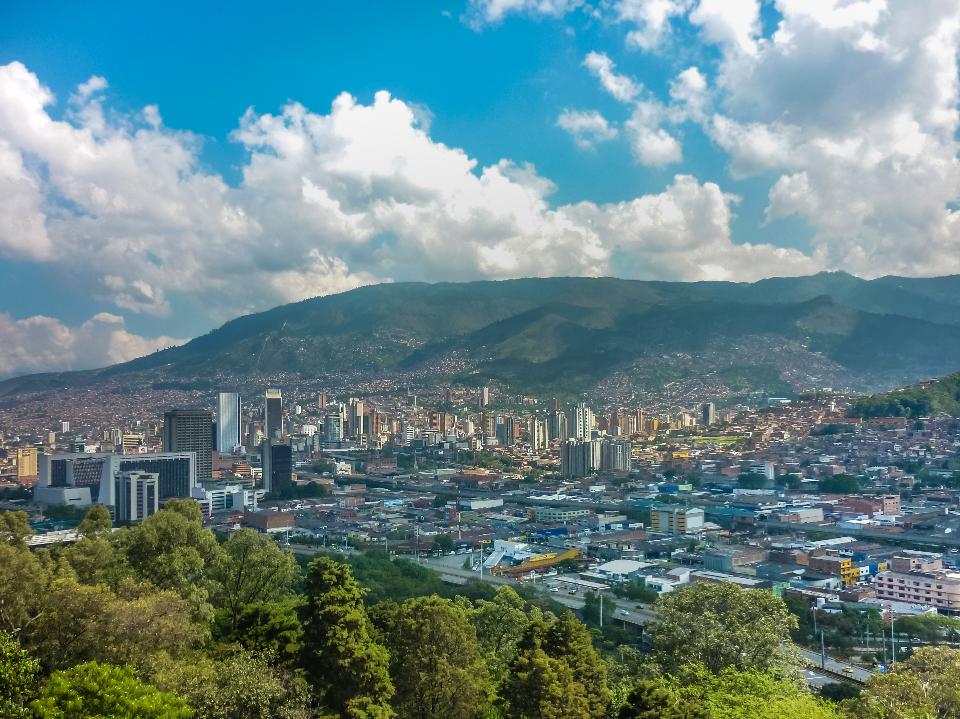
2. El Poblado, Medellín, Colombia

"Escobar’s dead and the city he and his goons once terrorized is today at peace," says Peddicord, describing Medellín, set in the mountains of Colombia. Her pick for where to live in Medellín: El Poblado, a neighborhood located in the heart of the city. "Medellín is culture rich and Euro chic; its people are well dressed, well mannered and welcoming. The city offers a comfortable, tranquil and idyllic way of life for a super affordable cost."

The current exchange rate between the U.S. dollar and the Colombian peso also allows expats to live a luxury cosmopolitan life at a great bargain. Another advantage: the weather, thanks to Medellín's location. "The climate is lovely all the time — upper 70s and low humidity," says Peddicord.

Medellín has also benefited from fear factor. "People have been afraid of it and have stayed away longer — both investors and tourists," says Peddicord, who points out that it's much cheaper, cooler and less touristy than Colombia's better known city, Cartagena.

Total monthly budget: $1,650 per person (4,760,000 Colombian pesos)
Rent: 3 million Colombian pesos
Transportation: 150,000 Colombian pesos
Gas: 300,000 Colombian pesos
Electricity: 0
Water: 0
Telephone/Internet/Cable TV: 300,000 Colombian pesos
Entertainment: 410,000 Colombian pesos
Groceries: 600,000 Colombian pesos

3. Las Terrenas, Dominican Republic

"Las Terrenas is quintessential Caribbean with a French twist," says Peddicord, describing this small coastal town on the north coast of the Dominican Republic. "The big and established community of French expats living in this white-sand beach town means fresh baguettes, great restaurants and greetings with kisses on both cheeks."

Add to that: "Infrastructure is improving, establishing residency is easy and the cost of living is one of the great bargains of today’s Caribbean."

Peddicord also points out that when many people look at the Caribbean as a region, the Dominican Republic is not necessarily the first place that comes mind — which has its advantages. "Other places like the Cayman Islands and the Bahamas are more developed and not necessarily in a good way," she says. "Tourists pay the highest prices for the worst services. The DR right now is enjoying a very strong economy — the strongest growing economy in Latin America — and an administration that’s working hard to bring attention to the country. Plus, crime is falling."

Total monthly budget: $1,250 per person (58,472.50 Dominican pesos)
Rent: 36,500 Dominican pesos
Transportation: 687.50 Dominican pesos
Gas: 350 Dominican pesos
Electricity: 2,755 Dominican pesos
Water: 230 Dominican pesos
Telephone/Internet/Cable TV: 2,200 Dominican pesos
Entertainment: 6,750 Dominican pesos
Groceries: 9,000 Dominican pesos

4.  Santa Familia, Cayo, Belize

"If you want to leave the troubles and the worries of our age behind, the little Santa Familia village in Cayo, Belize, is calling your name," says Peddicord. "Life in Cayo is back to basics, simple and sweet. You know your neighbors, they know you and you all look out for each other."

Peddicord recounts a 60 Minutes segment that Morley Safer did on Belize about 25 years ago. "He sat in a row boat and said 'The news from Belize is that there is no news from Belize.' And it hasn't changed since then. That's the reason Belize is on my list."

Cayo is a region of wide-open spaces, fresh air, warm sun and fertile land. "It's the world’s best place to disconnect and unplug," says Peddicord, which can have its disadvantages, too. "It’s is a paradise where the roads aren’t paved and the internet goes out constantly."

According to Peddicord, Belize is a country with limited government, limited resources and limited budgets — which is a positive thing, since the government leaves its residents well enough alone. "People are self-sufficient and self-reliant. The whole country is like a small town in the Midwest."

Total monthly budget: $1,200 per person (2,397.50 Belize dollars)
Rent: 1,200 Belize dollars
Transportation: 190 Belize dollars
Gas: 25 Belize dollars
Electricity: 350 Belize dollars
Water: 12.50 Belize dollars
Telephone: 100 Belize dollars
Internet: 100 Belize dollars
Cable TV: 45 Belize dollars
Entertainment: 175 Belize dollars
Groceries: 200 Belize dollars

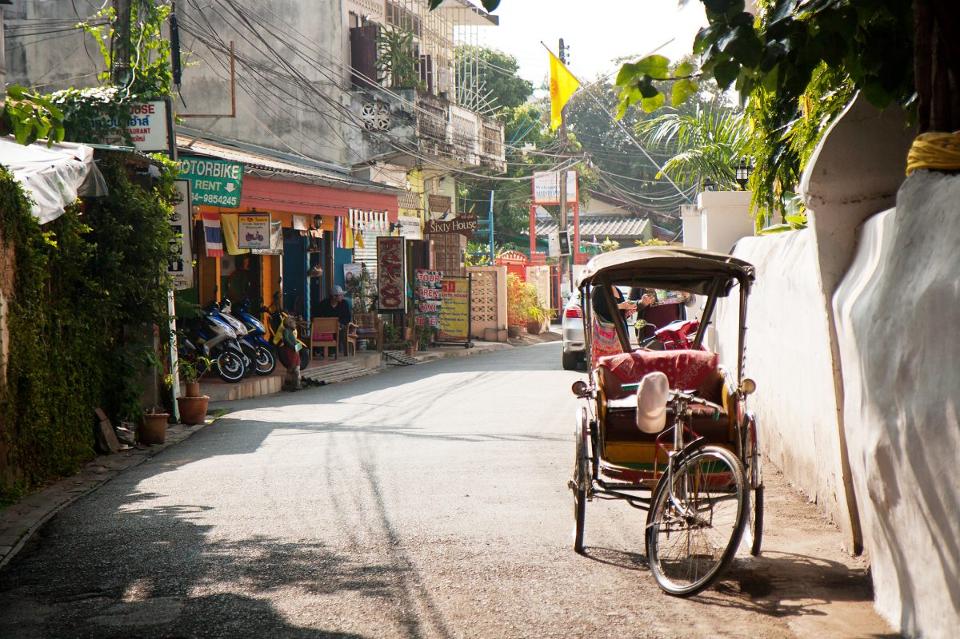
5. Chiang Mai, Thailand

"Since the 1800s, the Thai city of Chiang Mai has been luring expats from the West with its uber-low cost of living, great weather (especially compared with elsewhere in Thailand), rich history and distinct culture," says Peddicord.

"The biggest advantage to life in Chiang Mai is its cost in general and of health care in particular," she says. A person can live here comfortably on as little as $1,000 per month , and you can see an English-speaking doctor for $20.

The heart of Chiang Mai lies within its old city walls, where ancient and modern Buddhist temples coexist with public and international schools, residential and commercial neighborhoods. Modern Chiang Mai has grown beyond the ancient walls and offers mega-malls, huge multi-national grocery and department stores, and all other trappings of life in the 21st century.

"You will need to learn some basic Thai to get by, but there is an established expat community here that communicates in English," says Peddicord.

Total monthly budget: $1,000 per person (36,380 Thai baht)
Rent: 25,000 Thai baht
Transportation: 400 Thai baht
Gas: 300 Thai baht
Electricity: 2,000 Thai baht
Water: 200 Thai baht
Telephone: 600 Thai baht
Internet: 1,000 Thai baht
Cable TV: 1,100 Thai baht
Entertainment: 1,280 Thai baht
Groceries: 4,500 Thai baht

6. Barcelona, Spain

Peddicord's next pick: Barcelona, in the northeast of Spain on the Mediterranean Sea. "It is a vibrant, colorful, proud city that combines the passion of the Spanish with the efficiency and organization of the Catalans," she says, pointing out that it's a city with a strong energy that has not been dampened by Spain’s ongoing economic woes. And it's incredibly affordable to live here, versus vacationing here.

Another advantage: "Spain's second-biggest city is easily and quickly explored, thanks to its compact, well-laid-out design and the opportunities for diversion, entertainment and discovery," says Peddicord. You'll find art and architecture from pre-Roman times to the modern era around every corner. "This is a city of galleries, museums, monuments, theaters, restaurants and shopping, with the beach just right there."

Total monthly budget: $1,600 per person (€1,518.60)
Rent: €900
Transportation: €40
Gas: €80
Electricity: €60
Water: €20
Telephone: €45
Internet: 0
Cable TV: €20
Entertainment: €153.60
Groceries: €200

7. Granada, Nicaragua

"Nicaragua is a beautiful country with a troubled history that appeals to the romantic, the poet, the eco-traveler, the surfer (the break off Nicaragua’s Pacific coast is world-class) and the bargain hunter," says Peddicord. "The cost of living, of real estate and of everything else is a steal."

Geographically, Nicaragua is blessed with two long coastlines and two big lakes, plus volcanoes, highlands, rain forest and rivers. "In this regard, it's got everything Costa Rica's got, all less discovered, less developed and less expensive," she says.

Architecturally, too, Nicaragua is notable. "Colonial Granada is its architectural jewel," says Peddicord. "This city, one of the oldest in Latin America, is busier and livelier today than at any other time during its near five centuries of history, attracting tourists and expats in record numbers."

And Peddicord says that when you see it, you understand why: "The setting for this colonial town is like something out of a fairy tale — the lake, the volcano, the mountains.  At night, the backdrop is an ink-streaked sky that, just before the sun sets, illuminates the yellow and white cathedrals in ways that would have inspired Matisse to set up his easel."

Total monthly budget: $1,225 per person (35,945 córdobas)
Rent: 22,870 córdobas
Transportation: 500 córdobas
Gas: 290 córdobas
Electricity: 3,525 córdobas
Water: 285 córdobas
Telephone: 150 córdobas
Internet/Cable TV: 1,000 córdobas
Entertainment: 2,450 córdobas
Groceries: 4,875 córdobas

8. Kota Kinabalu, Malaysian Borneo

"This laid-back and quiet city is one of the most pleasant places to live in Asia and is incredibly welcoming," says Peddicord. "Its biggest practical advantages are the low cost of living and the high standard (and low cost) of health care."

The city is small and walkable. "Life revolves around the water and is lived out-of-doors," says Peddicord. "At home, you can fill your days snorkeling, diving, boating and ferry hopping from the city center to neighboring islands."

And while Kota Kinabalu might seem outside the box and comfort zone for most people, Peddicord says there is an emerging expat community, and it offers a mix of adventure and the exotic, as well as a "serene, close-to-nature lifestyle at a cost that’s a global bargain."

Total monthly budget: $850 per person (3,833 ringgits)
Rent: 2,500 ringgits
Transportation: 100 ringgits
Gas: 30 ringgits
Electricity: 200 ringgits
Water: 20 ringgits
Telephone: 50 ringgits
Internet: 60 ringgits
Cable TV: 70 ringgits
Entertainment: 253 ringgits
Groceries: 550 ringgits

(Source: Forbes)