Showing posts with label friends. Show all posts

Saturday, 19 February 2022

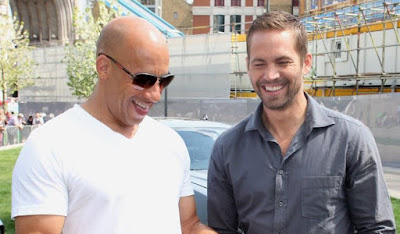
Vin Diesel walked Paul Walker’s daughter down the aisle at her wedding

 The theme of family transcends the Fast and Furious movies and has turned into a reality for the cast. Model Meadow Walker tied the knot in October and she shared images from her special day. She is the daughter of the beloved actor, the late Paul Walker. It was her dad’s close friend and costar, Vin Diesel, who walked her down the aisle.

© meadowwalker/Instagram

The Fast & Furious family showed up to support their costar’s daughter.

Meadow Walker married Louis Thornton-Allan in the Dominican Republic. Walker said it was a very intimate celebration. Another Fast & Furious actor attended, as seen in Meadow’s Instagram video. Jordana Brewster, who played the love interest of Paul Walker in the Fast and Furious franchise, is seen hugging the bride. Jordana posted the picture below congratulating the happy couple. Vin Diesel’s children were also attendees at the small wedding on the beach.


© jordanabrewster/Instagram


Meadow Walker shared images and a video from her wedding day on Instagram. One of the images is her being walked down the aisle by Vin Diesel. The video she posted showed her and Vin Diesel preparing to walk down the aisle. 


Meadow was 15 years old at the time of her Dad’s passing.


© meadowwalker/Instagram


Paul Walker passed away in 2013 at the age of 40. Meadow founded, and is the CEO of, the Paul Walker foundation, which aims to do good for the ocean life. 


Diesel and his family kept a close bond with Paul’s daughter.


Meadow posted a picture on Instagram with Vin Diesel’s children, with the caption “Family, forever.” Diesel is the godfather to Meadow Walker. In an interview Vin Diesel said Meadow is the first person to wish him a Happy Father’s Day and that it’s the most beautiful thing when he sees Meadow with his children. 


Paul Walker and Vin Diesel were more than just costars.


© Vin Diesel/Facebook


Paul Walker and Vin Diesel became close friends whilst working on the Fast and Furious movies together. Diesel said that he and Paul made a promise to each other that they would make ten Fast and Furious movies. He said that he saw how much the character of Brian O’Conner meant to him. In 2015 Vin Diesel named his daughter Pauline after Paul Walker.


Did your heart melt like ours did? Who are your chosen family members?


(Source: Brightside)

Sunday, 11 July 2021

Who is your neighbour? What we are not seeing in Pew study on India

The missing heterogeneity of our neighbourhoods should be viewed as a cultural, emotional and intellectual loss — a kind of social poverty.

There’s much to celebrate in the new Pew survey on the religious and cultural attitudes of Indians. Hindus and Muslims respect each others’ religion and take pride in their Indian identity. But there is one thing missing: ‘the neighbour’. There still appears to be some reluctance to have members of another religion living next door.


Thirty-six per cent of Hindus said they did not want a Muslim as a neighbour, and 22 per cent of Muslims and other religious minorities said they did not want a Hindu neighbour. This is on top of what we already know about segregated urban and rural caste neighbourhoods, as the study by Harvard scholar Naveen Bharati found.


Religious differences are not just limited to living, loving and food choices. This approach to your neighbour often expands to lifelong attitudes. If you live together, you play together. In the US, non-diverse playgrounds and recreational spaces were part of the civil rights struggle. In India, neighbourhood diversity can also affect the number of religious rioting in your city. We have heard testimonials about how Hindus protected many Sikhs in mixed neighbourhoods during the 1984 Delhi riots. And research also shows how Delhi and Ahmedabad, with their segregated neighbourhoods, see more community tensions and violence.


Illustration by Soham Sen | ThePrint


We frequently hear news about building societies that are all-vegetarian, all-Jain, all-dominant castes, all-Hindu and also about how some property dealers deny rented apartments to members of religious minorities. These should be treated like canaries in a coal mine. On the evolutionary scale, it is natural to go from homogeneity to heterogeneity, not backward.


Early intervention is necessary

If we don’t live in mixed neighbourhoods, we will not blink an eye if our schools don’t reflect the demographic diversity of the country, or if our offices are homogenous.


This missing heterogeneity should be viewed as a cultural, emotional and intellectual loss and a kind of social poverty. It then just gets easier for politicians and religious clerics to demonise the other. Homogeneity must be questioned, resisted and protested at all levels.


If you don’t have neighbours who belong to the ‘other’ community – religion, caste, province or sexual minorities or people with disabilities – then your children’s playgrounds are most likely devoid of diversity too. And this is fertile ground for stereotyping of the other. Learning theories show that prejudice is a virus that infects us as early as our infancy.


There can be no passive acceptance of that which is ‘missing’.


This doubling down on diversity must resemble the way we moved from being merely gender-aware to gender-alert in the way we addressed the sex ratio deficit. For three decades now, we have actively looked for the missing girls in our data sets. We produce rankings of states on their sex ratio. Over the years, there is a sense of policy-shaming that accompanies the falling sex ratio in a state. We didn’t just stop at passing laws.


Similarly, economists alerted us to the missing women voters from our rolls and elections, and journalists and pollsters like Prannoy Roy and Dorab Sopariwala went actively looking for them.


We now need to move from passively valuing diversity (as Pew findings show) to being alert to the deficit and becoming its aggressive advocates. Saying we have a reservation policy for caste discrimination isn’t enough. We know that so many reserved government posts are not filled. So, we have to look for the ‘missing’ in our neighbourhoods, schools, workplaces, playgrounds, social get-togethers; in our literature, cultural performances, protest movements, newsrooms and RWAs.


A smart city is one that should also include a number of mixed, diverse neighbourhoods. Our smart city index should reflect this. In the US, if a neighbourhood or city is diverse, it is also viewed as economically thriving. These areas come with a premium tag and are always more interesting rent and buy-in.


All this is easier on paper. Because after every religious rioting, Indian cities become more segregated. People prefer to retreat and find cover in sameness. Hindus and Muslims feel more secure in their own homogenous, non-diverse neighbourhoods.


Keeping up with the times

Scholar and a key member of the Pew survey team, Hilal Ahmed, calls the findings a “living together separately phenomenon”. But is together-separate a good enough template for 21st century India? No. And neither is that 100-year-old, outdated idea of the American ‘melting pot’, which really came to mean melting of new immigrants into the larger identity of the ‘bigger culture’. Regardless, it was discredited by post-modernism’s emphasis on the assertion of different identities.


Today, both assimilation and assertion are passe. Something new has to take its place, especially with the rise of social media and algorithmic living. We are all trapped in silos and echo chambers, and interest-group politics.

American anthropologist Robert Redfield had created the “great tradition” and “little tradition” grid more than half a century ago. Minority communities fear being swallowed by the larger traditions. If not merge, the two must at least interact to create a common cultural continuity.


Many may not like my idea of an aggressive hunt for the ‘missing’. But not talking about it isn’t going to make the problem go away. Sociologist and best-selling author of White Fragility, Robin DiAngelo, compares the White silence on racism to choosing not to talk about things like domestic violence or child pornography.


On a personal note, I also did a quick audit of my circle of best friends. They mostly make up of dominant caste Hindus. I can’t just shrug my shoulders and say I am blind to caste, religious, ethnic or sexual minorities. I must also recognise and act on the social filters that put barriers up all along the way. It all began in my early playground.


(Source: The Print)

Friday, 12 February 2021

The pandemic has erased entire categories of friendship

 There’s a reason you miss the people you didn’t even know that well.

A few months ago, when millions of Americans were watching the Netflix series Emily in Paris because it was what we had been given that week, I cued up the first episode and was beset almost immediately by an intense longing. Not for travel, or for opportunities to wear beautiful clothes—two commonly cited high points in an otherwise charmless show—but for sports. Specifically, watching sports in a packed bar, which is what the titular character’s boyfriend is doing when the viewer meets him.


The scene is fleeting, and it’s also pretty bad. It doesn’t come close to capturing the sweaty intensity of a horde of nervous fans, poised to embrace each other in collective joy or drink through despair. I know this because I am, sometimes unfortunately, a person who has spent a good chunk of her adult social life watching sports in bars, both with my actual close friends and with 500 or so fellow travelers at the New York City bar that hosts expatriated University of Georgia alumni during college-football season.


During the pandemic, I’ve been able to maintain, on an outdoor TV, the ability to watch a game with a couple of my closest buddies, which is a balm. But the other experience—the one Emily in Paris was trying to portray—has been lost entirely. In noticing all the ways the show misunderstood its joys, I realized how much I missed it, and especially how much I missed all of those people I only sort of know. Of the dozens of fellow fans and bar employees I’d greet with a hug on a normal fall Saturday, I follow only a handful of them on social media; for most of the others, I know only their first name, if that. But many comforted me through mutual, bone-deep disappointment, or sprayed champagne at me in exhilaration.


In the weeks following, I thought frequently of other people I had missed without fully realizing it. Pretty good friends with whom I had mostly done things that were no longer possible, such as trying new restaurants together. Co-workers I didn’t know well but chatted with in the communal kitchen. Workers at the local coffee or sandwich shops who could no longer dawdle to chat. The depth and intensity of these relationships varied greatly, but these people were all, in some capacity, my friends, and there was also no substitute for them during the pandemic. Tools like Zoom and FaceTime, useful for maintaining closer relationships, couldn’t re-create the ease of social serendipity, or bring back the activities that bound us together.


Understandably, much of the energy directed toward the problems of pandemic social life has been spent on keeping people tied to their families and closest friends. These other relationships have withered largely unremarked on after the places that hosted them closed. The pandemic has evaporated entire categories of friendship, and by doing so, depleted the joys that make up a human life—and buoy human health. But that does present an opportunity. In the coming months, as we begin to add people back into our lives, we’ll now know what it’s like to be without them.


American culture does not have many words to describe different levels or types of friendship, but for our purposes, sociology does provide a useful concept: weak ties. The term was coined in 1973 by the Stanford sociologist Mark Granovetter, and it comprises acquaintances, people you see infrequently, and near strangers with whom you share some familiarity. They’re the people on the periphery of your life—the guy who’s always at the gym at the same time as you, the barista who starts making your usual order while you’re still at the back of the line, the co-worker from another department with whom you make small talk on the elevator. They’re also people you might have never directly met, but you share something important in common—you go to the same concerts, or live in the same neighborhood and frequent the same local businesses. You might not consider all of your weak ties friends, at least in the common use of the word, but they’re often people with whom you’re friendly. Most people are familiar with the idea of an inner circle; Granovetter posited that we also have an outer circle, vital to our social health in its own ways.


During the past year, it’s often felt like the pandemic has come for all but the closest of my close ties. There are people on the outer periphery of my life for whom the concept of “keeping up” makes little sense, but there are also lots of friends and acquaintances—people I could theoretically hang out with outdoors or see on videochat, but with whom those tools just don’t feel right. In my life, this perception seems to be largely mutual—I am not turning down invites from these folks for Zoom catch-ups and walks in the park. Instead, our affection for each other is in a period of suspended animation, alongside indoor dining and international travel. Sometimes we respond to each other’s Instagram Stories.


None of the experts I spoke with had a good term for this kind of middle ground—the weaker points of Granovetter’s proposed inner circle and the strongest of the weak ties—except for the general one. “Friend is a very promiscuous word,” William Rawlins, a communications professor at Ohio University who studies friendship, told me. “Do we have a word for this array of friends that aren’t our close friends? I’m not sure we do, and I’m not sure we should.”


The extent to which individuals are separated from their moderate and weak ties during the pandemic varies by their location, employment, and willingness to put themselves and others at risk. 


But even in places where it’s possible to work out in gyms and eat inside restaurants, far fewer people are taking part in these activities, changing the social experience for both patrons and employees. And even if your job requires you to come in to work, you and your colleagues are likely adhering to some kind of protocol intended to reduce interaction. Masks, though necessary, mean you can’t tell when people smile at you.


Friends are sometimes delineated by the ways we met or the things we do together—work friends, old college buddies, beer-league-softball teammates—but they’re all friends, and Rawlins thinks that’s for the best. “Living well isn’t some cloistered retreat with just a few folks,” he told me. “The way worlds are created is by people sharing with and recognizing each other.” Many different kinds of relationships are important, he says, and man does not thrive on close friendships alone.


This realization, new to me, is also somewhat new in the general understanding of human behavior. Close relationships were long thought to be the essential component of humans’ social well-being, but Granovetter’s research led him to a conclusion that was at the time groundbreaking and is still, to many people, counterintuitive: Casual friends and acquaintances can be as important to well-being as family, romantic partners, and your closest friends. In his initial study, for example, he found that the majority of people who got new jobs through social connections did so through people on the periphery of their lives, not close relations.


Some of the most obvious consequences of our extended social pause could indeed play out in the professional realm. I started hearing these concerns months ago, while writing a story on how working from home affects people’s careers. According to the experts I spoke with, losing the incidental, repeated social interactions that physical workplaces foster can make it especially difficult for young people and new hires to establish themselves within the complex social hierarchy of a workplace. Losing them can make it harder to progress in work as a whole, access development opportunities, and be recognized for your contributions. (After all, no one can see you or what you’re doing.) These kinds of setbacks early in professional life can be especially devastating, because the losses tend to compound—fall behind right out of the gate, and you’re more likely to stay there.


The loss of these interactions can make the day-to-day realities of work more frustrating, too, and can fray previously pleasant relationships. In a recent study, Andrew Guydish, a doctoral candidate in psychology at UC Santa Cruz, looked at the effects of what he calls conversational reciprocity—how much each participant in a conversation talks while one is directing the other to complete a task. He found that in these situations—which often crop up between managers and employees at work—pairs of people tended to use unstructured time, if it were available, to balance the interaction. When that happened, both people reported feeling happier and more satisfied afterward.


Now Guydish worries that reciprocity has been largely lost. “Zoom calls usually have a very defined goal, and with that goal comes defined expectations in terms of who’s going to talk,” he told me. “Other people sit by, and they don’t get their opportunity to give their two cents. That kind of just leaves everybody with this overwhelming sense of almost isolation, in a way.”


This loss of reciprocity has extended to nondigital life. For example, friendly chats between customers and delivery guys, bartenders, or other service workers are rarer in a world of contactless delivery and curbside pickup. In normal times, those brief encounters tend to be good for tips and Yelp reviews, and they give otherwise rote interactions a more pleasant, human texture for both parties. Strip out the humanity, and there’s nothing but the transaction left.


The psychological effects of losing all but our closest ties can be profound. Peripheral connections tether us to the world at large; without them, people sink into the compounding sameness of closed networks. Regular interaction with people outside our inner circle “just makes us feel more like part of a community, or part of something bigger,” Gillian Sandstrom, a social psychologist at the University of Essex, told me. People on the peripheries of our lives introduce us to new ideas, new information, new opportunities, and other new people. If variety is the spice of life, these relationships are the conduit for it.


The loss of these interactions may be one reason for the growth in internet conspiracy theories in the past year, and especially for the surge in groups like QAnon. But while online communities of all kinds can deliver some of the psychological benefits of meeting new people and making friends in the real world, the echo chamber of conspiracism is a further source of isolation. “There’s a lot of research showing that when you talk only to people who are like you, it actually makes your opinions shift even further away from other groups,” Sandstrom explained. “That’s how cults work. That’s how terrorist groups work.”


Most Americans were especially ill-prepared for the sudden loss of their weak ties. The importance of friendship overall, and especially friendships of weak or moderate strength, is generally downplayed in the country’s culture, while family and romantic partners are supposed to be the be-all and end-all.


The physical ramifications of isolation are also well documented. Julianne Holt-Lunstad, a psychologist and neuroscientist at Brigham Young University, has found that social isolation increases the risk of premature death from any cause by almost 30 percent. “The scientific evidence suggests that we need a variety of kinds of relationships in our lives, and that different kinds of relationships or social roles can fulfill different kinds of needs,” she told me. People maintain hygiene, take their medication, and try to hold themselves together at least in part because those behaviors are socially necessary, and their repetition is rewarded. Remove those incentives, and some people fall into despair, unable to perform some of the crucial tasks of being alive. In people at risk for illness, lack of interaction can mean that symptoms go unnoticed and arrangements for medical care aren’t made. Humans are meant to be with one another, and when we aren’t, the decay shows in our bodies.


The small joys of running into an old co-worker or chatting with the bartender at your local bar might not be the first thing you think of when imagining the value of friendship—images of more intentional celebrations and comforts, such as birthday parties and movie nights, might come to mind more easily. But Rawlins says that both kinds of interactions meet our fundamental desire to be known and perceived, to have our own humanity reflected back at us. “A culture is only human to the extent that its members confirm each other,” he said, paraphrasing the philosopher Martin Buber. “The people that we see in any number of everyday activities that we say, Hey, how you doing? That’s an affirmation of each other, and this is a comprehensive part of our world that I think has been stopped, to a great extent, in its tracks.”


Rawlins describes the state of American social life as a barometer for all that is going on in the country. “Our capacity for—and the possibilities of—friendship are really a kind of measure of the actual freedom we have in our lives at any moment in time,” he told me. Friendship, he says, is all about choice and mutual agreement, and the broad ability to pursue and navigate those relationships as you see fit is an indicator of your ability to self-determine overall. Widespread loneliness and social isolation, on the other hand, are usually indicative of some kind of larger rot within a society. In America, isolation had set in for many people long before the pandemic, making it one of the country’s many problems both exacerbated and illuminated by extended disaster.


In some senses, that means there’s cause for optimism. As more Americans are vaccinated in the coming months, more people will be able to return confidently to more types of interactions. If the best historical analogue for the coronavirus outbreak is the 1918 flu pandemic, the Roaring ’20s suggest we’ll indulge in some wild parties. In any case, Rawlins doubts that many of the moderate and weak ties people lost touch with in the past year will be hurt that they didn’t get many check-in texts. Mostly, he predicts, people will just be so happy to see one another again.


All of the researchers I spoke with were hopeful that this extended pause would give people a deeper understanding of just how vital friendships of all types are to our well-being, and how all the people around us contribute to our lives—even if they occupy positions that the country’s culture doesn’t respect very much, such as service workers or store clerks. “My hope is that people will realize that there’s more people in their social networks that matter and provide some kind of value than just those few people that you spend time with, and have probably managed to keep up with during the break,” Sandstrom said. America, even before the pandemic, was a lonely country. It doesn’t have to be. The end of our isolation could be the beginning of some beautiful friendships.


(Source: The Atlantic)

Tuesday, 13 October 2020

Don’t get comfortable

 On lessons learned from a long friendship with Louise Glück

My friend Mark texted me at 6:18 A.M. yesterday: Louise Glück won the Nobel Prize! All morning, I found myself doing something I hadn’t done much, since the pandemic hit this horrid election year: joyscrolling.


Such recognition for a life in art! That life had changed mine, too: the minute, twenty-two years ago, that Louise plucked my first book manuscript from the submission pile for the APR/Honickman Prize.


One year after that, in 1999, I met her for the first time at a reading in Santa Fe. I tapped her shoulder and introduced myself. She enveloped me in the warmest, beariest hug—it seemed improbable that such a hug could come from so petite a person. Grasping my arms, she leaned back and took me in: “You are not at all what I expected—who would have thought such a sunny personality could write such devastating poems!”


It was a compliment of a high order, and one that troubled me for days. Was there some split between my self in the world and my self on the page? Louise seemed to me to be exactly herself, everywhere: in life and in art. Confounding, difficult task! So few truly accomplish it.


LOUISE GLÜCK © KATHERINE WOLKOFF


Louise had a mysterious capacity to change her aesthetic approach and still create poems that were unmistakably hers. I asked her about it once, and she said she would give herself little assignments, when she started writing again, after long silence. With Vita Nova, she thought: I never use repetition or questions; thus, every poem has to include one of each. She might not keep them all in every poem as a book developed, but such assignments—simple and formal in nature—propelled her into a new way of sounding exactly like herself.


After this, I looked for the tells in each book as it debuted: the humor and recorded speech of Meadowlands; the use of fragment and long sequences in Averno; the uncanny and disturbing prose poems in Faithful and Virtuous Night.


In Averno I saw the influence of her work with emerging poets, in her capacity as judge of the Yale Series of Younger Poets Prize, as it was known then. I was a screener for her during these years. I learned that she wanted what was raw and wild, even if it seemed half-baked. She was put off by the obviously, even exquisitely polished: so often such manuscripts felt inert to her. “Send it to me if it feels alive,” she instructed, “even if you think it needs work.” And indeed, each year she would work on such books with the year’s winner and one or two finalists, flying each poet out to Cambridge at her own expense, spending an intensive weekend with the book and the author under her exacting eye. And always, the explicit caveat to the finalists: such work was no guarantee of winning next year—let’s see what you do with the book.


Doing this screening work with her, I once asked what made her pick my manuscript all those years ago. “I didn’t like your book,” she said, without hesitation. I started laughing—her famous candor often had this effect on me, even if it was at my expense. “Why did you pick it, then?” I replied, incredulous. Her eyes widened: “Because I couldn’t quit thinking about it.”


She said that she decided that if she couldn’t quit thinking about a book, even if it disturbed her own sense of aesthetics, it meant that book should win. And that often, her initial reservations would transform into admiration.


Such an approach involves generosity of mind and great self-reflective capacity; it requires patience, and a willingness to sit with aversion: these are great acts of devotion to art. I imagine now that this is the same eye she brings to her own work, the eye necessary to writing books that are wholly new and wholly Glück.


She models vigilance against self-complacency. She has taught me to sense when a signature of style is simply serving as a crutch; to recognize when the familiar is inhibiting the potentially extraordinary. She has taught me: Don’t get comfortable.


(Source: The Paris Review)

Wednesday, 25 March 2020

A letter to... the school parents who ignore me and my autistic child

‘Your children are very kind to my child – I think they could teach you a thing or two’: the letter you always wanted to write

I see your glances in the playground at 3pm; I am fully aware that I am the parent of the “naughty child”. I understand that you are worried about your child’s education when my child is disruptive. Perhaps you are one of those who have complained to the headteacher.

I keep my head down, I breathe slowly; I have to save my strength for greeting my child with a smile and holding his worries. I am hoping the teacher doesn’t appear with a list of complaints, and we can just go home.

I don’t know what you have been told, if anything. My son has autism and struggles to cope with the busy, noisy classroom. In the past, he has turned over tables and chairs trying to communicate his discomfort, and the class has been evacuated. I understand that your child was frightened. My child was frightened, too – frightened to a point where he could no longer control his actions; not naughty.
I keep my head down and breathe slowly.’ Posed by models. Composite: Sarah Habershon/Getty

When you read in the news that the budget for special education needs has been slashed across the country, you probably think you are not affected, but you are. It took us more than a year, with help from the school, to get a diagnosis and funding to provide some support. I am told this is relatively quick, but it didn’t feel like that to my child. I had to give up my job in the process.

Your children are very kind to my child; I think they could teach you a thing or two. If you took the time to talk to him, or to invite him for a playdate or to a party (he doesn’t go to many), you would find that he is well-behaved and polite. He is also bright, funny, caring and interesting; he has a refreshingly different way of looking at the world. Your children know that; perhaps they have mentioned it?

I am not completely without allies; a few other outcast parents will chat to me. One of them once asked if you talk to me. When I said you don’t, he shook his head slowly and replied with feeling: “They’re full of shit.” I laughed, and I replay it in my mind when I need it.

Beyond the school gates, I have met other parents of autistic children, outcasts in different playgrounds. They are an innovative, resilient and supportive bunch, from all walks of life, and their children have so much to offer the world. I am proud of this secret tribe.

So you can continue to ignore, complain and whisper. I am here only for my child.


(Source: The Guardian)

Saturday, 21 March 2020

Coronavirus: How to protect your mental health

Coronavirus has plunged the world into uncertainty and the constant news about the pandemic can feel relentless. All of this is taking its toll on people's mental health, particularly those already living with conditions like anxiety and OCD. So how can we protect our mental health?

Being concerned about the news is understandable, but for many people it can make existing mental health problems worse.

When the World Health Organization released advice on protecting your mental health during the coronavirus outbreak, it was welcomed on social media.

As Anxiety UK's Nicky Lidbetter explains, the fear of being out of control and unable to tolerate uncertainty are common characteristics of many anxiety disorders. So it's understandable that many individuals with pre-existing anxiety are facing challenges at the moment.


"A lot of anxiety is rooted in worrying about the unknown and waiting for something to happen - coronavirus is that on a macro scale," agrees Rosie Weatherley, spokesperson for mental health charity Mind.

So how can we protect our mental health?

Limit the news and be careful what you read
Reading lots of news about coronavirus has led to panic attacks for Nick, a father-of-two from Kent, who lives with anxiety.

"When I'm feeling anxious my thoughts can spiral out of control and I start thinking about catastrophic outcomes," he says. Nick is worried about his parents and other older people he knows.

"Usually when I suffer I can walk away from a situation. This is out of my control," he says.

Having long periods away from news websites and social media has helped him to manage his anxiety. He has also found support helplines, run by mental health charities such as AnxietyUK, useful.

  • Limit the amount of time you spend reading or watching things which aren't making you feel better. Perhaps decide on a specific time to check in with the news
  • There is a lot of misinformation swirling around - stay informed by sticking to trusted sources of information such as government and NHS websites

Have breaks from social media and mute things which are triggering
Alison, 24, from Manchester, has health anxiety and feels compelled to stay informed and research the subject. But at the same time she knows social media can be a trigger.

"A month ago I was clicking on hashtags and seeing all this unverified conspiracy rubbish and it would make me really anxious and I would feel really hopeless and cry," she says.

Now she is careful about which accounts she tunes into and is avoiding clicking on coronavirus hashtags. She is also trying hard to have time away from social media, watching TV or reading books instead.

  • Mute key words which might be triggering on Twitter and unfollow or mute accounts
  • Mute WhatsApp groups and hide Facebook posts and feeds if you find them too overwhelming

Wash your hands - but not excessively
OCD Action has seen an increase in support requests from people whose fears have become focused on the coronavirus pandemic.

For people with OCD and some types of anxiety, being constantly told to wash your hands can be especially difficult to hear.

For Lily Bailey, author of Because We Are Bad, a book about living with OCD, fear of contamination was one aspect of her obsessive compulsive disorder. She says the advice about hand washing can be a huge trigger for people who have recovered.

"It's really difficult because I now have to do some of the behaviours that I've been avoiding," says Bailey. "I'm sticking to the advice really rigidly but it's hard, considering that for me, soap and sanitiser used to be something comparable to an addiction."

Charity OCD Action says the issue to look out for is the function - for example, is the washing being carried out for the recommended amount of time to reduce the risk of spreading of the virus - or is it being done ritualistically in a specific order to feel "just right"?

Bailey points out that for a lot of people with OCD, getting better means being able to leave the house - so self-isolating can present another challenge.

"If we're forced to stay at home, we have lots of time on our hands, and boredom can make OCD worse," she says.

Stay connected with people
Increasing numbers will join those already in self-isolation so now might be a good time to make sure you have the right phone numbers and email addresses of the people you care about.

"Agree regular check-in times and feel connected to the people around you," says Weatherley.

If you're self-isolating, strike a balance between having a routine and making sure each day has some variety.

It might end up actually feeling like quite a productive two weeks. You could work through your to-do list or read a book you'd been meaning to get to.

Avoid burnout
With weeks and months of the coronavirus pandemic ahead, it is important to have down time. Mind recommends continuing to access nature and sunlight wherever possible. Do exercise, eat well and stay hydrated.

AnxietyUK suggests practising the "Apple" technique to deal with anxiety and worries.
  • Acknowledge: Notice and acknowledge the uncertainty as it comes to mind.
  • Pause: Don't react as you normally do. Don't react at all. Pause and breathe.
  • Pull back: Tell yourself this is just the worry talking, and this apparent need for certainty is not helpful and not necessary. It is only a thought or feeling. Don't believe everything you think. Thoughts are not statements or facts.
  • Let go: Let go of the thought or feeling. It will pass. You don't have to respond to them. You might imagine them floating away in a bubble or cloud.
  • Explore: Explore the present moment, because right now, in this moment, all is well. Notice your breathing and the sensations of your breathing. Notice the ground beneath you. Look around and notice what you see, what you hear, what you can touch, what you can smell. Right now. Then shift your focus of attention to something else - on what you need to do, on what you were doing before you noticed the worry, or do something else - mindfully with your full attention.
(Source: BBC)

Wednesday, 29 January 2020

I miscarried a child 20 years ago, and I know the language we use really matters

Women’s traumatic experiences are made light of with weird, evasive language. No wonder so many end up with PTSD

It was the day before my nephew’s barmitzvah, almost 20 years ago, when family and friends would gather to celebrate my sister’s son’s coming of age. 

After nine years, my parents had just accepted my wife into the family: this was going to be an important moment for us as a couple. But it wasn’t the happy event I’d hoped for.

My wife and I had already told my parents – and others – that we were pregnant. I wanted a boy, and we knew his name: Eli. That day before the barmitzvah, I was due to have the all-important first scan where a heartbeat would be detected – but when I woke that morning I knew something was wrong.
‘Society has much to answer for on this. To be a family is seen by many as having children.’ Photograph: Alamy

Our friends enjoyed our good news and grieved with us in our sad news. Who do we protect if we remain silent?

At the hospital a scan showed the sac but no heartbeat. I was to return to the hospital on Monday but first had to go through an entire weekend of family celebration. I’d alerted my parents, telling my dad not to ask me to dance as I probably wouldn’t want to, so he danced with my wife instead – something I never thought I would see.

On Monday I was given medication to start the miscarriage. From hospital bed to my own bed, I was in the most excruciating pain, unable to get any relief. A day later I had a D&C procedure to remove anything that was left from my uterus, and that was it. Eli was gone. We were heartbroken. That was to be my only pregnancy.

Friends came to the rescue. Those who had miscarried were sympathetic and kind. Those who had given birth were very much aware of their luck. I am glad we previously shared our excitement about the pregnancy with those friends, regardless of any supposed 12-week rule – it meant they were there for us right from the start through to the end. Our friends enjoyed our good news and grieved with us in our sad news. Whom do we protect if we remain silent? We need to talk about miscarriage more – we need to talk to the professionals but also to each other.

Prior to treatment, because we were a same-sex couple, we had to undergo counselling to ensure we would be “good” parents. When I miscarried there was no counselling offered. Maybe this has changed now, but given my miscarriage and the experience of other people I know, it’s clear we need greater care and support. This is vital for our mental and physical wellbeing. 

Our bodies and minds have suffered a great trauma. We have been filled with pregnancy hormones, readying us to carry a child, to nourish it, watch it flourish and enter the world. To lose that causes tremendous distress. It’s not surprising then to read a study this week that suggests “one in six women who lose a baby in early pregnancy experience long-term symptoms of post-traumatic stress”. We need help.

After I miscarried, a friend who did have a child said to me, “Oh well, nothing’s changed for you, your life is the same as it was before.” We are no longer friends. Everything had changed.

Society has much to answer for on this. To be a family is seen by many as having children. Women are expected to procreate. The number of miscarriages some women go through before a live birth is shattering. Is this because as women we do not want to be seen as failures? The very formulation of the word miscarriage can denote a mistake, an error, a failure to meet the intended result. But it is not a mistake or a failure, it is just unlucky. It is simply an ending.

All of us – including the medical professionals – need to rethink our language around miscarriage. We should not camouflage what has happened and pretend it is something else in case we cause upset. We are already upset. 

Those cells and tissue are part of us, not some alien matter. Miscarriage is tough. Whether we miscarry at six weeks or 12 weeks or 23 weeks, the result is heartbreaking. Our minds and bodies are deeply distressed. We are grieving. We need proper care from those who are trained to give it, acknowledging our loss and offering space to heal.

My miscarriage was almost 20 years ago, but my wife and I still relive it. We still wonder who Eli would have grown into, how we would have raised him. We note his would-have-been birthdays every year. The pain never goes away completely. We cried for a very long time. We still cry. And we still talk about it. Because dialogue matters. It really matters. The right words matter.

(Source: The Guardian)

Monday, 27 January 2020

‘She said she’d be babysitting our embryo’: What’s it like to carry a child for a friend?

Surrogacy between friends can be life-changing. The people who have done it talk emotions, legal hurdles – and WhatsApp birthing groups

In a flat in north-east London, Abi is cradling her best friend’s baby. At 15 weeks old, the little boy is smiling up at her, testing out his first sounds. His mother, Rachel, prepares his bottle while Abi rocks him, showing all the love she would to any of her friends’ children. The only difference is that Abi gave birth to him.

Abi and Rachel, both 35, met on their first day at university in Birmingham in 2003 and rarely left one another’s side. At 16, Rachel had been diagnosed with MRKH, a congenital condition meaning her uterus was undeveloped. 

Although she produced eggs, she would never be able to carry children, something she kept to herself. “I’d tell people I didn’t want kids but deep down I was insanely jealous,” says Rachel, who works as an events producer in London. “I wanted them so badly but assumed I’d never have my own, so I learned to live with it.”

After meeting her boyfriend, Sam, at a warehouse party on the eve of 2014, she avoided the “family” chat for two years before confiding in him. “We continued our relationship knowing kids may or may not happen,” she says.

A weekend stay at Abi’s home, in November 2017, bringing together five friends, their partners and kids, presented an opportunity to open up to them, too. Abi, a mother to three boys, remembers: “My partner, Rich, was cooking a curry, the kids were asleep and we were sitting around the kitchen table. Everyone spilled something personal. When Rachel told us about her condition, I knew, in my gut, that I would help her to have a child.”

Rachel and Sam had explored IVF, surrogacy and adoption, but had dismissed using agencies, which can be vastly oversubscribed, with waits of up to two years to find a match. “It felt too impersonal; too life-changing somehow,” she says. Her younger sister had yet to start her own family; had she already had children, Rachel might have asked her to be a surrogate.

Abi and Rich, meanwhile, “spent Christmas contemplating what being a surrogate would mean for everyone. We had been so lucky, yet one of the people I love most hadn’t,” she says. “I hate this phrase but it was a no-brainer.”

She called Rachel in the new year and told her to sit down before offering to carry her baby. Rachel remembers: “She said it would be like ‘babysitting’ our embryo and that term stuck. She’d made up her mind, and that blew me away. I hadn’t told my friends expecting one of them to be the answer. When Abi offered, it felt, for the first time, as if having a child was a very real possibility.”

***

In the UK, the number of children born by surrogate is up to 10 times higher than it was a decade ago, according to the Law Commission, which recently consulted on modernising the process to better support parents, surrogate and child. While US states such as California have commercialised the arrangement, with surrogates earning well in excess of $50,000 (£38,300), it is illegal to pay someone for acting as a surrogate in the UK, meaning the process relies on the altruism of strangers recruited through an agency, or loved ones. It is not routinely available on the NHS, and the private medical costs are typically up to £16,000. “Known” surrogacy – between friends or relatives – is still rare: at Care, the UK’s largest private fertility group, they accounted for 10% of more than 100 surrogacy cycles at their clinics last year.
‘I could hardly believe it was real’: Rachel (right) with her baby, for whom Abi was the surrogate mother. Photograph: Silvana Trevale/The Guardian

Surrogacy is a delicate arrangement with high stakes. Pregnancy and childbirth can be gruelling, and present health risks, while the unknown territory of handing over a baby you have carried – or parenting the child you have not – presents added fears over bonding or changes of heart, albeit rare.
When there is an existing friendship at the arrangement’s heart, the stakes can feel higher still, for both the surrogate carrying a longed-for child and parents asking such as sacrifice of someone they care for, typically with a family themselves to consider. (Medics and lawyers advise against surrogacy until women have completed their own families, citing concerns about reproductive health and fears that it would be harder for them to give up the baby.) Not surprisingly, the friendships that underpin these arrangements are life-changing.

Abi, Rachel and Sam embarked on medical appointments at a London fertility clinic. The friends were invited for counselling and asked to consider everything from how they would feel if Abi backed out, to how she would feel if she gave birth to a girl, after three sons. They set up a WhatsApp group. “We left Rich off that,” Abi says. “I’ll talk about body parts and womb washing till the cows come home but he saw his role as keeping things normal – remaining practical and pragmatic in a hyper-emotional situation.” They told their families, including Abi’s boys – four, three and nine months at the time. “We always talked about ‘Rachel and Sam’s baby’. We said, ‘Rachel’s womb doesn’t work but Mummy’s does, so we’re going to look after a baby for them.’”

In hindsight, living miles apart was good. If we were round the corner I’d have been posting steak through her letterbox

After initially being refused any NHS fertility treatment that would lead to surrogacy, Rachel successfully lobbied her local commissioning group for a single round of IVF, in May 2018, allowing her eggs to be extracted for fertilisation by Sam’s sperm, creating a viable embryo. It would later be placed in Abi’s uterus at a private clinic, using money Rachel’s parents had saved for her wedding. “Surrogacy is still seen as something you do if you’ve got money rather than through biological need,” Rachel says.

Abi was given oestrogen and progesterone, and the embryo was transferred, via catheter, in a simple, minutes-long procedure, on 2 October. “From that moment, it was out of my control,” Rachel says. “I felt like I was holding my breath.”

When Abi took a pregnancy test, at 7am on a Saturday morning nearly a fortnight later, Rachel and Sam were in bed, on the end of the phone. “When she sent through a picture of the positive test, we were in total shock; it was extremely emotional. We didn’t know how to get on with our day other than staring at that picture.” They remained in daily contact and Rachel travelled the 150 miles to Abi’s home for midwife appointments and scans, as well as attending antenatal classes, along with Rich. “In hindsight, the distance was a good thing,” Rachel says. “If we were round the corner, I’d have been posting steak through her letterbox.”

They had to consider how to announce the pregnancy. Rachel would say: “We’re expecting a baby, but I’m not pregnant. My friend is carrying our baby.” Abi, who works in public engagement at the BBC, recalls: “Everyone’s mouths dropped at work. My mum asked, ‘Why you?’ But they all thought it was amazing.”

When it came to maternity leave, Abi was entitled to a year, but took six weeks, while Rachel was entitled to a year’s adoption leave. Outdated surrogacy laws require that Abi’s name is on the birth certificate alongside Sam’s; had Abi and Rich been married, he would have been named as the father. They also recognise Abi as the mother until Rachel obtains the court order granting her legal parental status. Seven months on, she is still waiting. “The fact that on paper he’s still not my son is upsetting,” she says, “but I can’t dwell on it. It’s a process, so we treat it that way.”

Many surrogacy pairings put an agreement in place. Although not legally binding – it is illegal for solicitors to negotiate one – it helps mitigate against concerns over all aspects of the pregnancy, from supplements to who first holds the baby. Rachel and Abi decided against it. “If Abi had changed her mind on anything, we all would have,” Rachel says.

Surrogates can receive reasonable expenses, such as extra food, travel, childcare or housekeeping costs, and Rachel and Sam gave Abi a cash card. “It’s the trickiest part because no expenses can repay her,” Rachel says. “She was militant about not asking for too much, but I wanted her to have a meal on us because she had our son with her.”

The baby was born on 8 June 2019. Rachel and Sam drove Abi to the hospital and witnessed the birth. “I could hardly believe it was real,” says Rachel, who fainted as he was delivered into her arms. The couple spent the first two nights after his birth in hospital, down the corridor from Abi.

“Rich was working late and arrived to find us all in the room together and the baby just minutes old,” Abi says. “He stayed for the placenta delivery, had some tea and toast and went home to be there for our boys in the morning. I don’t think the scale of what we’ve done will hit us for a long time. I’m relieved at how normal it feels when I see the baby. Rachel was so generous with her trust in me.”

Rachel adds: “Abi put herself mentally and physically through the most selfless act for me, to make us a family. She gave up a huge part of her life during those months to change ours for ever. I couldn’t handle what I was putting her through at times but she’d always say: ‘You’re not putting me through this, I’ve chosen to do it.’ If I ever asked why, she would say: ‘Well, I can’t think why not.’”

***

As fertility medicine has advanced and different family units evolved, surrogacy has emerged as a more familiar route to parenthood, but demand far outweighs the number of women willing or able to volunteer, and the British legal system is playing catchup. London-based family lawyer Joanna Kay, who has advised on surrogacy for more than a decade, says: “The landscape of what a family looks like has changed beyond recognition, but the laws are from the mid-80s. Without a court order, intended parents can’t make decisions about their child’s medical care or education; there can be problems with passports and inheritance. I don’t think anyone would argue against the need for reform.

“In most cases, everyone knows what they’re signing up for and is happy to honour their agreement. On rare occasions things go wrong and the courts are asked to intervene. There have been a handful of cases where the surrogate didn’t want to hand over the baby or the intended parent didn’t want it.”

Other relationships between parents and surrogates have been deep and enduring. Kim Cotton, who became Britain’s first surrogate in 1985, went on to help her friend Linda, who was unable to carry children because of complications associated with a miscarriage; Cotton gave birth to twins in 1991. “The family moved to New Zealand when the twins were teenagers but I still track their lives, mostly through Facebook now,” says Cotton, who is 63, and the founder of the Cots surrogacy agency. “Christmases and birthdays are still special and the twins and I always send messages to mark them. My friendship with Linda remains the kind where you are for ever aware of that person and can pick up with them anytime, even if you don’t speak often.”

***

Yet even longed-for pregnancies don’t always run smoothly. After Laura was made infertile five years ago, at 28, by treatment for stage two cervical cancer, her best friend Kerrie represented her only hope of becoming a biological mother. Last year, Kerrie offered to carry Laura’s fertilised eggs, frozen before she began intensive chemo and radiotherapy five years ago.
They had been friends since childhood and shared everything, Laura says, over a cup of tea at Kerrie’s home in Lancashire. “Relationships, breakups, marriages, my illness; she cries with me and laughs with me,” she says.

In 2014, Laura, a nursery manager, and her now-husband Grant were about to start IVF for problems unconnected to her own fertility when a routine smear test detected cancerous cells. “They talked about a hysterectomy,” she remembers. “Knowing my illness would take away my chance of having children was what broke me, not the cancer.” By this point in the story, both women are in tears. “As we left the hospital, I told Grant to leave me,” Laura adds. He didn’t. And while a hysterectomy was ruled out, Laura spent Christmas and New Year’s Eve undergoing treatment, with Kerrie by her side. She had delayed it by one month, so her eggs could be extracted and later used to try for a child via surrogate.

In April 2015, a scan revealed the tumour had gone. When Grant and Laura married in Cyprus in 2016, Kerrie was a bridesmaid. “When I was ill, a few friends had offered to be a surrogate,” Laura says. “And when we finally came round to thinking about it, two years ago, it was Grant who said: ‘It has to be Kerrie.’”

Kerrie, 33 and a hairdresser, had a similar conversation with her husband, Danny. “At the clinic, he told us he knew when Laura became ill that I would do it one day. I’d had two good pregnancies and it would only be nine months of my life to improve hers for ever. I focused on seeing them with a child.”

Although it was NHS-funded IVF that had led to the discovery of Laura’s cancer, when surrogacy became her only option, the funding was withdrawn. 

“I didn’t let it go without a fight,” she says. “Ultimately they were taking it away because I had cancer. The NHS saved my life; to then dictate that life isn’t fair.”

In the end Laura’s family paid for her treatment. “They would have helped me with a house deposit but I said, no, give me a baby, please.” The surrogacy was delayed when Kerrie unexpectedly became pregnant with her third child in 2018, but in October 2019 Laura’s eggs were thawed. Eight had been fertilised – but only one looked viable for transfer and pregnancy. It was placed in Kerrie’s womb on 7 October. The women held hands as they sat on the clinic’s bed. “When they told us there was only one chance, I couldn’t look at Laura,” Kerrie says. “She can read my thoughts. I wanted to stay positive for her but the pressure was huge.”

I’d been carrying her most treasured possession. We were numb. We drove home in silence

On 23 October, two clear lines showed on the pregnancy stick, but Kerrie tested and retested, with Laura by her side, to be sure. Both women were ecstatic. However, on 1 November Kerrie started bleeding. A miscarriage, at five weeks, was confirmed two days later at hospital.
She gave me my only chance of being a biological mum,’ says Laura (left) of Kerrie. Photograph: Shaw & Shaw/The Guardian

“It hit me like a ton of bricks,” Kerrie says. “I’d been carrying her most treasured possession. We were numb. We drove home in silence. My priority was being strong for her but I was broken. We went from speaking all day, every day, to nothing for 48 hours. I’d type a message asking, ‘Are you OK?’ then delete it. When we eventually sat down together, we cried our hearts out. I felt responsible but I knew I’d done everything I could.”

Laura is still coming to terms with her grief. “I was uncontrollable, heartbroken. We each had our own grieving to do; it wasn’t that we didn’t want to speak, we just didn’t have the words and didn’t want to add to each other’s pain.”

Kerrie has offered to be a surrogate again, with a donor egg, but Laura says she couldn’t put her friend through it. She has also thought about adoption but needs time to heal before giving it serious consideration.
“I don’t think anybody realises how difficult the process is,” she says. “Kerrie gave me my only chance of being a biological mum. I didn’t know I could love her any more than I already did.”

***

Despite the spike in surrogacies over the past decade – and a rise in profile following the examples of celebrities Kim Kardashian, Elton John, Sarah Jessica Parker and Tom Daley – just 302 (0.4%) of 75,425 fertility treatment cycles recorded by UK watchdog the Human Fertilisation & Embryology Authority (HFEA) in 2017 were surrogacies. But it has become a viable route for gay men who want to start a family. At Care, two-thirds of surrogacies in 2018/19 were for men in same-sex relationships, an option aided by the HFEA’s 2011 decision to offer £750 compensation to egg donors, triggering more women to help others on their parenthood journeys. This, says consultant gynaecologist David Polson, “opened up the options for same-sex couples to seek out a surrogate and become parents”. Advances in freezing fertilised eggs have also made it more likely that a thawed embryo will be suitable for transfer to another woman’s womb.

In Kent, Kevin, 45, a chief marketing officer, and Spencer, 30, a solicitor, are getting their six-month-old son ready for bed when the other half of “Sawyer’s birthing squad” (the name they gave their pregnancy WhatsApp group) arrives: surrogate Leanne, 36, and her sister Rachael, 33, Sawyer’s egg donor. “There’s not many teams like us out there,” says Leanne, grabbing a bedtime cuddle.

Spencer and Kevin have been together 10 years and married in 2015. “I told Kevin on our first date that I needed to be a dad,” Spencer says. “The biological connection was important to us. We wanted to be involved from the start.” They explored agencies but the networking aspect turned them off. “It was like speed dating. There were more couples than surrogates. It felt hard to be your true self.” They spoke to relatives and asked close friends but none provided an obvious solution. So, despite reservations, they turned to an agency and invested five months getting to know a potential surrogate, only to be let down by an early morning text weeks before treatment was due to start.

The one thing they did have was an egg donor. (Medics typically discourage having the same woman perform both functions, to offset concerns around the possibility of bonding too strongly with the baby.) Spencer and Rachael, a credit controller, had become friends two years earlier after meeting on an IVF forum on Facebook. Rachael, then pregnant with her third child, was exploring egg donation, and Spencer wanted to know more about surrogacy. They lived nearby and began meeting up, forming a close friendship that involved weekends together, takeaways, dinners and days out. Spencer and Kevin became unofficial uncles to Rachael’s youngest son and joined in family celebrations, which is how they grew close to Leanne, a mental health support worker who had three sons of her own.

Leanne remembers: “Kevin and Spencer were lovely, and I’d seen how close they all were and how badly the boys wanted to be parents. When Rachael told me their surrogate had let them down, I instinctively offered.”

The group drew up a 12-page “intention agreement”, detailing expenses, medical tests, pregnancy supplements and protection – including life and critical illness insurance – for Leanne’s children in the event that anything went wrong. Kevin and Spencer spent £25,000: £6,000 for the cost of Rachael’s egg donation; £6,500 on medical appointments, screening tests (for all four), medication and scans; £2,500 to transfer their embryo to Leanne’s womb; and £10,000 on surrogate expenses. On pregnancy test day, they sat around Leanne’s kitchen table together, dipping the stick in a cup she’d wee’d in.

“This was the next best thing to carrying the baby ourselves,” Spencer says. “We were so involved. Friendship-first gave us trust and openness.” The expectant dads attended scans, sent hampers each trimester – the first contained ginger biscuits and tea for morning sickness – and downloaded an app that allowed them to read bedtime stories for Leanne to play to her belly. 

When her waters broke three months early, at 28 weeks, the responsibility weighed heavily for all. Leanne says, “You don’t want to let anything go wrong. Decisions about what happened next were theirs to make. I felt guilty.” The men felt responsible, too. “Leanne has three children; she had to go home perfect at the end of this,” Spencer says.

Some nurses called Leanne ‘Mum’ which none of us wanted. It felt antiquated
‘There’s not many teams like us out there’: Rachael (left), egg donor, and her sister Leanne (right), surrogate for Kevin (left) and Spencer. Photograph: Silvana Trevale/The Guardian

Leanne was monitored as an outpatient until labour started a month later. When Sawyer arrived, at 2.36am on 6 April, eight weeks premature and weighing 5lb, all four were in the room, Rachael as birthing partner. Sawyer spent 16 days in neonatal intensive care. His fathers stayed by his side but the now familiar outdated legalities meant Leanne had to return for his discharge.

Even once they have left hospital, it is common for surrogates to be contacted by health professionals seeking consent for newborn checks, despite parents being present. Kevin remembers: “Before the birth, our consultant emailed ahead to enforce our right to be there. Some nurses called Leanne ‘Mum’ which none of us wanted. It felt antiquated. I think it’s sexuality and gender more than surrogacy. It took us being by his side for 16 days to prove ourselves, and it shouldn’t be that way.”

After the birth, Leanne was flooded with emotion: “Your body doesn’t know you’re a surrogate; he was premature and my natural instinct was to know he was all right. I talked a lot with Rachael to be sure what I was feeling was OK. The openness and honesty between me and the boys was vital. Once home, I was back to being Leanne again.”

She expressed and froze milk for Sawyer for two weeks before returning to work. Going home from hospital, Kevin and Spencer stopped at her house, “to give her boys the first cuddle,” Spencer says. “They’d been through a lot, too.”

When the friends share their story with others, it is the egg donation that tends to generate the most interest, Kevin says, but for Rachael it represented nothing more than a tiny piece of DNA. “It’s that black and white for me,” she says. “My own children are the ones I’ve created with my husband. The way Kevin and Spencer look at Sawyer is the exact reason I wanted to do this.”

They see each other often and last month shared a Christmas outing and an early New Year’s Eve celebration before Sawyer’s bedtime. “I want our son to know who the two most incredible women on the planet are,” Kevin says. 

“They’ll for ever have that bond with him. The more love he has, the better.”

Back in north-east London, Rachel and Abi echo the sentiment. As the baby goes down for his nap, the friends leaf through a photo book of their pregnancy, created for their children. “I can’t wait for my son to know how many people brought him into the world,” Rachel says. “It’s the biggest act of kindness imaginable; I can never thank her enough.”

Abi smiles. “But you don’t need to thank me,” she says, “because it just feels entirely normal. We were going to be friends for the rest of our lives anyway; it’s just cemented our bond.”


(Source: The Guardian)