Wednesday, 13 October 2021

A mini forest of one's own: How a Kerala man grew 400 trees in 3 cents of land

 MR Hari had tried many other methods before finally using the Miyawaki method to raise a forest of 400 plants in 18 months, in a plot in Puliyarakonam, Thiruvananthapuram.

MR Hari hops into the little restaurant just outside his plot in Puliyarakonam, a wee bit off the city of Thiruvananthapuram. He is obviously at home here, asking the ‘chechi’ running the restaurant for a breakfast of dosa and kadala (gram) curry, and telling her to allow him to be a complete vegetarian, without pampering him with an early morning offering of her chicken curry.


The plot next to it is two acres in all, part of it now converted into a forest, using the Miyawaki method. Miyawaki is a technique pioneered by Japanese botanist Akira Miyawaki, that involves growing self-sustaining mini forests in urban areas. The method helps the plants grow 10 times faster and 30 times denser than in normal conditions.


“Nothing was working. I had bought this land 12 years ago, after selling off my property in Kottayam, where I am from. But every year when the summer came, all the plants I planted would just die,” Hari says, as he climbs up the plot, which is divided into several layers. He expertly identifies every little plant on the way, suggesting the medicinal remedies that the leaves or fruits of some could give.


“The padathali is good for getting rid of grey hair, the thamravalli with the copper-coloured leaves is used by tribal people to treat cancer without causing wounds, the kareelanchi was once used to treat itching in children, the kayyonni for hair growth and a way to rebuild your failed lungs, the naaku with the green leaves is used by tribal people for tonsillitis and the changalamparanda is often powdered into chutney for the bones,” he says, often using pronouns for the plants, addressing them like children.


Hari runs a company called Invis Multimedia in Thiruvananthapuram with three partners, but his real interest has always been farming, he says. “I am a farmer, I want to be a farmer,” he says sitting on top of a rock, fondly looking at the forest he has raised in three cents of land.


“I grew up among trees, in a small town in Kottayam. I loved to plant them. When I grew up, I sold off my property in Kottayam and bought this dry land which had a pond. But it dried up when I got it cleaned – turns out all the water was because of the mud that was stuck in the holes. When we cleaned it, the water drained out through the holes.” 


He tried to raise a forest every year, planting 500 trees. Fifty of those would bloom but die with no groundwater. He did his best not to drill a borewell, since that would harm the environment. But when everything else failed, he tried that as well. That too, didn’t work.


Disheartened, Hari waited for another way out. “That’s when I heard of the Japanese Miyawaki method. I got help from a scientist friend of mine, Dr Mathew Dan. I took one-and-a-half years to research and experiment. Eighteen months ago, I planted these 400 trees on three cents, and they have shot up in search of sunlight so very soon,” he says, pointing at his mini forest of trees, shrubs, creepers and so on.


Hari elaborates about the plants he has raised – 70 species of natural vegetation and 200 more added. Among the natural ones he names are Ada pathiyan (Holostemma Ada-Kodien), Uzhinja (Cardiospermum helicacabum), Kayyonni (Eclipta prostrata), Nilappana (Curculigo orchioides), etc. And among those planted are Ashokam (Saraca asoca), Arayaal (Ficus relegiosa), Karingali (Acacia catechu), Thanni (Terminalia bellirica) and so on.


“There would be one type of insects feeding on a specific plant. Normally what happens is, people raise just one kind of plant over a plot of land and this particular insect that feeds on it will attack it. Whereas in a forest, different species of plants will be attacked by different types of insects. And some of these insects will prey on the others, and that way the plants are protected. It is always ideal to grow multiple species of plants.”


Hari describes his method. On top of the soil, you make a bed with tender coconut shell, and put a coating mixture over it using lime shell. The coating mixture includes rice hull, coir pith and cowdung. Hari rattles off the use of each component: to hold water, to make the plants strong, to prepare the soil. “The plants are so close to each other that they need to grow fast to get the sunlight, competing with each other,” he speaks fondly of them. Hari gets upset when he spots some slaked lime sprinkled around a few plants. He calls up a worker on the phone and asks why. “It appears some agriculture officer had suggested it. But their methods are different,” Hari says after the call.


He then shows a Facebook post – a photo of mushrooms sprouting around his plants. “I was going to post this photo of mushrooms on October 27, when Facebook brought me a reminder from a year ago. It seems the same day last year, mushrooms had sprouted in the forest. That means the organic nature of the soil is just perfect. It means I am doing something right,” he says cheerfully, and adds, “In my opinion, this is the only way, we as humans, can do something to put an end to climate change and global warming.”


Hari gets up from the rock and walks into his forest with a long stick. “I will stay here for a while,” he says, his voice drowning in the sounds of the forest already.


(Source: TNM)

Tuesday, 12 October 2021

Re-reading ‘Empress’: As a feminist historian, Ruby Lal offers a scholarly look at Nur Jahan’s life

 Yet, is the feminist mode the only way of studying this text?

The historical biography has gained much currency in recent literature and scholarship, in India, and abroad. When viewed through a feminist prism, the project focuses on two interrelated questions. How can one best recount the stories of women and girls, still largely missing in the pre-colonial and colonial history of South East Asia? And, in this quest – what counts as evidence, and therefore as history?


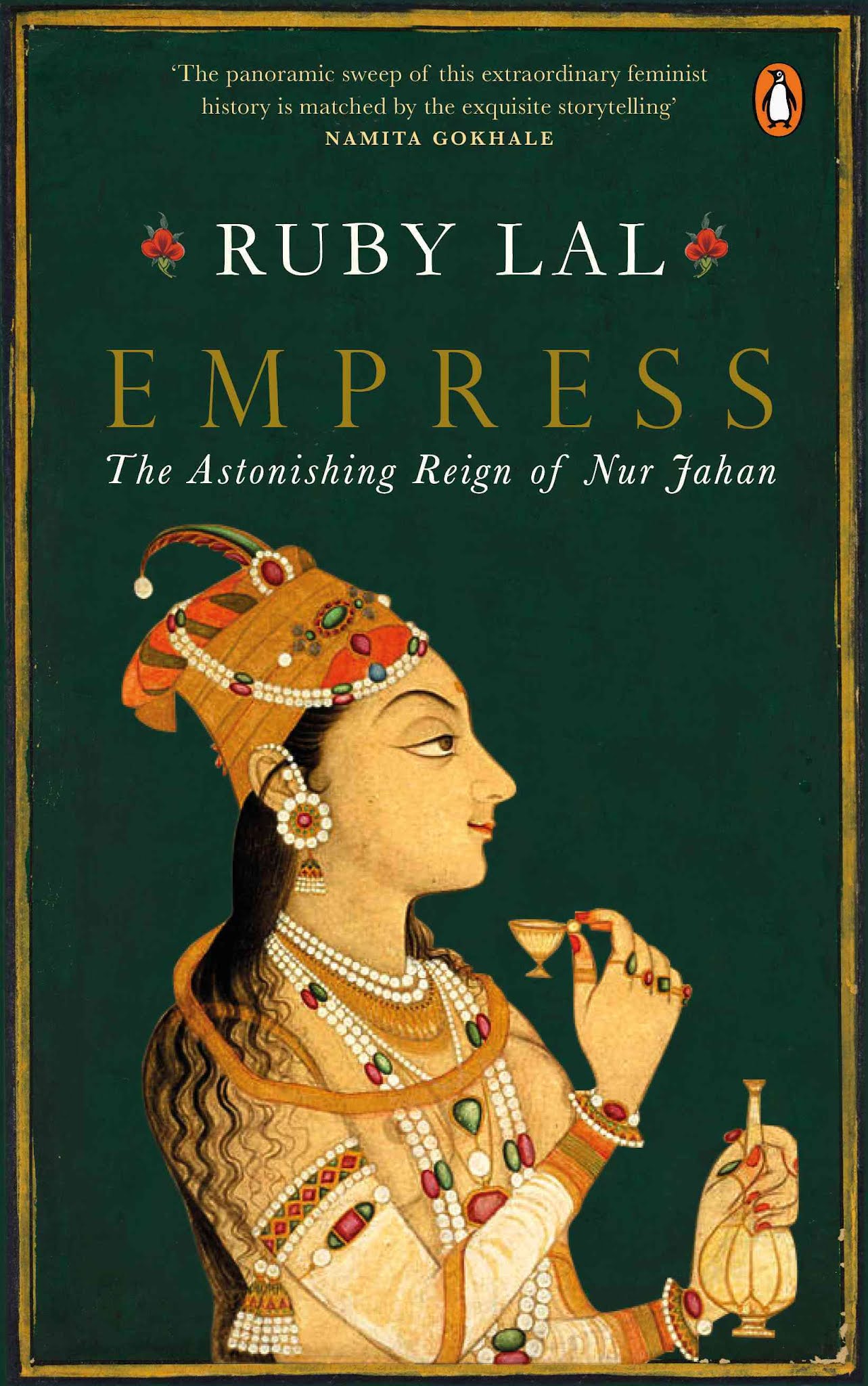
Ruby Lal’s Empress: The Astonishing Reign of Nur Jahan, recently published as a new paperback edition, lives up to the promise of addressing both these questions, within the context of the Mughal empire approaching its high noon. But in fact, it achieves a good deal more.
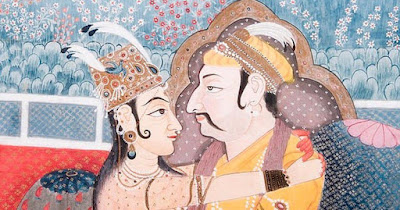

Nur Jahan and Emperor Jahangir. Opaque watercolor, gold, and silver on paper. Los Angles County Museum of Art | Photo courtesy: LCMA


However, an adjunct but equally interesting question appears if we put this book to Lal’s own method of interrogating an archive. Is the feminist mode the only way of studying this text? A new reading of this book, first published in 2018, uncovers other historiographical nuances.


A matter of style

One of the first things that stands out is Lal’s stylistic approach to her subject. Over the past two decades, other noted academic historians have tried their hand at the “popular but authentic” historical biography, and fallen short of the mark. The talent of getting a discerning, non-academic reader genuinely engaged in Mughal history involves so much more than the decision to exclude a discussion of transliteration and diacritical marks, curbing one’s temptation to launch into lengthy footnotes or dispensing with a weighty, full-length bibliography. This is where Lal is so successful.


The book begins with a scene on the morning of 23 October, 1619, when the twentieth wife and empress of Jahangir leads a retinue to a forest near Mathura, to flush out and kill a tiger that had been terrorising a nearby village. While the sole purpose is to bring down the tiger, the party that heads out has all the leisurely pace, pomp and ritual of an imperial pageant.


Lal’s treatment of this entire episode is surprisingly cinematic. But as soon as the hunt is over, the narrative zooms out to inhabit a more objective, scholarly tone:


“Nur’s shooting skill wasn’t the only thing that made her highly unusual. She held a position in the empire never before filled by a woman: co-sovereign. For more than a decade and a half, from a few years after their wedding until Jahangir’s death, Nur Jahan ruled along with their husband, effectively and prominently, successfully navigating the labyrinth of feudal courtly politics and the male-centred culture of the Mughal World.”


This technique of the juxtaposition of alternating viewpoints – one moment in the midst of the action, and in the next, distanced, academic and feminist – is sustained skilfully through the whole length of the book. This allows Lal the latitude to deploy literary stratagems that one usually associates with creative non-fiction, something she appears to have a natural flair for, without compromising on authenticity – because she can “cut away” at will, delving into the more academic nuances of the subject, across a wide range of domains, from religious discourse, miniature painting and architecture to gender and feminist studies.


Adventurous methodology

In tracing the story of Mihr un Nissa, the daughter of refugees from an oppressive Persian regime, from her birth outside the gates of Kandahar to the pinnacle of her fame as the Mughal empress who signed imperial orders as Nur Jahan Padshah Begum, her meteoric rise to power, and an even swifter fall from grace, Lal establishes a fundamental point.


Contrary to the slander of jealous contemporary nobles, aspersions in the Shahjahan-Nama or the equally chauvinistic latter-day European retelling of her story, Nur was neither a gold-digger nor a femme fatale, preying on the affections of her perpetually intoxicated husband. Rather, her spectacular success was the product of her extraordinary innate intelligence and her repeated demonstration of skills, from hunting and warfare, to astute political advice, hitherto solely the preserve of males of imperial or noble birth.


Naturally, the question now arises: how and at what point did Mihr inculcate such skills, and where was there an occasion to practice and hone them? To answer this, Lal has scoured the scantly recorded youthful years of Nur’s life with a fine-tooth comb, identified possible situations and then set down her conjectures, carefully and subtly.


Where Mihr and her first husband, Ali Quli Istajlu, move from the Mughal capital to the Burdwan district of Bengal, she posits: “Rather isolated in the eastern provinces, he would be likely to lean on her and discuss matters of trade, taxes, public grievances, the particulars of his visits to Rajmahal [the provincial capital], and news from the Mughal court. Mihr’s later grasp of governance suggests that Quli had talked about these things with her – or that she was very observant and perspicacious.”


Again, a few pages later, Quli having relocated to Allahabad, we find: “Mihr was left on her own in a remote area plagued by tigers and robbers… Mihr may have taken up the musket at this time, so she’d be able to defend her family.”


Methodologically, this is an unusual, interesting and slightly risky choice for an academic. But it pays off. Starting from the established position or end-point – that of Nur’s astonishing accomplishments – Lal works her way backwards, in a reverse-Bayesian mode, through a series of iterative, plausible hypotheses that are cleverly embroidered into the tapestry of the overall narrative.


The outcome that this exercise achieves, of course, is much bigger: the credible recreation and insertion of some missing pages of Mughal history. Reversing centuries of wilful erasure suffered at the hands of successive chroniclers, Lal thus accords Nur Jahan her rightful and lasting place in the sun.


The feminist lens

Having read Empress, one understands instinctively why readings of Francis Gladwin, Beni Prasad and Ellison Banks Findley inevitably left one dissatisfied. Dutifully researched and well-intentioned as these earlier works were, they were lacking in one crucial aspect – an original voice. In this case, a distinctly feminist one.


Lal places the male-centred animosity against Nur Jahan, during her own time and retrospectively, after her death – fitna, meaning chaos or disorder being the word repeatedly used in reference to her – in the orthodox Islamic thought of the times. She explains:


“For centuries after the Battle of the Camel, the Islamic world associated fitna with what were seen as innately destructively elements in women. Their sexuality was ruinous, her ambition damaging. Women were a source of trouble, turmoil and temptation. Women’s domain was the sacred, inner quarters. What else could follow a transgression of these boundaries, but fitna?”


From a feminist perspective, Empress continues the exploration of Lal’s earlier academic books. In Domesticity and Power in the Early Mughal World, she made extensive use of Gulbadan Begum’s Humayun-nama, a text that had received only a cursory notice by generations of male Mughal historians – with the exception of Kalika Ranjan Qanungo.


In her second book, Coming of Age in Nineteenth Century India: the Girl-Child and the Art of Playfulness, the aim was to use the existing sources, untranslated and obscure material, to illuminate a feminine world missing from the records. The same motivation and spirit of inquiry can be seen here. In recounting one of Nur’s courageous and empathetic actions, allowing the ladies in her harem the choice to either look for a husband or remain with her, the author reads this as a “feminist moment” of the empress.


As Lal acknowledges, this book really emerged as an answer to the challenge thrown by a male colleague: “How are you going to write a history of Mughal women, their relationship with court and the empire? There are no sources for it!” The answer, she finds, depends on which sources one studies, and how one reads them.


Gulbadan Begum’s Humayun-Nama, Abul Fazl’s monumental panegyric, Akbarnama, the utterly contrarian picture presented by Badayuni in his three-volume Muntakhab ul Tawarikh, Jahangir’s own memoirs, as well as later court histories written after Nur’s death in 1645, all undergo a worthy revisitation. In the end, Lal’s finding is that “Nur is there, it turns out: all we have do is look for her…”. And though in seeking out her subject, she has to peer over the figures of towering men, it’s important to note that she doesn’t then cast these men aside.


As the work of a feminist historian, Empress marks an insightful scholarly contribution to our understanding, of Nur Jahan, as well as of the lives, mores, trials and triumphs of women of noble birth and in the imperial harem of the Mughals. However, it is also an equally important commentary on Jahangir and his reign, an examination of the dynamics of power between the capital and far-flung provinces such as Bengal, and the dramatic recounting of inter-generational conflict and princely rebellion, court politics, schemes and machinations, the bizarre kidnapping of the emperor, treachery and imperial retribution – in other words, a perpetually relevant commentary on the condition of men-folk of all stations, who toiled and fought and thrived in the late 16th and first half of the 17th century, in the Mughal empire. Stemming from an avowedly feminist project in mind, the book nevertheless expands organically to assume a broader vision.


Lal does not cast a Rembrandt-like spotlight on Nur, and then proceed to obscure the emperor, princes, commanders, courtiers, ladies-in-waiting and servants around her, into pools of darkening, brown penumbra. Instead, having observed her subject in the sequestered chambers of the haveli, she draws her protagonist out into the open, to humid, rainy Burdwan, managing both her family and the estate, in the absence of her husband, to the jharokha of the Agra fort, to the banks of a raging Bahat River, desperate, indignant, firing off volleys from her musket at a superior renegade force, or – possessed of supreme composure – at the site of the hunt.


True, Lal’s visualisation of the royal hunt situates Nur at the centre of the scene – after all, she did succeed in killing the tiger with a single shot. But the author’s sweep also takes in the villagers, now-anxious, now-hopeful, that follow the royal train at a safe and discreet distance; the drummers, the local hunters who also double as guides, noblemen, soldiers, attendants, Nur’s elephant groaning and swaying nervously because it has sensed the presence of the tiger, and cannot stand still; and at the empress’s side, riding his own elephant, the devoted husband and emperor, who will never again draw his sword or fire a musket at another living creature, man or beast.

It is a gaze that is painterly, all-encompassing, and at its core, deeply humanistic.


(Source: Scroll)

Monday, 11 October 2021

'How to Raise Kids who Aren't A**holes' — or maybe even kind

The desire to raise good people is fairly universal among adults with kids in their lives. Most of us want our kids to grow up to be kind and compassionate adults.

We mean it, we really do, but our kids often hear something else. Research from the Harvard Graduate School of Education found that 80% of youth think their parents are more interested in their children's achievement or happiness than whether or not they are caring for others.


Effectively modeling behavior you'd like your kids to adapt takes a healthy dose of intention, says author and science journalist Melinda Wenner Moyer.


In her new book "How to Raise Kids Who Aren't A**holes: Science-Based Strategies for Better Parenting--from Tots to Teens," science journalist Melinda Wenner Moyer cuts through the data on the subject. She looks at research on gunplay, screen time, shyness, resilience and more, helping parents effectively send the message that kindness matters.


CNN spoke with Moyer about what we are getting right, what we're doing wrong, how to teach kindness, and why it's hard to raise a kind kid if we're not being kind ourselves.


This interview has been lightly edited and condensed for clarity.


CNN: What inspired you to write this book?

Melinda Wenner Moyer: Two and half years ago I started to get frustrated by the bad adult behavior I saw happening all around me. It made me think, what are my kids learning? Who are my kids learning from? It made me realize that what I wanted more than anything was for my kids to not grow up to be a**holes. And I realized I didn't know how to do this.


I began looking into the science about how to build character and values and was surprised by how much research there was.


CNN: Based on what you discovered, what are some of the things well-meaning adults are doing wrong when it comes to raising kind kids?

Moyer: First, I want to say that I hate to frame anything as "wrong." The last thing I want to do is shame parents or pressure parents to feel like they have to do everything right. We have a lot of leeway as parents and even when we do things that are not the most constructive, our kids will be fine.


One thing I saw come up again and again in the research is that a lot of parents avoid talking with their kids about nuanced, complicated topics like race, sex or pornography. But kids, starting from when they are little, are detectives trying to figure out how the world works. They notice a racial hierarchy, gender hierarchy and the sexual undertones, or overtones, everywhere. Disney movies have them.


Kids are being exposed to these big, nuanced issues, and if we aren't there to expose them to these issues, they will get the information elsewhere and then make assumptions that are inaccurate. It is far better to have intentional conversations on difficult topics. Even if you think they are too young, they are not, as long as you do it in an age-appropriate manner.


One more thing is how we handle our kids' feelings. We attempt to make our kids feel better when they are mad or bad or sad. We will minimize the feelings, or shame them, by saying things like "stop acting like a baby," or, for boys, "stop acting like a girl."


We do this because we want to rescue our kids from their negative feelings. Research tells us this is bad for a couple of reasons. We are telling them their feelings are wrong, and to bottle up their feelings and hide them. It doesn't help our kids learn the skills to manage them.


Also, parents tend to shame boys more for having feelings of sadness or fear because it isn't seen as masculine. But boys who have been taught to feel shame about these feelings are more likely to be aggressive as they get older.


Kindness matter is the message of Melinda Wenner Moyer's science-based book "How to Raise Kids Who Aren't A**holes."


CNN: And what might parents intuitively be doing right?

Moyer: One is modeling kindness and generosity in front of our kids. That is really good because kids learn from what we do rather than what we say.


Over the past five years, I've seen a lot more parents include kids in social movements, bringing them to protests, volunteering or encouraging them to donate their allowance money. When we include kids, we show them that it is important to care about others.


CNN: You found research connecting selflessness to success, which goes against much of what our competitive culture tells us.

Moyer: I often hear from skeptical readers who ask, "If we want our kids to succeed, isn't raising them to be kind and compassionate going to hold them back?" Our culture still tells us that to get ahead in the world, you need to be an arrogant a**hole.


There are certainly exceptions, but overall, research points to the opposite: People who are kind and compassionate are usually more successful. When you treat people well, people want to treat you well.


CNN: As I read your book, it struck me that parents can learn a lot about themselves in this process. Raising kind kids helps us think harder about how we could be kinder and what kindness means to us.

Moyer: I hope that this book inspires some self-reflection because to really model for your kids what you hope they become, you have to be pretty intentional. You have to think about what kindness means to you.


It helps to prioritize and think, "What is the most important thing for my kids to grow up and be or do?" Is it to be compassionate? To be helpful? Honest? Think about how to weave those values into your relationship with your kids.

It's important to remember that we can't do all the things all the time. Also, our priorities can change.


CNN: How do we balance our expectations for our kids and ourselves to be kind with an acceptance of our louder, angrier impulses?

Moyer: It's really important to be open and honest. It's OK for us to have big feelings; feelings are part of being human and are normal. We should accept our own big feelings, and the way we respond to situations when we are angry. That is OK. We are human and everybody makes mistakes and that is just part of life.


It is really helpful for kids to see us model that self-acceptance. It's also really good for them to see us apologize afterward, modeling the behavior we want them to do longer down the line. When we take responsibility, a lot of good can come out of our "mistakes" as parents.


(Source: CNN)

Sunday, 10 October 2021

Kerala man’s ‘Dress Bank’ gives free wedding outfits for brides from poor families

 Until last week, 155 women from different parts of Kerala have worn the wedding outfits from Nasar’s Dress Bank in Thootha town, on the Malappuram-Palakkad border.

A 44-year-old man living in a remote village called Thootha on the Malappuram-Palakkad border of Kerala is following a new model for charity — Dress Bank. Like concepts such as food banks and book banks, Nasar Thootha offers clothes through his Dress Bank initiative. However, these are not ordinary clothes, but wedding attires for women from poor families, which are given free of cost. 


Through Dress Bank, Nasar provides once-used wedding day dresses, donated by people from different parts of the state, to brides from poor families in different parts of Kerala and the neighbouring state of Karnataka. So far, 155 women from different parts of Kerala have worn wedding outfits from the Dress Bank, said Nasar.


It was 1.5 years ago that Nasar, a Saudi Arabia returnee, introduced this idea to help brides from low-income families in Kerala. “After returning from Saudi Arabia, I was engaged in rehabilitating the homeless by providing them with shelter. During that period, I was also able to establish close relationships with many families in the region, and noticed that many parents were struggling to arrange wedding dresses for their daughters, which are usually expensive,” said Nasar, a native of Thootha near Perinthalmanna in Malappuram. 


With the support of his friends, Nasar started the Dress Bank on an experimental basis in April 2020. He started the initiative in a room in his house near Thootha, with a set of 100 donated wedding outfits. “It was my family, including my wife, four children and my sister, who supported and assisted me in running the initiative at home in the beginning,” he said. 


Using WhatsApp and Facebook, Nasar circulated posters, requesting people to donate their wedding dresses to Dress Bank. “The campaign was a success as many people from different parts of the state expressed their interest in donating their wedding outfits. We managed to collect the dresses from different locations through different charity organisations and our friends. After dry-cleaning these outfits, we started distributing the dresses to poor families in neighbouring regions when required,” said Nasar.


Nasar recently moved the Dress Bank into a rented building in Thootha town, situated on the border of Malappuram and Palakkad district. 


“Any parent can directly approach me if they want a wedding dress for their daughter. We have more than 600 varieties of wedding dresses now. The outfits originally cost Rs 3,000 to Rs 60,000," he told TNM.


"The bride and parents of the woman can directly visit the Dress Bank and select the dress item that she needs irrespective of the cost of the item. We never ask them to return the dress after their use,” he said, adding that the store has dresses for all wedding customs of different religions and castes.


PT Noushad Ali, president of Aliparamba Grama Panchayat, where the Dress Bank is situated, said, “Initially, the project was beneficial for families from our panchayat and neighbouring panchayats in Malappuram and Palakkad districts. Now, many families from different parts of the state are coming to get these dresses,” he said, hailing Dress Bank as a successful model of charity. 


Perinthalmanna MLA Najeeb Kanthapuram, who visited the Dress Bank at Thootha on Monday, September 13, said that Nasar’s charity initiative was beneficial to more than 150 families across the state and a blessing to many families who have been struggling to meet the expense of wedding function. “We usually wear our wedding dress once in our lifetime. If we donate it, it will be a great support for a woman from a poor family,” said the MLA.


(Source: TNM)

Saturday, 9 October 2021

Indians spend a lot on ‘tamashas’: A British female traveller offers a glimpse into colonial life

 Jemima Kindersley’s letters depicted life in an uncertain mid-18th century, when things were chaotic and complex.

“Weaving is the employment of the greatest number of the people throughout India; but the greatest manufactory for fine muslins, calicoes, dimities, & c. is at a place called Daca, in Bengal, and formerly the capital of that province. The exquisite fineness of some of the muslins is inconceivable; for those which are made for the Mogul and his zanannah are ten times the price of any allowed to be made for Europeans or any other merchants.


Embroidery and needlework of all sorts, is likewise brought to the greatest perfection at Daca. The needlework is all performed by men. Their slowness is intolerable, but their patience is without end.”


Illustration by Anirudh A Ashar.


This extract from a letter by Jemima Kindersley in October 1767 provides an insight into the “patience and neatness” that the writer observed in the “inhabitants of India”, which led to “such perfection” in “some of their manufactories...that Europe can boast of nothing to equal them”.


Kindersley was among the several female travellers from England who had – from the 1740s onwards – documented their experiences in India. They were usually written as letters, a medium popular at the time.


Kindersley, who journeyed in the mid-1760s, occupied an ambivalent position among these writers. Historians, who placed travel accounts within a contextual framework based on approach and style, found it hard to classify Kindersley. She came several decades before the well-known and better-anthologised writers such as Maria Graham (later Maria Callcott) and Eliza Fay. Her style, in places, mirrored that of travellers such as Niccolo de Conti (of the early 15th century), and Ralph Fitch and Jean-Baptiste Tavernier in the 17th century, who are known for their curiosity and detailed observations. Kindersley’s letters show the same meticulous care, but she was clearly opinionated on several other aspects: for example, her reasoning for why sati was “so prevalent”. She stood midway between travellers of a century or so ago and the ones who came decades after her and clearly believed in the civilising mission of the colonising countries.


The 68 letters that make up Kindersley’s account were published as Letters from the Island of Teneriffe, Brazil, the Cape of Good Hope, and the East Indies, in 1777 by John Nourse, a well-known publisher of scientific and philosophical works. They are now available online, thanks to the digitisation efforts of the Fansey-Kindersley family history project. A review of the book in Critical Review Volume 43, which says the letters make for easy and agreeable reading, places the number of letters at 85.


Journey east

One of the earliest female travellers was Jane Smart, who lived in Madras, around two decades before Kindersley came to India. Her letters to her son – covering a total of eight pages – were all written in 1743. They describe how the Nawab of Arcot – with a fine procession of palanquins – visited the British governor at Madras. They are available in volume II of Henry Davison Love’s Vestiges of Old Madras.


The nawab’s begum, Smart observed, was “thin, genteel and middle sized” and her “complexion...tawny”. Her eyes were painted black, while her lips, nails and the spaces between her fingers and toes were coloured red. Smart’s view of the begum was in contrast to how Kindersley would, a few decades later, write about “Mohammedan women in the seraglio”, though both writers showed a certain empathy and curiosity.


Kindersley was born in 1741. When she was in her early twenties, she married Colonel Nathaniel Kindersley in Norfolk, East England. In 1765, three years after her wedding, she set out for India, where her husband served in the East India Company’s Bengal Artillery. Earlier that year, the Treaty of Allahabad had been signed between the Mughal Emperor Shah Alam, Shuja-ud-Daula of Avadh, and Robert Clive of the East India Company. The treaty recognised the Company’s now changed status in India – from traders, they were revenue collectors and administrators. As per its terms, the Mughal emperor also granted the Company the diwani of Bengal and Bihar. The Company also maintained troops at Allahabad, ostensibly for the emperor’s protection, but primarily as an assertion of their own power.


t took Kindersley a year to make the sea journey to India – from England to Tenerife (off the coast of northwest Africa), Brazil, South Africa and then South India. During her time, the big sailing ships called the Indiamen were yet to become popular. Instead, she travelled in gun-ships, which were equipped with 34 or 64 guns around the deck to guard against pirates. It took her three weeks to reach Tenerife, which had been conquered by the Spaniards a couple of centuries earlier.


A few months later, when she reached Brazil, she noticed how suspicious the Portuguese were about the arrivals from England, for they were always shadowed and trailed. At the Cape of Good Hope in South Africa, then under Dutch control, Kindersley wrote of the slaves from the Malay region. Some of her accounts, though, were based on hearsay and factually incorrect.


Kindersley’s travels coincided with that of Mirza Sheikh I’tesamuddin, who travelled to London as the Mughal emperor Shah Alam’s emissary. In his book The Wonders of Vilayet, I’tesamuddin wrote of his journey to the West, including a stoppage at the Cape. In contrast to Kindersley, I’tesamuddin detailed how the people of Bengal and Eastern India had been taken there as slaves and had, in time, forgotten their native languages.


Kindersley then sailed to Nagapattinam in South India, where there was controversy brewing over the Dutch governor Van Teylingen’s escape to Madras. Teylingen had been charged by his own company of corruption. From Pondicherry, Kindersley travelled to Madras, and then to Calcutta via the Bay of Bengal. It was during this time that she wrote about the dangers of the sand banks along the river Hooghly, which had led to many shipwrecks in these parts.

Kindersley’s accounts of how people travelled, how messages were passed on and how ordinary people lived gave a vivid sense of the times. Many of her river journeys – Calcutta to Patna, and to Allahabad – were on budgerows, a long, spacious boat that was common on the Ganges, especially after the monsoons. The budgerow would be accompanied by another boat, which carried helpers and provisions. In summer, Kindersley observed, people would travel in palkis or palanquins. A set of bearers would go on ahead with tents and pitch them when the journey ended every evening.


People lived simple lives, says Kindersley, though they spent vast sums “on tamashes”, such as their children’s marriages and religious festivals. The cow was the most venerated animal, she notes. The Rajputs and Mahrattas were the “fighting castes”, while “the banias”, with their passable knowledge of English, served as “intermediaries and interlocutors”.


Kindersley returned to England in 1769. Eleven years later, she translated Antoine Leonard Thomas’ Essay on the Character, Manners, and Understanding of Women in Different Ages (originally written in French in 1774). This book looked at women, largely of the upper class and in supposedly civilised cultures – ancient Greece and Rome, and the Renaissance period in Italy and France – and described them as both “adored and exploited”. She also added two essays of her own. In one of them, on the “Muhammedan women in the seraglio”, Kindersley wrote about how the women lived a life of pleasure and constraint, and used their wiles to control men.


Kindersley died in 1809, and in the decades following her death, there appeared more accounts, again written in the epistolary style, by women writers. Reading these – from Eliza Hamilton’s fictitious novel on a Hindu raja to Fay’s Letters and Callcott’s accounts – one can sense a gradual change in how the East was shaped and viewed.


Kindersley’s letters, precursors to those that followed, depicted life in an uncertain mid-18th century, when things were chaotic and complex across the Gangetic plains, when there was no clear ruler despite the recent battles that had been waged, and the many changes – such as those wrought by trains – had yet to leave their mark on this region.


(Source: Scroll)