Showing posts with label yoga. Show all posts

Wednesday, 5 January 2022

Long Covid: 'I have to choose between walking and talking'

 More than a million people in the UK are suffering from long Covid, with fears the number could rise due to the Omicron variant. Many patients say they only had a mild initial infection but it went on to ruin their health, social lives and finances.

Jasmine Hayer, 32, was living in London and training to be a yoga teacher when she caught coronavirus last March.


It sometimes feels like it was a different person, she says, speaking slowly and carefully from her parent's house in Biggleswade, Bedfordshire.


She moved back there last summer when she realised she couldn't even make her bed without becoming breathless.


"This illness is so baffling and no-one really knows how to treat it. I honestly don't know if I will ever get back to full health but I'll never stop trying," she says.


Jasmine Hayer has been contacted by hundreds of patients after starting a blog to raise awareness of long Covid. Jasmine Hayer


Currently on sick pay and previously furloughed, she is desperate to work again.


"My whole life has been pulled out from underneath me like so many others with long Covid. We've had a big identity crisis," she says.


"I need to reinvent myself. I can't even lift my left arm up, let alone be a yoga teacher, which is heartbreaking."


For nine months, doctors said anxiety was the cause of her symptoms, which included a tight chest, heart pain, breathlessness, fatigue and palpitations.


She knew they were wrong and developed her own symptom tracker which helped her work out that her triggers were bending over, walking and talking, with a delayed impact in her lungs.


Her health only began to improve when she started treatment at a clinic for 130 patients with severe long Covid, at the Royal Brompton Hospital, in London.


Doctors found multiple health issues. A gas transfer test showed oxygen levels in her lungs to be 53%, the same as a lung disease patient, and she was diagnosed with post-Covid heart inflammation, which they told her they had not seen before.


They also found small blood clots on her lungs, which only showed up on a specialised scan called a ventilation-perfusion scan.


Since starting blood-thinning medication, the clots have gone but she still has abnormal blood and oxygen flow to her lungs.


"An anti-inflammatory drug called colchicine significantly changed my recovery but unfortunately I relapsed again. Now I can walk slowly for five minutes once a week if I'm lucky but I get chest pain afterwards. I have to choose between using my voice and moving my body. I can't do both in a day.


"Doctors don't know why I have good overall levels of oxygen in my body but it's not getting to my lungs, which could be an issue with my blood vessels, but my scans show they are normal - they've never seen this before."


Since starting a blog about her story, she has been contacted by hundreds of people with long Covid desperate for help.


"Many patients are being dismissed because their GPs and specialists haven't been given enough guidance. They don't know that patients can have micro blood clots but normal scans and blood test results, like me," she says.


Jasmine is closely following an ongoing study in Germany which found microscopic blood clots in long Covid patients, starving their tissues of oxygen. A technique that cleans the blood, removing disease-forming proteins, has helped some patients there.


She is also a patient adviser on the largest long Covid study in the world to date, which aims to improve diagnosis and treatment of the illness.


Prof Amitava Banerjee, from University College London, is leading the two-year STIMULATE-ICP study which will recruit 4,500 patients from six long Covid clinics.


Existing drugs will be trialled to work out their effectiveness, including anti-histamines, such as the hay fever treatment loratadine. Anti-clotting drugs like rivaroxaban and the anti-inflammatory drug colchicine will also be tested.


Cardiologist Prof Banerjee is concerned that the current number of infections will result in more people suffering with long Covid.


Many patients developed it after a mild infection, he says, so he is not reassured that the Omicron variant may produce less severe initial illness.


"We know that people who were not hospitalised with acute Covid have gone on and been more impaired and we should be concerned about that," he says.


Vaccines are undeniably helping prevent death and severe illness but scientists do not know yet if they protect against long Covid, he says.


Many young people with long Covid have not been able to return to work, he adds, and this has had a major impact on their health, wellbeing and the economy.


He believes the best way to prevent it is to "avoid getting infected in the first place and keep the infection rate down", which will not be achieved with a vaccine-only approach, he says.


"I would love to see more consideration, debate and acknowledgement of long Covid from our policy-makers," he says. "If you only measure deaths you miss out the impact on peoples' lives. We should know better than this."


The Department of Health and Social Care has been asked for a response to Prof Banerjee's comments.


What is long Covid?

  • Long Covid covers a broad range of symptoms including fatigue, coughs, headaches and muscle pain
  • Most people who get coronavirus feel better in a few days or weeks but symptoms can last longer for some, even after a mild infection
  • An estimated 1.2 million people reported having long Covid in the UK in the four weeks to October 31
  • Women and those aged 35-49 are most likely to report long-term symptoms
  • Some 40,000 healthcare workers in the UK are estimated to have long Covid
  • NHS England has invested £134m to support those with long Covid and opened 90 dedicated clinics across England

Source: Office for National Statistics/NHS


For Emily Miller, long Covid continues to be a terrifying and lonely experience, without the input of supportive medical specialists.


The 21-year-old had just returned to studying for a music business degree in Brighton last October when she fell ill with coronavirus.

Emily Miller had just returned to studying for her music business degree in Brighton last October when she fell ill with Covid. Emily Miller


Growing up in Oxford, she walked everywhere and enjoyed trips to the theatre. Now she only leaves the house for medical appointments and lessons.


"By the end of my classes, I feel drunk and can't remember what has been said.


"I don't see my friends or have a social life. My life has completely changed and so has my career trajectory."


After an initial mild infection, she started to experience migraines, tinnitus, numbness, breathlessness, dizziness, nose bleeds, chest pain and nausea.


A blood test showed she had a low white blood cell count and she was referred to a long Covid clinic, which helped with fatigue management. She was then referred to a neurologist.


Meanwhile, Emily said a GP told her the symptoms were down to anxiety and she should "go home and sort myself out".


Emily is still on pain medication and suffers from fatigue, muscle spasms and gastrointestinal issues. Her GP recently suggested it was anxiety-related irritable bowel syndrome.


"I would love to have some more tests and investigations to see what is causing this but I keep hitting a brick wall," she says.


Apart from her health, her biggest concerns are financial and she worries about paying her rent every month.


"I applied for a disabled students' allowance but they do not recognise long Covid as a disability. I really hope one day it will be counted," she says.


Her job prospects when she graduates next year are bleak, she feels, and her dream of working for a record label is on hold.


She decided to set up a fundraising page to help support herself and try to ultimately find a cure by paying for experimental treatments like oxygen therapy.


"I hate asking other people to support me but I felt like I was running out of options," she says.


It's a similar situation for Antony Loveless, who recently had to ask his mother to lend him £1,000 to pay his mortgage.


The 54-year-old, who lives in Southend, caught Covid in January while he was at work as a lead investigator at London Gateway port.


His partner Claire Hooper, 52, who was working as a nurse, caught it too and also suffers from long Covid.


They have spent most of this year in bed with crippling pain and fatigue, having both been made redundant from their jobs.

Antony and his partner Claire have lost their jobs and spent most of this year in bed with crippling pain. Antony Loveless 


Antony has lost four stone, walks with a stick and drives a car with a disabled badge. He has been diagnosed with a loss of white blood cells and an autonomic disorder called postural orthostatic tachycardia syndrome, which affects his ability to regulate blood pressure. Claire has lost six stone and now has diabetes and hypertension.


Both have been discharged from a long Covid clinic, having been told they were too ill to start rehabilitation.


They burned through £10,000 of savings just paying their mortgage and bills, before they recently qualified for benefits.


"We had an enjoyable middle-class lifestyle," Antony says. "We went from earning around £4,500 a month to living on the bare minimum."


The former war photographer and author has to set reminders on his phone to go to the kitchen to eat but then can't remember why he is in there.


"I hadn't smoked in 37 years and forgot I didn't smoke and bought a packet of cigarettes the other day," he says.


He feels frustrated that statistics are collected on people with Covid who live and die but "not the people in the middle".


"The government never talks about long Covid, you either die or recover, but what about us?"


He says things got so bad a few months ago that he and Claire considered ending their lives.


"We got to a point where we couldn't go on with the pain and no quality of life. We had run out of money and options and were lying in bed, not even able to follow a plot on TV."


Antony says they feel like they have been left floating in the wind.


"We will just keep living and hoping we will get better, that's all we can do," he says.


(Source: BBC)

Sunday, 22 March 2020

Who were the Indian women who popularised yoga?

A research project wants to unearth forgotten stories.

Reba Rakshit was a star of Indian circus in the 1950s. Trained in yoga and bodybuilding in Calcutta, her feats included elephants and vehicles treading over her chest. One day, she walked away from the fame and glory to spend her years teaching yoga to women. She died in relative anonymity in 2010.

In 1955, another yoga practitioner from West Bengal, Labanya Pandit, published a book on the discipline with illustrations of over 40 asanas. Her writing in Shariram Adyam was praised by Rabindranath Tagore, but the only known copy of the book remained in the National Library of India in Kolkata, from where it was checked out for the first time in more than 50 years in April.
Image for representation only. | Amit Dave/Reuters

The stories of Rakshit and Pandit would have stayed wrapped in obscurity if not for an ongoing project that seeks to highlight women’s role in popularising yoga in West Bengal in the early and mid-20th century. The research project – called the Women of Yoga – is being spearheaded by American musician and yoga exponent Ida Jo, with Indian journalist Chandrima Pal assisting her.

“The goal is to dive into the Bengal region of the 1900s and start this conversation on the women of yoga,” Jo told Scroll.in. “Who were the women of this time period? Why do we not know of them? This project explores their contributions to yoga but also considers the social situations they were up against because of the time period they lived in.”

Yoga is India’s biggest soft power export, but the discipline as we know it today – the practice of asanas to achieve mental and physical wellbeing – is a relatively recent creation. Yoga was for most part a spiritual practice, until a renaissance in the early 20th century incorporated physical fitness into it. The shift occurred almost in parallel to the physical culture movement, which began in Europe in the 19th century and spread to India, courtesy of the British colonial rule.

The men who popularised yoga during this period are well-known. Tirumalai Krishnamacharya, who is hailed as the father of modern yoga, was one of them, as were Swami Kuvalayananda and Shri Yogendra. Swami Vivekananda is often credited with taking yoga to foreign shores with his US lecture tours in the 1890s. Paramhansa Yogananda’s seminal Autobiography of a Yogi (1946) and BKS Iyengar’s Light on Yoga (1966) further entrenched yoga in the West.

But what about the contributions of women? “While the men were taking yoga to the world, who was carrying the story forward in its place of origin? The women were,” said Pal. “Sadly, their stories never got told.”

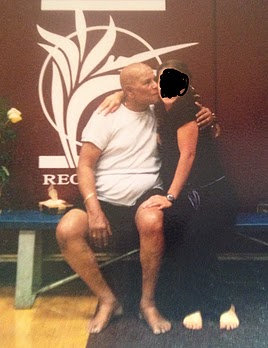
Jo, who teaches Ghosh Yoga, a form based on the teachings of Bishnu Charan Ghosh (1903-1970), first learnt of this gap in yoga’s history while helping edit her friend Jerome Armstrong’s book Calcutta Yoga. Ghosh, a bodybuilder and yoga teacher, was the brother of Paramahansa Yogananda and a key figure in the physical culture movement in West Bengal in the 20th century. He set up the College of Physical Education in Calcutta (now known as Ghosh’s Yoga College) in 1923. His students included Rakshit, Pandit, Bikram Choudhury – the founder of Bikram Yoga – and Monotosh Roy, who in 1951 became the first Indian to win the Mr Universe title.

Calcutta Yoga traces the history of yoga in West Bengal through the maverick Ghosh and his pupil and son-in-law Buddha Bhose. Undivided Bengal was a key centre of yoga’s resurgence, where yoga, wrestling and bodybuilding were being used to promote a brand of muscular nationalism and to rebel against the colonial stereotype of Bengali men as effeminate.

“While working on the book, we realised that there were many female characters who played important roles in yoga and physical culture but have remained mostly unknown,” Jo elaborated. “I saw singular photos, or heard little snippets about certain women, but had no deeper understanding or access to materials to learn from. It became obvious when looking a little deeper that there was more to be found. It just needed focus and effort to find it.”

Her research revealed the way women democratised yoga, taking it into the homes of ordinary men and women. Pandit, for instance, encouraged incorporating household objects in the practice. Another woman who was active in the 1930s, Reba Das, talked about using a chair in asanas.

“These women were way ahead of her time,” said Pal. “They were talking about things that a studio in Bandra would talk about today. Labanya Pandit was talking about how even a walk on the beach or rowing a boat can be yoga. This was a social-cultural revolution, a gender revolution happening at that time.”

These female practitioners also attracted a larger number of women to yoga. “If a class was split between men and women, you needed female teachers,” Jo said. “These women were great yoga experts in general, but also tailored their instruction and approach towards women. For example, Reba Rakshit wrote in an article for the Bayam Charcha magazine, ‘Now I shall talk about females, who do not have the privilege of going to any gym and regulate their health. I recommend yog-byam for them – they do not need to go anywhere but practice at home in privacy’.”

The process of finding these women has been arduous, requiring much legwork, said Pal. “There’s some material in an older form of Bengali, which involves translation,” she said. “[But] a lot of things have not been documented. We have help from the National Library and the Anand Bazaar Patrika archives. Bishnu Ghosh’s family, who Ida knows, pointed us to some people.”

The project is in the fund-raising stage and donations are being accepted on the Ghosh Yoga website. It will culminate in a book and, the researchers hope, in films and online series. Through the project, Jo and Pal hope to flesh out a more cohesive and inclusive history of yoga. “The stories of these women serve as a link between yoga’s past and present,” said Jo. “Historically, yoga teaching and practice have largely been reserved for men. Now though, what we see in Western culture is a practice largely done by women. There’s a huge gap between what was and what is today. These women bridge that gap.”


(Source: Scroll)

Saturday, 20 October 2018

Why the abused don't speak up

We all need to belong. For yoga practitioners, the community we choose based on our preferred yoga style, studio, and teacher, informs our friendships. When someone is molested, sexually harassed, or touched inappropriately by a leading figure of their yoga community, the consequences of a confrontation, legal or otherwise, can be devastating.

Just like survivors of childhood sexual abuse often lose their families, and may be disinherited, adult victims of sexual improprieties in the yoga community stand to lose their chosen family. They may suffer financial loss if their teaching style is trademarked. It always takes courage to speak up about abuse, because the loss is real, and healing the wounds is slow, difficult, and often lonely.

A few days into the Ashthanga workshop with Sri K. Pattabhi Jois in the Puck Building, with four hundred or so students curled up into halasana, I was suddenly groped by the guru.

In absolute shock, I rolled to sitting and found found myself staring across the room at Sharath, Jois’s grandson, who stared back looking just as horrified as I felt.


Pattabhi Jois remonstrated: “Bad lady!” and I heard the mild laughter of the crowd at the guru’s old joke. In disbelief, I crouched to find his eyes. He smiled as if he had no idea what had  transpired, and said:

“You no come out of pose.”

I sensed that if I were to respond in public, he would have experienced the humiliation he'd just made me feel. He would be angry, send me off. I thought I might be banned from my community that had come to feel like home. I was confused, felt helpless, and held my tongue.

Sri Krishna Pattabhi Jois was born in 1915. He came from a patriarchical culture, a poor orthodox family at a time in which natural bodily functions were considered dirty. Sexuality was taboo, physical and sexual abuse of children prolific, and misogyny taken for granted. Self-hating women unthinkingly unleashed scorn and frustrations from countless injustices onto their broods, the only ones over whom they had power, perpetuating the secret legacy of worthlessness that is at the crux of the dominator paradigm. Not much has changed.

I was born in 1963, in Belgium. At the age of six I was sold into a pedophile network, mentioned in the aftermath of the pedophile scandal that rocked Europe in 1996, when Marc Dutroux was arrested in connection to child murders. The rapes and violence I endured were all gender-based. In 1974, at age eleven, I was rescued from the network by an insider and given precise survival instructions, which included moving to New York. Following these instructions enabled me to spend my adult life in the context of healing, a privilege rarely enjoyed for people with a background as extreme as mine. Ashtanga yoga was part of that healing, and I came to see the journey of healing in the context of the

Raja yoga path.

A few days after the incident, after early morning practice, I got in the customary long line of students who were given audience with their guru. When it was my turn, I asked, in his own broken English to better make myself understood:

“Guruji, why you no respect women?”

“I no understand! I no understand!” He cried out.

“In this country, it is against the law to touch women on their genitals or their buttocks. It is against the law!” I stressed.

“Okay, tomorrow I no touch!” he sneered.

And that was that.


The next morning, we sped through the fastest ever led primary class. Jois was in quite a bad mood and didn’t adjust anyone. I had told a friend about my private conversation with the teacher the previous day and we were full of glee. Throughout the practice, the more annoyed Jois sounded, the more we laughed.

Worldly power is often a shield warding off the sense of worthlessness and shame resulting from humiliations in childhood. Poke that shield and you get childishness.

I experienced plenty of humiliation in childhood, observing men of power—heads of state, businessmen, and aristocrats—sink to the lowest depths, all for a fix of their power addiction. Every rape came with an invisible package of feelings, which the abusers needed to exorcise and put into me. I would feel dirty, guilty, cheap, ashamed, worthless, and so on. Having to finely attune myself to these men for my survival, I got a firsthand look into their psyches, often had visions of their own abused child self, which called on me, the victim, in this most twisted way, to relieve them of their suffering.

Part of my trauma consisted of being physically injured. I had been stabbed in the backs of my knees and tortured. Ashtanga yoga proved the perfect physical therapy. The practice replicates various physical forms in which I was placed, or made to take on during the rapes. Other poses trigger a variety of mental states I entered during the abuse. In the past, my body would go into freeze mode, relaxing to survive. My spirit was often completely dissociated from the body, and I observed details in the surroundings I would have never been able to see with the naked eye. I grew up without body consciousness below the ribcage, the ribcage itself permanently extended from holding my breath, in fear. With Ashtanga yoga, practiced Mysore style at my own pace, I found a way to remain present, to assuage fears, and heal the body.

The fear would come; the physical or emotional pain would come, and I would listen. 

I never had a yoga teacher who intuited what I was dealing with, especially Jois. The assists and suggestions I received in the few weeks during the New York workshops created no "aha" moments, or deeper understanding. I'm aware that many did receive this from Jois, and I respect it, though I remain skeptical. When we blindly trust an authority figure, we give away credit for what we do right, and accept blame for what they do wrong.

Trauma is described as helplessness in the face of an overwhelming, life-threatening event. The groping happened so abruptly that my fear was very short lived. But knowing there was no hope for an apology, no place for my anger in the ashtanga community, no support to take the issue before a court, left me feeling helpless. 

I never loved Jois. I’d just met the man and was never confused about his intention. Others, who are drawn into a situation with a teacher and sustain sexual harassment or rape over sometimes prolonged periods, when such a person eventually finds the courage to take action, they are further victimized as the community turns a blind eye to the guru, and is scapegoated (assigned labels that belong with the perpetrator: greedy, angry, unstable, etc.)

Lucas in 2009. Scars on right leg are from childhood injuries.
The dehumanization I'd experienced during the groping, and the community's passivity afterwards, affected my sense of self-worth. I was back in the prison of my childhood situation, believing that somehow, I must deserve it.

And I think that was the point. All abuse of power is essentially a rejection of feelings too painful for the perpetrator. Each insult, each trespass helps him see the fear of these negative qualities outside of himself, once again proving that he is not the worthless one.

Attachment to status is based on fear.

Status serves as a fighting machine around a vulnerable, hurt part of the self. Empowermet brings that part to light, safely, by acceptance and nurturance. Power hides that part, perversely showing the world aggression instead of strength, control over others instead of self-control, and dehumanization instead of respect.

Every criminal act is a misguided attempt at reclaiming one’s innocence.

In the role of victim, the adult hopes for a different outcome, even though she attracts people and circumstances that lead to the same outcome. In the role of the abusive power figure, she finds momentary relief, and a sense of freedom, but, because it is without awareness, the same relief has to be sought repeatedly, as in an addiction.

If sexual abuse is the core trauma, love may be hopelessly confused with fear-based protection of authority figures and lack of boundaries. Possibly every member of the original abuser's gender, all women, or all men, may trigger the trauma story. I speak from personal experience. It took me many years to acknowlegde and overcome my hatred of men, hiding behind an automatic survival tactic to placate, particularly, by finding just the way to boost a man's ego, much as I had in the pedophile network.

Without conscious awareness, trauma remains in the body, and focus remains outward, on the body or on postures. Outward focus is also easily expressed through over-intellectualization to cover up an underdeveloped or stifled emotional intelligence.                                           

With a guru leaving a legacy of mysogyny, adult disciples take on the roles of innocent (abused) children, blind to the dark side of their guru, staying in fear-based love, justifying or excusing what is lovingly referred to as his "flaws" or "humanness" instead of having the courage to confront the guru. I should mention that I did hear of senior Ashtanga teachers who stood up to Jois about his groping problem, who supposedly did lose his affection and are said to have been banned from the shala in Mysore.

The atmosphere in the SoHo ballroom was intense: hundreds expecting greatness from the man who had taken on the part, who fluidly conformed to the mental image his disciples projected, who absorbed the love and, at times, shined it back at them.

If a student projects fear onto a wise teacher, they will receive exactly what they need on her journey of personal growth. If the teacher is attached to power, the students may be met with mockery and humiliation. But they can always look for a life lesson—such as one about humility—preserve their reverence for their yoga master, and maybe go and mock their own students.

Love requires courage. Any person with power will be tempted to allow their weaknesses to flourish, exactly because followers are so ready to excuse them. A guru needs disciples who love him enough to be honest.
Lucas, six years old.
Love reaches beyond instinctual reaction, beyond unconscious revenge, beyond identification with victimhood, beyond cool externals, to empowerment and kindness for those who expect none. 

Power is a terrible trap, because from the vantage point of someone in power, whether it is a guru, a famous yoga teacher, a star, or a hedge-fund manager, it is almost impossible to discern true kindness from flattery and fear-based protection. It's easy to be kind to one whom people respect and admire, but just how kind are we to everyone else? It requires mindfulness tools, introspection, and a living practice of ahimsa to be kind to all, and not act from revenge.

Annoyed as Jois was the first day after our conversation, on the next day he slowed the pace, and the day after that he was back to adjusting, this time paying attention to men and older women, helping some students with particular issues and poses. He exuded joy. 

On the last day of the workshop, after the last primary practice, I got back in line, with my three-month old daughter. When Jois saw me, he smiled an ingenious, almost grateful smile. He stretched his arms forward to take my baby. Holding her out in front of him so their eyes were level, he zapped her—his eyes transparent with light—and my baby zapped him back, jubilantly flailing her little arms and legs as if she was going to bound right out of her little body into the realm of pure joy where their spirits were meeting.

It was the first time in my life that I was able to make a positive connection with someone who had touched me inappropriately. I had spoken up many times before, even when I was brought to the pedophile network. At age six, after a night of soul-slaying humiliations, I felt that I had to do something, or my spirit would be dead and I would never again be whole. I stood up, and addressing the guests at the orgy, I stated:

“You can't do this to me! I'm going to make sure you all get punished for this!”

Afterwards, I was quietly led away and calmly, but  graphically, threatened with my life. From the get-go, inside the pedophile network, I was considered problematic. The worse the crime, the harder it is to come back from. It's very difficult to live with the knowledge that you've harmed someone.

Jois was not a hardened criminal like the men I’d met as a child, but he did cause harm—to himself, to women, and all those who looked to him as an example. He never experienced the discomfort preceding accountability and never mended his ways. But he was open enough to accept my correction and that is very rare. Most men would remain petulant or become aggressive or dismissive.


Though I continued to practice Ashtanga, I never traveled to Mysore to study with Jois. I did return to the workshop whenever he came back to New York. At one of these workshops, I noticed him zero in on a woman during prasarita padhottanasana. I stood up and turned towards him, arms crossed, staring. Sharath had planted himself behind the woman’s mat, standing guard as well. Through four long prasarita padhottanasanas, Jois's hands moved in closer, then farther, then closer to her backside. He looked like he was dying to touch her and he never did.

After practice, I once again got on line and was greeted by a humorous flicker of recognition. Without a word or gesture, he conveyed that he wanted me to pranam, Indian style.

The idea of bowing to a man who had groped me some years back, who had never apologized and presently wanted me to surrender at his feet, created a unique conundrum. I did not want to be humiliated again. The power balance between us was still uneven. It was easy to see why he wanted people to bow down to him. It was easy not to bow.


As long as the threat of humiliation lingers, there is no room for humility. Surrendering to another person is dangerous, but surrender to what is, can relax the ego and allow humility. I had never been heard, seen, or understood about what had happened between this man and myself. All I’d had was my healthy pride, gained from overcoming many obstacles on the long road to recovery—the spiritual journey.

The choice to do something or not was entirely mine. I chose to let go and found forgiveness. I let go of him, of what he had done, of all knowledge and reserve, got on my knees, and brought my hands from his feet to my forehead, three times. 

I experienced a cleansing. Innocence and purity were mine, physically and psychically. Surrender created a sweet release and openness. I felt attuned to the young boy this man had been, a boy in pain, and found understanding for the man.

I became aware of Jois's nasal voice with his strong Indian accent: “Very good. Very good.”

Remembering his restraint towards the female student during prasarita padhottanasana, I smiled, pointed at him, and replied: "You too, very good!"

An explosion of his laughter filled the room.


When a friend of mine opened a yoga studio in Brooklyn some years later, she asked me to teach the Mysore class. I never missed a day of teaching, except once: I had been awake during the night and something told me not to go in the next morning. I texted my friend and, because I felt strongly about not teaching, but didn’t know why, I said I was sick, and she closed the studio for the day. 

It was the morning of May 18, 2009. The day Jois died.

—Anneke Lucas

(Source:  Yoga City)

Friday, 19 October 2018

Ashtanga yoga guru Pattabhi Jois accused of sexual assault in new photos

Asthanga yoga’s legendary founder Sri Krishna Pattabhi Jois is accused of sexually assaulting a former student in disturbing new photos published for the first time Tuesday.

Karen Rain, 52, shared the images in an essay for Medium.com after previously stepping forward to say Jois regularly groped her, pinned her down and rubbed his genitals against her crotch and buttocks during poses.

Karen Rain said she normalized Ashtanga yoga guru Pattabhi Jois invasive, hands-on adjustments at first, largely due to his revered image and because he abused multiple women the same way in full view of other students. (Karen Rain)
“I wanted to share the photos because I feel they represent a story of the normalization of sexual assault,” Rain, who was born in New York and raised in New Jersey, told the Daily News in a phone interview.

“They show my innocence,” she said. “My posting is meant to turn the shame around, because I was innocent, as are all victims of sexual assault. We have nothing to be ashamed of.”

Rain said she studied with Jois in Mysore, India, for two years in the mid-1990s.

“For me, the most frequent and dehumanizing form of assault was when he placed his penis against my genitals and moved his pelvis rhythmically, while I held my body still in various yoga poses,” she wrote on Medium.

“In the photo of me in a backbend, he is not even using his hands. His pelvic region, his genitals are the only thing making contact with my body, my pelvic region, my genitals,” she wrote.

Karen Rain (pictured) says Ashtanga yoga guru Pattabhi sexually assaulted her and other women while she studied with him in Mysore, India, in the mid 1990s. (courtesy of Karen Rain)
Jois died in 2009 at age 93. His athletic style of yoga exploded in popularity during his lifetime and was touted by celebrities including Sting, Madonna and Gwyneth Paltrow.

Rain said she normalized Jois’ invasive, hands-on adjustments at first, largely due to his revered image and because he abused multiple women the same way in full view of other students.

“This may sound like consent on my part, but the power differential, and my fear of the repercussions if I protested — losing my friends, my career, and my sense of belonging — made consent impossible. I was powerless,” she wrote.

“Here was a yoga master, a heavy man, lying on top of me, humping me, while I was in compromising postures. I acquiesced. I endured. I tried to tune it out. I did not consent,” she said.

Rain wrote that she eventually left yoga altogether.

Other women have levied similar allegations against Jois.

Brooklyn resident Anneke Lucas described her alleged assault at the hands of Jois in a post on YogaCityNYC.com in 2016.

She said it took place during an Ashtanga workshop in Manhattan. She and about 400 other students were there to practice with Jois inside the Puck Building in Nolita.

Lucas said she was curled up in a pose when she was “suddenly groped by the guru.”

She rolled back to a sitting position “in absolute shock,” she wrote.

When she tried to confront Jois at a later date, he claimed he couldn’t understand her and sneered, she wrote.

Rain said it took her two decades to work up the courage to write about her own experience with Jois.

“I’m sharing my story because I want to be a part of building a world that is safer and more welcoming for victims to recognize and report abuse when it happens, where we will be believed and protected,” she wrote on Medium.

(Source: NY Daily)

Sunday, 23 September 2018

Why schools in the US are banning yoga

Mindfulness programs have become popular on K–12 campuses, but in some parts of the country concerns about religious intrusion keep the trend at bay.

In certain parts of the United States, it’s getting more and more likely that rather than a game of dodgeball in gym class or a round of Heads-up, Seven-up as a break between lessons, students will instead find themselves doing downward-facing dog. The internet is saturated with yoga-based lesson plans, teacher-training courses, and “mindful” music playlists designed for schools, while programs for certified yoga instructors who want to bring their practice onto campus have also gained popularity.

While up-to-date data on the prevalence of school-based yoga is hard to come by, a 2015 survey led by the New York University psychologist Bethany Butzer identified three dozen programs in the United States that reach 940 schools and more than 5,400 instructors. School-based yoga programs, Butzer and her co-authors concluded, are “acceptable and feasible to implement.” The researchers also predicted that such programs would grow in popularity.

The trend, however, seems to have been accompanied by an uptick in vocal pushback against the idea. In 2016, an elementary school in Cobb County, Georgia, became the subject of heated controversy after introducing a yoga program. Parents’ objections to the yoga classes—on the grounds that they promoted a non-Christian belief system—were vociferous enough to compel the district to significantly curtail the program, removing the “namaste” greeting and the coloring-book exercises involving mandalas. A few years before that, a group of parents sued a San Diego County school district on the grounds that its yoga program promoted Eastern religions and disadvantaged children who opted out. While a judge ruled in favor of the district, the controversy resurfaced two years ago amid concerns that the program was a poor use of public funds in already strapped schools. Meanwhile, just last month the Alabama Board of Education’s long-standing ban on yoga caused some ballyhoo after a document listing it as one of the activities prohibited in “gym class” was recirculated, grabbing the attention of a Hindu activist.

Proponents tend to cite studies underscoring the benefits of mindfulness-based therapies such as yoga for kids’ development. A 2009 study published in the Journal of Child and Family Studies, for example, found that mindfulness-based cognitive therapy, which teaches children how to divorce themselves from harmful thoughts or emotions, was linked to reduced anxiety and increased attention levels. Other studies suggest that “mindful movement” such as yoga helps to enhance kids’ executive functions—skills such as working memory, attentional control, and cognitive flexibility. Some studies have gone as far as concluding that yoga has a positive effect on students’ academic performance or engagement, particularly among students who’ve struggled with traumatic experiences such as poverty and struggle with self-regulation as a result. After all, decades of research have shown that it’s hard for a child who hasn’t learned how to respond to stress to do well in school.

Elementary-school students hold their position during a yoga class in Encinitas, California, whose school district was the subject of a lawsuit seeking to ban the program.GREGORY BULL / AP
But some observers question the research on yoga’s benefits. Amy Wax, a University of Pennsylvania law professor who specializes in social-welfare policy, in a 2016 Atlantic story criticized some existing studies on yoga and mindfulness as being of “low quality and dubious rigor.” Julia Belluz, a senior health correspondent for Vox, has noted that despite a drastic increase in recent decades in the number of studies on yoga, the research tends to rely on small numbers of participants and imperfect comparisons, among other limitations. And some parents argue that yoga’s potential benefits aren’t enough to justify the spending at a time when public schools already struggle with limited funding.

The most vocal opponents tend to cite yoga’s Hindu and Buddhist roots, arguing that the line between those origins and secular practices is often blurry. Yoga encompasses all kinds of approaches and techniques, some more spiritual than others, but those roots often filter into even the most innocuous of mindful-movement routines. Religious influences are, arguably, even baked into elements as simple as “om” chants, poses with Sanskrit names, and, as the controversy in Georgia attests, collective “namaste” greetings.

In the Cobb County case, some parents felt that the school was using a double standard in allowing yoga classes yet banning other forms of religious practice in schools. “No prayer in schools. Some don’t even say the Pledge [of Allegiance], yet they’re pushing ideology on our students,” one mother, Susan Jaramillo, told a journalist for the area’s NBC affiliate. “Some of those things are religious practices that we don’t want our children doing in our schools.” Yet the school’s principal, who did end up apologizing for and revising the yoga curriculum, argued that much of the parents’ criticism rested on false assumptions about the program—a parent cited by The Washington Post worried, for instance, that the school was promoting a “Far East mystical religion with crystals and chants to be practiced under the guise of stress release meditation.”

In reality, school-based yoga typically focuses on physical exercise or on relaxation and mindfulness. Some schools integrate it via in-classroom lessons that have kids engage in a few exercises at their desk during short breaks throughout the day. Other schools adopt yoga as an in- or after-school elective, while some incorporate it into regular PE classes.

“Many original forms of yoga are practiced in a religious or spiritual manner,” acknowledges Marlynn Wei, a psychiatrist, therapist, and certified yoga teacher who’s written about yoga’s educational uses. Still, religion-infused yoga often pursues the same ends as its secular counterpart: For example, they both emphasize being in the present. By removing yoga’s more superficial aspects (such as Sanskrit words and symbols), yoga can still have mindfulness and be appreciated for its benefits beyond physical exercise, Wei says.

“The minute you put Sanskrit into a curriculum … some parents are going to freak out,” agrees Jai Sugrim, a yoga instructor who’s taught in schools.

Adoption of these programs has been uneven across the United States—yoga in schools is far more common in some regions than in others. Programs are, according to Butzer’s 2015 survey, based primarily in big cities on the coasts, such as Los Angeles and New York City. Areas known for their New Age–y enclaves—such as Colorado and the Northwest U.S.—account for many of the programs, too. Where they’re all but unheard of, Butzer’s data suggests, is in America’s heartland.

Big cities and liberal strongholds generally tend to be vanguards when it comes to implementing “progressive education” policies, such as the movement to replace zero-tolerance discipline with conflict resolution or the movement to eliminate homework. What’s more, much of the research on school-based yoga focuses on its benefits for “urban youth,” a high percentage of whom contend with trauma such as poverty, community violence, and exposure to drug abuse that takes a toll on their ability to manage stress. It’s easy to take this stuff for granted in areas such as parts of the West Coast and the mid-Atlantic, where, according to a 2016 survey, one in five people practices yoga. But in a state like Alabama, where school-based yoga has long been banned and where according to that same survey just 10 percent of the population has taken a class, it’s conceivable that many might see yoga as bizarre and inappropriate in a school setting. Notably, the same survey found that many people who hadn’t tried yoga before perceived it to be exclusive to young women or those who are already flexible, athletic, or spiritual.

Ironically, proponents argue that the value of yoga in schools is its inclusiveness —its promise to help boys who don’t know how to contain their outbursts, students with physical disabilities, children who struggle with obesity, and teens who lack direction. Perhaps the biggest obstacle faced by school-based yoga comes down to the fact that everyone has his or her own way of thinking about it. Religious versus secular, meditation versus exercise, exclusive versus inclusive—it’s little wonder that two people might see the same kid doing a warrior pose through completely different lenses.

(Source: The Atlantic)

Tuesday, 26 June 2018

This elite police force guards the Himalayas - and also practices yoga

Members of the Indo-Tibetan Border Police wear military fatigues, with thick boots and heavy jackets. On the job, they guard the vast border between India and China, where the mountaintop temperature can drop to minus 50 degrees Fahrenheit. Outside their regular duties, they summit Mount Everest.

Members of the Indo-Tibetan Border Police practice tree pose during a yoga class in the Himalayan mountains.
They also practice yoga.

In remarkable locations virtually inaccessible to the rest of the world, these "Sentinels of the Himalayas," often in full military gear, train in one of India's most renowned and ancient traditions as part of their well-being regimen. Their routines include physical and mental exercises, as well as breathing techniques that help members acclimate to the high altitude, which ranges from 9,000 to 18,000 feet.

Members of the Indo-Tibetan Border Police practice yoga on a frozen lake in the Himalayan mountains ahead of International Yoga Day.
Now, the elite police force -- along with yogis around the globe -- are marking Thursday's fourth annual International Yoga Day, which aims to raise awareness of the many benefits of practicing yoga.

India proposed the holiday in 2014 at the United Nations. With support from 175 other member states, the UN General Assembly passed a resolution proclaiming June 21 as the International Day of Yoga.

A member of the Indo-Tibetan Border Police practice wheel pose at a military base in the Himalayan mountains.

"Yoga embodies unity of mind and body; thought and action; restraint and fulfillment; harmony between man and nature; a holistic approach to health and well-being," Indian Prime Minister Narendra Modi told the UN General Assembly in 2014. "It is not about exercise but to discover the sense of oneness with yourself, the world and the nature."

The UN resolution highlighted the importance of "making healthier choices and following lifestyle patterns that foster good health."

A member of the Indo-Tibetan Border Police meditates during a yoga session at a military post in the Himalayan mountains.
It also underscored the goal of sharing best practices worldwide.

"Yoga is an invaluable gift of our ancient tradition," Modi said in 2014. (Three years later, India set a new precedent when more than 55,500 people participated in the largest-ever yoga class -- and set a Guinness World Record.)

Among those extolling yoga's benefits is the Indo-Tibetan Border Police, whose official website cites "adventure and dare-devilry" as required skills for new recruits.

The force's Twitter page, which features ample evidence of its members' epic mountaineering, rock-climbing and skiing skills, recently has been hyping #InternationalYogaDay2018. The feed's more than 86,000 followers have gotten glimpses of troops holding sessions atop frozen lakes and glaciers and on mountain plateaus overlooking the sweeping Himalayas.

They practice bridge pose, tree pose, crow pose and runner's lunge. They manage headstands and handstands. They sit cross-legged with outstretched palms, their thumbs and index fingers linked.
All the while, the warriors -- like yogis everywhere -- live out what the UN once lauded as a "holistic approach to health and well-being."

(Source: CNN)

Monday, 18 September 2017

The importance of Namaste

Our generation is heavily influenced by the Americans: we dress like them, drive like them, eat like them, watch movies like them, shop like them, read like them, build like them and also greet like them.

One day, at an immigration counter, a Turkish lady was asking everyone (for fun) how to say “bye” in their language. When she asked me, it struck me that we don’t have an equivalent for “bye” in India. We just fold our hands on meeting or parting with someone. From north to south, east to west, this is a tradition we share without even sharing the same language or even words.

In my many attempts at reading the Bhagvad Gita, which is said to be the nectar of Hinduism, I noted that it is often mentioned that the whole world is covered by the veil of Maya because everywhere there are dualities in the world and only when one is able to drop this veil of Maya, they realise unity and become one with the Absolute. Now, there are many ways described in the Upanishads as to how to overcome this duality, but one simple way is to fold your hands in Namaste.


When you fold your hands in the Namaste position, bringing your palms together, the right and left hemispheres of the brain connect. In the yogic system it is referred to as balancing of the prana between the Ida and Pingala nadis. In Taoism, it is called the union of yin and yang. In nature, it is the balance of the solar and lunar. In Hinduism it is called the union of Shiva and Shakti.

Do you recall the sense of unity you have with your partner when you hold hands? It perhaps creates a stronger connection than by touching any other body part. Similarly, when you join your hands together in Namaste, a unity and balance is created within you. Next time, fold your hands and looks towards any person or thing that matters a lot to you for a few minutes. You will notice the connection between the two of you will become more profound.

Indian culture was consciously designed both for yogis and even simple householders who couldn’t go off to the mountains. Let’s not forget or lose it.

(Source: Livingwise Project) 

Monday, 26 June 2017

Fact check: India wasn't the first place Sanskrit was recorded – it was Syria

As the Narendra Modi government celebrates Sanskrit, a look at the oldest known speakers of the language: the Mitanni people of Syria.

After yoga, Narendra Modi has turned his soft power focus to Sanskrit.  The Indian government is enthusiastically participating in the 16th World Sanskrit Conference in Bangkok. Not only is it sending 250 Sanskrit scholars and partly funding the event, the conference will see the participation of two senior cabinet ministers: External Affairs Minister Sushma Swaraj, who inaugurated the conference on Sunday, and Human Resource Development Minister Smriti Irani, who will attend its closing ceremony on July 2. Inexplicably, Swaraj also announced the creation of the post of Joint Secretary for Sanskrit in the Ministry of External Affairs. How an ancient language, which no one speaks, writes or reads, will help promote India’s affairs abroad remains to be seen.

On the domestic front, though, the uses of Sanskrit are clear: it is a signal of the cultural nationalism of the ruling Bharatiya Janata Party. Sanskrit is the liturgical language of Hinduism, so sacred that lower castes (more than 75% of modern Hindus) weren’t even allowed to listen to it being recited. Celebrating Sanskrit does little to add to India’s linguistic skills – far from teaching an ancient language, India is still to get all its people educated in their modern mother tongues. But it does help the BJP push its own brand of hyper-nationalism.

Unfortunately, reality is often a lot more complex than simplistic nationalist myths. While Sanskrit is a marker of Hindu nationalism for the BJP, it might be surprised, even shocked, to know that the first people to leave behind evidence of having spoken Sanskrit aren't Hindus or Indians – they were Syrians.

The Syrian speakers of Sanskrit
The earliest form of Sanskrit is that used in the Rig Veda (called Old Indic or Rigvedic Sanskrit). Amazingly, Rigvedic Sanskrit was first recorded in inscriptions found not on the plains of India but in in what is now northern Syria.

Between 1500 and 1350 BC, a dynasty called the Mitanni ruled over the upper Euphrates-Tigris basin, land that corresponds to what are now the countries of Syria, Iraq, and Turkey. The Mitannis spoke a language called Hurrian, unrelated to Sanskrit. However, each and every Mitanni king had a Sanskrit name and so did many of the local elites. Names include Purusa (meaning “man”), Tusratta (“having an attacking chariot”), Suvardata (“given by the heavens”), Indrota (“helped by Indra”) and Subandhu, a name that exists till today in India.

Imagine that: the irritating, snot-nosed Subandhu from school shares his name with an ancient Middle Eastern prince. Goosebumps. (Sorry, Subandhu).

The Mitanni had a culture, which, like the Vedic people, highly revered chariot warfare. A Mitanni horse-training manual, the oldest such document in the world, uses a number of Sanskrit words: aika (one), tera (three), satta (seven) and asua (ashva, meaning “horse”). Moreover, the Mitanni military aristocracy was composed of chariot warriors called “maryanna”, from the Sanskrit word "marya", meaning “young man”.

The Mitanni worshipped the same gods as those in the Rig Veda (but also had their own local ones). They signed a treaty with a rival king in 1380 BC which names Indra, Varuna, Mitra and the Nasatyas (Ashvins) as divine witnesses for the Mitannis. While modern-day Hindus have mostly stopped the worship of these deities, these Mitanni gods were also the most important gods in the Rig Veda.

This is a striking fact. As David Anthony points out in his book, The Horse, the Wheel, and Language, this means that not only did Rigvedic Sanskrit predate the compilation of the Rig Veda in northwestern India but even the “central religious pantheon and moral beliefs enshrined in the Rig Veda existed equally early”.


How did Sanskrit reach Syria before India?
What explains this amazing fact? Were PN Oak and his kooky Hindutva histories right? Was the whole world Hindu once upon a time? Was the Kaaba in Mecca once a Shivling?

Unfortunately, the history behind this is far more prosaic.

The founding language of the family from which Sanskrit is from is called Proto-Indo-European. Its daughter is a language called Proto-Indo-Iranian, so called because it is the origin of the languages of North India and Iran (linguists aren’t that good with catchy language names).

The, well, encyclopedic, Encyclopedia of Indo-European Culture, edited by JP Mallory and DQ Adams, writes of the earliest speakers of Proto-Indo-Iranian emerging in the southern Urals and Kazakhstan. These steppe people, representing what is called the Andronovo culture, first appear just before 2000 BC.

From this Central Asian homeland diverged a group of people who had now stopped speaking Proto-Indo-Iranian and were now conversing in the earliest forms of Sanskrit. Some of these people moved west towards what is now Syria and some east towards the region of the Punjab in India.

David Anthony writes that the people who moved west were possibly employed as mercenary charioteers by the Hurrian kings of Syria. These charioteers spoke the same language and recited the same hymns that would later on be complied into the Rig Veda by their comrades who had ventured east.

These Rigvedic Sanskrit speakers usurped the throne of their employers and founded the Mitanni kingdom. While they gained a kingdom, the Mitanni soon lost their culture, adopting the local Hurrian language and religion. However, royal names, some technical words related to chariotry and of course the gods Indra, Varuna, Mitra and the Nasatyas stayed on.

The group that went east and later on composed the Rig Veda, we know, had better luck in preserving their culture. The language and religion they bought to the subcontinent took root. So much so that 3,500 years later, modern Indians would celebrate the language of these ancient pastoral nomads all the way out in Bangkok city.

Hindutvaising Sanskrit’s rich history
Unfortunately, while their language, religion and culture is celebrated, the history of the Indo-European people who brought Sanskrit into the subcontinent is sought to be erased at the altar of cultural nationalism. Popular national myths in India urgently paint Sanskrit as completely indigenous to India. This is critical given how the dominant Hindutva ideology treats geographical indigenousness as a prerequisite for nationality. If Sanskrit, the liturgical language of Hinduism, has a history that predates its arrival in India, that really does pull the rug from out under the feet of Hindutva.

Ironically, twin country Pakistan’s national myths go in the exact opposite direction: their of-kilter Islamists attempt to make foreign Arabs into founding fathers and completely deny their subcontinental roots.

Both national myths, whether Arab or Sanskrit, attempt to imagine a pure, pristine origin culture uncontaminated by unsavoury influences. Unfortunately the real world is very often messier than myth. Pakistanis are not Arabs and, as the Encyclopedia of Indo-European Culture rather bluntly puts it: “This theory [that Sanskrit and its ancestor Proto-Indo-European was indigenous to India], which resurrects some of the earliest speculations on the origins of the Indo-Europeans, has not a shred of supporting evidence, either linguistic or archeological”.

(Source: Scroll)