Wednesday, 28 November 2018

Like John Chau, I believed in Christian missionary work – not anymore

I’ve had difficult conversations with family members about Christian faith, traditional religion and imperialism, and through them that I’m often reminded that the strong religious arm of colonialism is still very much alive, writes Mwende Katwiwa in The Independent. Read on: 

Earlier this week, a story about a missionary killed by arrows made headlines. Details revealing the circumstances around the death of John Chau were not without context, but rather a recent chapter in the long and violent history of colonisation.

Despite government bans on visiting India’s North Sentinel Island, previous visits where Chau was rejected by the Sentinelese people and previous attacks of “visitors”, Chau chose to go and “save” the Sentinelese through the words of Jesus – which resulted in his death.

Forcing religion on others in a “noble” effort to “save” is rooted in the colonial notion that part of “the white man’s burden” is to bring primitive natives to the light of Christ. This unproven, supremacist rhetoric is still alive in contemporary mission work – knowledge I acquired as an indigenous person and a former Christian.

I was born in Kenya to a Christian family. I believed so much in God that when we emigrated to the United States, I gifted my favourite uncle a Bible so we’d be together forever eventually in heaven. As a devout Christian, I wanted to “spread the good news of Jesus” and save souls from eternal damnation. He still credits me with getting him “saved”.

The church was both generous and familiar to my family in the States. An enjoyable custom during the holidays was participating in holiday gift drives for children in distant parts of the world (usually hosted by international groups like Unicef that partner with religious entities).

When I came across John Chau’s story, I was emotional ( Reuters )

I was participating in such activities in Sunday school one week when I struck with a frightening thought: “What if the kids who receive these Bibles can’t read them because they’re in English?” Remembering when I first came to the US and could not really speak or read English, I worried that children in non-English speaking nations wouldn’t be able to either, and subsequently stay unsaved. My next thought was: “What if they can read English, but the Bibles never make it because the pilot crashes the plane?” I wondered if their inability to read the word of God would condemn them to eternal damnation.

I was horrified by my thoughts. Horror turned to shame when I asked such questions of elders and was told I “needed to have faith” or “pray about it”. Shame turned to curiosity when I realised no one was willing to, or could, give me a straight answer as to why we were sending English Bibles to non-English speakers.

This was the moment I became conscious that my religion contained contradictions that my faith was too narrow to bridge. I continued to pray and attend church, but I couldn’t let go of the questioning. I wasn’t able to find answers in the Bible, so I began to read other books and seek out other sources.

I found information on Christianity and colonisation, about missionaries and the ways they “saved” my ancestors (with Bibles, violence, subjugation and the intentional dismantling and/or demonisation of indigenous belief systems). I learned of those who resisted. I was thrown into utter confusion when I realised I came from a family that had participated in anti-colonial struggles, yet proudly displayed portraits of a white Jesus at home. I read about Christian history in Africa pre-dating colonialism, but also how the version of Christianity in many places in Africa today is linked to right-wing American evangelicalism.

I do not want to oversimplify people’s histories, religious and cultural affiliations, and choices. But in my experience, reconciling my faith, findings and the ahistorical ways the church operates today, was not an option. Soon I stopped going to non-mandatory church activities, reading the Bible and eventually, praying to Jesus. Maybe my faith was always fickle, but either way, those strange, seemingly childish thoughts in Sunday school changed my life.

I still have a complicated relationship to Christianity. Most of my family is actively Christian (even if some have other beliefs and understandings that Christianity would reject). My parents still attend church and I often join them when I am home. I’m not sure if it’s out of habit or familiarity, but part of my attendance is rooted in wanting to sit intentionally and curiously in a space full of so many colonial contradictions that still offers hope for people across the world; a place that once offered me hope (it was over the course of two years in scattered church visits that I wrote the piece “The Gospel of Colonisation” exploring my story).

I’ve had difficult, enlightening and saddening conversations with family members about Christian faith, traditional religion and colonisation, and it is through them that I am often reminded that the body of colonialism, especially its strong religious arm, is still very much alive.

During the so-called post-colonial, neocolonial and neoliberal eras, colonialism has so deeply entrenched itself that many fail to recognise, let alone mount resistance against, its ongoing presence. For years, I’ve said that while colonised nations received independence, very few have actually taken steps towards decolonisation.

So when I came across Chau’s story, I was emotional. I was angry that some outlets were unable to look at Chau’s death through an honest, historical lens, choosing instead to frame it as a murder, rather than an act of survival by those whose sovereignty was under assault. I was sad that the Sentinelese could vanish from the Earth if Chau had exposed them to disease. But all in all, I wasn’t in the least bit surprised that stories like this are still occurring all over the world.

PS: Mwende Katwiwa is a storyteller/poet, artivist and writer. She writes under the pen name FreeQuency

The man who spent decades befriending isolated Sentinelese tribe

Not many people know more about the Sentinelese than Indian anthropologist T N Pandit.

As a regional head for India's Ministry of Tribal Affairs, Mr Pandit embarked on visits to their isolated island community over a period spanning decades.

The tribe, who have lived in near-total isolation for tens of thousands of years, came to global attention last week after they reportedly killed a 27-year-old American would-be missionary trying to make contact with them.

But Mr Pandit, now 84, says from his experience the group are largely "peace-loving" and believes their fearsome reputation is unfair.

A photograph of Mr Pandit handing a coconut to a Sentinelese man in 1991
"During our interactions they threatened us but it never reached a point where they went on to kill or wound. Whenever they got agitated we stepped back," he told the BBC's World Service.

"I feel very sad for the death of this young man who came all the way from America. But he made a mistake. He had enough chance to save himself. But he persisted and paid with his life."

Mr Pandit first set out to visit North Sentinel island, solely inhabited by the tribe, in 1967 as part of an expedition group.

Initially the Sentinelese hid in the jungle from their visitors, and then on later trips shot at them with arrows.

He said the anthropologists would bring a selection of items along with them on their trips to try and entice contact.

Few images of the endangered tribe
"We had brought in gifts of pots and pans, large quantities of coconuts, iron tools like hammers and long knives. We had also taken along with us three Onge men (another local tribe) to help us 'interpret' the Sentinelese speech and behaviour," he recalled in an essay charting his visits.

"But the Sentinelese warriors faced us with angry and grim faces and fully armed with their long bows and arrows, all set to defend their land."

Despite little success, they would leave gifts behind to try and build rapport with the mysterious community.

In one instance, he said they knew a tied-up live pig they offered was clearly unappreciated by the group when they swiftly speared the animal to death and buried it in the sand.

Making contact
After several expeditions trying to establish contact, their first real breakthrough came in 1991 when the tribe came out to peacefully approach them in the ocean.

"We were puzzled why they allowed us," he said. "It was their decision to meet us and the meeting took place on their terms."

"We jumped out of the boat and stood in neck-deep water, distributing coconuts and other gifts. But we were not allowed to step onto their island."

Mr Pandit (right) worked for India's Ministry for Tribal Affairs
Mr Pandit says he was not overly worried about being attacked, but was always cautious when he was in close proximity with them.

He says their team members tried to communicate in sign language with the Sentinelese, but had no success as they were largely pre-occupied with their gifts.

"They were talking among themselves but we couldn't understand their language. It sounded similar to the languages spoken by the other tribal groups in the area," Mr Pandit recalled.

'Not welcome'
In one memorably tense exchange on the trip, one young member of the tribe threatened him.

"When I was giving away the coconuts, I got a bit separated from the rest of my team and started going close to the shore," he told the BBC.

"One young Sentinel boy made a funny face, took his knife and signalled to me that he would cut off my head. I immediately called for the boat and made a quick retreat,"

"The gesture of the boy is significant. He made it clear I was not welcome."

The Indian government has since abandoned gift-giving expeditions, and outsiders are banned from even approaching the island.

The complete isolation of the Sentinelese people means any contact with the outside could put them at deadly risk of disease because they are likely to have no immunity to even common illnesses such as flu and measles.

Mr Pandit said members of his groups were always pre-screened for possible communicable diseases and only those in good health were allowed to travel to North Sentinel.

Officials say Chau, who was killed last week, did not gain any official permission for his trip.

He is instead said to have paid local fisherman 25,000 rupees ($354; £275) to take him to the island illegally in the hope of converting the tribe to Christianity.


An effort is now underway to try and retrieve the American's body - something Mr Pandit has suggested could be possible with a tentative approach by officials.

Despite his own experience of tense exchanges with the Sentinelese, Mr Pandit resists labelling them as hostile.

"That is the incorrect way to look at it. We are the aggressors here," he told the Indian Express. "We are the ones trying to enter their territory."

"Sentinelese are a peace-loving people. They don't seek to attack people. They don't visit nearby areas and cause trouble. This is a rare incident," he told the BBC.

Mr Pandit says he does favour the re-establishment of friendly gift-dropping missions with the tribe, but says they should not be disturbed.

"We should respect their wish to be left alone," he said.

That view is shared by conservation groups such as Survival International, who have implored local officials to abandon attempts to retrieve Chau's body.

(Source: BBC)

World's first genetically altered babies born in China, scientist claims

Leading scientists described the work as ‘monstrous’ and ‘far too premature’

A Chinese scientist claims he has helped create the world’s first genetically edited babies.

In research that would be illegal if carried out in most countries, Professor He Jiankui and his team said they altered the embryos of seven couples undergoing fertility treatment.

One successful pregnancy resulting from this treatment resulted in twin girls born earlier this month that the scientists claimed were naturally resistant to HIV.

Scientists have lined up to criticise the research which, if it turns out to be true, would represent a profound leap of science and ethics.

A US scientist also confirmed that he took part in the work in China, but this kind of gene editing is banned in his home country because the DNA changes can pass to future generations and risk harming other genes.

Many mainstream scientists therefore think it is too unsafe to try, and some denounced the experiment as “monstrous” human experimentation.

Professor He said his goal was not to cure or prevent an inherited disease, but to try to bestow a trait that few people naturally have: an ability to resist possible future infection with HIV, the Aids virus.

He said the parents involved declined to be identified or interviewed, and he would not say where they live or where the work was done.


There is no independent confirmation of the claim, and it has not been published in a journal, where it would be vetted by other experts. He revealed it on Monday in Hong Kong to one of the organisers of an international conference on gene editing that is set to begin on Tuesday, and earlier in exclusive interviews with the Associated Press.

“I feel a strong responsibility that it’s not just to make a first, but also make it an example,” he told AP. “Society will decide what to do next” in terms of allowing or forbidding such science.

Professor Julian Savulescu, an ethicist at the University of Oxford, said considering the effective ways to prevent HIV in healthy individuals and to treat those suffering from the disease, the work undertaken in China was indefensible.

“If true, this experiment is monstrous,” he said.

“Gene editing itself is experimental and is still associated with off-target mutations, capable of causing genetic problems early and later in life, including the development of cancer.”

Dr Eric Topol, who heads the Scripps Research Translational Institute in California, agreed that the research was “far too premature” given the current status of gene editing research.

“We’re dealing with the operating instructions of a human being. It’s a big deal,” he said.

However, one famed geneticist, Harvard University’s Professor George Church, defended attempting gene editing for HIV, which he called “a major and growing public health threat”.

“I think this is justifiable,” Professor Church said of that goal.

In recent years scientists have discovered a relatively easy way to edit genes, the strands of DNA that govern the body, using a tool that makes it possible to supply a needed gene or disable one that’s causing problems.

It’s only recently been tried in adults to treat deadly diseases, and the changes are confined to that person. Editing sperm, eggs or embryos is different – the changes can be inherited.

While this is outlawed in the US and the UK, China outlaws human cloning but not specifically gene editing.

Profesor He studied at Rice and Stanford universities in the US before opening a lab at the Southern University of Science and Technology in Shenzhen, where he also has two genetics companies.

The US scientist who worked with him on this project after Professor He returned to China was physics and bioengineering professor Michael Deem, who was his adviser at Rice. Professor Deem also holds what he called “a small stake” in and serves on the scientific advisory boards of Professor He’s two companies.

The Chinese scientist said he chose to try embryo gene editing for HIV because those infections are a big problem in China. He sought to disable a gene called CCR5 that allows HIV to enter a cell.

All the men in the project had HIV and all the women did not, but the gene editing was not aimed at preventing the small risk of transmission, Professor He said. The fathers had their infections deeply suppressed by standard HIV medicines and there are simple ways to keep them from infecting offspring.

Instead, the appeal was to offer couples affected by HIV a chance to have a child that might be protected from a similar fate.

He said the gene editing occurred during IVF, or lab dish fertilisation. First, sperm was “washed” to separate it from semen, the fluid where HIV can lurk. A single sperm was placed into a single egg to create an embryo. Then the gene editing tool was used.

When the embryos were three to five days old, a few cells were removed and checked for editing. Couples could choose whether to use edited or unedited embryos for pregnancy attempts. Eleven embryos were used in six attempts before the twin pregnancy was achieved, Professor He said.

Tests suggest that one twin had both copies of the intended gene altered and the other twin had just one altered, with no evidence of harm to other genes, he said. People with one copy can still get HIV.

Several scientists reviewed materials that Professor He provided to AP and said tests so far are insufficient to draw conclusions.

It’s unclear whether participants fully understood the purpose and potential risks and benefits. For example, consent forms called the project an “Aids vaccine development” programme.

The study participants are not ethicists, Professor He said, but “are as much authorities on what is correct and what is wrong because it’s their life on the line”.

“I believe this is going to help the families and their children,” he said. If it causes unwanted side effects or harm, “I would feel the same pain as they do and it’s going to be my own responsibility”.

Other researchers said that whatever the ultimate conclusions, Professor He’s experiments should serve as a warning of what is to come.

“It was inevitable that someone trying to reach the limelight would likely try this. However it is often better to be safe than to be first,” said Professor Peter Braude, a reproductive health specialist at King’s College London.

Dr Yalda Jamshidi, a human genetics expert at St George’s, University of London, added: “Whether the results stand up to scrutiny or not we need as a society to think hard and fast about when and where we are willing to take the risks that come with any new therapeutic treatment, particularly ones that could affect future generations.”

(Source: The Independent)

Tuesday, 27 November 2018

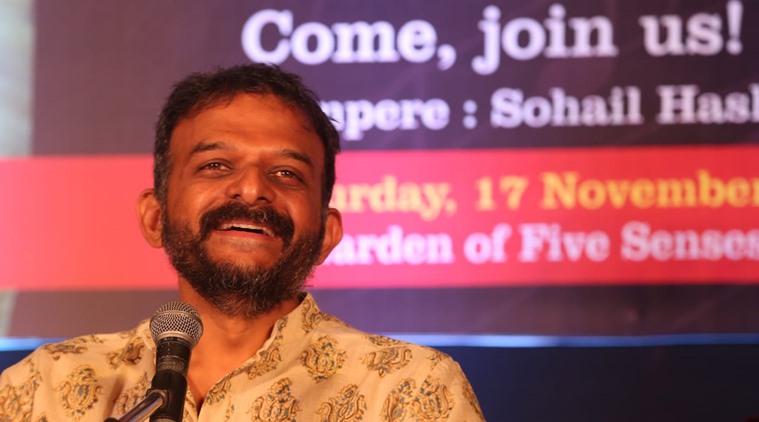
Art of a partisan

TM Krishna’s music is beautiful. But he exploits it for divisive politics, writes Dhananjay Singh, the assistant professor, Center for English Studies, JNU, in The Indian Express. Read on: 

Of the editorials in recent times that exaggerate one point of view as truth to an intelligent ignorance of another is “Show must go on” (IE, November 16) on the controversy associated with T M Krishna. The editorial is an extraordinary obfuscation of facts and Krishna’s holier-than-thou beliefs on art and activism. It disguises Krishna’s unprovoked diatribe as the championing of freedom of art, and must be responded to by decoding Krishna’s ideological mooring.

“The moment you ask difficult questions, and continue asking questions, you are reduced into binaries… We need to politicise art,” said Krishna in his speech at the NCPA in Mumbai. Indeed a thoughtful statement on the relationship between art and politics. All artists are expected to ask questions that dismantle binaries of “them” and “us,” to dismantle ideologies that seek to dominate and oppress. But what if an artist chooses one ideology over the other, pits one community against another, and hides his divisive politics under the mask of the universality of art?

Krishna’s statements over the last few years are entrenched within the binaries of political camps. His artistic expressions and political statements come from two different persons: Krishna the activist is a far cry from Krishna the artist. In art, he expresses beautiful expressions of harmony, in politics, he exploits a sense of prejudice against the Hindus.

An artist doesn’t seek a platform of a political party. An artist’s responsibility is “to create a mood” against social evils or for social causes. That’s the difference between a Javed Akhtar and a T M Krishna.

One need not be a connoisseur of Carnatic music to appreciate Krishna’s absolute mastery of notes and vocal rhythm. What is there in his music to affront any point of view? Absolutely nothing. His art is useless in the sense Oscar Wilde talked about it: “Art is useless because its aim is simply to create a mood. It is not meant to instruct or influence action in any way.” No art is apolitical, as all art originates from society and every society is politically conscious. But the sculptor’s stone is not the stone thrown in rabblement. Krishna’s choice, as an artist, to sing praises to Jesus or Allah would hardly make his music politically provocative. For a Hindu, it would resonate Krishna, Allah and Jesus in one composite experience of bhavas and rasas. But his assertion that it is a social act beyond the form of the classical and against the Hindu-dominated Indian society is deeply problematic.

In the Indian tradition of art and music, there has never been any restriction on the modification of classical forms to include new elements. The Natyashashtra, the source text for Indian art, theatre, music and performance promotes such variations as “pravritti”. So, the abuse that Krishna faced on social media for introducing new themes is ill-founded.

But over the last few years, Krishna, the artist has been overshadowed by Krishna the activist. In Delhi on November 17, on an AAP platform, it was not Krishna the musician that sought an audience for Krishna the activist but it was a bitter and arrogant activist who sullied the great artist.

The politics of art and the political activism of the artist speak a universal language of dissent. An artist doesn’t seek a platform of a political party. An artist’s responsibility is “to create a mood” against social evils or for social causes. That’s the difference between a Javed Akhtar and a T M Krishna.

At the literature festival in Mumbai, Krishna said, “art is never apolitical. I do not understand how one can be alive and not be an activist”. Fair enough. But what makes his art political? Singing songs of Jesus makes his art spiritual, but his view that this choice is a point to be proven against Hindus makes it political in a destructive way. It only evokes bigotry — not communal and musical harmony. One might argue why his choice is limited to Jesus and Allah, and not the Buddha or Nanak.

Krishna the activist is separate from Krishna the vocalist and seems to exploit the latter for ulterior political intentions. His politics, represented in tweets and interviews, reveals an unreasonable hatred for the prime minister. It is only the sophistry reinforced by his artistic identity that distinguishes him from the trolls who irrationally abuse him.

The recent controversy is about the alleged cancellation of his concert, which was to be held on November 17, hosted by the Airport Authority of India and Spic Macay. AAI’s statement said that the event had to be postponed due to “some exigencies of work”. It featured apart from Krishna other artists, including Sonal Mansingh, Priyadarshni Govind and Shahid Parvez Khan. While none of the other artists had any problem with the postponement, Krishna rushed to the conclusion that the event was cancelled due to his political views . Mansingh is known to have views contrary to Krishna. How is the postponement an attack on Krishna’s freedom and not her’s? His eagerness to embrace the stage offered by the AAP, and supported by political and social activists of the left, contradicts his claim that art should not be reduced to binaries. His activism dabbles in identity and power politics, and consolidates the binaries of left and right.

Why my best friend and I decided to move in together and co-mother our children

I’ve known my best friend Tia for 10 years. We’ve seen each other through marriages, career changes and the journey into motherhood.

This year was a year of relationship changes for both of us. Her marriage was coming to an end, and my live-in boyfriend and I decided to take a significant step backward so we could work on some of our conflicts. Despite our respective emotional rollercoasters, we were both forced to shift our attention to logistics. Finding an apartment in New York City is hard enough, but finding one that accommodates kids is like searching for a very expensive needle in a very expensive haystack.

As we shared our experiences with each other, the idea of merging our households kind of hit us like a brick. The aim was to help make both of our lives a little easier.

Tia (left) and the author, Ashley Simpo, on the day they moved in together.
Tia is the mother of two boys, ages 3 and 13, and I am the mother of one 5-year-old. Her three-bedroom apartment in Bedford-Stuyvesant could accommodate all of us. The master bedroom was converted into the boys’ room, with space designated on one end for the oldest child so he could retain some semblance of adolescent autonomy. Tia and I took the remaining two smaller rooms. We agreed to share all housing expenses ― groceries, rent, utilities, even Netflix. We also agreed to support each other, be each other’s first line of defense when dealing with parental ups and downs.

Logistically, we had it all figured out. We scheduled my move-in date for a little over a month ago; I packed my things and arranged movers. She cleared out the second bedroom for me, and we spent an afternoon figuring out how to set up the two youngest boys’ beds (one Hot Wheels bed and one Batmobile bed) ― which felt like a complex game of Tetris. When it was all said and done, the boys were wrestling in their giant room while Tia and I escaped to the backyard to sip on some congratulatory tequila.

Our home has two parents in it. Two parents who have agreed to be each other’s backup before deploying more expensive or inconvenient options.
Our arrangement goes beyond that of roommates. We’re genuinely leaning on each other; when one of us has more capacity than the other, she tags in.

When I had to figure out childcare for my son during the two weeks between his last day of kindergarten and his first day of summer camp, we sat down and talked about how we could work our schedules around the issue. She offered to take him to work with her for a few hours so I could get work done ― something I might have struggled to figure out had I been going this alone. When she needed to rest after a long night of work and play, I got up and made the boys breakfast. I use her car to take my son off to school if I’m running late.

We support each other with everything. We don’t need to reach out to expensive babysitters or strangers; there is always someone in-house who has our backs.

The most difficult time of day for most single mothers is between 5 p.m. and 8 p.m. on weekdays. We scramble to get children fed, bathed and into bed while also possibly finishing up work we left undone when we left the office. Having one woman in the house who can put down a plate in front of the kids while the other responds to important emails is a saving grace.

Our home has two parents in it. Two parents who have agreed to be each other’s backup before deploying more expensive or inconvenient options. This is a godsend in a city like New York, where work never sleeps and kids hardly ever settle down.

Making the boys’ beds in their new room.
As one battle (the move) subsided, another gracefully crept in behind it: the heart stuff. I was watching my friend go through the end of her marriage. Arguments about when the child would be picked up and who wasn’t being supportive enough would often leave her exhausted. I was spun into an overwhelmed stillness as I dealt with my own issues, too, and grappled with questions concerning my career and relationship.

I, on the other hand, had established a home with someone I still love, and post-move, I was navigating my own raw emotions. We both had some mending to do which made our arrangement all the more helpful.

Being able to hand off the baton to each other quickly became a saving grace. I was able to reintroduce myself to myself, embrace alone time and create more balance in my life. I have also been able to help Tia, like when she needed a break from her youngest son so she could facilitate a workshop one evening. I didn’t need to be asked, because I’m a mom. I know it’s nearly impossible to do anything in the presence of a 3-year-old.

Best of all, our sons get to bond like brothers, learn how to compromise, share and help our household function by pitching in with clean-up and meal prep. This wouldn’t be the case had we attempted to live alone in New York City with our respective kids.

There is a stigma about single mothers ― that we are overstressed, overtired, underappreciated and permanently in bad moods. There is a sense of acceptance around these ideas. We ourselves accept them as truths and try to work around them with the pressure of society at our feet. It’s as if we are constantly apologizing for failing to create the socially acceptable nuclear family. So instead of asking for help, we take on more than the average person. As women, this is already something we’re used to doing ― this piling-on of life. As mothers, we do it usually to the detriment of our sanity and health.

Mothers need each other ― single or otherwise. We understand the day-to-day and we hear the things that usually go unsaid.
Mothers need each other ― single or otherwise. We understand the day-to-day and we hear the things that usually go unsaid. My co-mother doesn’t have to explain why she propped up her son on the couch to watch “PJ Mask” for 30 minutes while she sat in her room in silence. I don’t have to explain to her why I needed to spend the night at my boyfriend’s place just to feel emotionally catered to by someone who didn’t ask for a peanut butter sandwich as soon as I sat down.

These things we don’t have to say allow us space that the world won’t give us. Space we greatly need.

A co-mothership is about partnership. It requires the same level of commitment and communication as any partnership. We have to stay on the same page, respect boundaries, be honest about what we can and cannot do and about what we need.

In cities like New York, where the median rent cost is upward of $3,000 a month, being a single parent feels impossible. But entering the realm of finding a roommate can be just as problematic. How would this new person respond to your child? How would your child respond to them? My first roommate as a single mother was a woman without children. She loved my son as if he were her own, but I still felt like I had to apologize when he was louder than normal, wanted to be rambunctious in the living room or spilled something all over the floor. These are all things that wouldn’t even warrant a blink from another mom (who is also my best friend).

Our arrangement has already proven to be fruitful and healthy. There have been bumps along the way, of course. Like the moment we looked around the apartment, completely in disarray after my things had been dropped off, and wondered what the hell we’d just done. Or the fact that we have one bathroom and five people who need to leave the house every morning. We’re constantly reminding the kids to share toys, even if they were previously designated to a child who had his own bedroom. There’s the work of remembering who likes almond milk and who likes cow’s milk, who prefers turkey bacon and who prefers pork bacon. Keeping track of who is in the house on Mondays and who is out of school on which days. What mother can pick up or drop off which kids and who will do the grocery shopping today or mop the floor next week.

We soon found out that the caveat to co-mothership is to remain frightfully organized and stay ahead of the storms. But above all else, it’s about respecting each other’s contribution and experience in motherhood and womanhood. I wouldn’t be able to do this without Tia, and I am so grateful for the life I share with her right now.

(Source: HuffPo)