Showing posts with label gang rape. Show all posts

Saturday, 7 December 2019

A woman interviewed 100 convicted rapists in India. This is what she learned

In India, many consider them “monsters.”

Madhumita Pandey was only 22 when she first went to Tihar Jail in New Delhi to meet and interview convicted rapists in India. Over the past three years, she has interviewed 100 of them for her doctoral thesis at the criminology department of Anglia Ruskin University in the United Kingdom.

It all started in 2013, first as a pilot project, months after the highly publicized gang rape and murder of a woman now known as “Nirbhaya” meaning “Fearless One.” The details of the case — a young, aspirational medical student who was attacked on the way home with a friend after watching the movie “Life of Pi” — struck a chord in India, where according to the National Crime Records Bureau, 34,651 women reported being raped in 2015, the most recent year on record.

Nirbhaya brought thousands of Indians to the streets to protest the widespread culture of rape and violence against women in 2012. That year, gender specialists ranked India the worst place among G-20 countries to be a woman, worse even than Saudi Arabia where women have to live under the supervision of a male guardian.

“Everyone was thinking the same thing,” said Pandey, who at the time was on the other side of the world, in England, finishing off her master’s. “Why do these men do what they do? We think of them as monsters, we think no human being could do something like that.”
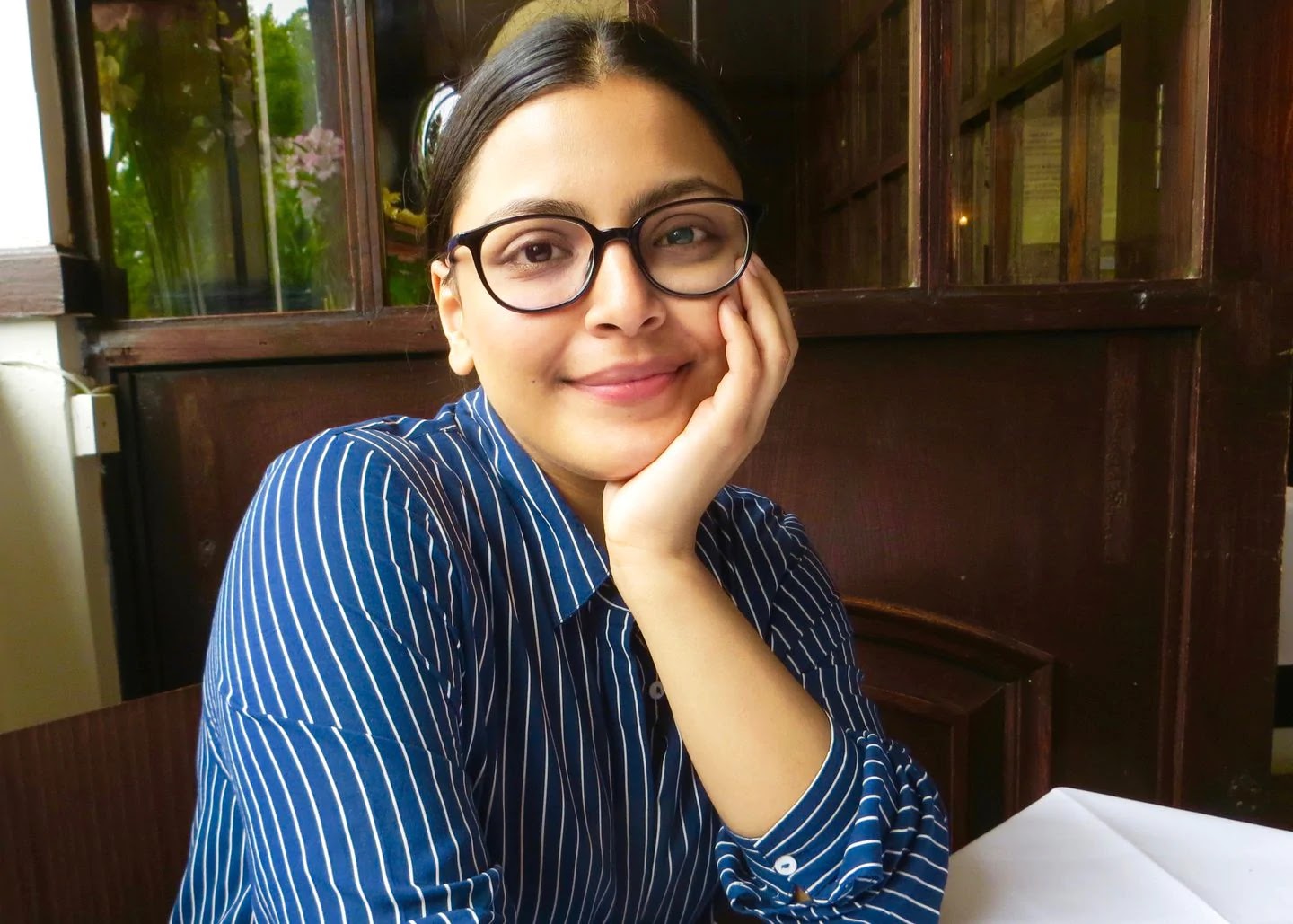
Madhumita Pandey, 26, has interviewed 100 convicted rapists in India. (Madhumita Pandey)

The protests forced a national conversation about rape, a topic which still carries huge stigma in India. Pandey, who grew up in New Delhi, and saw her city in a new light after the Nirbhaya case, said: “I thought, what prompts these men? What are the circumstances which produce men like this? I thought, ask the source.”

Since then, she has spent weeks talking to rapists in Delhi’s Tihar Jail. Most of the men she met there were uneducated, only a handful had graduated high school. Many were third- or fourth-grade dropouts. “When I went to research, I was convinced these men are monsters. But when you talk to them, you realize these are not extraordinary men, they are really ordinary. What they’ve done is because of upbringing and thought process.”

In Indian households, even in more educated families, women are often bound to traditional roles, Pandey said. Many women won’t even use their husbands’ first names, she pointed out. “As an experiment, I phoned a few friends and asked: what does your mom call your dad? The answers I got were things like ‘are you listening,’ ‘listen,’ or ‘father of Ronak’ (the child’s name).’”

“Men are learning to have false ideas about masculinity, and women are also learning to be submissive. It is happening in the same household, Pandey said. “Everyone’s out to make it look like there’s something inherently wrong with [rapists]. But they are a part of our own society. They are not aliens who’ve been brought in from another world.”

Pandey said that hearing some of the rapists talk reminded her of commonly held beliefs that were often parroted even in her own household. “After you speak to [the rapists], it shocks you — these men have the power to make you feel sorry for them. As a woman that’s not how you expect to feel. I would almost forget that these men have been convicted of raping a woman. In my experience a lot of these men don’t realize that what they've done is rape. They don't understand what consent is.”

“Then you ask yourself, is it just these men? Or is the vast majority of men?” she said.

In India, social attitudes are highly conservative. Sex education is left out of most school curriculums; legislators feel such topics could “corrupt” youth and offend traditional values. “Parents won't even say the words like penis, vagina, rape or sex. If they can't get over that, how can they educate young boys?” Pandey asked.

In the interviews, many men made excuses or gave justifications for their actions. Many denied rape happened at all. “There were only three or four who said we are repenting. Others had found a way to put their actions into some justification, neutralize, or blame action onto the victim.”

One case in particular, participant 49, sent Pandey on an unexpected journey. He expressed remorse for raping a 5-year-old girl. “He said ‘yes I feel bad, I ruined her life.’ Now she is no longer a virgin, no one would marry her. Then he said, ‘I would accept her, I will marry her when I come out of jail.’”

The response shocked Pandey so much that she felt compelled to find out about the victim. The man had revealed details of the girl’s whereabouts in the interview. When she found the girl's mother, she learned that the family had not even been told that their daughter’s rapist was in jail.

Pandey hopes to publish her research in the coming months but said she faces hostility for her work. “They think, here comes another feminist. They assume a woman doing research like this will misrepresent men’s ideas. Where do you begin with someone like that?” she said.

(Source: WP)

Thursday, 5 December 2019

Who is saving whom? MPs talk big on reforming rape laws, but nearly 50% have criminal records

There are moments in every country’s history that make its people reconsider all that they and their collective strength as a nation stand for. The world map as we now know has come to so evolve due to the changing perceptions as well as the aspirations of the people. 

Not all wars are fought by the armed forces but the most crucial ones, that make and break nations, are a result of political will that finds its justification in the votes of the people.

It was so in 2012 in India’s national capital when the brutal rape of a 23-year-old  in a private bus shocked the very consciousness of the people and sent the country’s masses on the streets, demanding that justice be served to Nirbhaya. It wasn’t long ago and human memory would serve to remind us of the outrage that followed. 

But it’s just been seven years and another similar shocker has this time come from the city of Hyderabad where a veterinarian was gang-raped and killed -- literally burnt alive. Her charred body was found under a culvert in Shadnagar in Hyderabad on November 28, a day after she went missing.


A movement calling for justice and ending violence and sexual assault against women is gaining ground even as the episode rocked the Upper House of the Parliament. 

As MPs expressed anguish over the Hyderabad rape and murder case, Rajya Sabha Chairman M Venkaiah Naidu suggested a rethink on the practice of allowing convicts in heinous crimes to go in for mercy appeals. 

"What happens even after punishment is given (to convicts). We all are witness...appeal, mercy (petition)...can anybody think of having mercy on such people," he said, observing this process has been followed for years.

Naidu said crime against women is a "societal disease" and there is some sort of lacunae in systems, both legal as well as the police. "This kind of violation of the dignity of women cannot go on unchallenged. It should be nipped in the bud," he said, and added that it was already too late.

Wait, what? The dignity of women? Let us first look at how we are breaking the morale of our women and boosting the spirits of offenders to go to any extent.

Kuldeep Sengar, rape accused legislator who was expelled by BJP after a lot of public outrage, was seen on Independence Day greeting advertisements alongside Prime Minister Narendra Modi and Uttar Pradesh Chief Minister Yogi Adityanath in the local edition of a Hindi daily. 

He featured on advertisements funded by the Panchayat chairman of Ugoo area in Unnao. Meant to wish residents on Independence Day and Raksha Bandhan on August 15, the ads also had photos of Sengar's wife.

He had also been named in the case pertaining to the death of the survivor's father. Another case was registered against the former BJP leader after the victim met with a deadly accident last month. The lawmaker had allegedly raped the girl, a minor at that time, at his residence in Unnao in 2017, where she had gone to seek a job.

That the state machinery failed to act appropriately against him even under tremendous public pressure and that powerful politicians extended support to him has been proven time and again.

Lest you forget, there is the curious case of Chinmayanand too. This alleged rape case involving former BJP minister got so murkier that the law student who had filed a rape complaint against him is currently in jail, for blackmailing him apparently. 

Despite all outrage, the local leaders of India’s ruling party showed no backbone as they continued to extend their political support to the man accused of crimes as heinous as those that have shocked us again today. This man was permitted to hold a press conference of sorts and sitting MPs from our very own parliament were regular visitors to him in jail. 

And then we look at the other side. A student, Anu Dubey was "hit, beaten up and threatened by three Delhi Police cops" for protesting against the Telangana doctor rape and murder case. 

Nearly half of the newly-elected Lok Sabha members have criminal charges against them, a 26 per cent increase as compared to 2014, according to the Association of Democratic Reforms.

Of the 539 winning candidates analysed by the ADR, as many as 233 MPs or 43 per cent have criminal charges.

The BJP has 116 MPs or 39 per cent of its winning candidates with criminal cases, followed by 29 MPs (57 per cent) from the Congress, 13 (81 per cent) from the JDU, 10 (43 per cent) from the DMK and nine (41 per cent) from the TMC.

Some may point out that this has always been the case in India. But no, it’s further from the truth.

In 2014, 185 Lok Sabha members (34 per cent) had criminal charges and 112 MPs had serious criminal cases against them. In 2009, 162 (nearly 30 per cent) out of the 543 Lok Sabha MPs had criminal charges and 14 per cent had serious criminal charges. So there is clearly an upward trend here. 

(Source: India Times)

Tuesday, 6 August 2019

Yazidi rape survivors forced to abandon children of Isis to be able to return to community: ‘Drowning in an ocean of pain’

On fifth anniversary of the Yazidi genocide, survivors struggle with new reality: ‘They are a body without a soul’

Exactly five years ago, Isis fighters committed arguably their most horrific crime –​ attacking the northwestern Sinjar region where the majority of the Yazidi population lived, they began rounding up and separating men and women.

Men were killed, children were abducted, Yazidi pilgrimage sites and houses of worship were destroyed. Women and girls were raped, enslaved and forced to endure unspeakable atrocities, with girls as young as nine tested for virginity and many sold into sex slavery.

Some 3,500 women were abducted by Isis and half remain unaccounted for to this day. While others have escaped, life remains arduous. And those women who had children as the product of rape are faced with the torturous dilemma of abandoning their babies in order to be allowed back into the Yazidi community, or keeping the babies but remaining ostracised.

Pari Ibrahim, founder and executive director of the Free Yazidi Foundation, lost many relatives in the Sinjar massacre, which marked the beginning of Isis’s genocide against the Yazidis – an ethnoreligious group in Iraq – in August 2014. She still has 17 female members of her family who remain missing. Nineteen were kidnapped by Isis in total but two managed to escape. Some 21 men from her family were taken but she assumes none of them are alive.

“We assume the men are dead,” she tells The Independent. “The women who came back told us the men were massacred and the elderly women also. They are my cousins and other relatives.”
A young girl sits outside the women’s centre at a camp in Dohuk in the Kurdish region of Iraq ( Women for Women International )

Ibrahim, whose organisation helps those Yazidi civilians worst affected by the Isis attacks, says those Yazidi women whose children are the result of rape by Isis militants face many difficulties due to not being welcomed back in the community with their children.

The Yazidi Spiritual Council, the supreme body tasked with binding religious decisions for Yazidis, decided these children could be accepted into the Yazidi community with their mothers back in April. But a clarification was issued just days later – partly prompted by fierce anger and consternation from the Yazidi population – which explicitly warned such children would not be welcomed.

“No one knows how many children were born of Isis,” Ibrahim says. “We support women with whatever they choose to do. If they want to put the baby up for adoption or the keep the baby – it is their choice.

“Of course, it is very difficult to live in the community if the child faces stigma. We know of cases where Yazidi families take the child away by force and put them up for adoption or give them to organisations that find a family or put them in an orphanage. These women are left very sad. Yazidi women survivors are left out of discussions.”

She says the organisation, which is based in the Netherlands, had put one Yazidi mother in contact with their child who was adopted by another family.

“When Yazidi women who escape out of captivity and flee Isis come back, it is like they are a body without a soul,” Ibrahim says.

“They have no hope anymore and see no future. All they want to do is sit in a tent and mourn for their family members and lost life. It is very difficult to compare the girl before she was kidnapped with her now she is sat in a tent or an unfinished building.

“I started the foundation to give Yazidis a chance to rebuild their lives. We have seen a lot of change with women we have been treating.”

She says one Yazidi woman, who lost her whole family in the massacre, had gone from saying she no longer wanted to live and asking why she was alive to becoming a yoga teacher at the Free Yazidi Foundation. She says the help she received has been transformative and she is now far happier.

Ibrahim, who fled Saddam Hussein’s Iraq with her family when she was three, says the circumstances endured by the Yazidi community living in camps was “dire” – explaining they are in desperate need of both basic amenities and mental health support.

“The Yazidi people are being failed by the international community,” she says. “They want the Yazidis back in Sinjar because they do not want them in their countries as refugees. Yazidis don’t have a voice. There is no justice for our people.”

She says members of the Yazidi community often get messages from family members that their children are in al-Hol camp – a locked desert camp in northeast Syria where more than 11,000 foreign women and children related to Isis suspects are being held.

Human Rights Watch has described the conditions there as “deadly” and “appalling” and found overflowing latrines, sewage seeping into tattered tents, and inhabitants of the camp drinking wash water from tanks which contained worms.

Ibrahim says Yazidi representatives go into al-Hol and other camps to look for Yazidis but many are scared to identify themselves due to being among Isis fighters and in fear of “endangering their own life”.

Brita Fernandez Schmidt, executive director of Women for Women International UK, who has been involved in efforts to help Yazidi women, raised alarm bells about the plight suffered by Yazidi women with babies born to Isis fighters.

“They saw them as being tainted by the devil,” she says. “A lot of women who were raped by Isis find it hard to find partners. A psychologist told me about a rare instance where a young Yazidi man married a girl knowing she was raped. For him, it didn’t matter.

“Many of these women will have children – they are called the ‘children of Isis’  – which is damaging. Just think for a moment what that does to those children. Women have to choose between living a life of utter stigma or a life of utter isolation.

“As a rape victim, you carry this enormous burden of stigma but if the rapist is Isis this is even more so. One government official said the only solution is repatriation to a third country because they can’t go back to the original community and can’t stay where they are not safe.”

The campaigner says the only way you can be deemed to be Yazidi is if both of your parents are Yazidi. She visited Khanke camp in Dohuk in the Kurdish region of Iraq in April.

She says: “Those 16,000 people who live there are Yazidi. It was the worst place I have been to. There were five to 10 people in one tent. There is no running water. There are many children. They have been there for five years.

“A psychologist there told me she feels like she is ‘drowning in an ocean of pain’. You can see that level of trauma in the camp.

“They want to go back to Sinjar but they don’t know if they ever will because it was so badly destroyed. Even though Isis has left, houses and infrastructure have been destroyed. It felt like they were trapped in refugee camps with nowhere else to go.”

A 2016 report by the United Nations said Isis subjected the Yazidi population – which has already survived centuries of persecution – to “some of the most horrific crimes imaginable”.

Yesim Arikut-Treece, a psychologist who worked with women in the camp for the foundation for a year and a half, says she thinks 16,000 additional Yazidis are living in satellite camps around Khanke camp.

She says a lot of women who have children who are the product of rape by Isis do not return to the community.

“They stay with the Isis families because they know the community does not accept the children,” she adds.

“It is a very complicated problem. They are a minority group under threat already – the only way they can hold on to their identity is by holding on to their rules. But both the mothers and the children are suffering a lot. I have heard from Yazidi women who were captured who left their children behind that there were women who stayed because they were unable to leave their children behind. Women who return to the Yazidi community with babies are stuck in safe houses or the child is put in an orphanage.”

Arikut-Treece says she contacted Kurdish officials after a Yazidi woman she worked with wanted to know if her child was safe in an orphanage but they refused to disclose anything. They were worried about what Yazidi families might do to non-Yazidi children, she adds.

She says she has heard “horrendous stories” of the Sinjar massacre from people who had witnessed the suffering firsthand and had many close relatives who remain missing.

“Everyone has a traumatising story,” she says. “People have flashbacks. When they realised Isis was coming and killing people, they started fleeing but not everyone could fit in the cars to escape.

“There was a very sad story of a pregnant woman who left her husband behind because he could not fit in the car. The last words he said were ‘look after the children for me’. She had one child with her. She loved him very much and they had a very happy marriage. She was very traumatised and suicidal. The only thing that made her continue to live was to look after the children. Nobody has heard from the husband since. Presumably, he is dead.”

Arikut-Treece expresses horror at the sexual slavery Isis subjected Yazidi women to, saying it was “unbelievable” it happened in the 21st century.

“They were very organised,” she says. “They organised slave markets. They brought the girls from one location to another. The person who bought the girl or the women resold them and again. One Yazidi girl’s best friend was beheaded by Isis in front of her. There were beatings and tortures. They saw their husbands, brothers and fathers killed in front of them.”

Nadia Murad, who survived the Isis torture camps, chronicled the horrors faced by women like herself who were sold in markets, and even on Facebook, sometimes for as meagre amount as $20 in her book The Last Girl. The Nobel Peace Prize winner is an advocate for the Yazidi minority and for refugee and women’s rights.

(Source: Independent)

Monday, 1 April 2019

Lion Mama: The woman who fought off her daughter’s rapists

Nokubonga Qampi became known as the "Lion Mama" in South Africa after she killed one of three men raping her daughter and wounded the others. She was charged with murder - but after a public outcry the prosecution was halted, and she was able to focus her efforts on her daughter's recovery.

It was the middle of the night when the telephone call came, waking Nokubonga from her sleep.

The girl at the other end of the line was just 500m away - and she said Nokubonga's daughter, Siphokazi, was being raped by three men they all knew well.

Nokubonga's first response was to call the police, but there was no answer. She knew, anyway, that it would take them time to reach her village, in the rolling green and brown hills of South Africa's Eastern Cape province.

She was the only person that could help.

"I was scared, but then I was forced to go because it was my daughter," she said.

"I was thinking that when I get there, she might be dead... Because she knew the perpetrators, and because they knew her and knew she knows them, they might think they had to kill her so she couldn't report them."


Siphokazi had been visiting friends in a group of four small houses in the same village but had been left alone, asleep, when her friends went out at 01:30. Then three men who had been drinking in one of the other houses attacked her.

Nokubonga's sparsely furnished hut has two rooms, a bedroom, where she had been sleeping, and a kitchen - where she picked up a knife.

"I took it for me, for walking the distance between here and where the incident was taking place, because it is not safe," she says. "It was dark and I had to use the torch on my phone to light the way."

She heard her daughter's screams as she approached the house. On entering the bedroom, the light from her phone enabled her to make out the awful sight of her daughter being raped.

"I was scared… I just stood by the door and asked what they were doing. When they saw it was me, they came charging towards me, that's when I thought that I needed to defend myself, it was an automatic reaction," Nokubonga says.

Nokubonga refuses to go into detail about what happened next.

The judge in the court case against the attackers said Nokubonga's testimony showed she had "become very emotional" as she saw one of the men raping her daughter, while the other two stood nearby with their trousers round their ankles, waiting to take their turn again.

Judge Mbulelo Jolwana went on to say, "I understood her to mean that she was overcome with anger." But in recounting the story now, all Nokubonga will admit to was fear - for herself and her daughter - and her face betrays only sadness and pain.

It's clear, though, that when the men charged at Nokubonga she fought back with her knife - and that as she stabbed them they tried to flee, with one even jumping out of a window. Two were seriously injured, and the other died.

Nokubonga did not stay to find out how badly hurt they were. She took her daughter to a friend's house nearby.

When the police arrived, Nokubonga was arrested and taken to the local police station, where she was kept in a cell.

"I was thinking of my child," she says. "I got no information [about her]. It was a traumatic experience."

At the same time, Siphokazi was in hospital worrying about her mother, imagining her in her cell and heartbroken about the prospect of her being jailed for years.

"I wished that if she spent time in prison, I would be the one who would serve it on her behalf," she says.

Siphokazi and Nokubonga in January, 16 months after the attack
Still in shock, she could remember little or nothing of the attack. What she now knows she heard from her mother when she arrived at the hospital two days later, after being freed on bail.

From that moment on they have been each other's emotional support.

"I didn't get any counselling but my mother has been able to assist me," Siphokazi says. "I am recovering."

Nokubonga's efforts are focused on ensuring that life continues just as it was before.

"I'm still the mother and she is still the daughter," she says. They share a laugh about the closeness of their relationship, joking that Siphokazi cannot get married, because then Nokubonga would have no-one to look after.

In the 18 months since the attack occurred they have come a long way.

Buhle Tonise, the attorney who represented Nokubonga, remembers that both seemed to have given up when she first met them, a week after the attack.

"The mother was distraught," she says.

"When you are meeting with people that are at that level of poverty, then you know most of the time they would feel that the mother is going to jail because she has no-one to stand by her side. The justice system is for those who have money."

As Buhle spoke to Nokubonga, Siphokazi watched her silently, as though the attack had deprived her of the power of speech.

Although Buhle says she was confident Nokubonga could argue convincingly that she acted in self-defence, she feared it would be a struggle to overcome her client's overwhelming pessimism. What neither of them had foreseen was the help they would get from the media, which ended up creating the legend of the Lion Mama.

A boy rests in a hut in the village of Lady Frere, before commencing a
traditional Xhosa manhood ceremony (2000) Getty Images

It is rare in South Africa for a rape case to get more than basic news coverage. This may be in large part down to the sheer number of rapes in the country, estimated at around 110 per day - a situation President Cyril Ramaphosa recently labelled a national crisis.
The Eastern Cape province - the country's poorest, with unemployment of over 45% - has a higher level of rape per capita of population than any other. In Lady Frere, the village where Nokubonga and Siphokazi live, there were 74 recorded rapes in the year 2017/2018 - an astonishingly high figure for somewhere with a population of less than 5,000.

But among the numerous harrowing stories of rape in South Africa, Nokubonga and Siphokazi's story stood out. The press quickly latched on to the tale of a mother protecting her daughter. Unable to name Nokubonga, to protect her daughter's anonymity, one newspaper labelled her "Lion Mama", placing the story next to a picture of a lion and her cubs. The name stuck.

"For me, at first, I didn't like it because I couldn't understand," Nokubonga says. "But in the end I knew it meant I was a hero, because when you look at a lion it would protect its cubs."

The public responded by criticising the decision to charge Nokubonga with murder and raising funds to help her mount her legal defence. This raised her spirits, but the extent of the public support did not sink in until her first appearance in a local magistrate's court, a month after the attack.

"Going to court I was scared, I woke up and said a prayer," she says.

When she got there, she found the place was full of well-wishers.

"There were a whole lot of people from all over South Africa. What I said to people is thank you, because the fact that the court was filled to the rafters, it meant that they supported me. They really gave me hope."

She was quickly called before the magistrate.

"I was told the charges had been withdrawn," she says. "I just stood there, but I was excited, I was happy. At that moment I knew the justice system is able to separate right from wrong, they were able to tell I had no intentions of taking someone's life."

Buhle Tonise recalls the impact the magistrate's decision had on Siphokazi as well.

"After the case was withdrawn, she calls her daughter. For the first time ever I heard her daughter laugh. I think that's when [Siphokazi] said she also wants to see the guys going to jail."

They had to wait over a year for that to happen, but in December 2018 the two remaining attackers, 30-year-old Xolisa Siyeka and 25-year-old Mncedisi Vuba - members of the same clan as Nokubonga and Siphokazi - were each sentenced to 30 years in prison.

"I was happy about it," says Siphokazi, now 27. "I felt a bit safe, but a part of me just felt they deserved life imprisonment."

This is as close as Siphokazi gets to showing anger toward her attackers.


Once the case was finished, she decided to waive her anonymity in order to give encouragement to other rape survivors.

"I would tell a person that even after such an attack there is even life beyond it, you can still go back to society. You can still live your life," she says.

Nokubonga also shows a surprising lack of anger for someone compared by the media to a lioness.

In fact, she has hopes that her daughter's rapists can achieve something positive in the future. "I'm hoping that when they finish their sentence they'll come back as reformed or changed people," she says, "to tell a story about it and be a living example."

(Source: BBC)

Wednesday, 27 February 2019

Isis slave escapes caliphate with 5-year-old son after five failed attempts

Faryal was kidnapped along with thousands of other Yazidi women and forced into sexual slavery

One of the Yazidi women abducted by Isis in 2014 has escaped the caliphate with her five-year-old son after spending four years as an Isis slave.

“He was terrified,” she said, recounting their escape this month. “I held his hand and we just kept walking.”

The walk to freedom lasted 53 hours, and the little boy cried all the way. It wasn't their first escape attempt – Faryal had tried five times before to flee Isis – but they would be shot on the spot if the militants caught them now.

They passed corpses in the darkness, and when exhaustion overwhelmed them, they huddled together and slept on the dusty path. Faryal whispered reassurances to her five-year-old son, telling him that his grandparents were waiting and that, after four years as prisoners of Isis, they were finally going home. He wouldn't believe her.

As members of Iraq's Yazidi minority, a largely Kurdish-speaking religious group, the pair had escaped what the UN has called a genocide.

Isis militants kidnapped thousands of Yazidis on a single day in August 2014, massacring the men and dumping them in mass graves, and forcing the women into sexual slavery.

Women and children flee the Islamic State’s last holdout of Baghouz which is surrounded by US-backed forces ( DELIL SOULEIMAN/AFP/Getty Images )
During her captivity, Faryal said she had six different owners, at times being passed on when a fighter wanted a new sexual partner or simply to settle a debt. “Monsters who treated us like animals,” is how she described them.

The atrocities committed against the Yazidis had initially prompted the US to launch airstrikes against the militants and begin a military campaign to roll back Isis's caliphate that now, four years later, could end within days. US-backed forces have the last Isis holdouts surrounded in the eastern Syrian hamlet of Baghouz.

In photographs, taken by aid workers on the night of her escape, a male companion hides his face but Faryal looks straight out at the camera. Her hazel eyes are fixed in a quiet stare. Her son's face is wet with tears, and he is sobbing. “I can't put into words how I was feeling at that moment,” she said. “All I could think was: 'Please, take me away from here.' ”

Faryal, 20, told her story last week in the northern Syrian town of Amuda after being transferred there by the US-backed Kurdish forces that rescued them. Throughout the interview, she kept a watchful eye on Hoshyar, her son, pulling him close as he cried and then trying, without success, to make him laugh.

 Details of her account were corroborated by members of her family in northern Iraq and through a team of Yazidi activists that had communicated with her secretly for months before the escape in attempts to smuggle her to safety.

The day before Faryal's life changed forever in 2014 had dawned like any other in the Iraqi village of Tel Banat. She pottered around the house looking after her infant son Hoshyar, she recalled. By midday, the sun was roasting, and although rumours had swirled for weeks that Isis forces were drawing closer, few in Tel Banat were aware of the coming storm.

The Islamist militants arrived at dusk.

“We couldn't run fast enough,” Faryal remembered, describing how she and 10 members of her extended family had piled into a car and joined an epic exodus. Yazidi towns and villages around Mount Sinjar in northern Iraq emptied within hours as more than 100,000 people fled to higher ground. Faryal and her husband, Hashem, made it only a few miles before militants blocked their path.

Yazidis have long faced persecution from more powerful religious groups for their beliefs, in part because of a false but commonly-held impression that they worship the sun, or the devil. There are fewer than one million Yazidis worldwide, and according to the UN, Isis had intended to entirely wipe out those within their reach.

Yazidi men and boys who had reached puberty were separated from the women and other children and often shot dead at roadsides. Women were bused to temporary holding sites and then sold to Isis fighters at slave markets.

Isis clerics had decided that having slaves was religiously sanctioned, institutionalising sexual violence across their caliphate. Women have reported being tied to beds during daily assaults. They were sold from man to man. Gang rape was common.

Many women and girls committed suicide in the opening months of captivity, according to Yazidi rights groups. Others harmed themselves to appear less appealing to fighters who might consider buying them.

Faryal recalled that an Isis fighter who was Iraqi and called himself Abu Kattab was her worst abuser. Hoshyar was abused, too, Faryal said. Abu Kattab beat him so badly there were hand prints on his face. Another had forced the boy's arm onto a hot plate.

“He was so small, but for some reason the fighters hated him,” Faryal said. “I could never explain to him why.”

As the boy sat beside his mother last week, his eyes moved slowly from side to side as if scanning the room for threats. His blond hair was cut in jagged chunks. He did not speak and he did not smile.

At its height in 2014, Isis's self-proclaimed caliphate covered territory in Syria and Iraq the size of Britain, and the movement drew recruits from around the world. In the intervening years, thousands of Yazidi women fled the territory held by the militants, but Faryal couldn't escape.

With each unsuccessful attempt to escape, the punishment grew harsher, she said. By 2017, she said, she had given up. Keeping her head down and accepting the abuse seemed the only way to keep Hoshyar alive, and the child was fraying badly. Their owners starved him and often forbade him to go to the toilet.

“I knew that if I fought back, they would take him from me forever,” she said. “They did that to so many women.”

There was one final act of resistance, though: a tattoo of her husband's name, inked in kohl and water on the back of her right hand. It took five days to complete, and the pain lasted even longer. It was, she sometimes told herself, a reminder of a life that could still be hers. At other times, she lost all hope.

In its final months, as the caliphate shrank to a sliver, her captors were moving weekly to outrun US airstrikes. But the US-backed Syrian Democratic Forces were closing in.

Food supplies ran so low that Faryal said she sometimes went days without eating, spending her money instead on small sandwiches for Hoshyar.

When the pair was struck by shrapnel in the Syrian hamlet of Baghouz in January, no medical care was available. The village clinic had been abandoned, left littered with empty drug packets and syringes.

“We were pushed out onto the street, still bleeding. There were no drugs left, and we saw people in the road being left for dead,” she said.

Their chance to escape came when several Isis fighters grew desperate and plotted to use Faryal and Hoshyar as their ticket out. After years of abusive behavior, the militants decided to style themselves as the Yazidis' guardians and surrender to the forces surrounding their last stronghold.

At 2.30pm one afternoon, they all set out from their tent in Baghouz. An Uzbek fighter and his family pushed the young mother out in front of them as they started down the dusty path. They walked for two days in the cold, following the only path out of what had once been the caliphate.

At 8pm on the second day, they heard shouting. Beams from flashlights bounced off the sky. It was the US-backed soldiers.

Isis fighters raised their hands above their heads and cried out for mercy. They claimed that they were helping a Yazidi escape and had kept her safe, according to someone present at the screening point that night. The appeal fell on deaf ears, and the men were detained as Faryal and Hoshyar carried on walking.

It took three days for the pair to finally believe they might be free. They still fear that the extremists will come back for them.

“As long as I'm alive, I'll be scared of them,” Faryal said, tensing her shoulders as she gripped her tattooed hand with the other. “My spirit might be strong, but my mind will never rest.”

(Source: The Independent)

Saturday, 20 January 2018

Trapped by trusted relative, raped by several men: Kerala teen's horrific ordeal

The minor girl had been allegedly taken to hotels and was sexually abused multiple times over the past year.

When the police asked 16-year-old Sunitha* where her relative Athira had been taking her for the past few months, Sunitha could not at first muster the courage to tell them her story.

At her modest house in Kerala's Alappuzha district, she finally confided to a woman police officer after persistent prodding, that she was subjected to prolonged sexual abuse by many men, including policemen.

On Tuesday, the Alappuzha police arrested Laiju, a probationary Sub-Inspector at the Mararikkulam police station in the district, on charges of sexually abusing the Class 11 student.

Earlier on Sunday, the investigation team had nabbed a senior civil police officer Nelson Thomas from Bengaluru. Nelson had absconded on being booked for sexually abusing the teenager.

As of Tuesday, the police have made five arrests in the case, including two policemen and believe that there are more people involved in the crime. Alappuzha DySP said that the first accused and the girl's relative Athira, policeman Nelson Thomas, another policeman Laiju, Prince and Jinu have been charged under various sections of the IPC including section 342, 353, 356, 370, Section 75 and 76 of the Juvenile Justice Act and under Sections 8, 9, 11, 12 and 16 of the POCSO Act.


The sex racket
According to the Alappuzha District Police Chief Surendran, the girl's relative Athira, a 24-year-old woman from Punnappra in the district, is the key accused in the case. Since the past few months, Athira had been taking Sunitha along with her to a number of hotels and lodges in the district, where the 16-year-old was subjected to repeated sexual abuse.

From young students to drivers and even policemen, the list of accused is lenghty, and many are yet to be arrested.

Sunitha is a student of a private school in the area and belongs to an economically backward family. According to the police, her father is physically disabled and mother suffers from a mental illness. When Athira's visit to the house became more frequent with her leaving the house with Sunitha at odd hours, the neighbours in the area grew suspicious about Athira's intentions.

Last week, the neighbours decided to question Athira when she visited Sunitha's house, to take the teenager out.

"The neighbours thought something was off, since Athira's visits became very frequent. They then called us and we went to speak to Athira. Even then, we did not anticipate that it will throw open such a huge crime. Even after Athira confessed to taking the girl to hotels, it took some time before the girl could tell us what was happening," Alappuzha Women's Police Station Sub-Inspector Sreedevi told TNM.

She added: "The girl remembered some of the names of people who abused her and she told us the names, based on which we began our investigation."

Asked whether Sunitha's parents knew about the sexual abuse, the police said that they are yet to ascertain the possibility.

"Since Athira was a relative, the parents did not suspect anything," the SI said.

Sunitha has now been shifted to a state-run home, along with Athira's 5-year-old daughter.

(Source: TNM)

Monday, 10 July 2017

Motherhood is biological or GTFO: What the new Sridevi movie MOM tells us

(Spoilers ahead)

There’s no dearth of the ‘sauteli maa’ syndrome in Indian cinema. Rekha has a field day keeping her stepdaughter Preity Zinta on her toes in Dil Hai Tumhaara. Lalita Pawar terrorises her stepson in Bindya. Even eternal matashri Reema Lagoo has her Kaikeyi moment when she sends her stepson and stepdaughter-in-law to exile aka Rampur, in Hum Saath Saath Hain. Basically, the Indian film industry — along with most forms of pop culture — has managed to give stepmothers a bad name.

Stepchildren are no less when it comes to giving their stepmothers a tough time, on screen. In the Tamil film Keladi Kanmani, actress Radhika’s character stands frustrated by her to-be stepdaughter’s refusal to accept her. In We Are Family, Kareena Kapoor walks through the same burning coals. This refusal is largely projected even in the the widely popular Tamil television show Chithi. The central idea sent across from all of them remains the same: motherhood is biological or GTFO.

Fast forward to Ravi Udyawar’s MOM, Sridevi’s third film after her return to screen with English Vinglish. In MOM, Sridevi plays a schoolteacher, Devki, who shares a tense relationship with her 18-year-old stepdaughter Arya (played by Sajal Ali). Arya repeatedly rejects Devki’s affections while Devki, in the fulsome generosity of motherhood, continues to shower Arya with love. In one scene, Arya leaves the table in anger during a discussion and Devki quietly leaves a plate of food in Arya’s room. Arya gives Devki the cold shoulder on a daily basis, but she continues to care for her stepdaughter without complaint.

So when Arya gets gangraped by a classmate and his accomplices, Devki goes on a rampage to avenge Arya, after they get acquitted (oh the law and its many appendages). Helped by private detective DK (played magnificently by Nawazuddin Siddiqui), she plots and succeeds in punishing the wrongdoers. This entire time, Arya still rejects Devki, referring to her as ‘ma’am’, as she does in school. Devki, pained but determined, quietly goes on with her fierce revenge.

It’s only when Arya finds out that it was her stepmother who went to great lengths to seek revenge, that she accepts Devki as her mother. In the predictably climactic scene, Devki holds one of Arya’s rapists (Abhimanyu Singh, in excellent form) at gunpoint. Trembling with superb rage and fear, she hears Arya scream “MOM!” for the first time in her life. After a second’s shock — BAM! — goes bullet after bullet from Devki’s gun into Singh’s head. Motherhood aka achievement unlocked.

In a world where the likes of transgender activist Gauri Sawant, who adopted and raised a daughter on her own, are trying to dispel frigid notions of motherhood, why do film plotlines run in archaic thought circles of what makes a mother? We have intertwined the notion of motherhood so deeply to biology that screenplays take extreme situations like rape and even more extreme measures like murder to “prove” someone’s motherhood. Sure, MOM gives mothers a fiercer identity.  But it also reinforces the dangerous, unquestioned stereotype that a woman has to possibly jump through hoops of fire to establish her bona fides with non-biological children. Because, simply loving them and caring for their well-being is not enough. In true Wonder Woman-style, she has to fight more battles than necessary in a post-apocalyptic 2017, to earn a description in her family.


MOM isn’t an isolated case of extreme hoops of fire for the stepmom. The one I remember most clearly is the 1999 Tamil TV show Chithi, in which Sharadha (played by Radhika) loves her stepdaughter Kaveri dearly. All is well till Kaveri grows up and decides that since Sharadha is not her biological mother, she does not deserve her affections. Many episodes pass with Sharadha trying to win her stepdaughter back. Only when Sharadha saves Kaveri from nearly getting assaulted that Kaveri stamps ‘omg you da mom’ on Sharadha’s forehead. Sharadha, grateful for her motherhood puraskar, lives happily ever after in unquestioned societal conditioning. The end.

On another note, cinema seems to have much less trouble normalising stepfather and stepchildren relationships, so why blow hell-fire towards stepmoms? In Gautam Menon’s Tamil movie, Yennai Arindhaal, Ajith raises his dead lover’s daughter as his own. His character received praise for setting examples of ideal fatherhood. No one questioned his fatherliness. No one questioned his right to call his stepdaughter his own. The stepdaughter did not wait to be assaulted and rescued to accept him as her father. Then why are the likes of Sridevi and Radhika made to run through courtrooms of crisis to be accepted as mothers?

As frustrating as this notion is, can a basis in real life be ruled out? As with films, so with life and vice versa? My aunt Meena married my uncle Kittu after his first wife lost her battle to cancer. Meena aunty spent her life taking care of her stepson and my cousin brother. In all my years of knowing them, I have never had reason to question her affections. Apparently, I was alone. I found out recently that Meena aunty has been watched by everyone in the family like a hawk. “What if the sauteli maa snaps, à la wicked step-witch from Hansel & Gretel? Will my cousin be fattened up and eaten up too?” This apparently was the reigning feeling.

Unfortunately (and fortunately), there was no crisis to present Meena aunty with an opportunity to win her stepson and the extended family over. Meena aunty remained Meena aunty. No Sridevi-ness came to her affections’ rescue.

It made me wonder, what more would it take for a woman who has given nothing but her time and effort to be accepted as a mother? Rigid notions of motherhood manifest in reel and real life — they feed off each other in a symbiotic relationship. If our attitudes towards motherhood in real life accommodate inclusive ideas of motherhood, we’d make better material for its projection on screen.

According to a report based on Census data, there are more divorced, widowed or separated women in India than men. The same report states that the gender ratio is tilted favourably towards older women than men. The natural progression points at a rise in blended families as a result of dispersed family units. Given these numbers, there’s an even greater need to break the stereotype of evil stepmother. As family structures update, shouldn’t our attitudes also change?

It’s not mothers but our national gameshow of prove-your-motherhood that needs some violent shaking up.

(Source: Feminism in India)

Saturday, 21 January 2017

Mom meets her daughter after 78 years!

Raised by a Lutheran pastor and his wife, Ruth Lee never wanted to learn the identity of her birth parents. She had a happy childhood and never doubted the love showered upon her by her adoptive parents and three brothers.

Blessed with five children herself — one more successful than the next, including NASA astronaut Mark Lee and West Point grad and Army Lt. Col. Brian Lee — her life was too full, too busy to think about her unknown past.
Minka Disbrow and her daughter, Ruth "Betty Jane" Lee, whom she gave up for adoption in 1929.

But then, at age 77, she was plagued by a series of health issues. Her children begged her to find medical information about the parents she never knew.

Lee reluctantly petitioned for the release of her adoption papers. As her daughter Cathy LaGrow writes in the new book, “The Waiting” (Tyndale), Lee expected to receive about five formulaic pages.

Instead, a 2-pound envelope arrived — stuffed with 200-plus documents about Case No. 359.

She let the package sit on her kitchen table before mustering the courage to start reading.

There were legal documents, ­official forms from the orphanage, a few photographs. But mostly it was letters.

Pages and pages and pages of handwritten letters, all written by the same woman — her mother.

Minka Disbrow, the daughter of Dutch-immigrant dairy farmers in South Dakota, was the stereotypical Midwest good girl. Shy, quiet and hardworking, she dropped out of school in eighth grade without protest to help her stepfather manage the farm.

Walking in the woods with her best friend one warm afternoon, the real world barreled into her idyllic life. Three men approached the 16-year-old girls; they were separated. Disbrow, who still believed storks delivered babies, was raped by a man in a cowboy hat who called himself “Mack.”

Bloody and sore, Disbrow and her friend returned home.
Minka Disbrow’s only memento of her daughter was a 1929 photo, inscribed “Sweetest little girl in the world – Betty J.”

Neither spoke of what had occurred, but her body spoke for her. Months later, when her belly swelled, her mother pulled her aside and asked whether she had “known” any boys. Disbrow revealed the attack. Only then did her mother explain, pointing to her stomach, that “babies grow here.”

The pastor of her Lutheran church had a solution. To “retain her good character,” the House of Mercy in Sioux Falls would take her in and help her find Lutheran parents to take the child.

Disbrow, as always, did as she was told.

On May 22, 1929, Disbrow, 17, gave birth to a beautiful girl she called Betty Jane.

When the bundle was lowered into her arms, Disbrow drank in everything about the baby, from her thin lips to her pink cheeks and wisp of blond hair.

It was love at first sight.

“Nothing had prepared her for this. This . . . connection. It was as though this tiny other person shared Minka’s soul,” LaGrow writes. “She had never imagined that she could feel this depth of love for a person she’d just met — like she would throw herself in front of a train to save her.”

Disbrow felt conflicted. Her love was so strong. But she knew life on a farm, as a single woman with no education, was no life for this baby.

Meanwhile, a Lutheran clergyman and his wife desperately wanted a baby girl and contacted the House of Mercy. Disbrow was thrilled by the match.

“Did you hear that, sweet girl? You’re going to grow up in a minister’s family,” she cooed to her baby.

On June 27, her family arrived in a dairy truck to collect Disbrow. She kissed her baby one last time.

“This must be what dying feels like,” she thought. “No. Death would probably be kinder than this.”

Heartbroken, Disbrow wrote regularly to the House of Mercy to inquire about Betty Jane.

“Did Reverend come after her all ready and how did they like her and just what did they say about her. And did you dress her up nice?” she wrote in June 1929, days after returning home.

Responses were kind but purposefully vague. Often her letters received no reply.
Her only memento was a black-and-white photo taken before the child was taken away, inscribed with, “Sweetest little girl in the world — Betty J.”

Disbrow kept writing. Every birthday and Christmas, she wrote. She shared news of her own family, but was clearly desperate for any information on Betty Jane.

“Have you heard anything from Betty Jane lately?” she wrote in 1935 after her stepfather’s death. “Can hardly believe she will be six years old in three months. It hurts me so terribly much to think she never could of seen her grandfather.”

When she got married in 1944, she wrote. When she had a baby in 1947, she wrote. For two ­decades, she wrote, penning some 60 letters.
Minka Disbrow and daughter Ruth Lee reunite in 2006.
“My little girl is a year old, and needless to say we all love her dearly. She has brought so much joy into all our lives. She has big blue eyes and medium dark hair, looks a lot like Betty did, but Betty Jane was fairer.

“Would appreciate a line from you and if you have any news about Betty I’d surely love to hear how she is,” she wrote in December 1947.

It was her last letter.

But she never stopped thinking of Betty Jane.

Every year, she reached for that faded black-and-white photograph and said a prayer for Betty Jane on her birthday. She did the same in 2006 on Betty Jane’s 77th birthday. She prayed that God would finally let her meet her daughter.

One month later in Wisconsin, Ruth Lee read and reread each letter. This woman — her mother — was unrelenting in her love for her.

“She never forgot about me,” Lee told her son Brian. “There are so many letters!”

Given her age, it was more than likely that Disbrow was already dead. But they checked an online White Pages anyway and found:

“Minka Disbrow. Birthdate: November 10, 1911. Age: 94 years.”

Not only was she alive, but she had a listed phone number.

It took two phone calls before Disbrow answered. Lee was too anxious to make the call herself; she asked Brian to do it for her.

When Brian told Disbrow the story, she was incredulous, worried that she was the victim of some kind of cruel hoax.

But then Brian started asking her questions.

“What was my mother’s given name when she was born?” he said.

“Betty Jane,” she responded.

“Where was she born?”

“Sioux Falls, South Dakota.”

“Would you like to speak to Betty Jane?”

Before Disbrow could respond, her legs buckled beneath her and she fell to the floor.

“Hello?” the daughter said. “This is your Betty Jane.”

The conversation went by in a haze. They spoke about their children and grandchildren and made arrangements to meet in person. They finally did, two months later, at Disbrow’s home in California.

“I can’t believe her hair is white!” Disbrow, now 102, told The Post.

LaGrow, the book’s author and Disbrow’s granddaughter, describes the women as “two long-lost sisters.” They dress the same — they unwittingly wore matching outfits during their reunion — and they have the same kind blue eyes and no-nonsense personality.

Disbrow sees much of her mother in Ruth Lee — from her small stature to the shape of her nail beds. Though they still live apart — Lee is still in Wisconsin — they stay in touch by phone. Her new grandson Brian, who felt instantly connected to his new grandmother, calls her every week.

After their meeting — a reunion 28,000 days in the making — Disbrow finally received her own letter from her new family:

“We feel so lucky and so fortunate to have found you. God was watching over us and guiding us to this very happy day.”

(Source: NYPost)

Thursday, 5 January 2017

Odisha woman brutally raped and murdered in Kerala, but who cares?

Is the deafening silence of the civil society in Kerala another instance of its attitude towards labourers from other states? 

When the death of 30-year-old Sabitha Maji was reported from the tea garden town of Peerumedu in Idukki on Sunday, there were suspicions that it was a murder. But the police on Wednesday revealed that it was a gruesome rape and murder case in which the sex perverts did not even spare the dead body.

Though the shocking incident is a reminder that women are no longer safe in Kerala, despite all the assurances and after those whirlwind campaigns that followed Jisha murder last year, nobody seems to care about the plight of the hapless woman from Odisha.  Apparently, no one is shocked. No protests, not even press releases deploring the murder!

Maji, a native of Odisha who was a working at a private tea garden in Peerumedu, had 58 cuts in her body, most of them inflicted by a sharp machete. The autopsy report revealed that she was also subjected to brutal rape.

The police had arrested two tea garden workers, one from Odisha and the other a Srilankan Tamil in connection with the murder. Interrogation brought out the real horrors.

The suspects told police that they had nursed a grudge towards Maji and struck her down with a machete while she was collecting woods on Sunday. They repeatedly hit her on head till she fell down, bleeding. Then the men dragged her into the shrubs and preyed on her body. Before hiding the body in a thicket, they stabbed her several times on the chest and abdomen to ensure that she was indeed dead.

The suspects told the police that Maji had protested their sexual advances several times before. And that they were waiting for a chance.

The blood samples collected from the scene of murder matched with that of the suspects. Detailed investigation is on to collect all possible evidences, according to police.

The murder of the Odisha woman brought back the horrors of Jisha murder that created uproar in the state last year. Jisha, a Dalit law student from Perumbavoor, was found brutally raped and murdered in her home in April 2016. Her body bore the 36 injuries. The police arrested an Assamese labourer in the case after 50 days. The murder took place during the day and inside her home had raised many questions over the safety of women in the state.

Is the deafening silence of the civil society in Kerala another instance of its attitude towards labourers from other states who are often termed as ‘bhais’ or ‘migrants.’

Well, these labourers, who are destined to be called migrants in their own country, are always the ‘other’ for us.

(Source: Asianet news)

Saturday, 30 March 2013

Mixed fortunes for the daughters of Travancore


IN THE 1920s Queen Sethu Lakshmi Bayi of Travancore, a kingdom that would later become part of the south Indian state of Kerala, rewarded women who went to university with an invitation to tea at the palace. The royals were matrilineal—the maharajah’s sister’s sons, rather than his own progeny, inherited the throne. The Nairs, an upper-caste Hindu community, likewise bequeathed the family home to women and believed strongly in female education. “The birth of a girl [was] a cause for celebration,” recalls Gouri Parvathi Bayi, a member of the erstwhile royal family, sitting in her now slightly dilapidated palace in Kerala’s state capital, Thiruvananthapuram.
Modern Kerala is still often upheld as India’s best state for women. It has the country’s highest female literacy rate at 92%, with only four percentage points’ difference between male and female rates. In Rajasthan, a large northern state, only 53% of women are literate: almost 30 percentage points behind their male counterparts. Nationally, only two-thirds of all women can read and write, versus four-fifths of men. Kerala also has India’s lowest rates of maternal mortality as well as a population of 1,084 women per 1,000 men, which makes it the country’s most female state. India’s national population has 940 women per 1,000 men, as couples selectively abort female fetuses or neglect daughters. Haryana, another northern state, has just 877 baby girls per 1,000 boys. Families there have in recent years started sourcing brides from Kerala.
The poor status of women in India has been under the spotlight since the brutal gang-rape of a student in Delhi in December sparked home-grown protests, international criticism, and a revision of the country’s sexual-assault laws. Yet vicious attacks have continued. This month, a seven-year-old girl was allegedly assaulted at a school in the capital, triggering further protests. A Swiss tourist camping with her husband in Madhya Pradesh, a poor and landlocked state, was allegedly gang-raped. Women in the growing urban middle class, in particular, are becoming more independent and educated. Yet a culture of preserving a daughter’s virginity, paying dowries upon her marriage, and then “losing” her and her earning capacity to her husband’s family persists. A lower proportion of India’s women work than do those in any of its seven neighbours bar Pakistan. 
Kerala, a small chili-shaped state filled with palm trees, thus bucks some national trends. The progressive maharajahs, who ruled with the permission of British colonisers until 1947, have given way to elected leaders. Many Nairs, whose matrilineal customs were once copied by the less well-off, including Muslim communities, have sold their ancestral land to property developers. Yet women still benefit. Kerala has see-sawed between two coalition governments—one led by the Communist party, one led by the Congress party, which leads India’s national coalition—in every poll since 1982.
Amid such competition, politicians woo savvy voters with welfare schemes that often support women and children. Kudumbashree, a programme founded in 1998 that works with half of the state’s households, organises women into savings clubs and offers grants to entrepreneurs. J. Devika, of the Centre for Development Studies in Thiruvananthapuram, says the scheme has boosted women’s financial know-how (though the state has taken advantage of low wages when it hires the business that have resulted, such as street-cleaning outfits).
But there’s trouble in paradise. Just over a fifth of Keralite women aged 15-59 are working or job-hunting, which is roughly in line with the national average, according to 2009-10 data. This is partly because they are studying at schools and colleges. But it is also because they regard menial jobs as being beneath them. “A change in mindset is urgently needed,” says a senior state government official, who laments that far more women have their noses to the grindstone in neighbouring Tamil Nadu. Also, many families need only one bread-winner. Communist governments and strong unions have resulted in high wages—a carpenter in rural Kerala earns 538 rupees ($9.96) a day, more than double the national average for such work, according to India’s labour ministry. Many Keralite men migrate to the Gulf for work and send large pay packets home.
Perhaps surprisingly, Kerala also has India’s third-highest official rate of crimes against women, with 34 offences per 100,000 citizens in 2011 (this may be due in part to well-informed Keralites reporting more crimes than their peers). Fewer of Thiruvananthapuram’s women go out alone after dusk than do women in Delhi, according to a recent study. Those who do walk alone at night risk being seen as “loose”. Kalyani Nandakumar, a 19-year-old student who is always home by 7pm, feels hemmed in. “Even being seen with a boy is a problem,” she says. “Boys from good families might see you and think, ‘we don’t want a girl like that in our family’.” Kerala’s pride in its women, it seems, comes with a restrictive emphasis on dignified conduct.
(Source: The Economist)