Showing posts with label Karachi. Show all posts

Monday, 16 March 2020

The fate of Lahore’s Hindu temples show the city’s shift from a cosmopolitan to monolithic culture

In a city spread across 2,000 sq km, only two publicly-functioning Hindu temples remain.

Lahore was currently dealing with the aftermath of a heavy downpour – the price for a cool July day was having to walk through a muddy Ravi Road. We turned down a dim alleyway that was bordered by one of the numerous Sufi shrines that dot the city. In front of us loomed a tall building made of ashy white marble and shrouded by electric wires. On the same road was a cluster of shops, indistinguishable from any other neighbourhood market in inner-city Lahore.

We combed through each alley looking for signs that might guide us towards one of the last few functioning Hindu temples in Lahore – an orange flag, a spire on top of a building, a placard, anything. Instead, there were only more shops and dead ends.

A boy who had been watching us for some time asked what we were looking for. “Krishna Mandir”, we told him. He pointed in the direction of the white building, the one we had taken to be an office building.
Minar-e-Pakistan, Lahore | Tayyab3425/Needpix.com [Public Domain]

A closer look revealed little else about the building. The gate was locked, and the windows were blacked out: The only way to see inside was a side entrance that was half covered by a curtain. Our only indication that this was a temple at all was the mellow scent of incense that surrounded the structure and a gold finial on the roof, visible only from several metres away.

Almost everything that complements the presence of a Hindu temple was divorced from this building. With the gates locked and windows darkened, it was as if the place had isolated itself from the busy bazaar that once facilitated its Diwali celebrations in the past. The mandir’s presence felt unwelcome in the neighbourhood, as if there was a conscious attempt to blend it into the surroundings.

According to the city’s Hindus, the inside of the Krishna Mandir feels equally unwelcoming. Raj Kumari, who has lived in Lahore since birth, says that the temple has no sitting room at all, save for a place to eat food and a latrine. “It is only a small two-story building with idols inside,” she says.

Despite being granted nominal religious freedom by Pakistan’s Constitution, Hindus like Raj Kumari still face extreme obstacles in being able to practise their faith. In a city of 11 million people across almost 2,000 sq km, only two publicly-functioning Hindu temples remain. One is the Krishna Mandir on Ravi Road, while the other is the Valmiki Mandir, located in New Anarkali.

“We’re not allowed to abandon our religion,” Raj Kumari says. But living in Lahore has severely impacted their visibility and how they practise their faith in public spaces. In order to fully appreciate how the Krishna and Valmiki Mandirs operate today, one must understand them within the greater context of Lahore and its spatial politics, whose complex history dates back long before the state of Pakistan was established. The foundation of Lahore, and Pakistan at large – namely, the Two-Nation Theory – depends on an exclusive definition of space, ultimately leading to social cleansing and contestation over control of spatial politics and architectural language in Lahore.

Communal violence
Lahore, as the already-developed political capital of several empires, was economically buttressed by the British Raj, becoming one of the largest and most advanced cities in the Indian subcontinent after the ascendance of the British Empire. In 1947, it was at the frontier of the Partition of India, a centuries-old union undone by years of communal violence underpinned by the Two-Nation Theory.
The Two-Nation Theory has dictated, to a great extent, spatial politics and architectural language in Pakistan. Credit: Rizwan Tabassum/AFP

The urban ecology of Lahore was defined by its spatial, religious and ethnic multiplicity. Lahore’s 1941 census highlights that Hindus and Sikhs comprised nearly 40% of the city’s population, forming the backbone of Lahore’s merchant class.

Reflecting this demographic diversity, Lahore was replete with mandirs and gurdwaras that hosted the city’s minority populations. Model Town, the first modern suburb built for the elite class in Lahore, was spearheaded by wealthy Hindu merchants.

However, the onset of Partition changed Lahore fundamentally as millions of people migrated across the newly-formed Indo-Pak border in 1947. The consequences for Lahore being demarcated as a part of Muslim Pakistan were colossal – thousands of Hindus and Sikhs fled their homes for India as Muslim rioters ravaged their properties and took their lives.

The Shah Alami Market, a bustling hub for Hindu traders and business elites, was captured entirely by a Muslim mob that had trapped its residents inside by setting the gate on fire. Bhagat Labha was 12 years old when he witnessed Shah Alami, the biggest market of Lahore, go up in flames. He recalls, “there were properties being burnt everywhere. None of us were allowed to go outside.” He narrowly escaped a Muslim mob during the communal unrest.

Vidya, also known as Mary, was living on Jail Road during Partition. “We used to come to the canal and play as kids,” she said. “We would see the dead bodies of massacred people there.” At the time, all of Vidya’s relatives were travelling to Lahore from India. None of them survived the journey.

Simultaneously, hundreds of Muslim refugees who faced identical violence in India were arriving into the city on a regular basis, filling in the gaps left empty by Hindu residents, all of whom had either left or had been murdered. The demographics of Lahore changed rapidly as its Muslim population grew and its Hindu and Sikh population declined. Today, Hindus and Sikhs constitute only 1% of Lahore’s population.

Transforming Lahore
A city-goer’s perception of Lahore is often dominated by its most well-known landmarks: the Badshahi Mosque, Liberty Market, Minar-i-Pakistan, Packages Mall, all conveniently located near the recently developed Metro stations. Amidst the novelty and fluctuating styles of architecture, it is easy to forget the presence of a heterogeneous society that continues to take residence within this same vicinity.
The Swaminarayan Temple in Karachi was a departure point for those migrating to India after the Partition. Credit: Haddid Uddin/Wikipedia (CC BY-3.0)

As the Muslim population continues to grow exponentially, the city takes the form of a monolithic space, all the while curbing traces of other religions. In this process, a Lahore that was once home to rich cultural and ethnic diversity quickly becomes a thing of the past. As per anthropologist Haroon Khalid, the Lahore that is now marked by huge infrastructure and everyday hustle that stretches beyond midnight conceals the Lahore that exists in historical imaginations.

In contemporary Lahore, the Krishna and Valmiki Mandirs are remains of the imagined city and its multiplicities. To understand the current dynamics of Lahore’s spatial politics and the extent of their deviation from the city’s indigenous foundations, one must dive back into the past and try to conceptualise this Lahore.

Today, just as we see Muslims heading to the Data Darbar on a Thursday evening, Hindus would visit the Seetla Mandir in Shah Alami for pooja. The stairs of the Lahore Fort casting its shadow on Hazuri Bagh, was the centre of Dussehra Jaloos that later spread to other parts of the city.

Looking at the rusty buildings and restaurants that are settled around the Lakshmi Chowk, the same neighbourhood was once drowned in colour as the centre of Holi. The high-spirited celebrations of Diwali were visible in the city’s temples, with decorations extending to Hindu neighbourhoods in the narrow streets of Anarkali.

Such festivals and religious practices were characterised by popular participation from all walks of life. Presently, however, these traditions are now secluded within the boundaries of homes instead of temples, resulting in dramatically fewer public displays of faith. The diminishing presence of Hindu spaces is key to how Lahore has fundamentally redefined itself since Pakistan’s independence.

The current state of Hindu temples and their significance within the city’s greater context hinges on the destruction and isolation of Hindu spatial expression that arose during Partition and continues to endure, reaching its zenith with the response to the Babri Masjid demolition in 1992.

Aftershocks of Babri
Hindu-Muslim differences crescendoed in Ayodhya in 1992, after decades of modern nation-building in India and Pakistan in light of the Two-Nation Theory – that Hindus and Muslims were indeed two different, irreconcilable nations.
Believed to be the birthplace of Ram, Ayodhya is an important pilgrimage site for Hindus all over the world. Until 1992, the town was also home to the famed Babri Masjid, a mosque whose construction is said to have been ordered by the Mughal Emperor Babur.
The aftershocks of the Babri Masjid demolition in Ayodhya, India, were also felt across the border. Credit: Douglas E.Curran/AFP

Ayodhya, with its rich Hindu and Muslim heritage, could have been a site for religious multiplicity but ultimately fell victim to communal hatred. Hindu nationalists claim that the Babri Masjid was built on the site where Ram was born and where a temple previously stood.

Calls to liberate Ram Janam Bhoomi, or Ram’s birthplace, from the ownership of Indian Muslims arose in the 1850s and culminated on December 6th 1992, when a group of Hindu nationalists led by the Bharatiya Janata Party, the Rashtriya Swayamsevak Sangh and the Vishva Hindu Parishad demolished the mosque brick by brick.

The Babri Masjid demolition became the epicentre for a wider communal response, whose far-reaching consequences included the deaths of over 2,000 people in riots all over India, the majority of whom were Muslims. Consequently, parallel violence stretched across Indian borders into Pakistan and Bangladesh, where Muslim rioters razed dozens of Hindu and Jain temples to the ground in retaliation.

Tara Chand, a Hindu resident in Lahore, recalls being at work at the Valmiki Mandir one morning when a man rushed into the temple to warn him that he was in danger. “I ran outside to the street, and they all came with daggers, knives and guns, and set everything on fire,” says Tara Chand. “They took off the fans, they broke the idols...they left doing a lot of other damage.” The fire that consumed the Valmiki Mandir continued to rage for three days afterwards.

Shams Gill, who keeps his real Hindu name a secret in order to blend in, was attending a gathering at Mall Road that morning, protesting the demolition of the Babri Masjid in India along with other Muslim residents. Gill remembers hearing about numerous attacks on Hindu places of worship all over Pakistan. “Many temples in Lahore were destroyed,” he recalls, “including the temples in Ichra and the Jain temple near the university ground. They used tankers to run these to the ground.”

The destruction of the Babri Masjid and of temples all over Pakistan and Bangladesh is a demonstration of hostage theory, described by Abdul Kalam Azad as a means to assert minority rights: whatever treatment was given to Muslims in India would also be given to Hindus in Pakistan. This would keep “hostages” safe; the danger that could befall one’s religious brethren in the other country would be too great to ever risk hurting minorities in one’s own country.

But the founders never took into account that nation-building can also require the ethnic cleansing of the Other, regardless of one’s intention to protect a different country’s minorities. Ultimately, the episode only further exemplified the Two-Nation Theory and how spaces belonging to the Hindu or Muslim Other cannot be tolerated in the exclusive workings of the modern nation-state. Despite having a rich Hindu heritage that has existed long before Pakistan, it becomes essential to limit Hindu spaces as much as possible in order to reinforce the nation-state’s monolithic self-definition.

Destroying the mandirs was still not enough; all evidence of Hindu structures had to be erased and assimilated within Pakistan’s visibly Islamic landscape. The Seetla Mandir, a defunct site that had already been torn down during Partition riots, faced renewed violence, fueled by the same energy that tarnished it in the first place. A minaret was situated atop the Valmiki Mandir in a conscious effort to convert the building into a Muslim space.

The Krishna and Valmiki Mandirs were both eventually reconstructed after the aftershocks of the Babri Masjid demolition. Although they have been rebuilt as Hindu temples, they have not been rearticulated as such. Bhagat Lal Khokar is Valmiki Mandir’s long-time priest, whose family and associates have been the custodians of this land and temple for generations on end.

The Valmikis are considered to be untouchables in Pakistan, marginalising them within the Hindu community and within Pakistan. Many of them convert to Christianity and take Christian names but are still loyal to the Valmiki Mandir, compelling it to become a more syncretic space.

He describes the present state of the Valmiki Mandir to be modelled like classrooms adjoining an open space or offices at any ordinary plaza. “This is not what our temples look like,” he claims. The process of restoring both temples only further exemplifies the conscious effort to model these spaces as architecturally conformist, indistinguishable from any other building in the city, indeed for safety’s sake, but also as an easily assimilable and copyable architectural form that does not require unorthodox difference.

“All of Lahore’s gurdwaras look like gurdwaras, its churches look like churches, and its mosques look like mosques. Why doesn’t our temple look like a temple?” he asks us.

Tucked in a narrow street close to the famous bicycle shops of New Anarkali, the Valmiki Mandir presently looks like an abandoned house with khokhas and shops clustered along its outer boundary wall. The congestion of these shops and businesses leaves only a narrow space in between to be used as a door to the mandir. It can initially be recognised by the saffron coloured flag from a distance, standing side by side with the Pakistani flag at the entrance.

Once inside, you see an open space with a weathered brick floor and a semi-carpeted sitting area at one corner to accommodate visitors. The inner chambers of the temple are restricted to two small rooms, prone to flooding with even the slightest amount of rainfall. Inside the rooms, the garbhagriha occupies a central position, with the saffron-coloured flag taped to it at the forefront and the Pakistani flag again by its side.

“We did not put up the Pakistani flag as a form of protection,” Khokar says. “If anyone ever comes to try and disturb our temple again, the flag serves as a reminder that this space belongs to Pakistan just as any other building does. If they harm our land, then they should know that they are also harming Pakistan.”
Shri Krishna Temple in Mithi, Pakistan. Credit: Rizwan Tabassum/AFP

John, another congregant of the Valmiki temple, disagrees. “Why should we put up the Pakistani flag?” he asks us. “If we are so welcome in this place, then why do we need to constantly display our Pakistani identity? Mosques don’t even think about having Pakistani flags in their musalla. Why is the flag on our shrine itself?”

Capitalism and nation-building
Next to the grand lotus-petal Alamgiri Gate of the Lahore Fort rest the scattered ruins of the Lava Mandir, accidentally exhumed while the royal kitchen above the temple was being excavated. Hindu legend narrates that Sita and Ram’s son, Prince Lava, or Loh, founded the ancient city of Lavapur. The city would also be referred to by the prince’s latter name, Loh, becoming Loh-awar, eventually giving rise to the modern city of Lahore.

The abandoned temple has no congregation, only Hindu yatrees from across the border visit and worship at the Lava Mandir. The small room remains barricaded to Pakistanis and is easy to miss under the majesty of the Lahore Fort. Faded frescoes and well-worn arches surround the central shrine. The garbhagriha itself, comprised of an ancient stone pavilion topped with a lotus-adorned cupola, notably lacks any murtis in its hollowed-out middle. Instead, subdued garlands and burnt-out incense sticks mark the ephemeral visits that the temple hosts.

The dilapidated site of the Loh Mandir is a manifestation of the lack of public Pakistani investment in Hindu heritage sites, especially in Lahore. The durability of Hindu spaces in the city is not judged by their utility to the indigenous Hindu population, but rather their viability within a complex nexus of international relations and capitalist development.

The Kartarpur Corridor, for example, is the culmination of decades of Sikh diaspora activism to convince leaders on both sides of the border to open up a visa-free thoroughfare for Sikh pilgrims to visit Guru Nanak’s place of death. The brick-laying ceremony was attended by the prime minister of Pakistan and multiple ministers from India, both parties eager to co-opt the opening to soften India-Pakistan relations. Videos produced from the Kartarpur Corridor showcase large developments, an expansive highway and future plans for five-star hotels and world-star cuisine descending upon the space of this small ascetic gurdwara.

Similar arrangements for the repair of Lahore’s flagship gurdwara, Gurdwara Dera Sahib, were financed and organised by wealthy Sikh diaspora, rather than by the government agencies responsible for the upkeep of religious custodianship in Punjab, the Auqaf Department and the Evacuee Trustee Property Board.

While the government does facilitate the arrival of a few thousand Hindu and Sikh yatrees from across the border every year, it is particularly negligent and even exploitative of the precarious position of Pakistani Hindus living inside Lahore. At the Valmiki Mandir, John asserts that his fealty to the land runs deeper than both India or Pakistan. Bhagat Lal Khokar, the priest, tells us about how during and after Partition, the elders at the temple adamantly decided to stay in Lahore and care for their ancestral temple, even giving up portions of the large mandir complex to Muslim refugees coming in from India.

Those refugees never gave that property back. The temple’s land became increasingly encroached on by shops and khokas in the busy market, the rent from which was initially collected by the mandir. The Auqaf had started a Jinnah Fund for minority communities in the 1950s, and when they came to the Valmiki Mandir for contributions, the elders decided to give the rent from these khokas towards the Jinnah Fund.

However, the Jinnah Fund abruptly ended, yet the Auqaf did not remand revenue back to the mandir. Some congregants demanded that the dilapidated and encroached-upon mandir needed significant work, especially after the Babri Masjid demolition. This February, after decades of struggle, the Valmiki Mandir has finally filed a court case to regain revenue rights from their own property.

“We never ask the Auqaf Department for anything,” says Bhagat Lal Khokar, “All our festivals and celebrations we organise and finance ourselves for our brothers.”

Meanwhile, at the Krishna Mandir, the only other public functioning Hindu temple in the city, Diwali and other festivals are celebrated with huge fanfare with the economic support of the Auqaf, but with little substance as the entire road is barricaded and the Muslim community around the temple is prohibited from visiting.

That Muslims are not allowed to ring in festivals with the Hindu community further stratifies their religious identities, demarcating them at a point of difference. The Ministry of Religious Affairs visits the festival every year to take ceremonial photos, capitalising on the image of “inter-faith harmony,” but failing to account for the deteriorating state of the mandir.

This contestation of space hinges on the role of neoliberal capitalism in nation-state building. Not only do the Hindu temples fall under the coercive purview of the governmental departments with no other option, but they are also expected to accept and use these funds in a manner that suits the Pakistani ideology.

The specific deployment of Pakistan’s religious minorities is in service of Pakistani statehood as a benevolent caretaker. An image of “harmony” only holds insofar as it is relevant to the respective countries’ nation-state ideologies, but never for the sake of safeguarding minorities and their religious freedom.

Nation-building is inextricably linked to capitalist development in Pakistan. The only mode of “developing” property under capitalism is in the name of profit, and government agencies follow suit. In the case of the Valmiki Mandir and its outlying khokhas, these Muslim-led agencies take coercive control of the mandir’s property and benefit from their rented shops.

Meanwhile, in the case of the Kartarpur Corridor, the framework for free market profit has already been laid around the epicentre of the gurdwara. The opportunity to benefit from unorthodox religious spaces is ripe under Pakistan’s neoliberal regime, as Islamic nationalism is upheld and development grows at the expense of further limiting Hindu spaces to the point of social cleansing. Therefore, these unorthodox, non-Muslim religious spaces only become relevant in the context of profit.

Spatial politics
“In Pakistan, the Hindus have never been persecuted,” says Shams Gill, “but the anger against us has been vented on our temples.” Gill has reached the crux of the issue: Pakistani Hindus, a term that many consider to be an oxymoron, are represented through physical space.

Now, there are only a few traces of Hindu visibility in Lahore, such as the building once known as the Hanuman Basuli Mandir. Its shikhara peaks through the newly constructed plazas and old heritage buildings of the Anarkali Bazaar. This mandir, now a residence to numerous families, is easily distinguishable from its surroundings. It stands out with its antique Hindu architectural language, sculptures of deities whose faces have been scratched out and Sanskrit wall engravings that the city has grown to neglect over time.

The mere presence of the mandir in the midst of the crowded bazaar exemplifies the extent of capitalist development that continues to dictate the marginalisation of Hindu temples and sacred spaces within Lahore. After so many attempts to remove evidence of Hindu visibility in Lahore, the Hanuman Basuli Mandir, no longer functioning as a temple, remains the sole survivor of these efforts.

However, the building’s future remains precarious in the contemporary political climate. History tends to repeat itself, and there is no certainty regarding the fate of Lahore’s unorthodox religious spaces.

This article first appeared on Dawn.

(Source: Scroll)

Thursday, 31 January 2019

Suman Kumari makes history, becomes Pakistan’s first Hindu woman judge

Suman Kumari has become the first Hindu woman in Pakistan to be appointed as a civil judge, according to a media report.

Suman, who hails from Qambar-Shahdadkot, will serve in her native district.

She passed her LLB examination from Hyderabad and did her masters in law from Karachi's Szabist University, Dawn reported.

According to Pawan Kumar Bodan, her father, Suman wants to provide free legal assistance to the poor in Qambar-Shahdadkot.

According to her father, Suman wants to provide free legal assistance to the poor in
Qambar-Shahdadkot.(Photo Courtesy: Twitter/@Danyal Gilani)

“Suman has opted for a challenging profession, but I am sure she will go places through hard work and honesty.” - Pawan Kumar Bodan, Suman’s father

Her father is an eye specialist while Suman's elder sister is a software engineer and another sister is a chartered accountant.

Suman is a fan of singers Lata Mangeshkar and Atif Aslam.

This is not the first time that a person from the Hindu community has been appointed as a judge. The first judge from the Hindu community was Justice Rana Bhagwandas, who served as the acting chief justice for brief periods between 2005 and 2007.

Hindus make up nearly 2 percent of Pakistan's total population and Hinduism remains the second largest religion in Pakistan after Islam.

(Source: The Quint)

Tuesday, 15 August 2017

A memoir: My grandmother’s flight from Karachi to Bombay in 1947

An excerpt from ‘Inheriting the Hamam Dasta and its Stories,’ a chapter by Maya Mirchandani in Looking Back: the 1947 Partition, 70 Years On, edited by Rakhshanda Jalil, Tarun K. Saint and Debjani Sengupta and published by Orient Blackswan:

Sometimes, on Sundays especially, I like to cook. I pull out my old notebook of family recipes and take down a beaten brass mortar and pestle to pound the spices I need. Over the years and several conversations, I have written down recipes for signature Sindhi cuisine, with my grandmother’s spectacularly revealing notes about how she conned us into eating stuff we didn’t necessarily like as children – Sindhi kadhi (no yoghurt, and lots of kokum and lots of vegetables), sai bhaji (put in all the vegetables no one likes to eat, they will never know) or sehal gosht (the easiest mutton curry recipe ever—just toss everything in together and let it cook).

In my home, I don’t think we have ever used the term mortar and pestle. We call it a hamam-dasta. And if it were a living thing, it would be the second oldest member of my family. Second only to my grandmother, Savitri, who arrived by ship to Bombay from Karachi in late October 1947 with two toddlers – my father who was two, and my aunt who turned one that month – one small suitcase of clothes and this hamam-dasta, packed for her without her knowledge by the lady who helped look after the children. So that even as a refugee fleeing the violence of Partition spreading to Sindh, she would be able to set up a kitchen no matter where she landed.

Dadima, as I call her, turned ninety-four in September 2016. She insists on living independently in her one-bedroom house in New York in spite of entreaties by her children to move in with them. On Tuesdays, she plays cards with a Sindhi friend she made there, about twenty years younger than her. Someone with whom she can speak in the language of her childhood, and what is still the language of her thoughts. If anyone drops in to see her, they will find her singularly engrossed in the rummy game. But her brood of children, grandchildren and great-grandchildren, who get their stubborn streak from her and insist on disrupting her game by walking through the front door unannounced, never tire of her stories.

Savitri Mirchandani (née Gidwani) was born in September 1922 in Hyderabad, Sindh, to a family of zamindars – the sixth of ten children. She moved to Karachi at the age of nineteen, as a young bride in December 1941. And there she lived with her husband, a police officer, his family and two very young children. Until one day, six years later, around the end of October of 1947, when she was rushed out of the house overnight. She cannot remember the exact date, but does say that my aunt had her first birthday in Bombay – on the 19th of November.

Sindh, especially upper Sindh, and also the cities of Hyderabad and Karachi had stayed calm for some time after the bloody Partition of August 1947. Sindhi Hindus – for whom language and culture came first, and religion second – had no intention of leaving their homes and lands. After all, unlike Punjab or Bengal, Sindh was not divided, but went wholly to Pakistan, and while they were concerned about their new status as a minority community in a new Pakistan, the question of leaving hung in the air without a clear answer. But as a new Pakistan went about the business of nation-building, on the streets and in mixed neighbourhoods, anger simmered. It was only a matter of time before violence flared. As mobs began to loot Hindu homes, and her husband Sunder, was on duty round the clock, helping to maintain law and order, her safety and that of her two young children became paramount.


After having retired as one of the few Indian officials working for the British-run Karachi Port Trust, her father-in-law, Rewachand Mirchandani had become a card-carrying member of Raja Ram Mohan Roy’s Brahmo Samaj, working for social reform in the city. To him, Savitri was a daughter and given the same status and liberties as Mohini and Rukmini, her sisters-in law. He was liberal but strict – qualities Dada also inherited. But that day, there was no discussion; only an order. After assessing the danger, he came home with a ticket for a berth on a ship that was sailing a few hours later to Bombay, where Savitri’s sister Sita lived.

I often tell Dadima that I consider all Sindhis Sufi. According to what I have learned from her over the years, in many families, the first son became a Sardar and many Amil Sindhis are Nanak Panthis, or followers of Guru Nanak, and follow many Sikh traditions, especially during weddings and funerals. My Dadima still recites from the Granth Sahib every day. My grandfather, on the other hand, pursued his father’s Brahmo Samaj ideals and while he was superstitious about the stars and planets (he famously threw my grandmother’s sapphire ring into the Indian Ocean when they lived in Colombo), he didn’t believe in any religious ritual. In that regard, perhaps we are unlike many families, but in my mixed-up home (my mother is Telugu), Dadima ensured that my brother and I learned our prayers from the Granth Sahib, and even today we recite them anywhere and everywhere we feel like or in places of worship, irrespective of faith – at Gurudwaras of course, but also at dargahs and churches or at the most traditional Hindu temples.

Dadima recounts from memory the terror she felt that night. Like most days and nights at the time, my grandfather was at work. The governor of Sindh had cancelled all leaves and rejected all resignations from police officers, irrespective of their religion. After a posting in Larkana, where he made local headlines for having killed a ‘dacoit’ in an encounter, my grandfather was finally back in Karachi. The city was burning and the governor needed his men. Hindu neighbourhoods and their women were suddenly no longer safe, and her frantic arguments against leaving home, her pleas to stay, to contact my grandfather, all fell on deaf ears. Rewachand told her not to worry, Sunder would be told, but she simply could not stay.

Today Dadima loves to tell everyone that she travelled from Karachi to Bombay in the same ship and in the same cabin that Fatima Jinnah had made the reverse journey in. No one understands why she so has clung to this story. Perhaps because it allows her a chance to make sense of her hurried departure from Karachi – after all, others who had made Bombay their home were doing the same, in reverse. Sindh was part of the Bombay Presidency and the two were considered sister cities – bustling, cosmopolitan and wealthy. Telling us about the ship and of strangers tied together by a shared experience must make it easier for her to talk about it. I don’t know about Ms. Jinnah – who left behind a thriving dental practice in Bombay – but I do know about Dadima. The thought of having left for good was somehow inconceivable to her. Maybe my grandmother’s domestic help who packed her hamam-dasta without telling her knew better.

It wasn’t until after some months later, during which there was absolutely no communication, when my grandfather was finally able to resign from his job and make the journey to India; Dadima says it was a little after Mahatma Gandhi was assassinated in January 1948. But there was an uncomfortable condition to his resignation, a final assignment. He had to escort a train-load of Hindus fleeing from Sindh – alive, wounded or dead – across the newly created border. His resignation letter was submitted and accepted only once the assignment was complete, at Khokrapar, on the border inside Rajasthan.

Dada – Sunderdas Rewachand Mirchandani – a lawyer by training and a policeman by profession, was a man of letters. Fluent in Farsi, nothing was more valuable to him than his books. He had some time to prepare before he left for Bombay and so he carried a few things he felt were important – a book of historical essays he had received as a prize in college, a wedding photograph and the front page of The Sind Observer with the lead story of Germany’s unconditional surrender in World War II. And for Dadima, he brought some jwellery and her wedding sari. A royal purple organza with bunches of grapes all over, woven in pure silver zari. So delicate that it is now frayed and split into pieces, one of which I still wear on rare occasions as a dupatta, to much admiration.

Many Sindhis who arrived in similar ways to Bombay stayed on. The sea air, proximity to Karachi and the ability to speak in their own language with others from the community who arrived under the same circumstances made them feel close to the home they had left behind. In fact, Mumbai today has one of the largest Sindhi communities in the country and many of them have contributed significantly to the city’s cultural and financial character. Their entrepreneurial spirit is legendary – often admired and reviled in the same breath. In fact, my grandfather’s sister Mohini and her husband Gopal Sipahimalani (Sippy, for short) a practising lawyer in Karachi, who reinvented himself in Bombay as one of the most prominent film producers of his time, tried very hard to convince my grandfather to join them. But my Amil grandfather, who had no head for business and perhaps no stomach for painful nostalgia that gripped so many members of his family at that time, wanted to leave the lament of exile he heard all round.

For those who are unfamiliar with the class-based segregations in Sindhi Hindu society, the Amils (from the word Ámal in Farsi, meaning to administer) were well educated and mainly worked as accountants and lawyers. Some even held government positions – of the very few government positions that Indians were allowed during the Raj. Many Bhaibands – the other major Sindhi community of traders and businessmen – stayed back to protect their businesses as long as they could. But with relatively little in terms of trade and business interests to hold them back during the violence, most of the Amils fled, like so many others, across the Sindh province to India.

Savitri and Sunderdas Mirchandani (Dadima and Dada) on their wedding day,
December 20, 1941. Courtesy: Maya Mirchandani
Days after he found Dadima in Bombay (not wanting to be a burden on anyone she had moved out of her sister’s place by then), the reunited family left bag and baggage for Delhi and lived as refugees, crammed into a single room with another of my grandmother’s sisters, Kalavati (Kala) and her family comprising a husband, Rochi and two children. In the Shershah Mess refugee camp, where the Delhi High Court now stands, Rochi uncle and my grandfather searched for work, joining the line every day to meet the government recruiters who came there. Ours is a family of civil servants and so, Sunderdas Rewachand Mirchandani decided he was going to do what he knew best – serve the new India in whatever capacity he could. Several weeks and many queues later, he was re-employed as a police officer, this time with the Gujarat cadre. Together, my grandparents and their three children (my father’s youngest brother was born twelve years after Partition) travelled all over Gujarat, and then overseas, as my grandfather went up the ranks of the Indian Police Service.

In the winter of 2004, fifty-four years after she was forced to flee her home and her culture and thirty years after my grandfather died, I decided to make the journey back to Sindh with Dadima. I had heard several stories of Partition survivors breaking down and bending to kiss the earth upon arrival in their villages in modern- day Pakistan, so as a caveat, I must state that my grandmother is not a sentimental woman. In my lifetime, even though the stories are told and retold, sometimes with embellishment depending on the audience, I have never seen her express either extreme joy or extreme sadness. And so, armed with a walking stick, she wandered about Karachi as a curious tourist more than anything else. We drove around the city’s formerly Hindu areas in circles – what were empty maidans once were now built-up colonies, old bungalows had given way to swanky new buildings, all but obscuring the streets and landmarks of the Karachi that she once knew.

But Hyderabad, the small dusty town of her birth two short hours north of Karachi, was different. The city had grown, but its core felt familiar to her. In the small narrow streets of Hirabad, the formerly Hindu neighbourhood where my grandmother spent so many of her early years, the old havelis still stood (at least twelve years ago, they did). Engraved in stone at the entrance were names of the families who had once lived there and the dates they were constructed – testaments to the affluence of the original inhabitants. It is hard to say what happened to the individual residents of each home, but in all likelihood their stories must be similar to that of my grandmother’s. The journeys and histories of so many like my grandmother’s family who left Sindh and suddenly found themselves landless, homeless and most importantly, stateless, is largely undocumented. While many of the Hindu families from upper Sindh moved south into the cities after these homes were vacated, the vacuum created by the sizeable community’s departure was largely filled by Muslim refugees from India – the muhajirs, as they are called in Pakistan today. While the Muslims from Punjab settled mostly in and around Lahore, those who left Uttar Pradesh, Bihar, Bengal, Madhya Pradesh, settled in Sindh.

So it was a more than special surprise when, while searching for my grandmother’s childhood home in Hyderabad, we were directed to an original resident in one of these havelis. For two complete strangers – my eighty-two-year old grandmother and eighty-eight-year old Dadi Leela at the time – their connection was almost immediate. In 2004, when they met, Leelawati Harchandani, better known to everyone as Dadi Leela (Dadi means older sister in Sindhi), was the oldest living Amil Sindhi in Hyderabad. Her memory was sharp, and her wit still dry. She told us the entire neighbourhood emptied out at the time of Partition, including members of her own family, but she couldn’t bring herself to leave. When I asked her why, she replied: “When I was a little girl, my headmaster told me I had three mothers. I remember getting very offended, as though he was saying things against my father. Then he explained to me who the three were. He said the first was my mother who gave me birth. The second was my mother tongue. And the third, my motherland. I never forgot that.”

My conversation with her was in Urdu; I understand Sindhi but unfortunately, cannot speak it. My grandmother and Dadi Leela, however, spoke in the language of their mothers, their childhood, and their hearts. And as I listened, half understanding their conversation – fast and furious with excitement and nostalgia – I couldn’t help but reflect on the idea of home and the nature of identity. I watched as Dadima, elegant and cosmopolitan – she who called Delhi and New York home – transformed into Savitri, the young girl from Hyderabad, Sindh.

Dadi Leela was a singer. My grandmother has always urged me to learn Sindhi kalams – odes to the Lord written by Sindhi saints like Shah Abdul Latif Bhitai and Shahbaz Qalander, whose shrines in Bhit Shah and Sehwan are visited every day by thousands of people. As my grandmother sat down with her on the charpoy in the sunny courtyard where she spent winter afternoons, Dadi Leela pulled out her harmonium for us, and together she and my grandmother sang these kalams of their youth, and mine – I have heard these songs sung at Sindhi gatherings in Delhi and Bombay all my life. And at the end of our visit, she told us she used to know my grandmother’s aunt, and directed us to the house she had lived in, almost next door. A family from Aligarh opened the door and their home to us and asked us to stay as long as we liked. Karachi, Pakistan’s bustling commercial hub, may have been completely unfamiliar, but this short afternoon in Hyderabad, my grandmother’s city made our entire trip worthwhile – as though we had found home.

Today, after over a decade since we went, the stories of that trip, rounded off with a visit to Panja Sahib Gurudwara in Hasan Abdal, have been added to Dadima’s kitty of tales that make up our family history. Her travels in Sindh, like her memories of 1947, are told and retold to family and friends. At home in New York, where her self-taught English has become her first language, the only one who can speak in Sindhi with Dadima is her Tuesday afternoon Rummy companion, and the occasional extended family member who visits.

It wasn’t always like this. When she first moved there in 1985, there were many like her – Sindhis of her generation who had lived all over the world and finally decided to create a home where their children had come to live and work. When they met, conversations were a happy, even if sentimental mix of nostalgia and entrepreneurship, of what home has come to mean for so many of them – where statelessness and exile were superimposed with discussions of new horizons and challenges. While Delhi and Mumbai particularly, followed by cities like Ajmer and Ahmedabad have sizeable Sindhi communities, the community has spread itself all over the world. From Japan to the Caribbean, from South America to Europe, and every place in between, Sindhis are running businesses, own real estate, and adopting new cultures and nations along the way. That is what happens when an entire ‘nation,’ in the ideological sense of the word, becomes stateless.

Dadima, like her few surviving friends, has learned to adapt to new cultures and identities, even within our family. While for some of them the adapting has been about new cities and cosmopolitanism, at home my Telugu mother has introduced the Mirchandani clan to a new cultural sensibility and cuisine; my brother is married to an American of Irish and Danish heritage. In that, I suppose we are not an oddity. Generation after generation, like with so many other cultures and communities, the ‘Sindhi- ness,’ as it were, is getting diluted. Today, even though she tells us not to disturb her concentration when we walk through the door, Dadima speaks our language and listens to our music.

I like to think, though, that the core of who we are as a culture, as a people, has not changed much. My grandmother’s resilience, her perseverance in the face of adversity are to me singularly the most impressive and abiding traits of an entire community. She has held on to them for dear life and passed them on to her children, grandchildren, and great-grandchildren, despite our mixed identities and the many places we call home. We all still look forward to our Sunday lunch. In New York, her recipes – including her famous methi fish curry – have found their way into the menu of my brother’s Manhattan bistros. And in my kitchen in Delhi, I pound my spices fresh in that precious hamam-dasta, checking my recipe book as I cook lunch for my retinue of friends who walk through the door in much the same way as we walk into my grandmother’s house – demanding our favourite food. As the sai bhaji simmers in its pot, the scents of my kitchen remind me of Dadima and the flavour of home she carries with her, and that will stay with me wherever I am.

(Source: The Wire)

Friday, 30 June 2017

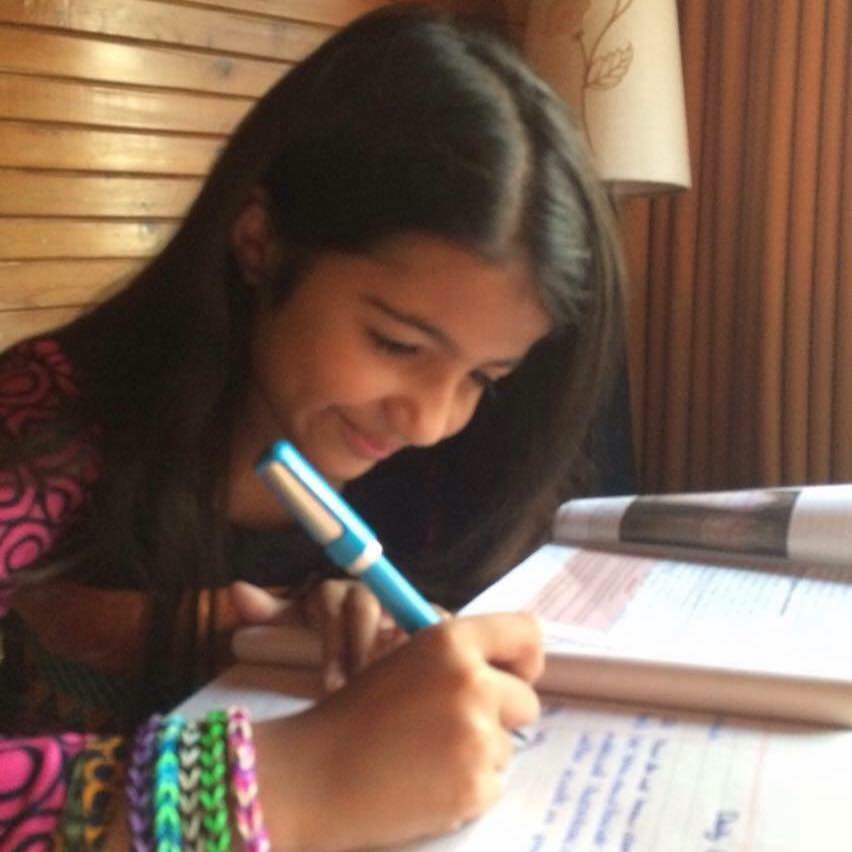
Karachi teen on a mission to read a book from every country in the world

Aisha Esbhani is a 13-year-old on a mission, and what a mission indeed! About a year ago, Eshbani, a Karachi-based barely-teenager, realised that most of the books in her bookshelf were written by European and American authors, and she noticed a lack of writers from African and Asian countries. It got her thinking, and she ended up setting herself a unique challenge: to read a book or story from every country in the world.

She started a Facebook page (@reading197countries) asking for help from people all over the world in discovering books, stories and authors from different countries, and the top post on her page is a pretty amazing resource for everybody: it’s a list of all the countries paired with the books and stories she’s reading from them. She also often posts her own reviews of the books she’s reading, and you suddenly remember again how young she is when you see a post from April 22nd apologising for the lack of reviews recently because she’s been busy studying for her exams.

People from all over the world, including readers, writers and the President of Nigeria, have been helping her with recommendations, all listed in the fascinating post below:


Will You Be Willing to Provide Me A Helping Hand?
Hi,
I am Aisha Arif Esbhani, a 13 year old based in Karachi, Pakistan.

After discovering that most of the books I read as a preschooler, as an adolescent, were by a British or North American author, I wanted to explore the writers of the African continent and the tiny islands in Asia. I wanted to explore the nations of which I had never read any books. I wanted to explore stories that had been translated into English. 

 And so, in April 2016, I set myself on a quest of reading one novel/short story collection or memoir from every single country of the world. The author has to be a native of the country. I created a Facebook page and had received numerous recommendations and suggestions on it. Unfortunately, due to my age, Facebook deleted my account and my page has vanished. I had completed 43 countries, and my project has been mentioned on the Dawn Newspaper and Words Without Borders Campus Site. Other Facebook pages like Literature Across Frontiers had mentioned my page too.
In October, Former President of Nigeria, GoodLuck Ebele Jonathan sent me a message. He told me of some great Nigerian authors and proved to me that great individuals around the world are taking interest in my quest and are wiling to help me. 

Karlis Verdins had provided me with his story "Come to Me" from Latvia and Robi Gottlieb from Luxembourg had couriered me his book, "Minute Stories." 

But I still require your help and assistance. I am following the UN recognized nations (+ Scotland, Taiwan and Palestine) and have posted my list of countries along with the books I have already been recommended on this post below. For some countries, I have received no recommendations, it would be great if you could help me with those, and for others, I would love to see a few more books. 
Let's have a fun time together, I would love to see my notifications flooding because of the amount of comments and suggestions. Do let your family and friends know about my project It would be very encouraging and I would really appreciate it. 

(P.S: Thankfully, I had saved all my book reviews before the page got deleted. I will be posting them one by one and would also be pleased to hear your comments on the book, thank you.)
Thank you to my parents and brother for their constant support. 

And thank you to Pam Gizzaro, a fellow literary explorer, for always motivating me through her comments and messages. I would also like to extend my gratitude to all those people on my page who kept encouraging me, I hope they can trace me and eventually reach this blog.
Thank you,
Aisha

Here is my list:
• Afghanistan 🇦🇫 : The Kite Runner✅, A Thousand Splendid Suns, And The Mountain Echoed by Khaled Hosseini
• Albania 🇦🇱 : The Palace of Dreams, General of The Dead Army✅
• Algeria 🇩🇿 : Flickering Shadows, The Stranger by Albert Camus✅, One Hundred Twenty-One Days by Michèle Audin
• Andorra 🇦🇩 : The Teacher of Cheops by Albert Salvado
• Angola 🇦🇴 : The Return of the Water Spirits, A General Theory of Oblivion by José Eduardo Agualusa✅
• Antigua and Barbuda 🇦🇬 : A Small Place*
• Argentina 🇦🇷 : The Aleph and Other Stories by Jorge Luis Borges✅, The Tango Singer by Tomas Eloy Martinez, The Island of Last Truth by Flavia Company
• Armenia 🇦🇲 :
• Australia 🇦🇺 : The Book Thief✅, Cloudstreet, I can Jump Puddles, Obernewtyn by Isobelle Carmody, Playing Beatie Bow by Ruth Parks, Tomorrow When the War Began by John Marsden, Follow the Rabbit-Proof , The Harp in the South trilogy by Ruth Park: 1) Missus, 2) The Harp in the South, and 3) Poor Man's Orange, Looking for Alibrandi by Melina Marchetta, The Camel who Crossed Australia by Jackie French, : A Long Way Home by Saroo Brierley, The Green Wind/ The Wind Is Silver by Thurley Fowler, Jellicoe Road by Melina Marchetta
• Austria 🇦🇹 : Chess Story, The Piano Teacher by Elfriede Jelinek, The Weight of Things by Marianne Fritz, A Whole Life by Robert Seethaler✅
• Azerbaijan 🇦🇿 : Ali and Nino, All Russian Love Birch Trees by Olga Grjasnowa
• Bahamas 🇧🇸 : Thine is the Kingdom, Life on a Rock by K. Alison Albury , Do No Harm by Cliff Bacchus M.D , Biblical Journeys / What Does the Bible Say About... by Velyn Cooper, Vessel Of The Light by Shawn T. Gardiner, Who Let The Dog Out? by Carole Hughes, Islands of the Sun by John Thompson
• Bahrain 🇧🇭 : Quixotiq by Ali Al Saeed✅
• Bangladesh 🇧🇩 : The Good Muslim by Tahmina Anam✅, A Golden Age by Tahmina Anam
• Barbados 🇧🇧 : Karen Lord's Redemption in Indigo✅, In the Castle of My Skin: By George Lamming, Tropical Holiday, author: Donna Every
• Belarus 🇧🇾 : Second Hand Time by 
Svetlana Alexievich✅
• Belgium 🇧🇪 : The Adventure of TinTin, Pétronille, Amélie Nothomb, War and Turpentine by Stefan Hertmans
• Belize 🇧🇿 : Beka Lamb by Zee Edgell*, On Heroes, Lizards and Passion by Zoila Ellis or Sinner's Bassanova by Glenn Godfrey.
• Benin 🇧🇯 : Autobiography of the Lower East Side by Rashidah Ismaili Abubakr
• Bhutan 🇧🇹 : The Circle of Karma, The Stray Dog in Bhutan by Kunzang Choden✅
• Bolivia 🇧🇴 :
• Bosnia and Herzegovina 🇧🇦 : The Bridge on the Drina by Ivo Andric, Miloš Crnjanski: Migrations, From Enemy Territory by Mladen Vuksanović✅
• Botswana 🇧🇼 : The Full Cupboard of Life, Twenty Chickens for a Saddle by Robyn
• Brazil 🇧🇷 : East of the West, A country in Series, The Alchemist✅, Like a Flowing River, Aleph, Brida, The Hour of the Star, Author: Clarice Lispector Gabriela, Clove and Cinammon/ Tieta by Jorge Amado
• Brunei 🇧🇳 : The Wild Men of the East by Selamat Munap, Crosswise the Boulevard: An Extraordinary Love Saga by M. Faisal, Four Kings by Christopher Sun, The Forlorn Adventure by Amir Falique, Written in Black by KH Lim, The Last Bastion of Ingei by Aammton Alias✅
• Bulgaria 🇧🇬 : Everything Happens As It Does by Albena Stambolova, Streets without a Name by Kapka Kassabova, The Physics of Sorrow by Georgi Gospodinov
• Burkina Faso 🇧🇫 : The Parachute Drop by Norbert Zongo
• Burundi 🇧🇮 : Baho! by Roland Rugero
• Cabo Verde: The Last Will and Testament of Senhor da Silva Araujo
• Cambodia 🇰🇭 : In the Shadow of the Banyan✅
• Cameroon 🇨🇲 : White Man of God by Kenjo wan Jumbam.
• Canada 🇨🇦 : Shooting Waters✅, Brian Doyle: Hey, Dad!, Anne of Green Gables by Lucy Maud Montgomery, We Are Made of Molecules , Indian Horse by Richard Wagamese, Rilla of Ingleside by L.M. Montgomery, 419 by Will Ferguson, A Complicated Kindness by Miriam Toews, A Fine Balance by Rohinton Mistry, A Season in the Life of Emmanuel by Marie-Claire Blais trans. Derek Coltman, A Sunday at the Pool in Kigali by Gil Courtemanche trans. Patricia Claxton, A Tale for the Time Being by Ruth Ozeki ,Alias Grace by Margaret Atwood, Annabel by Kathleen Winter, Away by Jane Urquhart, Barney's Version by Mordecai Richler, Bear by Marian Engel, Beautiful Losers by Leonard Cohen, Bone and Bread by Saleema Nawaz, Brown Girl in the Ring by Nalo Hopkinson, By Grand Central Station I Sat Down and Wept by Elizabeth Smart, Cereus Blooms at Night by Shani Mootoo, Certainty by Madeleine Thien, Come, Thou Tortoise by Jessica Grant, Creation by Katherine Govier, Crow Lake by Mary Lawson, De Niro's Game by Rawi Hage, Elizabeth and After by Matt Cohen, Essex County by Jeff Lemire, Fall on Your Knees by Ann-Marie, macdonald February by Lisa Moore, Fifth Business by Robertson Davies,Station Eleven by Emily St. John Mandel
• Central African Republic 🇨🇫:
• Chad 🇹🇩: In chad under the stars by Joseph Brahim Seid, Told by Starlight in Chad*
• Chile 🇨🇱 : Death and the Maiden, Seeing Red by Lina Meruane, The House of The Spirits/ Forest of the Pygmies✅ by Isabel Allende, 2666 by Roberto Bolaño
• China 🇨🇳 : Chinese Cinderella✅, Red Scarf Girl by Ji-li Jiang, Crystal Wedding by Xu Xiaobin, French Concession by Xiao Bai, Little Aunt Crane by Yan Geling, The Last Lover by Can Xue
• Colombia 🇨🇴 : Collected stories by Gabriel Garcia Marquez, One Hundred Years of Solitude✅, The Sound of Things Falling/ Reputations by Juan Gabriel Vásquez, Oblivion by Héctor Abad Faciolince
• Comoros 🇰🇲: The Kafir of Karthala by Mohammad Toihiri✅
• Democratic Republic of CONGO Tram 83 by Fiston Mwanza Mujila✅
• Congo, Republic of: Alain Mabanckou - Tomorrow I'll Be Twenty/ Lights of Pointe-Noire✅
• Costa Rica 🇨🇷: Cocori by Joaquin Gutierrez, Candence of the Moon by Óscar Núñez Olivas*
• Côte d'Ivoire 🇨🇮: Véronique Tadjo - The Blind Kingdom*
• Croatia 🇭🇷 : Girl at war by Sara Novic✅, Europe in Sepia by Dubravka Ugresic
• Cuba 🇨🇺 : Afro Cuban Tales by Lydia Cabrera, The Kingdom of This World*/Explosion in a Cathedral by Alejo Carpentier, Alma Flor Ada: My Name is María Isabel
• Cyprus 🇨🇾: Ledra Street by Nora Nadjarian✅
• Czech Republic 🇨🇿 : A Kingdom of Souls by Daniela Hondrová, Aaron's Leap by Magdaléna Platzová, B. Proudew by Irena Dousková, Freshta by Petra Procházková, Innocence; or murder on Steep Street by Heda Margolius Kovaly, Stomach of the Soul by Sylva Fischerová, The Attempt by Magdaléna Platzová, Peter Sís: The Wall: Growing up Behind the Iron Curtain, The Trial by Franz Kafka✅
• Denmark 🇩🇰 : The Seducer's Diary, One of Us is Sleeping by Josefine Klougart, So Much for that winter by Dorthe Nors
• Djibouti 🇩🇯: Passage of Tears by Abdourahman Waberi
• Dominica 🇩🇲: Most Wanted by Christborne Shillingford, The Orchid House by Phyllis Shand Allfrey*
• Dominican Republic 🇩🇴 : The Brief Wondorous life of Oscor Wao/ This Is How You Lose Her/ Drown* by Junot Diaz, In The Time of the Butterflies by Julia Avrez
• Ecuador 🇪🇨: "To the Coast" by Luis Alfredo Martínez, The Villagers by Jorge Icaza
• East Timor: The Crossing by Luis Cardoso
• Egypt 🇪🇬 : Cairo, My Country, Our Revolution✅, Aunt Safiyya and the Monastery by Baha Taher, Brooklyn Heights by Miral al-Tahawy, Spectres by Radwa Ashour, The Queue by Basma Abdel Aziz, The Woman from Tantoura: A Palestinian Novel by Radwa Ashour, Utopia by Ahmed Khaled Tawfek, The Cairo Trilogy of Naguib Mehfuz, Distant View of a Minaret by Alifa Rifaat, The Memory of Love/ Ancestor Stones/The Devil that Danced on the Water by Aminatta Forna
• El Salvador 🇸🇻: author: Claudia Lars, author: Alfredo Espino
• Equatorial Guinea 🇬🇶: Juan Tomás Ávila Laurel - By Night The Mountain Burns*
• Eritrea 🇪🇷: African Titanics by Abu Bakr*
• Estonia 🇪🇪: Truth and Justice by A.H. Tammsaare✅, Man who Spoke Snakish by Andrus Kivirähk, Indrek Hargala : Apothecary Melchior series
• Ethiopia 🇪🇹 : Tower in the Sky, Arabian Sands, Beneath the lions Gaze by Maaza Mengiste*
• Fiji 🇫🇯: Satendra Nanjan Fijian-Indian: fragments
• Finland 🇫🇮: The Summer Book✅, A Year of The Hare, Compartment No 6 by Rosa Liksom, Mr. Darwin's Gardner by Kristina Carlson: The Defenceless by Kati Hiekkapelto
• France 🇫🇷 : Collected Stories by W. Somerset Maugham✅, Affairs of State by Dominique Manotti, A Kingdom of Souls by by Daniela Hodrová, Bitter Almonds by Larence Cossé, Escape by Dominique Manotti, Happy are the Happy by Yasmina Reza, Ladivine by Marie NDiaye, Leonora by Elena Poniatowska, Life, Only Better by Anna Gavalda, Mon Amie Américaine by Michèle Halberstadt, Murder Most Serene by Gabrielle Wittkopp, Paris for Outsiders by Juliette Lamber, Soft in the Head by Marie-Sabine Roger, Suite for Barbara Loden by Nathalie Léger, The People in the Photo by Hélène Gestern, Tregian's Ground by Anne Cuneo, We’re Not Here to Disappear by Olivia Rosenthal, The Elegance of the Hedgehog, The Little Prince, The Rabbi's Cat by Joann Sfar, Racism Explained to My Daughter by Tahar Ben Jelloun/ The Sand Child, Marcel PAGNOL's "My father's glory
• Gabon 🇬🇦:
• Gambia 🇬🇲: When Monkeys talk/ Dabalagi by Baba Sillah.
• Georgia 🇬🇪: The Knight in the Panther's Skin by Shota Rustaveli
• Germany 🇩🇪: Ruby Red, Diary of a Young Girl, Axolotl RoadKill by Helene Hegemann, My Berlin Child by Anne Wiazemsky, The Cold Centre by Inka Parei, The Mussel Feast by Birgit Vanderbeke, The Shadowboxing Woman by Inka Parei, This Place Holds No Fear by Monika Held, Where Love Begins by Judith Hermann, You Are Not Like Other Mothers by Angelika Schrobsdorff, Sidhartha by Hermann Hess, All Quiet on the Western Front✅, The Hangman's Daughter by Oliver Potzsch
• Ghana 🇬🇭 : Ghana must Go, Mesack Asare: The Cross Drums, Changes: A Love Story by Ama Ata Aidoo
• Greece 🇬🇷 : Back to Delphi by Ioanna Karystiani, Seven Lives and One Great Love by Lena Divani✅,Why I Killed My Best Friend by Amanda Michelopoulou
• Grenada 🇬🇩: Force Ripe by Cindy McKenzie
• Guatemala 🇬🇹 : The President/ Men of Maize by Miguel Ángel Asturias, Sovernia/ The African Shore/ The Good Cripple/ The Beggar's Knife/ Dust on Her Tongue by Rodrigo Rey Rosas, The Honey Jar/ Crossing Borders/ The Secret Legacy/ The Girl from Chimel by Rigoberta Menchú
• Guinea 🇬🇳
• Guinea-Bissau 🇬🇼
• Guyana 🇬🇾:
• Haiti 🇭🇹 : Claire of the Sea Light by Edwidge✅
• Honduras 🇭🇳: Don't be Afraid by Gringo, Blanca Olmedo by Lucila Gamero, My aunts the Crawls by Marco Rosa
• Hungary 🇭🇺 : The Door, Paul Street Boys, Be Faithful unto Death, Meša Selimović:Death and the Dervish
• Iceland 🇮🇸 : Stone Tree, Butterflies in November by Auður Ava Ólafsdóttir, Children in Reindeer Woods by Kristín Ómarsdóttir
• India 🇮🇳 : Winter evenings, The Palace of Illusions, Haroun and the Sea of Stories, Becoming a Mountain, Jamila Gavin: Coram Boy, Secret Keeper by Mitali Perkins, When The River Sleeps by Easterine Kire, The God of Small Things by Arundhati Roy, The Pregnant King by Davduty Pattanik, The Delightful Sister of My Heart by Chitra Banerjee, Rain in the Mountains: Notes on the Himalayas, Our Trees Still Grow in Dehra by Ruskin Bond, Tales from Firozsha Baag by Rohinton Mistry, The Hungry Tide by Amitav Ghosh, The lives of others - Neel Mukherjee, Gitanjali - Rabindra Nath Tagore, This is not that dawn by Yashpal, Ancient Promises by Jaishree Mishra, The Panchatantra by Vishnu, Arvind Adiga's White Tiger, The Sensualist/ The Night Train At Deoli/The Cherry Tree/The Tiger/ In The Tunnel Time Stops At Shamli/ Susanna’s 7 husbands/ Delhi Is Not Far,The Room On The Roof/Death Of The Trees/ The Blue Umbrella/ A Flight Of Pigeons/ When Darkness Falls by Ruskin Bond, Ponmiyin Selvan, One Part Women by Perumal Marigan, Pratham Pratishruti by Ashapurna devi, THIRUKURAL by Tiruvalluvar, Ponniyin Selvan, VADIVASAL ARENA BY C S CHELLAPPA, THE STORY OF A SEASIDE VILLAGE by VIJAYALAKSHMI, Karukku by Bama
• Indonesia 🇮🇩 : Tea With Hazbullah, Home by Leila S. Chudori, The Secrets of the Wild Wood by Tonke Dragt, The Rainbow Troops by Andrea Hirata, Man Tiger
• Iran 🇮🇷 : Reading Lolita in Tehran, Persopolis by Marjane Satrapi, Khomeini, Sade and Me by Abnousse Shalmani, The Gardens of Consolations by Parisa Reza, The Man Who Snapped His Fingers by Fariba Hachtroudi, Things We Left Unsaid by Zoya Pirzad, The Blindfold Horse✅
• Iraq 🇮🇶 : when Mountains weep by Gharbi Mustafa,The last pomegranate of the world by Bachtyar Ali, a journey to kurdistan by Ruwayda Mustafa, Letters from a Kurd by Kae Bahar
• Ireland 🇮🇪: the Boy in The Stripped Pajamas✅, Morning Sea by Margaret Mazzantini, Asking for It by Louise O'Neill, Into the Grey by Celine Kiernan
• Israel 🇮🇱 : Lies, First Person by Gail Hareven, One Night, Markovitch by Ayelet Gundar-Goshen, The Best Place on Earth by Ayelet Tsabari✅
• Italy 🇮🇹 : 1984, Meditations by Marcus Aurelius ✅, My Brilliant Friend by Elena Ferrante, Eva Sleeps by Francesca Melandri, From The Land of The Moon by Milena Agus, The Hollow Heart by Viola Di Grado, The Jewish Husband by Lia Levi, The Nun by Simonetta Agnello Hornby, Three, Imperfect Number by Patrizia Rinaldi, "Marcovaldo: or the Seasons in the City", by Italo CALVINO
• Jamaica 🇯🇲: A Brief History of Seven Killings by Marlon James✅
• Japan 🇯🇵: The Essence of Buddha✅, The Guest Cat,Guardian of the Spirit, Guardian of the Darkness by Nahoko Ukenashi, Facing the Bridge by Yoko Tawada, Salad Anniversary by Machi Tawara, Strange Weather in Tokyo by Hiromi Kawakami: The Bridegroom was a Dog by Yoko Tawada, Wild Grass on the Riverbank by Hiromi Ito, All She Was Worth by Mikuki Miyabe
• Jordan 🇯🇴: Land of No Rain by Amjad Nasser, Cities of Salt✅
• Kazakhstan 🇰🇿: Abish Kekelbayev - Ballad of Forgotten Years, "The book of Words" by Abai Kunanbaev
• Kenya 🇰🇪 : Dust, The White Masai, Child of Dandelions by Shenaaz Nanji, Honey Guide by Richard Crompton, The Last Plague by Maija Mwangi
• Kiribati 🇰🇮:
• Kuwait: The Bamboo Stalk, The Hidden Lights of Objects by Mai alNaqib✅
• Kyrgyzstan 🇰🇬: Kyrgyzstan: Chingiz Aitmatov - Jamilia*
• Laos 🇱🇦 : Mother's beloved
• Latvia 🇱🇻 : Come To Me by Kārlis Vērdiņ✅, Aspasia. A Latvian Writer 1865-1943. Her Lyrical Prose, Suddenly, a Criminal: Sixteen Years in Siberia, The Tower and Other Stories, High Tide by Inga Abele
• Lebanon 🇱🇧 : One Thousand and One Nights, Samarkand by Amin 
Maaluf✅, Kamal Jann by Dominique Eddé, Kite by Dominique Eddé, Oh, Salaam by Najwa Barakat
• Lesotho 🇱🇸
• Liberia 🇱🇷: The House at Sugar Beach by Helene Cooper, Why Leopard has Spots
• Libya 🇱🇾 : In the Country of Men by Hisham Matar*, The Bleeding of the Stone by Ibrahim al-Koni
• Liechtenstein 🇱🇮 : Seven Years in Tibet, Rapids
• Lithuania 🇱🇹 : Between Shades of Gray
• Luxembourg 🇱🇺 : Ralph 124C 41+ by Hugo Gurnsback, Minute Stories by Robi✅
• Macedonia 🇲🇰: Homunculus: Fairy Tales from the Left Pocket by Aleksandar Prokopiev*
• Madagascar 🇲🇬 : Beyond the Rice Fields by Naivo*
• Malawi 🇲🇼: The Boy Who Harnessed the Wind' by William Kamkwamba, Oath of the Allegiance by Charles Mlunga*
• Malaysia 🇲🇾 : Ripples and Other Stories,The Garden of Evening Mists by Tan Taw, Kampung Boy by Lat, A Most Peculiar Malaysian Murder by Shamini Flint, Salina by A. Samad Said, Made in Malaysia: Stories of Hometown Heroes and Hidden Gems by Alexandra Wong, The Ghost Bride by Yangsze Choo, The Rice Mother by Rani Manicka, Sorcerer to the Crown
by Zen Cho,21 Immortals by Rozlan Mohamed Noor, As I Was Passing I and II by Adibah Amin, The Gift of Rain by Tan Twan Eng, Life's Like That by Lydia Teh, Inspector Singh Invstigates: A Bali Conspiracy Most Faul by Shamimi Flint✅
• Maldives 🇲🇻 : Dhon Hiyala and Ali Fulhu✅
• Mali 🇲🇱: The Fortunes of Wangrin/ A Spirit of Tolerance by Amadou Hampâté Bâ
• Malta 🇲🇹:
• Marshall Islands 🇲🇭:
• Mauritania 🇲🇷:
• Mauritius 🇲🇺: The Last Brother by Nathacha Appanaha✅
• Mexico 🇲🇽 : Like Water for Chocolate✅/ Pierced by the Sun by Laura Esquivel, Before by Carmen Boullosa, Texas: The Great Theft by Carmen Boullosa, The Story of My Teeth by Valeria Luiselli, Umami by Laia Jufresa, Aura by Carlos Fuentes, Tinismia by Elena Poniatowska
• Micronesia 🇫🇲 : Mariquita : a tragedy of Guam by Chris Perez Howard, The Book of Luelen
• Moldova : The Good Life Elsewhere by Vladimir Lorchenkov*, The homework" by Nicolae Dabija
• Monaco 🇲🇨
• Mongolia 🇲🇳 :
• Montenegro 🇲🇪: The Mountain Wreath by Petar II Petrovic Njegos/The Ray of Microcosm, The Mountain of Cries by Mihailo Lalic/ Evil spring, Deep dead by Cedo Vukovic
• Morocco 🇲🇦 : The Last Patriarch by Najat El Hachmi, The Life of Elves by Muriel Barbary: The Arch and the Butterfly by Mohammad Achaari✅
• Mozambique 🇲🇿 : The First Wife by Paulina Chiziane
• Myanmar 🇲🇲 (Burma): Not Out of Hate by Journal Kyaw Ma Ma Lay, 'Smile As They Bow' by Nu Nu Yi (Innwa), 'From the Land of Green Ghosts' by Pascal Khoo Thwe, Not Out Of Hate by Journal Kyaw, Freedom of Fear or Letters from Burma by Aung San Suu Kyi, : A Burmese Heart by Tinzar Maw Naing, Golden Parasol by Wendy Lawyone, Maurice Collis' She Was a Queen, "The River of Lost footsteps" by Thant Myint-U
• Namibia 🇳🇦 : The Purple Violet of Oshaantu by Neshani Andreas
• Nauru 🇳🇷
• Nepal 🇳🇵 : The Royal Ghost, The City Son by Samrat Upadhyay
• Netherlands 🇳🇱 : The Gladiators by Fik Meijer, How to Become a King by Jan Terlouw, Diary of a Young Girl by Anne Frank✅, The Evenings by Gerard Reve
• New Zealand 🇳🇿 : Plumb, The Whale Rider, The Betrayal of Maggie Blair by Elizabeth Laird, I am not Esther by Fleur Beale, The Girl Who Rode The Wind✅, • "English Harem" from Anthony McCarten
• Nicaragua 🇳🇮 : Infinity in the Palm of her hand, The Country Under My Skin by Gioconda Belli
• Niger 🇳🇪
• Nigeria 🇳🇬 : Things Fall Apart by Chinua Achebe, Americanah by Chimamanda Ngozi Adichie✅, Song for Night by Chris Abani, • I Do Not Come to You By Chance by Adaobi Tricia Nwaubani
• North Korea 🇰🇵 : The Orphan Master's Son, MY LIFE AND FAITH, by RI IN MO, The Accusation by Bandi,
• Norway 🇳🇴 : The Blue Room by Hanne Ørstavik, The Looking Glass Girls by Gøhril Gabrielsen, Sophie's World/ Maya/ Orange Girl/ Looking in the Glass by Jostien Garder, Shyness and Dignity by Dag Solstad✅
• Oman 🇴🇲 : Earth Weeps and Saturn Laughs
• Pakistan 🇵🇰 : the Wandering Falcon by Jamil Ahmad✅, Moth smoke,
My feudal lord, A Case of Exploding Mangoes by Mohammad Hanif, The Reluctant Fundamentalist/Exit West/Moth by Mohsin Hamid, Blasphemy by Tehmina Durrani, Palatial Stories from Sindh by Shaikh Aziz, Glimpses of Sindhi Short Fiction by Saleem Noorhusain, Ice-Candy Man by Bapsi Sidhwa, Kartography/ Burnt Shadows/ Broken Verses/ Salt and Saffron By Kamila Shamsie, Undying Affinity/Our Story Ends Here by Sara Naveed, Visiting American Mind By Mehmood Shaam, Wanting Mor And King Of The Skies By Rukhsana Khan, Air warriors : 50 Years Of Pakistan Air Force By Muhammad A. Housseni, Great Air Battle Of Pakistan, Air Force By M. Kaisar Tufail, Defenders Of Pakistan By Mohammad Amin & Masud Quraishy, Flight Of The Falcon By S Sajjad Haider, Heart of Eternity By Nida Jay, In Other Rooms, Other Wonders By Daniyal Mueenuddin, Black Wings By Sehba Sarwar, The Murder Of Aziz Khan by Zulfikar Ghose,Pir-e-Kamil by Umera Ahmed, Dayar-e-Dil by Farhat Ishtiaq, Bano by Razia Butt, Maps for Lost Lover by Nadeem Aslam, The Writing On my Forehead by Nafisa Haji
• Palau 🇵🇼 : The Legends of Palau, Legends and Tales from The Island Nation- Palau✅
• Palestine: Three daughters, Time of White Horses by Ibrahim Nasrallah, Men in the Sun by Ghassan Kanafani, Sunflower or Wild Thorns by Sahar Khalifeh, Of Noble Origins by Sahar Khalifeh, Touch by Adania Shibli, Mornings in Jenin, Code Name: Butterfly by Ahlam Bsharat
• Panama 🇵🇦 : The Golden Horse by Juan David Morgan
• Papua New Guinea 🇵🇬
• Paraguay 🇵🇾: I, The Supreme by Augusto Roa Bastos
• Peru 🇵🇪 : The Storyteller/ Aunt Julia and the Scriptwriter/ Death in the Andes* by Mario Vargas Llosa, Red April by Santiago Roncagliolo
• Philippines 🇵🇭: Banana Heart by Merlinda Bobis, Noli Me Tangere by Jose Rizal, author: Nick Joaquin, Dogeaters by Jessica Hagedorn, The Rosales Saga: The Pretenders, My Brother, My Executioner, The Samsons by F. Sionil Jose
• Poland 🇵🇱 : The Long Walk by Sławomir Rawicz✅, Chasing The King's Heart by Hanna Krall, "Maps" by Aleksandra & Daniel Mizieliński!, "A Treatise on Shelling Beans" by Wiesław Myśliwski, 'Tales of Pirx the Pilot' by Stanislaw Lem
• Portugal 🇵🇹 : The Mandarian and other Stories, author: Jose Saramago, author: Jose Luis Peixoto, author: Ricardo Reis, Death With Interruptions by Jose Saramago✅, Balthasar and Blimunda by José Saramago
• Qatar 🇶🇦 : The Corsair by AbulAziz Al-Mahmoud*, Qatari Voices
• Romania 🇷🇴 : Night by Elie Weisel✅, The Fox Was Ever the Hunter by Herta Müller, Why we love women by Mircea Cartarescu
• Russia 🇷🇺 : War and peace by Leo Tolstoy, The Master and Margarita, Baba Donja's Last Love by Alina Bronsky, In Praise of Poetry by Olga Sedakova, Letter to The Amazon by Marina Tsvetaeva, Memories by Teffi, The Women of Lazarus by Marina Stepnova, Twenty Three Tales by Leo Tolstoy✅, "A Hero of Our Time" by Lermontov
• Rwanda 🇷🇼 : Our Lady of The Nile by Scholastique Mukasonga, author: Paul Rusesabagina
• St. Kitts and Nevis
• St. Lucia: Nor any Country by Garth St. Omar✅
• St. Vincent and The Grenadines
• Samoa 🇼🇸: Leaves of the Banyan Tree or the Songmaker's chair by Albert Wendt
• San Marino 🇸🇲: The republic of San Marino by Giuseppe Rossi
• Sao Tome and Principe 🇸🇹
• Saudi Arabia 🇸🇦 : Girls of Riyadh✅, Cities of Salt by Abderahman Munif
• Scotland: Kidnapped✅, The Prime of Miss jean Brodie by Muriel Spark
• Senegal 🇸🇳 : So Long a Letter
• Serbia 🇷🇸 : Milorad Pavić: Dictionary of the Khazars : A Lexicon Novel in 100,000 Word, The Tiger's Wife by Tèa Obreht✅
• Seychelles 🇸🇨
• Sierra Leone 🇸🇱 : A long Way Gone✅/ Radiance of Tomorrow by Ishmael Beah, The Memory of Love/ Ancestor Stones/ The Devil that Danced on the Water by Aminatta Forna
• Singapore 🇸🇬 : Fistful of Colours, A River's Song by Suchen Christine Lim, Aunty Lee's Delights by Ovidia Lu✅, The Art of Charlie Chan Hock Chye by Sonny Liew, Spider Boys by Ming Cher, Mammon Inc by Tan Hwee
• Slovakia 🇸🇰: Ever green is: selected prose by pavel vilikovsky
• Slovenia 🇸🇮: Alamut by Vladimir Bartol
• Solomon Islands 🇸🇧: Suremada: Faces from a Solomon Island Village by Rexford Orotaloa
• Somalia 🇸🇴: Folk Tales from Somalia by Ahmed Artan Hange, Culture and Customs of Somalia by Mohammad Diriye Abdullahi, The Orchard of Lost Souls by Nadifa Mohamed✅, From a Crooked Rib by Nuruddin Farah; Secrets of Sardines
• South Africa 🇿🇦 : Long Walk to Freedom, Waterlandsridge by Vincent Gray✅, The Elusive Moth by Ingrid Winterbach, Paper Bird by Maretha Maartens, Kaffir Boy
• South Korea 🇰🇷 : The hen who Dreamed she could Fly, The Vegetarian by Han Kang✅, One Hundred Shadows by by Hwang Jungeun, I have the Right to Destroy Myself by Kim Young-ha, Please look after mom by Shin Kyung-sook, The Bird by Jung-hee
• South Sudan 🇸🇸 : They Poured Fire on Us From the Sky: The True Story of Three Lost Boys of Sudan by Alephonsion Deng
• Spain 🇪🇸 : The High Mountains of Portugal✅, Death in Spring by Mercè Rodoreda, The Prisoner of Heaven by Carlos Ruiz Zafon
• Sri Lanka 🇱🇰 : Funny Boy by Shyam Selvadurai, Chinaman: The Legend of Pradeep Mathew by Shehan Karunatilaka ,The English Patient by Michael Ondaatje, Cinnamon Gardens by Shyam Selvadurai, Anil's Ghost 
by Michael Ondaatje,The Road From Elephant Pass by Nihal de Silva, Running in the Family by Michael Ondaatje, Reef by Romesh Gunesekera, In the Skin of a Lion by Michael Ondaatje ,A Disobedient Girl by Ru Freeman, Swimming in the Monsoon Sea by Shyam Selvadurai ,The Flower Boy by Karen Roberts, July by Karen Roberts, The Prisoner of Paradise by Romesh Gunesekera, Island of a Thousand Mirrors by Nayomi Munaweera, Tamil Tigress by Niromi de Soyza, The Hamilton Case by Michelle de Kretser, Colpetty People by Ashok Ferrey, Moments of Merriment by Irfan Hafiz✅, Wave by Sonali Deraniyagala, The sweet and simple kind by Yasmin Gooneratne
• Sudan: Season of Migration to the North by Tayeb Salih✅, Lyrics Alley by Leila Aboulela
• Suriname 🇸🇷 : The Cost of Sugar
• Swaziland:
• Sweden 🇸🇪: the thrillers by Stieg Larsson, the dramas from last turn of century by Hjalmar Söderberg, The Dwarf by Par Lagerkvist, Marianne Fredriksson - Anna, Hanna & Johanna, Mio my son by astrid lindgren, Little Star by John Ajvide Lindqvist, Girl With A Dragon Tattoo, a man called ove by Fredrik Backman, The Children of Noisy Village/ Pippi Longstocking by Astrid Lindgren, Agnes Cecilia/ "Pappa Pellerin's Daughter" by Maria Gripe, "The Wonderful Adventures of Nils" by Selma Lagerlöf
• Switzerland 🇨🇭 : Heidi✅, Beauty on Earth, Invitation to The Bold of Heart by Dorothee Elmiger
• Syria 🇸🇾 : Breaking Knees, In Praise of Hatred by Khaled Khalifa✅, A Woman in the Crossfire: Diaries of the Syrian Revolution by Samar Yazbek
• Taiwan 🇹🇼: Last words from Montmartre by Qiu Miajin*
• Tajikistan 🇹🇯: “Hurramabad” by Andrei Volos, The sands of Oxus/ Bukhara: Reminiscences By Sadriddin Ayni
• Tanzania 🇹🇿: Desertion by Abdulrazak Gurnah✅
• Thailand 🇹🇭 : The Happiness of Kati by Jose Vejjajiva✅, The Sad Part Was by Prabda Yoon
• Togo 🇹🇬
• Tonga 🇹🇴: Tales of the Tikongs/ Kisses in the Nederends By Epeli Hauʻofa
• Trinidad and Tobago 🇹🇹 : Yin Li One Girl's Journey: Taishan to Trinidad, A House for Mr. Biswas/ Miguel Street by V.S. Naipaul ✅
• Tunisia 🇹🇳 : Talismano, Thus Spoke Abu Huraira by Mahmoud Messaidi; The Dam, Sleepless Nights by Ali Douagi, Lion Mountain by Mustapha Tlili, The Scents of Marie by Claire Habib Selmi, A Tusnian Tale by Hassouna al-Moshabi, The Present Tense of the World by Amina Said
• Turkey 🇹🇷: The Forty Rules of Love✅ by Elif Shafak; Bastards of Istanbul, The Honour, The Architect's Apprentice, Black Book by Orhan Pamuk; The Snow, Istanbul, Madonna in a Fur Coat by Sabahattin Ali,
•Turkmenistan 🇹🇲: Aysoltan from the land of white gold/ Nebit-Dag/ Born by a Miracle By Berdi Kerbabayev
• Tuvalu 🇹🇻
• Uganda 🇺🇬 : Abyssinian Chronicles by Moses Isegava✅
• Ukraine 🇺🇦 : Near to the Wild Heart by Clarice Lispector, "Taras Bulba" by Nikolai Gogol, Voroshilovgrad/ Depeche Mode by Sergiy Zhadan, The Hunters and the Hunted by Ivan Bahriany, The Moskoviad by Andrukhovych.
• United Arab Emirates 🇦🇪 : The Wink of the Mona Lisa
• United Kingdom 🇬🇧: Harry Potter✅, Cracking Skulls in Portishead by John Cullen, Jane Eyre by Charelottet Bronte, The Professor by Ema Bronte, The Minister's Daughter by Julie Hearn
• United States of America 🇺🇸: To Kill a Mockingbird✅, The Absolutely True Diary of a Part-Time Indian, The School For Good And Evil, As I Lay Dying by William Faulkner, Narrative of the Life of Frederick Douglass, Whiteman's Leaves of Grass, Meena by Melody Ermachild Chavis, Princess & Daughters of Arabia by Jean P. Sasson
• Uruguay 🇺🇾 : The Decapitated Chicken, Children of the Days: A Calendar of Human History by Eduardo Galeano, A Brief Life by Juan Carlos Onetti
• Uzbekistan 🇺🇿: Hamid Ismailov - The Dead Lake/The Railway
• Vanuatu 🇻🇺
• Vatican City 🇻🇦:
• Venezuela 🇻🇪: Mama Blanca's Memoirs/ Iphigenia by Teresa de la Parra, The Disappearance of Irene Dos Santos
• Vietnam 🇻🇳 : Paradise of the Blind, Abahn Sabana David by Marguerite Duras, The Taste of Salt by Monique Truong, 'The sorrow of war' by Bao Ninh
• Yemen 🇾🇪 : They Die Strangers by Mohammad Abdul-Wali, The Hostage by Zaid Mutee Dammaj, Hurma by Ali al-Muqri*, A Land Without Jasmine by Wajdi al-Ahdal, It's Just Love by Nadia Alkowkabani,
• Zambia 🇿🇲 : A Cowrie of Hope*
• Zimbabwe 🇿🇼 : The Book of Memory, The Girl On The Train✅, We Need New Names by NoViolet Bulawayo, Zenzele by J. Nozipo Maraire , Zenzele by J. Nozipo Maraire
✅: Read
*: Awaiting Delivery/ Will be reading it soon