Showing posts with label Harvey Weinstein. Show all posts

Saturday, 23 January 2021

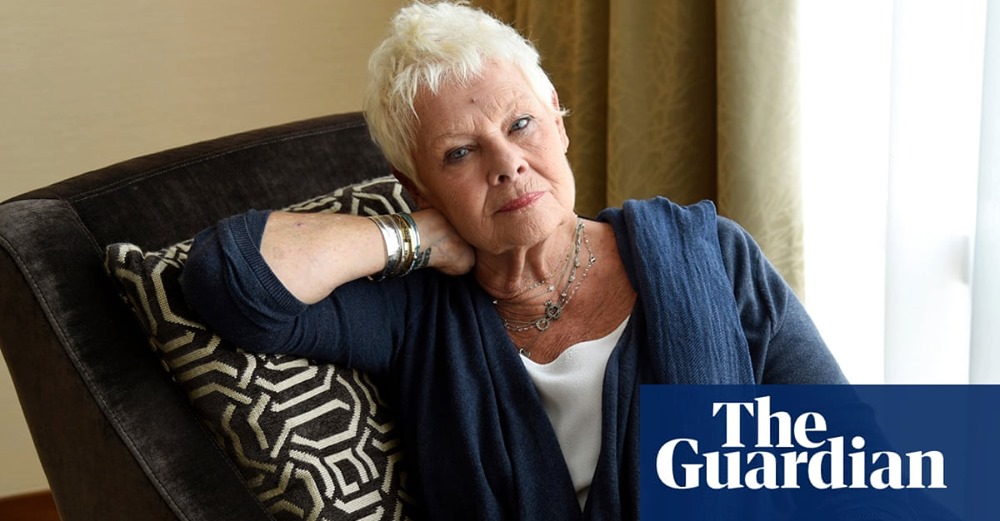
Judi Dench: 'In my mind's eye I'm six foot and willowy and about 39'

 At 86 and in lockdown, the actor finds herself in the rare position of not working. Instead, she talks about theatrical ghosts, her friendship with Harvey Weinstein and definitely not being a national treasure

It’s all go for Judi Dench, stuck at her house in deepest Surrey. What a freewheeling week; she is beside herself with excitement. Yesterday, she explains, she received her Covid vaccine. This required a trip to the village and was the first time she had left home since she can’t remember when. Then today it’s a phone interview, the thing she is doing right now. Her cup runneth over. Her world has turned Technicolor. “I’m not even joking,” she says with a sigh. “It’s nice to actually have something to do.”


Lockdown, I fear, is not the life Dench was born to. She used to practically eat and drink on the stage, but the theatres have closed, who knows for how long. She used to bounce from one film set to the next, but now production is mothballed and the industry has gone to ground. All of which means that she is confined to the house, an 86-year-old actor shoved into what she hopes is a partial and temporary retirement. She gets up each morning determined to keep herself busy. She crawls back to bed with most of the tasks left undone. After a while, she admits, the time starts to drag.


Dench recently learned a new word: synesthesia. “And I thought; ‘Well, that’s me.’ Because I always saw the days of the week in colour. I never gave it a second thought, it’s just how my mind works. And all of a sudden it’s not there any more. The days of the week have no colour at all. There’s no structure, no planning.” She is marooned with her memories and mementoes and various unquiet ghosts.


As luck would have it, her most recent film similarly throws her in among ghosts – although here, again, the experience soon starts to grate. Blithe Spirit is a galumphing reanimation of Noël Coward’s 1940s farce, played with gusto but fatally heavy-footed. Dench co-stars as Madame Arcati, a preposterous old medium who was previously embodied by the likes of Margaret Rutherford and Angela Lansbury. Down the years we have grown accustomed to seeing Dench making herself blissfully at home in any film, big or small, but her role as Arcati feels like so much heavy lifting. She huffs and she puffs. She falls into the orchestra pit. If the film is a notch or two up on 2019’s calamitous Cats (in which she played Old Deuteronomy), it is still a far cry from the heyday of Philomena, or Notes on a Scandal. Blithe Spirit is running on vapour, shouting to be heard. In the end it is a bit of a ghostly presence itself.


Dench says that in real life she probably has seen a ghost. She is reluctant to discuss it. People will think she’s gone daft. “But I remember being at [the actor] Michael Dennison’s memorial, which was at the Haymarket theatre, early in the morning. And I was walking down the stairs to the stalls and saw somebody in a black tailcoat run down in front of me. And then at the bottom there was nobody there at all.” She pauses. “But a lot of people say they’ve seen ghosts at the Haymarket, or at theatres all over. Ralph Richardson was certain that he did. And it makes perfect sense to me. There’s always a lot of spirits in the theatre, I think.”


Dench spent decades haunting the theatre herself – first in her home town of York, then at the Old Vic, then all over. These days, she tires more easily: an extended run can feel like a marathon. Also, her eyesight is almost completely shot (macular degeneration; she doesn’t want to harp on about it). But before that, good heavens, there was no stopping her. Directors knew her as “the Mighty Atom”, a 5ft 1in ball of fire, versatile and enduring. She says that when she wasn’t on stage, she would hang about in the wings, simply watching the show, drinking in the experience. She loved the interaction with an audience, the endless possibilities; the sense that a play could change and grow over time and that no performance was the same as the last.


It’s ironic, she says. She never especially wanted to be a film actor anyway. “Recently an American journalist said to me, ‘Oh, and I believe you did a little theatre as well’, and it was like an arrow going through my heart. I thought: ‘Oh dear, there goes the 60s, the 70s, the 80s, the 90s.’ Thousands of performances, gone in a flash.”


Besides, she adds, it’s not as if Hollywood was knocking the door down. When she was first starting out, a well-known film director turned her down for a role. He said that she was altogether too short and too plain. She should stick to the stage and leave cinema to the thoroughbreds.


I have heard this story before, but I don’t believe she has ever named the culprit. “No,” she says sharply, like a schoolmistress scolding an unruly pupil. “I never have and I never will. I’m not going to break my word today. The film in question, though, went on to be enormously successful. And I’m not going to tell you the name of the film, because then you’d know who it was right away.”


In which case we’ll move on from one louse to another. Dench’s film career is her own handiwork. She is a peerless performer; a commanding screen presence, as comfortable in a Bond film as she is in The Best Exotic Marigold Hotel. But her Hollywood breakthrough was engineered at least in part by Harvey Weinstein, who is serving a 23-year prison sentence for third-degree rape and first-degree sexual assault. It was Weinstein who spearheaded the awards campaign for 1998’s Shakespeare in Love. In her role as Elizabeth I, Dench was on screen for all of eight minutes. She went on to win the best supporting actress Oscar.


The problem, I suspect, is that Dench is a workaholic. She once claimed that she says yes to everything, never turns a gig down. I assumed this was a joke but she insists it is, by and large, true. Her agent reads the scripts first, weeds out the bad ones and provides a quick precis of what the good ones are about. After that, more often than not, it is simply a case of rearranging her diary.


What would it take to make her say no to a film? What is the one movie role she would totally balk at playing? “Probably an 86-year-old woman who’s not able to see.” She laughs shortly. “I’m not going to play that part, thanks.”


Ideally, she’d prefer some darker material. One of her favourite film roles was that of Barbara Covett, the vicious, miserable schoolteacher in 2006’s Notes on a Scandal. It would be nice to have the chance to make another picture like that one. “But I get put in a bracket. ‘Oh, would you like to play this person who’s sitting in a care home and she’s in love with a bird? And then she gets upset because, I don’t know, something happens to the bird.’”


Here, perhaps, is the downside of Dench’s film success; the consequence of being a part of the nation’s collective cultural fabric. We prefer our brightest stars to remain in one place. It is reassuring and soothing; it is how we plot our course through the world. When they start zigzagging about, it confuses the public; makes us lose our bearings.


Dench claims that she especially detests being described as a national treasure and who can blame her? It’s reductive and condescending. It puts lead boots on her feet. Others, though, have suggested that perhaps she doth protest too much. The late Geoffrey Palmer, her co-star in the BBC sitcom As Time Goes By, swore blind that she only pretends to dislike the term. “[That] would be an absolute bloody lie,” he said. “She loves it.”


I put this to Dench and she splutters with righteous indignation. That’s Geoffrey, she says, teasing her from beyond the grave, making her justify herself all over again. Because it is true that she hates it. Always has, always will.

“For one thing,” she says, “it’s a terrible label. So dusty, so dreary. For another, it relegates me to being an 86-year-old woman. Whereas in my mind’s eye I’m 6ft and willowy and about 39.”


She takes a breath and mulls it over. She says: “Do you know what it’s like? It’s like they’ve picked me up and put me inside a little glass-fronted cabinet. Then they’ve locked the door so I can’t get out.”


The line is breaking up. We have gone underwater again.


Smash the glass, I tell her, raising my voice to be heard. Smash the glass and run amok.

“Exactly,” she says. “And fuck being 86 years old.”


• Blithe Spirit is on Sky Cinema now


(Source: The Guardian)

Tuesday, 25 September 2018

The Brett Kavanaugh case shows we still blame women for the sins of men

From Anita Hill to the victims of Cosby and Weinstein, women are disbelieved, powerful men excused. When will we learn? asks Rebecca Solnit, the author of Men Explain Things to Me, and The Mother of All Questions, in The Guardian. Read on: 

We have been here before. We have been here over and over in an endless, Groundhog Day loop about how rape and sexual abuse happen: offering the same explanations, hearing the same kind of stories from wave after wave of survivors, hearing the same excuses and refusals to comprehend from people who are not so sure that women are endowed with inalienable rights and matter as much as men – or, categorically, have as much credibility. We are, with the case of Brett Kavanaugh, Donald Trump’s nominee for the US supreme court, who has been accused of sexual assault, revisiting ground worn down from years of pacing. Kavanaugh denies Christine Blasey Ford’s allegation that he forcibly held her down and assaulted her when both were at high school. We have only the accounts of the participants, and these, it seems, will always contradict each other. The allegation and the denial put us back in a familiar scenario.

The last five years have been an exhaustive and exhausting crash course in how abusers and rapists (and attempted rapists) and their victims behave, and how they are perceived and treated, but the learning curve of the wilfully oblivious resembles the period at the end of this sentence.

 We know that there is virtually nothing that a straight white man can do to discredit himself
We know why victims don’t report rapes. We know that a minority of rapes are reported; and of those, a small percentage result in arrests; and of those arrests, a small percentage result in prosecutions. Only a very small percentage result in convictions and sentences. We know that the woman who accused the basketball player Kobe Bryant of rape years ago received death threats and extensive character assassination, as did some of Judge Roy Moore’s accusers, one of whom had her house burned down after she spoke up.

 Illustration: Matt Kenyon
We know that women have been portrayed, ever since Eve offered Adam an apple, as temptresses, more responsible for men’s acts than men themselves are, and that various religions still inculcate this view, and in recent times various judges and journalists have acceded to it, even blaming female children for “seducing” their adult abuser.

We know that we – well, some of us – are just beginning to emerge from an era of women being routinely discredited, shamed, blamed, and disbelieved when they speak up about sexual assault. We are, of course, seeing it again with Professor Ford. Her credibility and character were being preemptively attacked even before we knew who she was; she was promptly doxxed when the Washington Post revealed her identity. We know why the more than 60 women who say Bill Cosby sexually assaulted them, from the 1960s through recent years, mostly didn’t speak up before 2014, and how those who did were disbelieved and punished while Cosby’s career sailed on. We know why Harvey Weinstein’s alleged victims didn’t speak up, and how a whole apparatus existed – of threats, lawyers, spies – to keep them silent. We know that the teenage victims of the gymnastics doctor Larry Nassar who spoke up were, for the most part, not believed by the school, by the police or even by their parents. We know that a groundswell of feminism made it possible for many women to be heard for the first time, starting last October with the cataclysm of testimony we call #MeToo. Why should we now expect an ordinary schoolgirl to have succeeded where Olympic athletes and Hollywood actors failed to get a hearing or justice?

We have seen this all before. We saw it 27 years ago with the discrediting and harassment of Anita Hill. Hill was called “a little bit nutty and a little bit slutty” for testifying against the supreme court nominee Clarence Thomas, and that one of the ways she was smeared was as a fantasist: “Do you think it a possibility that Professor Hill imagined or fantasised Judge Thomas saying those things she has charged him with?” said Senator Arlen Specter. “Her story’s too contrived. It’s so slick it doesn’t compute,” said Senator Orrin Hatch, blaming her for being coherent, as he would have undoubtedly done for being incoherent, and then he offered some truly loopy reasons why he thought she fabricated her reluctantly told tale. Some of the same people – notably Hatch – are now gearing up to attack Ford.

We know that the worst things that happen to us can be among the most indelible, so the argument that the accuser can’t possibly remember events from the early 1980s doesn’t hold up. In the late 1990s, I knew a Marine lieutenant colonel who was haunted by the civilian he had, under direct orders from a general, shot during the Korean war more than 40 years before, in circumstances he described in detail to me. A few years ago, a woman in her 60s, moved by the feminist conversation we’re having now, wrote to me in detail of her rape in the 1960s – the first time she had unpacked the trauma she couldn’t escape.

I asked David J Morris, the Marine corps veteran and author of The Evil Hours, a powerful book on PTSD, about trauma and memory, and he replied: “Most men have no idea how truly traumatic sexual assault is. The science on the subject is pretty clear: according to the New England Journal of Medicine, rape is about four times more likely to result in diagnosable PTSD than combat. Think about that for a moment – being raped is four times more psychologically disturbing than going off to a war and being shot at and blown up. And because there are currently no enduring cultural narratives that allow women to look upon their survival as somehow heroic or honorable, the potential for enduring damage is even greater. A traumatic event like the one Christine Blasey Ford is alleging fractures the self, destroys one’s sense of time and place in the universe and generally changes a person completely. It is literally an encounter with death. To suggest that she wouldn’t remember it flies in the face of reason. No sane person would suggest that someone wouldn’t remember the time they were in an airplane crash. From a neuroscientific standpoint, being raped is more traumatic than war, not to mention plane crashes.” Ford reports fearing she might be killed in the conflict.

We know that as a society we hold people responsible for “youthful indiscretions”. The same Republican politicians who have been trying to dismiss an allegation of sexual assault against Kavanaugh as boys-will-be-boys stuff support a president who, in 1989, placed full-page ads in four newspapers calling for the death penalty for the five non-white boys – two of them 15, one 14 – falsely convicted of the 1989 Central Park jogger rape and beating. (Donald Trump even asserted they were guilty in 2016, long after their exoneration.) We treat many juveniles accused of crimes as adults, sentence some to life without parole, and saddle them with felony convictions and/or put them on registers of sex offenders for life. We do not excuse them for being drunk or high. The infamous Stanford rapist Brock Turner was 19 when he was arrested for felony sexual assault, banned from the Stanford campus, and given a six-month sentence and a lifetime on the sex offenders registry.

We know that too many men are full of empathy – for perpetrators, not victims – when stories such as Kavanaugh’s emerge, and that apparently they cannot imagine what it is like to be a woman who has been assaulted, because they’ve never tried. We know that Kavanaugh is not facing punishment for a crime, just consideration of whether he deserves not only a reward but power over the lives of all Americans. This week in the Atlantic, the writer Caitlin Flanagan told of her own near-rape. It was an exceptional story – in that the perpetrator approached her to apologise wholeheartedly when they were both still young. Her story was about an incident in the late 1970s that she remembers with painful clarity – and she says that she believes Professor Ford. I believe in redemption and forgiveness – as things that must come after atonement and transformation.

We know who lies about rape, routinely, regularly: rapists. Criminals tend to deny their crimes. Which doesn’t mean everyone accused is guilty, only that claiming innocence is a habit of the innocent and guilty alike, so it doesn’t tell us much. We know that, on the other hand, false rape accusations are extremely rare (and that they are often lurid stories about recent events, not about a fumbling attempt decades ago). We know this witness was reluctant to come forward and that she was essentially forced out by the journalists pursuing her after details of her letter emerged. We know multiple people vouch that she told the story long before Kavanaugh’s nomination.


We know there is virtually nothing a straight white man can do to discredit himself, especially if he has elevated status. We routinely see plagiarists, domestic violence perpetrators, liars, thieves, inappropriate masturbators, gropers, and incompetent men put forward as reliable sources and respectable citizens. Ken Starr took sexual assault very seriously when he let the Whitewater investigation into Bill Clinton veer over into Clinton’s sexual misconduct. Yet he overlooked sexual assault when, as president of Baylor University, he was responsible for protecting female students. In 2016 the university fired him after an independent report showed a “fundamental failure” to respond to student sexual assault allegations. Now, on Kavanaugh, Starr is treated as a credible source. He told a news site: “I’ve known him since 1994. I’ve worked alongside him – this is so wildly out of character.”

We’ve heard men testify like this before – for example, in 2011, Dominique Strauss-Kahn’s pal Bernard-Henri Lévy asserted, “the Strauss-Kahn I know, who has been my friend for 20 years and who will remain my friend, bears no resemblance to this monster” his victim described. Other women came forward to report being sexually assaulted by the monster Lévy had not met. We have been here before.

We are going to go there again, when the case goes to a Senate hearing. Let us proceed to that drama with what we have learned.

Saturday, 26 May 2018

Brad Pitt 'threatened to kill' Harvey Weinstein over alleged Gwyneth Paltrow assault

'He leveraged his fame and power to protect me at a time when I didn’t have fame or power yet'

Brad Pitt is claimed to have threatened to kill Harvey Weinstein for allegedly sexually harassing Gwyneth Paltrow when she was 22 years old.

Paltrow made the allegations against the disgraced producer, claiming he had inappropriately placed his hands on her during a “work meeting” in a Los Angeles hotel shortly after she was hired to play the lead role in Jane Austen adaptation Emma in 1994.

In The New York Times article, Paltrow revealed she had told her then-boyfriend Brad Pitt who later confronted Weinstein. Speaking on The Howard Stern Show, the actor has elaborated upon the confrontation which occurred at the opening of Hamlet starring Ralph Fiennes on Broadway in 1995.


According to Paltrow, Pitt - whose film credits at the time included Interview with the Vampire, Twelve Monkeys and Seven - told Weinstein: “If you ever make her feel uncomfortable again, I’ll kill you.”

Paltrow told Stern: “It was the equivalent of throwing him against the wall, energetically. It was so fantastic... He leveraged his fame and power to protect me at a time when I didn’t have fame or power yet. He's the best.”

The Oscar-winning star previously told how she feared her career would end after rejecting Weinstein's alleged advances. She said: “I thought he was going to fire me. He screamed at me for a long time. It was brutal... I was expected to keep the secret.”

Weinstein has been accused of sexual misconduct by multiple women but has denied all allegations of non-consensual behaviour.

(Source: Independent)

Friday, 19 January 2018

Why women hesitate to report sexual misconduct

Ever wondered why do accusers wait so long to come forward? Because their names get dragged through the mud, their motives are questioned, they fear professional consequences, they blame themselves, they worry their past will be used against them, writes Emanuella Grinberg in CNN. Read on: 

The news has been filled with stories of prominent men accused of sexual misconduct -- many of the alleged misdeeds going back decades.

Though the circumstances are different in each case, the same question keeps coming up: Why did the accusers wait so long to come forward?

Some who came forward explained their reasons for waiting. In other cases, the treatment accusers endured after coming forward made their reasons apparent. Here are a few examples:

Their names are dragged through the mud
While examples abound of accusers' credibility coming under question, Italian actress and filmmaker Asia Argento's case was particularly extreme.

She was disparaged in the Italian press after the New Yorker published her sexual assault allegations against Harvey Weinstein. Weinstein has repeatedly denied all allegations of non-consensual sex.

One opinion writer called her account "prostitution, not rape." When she gave a TV interview about the accusations, another writer tweeted that Argento was "trying to justify high-class prostitution." In a radio interview, the editor-in-chief of right-wing publication Libero said the encounter was the price of becoming a great actress, and that it must have been consensual.

The treatment led her to flee Italy for a few weeks, she said. Italians "just don't get it," she told The Guardian.

"We have been so lobotomized by the objectification of women that we, as women, don't even know that we are being harassed and treated the wrong way," she said.

Their motives are questioned
When the Washington Post published accounts from four women who said Alabama Senate candidate Roy Moore pursued them as teenagers, Moore's supporters said they found the timing "suspect." Moore has denied the allegations.

The Senate race was just weeks away, leading many, including Moore's wife, to accuse the women of conspiring with the "liberal press" to get "involved" with the race.

The Washington Post said none of the women approached the paper with the story. On the contrary, the paper approached the women after receiving a tip and asked them to come forward.


They fear professional consequences
Numerous Weinstein accusers said they had long stayed quiet for fear of the consequences of challenging a man who held their career in his hands.

In her account of Weinstein's alleged harassment, actress Gwyneth Paltrow said she feared the repercussions for her career if she were to speak out. After her then-boyfriend, Brad Pitt, confronted Weinstein, the Miramax producer warned her not to tell anyone else, she told The New York Times.

"I thought he was going to fire me," she said.

Five women told CNN that political reporter Mark Halperin sexually harassed them while he was at ABC News. None of them reported the incidents. Some of the women said they did not report Halperin's behavior to management because they feared retribution, given the power Halperin had at ABC and in the industry.

Halperin acknowledged pursuing relationships with women he worked with and apologized for his actions.

They blame themselves
American gymnast Simone Biles explained the guilt victims carry around after being violated. The Olympic champion said she was sexually abused by former USA gymnastics team doctor Larry Nasser, who admitted to taking advantage of young female athletes in his care. He pleaded guilty in November to criminal sexual conduct and faces sentencing this week.

Before speaking up, Biles she said she grappled with whether she could have done something to prevent what happened, even though she did nothing to cause it.

"For far too long I've asked myself 'Was I too naive? Was it my fault?'" she said Monday.

"I now know the answer to those questions. No. No. It was not my fault. No, I will not and should not carry the guilt that belongs to Larry Nassar, USAG, and others."

They worry that their past will be used against them
One of Moore's accusers told the Washington Post that she didn't come forward sooner because she worried that her background, which included three divorces and financial troubles, would undermine her credibility.

"There is no one here that doesn't know that I'm not an angel," Leigh Corfman said, referring to her home town of Gadsden, Alabama.

Corfman has since filed a defamation lawsuit against Moore and his campaign for calling her allegations "politically motivated" and "malicious."

Tuesday, 16 January 2018

Reading what Weinstein did to Salma Hayek during Frida makes me never want to watch a movie again

With the full confidence of someone who had just graduated from college the previous year I said, “No woman in a Bangalore college dresses like that.” The editor gave my salwar a look and said genially, “You don’t know anything”, writes Nisha Susan in The Ladies Finger. Read on: 

We watched Frida on cable TV, my friend and I. The scene in which Trotsky pulls Frida Kahlo down onto his lap is the moment in which my friend, who got her communism with her mother’s milk, huffed in disgust and left the room. Nonsense, she kept mumbling. Back then I found her reaction hilarious. I don’t remember a sex scene in Frida. Perhaps because I watched it on TV.

Then yesterday I read Salma Hayek’s essay about facing tortuous sexual harassment at the hands of Harvey Weinstein during the making of Frida. And I read about his attempt to break her as an artist. Frida was Hayek’s movie; she imagined it, produced it and played the Mexican artist. Hayek writes, “I was hoping he’d acknowledge me as a producer, who on top of delivering his list of demands shepherded the script and obtained the permits to use the paintings [and] Frida Kahlo’s houses… But all of this seemed to have no value. The only thing he noticed was that I was not sexy in the movie… He would let me finish the film if I agreed to do a sex scene with another woman. And he demanded full-frontal nudity.”

Salma Hayek and Alfred Molina. Still from Frida
Hayek then writes about the day she finally shot the scene with Ashley Judd and how ill she felt. “It was not because I would be naked with another woman. It was because I would be naked with her for Harvey Weinstein…At that point, I started throwing up while a set frozen still waited to shoot. I had to take a tranquilizer…”

Reading this made me think of a phrase I’d learnt a couple years before I watched Frida. In the 70s, feminist film critic Laura Mulvey had gifted the world the idea of the male gaze – ‘the act of depicting the world and women in the visual arts and in literature from a masculine and heterosexual point of view, which present women as objects of male pleasure’. It was so handy and explained so much to me. Now it feels like watching a crime in progress.

Still from Rear Window
The same year that Weinstein was already doing to women actors what would be considered a violation of the Geneva Convention if done to prisoners of war, I assisted in the making of a short film. A friend’s friend donated his time and services as an editor. I spent a few nights in his studio in Bangalore’s Gandhinagar neighbourhood waiting as he worked on big Kannada movies. One night he was editing a song. The Bangalore college girl in the sequence was dancing in a teeny tiny skirt. With the full confidence of someone who had just graduated from college the previous year I said, “No woman in a Bangalore college dresses like that.” The editor gave my salwar a look and said genially, “You don’t know anything.” I remember thinking, “What am I supposed to feel now? That you think I don’t have any short skirts or that I am not cool enough to know girls who wear short skirts?” The ‘male gaze’ was just then explained the ridiculous female characters in my favourite Malayalam movies all of whom sounded like no woman I had ever met. The male gaze explained why they screamed, threw tantrums and were so ‘chulbuli.’

Unfortunately, I had also been taught just then that realism was overrated and that I shouldn’t be so by-the-book in my approach to critiquing Indian movies. So I shrugged at the editor.

But now? Now, I feel a little cheated. And Laura Mulvey, wherever you are, you probably feel a little gypped too. What need is there for us to understand a vast philosophical construct because of which male writers and directors create roles and narratives for women actors that are utterly alien to women viewers? “Why should Frida sit in Trotsky’s lap?” my friend had asked while storming out.

The answer is not the male gaze but something simpler. We were taught that via Gabbar’s gaze as he made Basanti dance, male viewers could have a guilt-free consumption of Basanti. After all, the villain was making Basanti do it, not the hero. But in Hayek’s case, it wasn’t the single-headed artistic, male-gaze of the director or the hydra-headed male gaze of the box office that was making Basanti dance. It was just that Harvey Weinstein wanted it. It wasn’t his objectifying subconscious rejecting Frida’s unibrow and limp. It wasn’t his lack of understanding of patriarchy’s twisting of art that demanded a scene in which Frida Kahlo had sex with Tina Modotti. No, he just wanted to screw Hayek and if he couldn’t screw her, he wanted to screw her over. Actually, he just wanted to screw her over to begin with. That rape is about power not sex, I still believe, whatever other theory has been ripped from my heart.

Because women leading a movement would make unrealistic cinema. Still from Buddha in a Traffic Jam
At TLF and elsewhere, we female critics spend time analysing, praising, half-praising and critiquing movies with our feminist toolkit. I have laughed uproariously while telling the story of the man who wanted to make Buddha In A Traffic Jam, a movie ‘inspired’ by the Pink Chaddi movement telling me that it’s unrealistic to have a woman lead a movement like that. I have told this other story of the male scriptwriter’s gaze a 100 times and had audiences in a mixture of shock and giggles each time. I have been watching movies and television for years with that eager beaver feminist student’s notebook, giving points to the movies that thwart the gaze, and to the movies that give women actors names and a few more lines of dialogue. Spent years like a trudging pilgrim, to be nearer to thee, my non-denominational artistic deity. Because the best instrument of our feminist toolkit has been hope.

But now I want to retire from that game.

Over a decade ago, a filmmaker friend told me a story from the sets of a big Tamil movie. A song was being shot with the reigning chulbuli, a woman with a personality as effervescent as Hayek’s. The director paused action to ream the costume designer out in front of the whole set and the actor. And because this is Chennai, the reaming is in English. The director says, “Where are the tits and ass in this costume? Do you think I cast her for her acting?” The actor quit a year or so later, after getting married. That was the first time I didn’t do my usual moaning about women quitting the movies after getting married. For years I had bemoaned the loss of Manju Warrier, for which I boycotted her husband, nobody’s priya Dileep. I began to say to myself then that acting was just a horrible job for some women and why would anyone continue if they didn’t have to. Even then, I didn’t think that some of the women who quit, seemingly by their own choice, may actually still miss the movies. I didn’t think that, for some of them, it was an artistic pursuit but they were exhausted by its sexism.

So when we ask, where did all those women we loved in the movies go? They went perhaps to a place where they were facing less rape threats, death threats and daily violence. Weinstein threatened to kill Hayek at one point but that’s just him, right? No. In the first paragraph of her expose of Indian theatre that Nandini Krishnan wrote for TLF, she says, “Two years ago, I decided I’d stop acting in plays… In 2014, a co-actor slapped me as a scene was being choreographed. There was no slap in the script.”

Actor Parvathy. Photo courtesy Parvathy Instagram
This year I heard on the grapevine about an actor’s experience in a south Indian movie playing the wife of a star who’s old enough to be her grandfather. The movie is full of male-gaze-south-Indian-edition absurdities like the young wife wanting desperately to comb her husband’s moustache. The hero dies in this movie and the actor had to be in a scene where she is wailing next to her dead husband’s corpse. In each take, the ‘dead’ man, cotton balls in his nostrils notwithstanding, copped a surreptitious feel of the heroine. The third time it happened she got up mid-wail and yelled at him, “stop doing that right now.” And yelled at, for the first time in his 40-year career, the man quietened down. This young woman actor has a cultivated or accidental air of ‘I can take this career or leave it,” that has protected her from backlash. Or maybe we will read about the backlash 40 years from now in her memoir. It may be like the kind of backlash that actors like Swara Bhaskar are now talking about or the kind that award-winning star Parvathy is currently facing for saying that she was disappointed by Mamooty’s misogynistic dialogue in Kasaba. Or it may be worse.

One of the kindest and smartest things I’ve read all year is what Rima Kallingal said in Leena Reghunath’s profile of Manju Warrier. Warrier is a woman who dumped her husband, made a triumphant comeback and now has to cope with the drama of her former husband allegedly ordering a ‘supaari’ rape on her actor friend. Here is the line. “Kallingal was defensive about criticisms that Warrier was seeking to market her personal story as part of the movie. “That is the only thing that we have, our tragedies,” she said. “So what is wrong if we market that?””

So, no I don’t want any theoretical understanding of why male artists can’t help themselves, what with the weight of civilisation and all. What I want is a sign before every movie indicating that, “no women were harmed in the making of this movie.” I want movies written by women, made by women, funded by women.

Because is there any point knowing about the male gaze as long as there is no female bank balance to poke in that twisted eye? As the Superwoman’s mother said, “Tu minnu bhindiya tedhi aankhein na dikha, okay?”

Thursday, 7 December 2017

Opera in a post-Weinstein world

Exposing my daughter to opera has been a calculated risk, writes Daniel H. Foster, the author of Wagner’s Ring Cycle and the Greeks, in the Paris Review. Read on: 

These days, we hear soloists, ensembles, and choruses of women singing out against abusers. But the courage expressed by these female choirs has made me question my enjoyment of another kind of music. I’m talking, of course, about opera. In this modern moment, it’s difficult not to hear opera as the highly aestheticized echo of our deeply sordid reality, a harmonization of voices wrung from women’s suffering. Louder and clearer than ever, I’m hearing opera as critics like Catherine Clément long have: as the undoing of women by men.

From an early age, my daughter (let’s call her O. to protect her privacy until she’s ready to tell her own story in the way she wants to) also recognized that there was something seriously wrong going on between men and women in opera. Carmen is her favorite opera. It used to serenade us on our daily commute to her nursery. She especially loved the children’s chorus—“Taratata, taratata!”—as they imitated the marching soldiers bugling and fifing out the old guard for the new. We even watched Francesco Rosi’s cinematic montage of bullfighting and lust in the dust of Seville. Then, one day, she asked me, “If Don Jose loves Carmen so much, why does he kill her?”

It’s tricky to know how to answer that question, especially when it is posed to you by your three-year-old. As a university professor who’s taught and thought about Carmen for years, I had on the tip of my tongue many themes with which to improvise an answer. Everything from the rejoinder generic—“It’s a tragedy. What did you expect?”—to the freewill retort—“Does he kill her? Or does she decide to die on his blade?” But neither of those nor the many other ripostes that I have previously pondered seemed satisfactory outside the classroom. When I thought about how I wanted my daughter to live and be loved, Carmen made for an appalling example.

FROM THE WELSH NATIONAL OPERA’S STAGING OF DEBUSSY’S PELLÉAS ET MÉLISANDE.
And it’s not just operatic lovers, either. Operatic fathers have a lot to answer for, too. When O. was nine, we went to her first live opera: Verdi’s Aida. Verdi had a thing about fathers and daughters. Perhaps with good reason: his two children died when the composer was in his twenties. In Aida, Verdi doubles up with two father/daughter sets. And then there’s Rigoletto, Simon Boccanegra, and, in a certain way, La traviata and Otello, as well. Given Verdi’s inclination toward the tragic, things tend not to go well for his operatic daughters. And, as my own daughter has pointed out to me, it’s mostly their fathers’ fault. The fathers interfere in the love lives of these young women in a way that winds up getting people killed: their daughters, themselves, their daughters’ lovers, and anyone else who gets pulled into their (often) well-intentioned but (always) poorly orchestrated plots.

So I have to ask myself, especially today: How can I justify raising my daughter to love an art form that seems to delight in the pain it causes women while all too often letting their abusers go scot-free? (The question gets even more complicated, because, as a man from the working classes, I saw opera as a liberation from the violent, dead-end options for my own future. Opera comforted me in the world I was born to, opened my eyes and ears to a different one, and inspired me to find that different world beyond.)

Exposing my daughter to opera has been a calculated risk. Together we watch, we listen, we discuss. And I’ve discovered that opera’s self-same abusive and violent themes often give my daughter and me a forum in which to talk about issues she (thankfully) otherwise rarely encounters. She recently summed up Rossini’s Barber of Seville as being “like all the movies I’m not allowed to see all rolled up into one.” According to her, in opera, “all the rules are broken.” Social and cultural taboos are flaunted in this art form, where hundred-piece orchestras back up singers who emphatically repeat things that in the real world would make them repeat offenders.

But honestly, my concerns are not those Socrates worries about in The Republic. Namely, that theater is dangerous because it gives impressionable youths bad role models. Crazy gods, weeping heroes, patricides, matricides, infanticides—O. seems to readily grasp the difference between her world and the operatic world. To begin with, the operatic one is bigger. It is what Herbert Lindenberger memorably calls an “extravagant art.” Or, in O.’s words, “Everything in opera is ten times greater than in real life.” Passion in that world is not like love in ours. “In opera, everyone is willing to kill for what they want,” she tells me. “In real life, only a few people are.”

In contexts like the university classroom, I am generally uncomfortable hunting the takeaway in art. There I am constantly vigilant against students who reduce Hamlet to hubris, boil down Austen to her titles, or see little more in Oedipus Rex than the moral of “pride goeth … etcetera.” But there are cases where I cannot resist questioning the moral dimension of certain art forms and certain artists, especially ones that are so seductive, so destructive. Does enjoyment of the Ring cycle insidiously lead us toward intolerance? Does Stephen Foster’s “Oh! Susanna” tempt us to sentimentalize out of existence the horrors of slavery?

DEBORAH WARNER’S STAGING OF PURCELL’S DIDO AND AENEAS.
In our discussions of these issues, O. sometimes comes up with some rather interesting morals for her favorite operas. For Aida, it’s: “Don’t make enemies that are high up.” For Carmen, it used to be: “Don’t fall in love with random people.” But, now ten years old, and with a keen interest in other games of power, she recently likened the killing of Carmen to chess: “You sometimes have to sacrifice something to get something you want more.” In a painfully prescient definition of abuse, Don Jose, she explains, kills his queen for total control.

Critics like Clément have long seen operatic music as a way to sugarcoat the very bitter pill of plots designed to abuse and kill women. In its most brutally brief definition, opera is posh snuff porn where women die at the height of climax. And yet, as scholars like Carolyn Abbate and Paul Robinson have pointed out, we tend to remember not how divas expire but how they express themselves. True, operatic music may be read as the seductive siren song of the patriarchy. But it can also be read as an aural revolt against men. The female voice can breach, overcome, and triumph over male voices, and over the orchestra, the libretto, the plot—over everything. The music itself sides with women, with their voices, and encourages their passion even in the face of difficulty and defeat.

As she dies, Dido sings one of the most poignant lines in all of opera: “Remember me, but forget my fate.” And so we do. We remember her aria, not the little man who wronged her and left her to die. We forget the bonfire of the vanities that engulfs her body in the end, and retain her incandescent voice shining down the years. And that is what I hope will inspire my daughter: to see that she, too, can make herself heard above the noise of petty plots designed to silence her.

Saturday, 2 December 2017

Weinsteins in Indian mythology

If the recent #MeToo went viral to highlight how pervasive is sexual harassment in society, Indian mythology tells us stories of several women, who faced abuse and harassment, but for which the aggressors did not go unpunished, writes Kavita Kane in She the People. Read on: 

With the number of men tumbling out of their beds as sexual predators and being rapidly exiled, it needs to be noted that the weirs broke only after some gutsy women were willing to speak out and the abusers got known publicly. Without these women’s voices, the Weinstein, Cosby, Spacey and closer home, Tarun Tejpal and their kind would have had the opportunity to find more victims.  Funneling down the ages, we get to come across several such characters in our mythology who are not just exposed but are punished for their deeds.  Each of them, have a pattern, be it Indra, the King of Gods or Ravan, the emperor of the golden Lanka.

Ravan is mistakenly glorified as a hero and not seen as the sexual predator that he was, under the sheen of scholarliness and sophistication.

He was handsome, wealthy, powerful, erudite, brave and even charming – all what a woman may want in a man. Sita did not; but his buoyed ego could not digest her ‘no’.

Some consider him a gentleman that he courted Sita and did not force himself upon her! But again, there’s a chink in that shining armour, a reason for his apparent gallantry.

The very character of Mandodari, Ravan’s wife is a physical restraint and reminder to stop her erring husband from violating Sita. The wife irrevocably becomes Sita’s protector. She challenges her husband to ‘woo’ Sita, than win her by brutality. Ravan is forced to obey – not because he is wary of his wife’s warning but of a curse that haunts him.

Fear not chivalry halts Ravan.

He has been cursed by Nalkuber, the son of Kuber, the god of wealth, the erstwhile king of Lanka and the older step-brother of Ravan. When Ravan plunders the city of Alaka, Kuber’s celestial abode, he rapes an apsara – Rambha – out of spite and vengeance because she happens to be Kuber’s daughter-in-law. The enraged, helpless husband curses Ravan that he will die the moment he next forces himself on a woman against her will. The curse, comes a little too late, for it saves Sita, but not the unfortunate Vedavati.

A much younger Ravan, once, during his celestial tours on his pushpak viman, cites the lovely Vedavati, in meditation. Instantly smitten by her beauty, he propositions her but to his surprise and anger, is rejected, with Vedavati revealing her devotion to Vishnu. Furious at being spurned over Vishnu, he grabs her hair, pulling at her. She slips away and jumps into a blazing fire, not before warning him that she will be reborn to destroy him. Vedavati. Rambha. Sita. Three women, three victims.


Indra, interestingly, is as flamboyant, infamous for his weakness for women.

He is handsome and powerful, he is the King of Gods. He wishes to have Ahalya the most beautiful woman created by Lord Brahma but she is won over and married to Rishi Gautam, whom Lord Brahma favours. Furious at being rejected, he chases her nevertheless and after being turned down, he stoops to a new low- he seduces Ahalya through subterfuge, disguising himself as her husband Gautam.

And then you recognize the pattern. Both these men wield control and power, both are grandiose: initially charming, attentive, manipulative, both are forgiven their past transgressions very easily and are allowed to flourish in covert behavior. But their mask had to be uncovered someday, by someone. Sita and Ahalya are the victims, but their voices are heard – strangely, in variance.

Sita gets her war of honour where Ram kills Ravan. Indra is cursed by an enraged Gautam to be castrated and dethroned. But Ahalya fast turns from a devoted wife to a victim to a promiscuous woman: The angry and betrayed Gautam curses his unfaithful wife too: the wife, who though, having recognized the treachery of Indra, went ahead and succumbed to her curiosity and desires, a painful corollary to the story.

It is not just in the assembly hall of the Kurus, that Draupadi is made to suffer the vastraharan and molestation.

When in exile with the Pandavas, Jayadrath (Duryodhan’s brother-in-law) meets and propositions Draupadi and when she refuses, abducts her. Bhima and Arjun rescue her after defeating and capturing him. About to be killed by them, Draupadi intervenes and saves his life for she does not wish the wife Dushala to become a widow. Instead, she tells The Pandavas to treat him like a slave, after which Bhima shaves off Jayadrath’s head bald with just five tufts of hair and sets him free, disgraced and humiliated.

In another instance, Draupadi again is a target of lust, this time by Kichak, the brother of Queen Sudheshna of Matsya, in whose palace and kingdom the disguised Pandavas have taken refuge. A livid Draupadi seeks her revenge through Bhima who kills Kichak with his bare hands, the very night and at the very place he had planned to seduce Draupadi.

Interestingly, earlier, an outraged Urvashi, the apsara curses Arjun for rejecting her advances with an ironic punishment – of being a eunuch! That he uses that curse later to his advantage is another story; and that such an intricate narrative can have variant connotations.

Satyavati, the grand matriarch of the Mahabharata, and the female protagonist of my forthcoming book, is cannier when she realizes Rishi Parasher whom she is ferrying across, has designs on her. She is an object of his lust but she turns the situation to some advantage for herself but not without realizing that power is intoxicating, after having made love to a powerful man. And also, dangerous, capable and culpable of an eventual fall.

And which all these men, through their own deeds, saw, suffered and perished…

Monday, 27 November 2017

Mukesh Bhatt’s take on sexual harassment in Bollywood? Women are not simple any more

It’s almost surprising how little the Harvey Weinstein scandal has touched Bollywood, writes Sharanya Gopinathan in The Ladies Finger. Read on: 

It’s almost surprising how little the Harvey Weinstein scandal has touched Bollywood. In India, its explosive effects came straight out of left field, with Raya Sarkar’s infamous, widely-shared and controversial list of men in liberal academia who were accused of repeated sexual harassment. Some people in the film industry, like Swara Bhaskar and Priyanka Chopra, have spoken a bit about experiencing or hearing of such things, but not one person has been publicly named, despite public calls for people to come forward with their experiences, and more importantly, with their knowledge of known harassers within the industry.

I bet Bollywood feels like it narrowly dodged a bullet (speaking of which, did you know director Vikas Bahl was welcomed back to Phantom Films earlier this year, despite having been chucked out back in April after he was accused of sexual harassment by an employee there?). But now, about a month after the Weinstein allegations, the creeps are really starting to come out of the woodworks.

Bollywood producer Mukesh Bhatt gave an interview to Reuters in which he was asked about sexual harassment in Bollywood, and he was quick to answer that India’s film industry shouldn’t be singled out, and then, that absolutely nothing could be done about sexual harassment in the film industry.“What can we do? We cannot do any moral policing. We cannot keep moral cops outside every film office to see that no girl is being exploited.” Er, well, at least he told us where it happens.

Suraiya in Shama Parwana, 1954. Image courtesy Wikimedia Commons
Even more shockingly, he goes on to actually blame women for the kind of rampant and twisted abuse that goes in Bollywood, saying, “I am not saying men have not been exploitative. They have been for centuries. But today’s woman is also not as simple as she pretends to be. But just as there are good men and bad men, so also there are women who are exploitative and very cunning. Also blatantly shameless to offer themselves.”

After some media outrage, Mukesh Bhatt issued a statement saying that what was presented in the Reuters interview was in fact the opposite of what he actually said. He clarified, “Sexual harassment is not gender specific and in some instances men take advantage of it and in some instances women take advantage of the same. But it was twisted, turned and completely put out of context. I stand by the firm belief that sexual harassment should not happen in the first place and shouldn’t be gender specific.”.

He also cried that he didn’t appreciate being misquoted on such a sensitive point of discussion. What to do, we cannot keep cops outside every interview to see that no quote is being exploited.

Friday, 10 November 2017

Women who complain of sexual harassment 'branded a troublemaker’

Most women who experience these incidents stay silent, and the cost of going public is often high. But as those who did share their stories explain, you don’t create change by covering things up.

Imagine being 20 years old and stuck on a remote mountainside thousands of miles from home. Now imagine being the only woman working among dozens of men and being subjected to a sexually degrading, humiliating experience. Imagine making a complaint and being told it’s best just to drop it; that, otherwise, you might struggle to get a job elsewhere.

That was the choice Rebecca Crookshank faced as a young RAF officer stationed in the Falklands in 2001, if choice is the word. She had worried in advance about being posted to the Mount Alice remote radar base: “I remember hearing stories from other girls who had been, hearing about this ritualistic behaviour and feeling very vulnerable; feeling I didn’t want to go up there, making that known, being kind of accused of being a troublemaker – suck it up, you need to go up there.”

Men mooned her on arrival; an initiation ceremony followed, involving being manhandled by several naked men. When she complained to a superior officer, the interview took place in her bedroom and she recalls being told she would get a good report if she kept quiet.

“I think I said in the meeting: ‘I’m going to leave,’ and they said: ‘Well, your civilian life will be affected if you take this further.’ I was really terrified of all of it, of the power of this institution and the weight of the loyalty and heritage. My father was a serviceman, my grandfather too. What would they say?” So she simply stuck out the four-week posting and left the RAF the following autumn.

Rebecca Crookshank in her play Whiskey Tango Foxtrot, in front of a still from her initiation ceremony when stationed at Mount Alice. Photograph: Cecilia Colby
Why don’t more women report incidents of sexual harassment at the time? Why are those with stories to tell often reluctant to name names? These questions have been asked repeatedly in the wake of the Harvey Weinstein scandal and more recently in British politics. One obvious answer is: consider what happens when they do.

There are particular difficulties for women in the armed forces, who may have to continue not only working but living alongside men they have complained about in barracks, perhaps even relying on their support in dangerous situations. Leaving, meanwhile, means losing more than a job. “It’s your roof over your head, it’s your education, it’s your food,” says Crookshank. “Living in barracks, you’re so reliant – that’s why it’s so hard to transition into civilian life. You’re leaving a family, a home, a network and a chain of command that is all you know.”

But, even in civilian life, most women experiencing sexual harassment never report it, according to research last year from the TUC and the Everyday Sexism project. Of the minority who did, three-quarters said it made no difference and 16% felt they were treated worse as a result. Taking legal action remains relatively rare, perhaps unsurprisingly when payouts are generally small and the publicity makes it harder to find new jobs.

“The most profound damage is losing friends, having a global corporation calling you a liar, the impact in terms of anyone ever wanting to employ you again,” says Catherine Mayer, the co-founder of the Women’s Equality party who last year brought a claim for sex and age discrimination against her former employer, Time magazine, a claim it denies. “The sign you’re hanging round your neck, whether you talk about harassment or discrimination, says ‘troublemaker’.”

Avoid legal action, meanwhile, and there is still the court of public opinion. “One pushy lady!” shrieked the Daily Mail last week over a piece about the writer Kate Maltby that systematically – and she says inaccurately – shredded her reputation after she described how the deputy prime minister, Damian Green, had allegedly brushed her knee with his hand over drinks (he denies making any advances).

Yet there is undeniably a purpose to speaking out. A decade after leaving the RAF, while looking for work as an actor, Crookshank started writing a play based on her experiences. Whiskey Tango Foxtrot was staged in 2015; she also posted cameraphone film she shot in the Falklands on YouTube and is still regularly contacted by servicewomen with similar experiences. “I only talk,” she says, “because I want other people to come forward with their stories. Because I know they’re there.”

Rebecca Crookshank in her RAF days: ‘I only talk because I want other people to
come forward with their stories.’ Photograph: Courtesy of Rebecca Crookshank

There is a vicious circle here: if nobody talks, sexual harassment goes unchecked. Women who do talk, however, may pay a price for it. Silence begets injustice, but so, sometimes, does speaking up. Is there a way of breaking the circle?

Jean Porcelli was a science lab technician, working at a school in Glasgow, when she began to experience what she described as low-level nuisance from two male colleagues; messing with her papers or her chemicals. Before long, she said, things assumed a sexual connotation. They would read Page 3 of the Sun in front of her and, if she complained, say she was just jealous; they made suggestive jokes, brushed up against her. When she complained, she was told to get on with the job.

Unable to afford a lawyer, Porcelli had to represent herself at tribunal, but eventually, with the help of what was then the Equal Opportunities Commission, won a landmark victory; in 1986, hers was the first successful British case to show sexual harassment could be classed as a form of sex discrimination, although it would be 2005 before it was explicitly defined as an offence in law.

Yet, 31 years on, that law remains surprisingly difficult for victims to deploy without wrecking their careers, so much so that many choose to leave a company quietly rather than fight. “Clients just get to the stage where they say: ‘I just have to get on with my life.’ They’ve been through enough,” says Harriet Bowtell, an employment lawyer at the London-based firm Slater and Gordon. “Often, people don’t raise it because they feel it won’t be treated seriously or they won’t be believed. We get lots of female clients who are strong individuals, who say to me: ‘I feel ridiculous raising it because I should just be able to get over this.’ And I say: ‘It’s great if you can, but you shouldn’t feel as if you have to.’”

And while many women would rather resolve things privately within their companies, it isn’t always that simple.

 Sarah Lacy, founder of PandoDaily, dared to question the ‘bro’ culture at Uber. Photograph: Bloomberg via Getty Images

In 2013, Alison Smith was one of four women to publicly accuse the Liberal Democrat peer Lord Rennard of inappropriate touching and harassment. Smith, who met him at a time when she was being encouraged to stand as a parliamentary candidate, tried repeatedly to raise the alarm privately within the party to no avail before finally being persuaded to go public. By then she was teaching at the University of Oxford, having decided to put off standing for parliament for a while, and feeling increasingly responsible for her female students. “I was lecturing PPE students and that’s the pipeline into politics … There was a moment of clarity when I thought, ‘What are we sending these talented young women into?’” she says. “The idea of it happening to them filled me with horror. What people forget is the psychological cost of doing nothing in these cases.”

Things did not turn out as she hoped; an investigation launched by the party found there was credible evidence that the women’s personal space had been violated, but insufficient evidence on the criminal standard of proof that Rennard had acted in a sexually inappropriate way. He still takes the party whip as a peer and has always denied the allegations.

Shortly after, Smith moved to the Netherlands to be with her Dutch husband. Her new colleagues have mostly never heard of Rennard and she realises that gives her an anonymity denied to victims trying to continue careers in an industry where everyone is gossiping about them: “One of the reasons I’m reluctant to say, ‘It’s fine, it all worked out great’ is there’s a certain choice you are making. You know if you are speaking out about someone who is extremely powerful, they don’t have that power base from nothing. If you wanted to continue to work in an industry then, to be honest, I’m not sure I would have spoken out in those circumstances.”

Four years on, she is reconciled to her choices and hasn’t completely ruled out returning to politics in the future, despite some nervousness about re-entering the same circles as Rennard. “I’ve made my peace with it. I’ve even made my peace with the Liberal Democrats, although, obviously, we need to hold their feet to the fire in terms of continuing improvements. I feel much more at peace than I would if I’d known how big a problem it was and not spoken out.” For, just occasionally, that’s what makes the difference.

It was when she found herself with an empty diary in November that Sarah Lacy realised she had become something of a professional pariah. “It was the first year in 20 years in Silicon Valley that I wasn’t invited to any Christmas parties,” she says, laughing, although that was hardly the worst of it; she recalls having to turn her tech news website, PandoDaily, subscription-only after advertisers pulled out, and there are still investors she hasn’t forgiven for getting cold feet.

Her crime, she thinks, was to run a series of pieces on sexist “bro” culture in tech generally and, particularly, at Uber. It wasn’t what the Valley wanted to hear about itself and those tensions finally became public three years ago, when it emerged that Uber executive Emil Michael talked at a business dinner about digging up dirt on his company’s critics, suggesting there was something specific to expose about Lacy’s personal life.

But she wasn’t the only one to experience unpleasant personal consequences for raising the issue. When the tech venture capitalist Ellen Pao brought and lost a sexual discrimination claim against her ex-employer, Kleiner, Perkins, Caufield and Byers, it was open season for journalists and industry gossips on her career, marriage and personal choices. “There were a lot of women in the industry trashing her, and saying: ‘We all suffer this stuff but we don’t talk about it,’” recalls Lacy. The message for other women was clear: don’t risk it.

Ellen Pao has written Reset, a book recording her sexual discrimination claim. Photograph: Jeff Chiu/AP

Now, two years later, Pao’s book about the case, Reset, is flying off shelves and she is regarded as “the Anita Hill of the industry”, says Lacy, referring to the lawyer who, in 1991, famously accused Supreme Court nominee Clarence Thomas of sexual harassment and thus lodged the concept in US consciousness, although he denied the allegations and was confirmed in the post. Hollywood is making a movie about sexism in tech based on a viral blog by the former Uber engineer Susan Fowler, describing how badly the company handled her sexual harassment complaint. Uber’s Travis Kalanick resigned as CEO in June, days after Emil Michael also departed, following a string of controversies surrounding the company – including Fowler’s allegation – and an inquiry commissioned by the board into its broader culture.

In July, prominent venture capitalists Justin Caldbeck and Dave McClure resigned after a series of female entrepreneurs described a culture in which women trying to raise finance were routinely propositioned and hassled. “Up until this summer, the idea that a man would get fired from a venture firm for propositioning women – ha!” says Lacy. “Everyone just accepted it was a part of business.” Yet suddenly, she says, “there have started to be consequences for men acting badly, which there just weren’t before”.

That has brought consequences for women. Lacy has just successfully raised finance for a new site for working mothers and says, wryly, that many women are finding investors suddenly keen to back them: “For sure, there are venture partnerships where people are terrified of what’s just happened. I talk about this every day with women in the Valley and it’s this thing of: ‘Maybe it’s guilt money, but let’s take the money.’”

What is interesting about this sea change is that there was no obvious reason for it. Women are reaching more senior positions in tech, but it remains male-dominated. The summer’s resignations preceded the Weinstein scandal, so can’t flow from it.

Lacy, however, has a theory: “It’s Trump, 100% Trump. If Hillary Clinton had been elected, none of this would have happened; it would have been four years of Lean In feminism: ‘Things aren’t perfect but here’s how we hack our systems to get on.’” The president’s ability to get elected despite boasting of grabbing women “by the pussy” shocked senior women into realising just how fragile their positions were, she says. And now they are allying with younger women who simply won’t tolerate what their elders did: “It’s a combination of younger women who just don’t think this is OK and older women thinking: ‘Oh dear Lord, we’ve made no progress.’”

What Britain may now be seeing is a similar alliance between older women, who once believed harassment was simply the price of the job, and millennials using the #metoo hashtag to reveal their experiences.

 Catherine Mayer: endured awkwardness early in her journalistic career. Photograph: Roberto Ricciuti/Getty Images

It hasn’t been painless, with several of those coming forward being heavily trolled on social media. “A lot of strangers opened up with ‘you’re lying’,” says writer Kate Leaver, whose tweets about how the then GQ political correspondent Rupert Myers forcibly kissed her outside a pub led to his dismissal. “I had: ‘You’re trying to promote your book,’ or ‘you shouldn’t be drinking alcohol with a stranger,’ even someone saying: ‘He can’t be held responsible for your decision to meet him.’ A lot of them were so ridiculous it was like water off a duck’s back, but get me in a vulnerable moment …”

But, as a freelancer, Leaver didn’t have a line manager or an HR department to approach; it was just her, sitting on her sofa at home, nervously composing tweets accusing Myers (who is also a barrister) of something over which, for all she knew, he might sue. Would she advise others to follow suit? “It really matters how strong the person feels in terms of dealing with the aftermath. I don’t want to scare people from disclosing, but I’d want someone to know that they were likely to feel frightened, shaken, exposed, vulnerable.” She worried, too, about damaging her career although, fortunately, the editors she writes for are mostly female and sympathetic – unsurprisingly, perhaps, when some may have similar unspoken stories.

Decades ago, when Catherine Mayer was just starting out as a journalist and her boss wrote a letter explaining that he’d only hired her because he fancied her, she didn’t report him. Instead, she says: “I marched in after a weekend of utter turmoil and said: ‘We will never speak of this again,’” and then endured the awkwardness until he left.

Even five years ago, when she was sitting in the reporters’ gallery at the House of Commons and an MP texted a lascivious query about what boots she was wearing, she chose simply to ignore it. But now she worries that, by not speaking up, her generation of women unwittingly allowed such things to continue. “I don’t want to minimise the downside [of speaking out],” she says. “But I don’t believe you ever create change by covering things up.”

(Source: The Guardian)

Sunday, 5 November 2017

Eight shocking celebrity rape scandals

1. The silent film comedian who was falsely charged with the rape and murder of a Hollywood starlet
In 1921, silent film actor Roscoe “Fatty” Arbuckle was one of the biggest stars in the world. To celebrate his success, he and two friends drove to San Francisco for a three-day bacchanal at the St. Francis Hotel in San Francisco on Labor Day weekend. By the end of the trip, Fatty was sitting in “felony row” at the San Francisco Hall of Justice, held without bail for the rape and murder of a 25-year-old actress named Virginia Rappe.

On September 5, Arbuckle awoke to find that he had many uninvited party guests, two of which were Rappe and friend Maude Delmont. Their reputations preceded them — Delmont was known as a madam and blackmailer, and Rappe had made a something of a name for herself as a model, aspiring actress and party girl. Fatty was initially worried their presence would alert police to the “gin party,” but quickly shed his concerns as the celebration raged.

By the end of the day, Rappe was found seriously ill in one of the rooms. She was examined by the hotel doctor, who concluded her symptoms were mostly caused by intoxication and gave her morphine to calm her. She stayed at the hotel for a few days before she was taken to a hospital—where she died, on September 9, of a ruptured bladder.


What exactly happened to Rappe is still a mystery, but Dumont had her own version of events for the police. She said Arbuckle and Rappe had had a few drinks together, after which he pulled the actress into an adjoining room, saying, “I've waited for you five years, and now I've got you.” Delmont claims to have heard Rappe screaming, so she knocked on and then kicked at the locked door. After a delay, Arbuckle came to the door in his pajamas, wearing Rappe's hat “cocked at an angle” and smiling his “foolish ‘screen smile.” Behind him, Rappe was sprawled on the bed, moaning.

“Arbuckle did it,” the actress said, according to Delmont.

Fatty denied any wrongdoing (there was no evidence that a rape ever occurred), and it appears he was simply in the wrong place at the wrong time. Despite this, he surrendered to authorities a few days after Rappe passed away. He was in jail for three weeks, at which time his sentence was reduced from murder and manslaughter.

Hearst News Corporation had a field day with the story. While sexually assaulting Virginia Rappe, the papers surmised, the 266-pound star had ruptured her bladder. The newspapers, an overzealous DA, and dubious witnesses all conspired to bring Fatty down, but after three trials he was acquitted. Jury foreman Edward Brown later said, “Acquittal is not enough for Roscoe Arbuckle.”

Fatty never truly rebounded from the scandal — his once lucrative career was over. He changed his name to William B. Goodrich (Will B. Good) and worked behind the scenes, directing films for friends who remained loyal to him. He barely earned a living in the only business he knew. A little more than ten years later, on June 29, 1933, he had a heart attack and died in his hotel room. He was 46.

2. The film director who fled the U.S. after being convicted of the rape of a 13-year-old girl
On March 10, 1977, director Roman Polanski, then aged 44, photographed a 13-year-old girl named Samantha Gailey (now Geimer), fed her drugs and alcohol, then raped her.

With the encouragement of her mother, the young girl agreed to model for Polanski for a French magazine spread. He set up two photo shoots near her home in Los Angeles. During one of the sessions, he gave the girl Quaaludes and champagne before sexually assaulting her.

Samatha's mother called the police, and the girl pressed charges against Polanski, who pleaded guilty to unlawful sexual intercourse with a minor. Faced with the possibility of prison time and deportation, he fled to his home in France, just hours before he was to be formally sentenced. To this day, he remains exiled overseas and has lived mostly in France, avoiding countries that might extradite him.


Samantha has since written a book about the rape, The Girl: A Life in the Shadow of Roman Polanski, and says she feels more wounded by what she calls the "victim industry," the lawyers, judge and journalists who she feels sensationalized her case for their interests. She has also defended Polanski's right to move on with his life. When he was nominated for an Oscar for The Pianist, she wrote an op-ed piece for The Los Angeles Times arguing that the movie should be judged on its merits.

Polanski, for his part, has been apologetic. He wrote Geimer a letter, which appears in the book, saying, "I wanted you to know how sorry I am for having so affected your life."

3. The once beloved comedian who is alleged to have drugged and raped over 40 women
Several women who have accused comedian Bill Cosby of drugging and raping them are saying newly unsealed testimony by the comedian in a 2005 case corroborates their claims.

The former television star and humanitarian admitted to acquiring Quaaludes with the intent of giving them to women he wanted to have sex with, during testimony for a sexual-abuse case filed by former Temple University employee Andrea Constand.

Attorneys for some of the women suing Cosby seized on the testimony as powerful evidence that what they have been saying all along is true — the comedian drugged and raped women throughout his career.


Cosby, 78, has been accused by more than 40 women of sexual misconduct in episodes dating back to the 1960s. He has never been charged with a crime, and the statute of limitations on most of the accusations has expired. His wife, Camille Cosby, has stated she knows her husband is a serial philanderer but believes his scores of accusers consented to drugs and sex with him.

The release of Cosby's 2005 testimony has resulted in his famed sitcom, The Cosby Show, being removed from all networks. In addition, corporate, educational and celebrity supporters have denounced their support of this once beloved icon.

4. The iconic actor who "date raped" and impreganted his co-star
In a July 2015, during an interview with BuzzFeed, Oscar Award-winning actress' Loretta Young's daughter-in-law, Linda Lewis, said it was while watching Larry King Live in 1998 that Young first heard the words "date rape" and inquired about its meaning.

"I said, 'It doesn't have to be violent; it doesn't have to be rip-your-clothes-off. It's when your no isn't no,'" Lewis recalled her words and Young's eye-opening reaction.

"That's what happened between me and Clark," she allegedly told Lewis.

The Clark she was referring to was legendary screen actor Clark Gable, who famously starred alongside Young in the 1935 movie Call of the Wild.


Less than a year later after the movie's release, Young gave birth to her first child, a daughter named Judy. But it wouldn't be until 2000 — years after enduring rumors and criticisms of her so-called affair and resulting "love child" — that she'd posthumously confess in her memoirs that it was indeed Gable who fathered her baby.

It was while the film crew was traveling back to Hollywood by train that she said Gable snuck into her personal, overnight compartment and took advantage of her.

"She was so humiliated," Linda Lewis said, "and what she would do when she was humiliated was just 'on with the show.' Because she had been trained since the age of 3, you put a good face on it, and you go forward. She knew she'd have to continue working with him."

Young went through excruciating measures to keep it a secret from not just the public but her film studio. After giving birth, she resorted to giving the baby, who had a false name listed as her mother on her birth certificate, to an orphanage. Little Judy was then formally adopted by her biological mother. It wasn't until shortly before her wedding day that Judy learned the truth about her parentage.

5. The teen musician who was raped by her former manager
In July 2015, Runaways bassist Jackie Fuchs claimed the band's manager and founder, Kim Fowley, raped her while other band members and acquaintances watched.

Fuchs, whose stage name was Jackie Fox, described a party that took place after The Runaways' New Year's Eve show in Orange County, California in 1975 when she was 16 years old. According to several witnesses, she was given Quaaludes during the celebration, before Fowley allegedly asked a roadie in attendance if he would like to have sex with Fuchs.

Fuchs said the attack was witnessed by several people, among which were the guitarist Joan Jett and lead singer, Cherie Currie. Kari Krome, songwriter for the Runaways, corroborated Fuchs' story and said she was also sexually assaulted by Fowley. She was 16 at the time.


Of the assault Fuchs said, “You don't know what terror is until you realize something bad is about to happen to you and you can't move a muscle,” Fuchs said. “I can't move. I can't speak. All I can do is look him in the eye and do the best I can do to communicate: please say no… I don't know what it looked like from the outside. But I know what was going on inside and it was horror.”

Fowley, who had a reputation for despicable behavior, died in January 2015 and is obviously unable to address the allegation. But Fuchs' recollection did prompt responses from former bandmates Joan Jett and Cherie Currie, who said they did not witness the alleged assault, as Fuchs claimed.

She said of her bandmates (and the media), “If I am disappointed in one thing, it is that the story has become about who knew what when and who did or didn't do what. That isn't the story at all. It would be nice if everyone who was there the night I was raped could talk about how it has affected them over the years. But if they don't want to talk it about, I respect that. It's taken me years to talk about it without shame. I can only imagine what it must have been like to have watched it happen."

6. The legendary comedian who married his teen girlfriend to avoid a statuatory rape charge
Comedian Charlie Chaplin was once the world's biggest star, but by the mid-1920s, it was clear that something was not entirely right about his daliances with women. His first wife, Mildred Harris, was 16 and pregnant with his child (he was 29 at the time) when they married in 1918. They divorced in 1920.

After the divorce, Chaplin met Lita MacMurray. His behavior toward her was abhorrent at best: he was openly obsessed with her and told friends that he would marry her if she ever became pregnant. He spent his days making her over into a starlet known as Lita Grey. To cover up her age, he told the press she was 19.

When the 16-year-old collapsed on the set of The Gold Rush, Chaplin learned she was pregnant. He responded by insisting she have an abortion and removed her from the film when she refused. Grey's family threatened to turn him in for statutory rape. Chaplin married the starlet under duress and in secret in 1924, telling friends that “marriage was a better option than prison.” The move led to a life of misery for his wife who gave birth to two sons during the three-year marriage.


An original copy of the 1927 divorce papers filed by Grey emerged in April 2015. In the documents, she describes his “revolting” and “inhumane” treatment of her.

The papers reveal she was forced to perform sexual acts that were illegal in California during the 1920s. Chaplin demanded she take part in a threesome with another woman. On one occasion, he screamed at her: “All married people do those kinds of things. You are my wife and you have to do what I want you to do.”

At the time of the divorce, details were leaked to the press of his “perverted sexual desires” which left Chaplin on the verge of a nervous breakdown as calls for his films to be banned grew.

The graphic details saw a judge award Grey the world's then-largest divorce settlement of £557,000 — worth £8 million today.

7. The world heavyweight champion who served a six year sentence for rape
Boxer Mike Tyson's 1992 rape conviction came as little surprise to his former manager, Rory Holloway, who claims the former champion could have been the greatest of all time but for his "weakness for women." Holloway, who was a friend of Tyson's since the pair were teenagers, claims in his new book Taming the Beast: The Untold Story of Mike Tyson, that the 48-year-old's "sex addiction" stopped him from going down in history as the best ever.

Tyson was arrested in 1991 for the rape of 18-year-old beauty pageant contestant Desiree Washington in an Indianapolis hotel room.


After attending a Johnny Gill concert on the night of the crime, Tyson found himself alone. He called Washington and convinced her to join him at his hotel so that they could talk and get to know one another. Once there, Washington agreed to accompany Tyson to his room so that he could pick up something he claimed to have left behind. Tyson instead pinned Washington to the bed, telling her to relax as he forced himself upon her. She left the room alone about 30 minutes after arriving. A hospital medical examination was conducted, and Washington's injuries were found to be consistent with her account. Tyson later claimed that the sexual encounter was purely consensual and that Washington had made the story up for money.

Tyson was charged and convicted the following year and sentenced to six years in prison. The only surprise to Holloway was that Tyson was not the subject of further complaints.

8. The actor who was raped during his art exhibit
In a 2014 interview with Dazed magazine, Shia LaBeouf said that a woman had raped him during a performance art piece at a Los Angeles art gallery earlier that year.

LaBeouf's show, "#IAMSORRY" involved the actor sitting silently behind a desk in a room in LA's Cohen gallery with a paper bag bearing the legend “I am not famous anymore” over his head. For five days, members of the public waited for the chance to be able to sit alone with him in the room with a prop of their choice.

For the most part, the public's interactions with the actor were uneventful, with the exception of a visit from one woman. Shia said, "(She) came with her boyfriend, who was outside the door when this happened, whipped my legs for 10 minutes and then stripped my clothing and proceeded to rape me.”


His collaborators in the performance art piece, British artist Luke Turner and Finnish artist Nastja Säde Rönkkö, said they had intervened as soon as they became aware of the incident and “put a stop to it."

Both artists posted the same statements on Twitter, which they described as “important clarifications” about the art project: “Nowhere did we state that people could do whatever they wanted to Shia during #IAMSORRY."

When asked if the incident was reported to police, Turner evaded the question and said the woman, "ran out, rather than simply walking away. Beyond that, it's not my place to comment.”

LaBeouf said that news of the incident “traveled through the line” of people waiting, and reached his girlfriend. He said: “When she came in she asked for an explanation. I couldn't speak, so we both sat with this unexplained trauma silently. It was painful.”

(Source: Oddee)