Friday, 30 March 2018

Labour is definitely prepared to vote down Theresa May's Brexit deal: Keir Starmer

The shadow Brexit secretary says Labour will not 'step back' from the challenge, despite fellow frontbencher suggesting the party could back the deal even if it lacked detail, writes Joe Watts Political Editor of the Independent in his exclusive story. Read on: 

Labour’s Keir Starmer has said his party is definitely prepared to vote down Theresa May’s Brexit deal, after a fellow frontbencher suggested the party might back it even if it lacks detail.

The shadow Brexit secretary said Labour would not “step back from the challenge” of opposing the agreement, following Emily Thornberry’s comments at a think tank event.

Ex-Prime Minister Tony Blair also said Labour MPs should vote against their party today, if it looks like it is going to back Brexit without knowing exactly what future relations look like.

Writing exclusively for The Independent, Mr Starmer said: “Labour will not support a deal that fails to meet the six tests I set out last year. But, we will also not allow the UK to crash out without a deal.

“The next twelve months will be pivotal for the whole Brexit process. This is not the time to step back from the challenge. It’s the time to stand up and fight for our country’s future.”
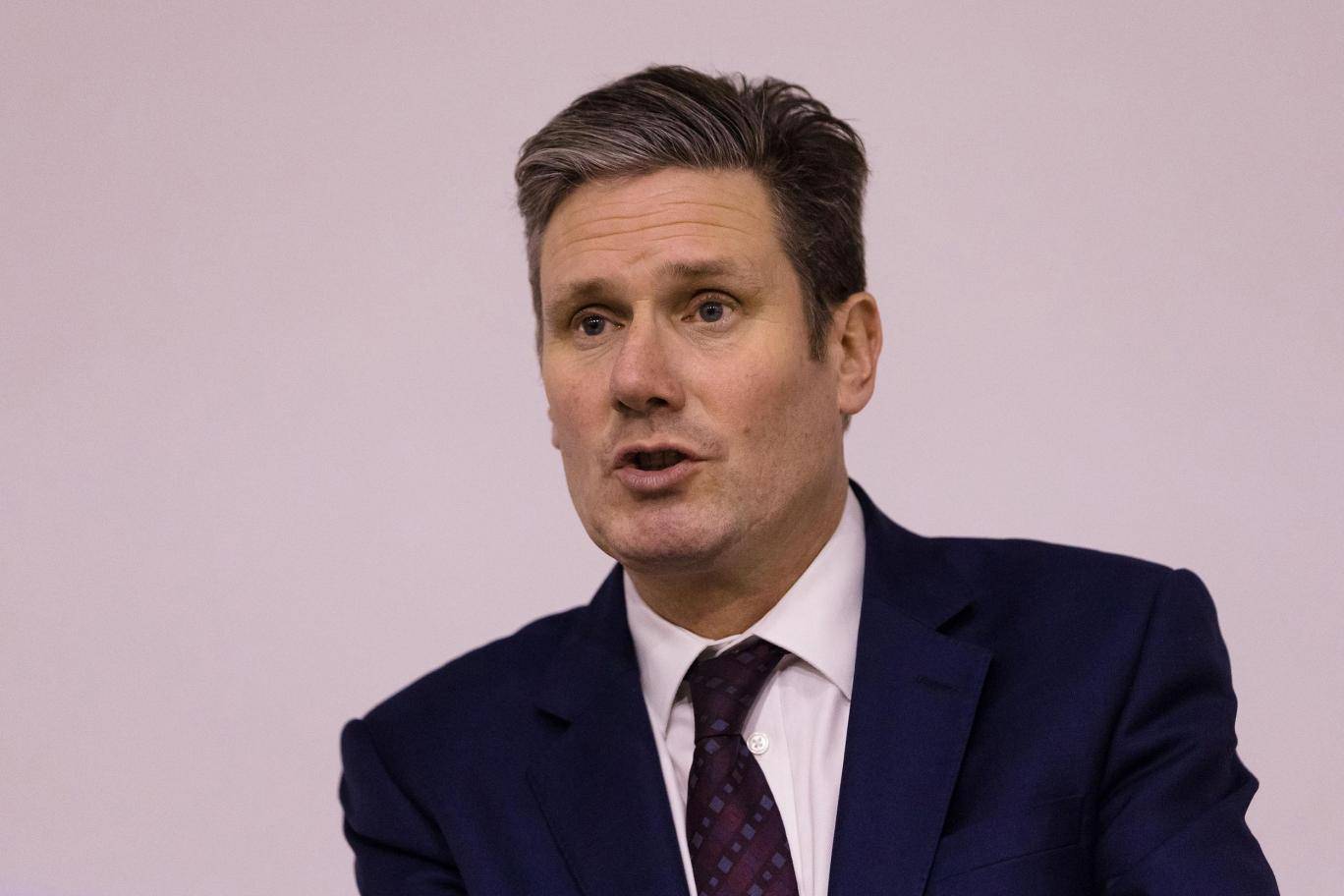
Shadow Brexit secretary Keir Starmer said Labour is willing to vote against a Tory Brexit Rex
Shadow foreign secretary Thornberry raised eyebrows on Wednesday when she said the prime minister would return with an undetailed Brexit agreement, but that it would still likely pass Labour’s six tests set out by Mr Starmer last year.

Speaking at the Chatham House foreign policy think-tank, she said the agreement will likely be a “blah, blah, blah, divorce”.

She went on: “It’s not going to make any decisions. It’s going to continue to kick things down the road. We don’t seem to have come to any difficult decisions at the moment.

“The difficultly is going to be with the meaningful vote in October, which we have secured, is that, what is it we are going to be agreeing on?”

Ms Thornberry added: “We have our six tests. If you hold up blah, blah, blah, to six tests, you’ll probably pass it.”

In an interview with The Independent, Mr Blair also raised concerns Labour could back the Government’s Brexit deal, even if it failed to really set out what the UK’s relations with Europe will look like.

Urging Labour MPs to vote against their party whip if Labour backs the Government’s deal, he said: “I think all MPs have got a responsibility to do what they think is right and that’s why what I was urging MPs to do, whether Conservative or Labour, is vote according to what you genuinely believe.

“This is the most important decision since the Second World War and it’s going to decide the destiny of the country for future generations – do what you think is right, this is one moment surely to do that.”

Condoms don’t necessarily help teen girls avoid pregnancy

According to a new study, distribution in schools can actually increase fertility rates. Can alternative policies be more effective?

The logic seems so simple: more condoms, less disease, fewer teen pregnancies. That was the rationale behind a major policy push across the country in the early 1990s: Facing the then-fatal threat of HIV/AIDS, districts from Colorado to California to New York introduced condom-distribution programs in schools. According to a study published this month, over the course of just a few years, 22 districts in 12 states implemented this kind of program, affecting roughly 484 schools. In about two-thirds of the schools, kids had to go through mandatory counseling to get the condoms.

Condom access didn’t decrease the rate of teen births, though. It seems, in fact, to have increased it. The researchers estimate that these programs were responsible for roughly two additional births per 1,000 teens. And this rate was significantly higher when students could get condoms without any counseling. The effects would have been even greater if condoms were freely available to the entire U.S. high-school-age population, the researchers suggest—in that case, they projected, there would have been an additional five births per 1,000 teens.

The findings seem to pose a challenge to groups that advocate these kinds of school-based contraception-distribution programs. But they’re also troublesome for those who oppose sex education in schools. Easy access to condoms created worse outcomes for students, not better. But it seems that lack of access to information may have hurt them even more.

The debate over contraception distribution in schools often focuses on whether districts should only teach abstinence. In the schools included in this study, “counseling often included the message  that abstinence is the safest method of protection against STIs,” wrote the researchers, Kasey Buckles and Daniel Hungerman of Notre Dame, in an email. But the programs weren’t necessarily geared toward abstinence—“in some cases, a counselor might be required to show how a condom is put on, and in other cases a counselor might be forbidden from doing that.” Opponents worry that this kind of show-and-tell, paired with easy access to condoms, encourages kids to have sex or engage in risky sexual behavior. The researchers speculated that the ’90s-era condom programs might have done exactly that.

But a lot has changed over the last couple of decades, suggesting that alternative policies might have different outcomes. Since 1990, teen birth rates have fallen dramatically, declining from roughly 62 births per 1,000 girls aged 15 to 19 to roughly 24 among the same group in 2014. Teen abortions have also decreased significantly: In 2011, roughly 14 out of every 1,000 adolescent girls had an abortion, compared to 44 out of 1,000 in 1988. Teens are also waiting longer to have sex, and when they do, they’re doing it more safely.

The way young women use birth control is also changing. According to the CDC, condom use decreased by about half among women aged 15 to 19 between 1995 and 2010, while reliance on hormonal birth control has gone up, especially among women under 30. While women in their late 20s and 30s are more likely than teens to get IUDs, the greatest decrease in condom use as the only method of birth control was among teens.


These trends have likely been driven by a number of factors, including new public-health policies. Recently, a number of programs have shifted their emphasis away from condoms and toward hormonal birth control. While condoms are still the most common kind of contraception used by teens, they have higher failure rates for preventing pregnancy than hormonal birth control. As the researchers in this study point out, girls also have less control over condom use than they do over something like the pill; they can make a long-term decision to get on birth control, rather than deciding whether or not to use a condom when they’re about to have sex.

That’s why some states and localities are pushing for wider distribution of other kinds of birth control, including long-acting reversible contraceptives, or LARCs. An initial study of one such program—Colorado’s Family Planning Initiative, founded in 2009—suggests it has reduced teen birth rates in the state by about 5 percent.

Then again, as the researchers point out, some public-health organizations, including the American Academy of Pediatrics, have recently advocated condom-distribution programs in schools. Because of this, “many school districts (including Boston and Chicago) have recently considered the role of condoms in schools,” Buckles and Hungerman wrote in an email. In some areas of the country, alternative programs, including those that provide students with free IUDs, have had trouble catching on. This is especially true in conservative states like Texas, as my colleague Olga Khazan reported earlier this month.

For all of the positive trends involving teen sex, pregnancy, and contraception use in the United States, studies suggest that fewer teens are getting formal sex education in school now than in the past. While the Notre Dame study is a reminder that it’s difficult to predict the outcomes of public-health policies, it’s also a warning: lack of education, along with the specifics of how health policies are constructed, can be an important factor in teen birth rates.

“Our work suggests that if you get this type of intervention wrong, there could be unintended consequences,” Buckles and Hungerman wrote in an email. “That is a message that will probably never lose relevance!”

(Source: The Atlantic)

Crocs are cool again

Looking at what is considered fashionable today, it is clear that trends always come back into style.

First it was scrunchies, then Juicy Couture - now Crocs are making a comeback.

Always considered a divisive shoe, Crocs have officially come out on top and proven their place in the world of high-fashion - after Balenciaga’s $850 version of the shoe sold out before they were released.

Originally designed by Demna Gvasalia for Balenciaga, the foam-platform shoes took centre stage when they were introduced on the runway.

And now it appears they will be showing up on feet everywhere this season.

However, apart from a 10cm platform addition, it would be easy to mistake the new outrageously expensive Crocs for the now-retro ones of our childhoods.

Featuring the same pastel colours and buttons that can be attached for added flair, the Balenciaga Platform Crocs look almost identical to the real plastic-y slip-on Crocs you can purchase for a quarter of the price - but that hasn’t stopped people from going crazy over them.


With the Women Spring Summer 18 runway show, Balenciaga launches the “Foam” shoes, a 10 cm platform version of the iconic @Crocs clog. pic.twitter.com/TsjgjkllF2

— Balenciaga (@BALENCIAGA) October 1, 2017
The platform plastic shoes originally went on pre-sale on Barney’s website on February 1 - but within a matter of hours, all of the new and improved Crocs had sold out.

A lot of people are probably understandably confused, considering the comments and reactions from people mocking the shoes on Twitter when they were first introduced.

What a tragic era in fashion and it’s even worst that is from @BALENCIAGA https://t.co/DmruuGkD06

— • Kylo Blossom • (@KikeSalazar) October 2, 2017
The world is officially ending soon

— Busisiwe (@BusisiweThandoG) October 2, 2017
Burn Them All.
Balenciaga is Cancelled.

— No (@erisonic8) October 1, 2017
Despite the haters, Balenciaga has proved crocs can be cool - and worth $850.

(Source: Independent)

Laser mapping uncovers dozens of ancient Mayan cities

Advanced laser mapping has revealed more than 60,000 ancient Mayan structures beneath the jungles of northern Guatemala.

Set across dozens of hidden cities, the discoveries include houses, palaces and a 90-foot-tall pyramid that was previously thought to be a hill.

Made possible through special laser-equipped airplanes that can "see" through dense jungle, the groundbreaking research suggests that Mayan metropolises were far larger and more complex than previously thought.

Evidence of agriculture, irrigation, quarries and defensive fortifications were widespread, and extensive road networks point to initially unknown levels of interconnectivity between settlements.

Game-changing discoveries
The extent of the findings, first reported by National Geographic, may transform our understanding of how Mesoamerican civilization operated, according to one of the study's co-directors, Marcello Canuto from Tulane University in New Orleans.

"We're discovering that there is more of everything, and the scale is much bigger," he said in a phone interview. "In any given area there were more structures, more buildings, more canals and more terraces (than expected).'"

By extrapolating data from the 2,100-square-kilometer (811-square-mile) site, researchers have also revised their population estimates for the region. They now believe that 10 million people lived in the Maya Lowlands (an area covering parts of present-day Guatetmala and Mexico), a number that is "many times larger" than indicated by previous research.

"The general conceit over the last 100 years has been that the tropics were a bad place to have civilizations and that (the climate) is not conducive to sustaining complex societies," said Canuto, who has worked on Mayan archeology for more than 30 years. "There has always been this assumption that Mayan society was less populated and that there wasn't any infrastructure -- that they were small, independent city-states without much interaction.

"But we're finding that this just isn't true. This research shows that, not only were there lots of people, but also lots of ways that they modified the landscape to render it more productive. The defensive structures that we're finding (also suggest) that there were lots of people and lots of resources, which can create lots of competition."


'Revolutionary' aerial mapping
Central America's thick jungle has often made large-scale surveys of historical sites logistically difficult. But recent developments in a technique known as light detection and ranging (or "lidar") are allowing archeologists to see through even dense forest.

The aerial mapping process is carried out by attaching a lidar sensor to the underside of an airplane.

Using the same technology found in self-driving cars, the instrument maps the landscape by emitting pulses of laser light and the time taken for them to return.

The resulting data can reveal ground-level contours, pointing researchers toward man-made structures beneath the canopy. For archeologists, the method allows surveys of great detail and unprecedented size, Canuto said.

"This initiative is bigger than anything that has ever been done before. But it's not just big, it's also covering a wide swathe of this area, so it's actually a representative sample.

"For (archeologists) who work in the tropics, this is entirely revolutionizing the way we do everything," he added. "It's as if you were observing the sun and the stars with your naked eye and then someone invents the telescope."

Potential for archeology
Lidar sensors have previously been used to study other Mesoamerican settlements in Belize, as well as temple complexes in Cambodia. The technology may have archeological potential in other tropical areas, such as the Amazon and central Africa.

For now, the method's greatest barrier is the cost of chartering aircraft, Canuto said. His project was only made possible through funding from the Maya Cultural and Natural Heritage (PACUNAM), a Guatemalan non-profit organization that brought together a consortium of archeologists with different areas of expertise.

But as well as making research economically viable, this type of collaboration may provide new insight into the large datasets created.

"Now we're not limited to one site -- we can see everyone's data," Canuto said. "So instead of having 10 scholars working on 10 individual sites, we had 10 scholars working on individual questions across all the sites. That gives you a regional perspective that no one else has."

Moreover, if archeologists collaborate with experts in other fields, such as ecology and environmental science, aerial mapping may become more cost-effective and widely used.

"The data we use shows what's on the ground... but the other 95 percent of the data is providing a vertical profile of the canopy," Canuto said. "We, as archaeologists, want to know what's under there when you remove the trees. But ecologists want to see biomass and other things that archeologists don't care about."

The digital maps will later be used to carry out targeted ground research. Over the next three years, Canuto and his team hope to scan the entire Maya Biosphere Reserve, an 8,341-square-mile site in Guatemala's Petén region.

(Source: CNN)

DPD courier who was fined for day off to see doctor dies from diabetes

Don Lane’s widow says he was afraid of getting fined if he did not ensure his round was covered

A courier for the parcel giant DPD who was fined for attending a medical appointment to treat his diabetes collapsed and died of the disease, it has emerged. Don Lane, 53, from Christchurch in Dorset, missed appointments with specialists because he felt under pressure to cover his round and faced DPD’s £150 daily penalties if he did not find cover, his widow has told the Guardian.

DPD delivers parcels for Marks & Spencer, Amazon and John Lewis but only pays couriers per parcel delivered. It treats them as self-employed franchisees and they receive no sick or holiday pay. The company’s system of charging drivers if they cannot cover their round has been described as appalling by the chairman of the House of Commons’ work and pensions committee, Frank Field.

Lane had collapsed twice, including once into a diabetic coma while at the wheel of his DPD van during deliveries, when the company fined him in July after he went to see a specialist about eye damage caused by diabetes. He collapsed again in September and finally in late December having worked through illness during the Christmas rush. He died at the Royal Bournemouth hospital on 4 January, leaving behind a widow, Ruth, and a 22-year-old son. He had worked for DPD for 19 years.

Ruth Lane, the widow of Don Lane, who was a courier with DPD at its Bournemouth depot. Photograph: Richard Crease/BNPS
Ruth Lane told the Guardian: “There was a constant threat of a fine. They had to deliver the parcels to tight slots and the pressure to get them done was huge. He was putting the company before his own health. He wasn’t able to do his parcels first and make the hospital appointments, so he would cancel on the day.

“He collapsed in January 2017 and they knew that because they collected his van. It was after that Don cancelled three appointments. DPD had a duty of care to make sure he got to those appointments, but they failed in it.” She added that in March her husband had told her: “I think I am going to die.”

Lane’s death comes as concern mounts at the human cost of the gig economy, which accounts for 1.1 million people, many working as couriers and minicab drivers. It is likely to increase pressure on the government to make meaningful reforms to employment law in a delayed announcement on modern working practices expected this week.

Trade unions last night said the government must crack down on bogus self-employment. The TUC general secretary, Frances O’Grady, said: “The insecure work free-for-all has to end … this will be a real test of Theresa May’s government. Does she even have a domestic agenda any more?”

DPD, one of the most successful firms operating in the gig economy, made over £100m profit after tax in 2016. Both it and Hermes, another parcel company relying on self-employed couriers, are facing employment tribunal claims from people who believe they should be treated as employed.

Field described Lane’s death as “a new low for the gig economy” and called on Theresa May to urgently introduce new legislation to protect “this small army of workers at the bottom of the pile … who are being badly exploited”.

Lane disputed the £150 charge in July, insisting that he had told his bosses about the appointment months earlier. According to correspondence seen by the Guardian, he told his manager: “I have cancelled so many appointments because I couldn’t make the time to get there that the renal department have stopped treating me. I had to go.”

His DPD area manager replied: “I fail to understand why a full day off was required and as such do not see that the breach [the £150 fine] should be rescinded.”

During the appointment, doctors found Lane’s blood pressure and cholesterol were high, he had anaemia and rising levels of creatine in his kidneys, a warning sign of renal failure. In September 2017 he collapsed into another diabetic coma.


In the days before he died, he was feeling sick and vomiting blood, Ruth said, adding that he told her: “I really don’t want to work, but I have to.”. “They are like employees, not self-employed,” she said.

A colleague, who asked not to be named for fear that DPD would terminate his contract, said: “Don was falling apart, but they wouldn’t take it easy on him. They push drivers till they break. I definitely think they contributed to this. They knew Don was diabetic. They should have looked after him more.”

DPD said in a statement that it was “profoundly sorry” that it had charged Lane, but cited “confusion” at the time. “Don attended his appointment, but it isn’t clear why he was then charged, when the charge hadn’t been been applied at any other time,” it said. “We got it wrong on that occasion.”

Lane first collapsed on 27 December 2016 and Ruth texted his manager to say: “he knows he has to come into work tomorrow as he’ll get charged”. On that occasion, the manager responded that “he has no worries about being charged”.

“In relation to Don’s poor health at the end of December 2016 and into January 2017, we refute the claim that he was under pressure and threatened with a £150 charge,” DPD said. It said that it monitored Lane’s health during 2017 but did not know that he had suffered another diabetic coma in September. It said he had a quiet rural route with a relatively small number of deliveries, which suited him “as it was convenient for his hospital appointments”.

“In the runup to Christmas, it is normal in the industry for drivers to work additional days at the weekend and Don was working his normal route,” DPD said. “We weren’t made aware that Don was feeling sick and vomiting up some blood at this time. We were shocked and hugely saddened by Don’s death and our thoughts go out to his family and friends at this difficult time.”

DPD said its drivers “do not have to provide the service personally, and drivers have the option of providing a substitute driver in the event of sickness. Don was aware of the need to provide a substitute.” It said if a driver cannot find a substitute, it tries to reallocate the route among other drivers.

DPD uses around 5,000 self-employed couriers. They are under pressure to deliver parcels to restricted time slots, must wear a uniform, hire a DPD liveried van and not work for any other courier company. MPs and unions have argued that these strict conditions mean they are bogusly self-employed and should be treated as employed workers. Courier companies using self-employed drivers, including ParcelForce and UK Mail, have also sparked anger by levying fines if rounds are not covered.

DPD said that it charged fines in 4.6% of the cases where couriers did not provide a service, but declined to say how much it raised because this information was “operationally sensitive”.

“How can modern Britain allow workers who are dedicated to their job to be driven to an early grave by such appalling exploitation?” said Field. “DPD have been told time and again that their punitive regime is totally unjust, particularly as their workers are labelled ‘self-employed’. Such mistreatment of workers smacks of sweated labour from the Victorian era.”

(Source: The Guardian)