Friday, 4 May 2012

Akshaya Tritiya: Hotbed of child marriages

On the auspicious day of 'Akshaya Tritiya', thousands of child brides become victims of early marriage in India.

"I am one of those unfortunate Hindu women whose hard lot is to suffer the unnameable miseries entailed by the custom of early marriage. This wicked practice of child marriage has destroyed the happiness of my life. It comes between me and the things which I prize above all others - study and mental cultivation. Without the least fault of mine, I am doomed to seclusion; every aspiration of mine to rise above my ignorant sisters is looked down upon with suspicion and is interpreted in the most uncharitable manner..."
- Extract from a letter written by a woman named Rukhmabai to The Times of India on June 26, 1885, reproduced in Child Marriage in India: Socio-legal and Human Rights Dimensions, by Jaya Sagade (Oxford University Press, 2005).

This is not just the case of one Rukhmabai. There are hundreds of thousands of Rukhmabais who fall victim to early marriage. In fact, UNICEF's State of the World's Children 2012 report says that more than 40 per cent of the world's child marriages happen in India.

More than 60 million women across the world now aged between 20 and 24 years were married before they turned 18. Even though the extent of early marriage varies from countries and regions, the highest rate is found in West Africa, followed by South Asia.

"About half the girls in early marriage live in Southeast Asia," the WHO said in the Geneva meet last month.

Archbishop Desmond Tutu, the chair of The Elders, who was in Bihar, India, in February 2012, said that child marriage is "a practice that robs millions of girls of their childhood, their rights and their dignity. I find it astounding that this issue does not receive far greater attention. Together, we and our partners commit to working together to end it."

The numbers are different in urban versus rural areas. According to the Union health ministry's Family Welfare Statistics 2011, "for every woman aged below 18 getting married in urban centres, three women are getting married in rural areas".

Read more here.

Sunday, 15 April 2012

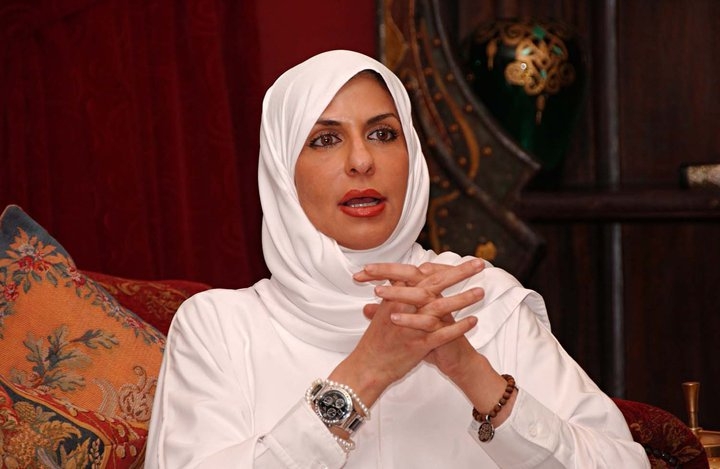
The Acton princess calling for reform in Saudi Arabia


Royal runs campaign for change in her homeland from a suburb in west London

Her Royal Highness Princess Basma Bint Saud Bin Abdul Aziz is one of the more unlikely critics of the élite that runs Saudi Arabia. The oil state boasts a 15,000-strong royal family but it is rare for a voice from within its ranks to become part of the growing clamour for reform in the desert kingdom.

As the youngest daughter of the country's second king and niece to its current ruler, she is from the highest echelons of the Saudi monarchy. Just as her privileged status gives her considerable authority in the debate about change, so this carefully dissenting royal has much to lose if her actions incur the displeasure of Saudi Arabia's ultra-conservative regime.

But then Basma Bint Saud is no ordinary Saudi princess.
A 47-year-old divorcee and a successful businesswoman, she has spent the last five years in the country building a parallel career as a journalist and a blogger, confronting head on sensitive subjects from the abuse of women and poverty in the world's second biggest oil exporter to the chilling effect of the mutawa, the kingdom's draconian religious police.

Such has been her success at shining a light on the problems in Saudi society (a Facebook fan page has 25,000 followers), she now conducts her campaign not from her birthplace in the capital, Riyadh, or her previous home in Jeddah but a recently-acquired house in the west London suburb of Acton which she shares with three of her five children.

The princess underlines that she was not forced to leave Saudi Arabia and goes out of her way to emphasise that her criticisms do not relate to her octogenarian uncle, King Abdullah, or the other senior members of the monarchy. Instead, the focus of her anger is the tier of governors, administrators and plutocrats who run the country day to day.
Amnesty International this month accused the Saudi authorities of conducting a campaign of repression against protesters and reformists in the kingdom in the wake of revolutions sweeping the Arab world, during which Riyadh sent troops into neighbouring Bahrain while protests for greater political freedom among Shi'ites were stamped out. The impression of increased authoritarianism was not allayed by detention in October of three young Saudi film makers who posted on the internet a documentary about poverty in Riyadh.

The princess insists she is no "rebel" nor an advocate of regime change. But in an interview The Independent, she equally does not pull her punches when it comes to the question of who bears responsibility for the ills that she considers beset her country.

Sat in a living room decorated with Saudi artefacts and in front of a table carrying a plate of Saudi dates ("the best in the world"), she said: "The problems are because of the ruling ministers. We have ministers who are incapable of doing what has been ordered from above because there is no follow up, because there are no consequences. If you are poor man and you steal, your hand is cut off after three offences. But if you are a rich man, nobody will say anything to you."

She added: "We have 15,000 royals and around 13,000 don't enjoy the wealth of the 2,000. You have 2,000 who are multi-millionaires, who have all the power, all the wealth and no-one can even utter a word against it because they are afraid to lose what they have."

Asked if her decision to speak out means she risks losing what she has, she replied: "Oh, definitely. Definitely."

Speaking fluently with a neutral English accent picked up as a teenager in the Home Counties, Basma is the first to admit she is the product of a not only a privileged upbringing but also an atypical one for a Saudi princess. She is the 115th - and last - child of King Saud, the eldest surviving son of Saudi Arabia's founding monarch Abdul Aziz.

King Saud was overthrown in 1964 by his brother, Faisal, and left for exile in Europe. Basma's mother, a Syrian-born woman who was chosen for her future husband when she visited Mecca on the haj at the age of 10, took her children to the Middle East's then most cosmopolitan city, the Lebanese capital of Beirut, where the young princess was schooled by French nuns among Christians, Jews and Muslims who did not adhere to the austere Wahhabi branch of Islam practiced in Saudi Arabia.

When Lebanon's civil war broke out in 1975, the family fled for Britain where she attended a Hertfordshire girls' school and an international college in Oxford before spending two years studying in Switzerland. It was a very different existence from the closeted upbringing normally led by young Saudi royals.

She explained how, at the age of 17, she joined one of the first visits to post-Mao China by foreign students, describing vividly how her group were taken to a farm and treated to a delicacy in the form of the brains of a live monkey chained and slaughtered at the table. She said: "Some girls screamed and fainted. Others were sick. I went to the car and refused to go back into the building. China was like visiting the moon."

Equally alien was the land of her birth when she returned in early 1980s. Upon entering the royal court ("I was very careful, very nervous to behave correctly"), she found a cut-off society which, paradoxically, was more relaxed than present-day Saudi Arabia.

She said: "If China was like the moon, then arriving in Saudi Arabia was Mars. At least you can see the moon from Earth. It was a completely secluded society but I wouldn't say backward - not as backward as it is now. It was much more open and tolerant. You wouldn't hear people saying ‘go to prayer', ‘go and do this and that'.

"This is the atmosphere you have now. It is such a non-tolerant atmosphere, even of other sects. Any other sect that doesn't actually belong to our community is thought to be - I'm not going to be sharp but very specific - not the true Islam."

It is an intolerance which she claims pervades Saudi society, fromented by the mutawa, otherwise known as the Commission for the Promotion of Virtue and Prevention of Vices, ironically founded her father to act as a check on traders charging inflated prices.

The princess said: "Our religious police has the most dangerous effect on society - the segregation of genders, putting the wrong ideas in the heads of men and women, producing psychological diseases that never existed in our country before, like fanatacism. The mutawa are everywhere, trying to lead society to a very virtuous life that doesn't exist. Everthing is now behind closed doors."

Amid regular accounts of executions  - Amnesty International last week described as "truly appalling" the death penalty carried out on a Saudi woman for "sorcery and witchcraft - Basma makes the point that human rights abuses happen to both genders but fall disproportionately on women.
As a result, she is slightly bewildered by the focus on the continuing prohibition on Saudi women, who cannot go to university or take a job without a male guardian's permission, from being allowed to drive.

She said: "Why don't we actually fight for a woman's right even to complain about being beaten up. That is more important than driving. If a woman is beaten, they are told to go back to their homes - their fathers, husbands, brothers - to be beaten up again and locked up in the house. No law, no police will protect them.

"We are overlooking essential rights of a human being - the right to mix between the sexes, to talk and study freely... We have got human rights but they are paralysed. They are completely abstract, for the media and the western world."

The princess, who divorced from her Saudi husband six years ago and went into business setting up a series of restaurant chains which she now intends to expand into Britain, has not been afraid to air similar views in Saudi Arabia, writing in newspapers and websites on issues from the mutawa, to women's prisons and clothing. She eschews what she describes as the expected "sleep by day, live at night" leisured life of Saudi princesses and is instead setting up a charity to fight poverty in the Arab world by offering a Fair Trade-type deal to artisans which will include access to education and health care.

But in a country where doctrine and adherence to orthodoxy can be everything, Princess Basma is aware of the hostility generated by a woman speaking out. She has studied Islam in depth, becoming a scholar of the faith's great texts to give her the authority to challenge the teachings of Saudi imams. Armed with the evidence of scripture, she has rebuked the authorities in writing on issues from driving to the doctrinal basis for the requirement that women cover up in public.

But the eruption of democracy movements in Tunisia, Egypt and Syria has brought an abrupt end to her reporting from Saudi Arabia. This summer, officials began to suggest she "edit" her work. She said: "The first time they took out some sentences. The second time, paragraphs. The last time, they told me to change the whole article or the editor who published it would go to prison. I didn't want to send anyone to prison on my behalf."

Even though she insists her work was carried out until recently with the blessing of King Abdullah, here is a princess treading a narrow line.

Following the death in October of Crown Prince Sultan bin Abdel Aziz, the 86-year-old heir to the throne, Saudi Arabia is still ruled by the ageing and conservative generation of her uncles, who she says have given her "very strong hints" that her criticisms are not currently being met with approval.

Sitting close to a photomontage of the Saud dynasty which shows her father as a young man next to her grandfather and beside the boy Prince Nayef, the 78-year-old head of the interior ministry who is de facto ruler, Basma underlines her respect for her father's ruling brothers.

She said: "I am still an obedient citizen and I will always be behind the royal family. But I will never be quiet about what is happening on the ground. The unfairness of the distribution of wealth, about the power that has been unevenly given to people because they have complete obedience to those above them.

"I owe my uncles everything and what I owe them most is to tell them the truth. My mistake, my ruin is going to be insisting on telling the truth even if they don't like it. Because I think they need to hear it, especially from one of their loyal, royal own."

(Source: The Independent)

Saudi princess: What I'd change about my country


Princess Basma Bint Saud Bin Abdulaziz tells the BBC there are many changes she would like to see in Saudi Arabia - but that now is not the time for women to be allowed to drive.

I speak as the daughter of King Saud, the former ruler of Saudi Arabia. My father established the first women's university in the kingdom, abolished slavery and tried to establish a constitutional monarchy that separates the position of king from that of prime minister. But I am saddened to say that my beloved country today has not fulfilled that early promise.

Our ancient culture, of which I am very proud, is renowned for its nobility and generosity, but we lack, and urgently need, fundamental civil laws with which to govern our society.

As a daughter, sister, (former) wife, mother, businesswoman and a working journalist, these are the things that I would like to see changed in Saudi Arabia.
1. Constitution
I would like to see a proper constitution that treats all men and women on an equal footing before the law but that also serves as a guide to our civil laws and political culture.

For example, today in Saudi courts, all decisions are made according to the individual judge's interpretation of the holy Koran. This is entirely dependent on his own personal beliefs and upbringing rather than universally agreed principles or a written constitution as a guide.

I am not calling for a western system but an adaptation of that system to suit our needs and culture. Thus our constitution should be inspired by the philosophy of the Koran with principles that are set in stone and not open to the whims of individual judges as is the case now.

In particular, the constitution should protect every citizen's basic human rights regardless of their sex, status or sect. Everyone should be equal before the law.

2. Divorce laws

I strongly believe that current divorce laws are abusive.

Today in Saudi, a woman can ask for a divorce only if she files for what is called "Khali and Dhali". This means either she pays a big sum of money running into tens of thousands of dollars or she has to get someone to witness the reason why she is filing for a divorce - an impossible condition to fulfil given that such reasons usually are the kind that remain within the four walls of a marriage.

Another way to keep a woman in the marital home against her will is the automatic granting of custody of any children over the age of six to the father in any divorce settlements.

This state of affairs is in complete contradiction to the Koran, upon which our laws are supposed to be based. In it a woman is given full rights to divorce simply in the case of "irreconcilable differences".

3. Overhaul of the education system

The way women today are treated in Saudi Arabia is a direct result of the education our children, boys and girls, receive at school.

The content of the syllabus is extremely dangerous. For one, our young are taught that a woman's position in society is inferior. Her role is strictly limited to serving her family and raising children. They are actually taught that if a woman has to worship anyone other than God it should be her husband; "that the angels will curse her if she is not submissive to her husband's needs". Girls are also strictly forbidden from taking part in any physical education. This is a result of a complete misinterpretation of the Koran. I consider these ideologies to be inherently abusive.

Aside from that, the focus in most of our educational system is on religious subjects such as hadith (sayings attributed to the prophet), Fiqh (Islamic jurisprudence), tafssir (interpretation of the Koran) and of course the Koran. The attitude is that "learning itself, anything other than religion won't get you into heaven so don't waste your time". I would like to see religious teaching limited to the Koran and the Sunna (the way the prophet lived), where the true ethics of Islam lie. The rest is blind rote learning of the most dangerous kind. It has left our youth vulnerable to fundamentalist ideologies that have led to terrorism and abuse of the true meaning of the Koran.

Instead of wasting our youths' intellect on memorising quotations whose origins is uncertain (such as those found in hadith, Fiqh and tafssir) we need to encourage them to think freely, innovate and use their initiative for the betterment of our society. Early Islam was a time of great creativity. Scholars excelled in sciences and literature. Our religion should not be a shield behind which we hide from the world but a driving force that inspires us to innovate and contribute to our surroundings. This is the true spirit of Islam.

4. A complete reform of social services

The ministry of social affairs is tolerating cruelty towards women rather than protecting them. The only refuge homes that abused women can turn to are state ones. In these, women are continuously told that by seeking refuge they have brought shame on their families.

If they come from powerful families then they will be sent straight back to their homes in fear of the wrath of a powerful patriarch. As a result we have seen many cases of suicide by educated women, doctors and scientists who were sent back to their abusers.

We need independent women's refuges where the rights of women are upheld and backed up by powerful laws that can override family traditions and protect women.

The ministry of social affairs not only abuses women's rights but is also one of the reasons poverty is rife in the kingdom. A corrupt system that lacks transparency has meant that more than 50% of our population is poor and needy even though we are one of the wealthiest countries on earth.

5. The role of the Mahram (chaperone)

Women in Saudi cannot get around or travel without a mahram (a kind of chaperone - usually a male relative).
At the time of the prophet, women used to have a man to accompany them but in those days Arabia was a desert literally full of pirates.

Today the only purpose of such a law is to curtail women's freedom of movement. This not only infantilises women but turns them unnecessarily into a burden on their men and on society.

Today women in Saudi Arabia are not allowed to drive.

This one seems to concern western observers the most but there are more essential rights we need to obtain first.

I am definitely for women driving but I don't think this is the right time for a reversal of this law. In the current climate if a woman drives, she could be stopped, harassed beaten or worse to teach her a lesson.

This is why I am against women driving until we are educated enough and until we have the necessary laws to protect us from such madness. Otherwise we might as well hand out a licence to the extremists to abuse us further. If as drivers we get harassed, they will say to the Islamic world "see what happens when women drive, they get harassed they get beaten" and they will call for even more stringent laws to control women. This is something we can't afford. Fundamental changes in the law and its attitude to women are needed before we take this step.

On the whole it is the rights and freedoms of all citizens that are crucial in Saudi Arabia and from those the rights of women will emanate.

An insular kingdom

  • Established in 1932 by King Abd-al-Aziz
  • One of the most devout and insular countries in the Middle East
  • The royal family is 15,000 strong
  • The Al Saud dynasty holds a monopoly of power; political parties are banned
  • Saudi women live a restricted life and are banned from driving
  • The country includes the Hijaz region - the birthplace of the Prophet Muhammad and the cradle of Islam
  • Saudi Arabia sits on more than 25% of the world's known oil reserves

Princess Basma

  Youngest daughter of the country's second king and niece to its current ruler
  Educated in Britain and Switzerland
  Lives in Acton, London

(Source: BBC)

Qatar tops MENA region in female literacy rate


Qatar is the only country in the MENA region where female adult literacy is higher than male adult literacy, which confirms the vital role women have come to play in nation building, says Qatari writer and Faculty Member of Carnegie Mellon University in Qatar, Dr Amal Mohammed al Malki. Excerpts:

Q: How would you assess the present status of Arab women?
A: Arab women have achieved some critical rights, such as a more equal personal status code for women in Morocco, the right to divorce in Egypt, the right to vote and run in elections in Oman, Bahrain and Kuwait over the last decade or so.

However, there is so much more to be done. Women are still caught between politics and culture.

There is the need to institutionalise their rights to ensure they are not left to be hijacked by political factions or outdated traditions.

How would you rate the role of Qatari women in the process of nation building?
Qatari women are a central resource in Qatar’s strategy of national development.

According to World Bank statistics on women and development in the Middle East, Qatar is a leader in women’s advancement in the MENA region. Qatar closed the malefemale secondary school enrollment gap back in 1980, much, much before any other MENA country.

UNESCO figures for 2000 put Qatar as one of the only six MENA countries (along with the UAE, Kuwait, Lebanon, Bahrain, and Jordan) where adult female literacy is over 80 percent. It is the only country in MENA where female adult literacy surpasses male adult literacy.

Among the school-age population, Qatar stands third in the ratio of female to male literacy, second only to Palestine and Saudi Arabia. More than any other MENA country, Qatar has encouraged women to continue their education after high school, with three Qatari women attending a post-secondary college or university for every male who does so. Qatari women study the humanities, arts, and education at the tertiary level by a ratio of 9:1 over men, suggesting that Qatar, already and will for decades to come, rely primarily on experts drawn from its female population to design and implement its core educational strategies.

What are the stages of development Arab women have passed through in the past one to two decades?
Arab women’s recent development has been mainly tied to politics and economy, and thus we see that women in stable economies and political atmospheres have been granted more freedom and equality, especially in terms of education and employment.

The two main global agreements in recent history that have benefited Arab women are the Convention on the Elimination of All Forms of Discrimination against Women (CEDAW), a universal “bill of rights” for women that requires all signatories to abolish all laws that are inconsistent with women’s equality with men and the Fourth World Conference on Women, better known as the Beijing Declaration and Platform for Action (Beijing Declaration 1995).

What has been the impact of Arab Spring on Women in the Arab world?
Nothing that is positive so far. On the contrary actually, women rights are further jeopardised due to change of political ideologies and women themselves are the first victims of any political unrest, so until the Arab Spring settles down and we see its results on women’s struggle for equality, I’m afraid any claim of it having positive impact on women is just hypocrisy.

However, I would like to reverse the question and talk about the impact of women on the Arab Spring.

Women have proved that they are in fact equal citizens with political consciousness and can be major players in the political scenes.

Men and women stood side by side in every venue calling for freedom and political reform. They talked to the world east and west and utilised traditional media as well as new media.

They proved to the world and their own societies that they aren’t passive and that they have voices which they used in all languages.

Why is it that you are the only Qatari faculty member of the Education City?
It happened that I had the right qualifications and wouldn’t take “no” for an answer. The moment I knew what I wanted and that is to teach in Education City, I was determined to achieve my aim.

I believe nothing is impossible and you can overcome any obstacle with determination and hard work. To teach in a branch campus here in Qatar, I had to go through the main campus, which meant that I had to teach in Carnegie Mellon- Pittsburgh before teaching here. It was one of the most fulfilling experiences that shaped who I am today.

Do you think that Qatari women are unwilling to take up such responsibilities?
I believe in the will and power of Qatari women and I believe that many will follow in my footsteps.

What kind of role do you foresee for the Qatari woman by 2030?
I see her working as a partner and a leader. She will be the wife and mother, student, educator, manager, minister, politician, economist, pilot, athletic, and many more. She will demand the respect of the world and will break all stereotypes about her.

(Source: Qatar Tribune)

Saturday, 14 April 2012

Pakistani cleans shoes to atone for beheading

Thousands of Indian pilgrims barely registered the man in the orange bandanna and Ray-Ban sunglasses taking their shoes and storing them in wooden cubbyholes before they entered the Sikh shrine in this town in northwest Pakistan.

The unassuming 62-year-old tending to the shoes is a top government lawyer and devout Muslim. At the shrine, he is on an unusual solo quest — taking on menial jobs to atone for the beheading of a Sikh by Islamist militants.

Over the past two years, Muhammed Khurshid Khan has traveled to Sikh shrines in Pakistan and India, volunteering to polish shoes, clean bathrooms, cook meals and do other chores. Such service is known as "seva" — selfless service — in Sikhism, and it holds a special place in the faith.

Attacks against Sikhs, Christians and Hindus have spiked in Pakistan in recent years as the Taliban and their allies gained strength. Atrocities by Muslim extremists against religious minorities now are so common that they rarely illicit more than routine condemnation by officials, much less collective contrition or shame.

In helping Sikhs, Khan is reaching out to an extremely small minority in predominantly Muslim Pakistan — the government estimates there are 30,000 Sikhs in the country of 190 million people.

"I have a desire to serve the Sikh community because my community has done them serious harm, and that hurts me," said Khan, taking a break from his work at the shrine in Hasan Abdal, 45 kilometers (30 miles) northwest of the capital, Islamabad.

Khan, one of two dozen deputy attorney generals in Pakistan, began his mission in 2010 after militants kidnapped three Sikhs returning from Afghanistan to their homes in Pakistan. The militants demanded some $240,000 — an amount the families could not afford. Two of the captives were freed in a commando raid, but 30-year-old Jaspal Singh had already been beheaded.

"That news pierced my heart," said Khan. "How could Muslims do such harm to such a peaceful community?"
A day after Singh was beheaded, Khan went to the dead man's home in the northwest city of Peshawar to offer condolences. He sat on the floor with Singh's relatives, but they became wary once they realized Khan was a government official.

Khan then visited a Sikh shrine in Peshawar and asked religious leaders if he could perform seva to atone for the beheading. After two weeks his request was approved, and for the next four months he went to the shrine in Peshawar every day after work, polishing worshippers' shoes for hours.

Handling the shoes of devotees is considered a particularly worthy form of seva because it shows humility and a belief that all people, rich and poor, are equal in the eyes of God.

"When I was permitted to do seva, that day felt like the happiest day of my life," said Khan.

He said he initially hid his quest from his family because he worried they would be embarrassed and ask him to stop, but they are now supportive. He also avoided media interviews until a reporter reminded him that Islam tells followers to publicize good deeds as an example to others.

"My message is love and peace," said Khan, who also visits Hindu temples and Christian churches to reinforce that religious minorities should be protected. "These minorities have been living here for centuries."
Khan has not contacted the beheaded Sikh's family since just after the killing.

Harnam Singh said his slain brother left a widow and four young children and the family has trouble making ends meet.

"We appreciate what Khan is doing because it shows solidarity with the Sikh community," said Harnam Singh. "It would also be good if someone could provide some help for the family because they are facing serious problems."

Sikhism was founded in the 15th century by Guru Nanak Dev in the Punjab region of South Asia, which was divided between India and Pakistan in 1947 when the countries gained independence from the British empire. There are about 20 million Sikhs in India.

The shrine in the Pakistani town of Hasan Abdal is revered because it houses what is believed to be a handprint of Sikhism's founder. This week, there was a festive atmosphere at Gurdwara Panja Sahib, a brick building adorned with arched windows and topped by a large dome. Indians, and some Pakistanis, were visiting as part of a 10-day pilgrimage to celebrate the Sikh new year.

Some worshippers filed in to listen to a religious leader read aloud from the Sikh holy book, the men cutting a particularly vivid figure in their brightly colored turbans. Others splashed holy water on themselves from a pool around the shrine and placed their hand on the founder's print impressed into a rock. Some children jumped into the pool for a swim, and hundreds of pilgrims ate donated rice and spicy fried snacks while religious music blared.

Khan surveyed the gathering from his perch behind a long wooden counter and said he hoped his actions would highlight the need to protect Pakistan's minorities.

"The message is a soft image of my religion Islam, a soft image of my country Pakistan," said Khan. "We are not terrorists."

(Source: AP)